About this sheet
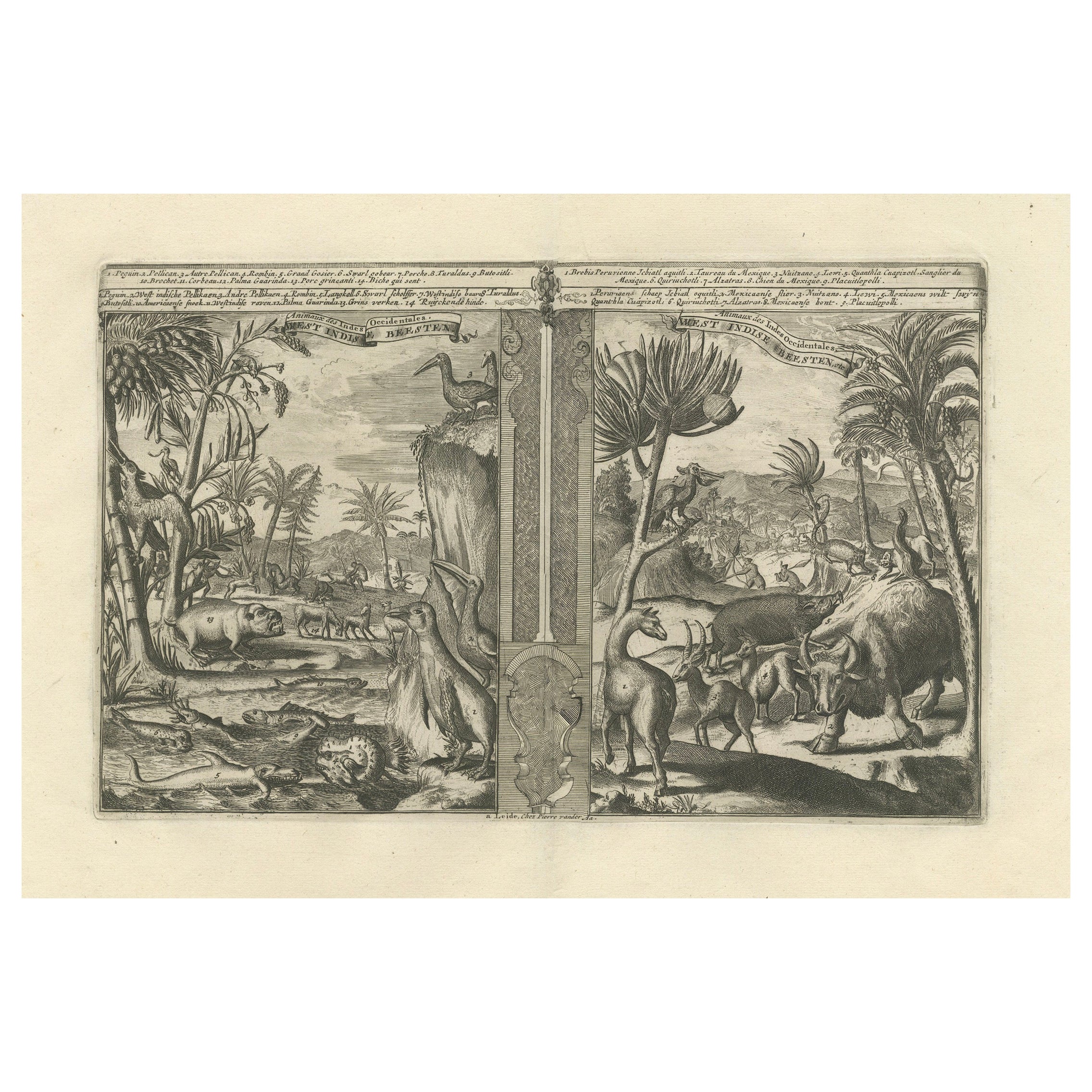
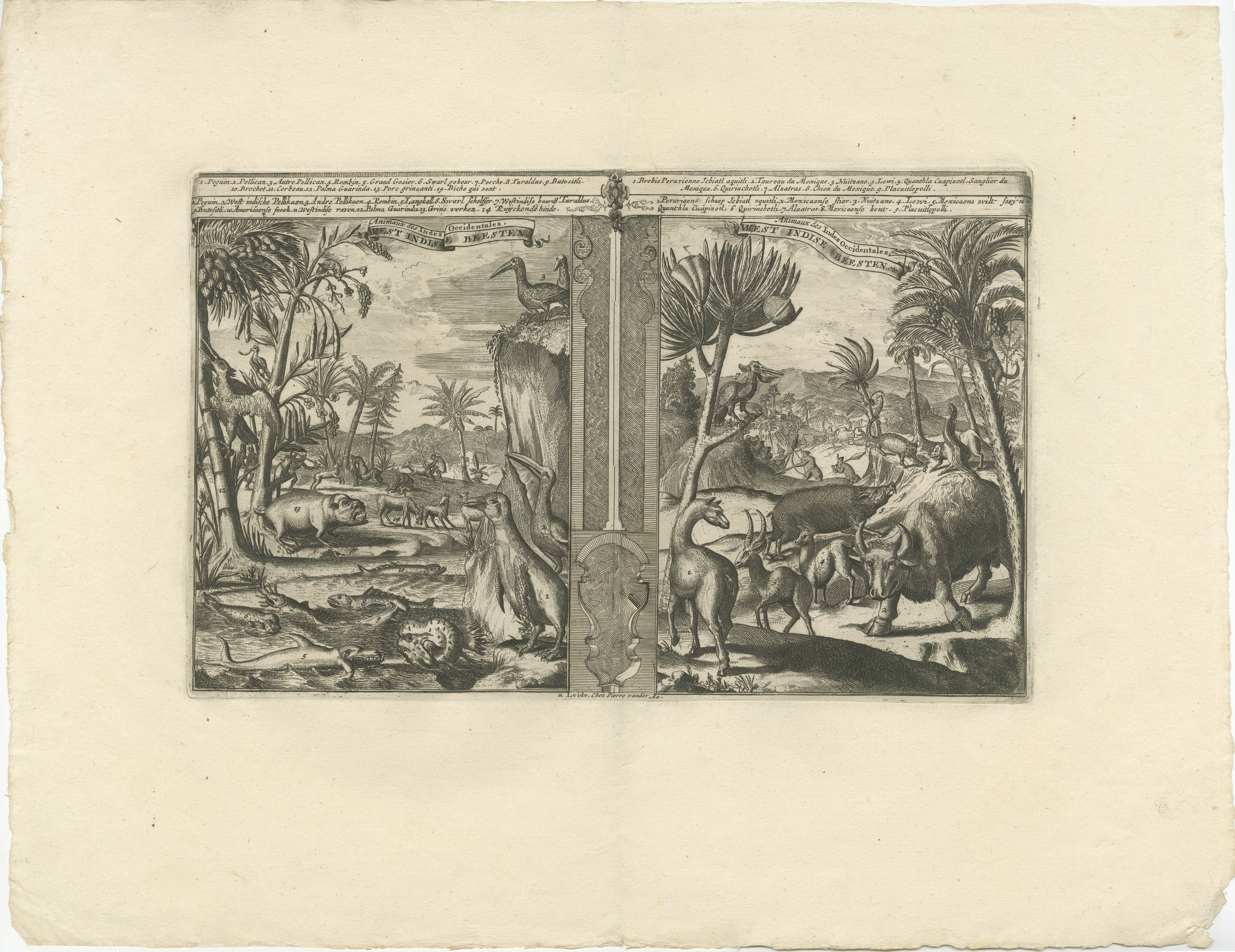
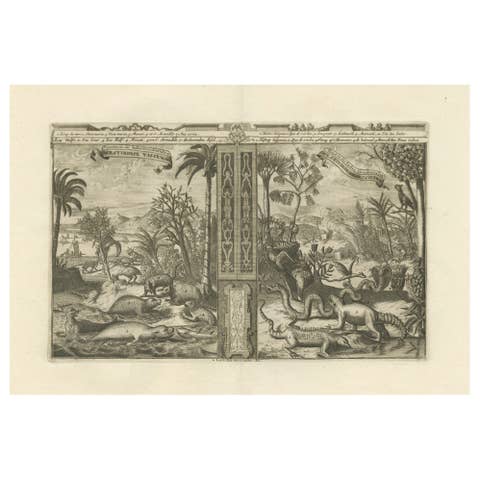
This original antique print is an intricate engraving from the early 18th century, titled "India Occidentalis," also known as the West Indies. Created by Romeyn de Hooghe, a distinguished Dutch Baroque engraver, and published by Pieter van der Aa, this work is part of a larger series called "Les Indes Orientales et Occidentales et autres lieux," which translates to "The East and West Indies and other places."
Description of the Engraving:
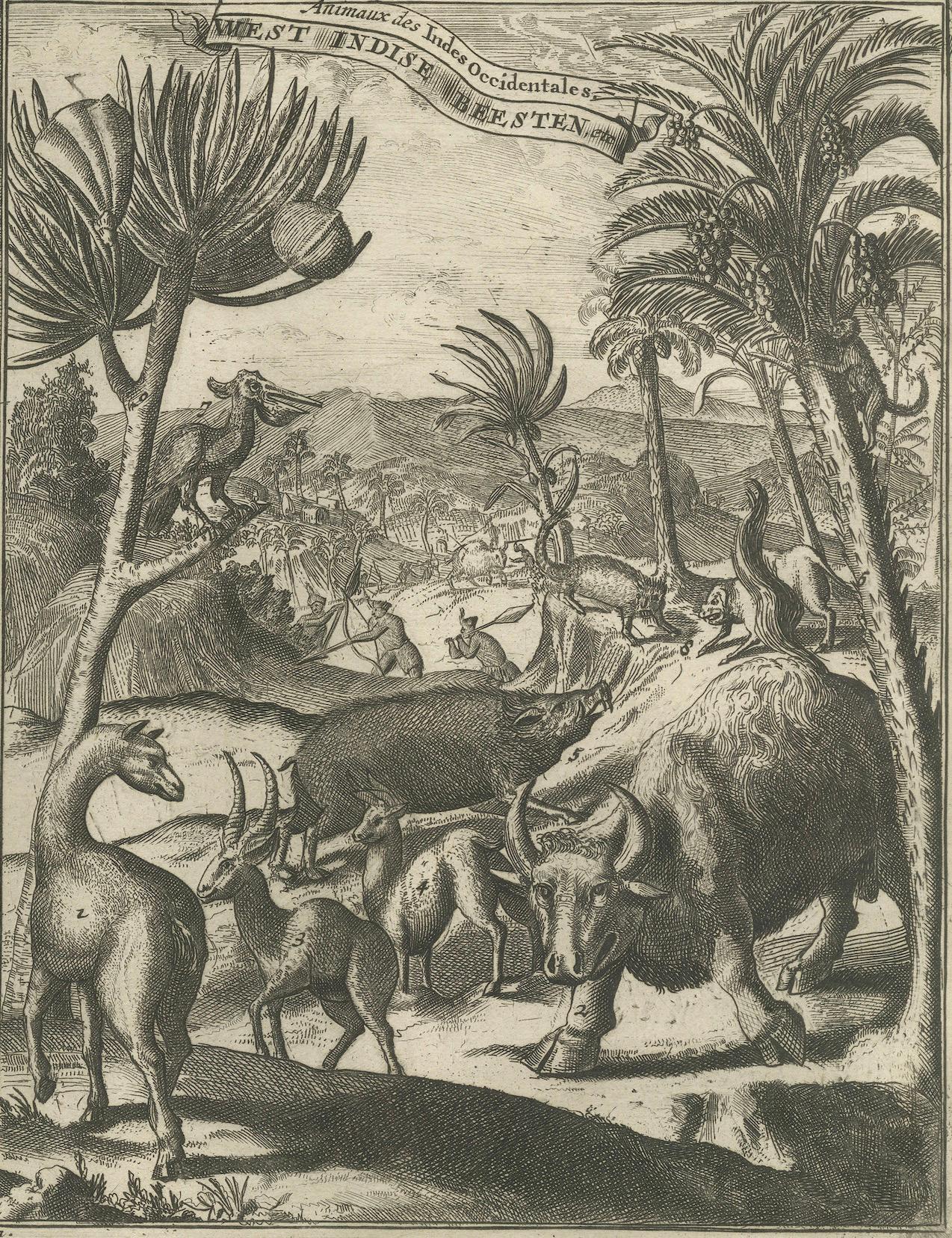
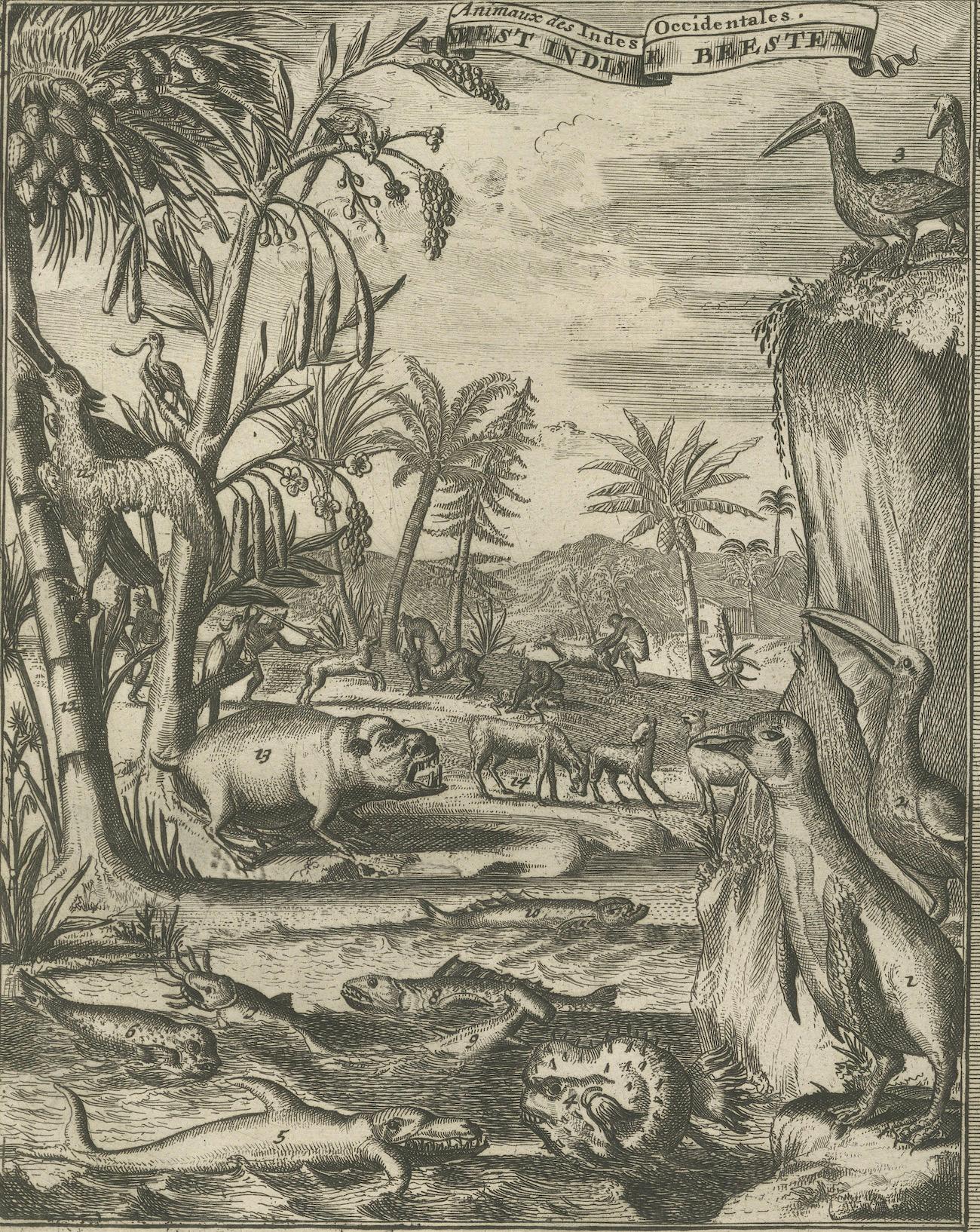
The engraving is a vivid portrayal of the diverse fauna and lush landscapes imagined to exist in the West Indies, reflecting European fascination with exotic locations during the Age of Discovery. The scene is teeming with both real and fantastical creatures, set against a backdrop of dense tropical vegetation and distant mountains, which evoke a sense of the mysterious and unexplored territories.
List of Notable Animals Depicted:
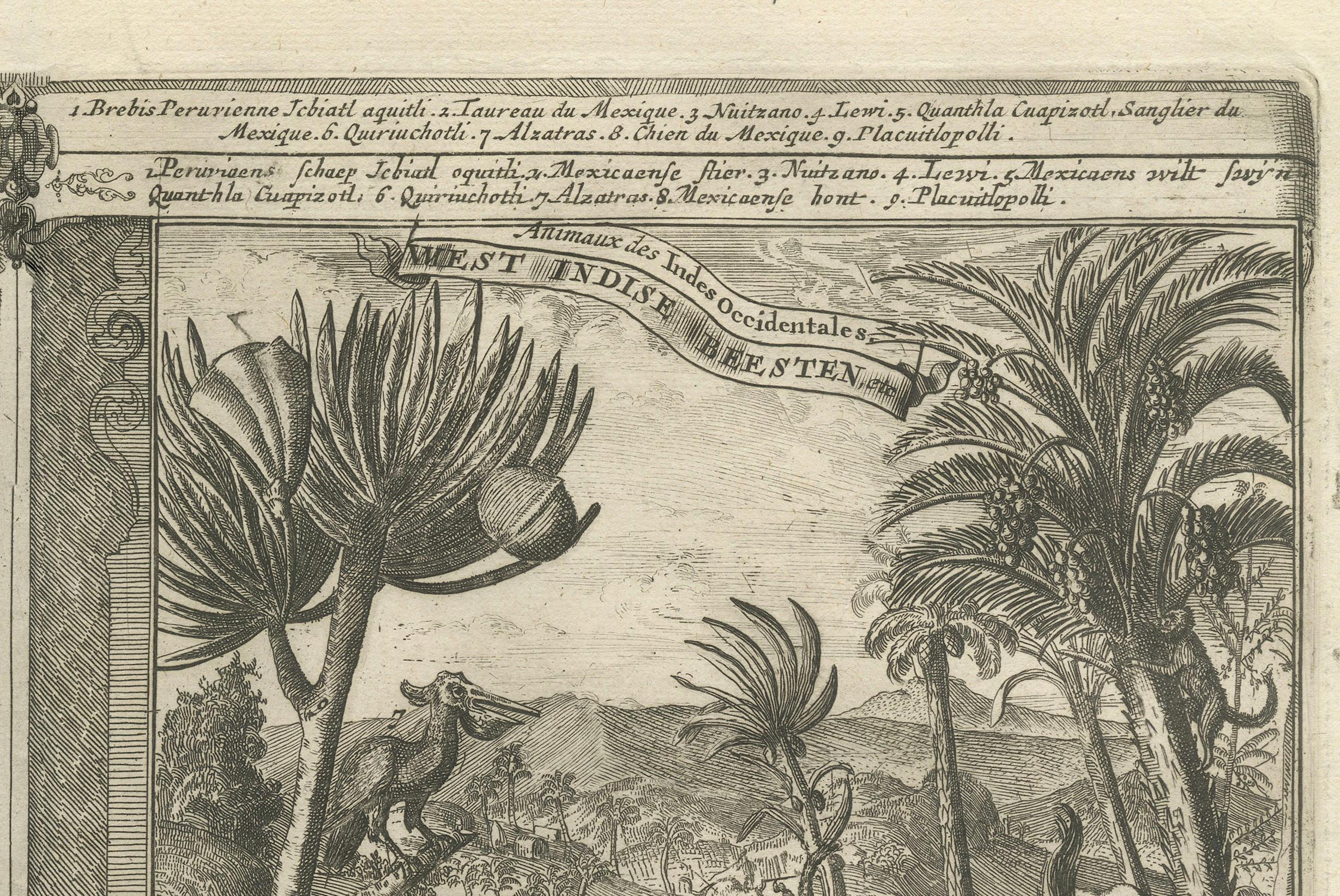
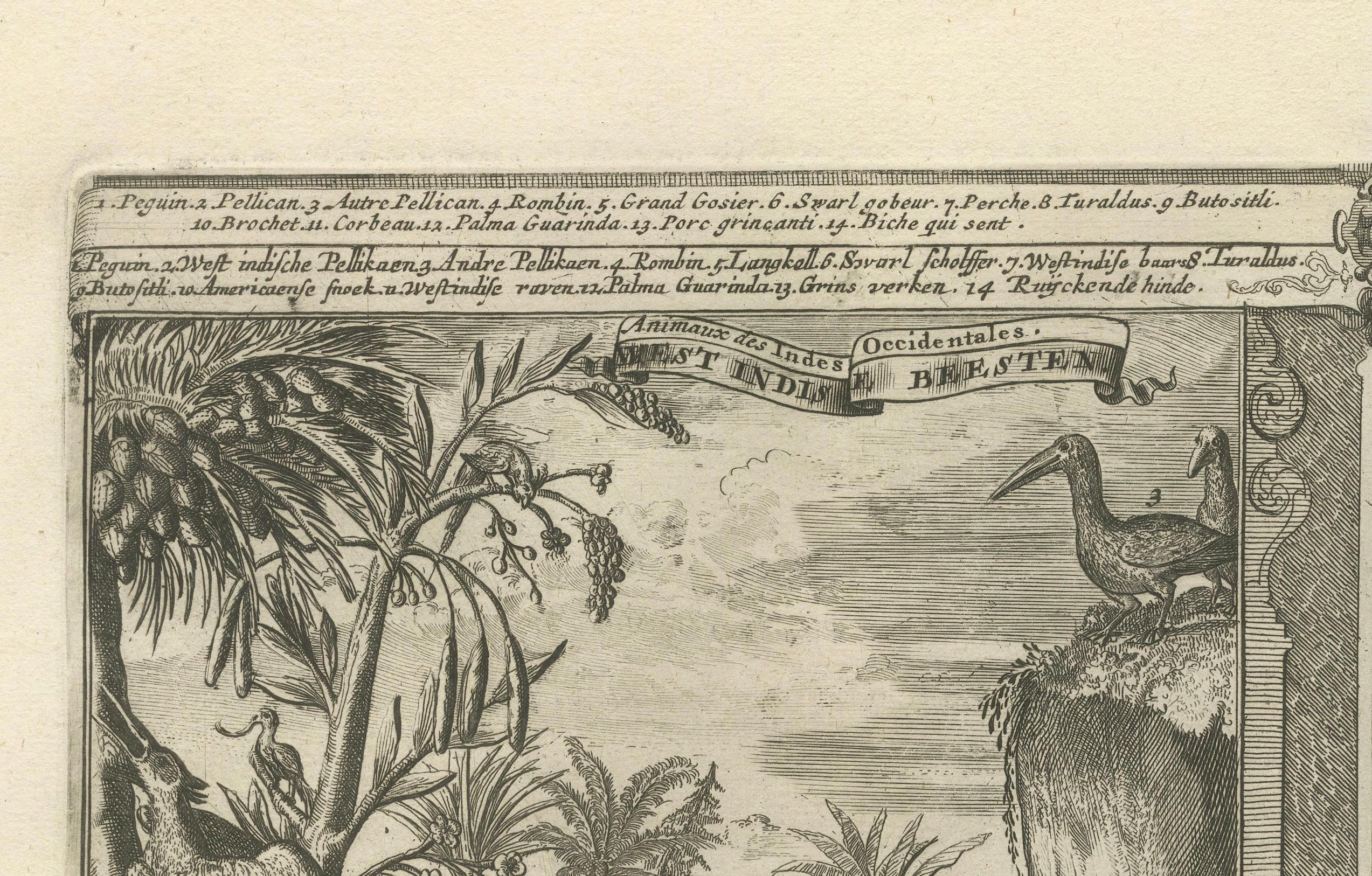
The text provided in the images, written in an early form of French, appears to list the names of various animals depicted in the engravings, along with their regional names or attributes. Here's a translation of the visible text from both images:
Image 1 (Top Section):
1. "Brevis Peruvienne" - Short Peruvian
2. "Tcibalt aquili" - Resembling an eagle
3. "Taureau de Mexique" - Bull of Mexico
4. "Nutrano, Lewi" - (Possibly a mislabeling or mythical creature)
5. "Quantia Cuaricotli" - Another name or descriptor not directly translatable without more context, possibly indigenous or local name
6. "Alcatras" - Albatross
7. "Chien de Mexique" - Dog of Mexico
8. "Placutilpolli" - Another name or descriptor, potentially an indigenous or local term
Image 2 (Bottom Section):
1. "Peguin" - Penguin
2. "Pellican" - Pelican
3. "Autre Pellican" - Another Pelican
4. "Rombin" - (Could be a type of bird, possibly mislabeled or an archaic name)
5. "Graad Gosier" - Great Gosier
6. "Swarl goebur" - (Unclear, likely a misspelling or a phonetic attempt at a name)
7. "Perche" - Perch
8. "Turadus" - Thrush
9. "Butosili" - (Untranslatable without further context, likely a local or indigenous name)
10. "Brochet" - Pike (type of fish)
11. "Corbeaux" - Ravens
12. "Palma Guarinda" - (Likely referring to a type of palm)
13. "Porc grignant" - Grinning Pig
14. "Biche qui sent" - Deer that smells
These translations are somewhat speculative due to the historical nature of the text and the possible use of archaic or local names not common in contemporary language. The text provides an interesting glimpse into the European naming conventions and the blending of indigenous names for animals encountered in the New World during the age of exploration.
Artistic and Historical Significance:
This engraving is a masterpiece of baroque art, showcasing de Hooghe's skill in detailed and dynamic compositions. The inclusion of both realistic and imaginary elements illustrates the era's mix of scientific curiosity and mythologizing of distant lands. The artwork serves as a cultural document, revealing how Europeans perceived the natural world of the West Indies, blending real observations with fantastical elements.
These prints were highly sought after in their time and remain valuable for their artistic merit and as historical records of colonial perspectives on nature and exploration. They appeal to collectors interested in natural history, art history, and the Age of Exploration, offering a window into the way the natural world was understood and imagined in early modern Europe.