Large Antique Print of Sequoyah, also known as George Gist, circa 1838
€ 1 900
Original antique · The actual sheet photographed · Certificate of authenticity on request · Sold unframed · Worldwide shipping from € 15 (rates)
Date
1838
Sheet size
54.2 × 38.7 cm (21.3 × 15.2 in)
Condition
Fair
Reference
BG-13467-4
What the condition grades mean
Excellent
Bright and clean, with no faults worth mentioning.
Very good
Only light signs of age, such as faint toning.
Good
Normal signs of age for a sheet of this period: toning, some foxing, small marks or neat old repairs.
Fair
Clear faults such as staining, tears or repairs, priced to match.
Every fault we see is written in the condition note, and the whole sheet is shown uncropped in the photos.
Condition
Repaired: Some closed tears in the margins. Age-related toning. Shows wear and soiling. Closed tears in margins. Blank verso. Please review the images for further condition details.
About this sheet
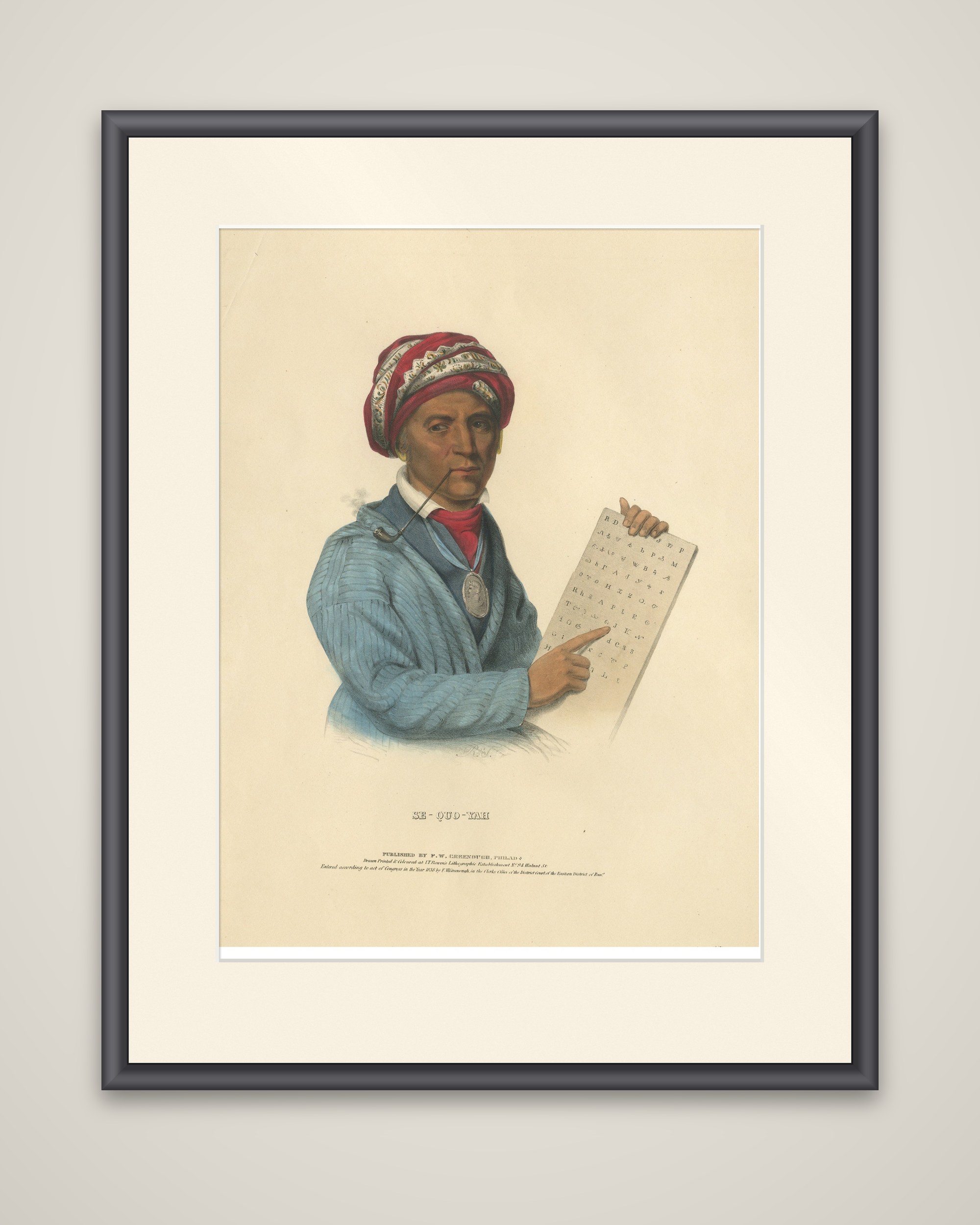
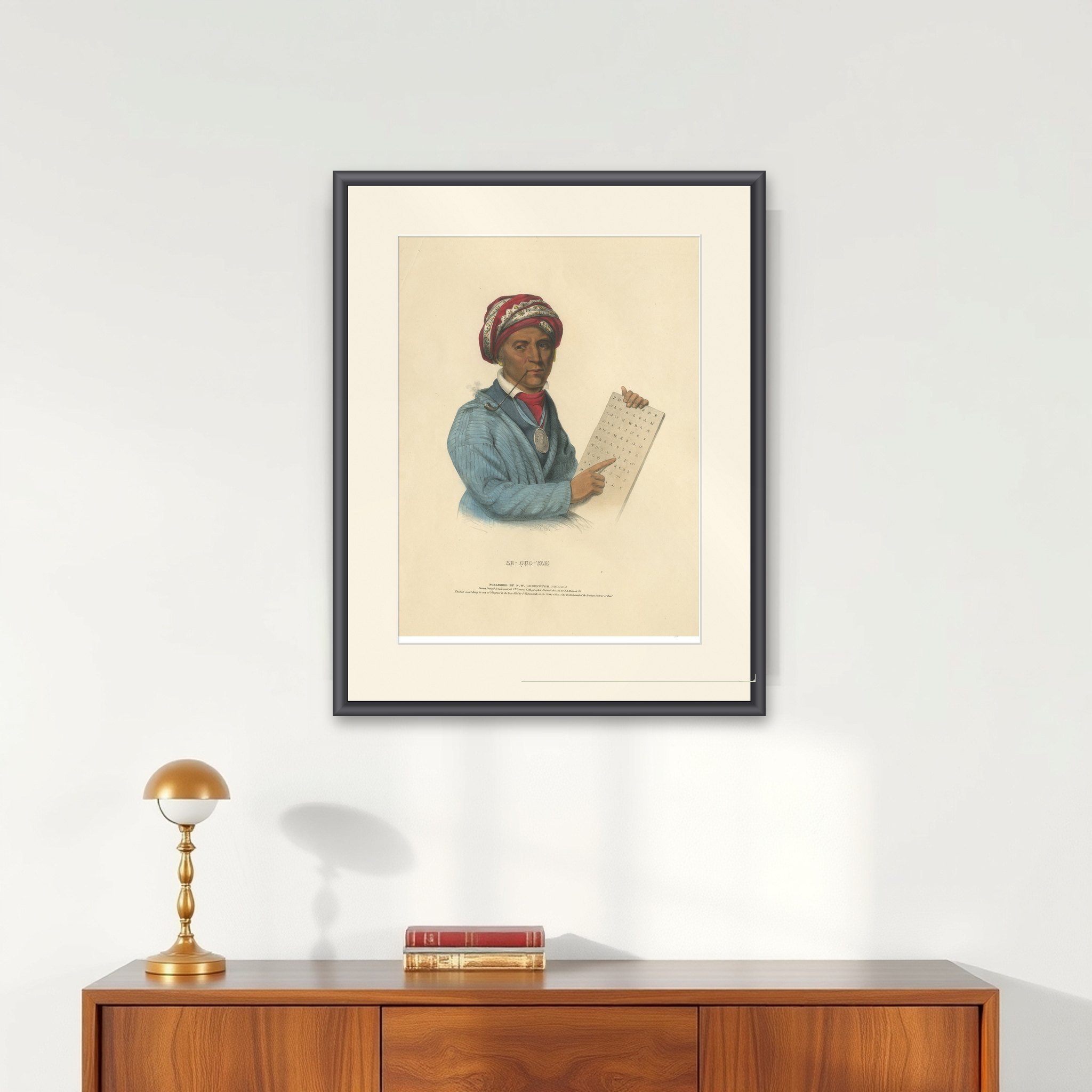
Se-quo-yah, the Cherokee inventor of the syllabary, a hand-colored lithograph from the History of the Indian Tribes of North America by Thomas L. McKenney and James Hall, published in Philadelphia by F.W. Greenough and drawn, printed and colored at J.T. Bowen's lithographic establishment, about 1838. The name is lettered "SE-QUO-YAH" beneath the image, with the publisher's imprint and copyright line below.
The portrait shows a man in a red-and-white patterned turban with a long pipe in his mouth, wearing a light blue jacket over a darker garment, a white collar with a red neckcloth and a silver medal on a ribbon. He holds up a tablet with the characters of the Cherokee syllabary in rows, and points to it with his other hand, so the portrait records his invention as well as his appearance.
Sequoyah, also known as George Gist or George Guess, devised a writing system for Cherokee in the early 1820s, and the Cherokee Nation adopted it widely within a few years.