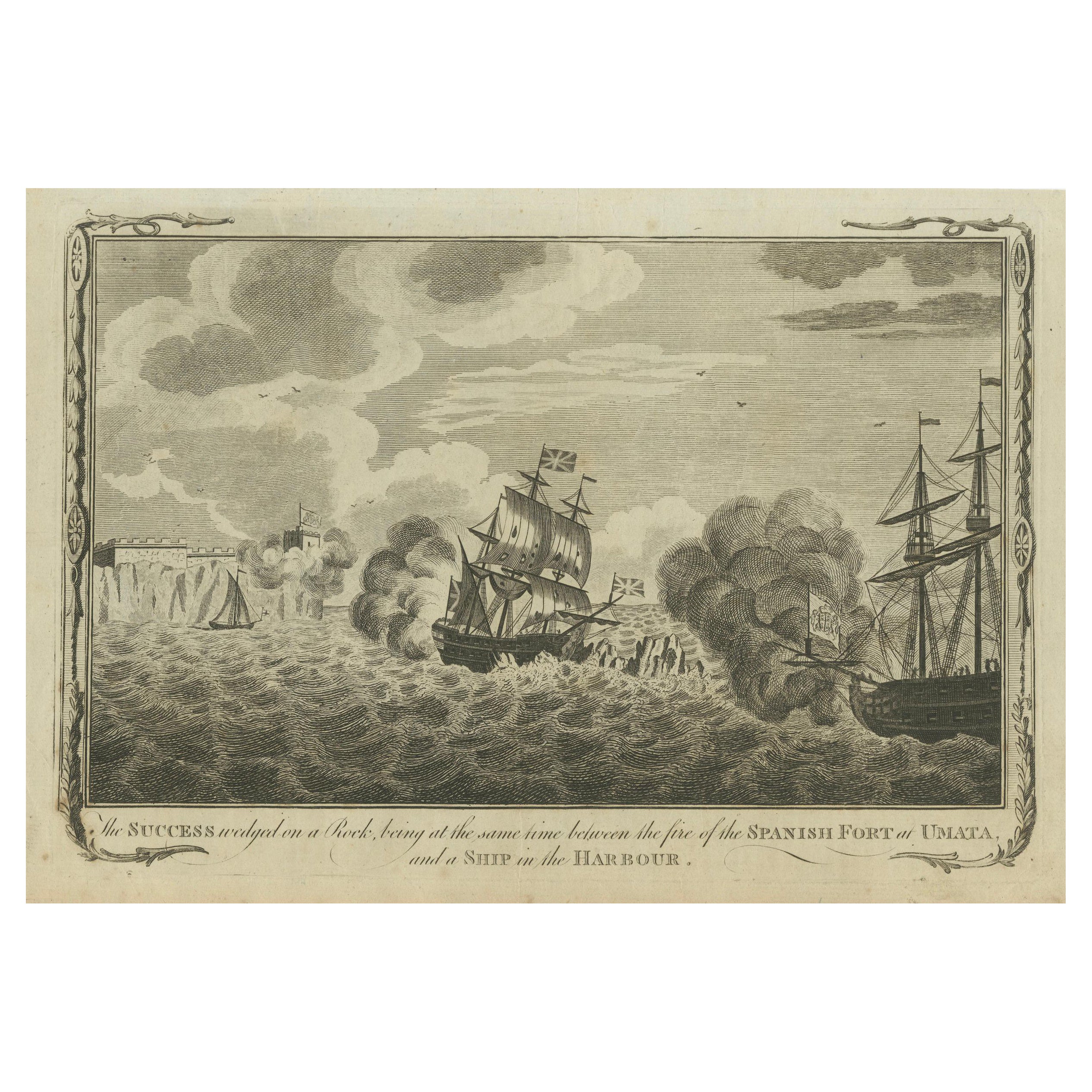
Naval Engagement at Unalata, Guam: The Peril of HMS Success, circa 1790
€ 220
Original antique · The actual sheet photographed · Certificate of authenticity on request · Sold unframed · Worldwide shipping from € 15 (rates)
Date
1790
Sheet size
22.5 × 37.5 cm (8.9 × 14.8 in)
Condition
Fair
Reference
BG-13597-70
What the condition grades mean
Excellent
Bright and clean, with no faults worth mentioning.
Very good
Only light signs of age, such as faint toning.
Good
Normal signs of age for a sheet of this period: toning, some foxing, small marks or neat old repairs.
Fair
Clear faults such as staining, tears or repairs, priced to match.
Every fault we see is written in the condition note, and the whole sheet is shown uncropped in the photos.
Condition
Overal light toning and soiling but the image itself mostly clean. A few creases. Aged paper with typically warm, yellowish-brown hue, mostly around the edges. One Study the images carefully.
About this sheet
This is an 18th-century engraving depicting a nautical scene with dramatic action. The image shows two sailing ships in a state of distress near a rocky coastline, with the central ship striking a rock and billowing smoke—presumably from cannon fire—as it engages in what appears to be a naval battle. The scene is set against the backdrop of a Spanish fort, indicated by a flag, situated atop a cliff edge at Unalata.
The engraving depicts the British ship 'Success' stranded on a rock and under fire from both a Spanish fort at Umatac, Guam, and another ship in the harbor. This unfortunate situation occurred during the voyage of Captain John Clipperton, who, after separating from his privateering companion Captain Shelvocke, turned to piracy. The 'Success' sought to resupply at Guam in 1721 but ended up in a dire predicament, leading to a series of misadventures including Clipperton's eventual death shortly after his return to England.
The engraving is highly detailed, capturing the rough sea, the smoke from the cannons, and the dynamic clouds in the sky. The ships are flying the British flag, which suggests that the scene is likely from a British perspective, potentially during one of the conflicts with Spain.