Moskito Men Reunion, Juan Fernandez Island – Dampier Voyage Engraving, ca.1789
€ 379
Original antique · The actual sheet photographed · Certificate of authenticity on request · Sold unframed · Worldwide shipping from € 15 (rates)
Date
1789
Mapmaker / artist
Gravelot (designer) and Pollard (engraver), England, late 18th century
Technique
Copperplate engraving
Sheet size
22.2 × 35.7 cm (8.7 × 14.1 in)
Condition
Good
Reference
BG-13599-106
What the condition grades mean
Excellent
Bright and clean, with no faults worth mentioning.
Very good
Only light signs of age, such as faint toning.
Good
Normal signs of age for a sheet of this period: toning, some foxing, small marks or neat old repairs.
Fair
Clear faults such as staining, tears or repairs, priced to match.
Every fault we see is written in the condition note, and the whole sheet is shown uncropped in the photos.
Condition
Good condition for age with general age-related toning and minor spotting, mainly visible in the margins. The engraved image remains clear and well defined. Blank verso.
About this sheet
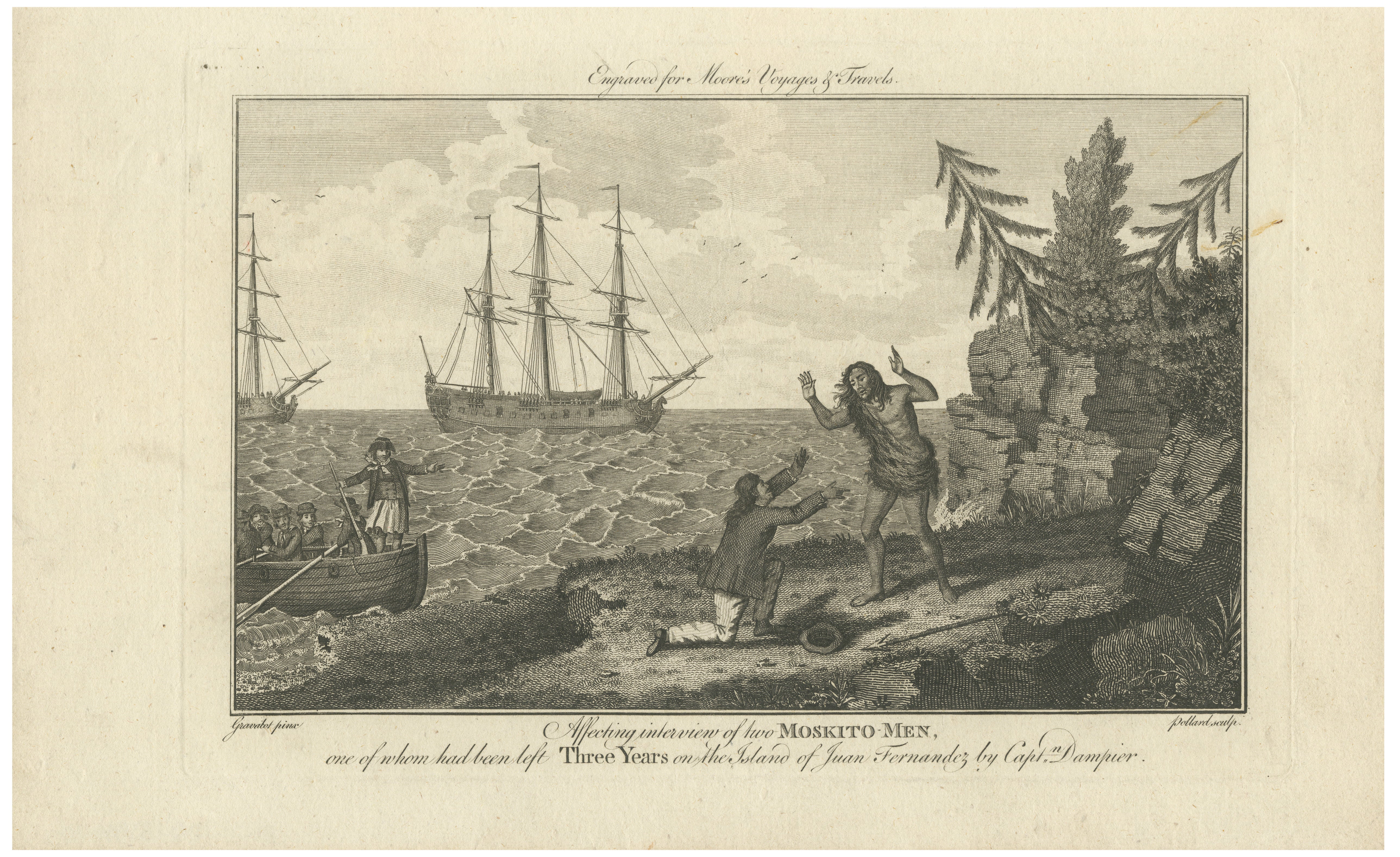
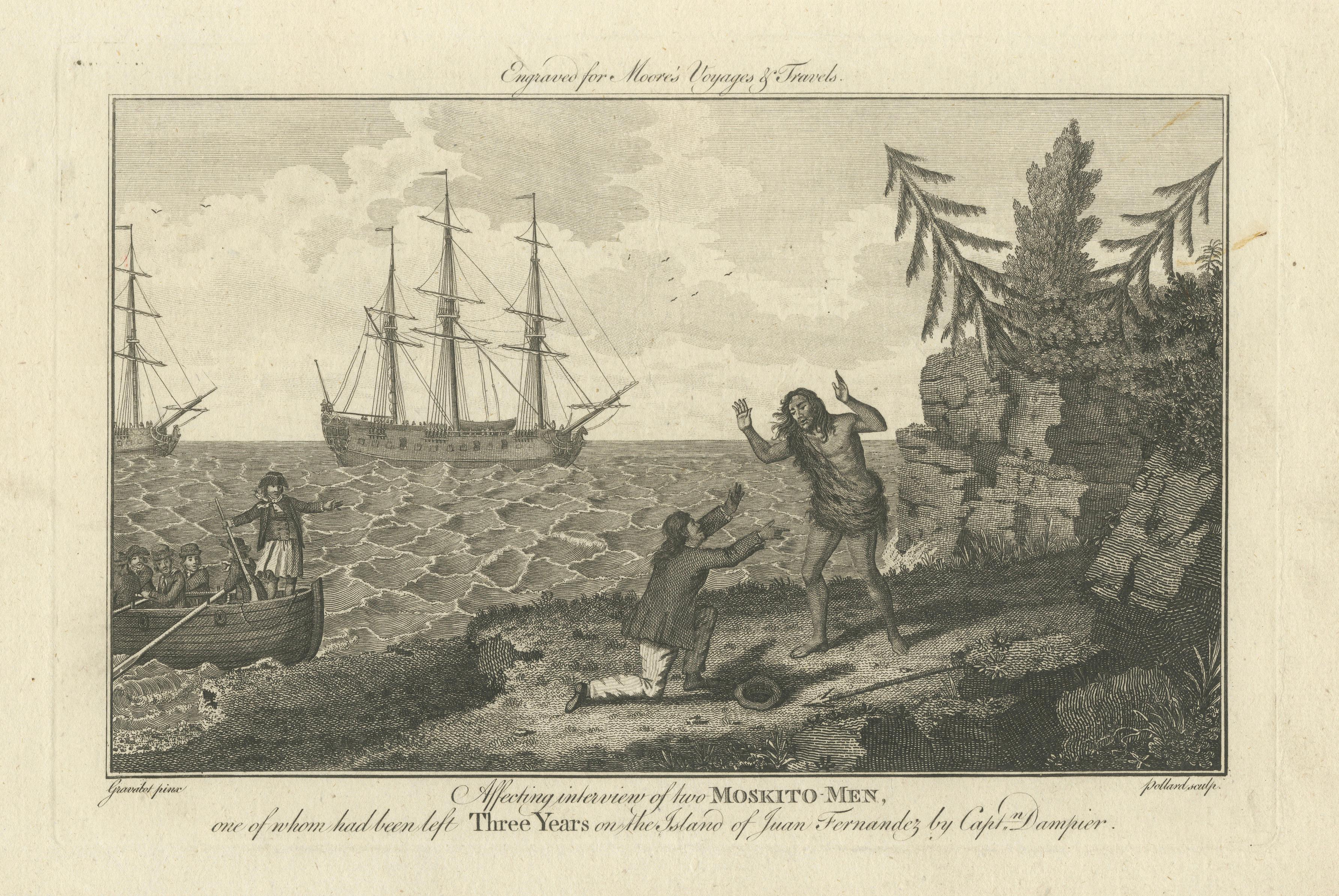
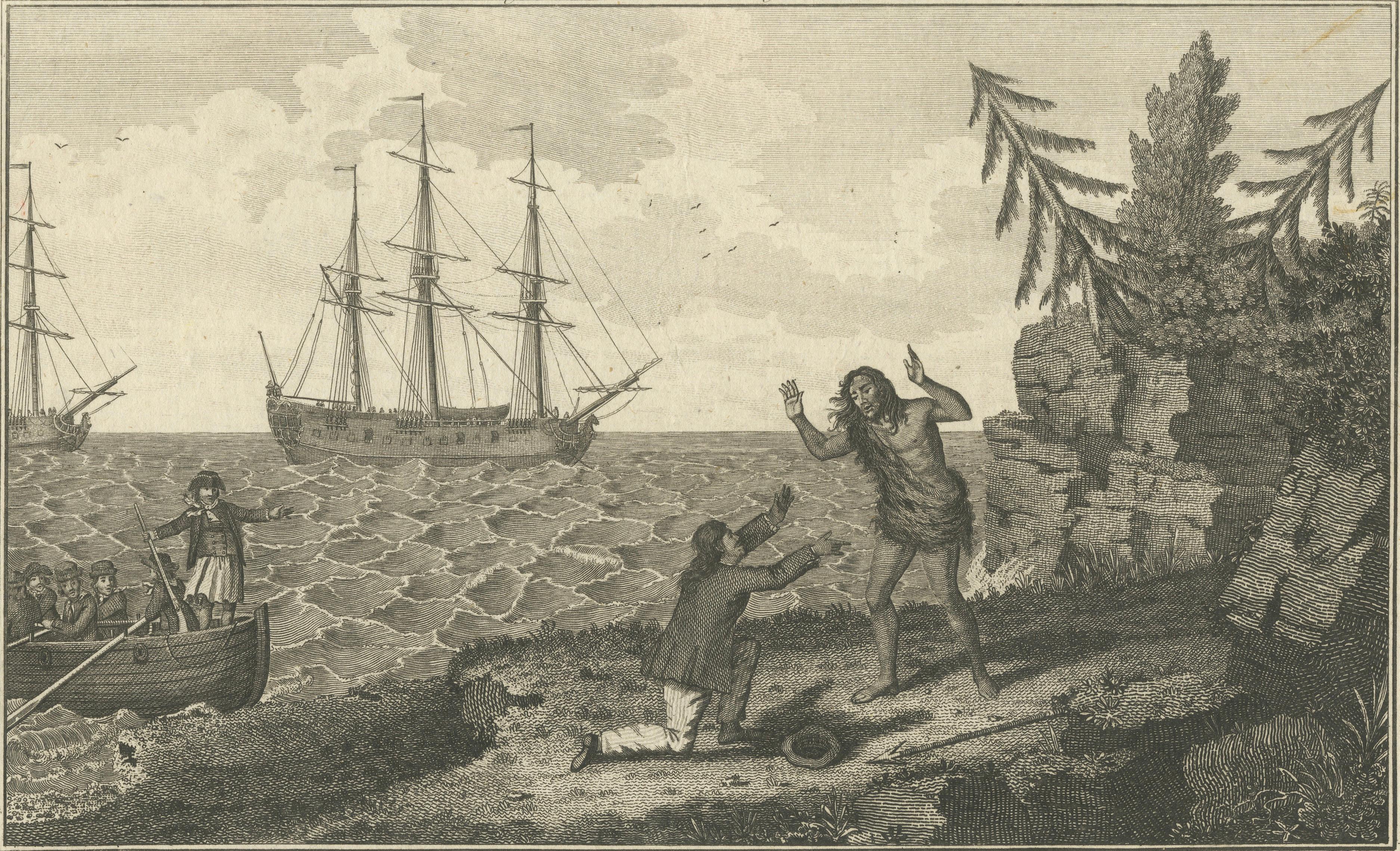
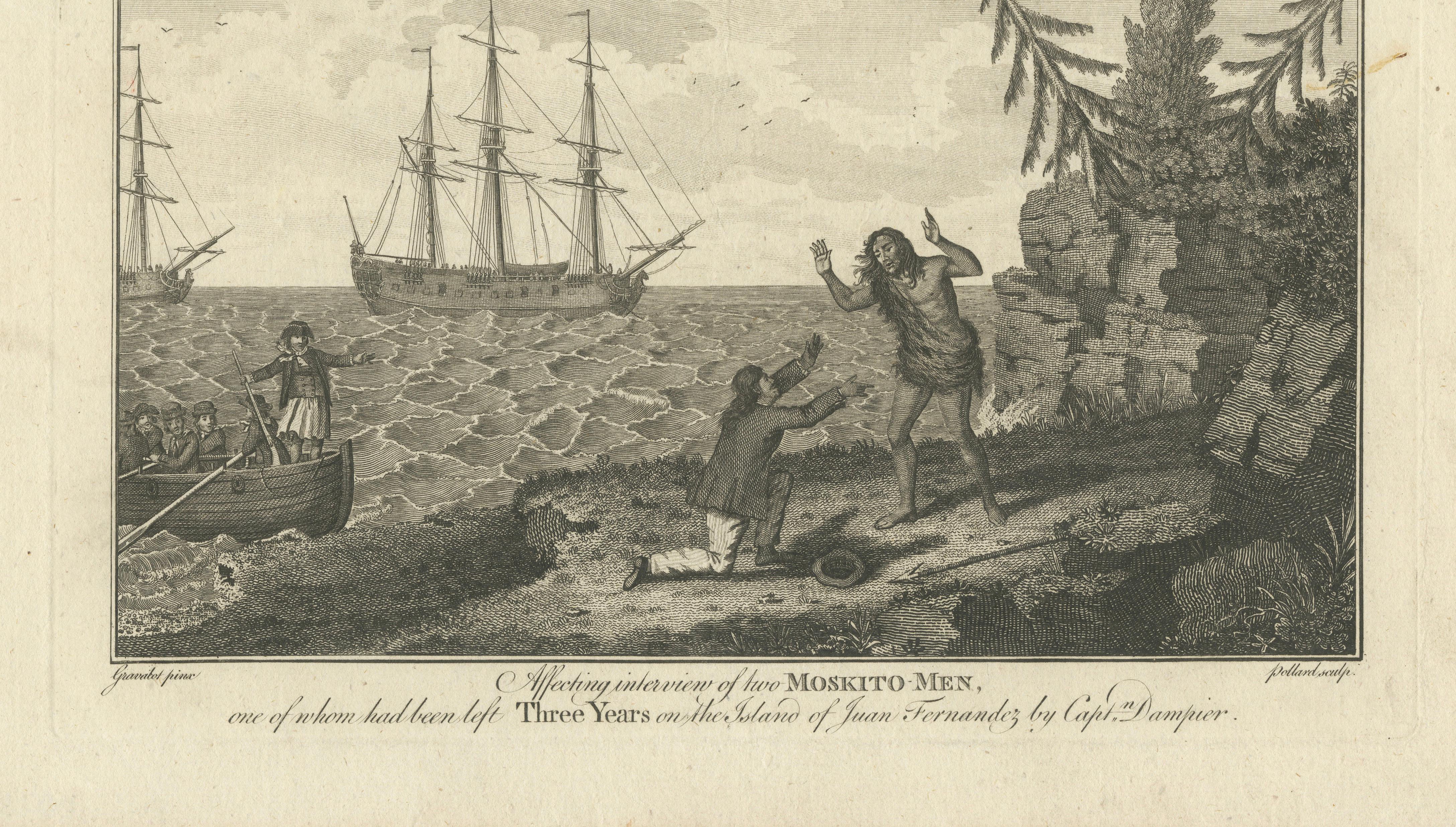
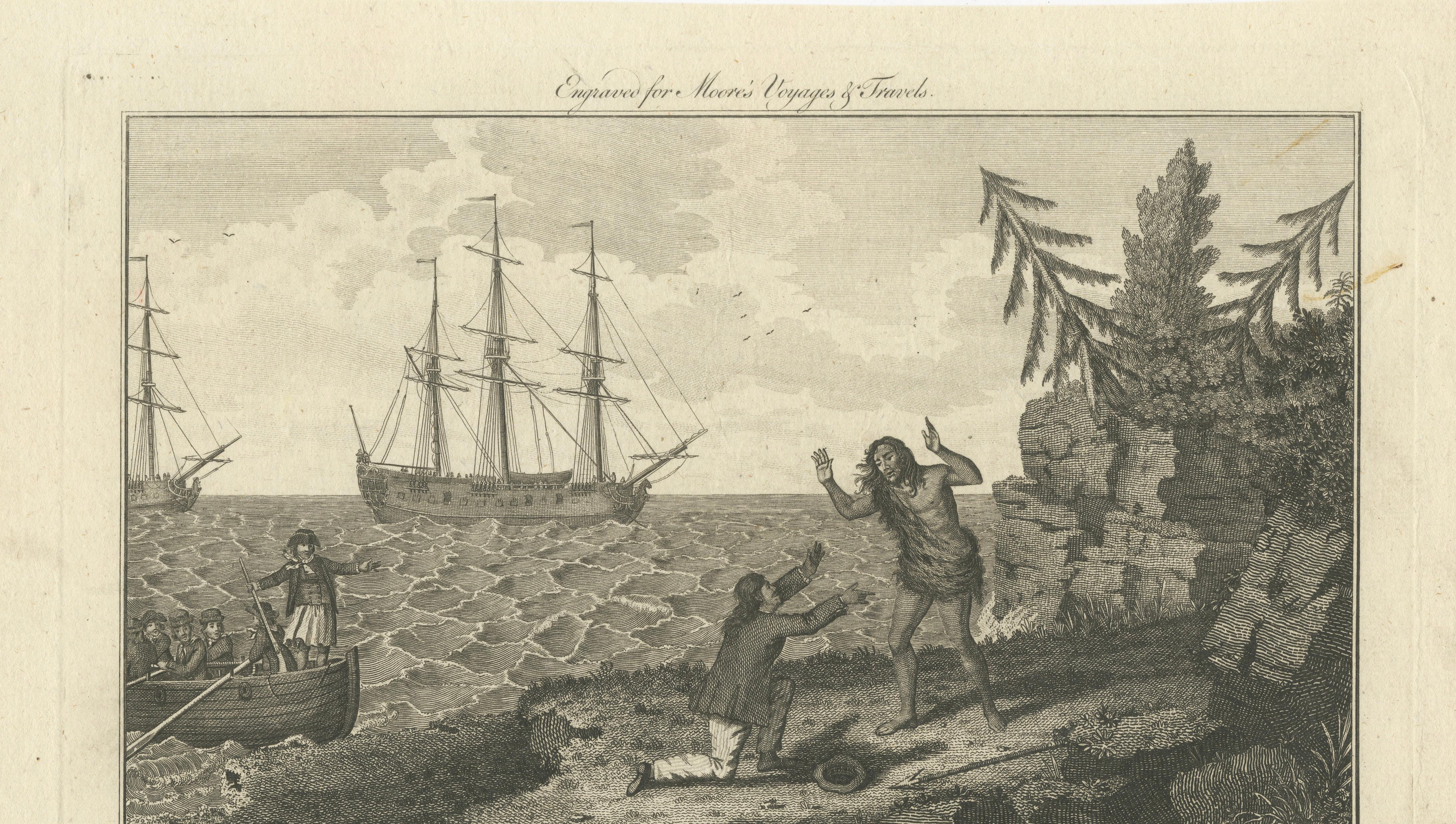
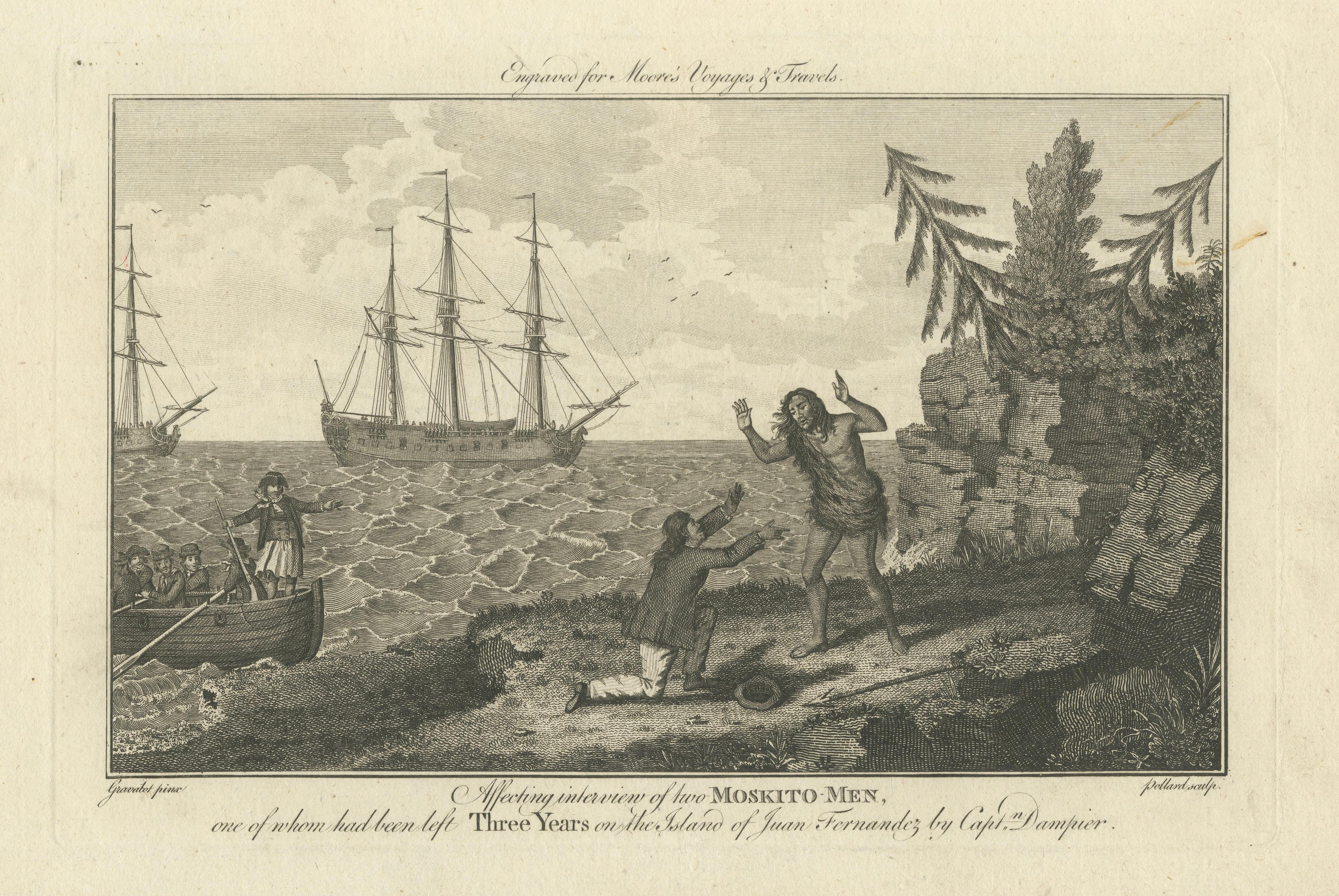
Moskito Men Reunion, Juan Fernandez Island – Dampier Voyage Engraving This expressive 18th-century copperplate engraving illustrates a dramatic and moving moment from the voyages of the English explorer and privateer Captain William Dampier. The scene depicts the emotional reunion between two Miskito men on the remote island of Juan Fernández in the South Pacific, following the rescue of a marooned sailor who had survived there alone for more than three years.
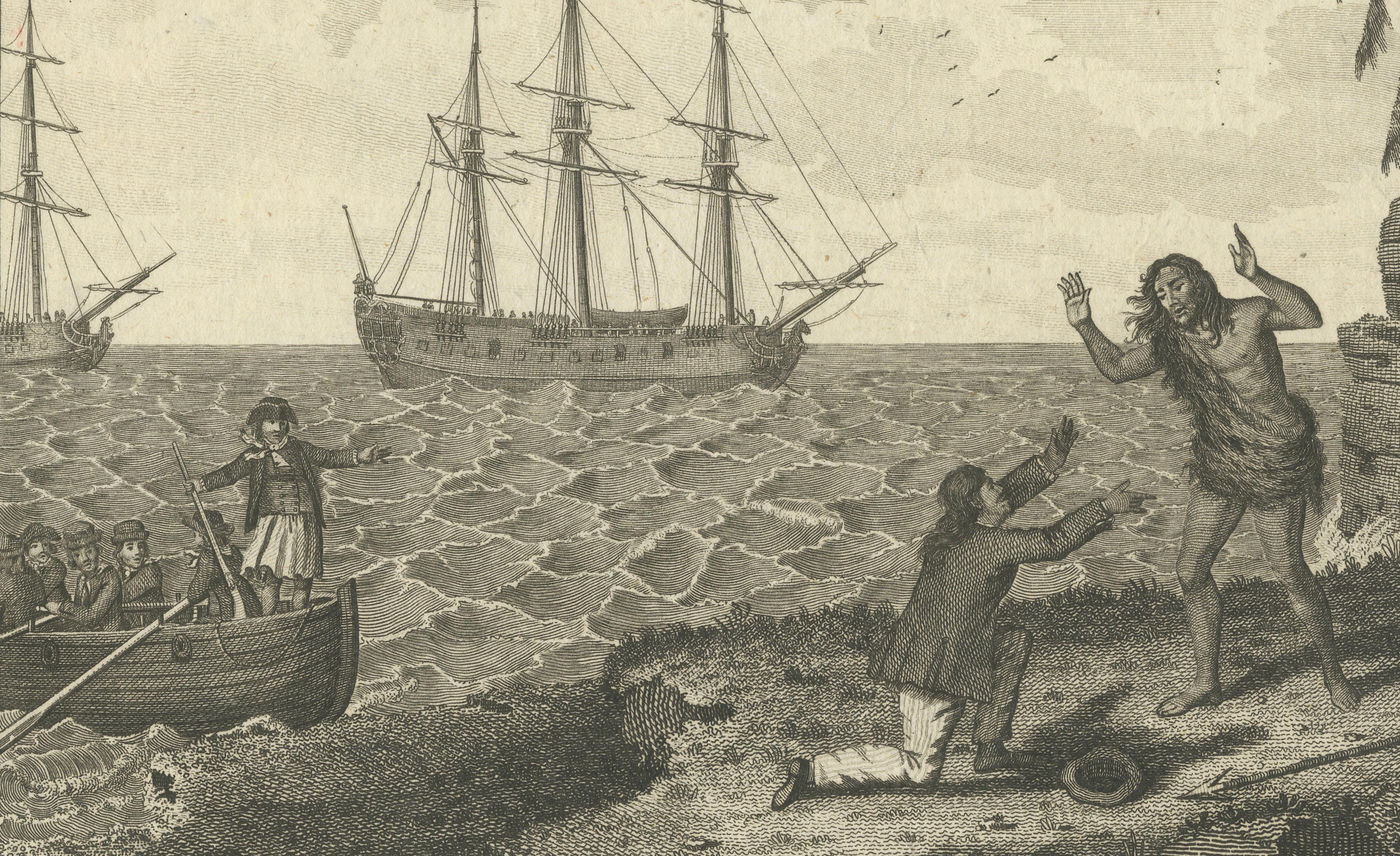
The engraving shows Dampier’s ship anchored offshore while a small boat approaches the rocky coast. In the foreground, one of the stranded men falls to his knees as he greets another Miskito companion who had arrived with Dampier’s crew. Their gestures convey astonishment and relief, capturing the powerful emotional moment of reunion after years of isolation. The rugged coastal landscape and towering rock formations reinforce the remote and inhospitable character of the island where the man had been left behind.
The subject refers to an episode from Dampier’s voyages in the late 17th century. In 1684, Dampier encountered a Miskito man named William who had been marooned on Juan Fernández Island after being accidentally left there by a previous expedition. For more than three years William survived alone on the island, hunting goats and living in complete isolation before Dampier’s ship arrived and rescued him. The event became well known among readers of travel literature and was frequently retold in early narratives of exploration and survival.
This remarkable story predates by roughly twenty-five years the far more famous marooning and rescue of Alexander Selkirk on the same island. Selkirk’s ordeal later inspired Daniel Defoe’s novel Robinson Crusoe, but Dampier’s earlier account already fascinated European audiences with its tale of endurance and survival in one of the most remote locations of the Pacific Ocean.
The engraving bears the caption “Affecting interview of two Moskito Men, one of whom had been left three years on the Island of Juan Fernandez, by Capt. Dampier.” It was produced for Moore’s Voyages and Travels, one of the popular 18th-century compilations that gathered together narratives of global exploration. The composition was designed by Gravelot and engraved by Pollard, both well-known artists who contributed to illustrated travel books of the period.
Today the print remains a fascinating visual document connected to early Pacific exploration, maritime survival stories, and the literature of discovery that captivated European audiences during the Age of Exploration.
Framing tips: This print frames beautifully in a dark walnut or black frame with a wide ivory mat, allowing the detailed maritime scene and generous margins to stand out elegantly.