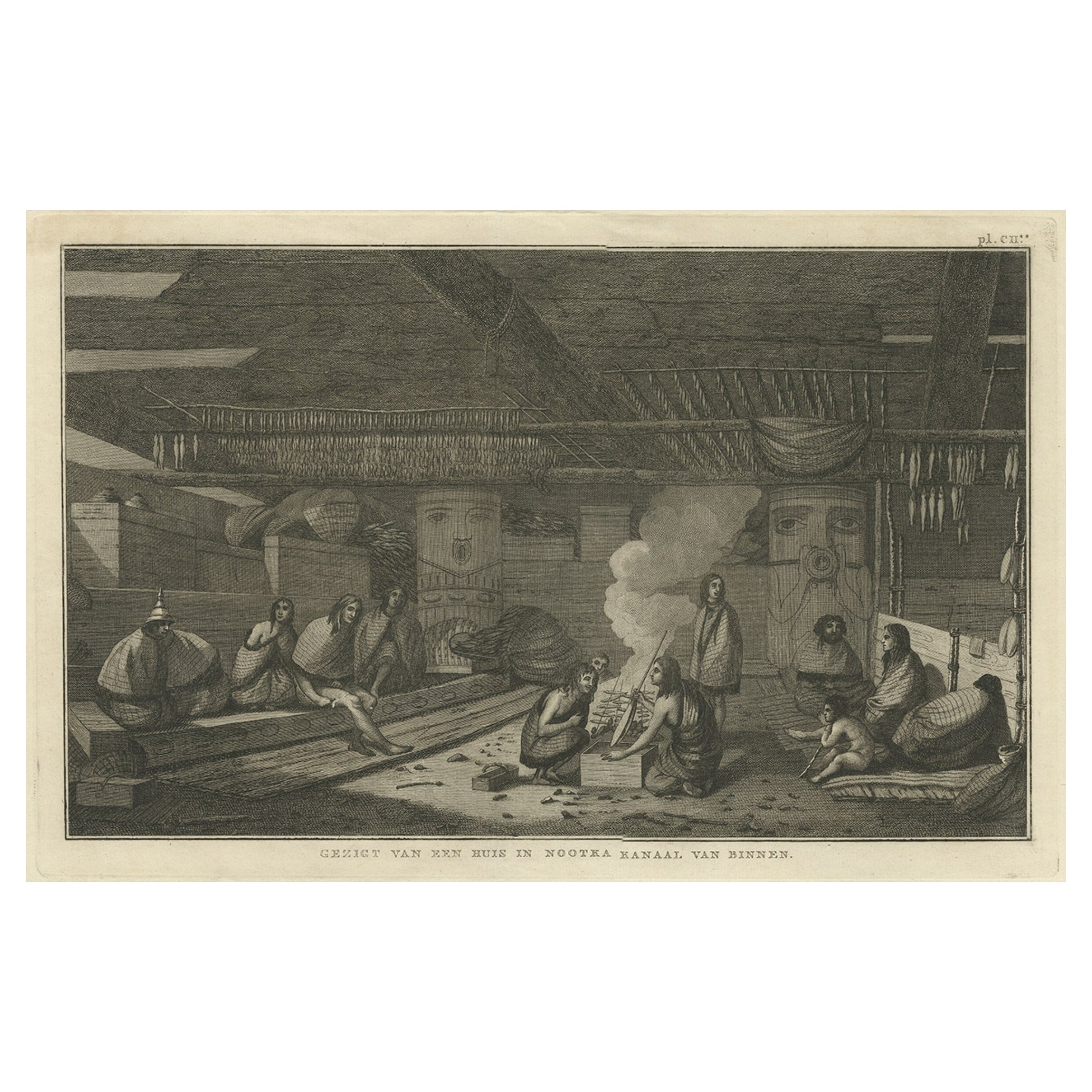
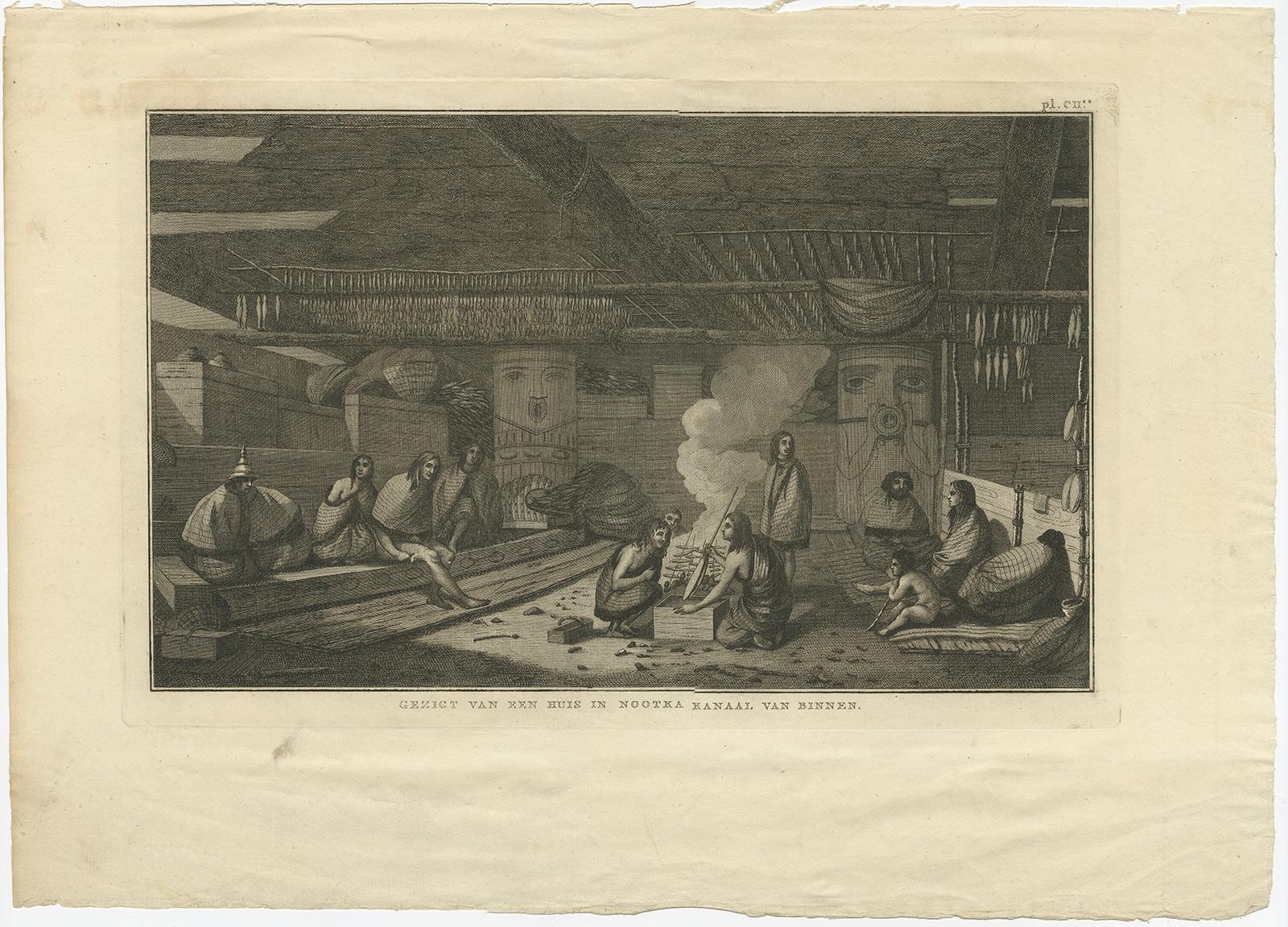
Interior of a Nootka House, Vancouver Island – Cook Voyage Engraving c.1795
€ 378
Original antique · The actual sheet photographed · Certificate of authenticity on request · Sold unframed · Worldwide shipping from € 15 (rates)
Date
1795
Sheet size
34 × 47.5 cm (13.4 × 18.7 in)
Condition
Good
Reference
BG-11487-69
Condition
Condition summary: Very good condition with strong impressions and clean paper. Minor age-toning and slight foxing near the margins but no tears or repairs. Paper remains firm and crisp.
About this sheet
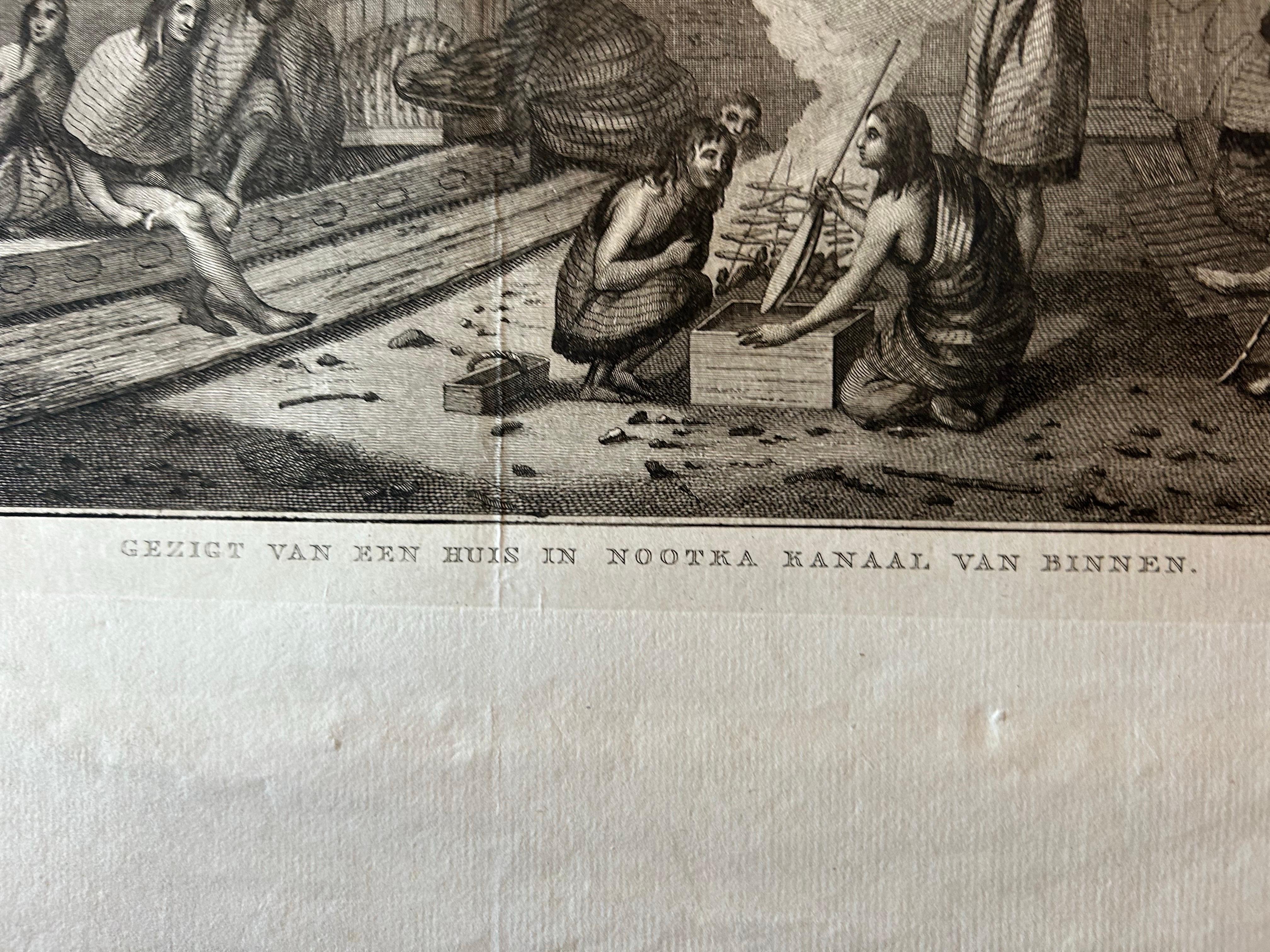
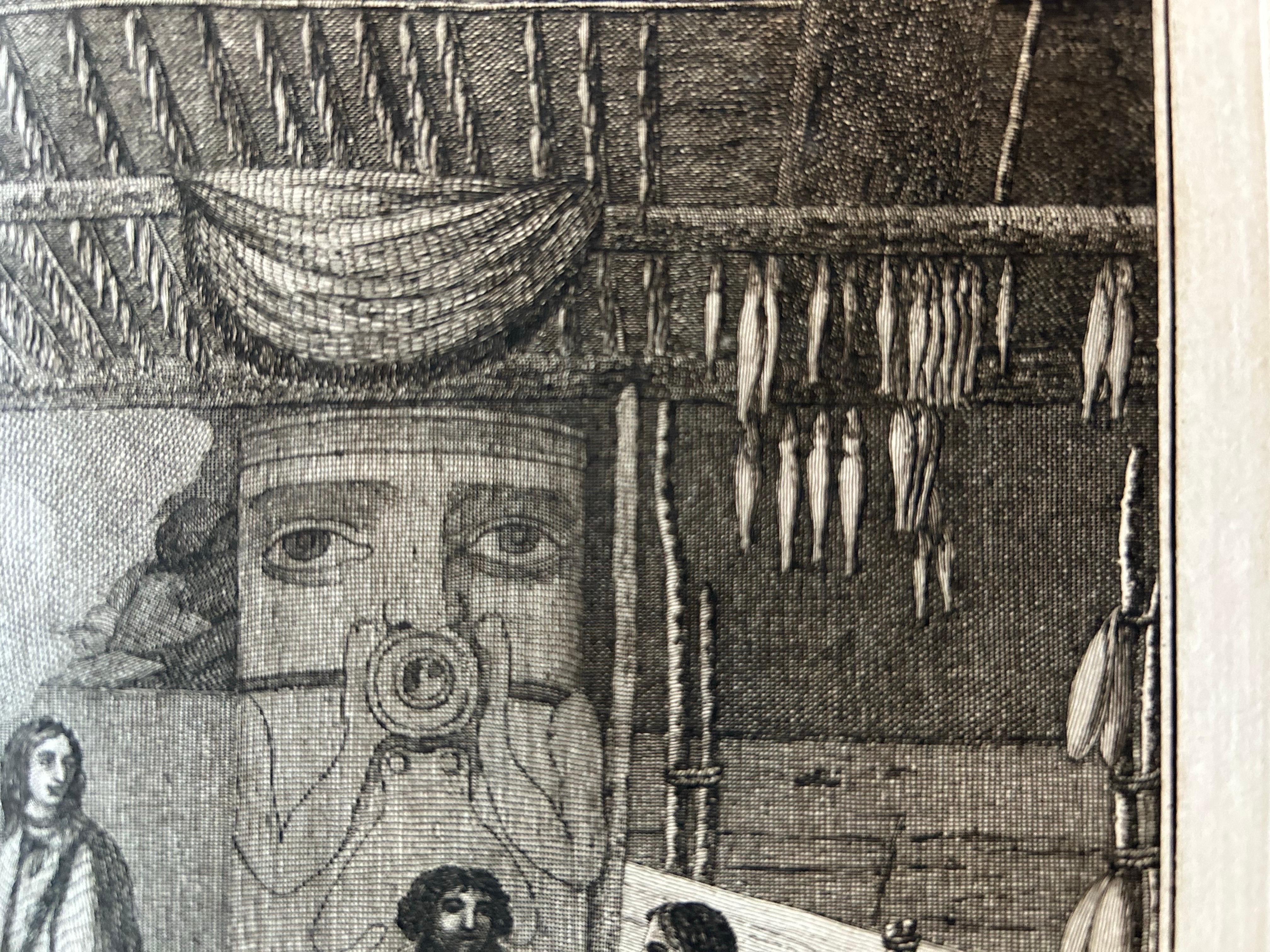
Gezicht van een Huis in Nootka Kanaal van binnen – Interior of a Nootka House c.1795
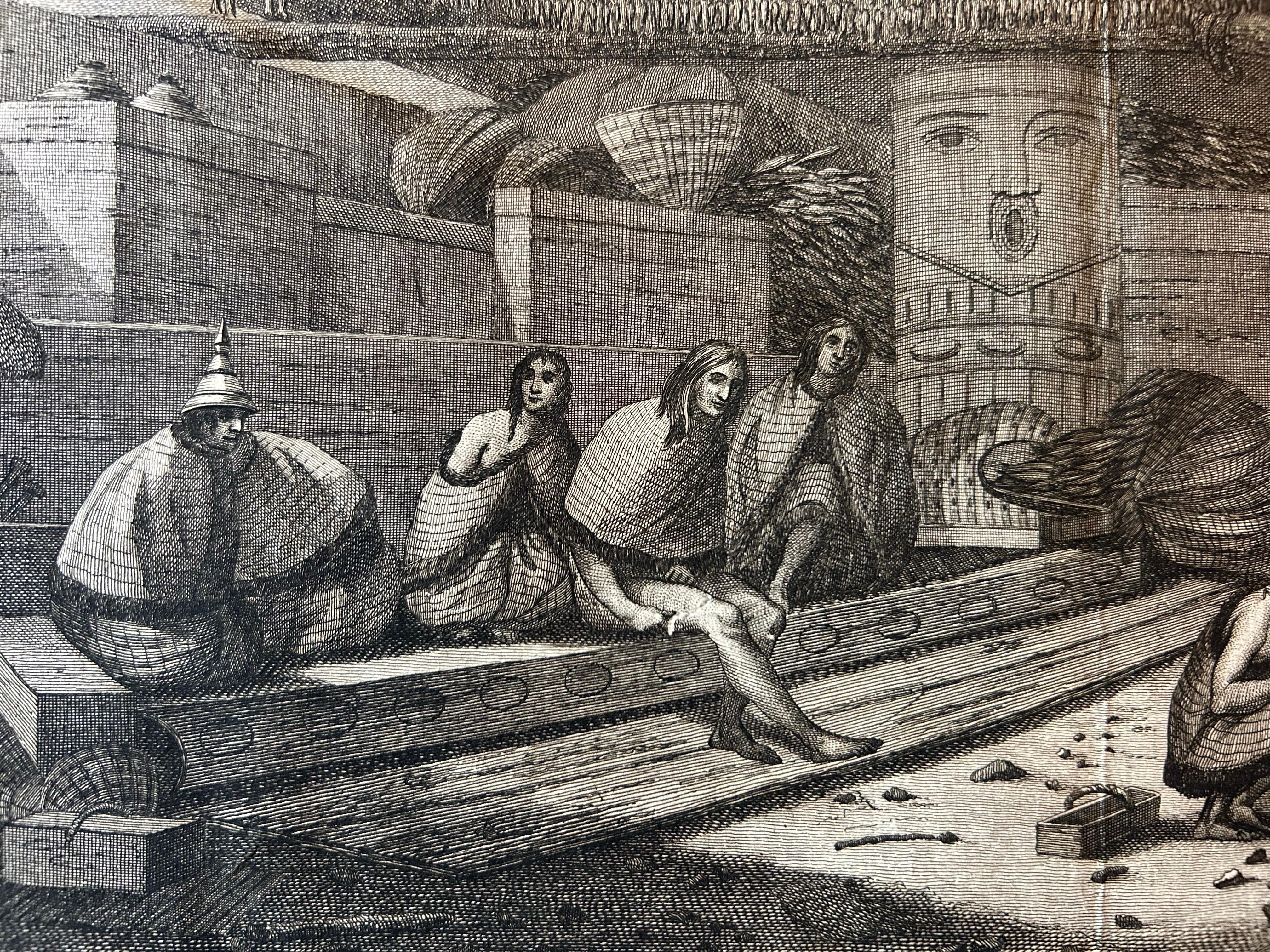
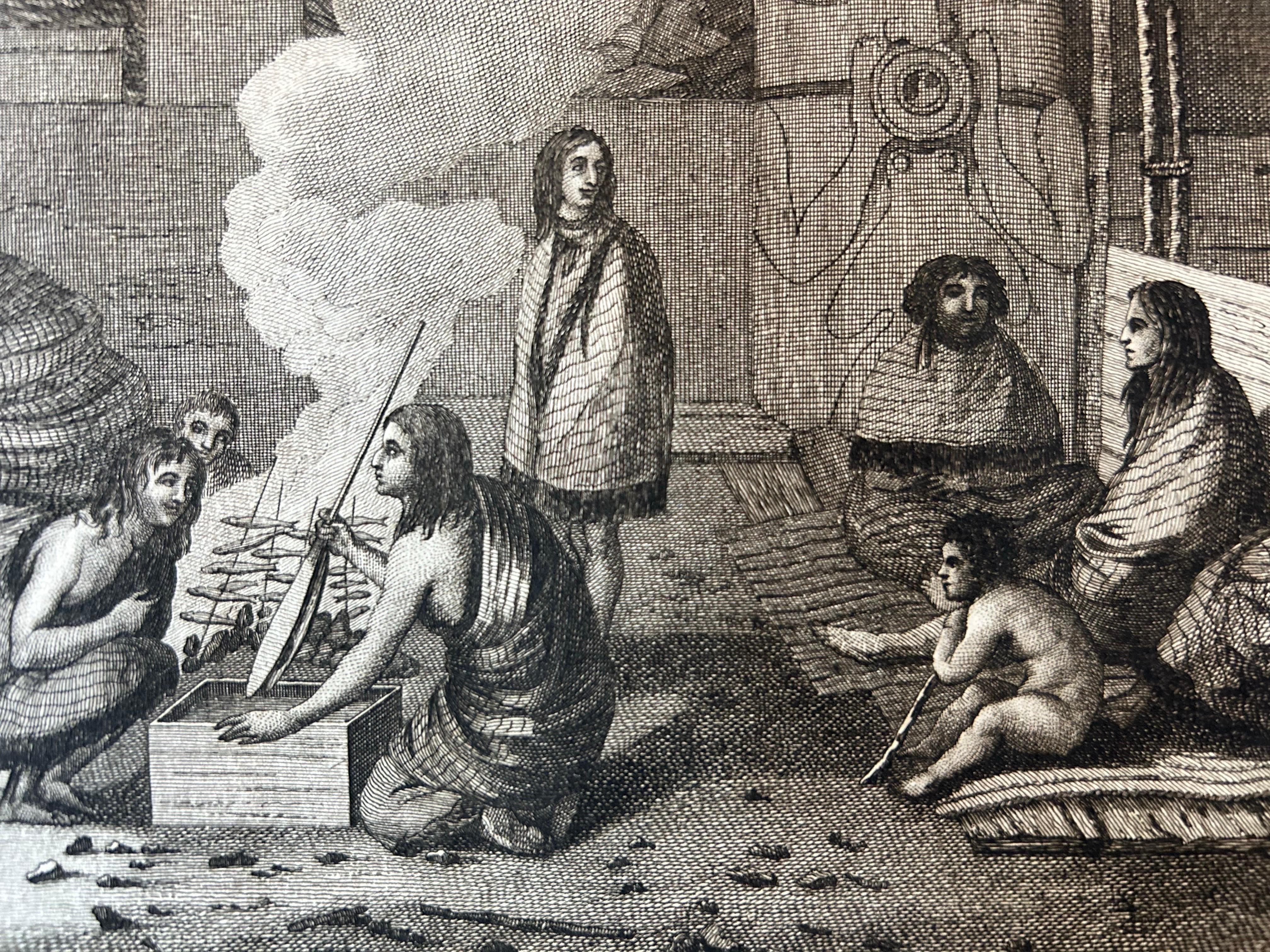
This antique print depicts the interior of a traditional house in Nootka Sound, located on the west coast of Vancouver Island, Canada. The engraving shows a spacious communal dwelling with thick wooden beams and planks, decorated with carved panels featuring stylised faces and figures. Inside, groups of Nuu-chah-nulth people are gathered around a central fire, engaged in various activities such as cooking, conversing, and resting. Several figures are seated or reclining on raised platforms along the walls, wrapped in blankets or robes, while others tend to food preparation or smoking near the hearth. At the far right, a mother cares for a child near baskets and tools, offering a glimpse into family life within the longhouse.
This engraving originates from ‘Reizen Rondom de Wereld door James Cook,’ the Dutch translation of James Cook’s voyages published circa 1795 by Honkoop, Allart en Van Cleef. The translation was prepared by J.D. Pasteur. Cook visited Nootka Sound during his third voyage in 1778, documenting the impressive architecture and social organisation of the Nuu-chah-nulth people, who were skilled woodworkers and traders along the Pacific Northwest Coast. Such engravings provided European audiences with rare visual insights into indigenous North American cultures at the end of the 18th century.
The technique used is engraving, where the image was meticulously incised onto a metal plate, inked, and pressed onto paper to produce fine detail and tonal depth. These prints remain valued for their accuracy and as early ethnographic records predating photography.
Condition summary: Very good condition with strong impressions and clean paper. Minor age-toning and slight foxing near the margins but no tears or repairs. Paper remains firm and crisp.
Framing tips: This print will suit a warm cream or light taupe mount to highlight its sepia tones. Choose a dark oak, walnut, or black frame with a slim gold or silver inner edge for a museum-quality presentation. UV-protective glass is recommended to preserve the engraving’s detail over time.