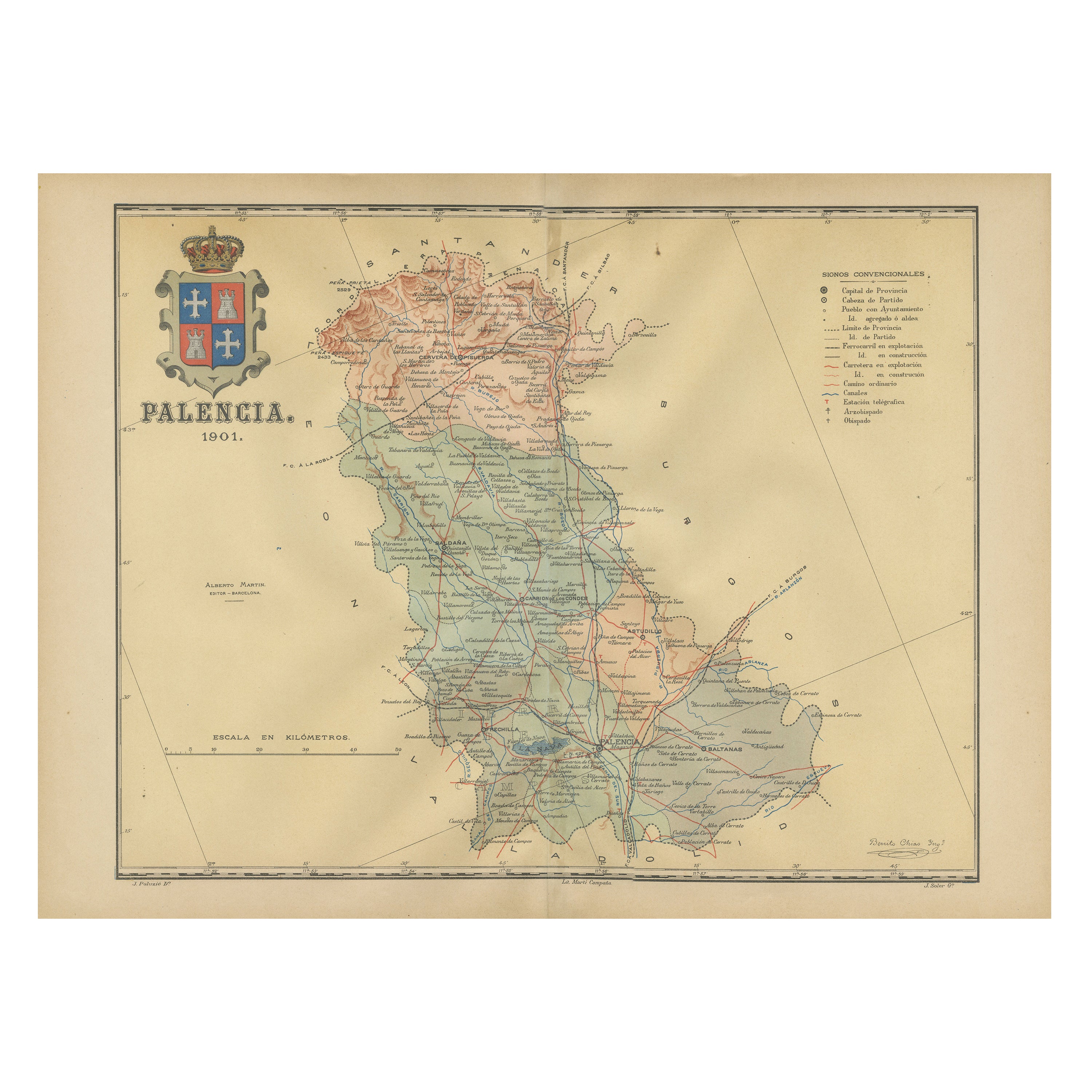
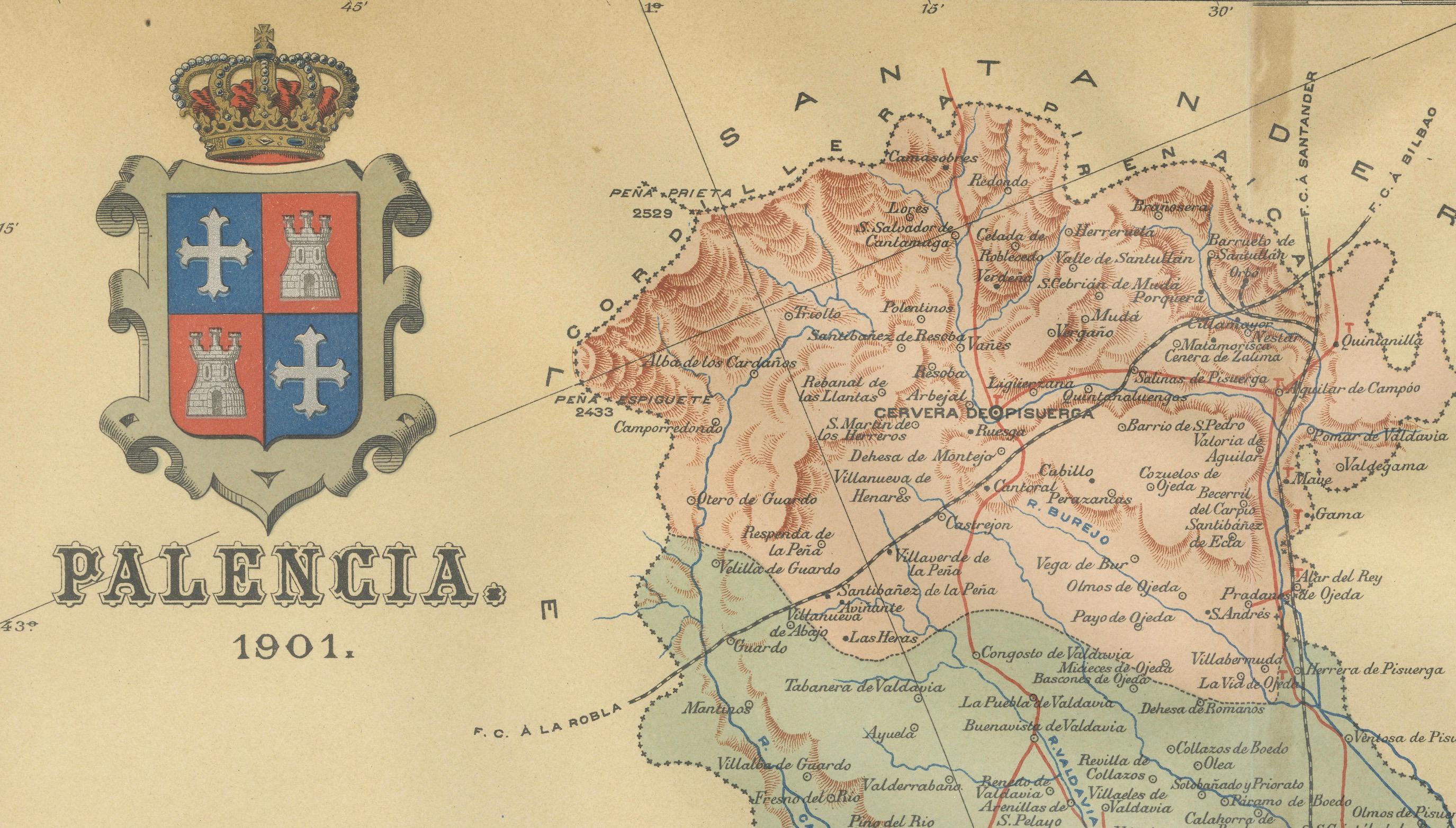
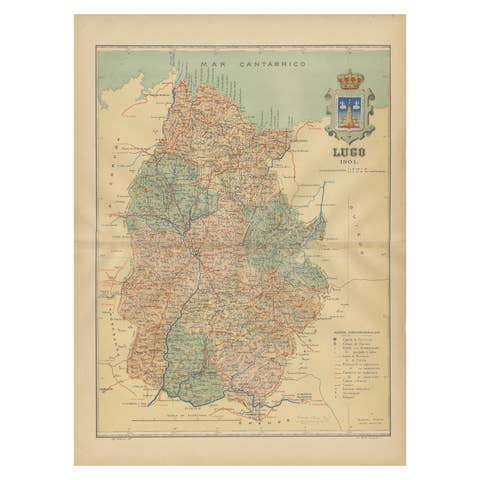
Original Antique Map of Palencia Province, in Northern Spain, 1901
€ 290
One of a kind: this is the sheet in the photographs. Ships from Langweer, the Netherlands.
Date
1901
Sheet size
37.5 × 51 cm (14.8 × 20.1 in)
Condition
Good
Reference
BG-13642-33
Condition
Good condition. Central vertical folding lines as issued. Aged paper with typically warm, yellowish-brown hue, especially around the edges. A light brown discoloring along the top of the fold. Check the images carefully.
About this sheet
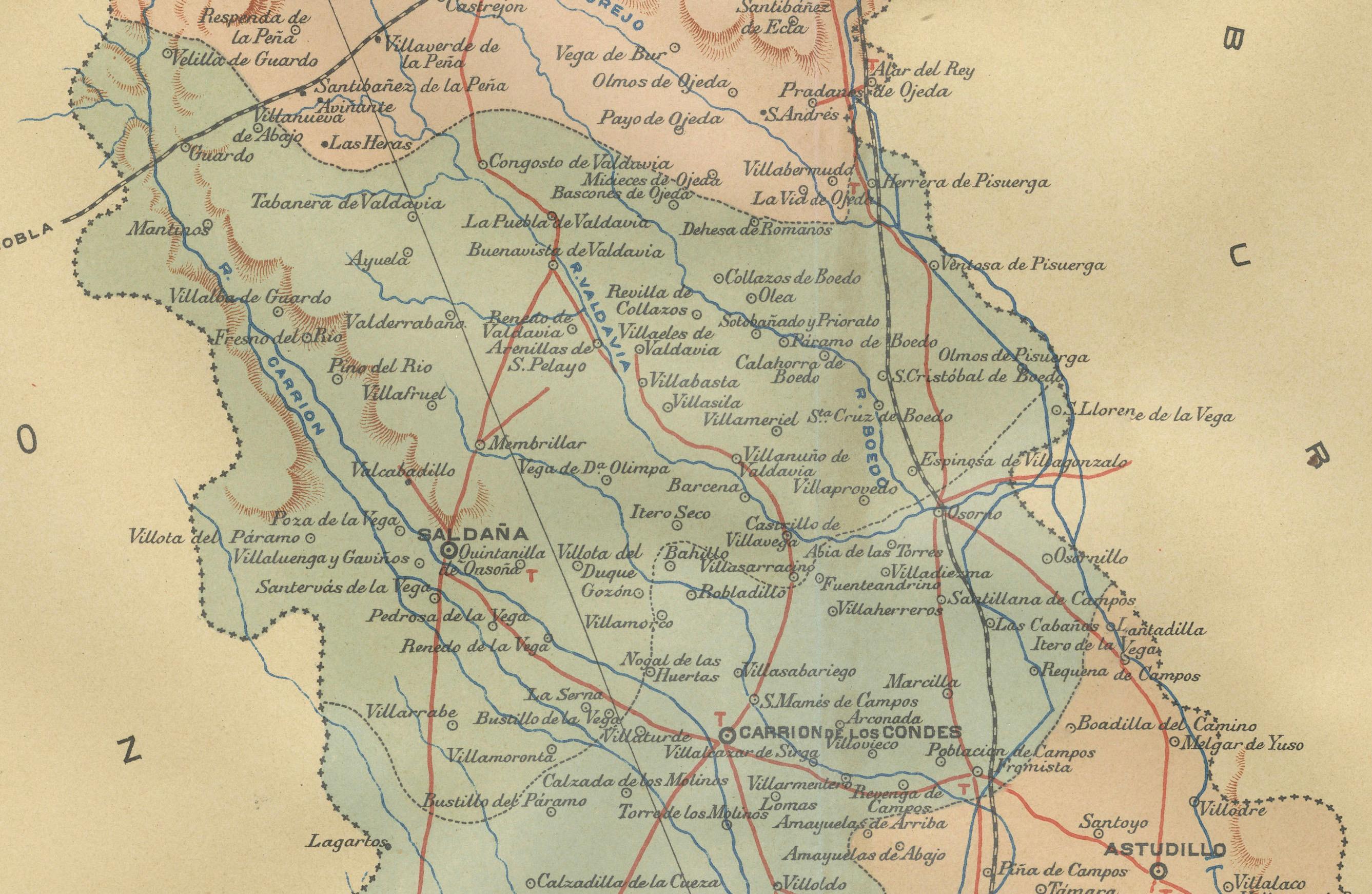
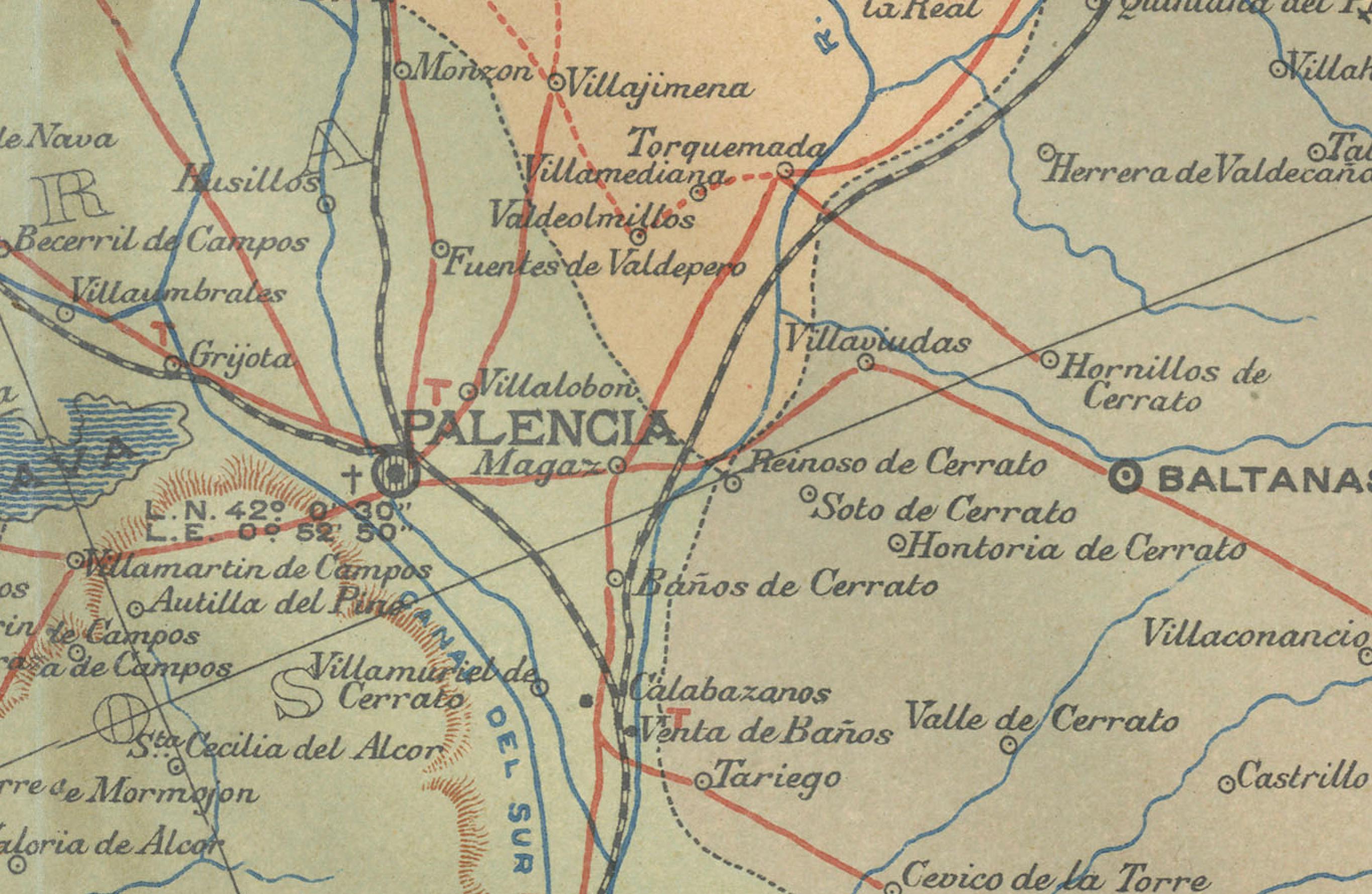
This historical map is of Palencia, a province in the northern part of Spain.
Palencia is situated within the autonomous community of Castilla y León. It is bordered by the provinces of León, Cantabria, Burgos, and Valladolid. The capital city is also called Palencia. It is known for its historical heritage, including the Gothic Cathedral (Palencia Cathedral), which is one of the largest in Europe. The province features a varied landscape with the fertile Tierra de Campos on the plains used primarily for agriculture, and to the north, the Cantabrian Mountains with the protected natural spaces. Agriculture has traditionally been the mainstay of the province's economy, with crops such as wheat, barley, and sugar beets being prominent. The Romanesque architecture is significant in Palencia, with the area along the Camino de Santiago pilgrimage route, especially the town of Carrión de los Condes, featuring notable churches and monasteries. Palencia has natural reserves such as Fuentes Carrionas y Fuente Cobre-Montaña Palentina Natural Park, which provides a habitat for a variety of wildlife and is a destination for outdoor activities. Palencia has several historical sites dating back to the Roman era and played a significant role during the Reconquista and in the later Middle Ages.
This province, like many others in Spain, is steeped in history and rich in cultural and natural attractions.
The province of Palencia is located in the northern part of Spain, within the autonomous community of Castile and León. It is characterized by a diverse landscape that includes part of the Cantabrian Mountains to the north and the expansive Castilian Plateau (Meseta Castellana) to the south. The province is home to a rich historical heritage, with numerous Romanesque churches, particularly in the city of Palencia, which is the capital and a significant urban center. The province is also known for its natural beauty, including the Natural Park of Fuentes Carrionas and Fuente Cobre-Montaña Palentina to the north.