Huelva 1901: A Cartographic Presentation of Andalusia's Atlantic Frontier
€ 360
One of a kind: this is the sheet in the photographs. Ships from Langweer, the Netherlands.
Date
1901
Sheet size
51 × 37.5 cm (20.1 × 14.8 in)
Condition
Good
Reference
BG-13642-20
Condition
Good condition. Central vertical folding lines as issued. Aged paper with typically warm, yellowish-brown hue, especially around the edges. Check the images carefully.
About this sheet
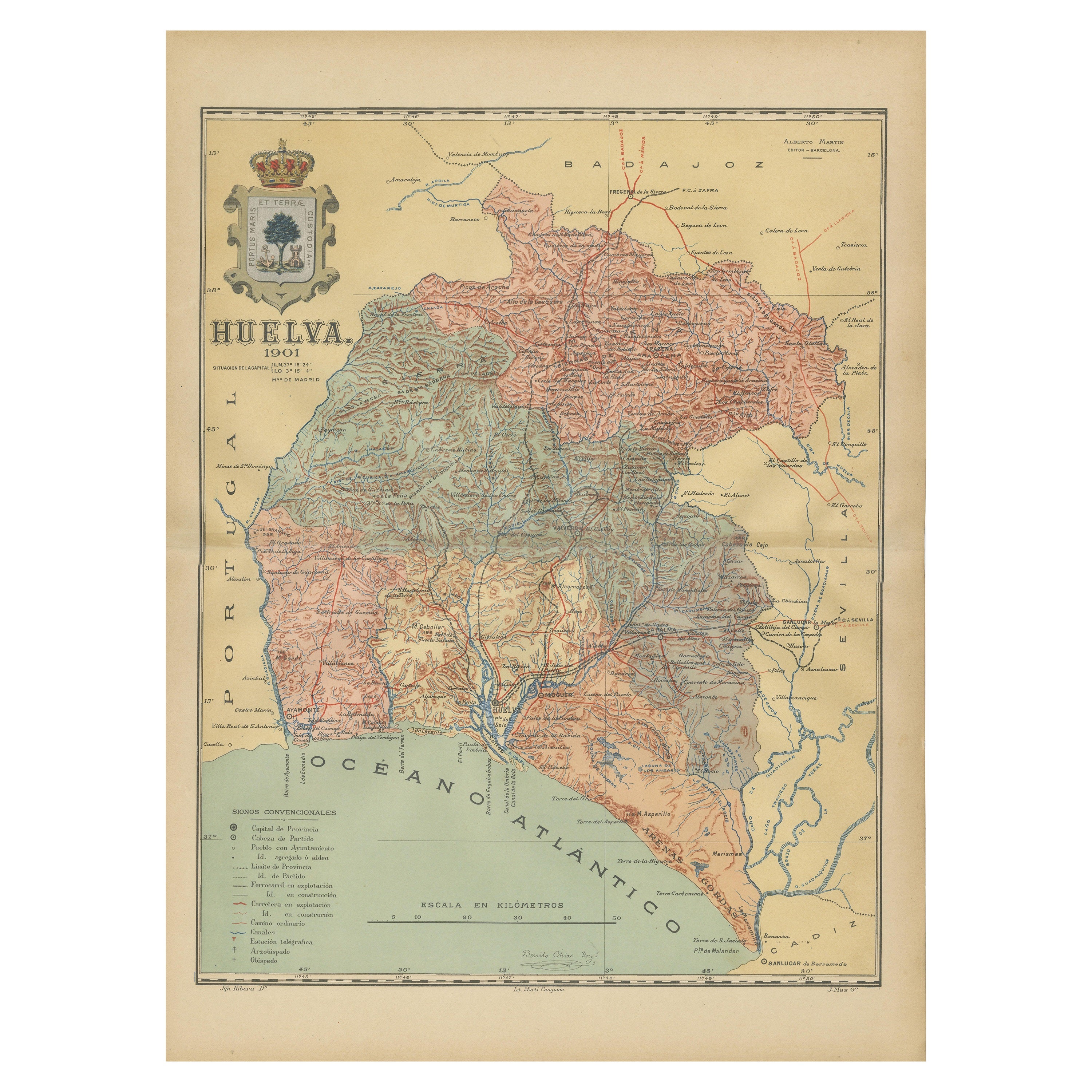
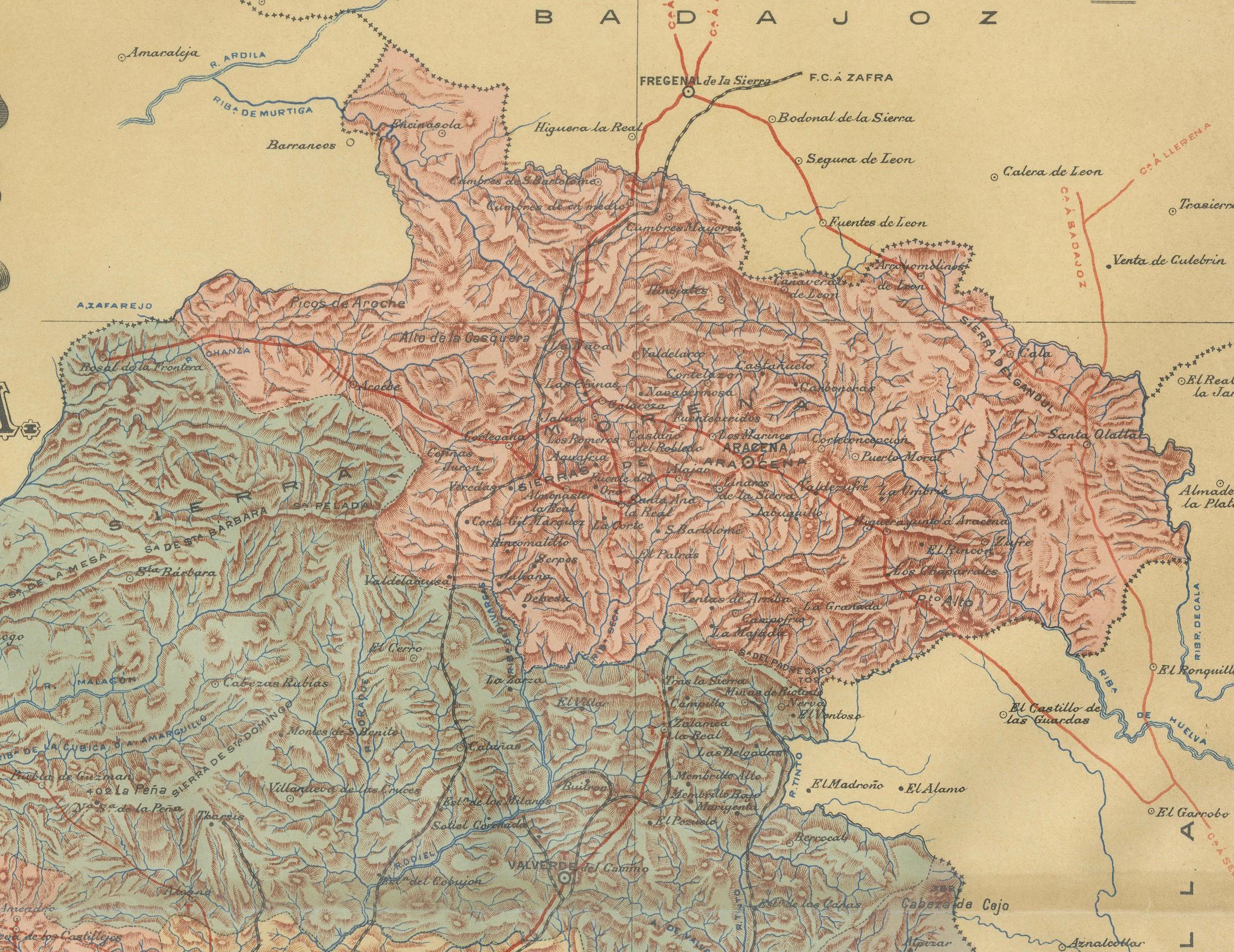
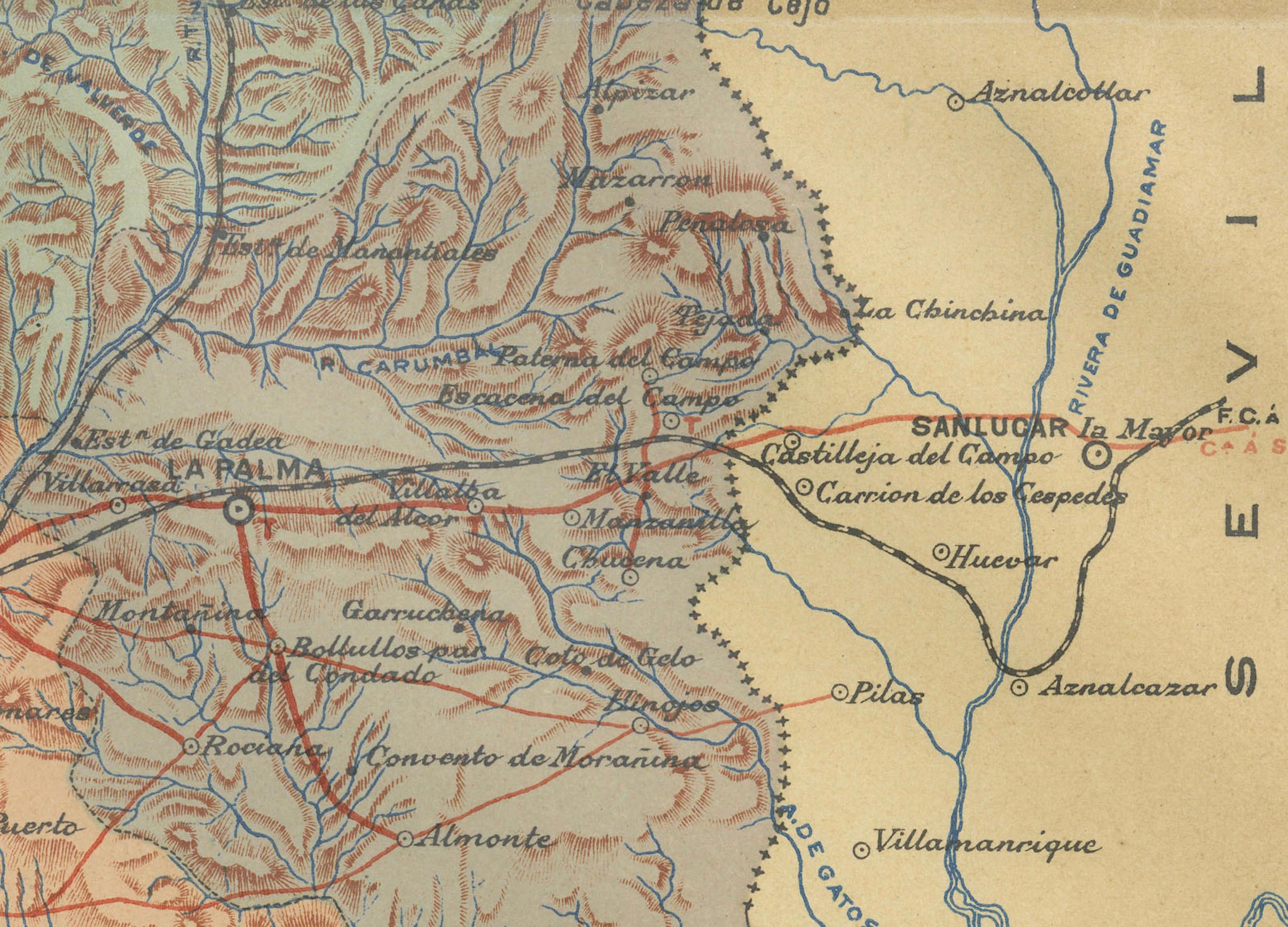
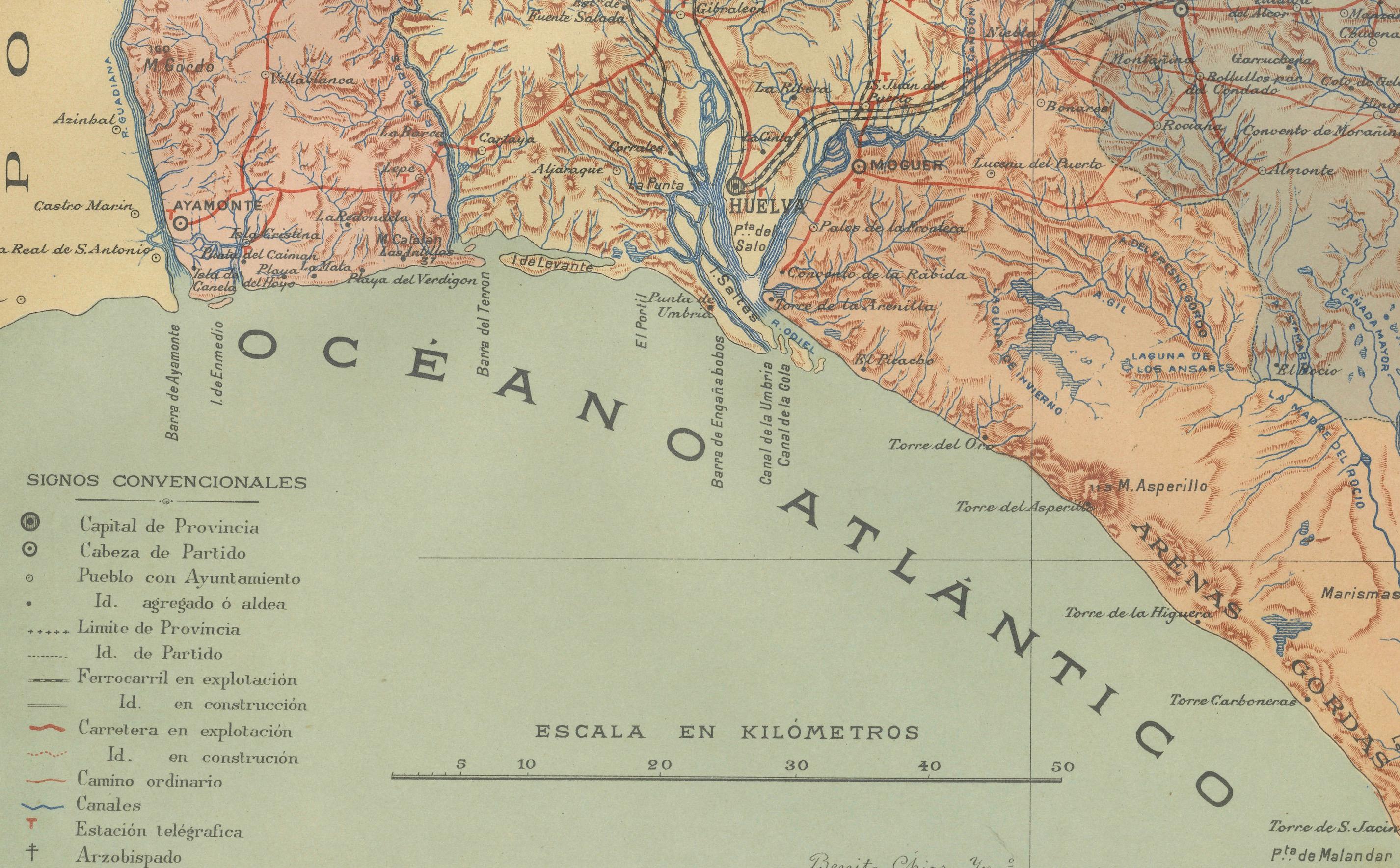
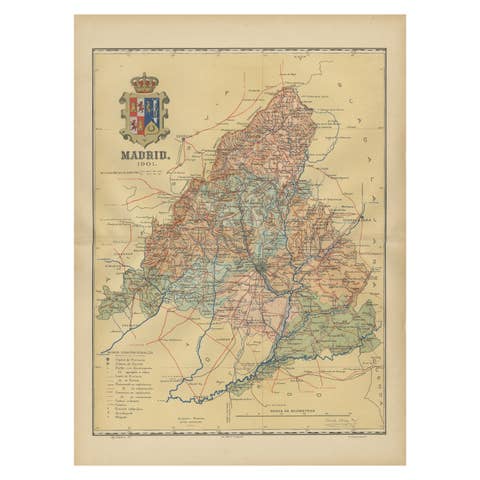
The map displays the province of Huelva, located in the southwestern part of the autonomous community of Andalusia in Spain, as of the year 1901. It outlines various geographic and man-made features:
The map illustrates the terrain of Huelva, including both the coastal plains and the more mountainous regions inland. Blue lines represent the waterways, likely including the Odiel and Tinto rivers, which are significant in the region. Red lines indicate the roads and railways, demonstrating the infrastructure for transport within the province and connections to other areas. Symbols mark the locations of cities, towns, and villages, with the capital city, also named Huelva, highlighted. Dotted lines suggest the administrative boundaries within the province. The map includes a legend (Signos Convencionales) explaining the symbols used for provincial capitals, roads, railways, and boundaries. A scale in kilometers is provided at the bottom for distance measurement.
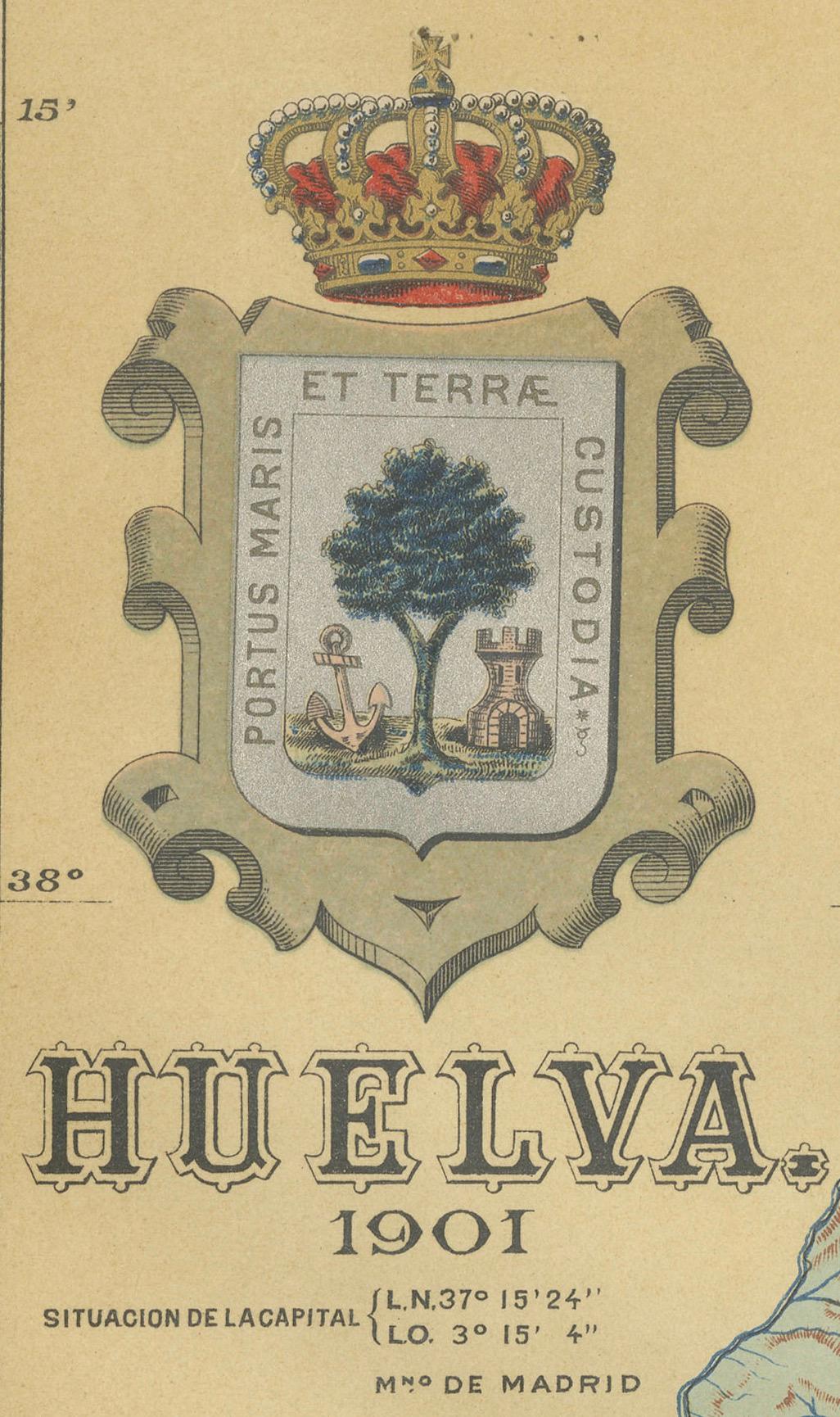
The coat of arms of Huelva is featured, incorporating symbols that represent the province's identity and heritage.
About the province of Huelva:
Huelva is known for its rich history, which includes evidence of ancient settlements, such as those at the Doñana National Park, which is also a UNESCO World Heritage site and a Biosphere Reserve. The province has a significant coastline along the Atlantic Ocean, which contributes to its economy through fishing, salt production, and tourism. Huelva is also known for its natural resources, particularly the Rio Tinto mining area, which has been a source of minerals for thousands of years. The local cuisine features seafood prominently, and the region is part of the Jabugo denomination, renowned for its high-quality ham. Huelva's cultural traditions include flamenco music and dance, as well as religious festivals like the Romería de El Rocío, one of the largest pilgrimages in Spain. The province played a notable role in the history of navigation; from its port, Christopher Columbus set sail on his first voyage to the New World.