About this sheet
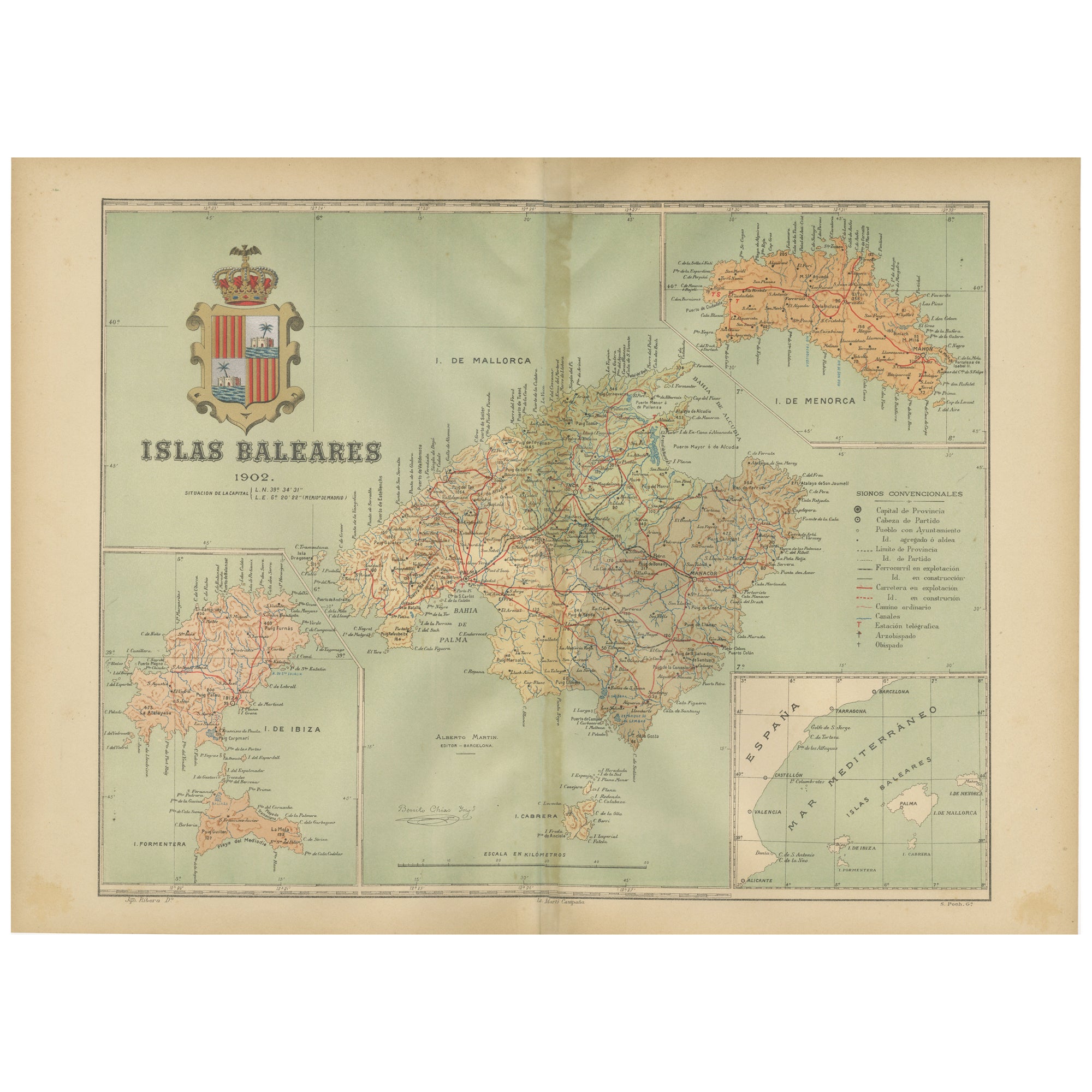
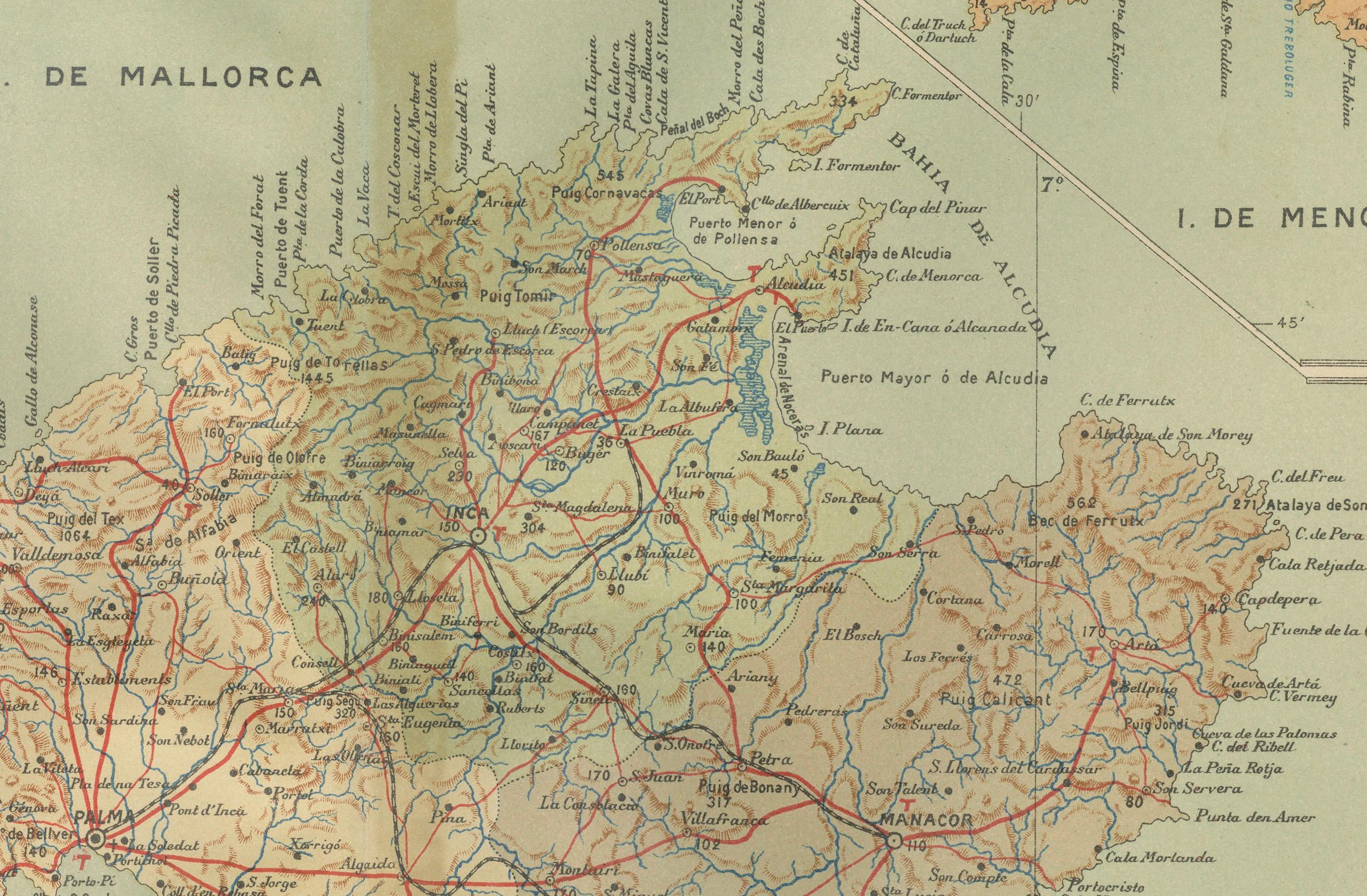
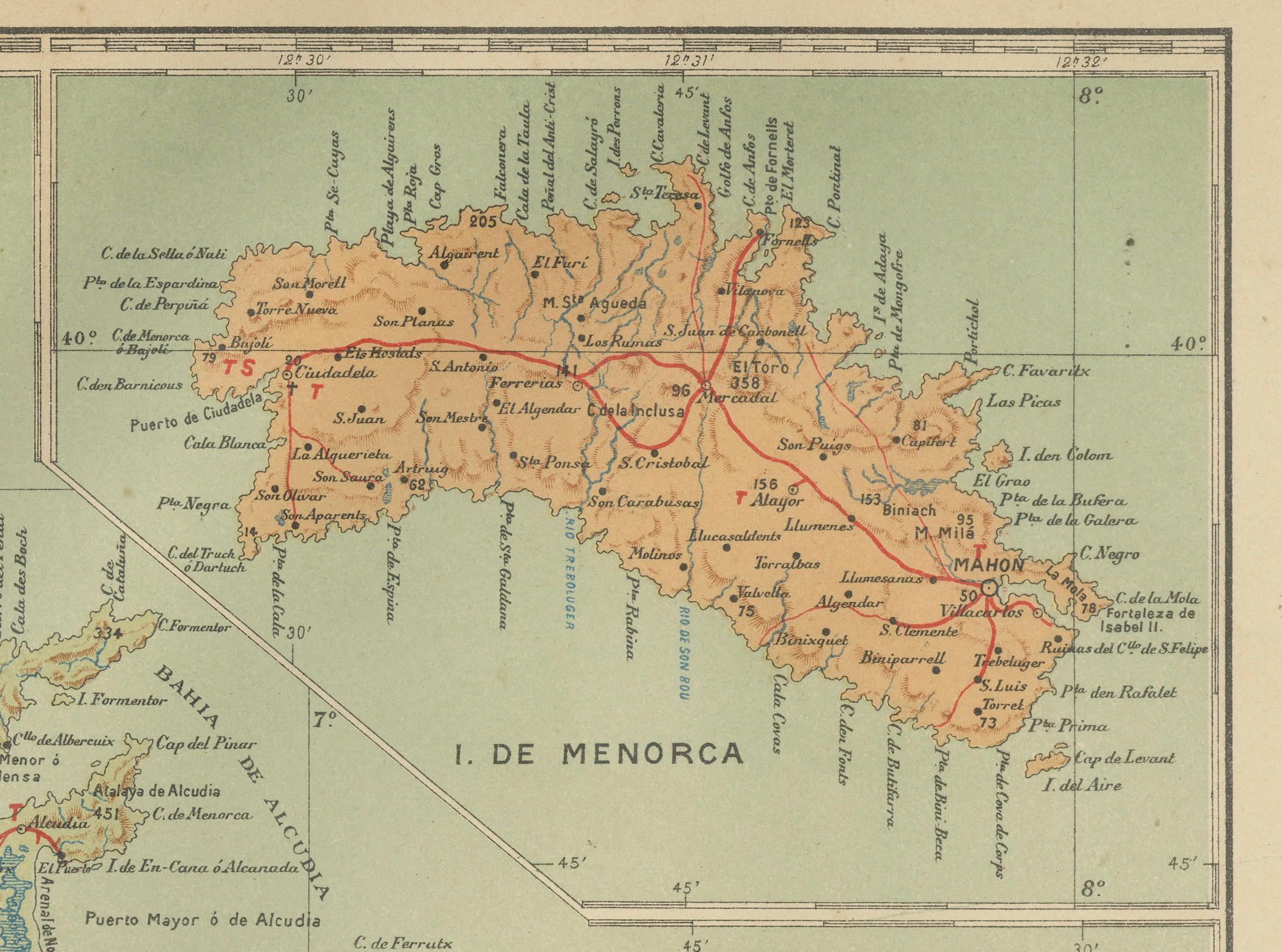
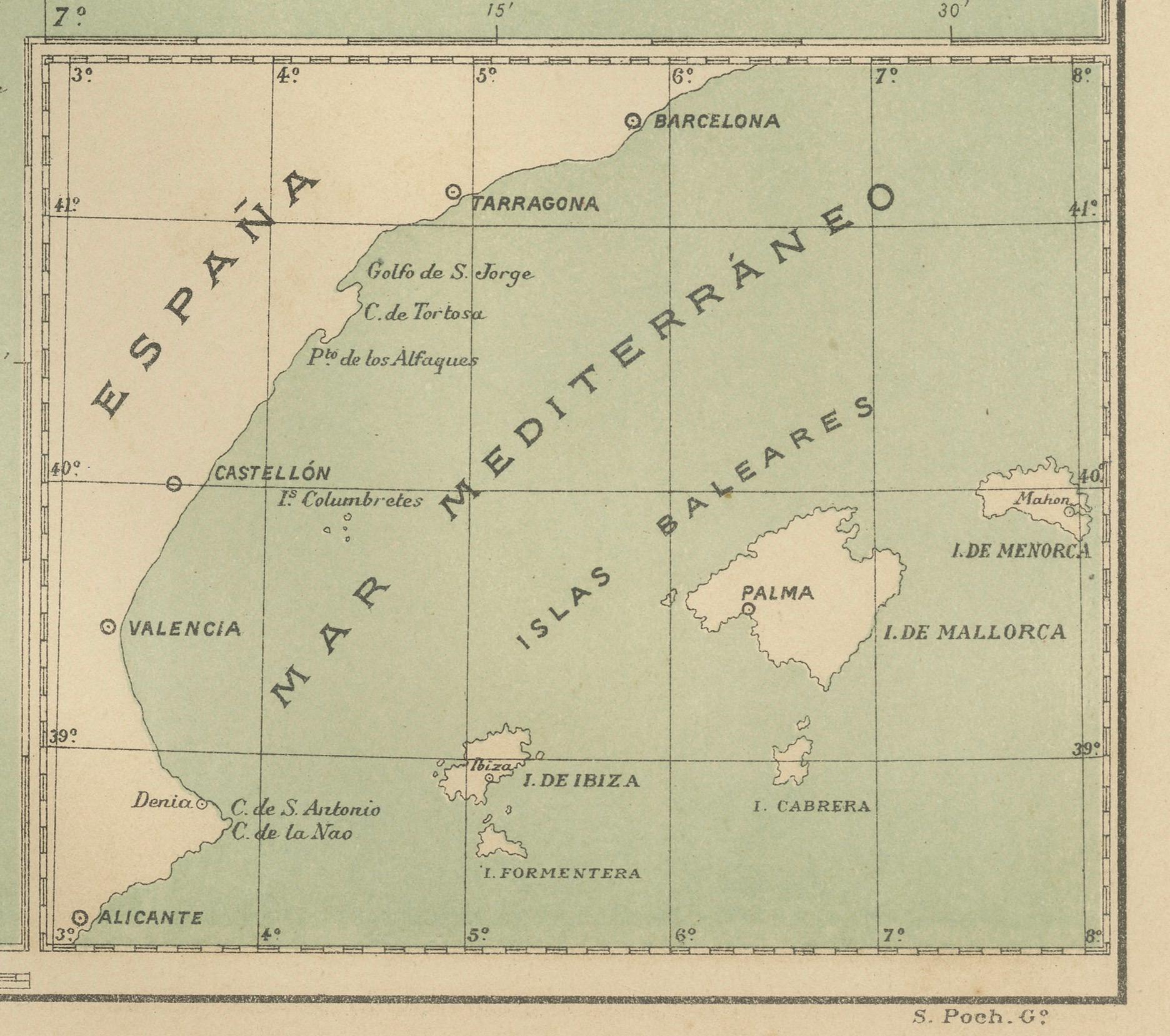
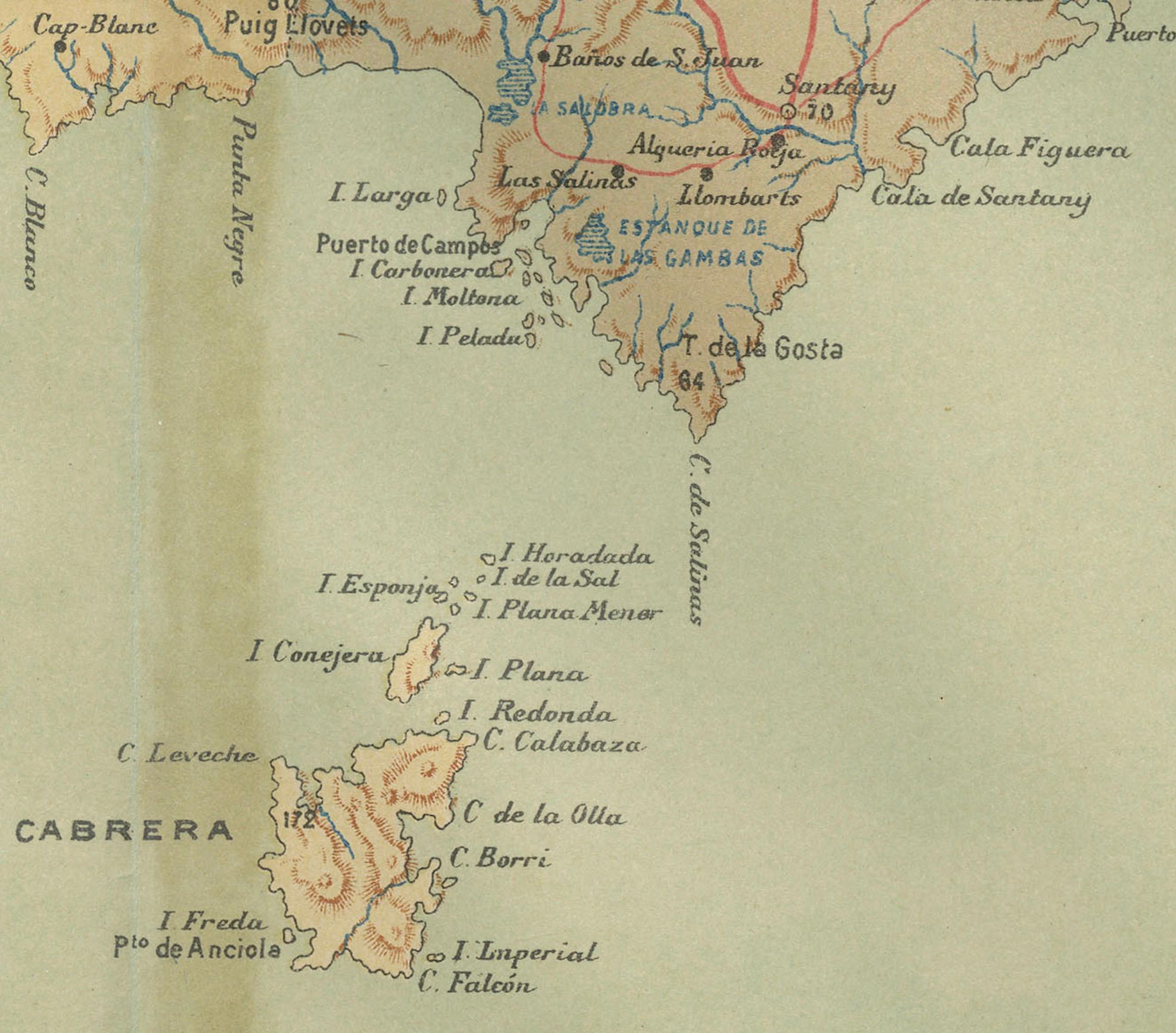
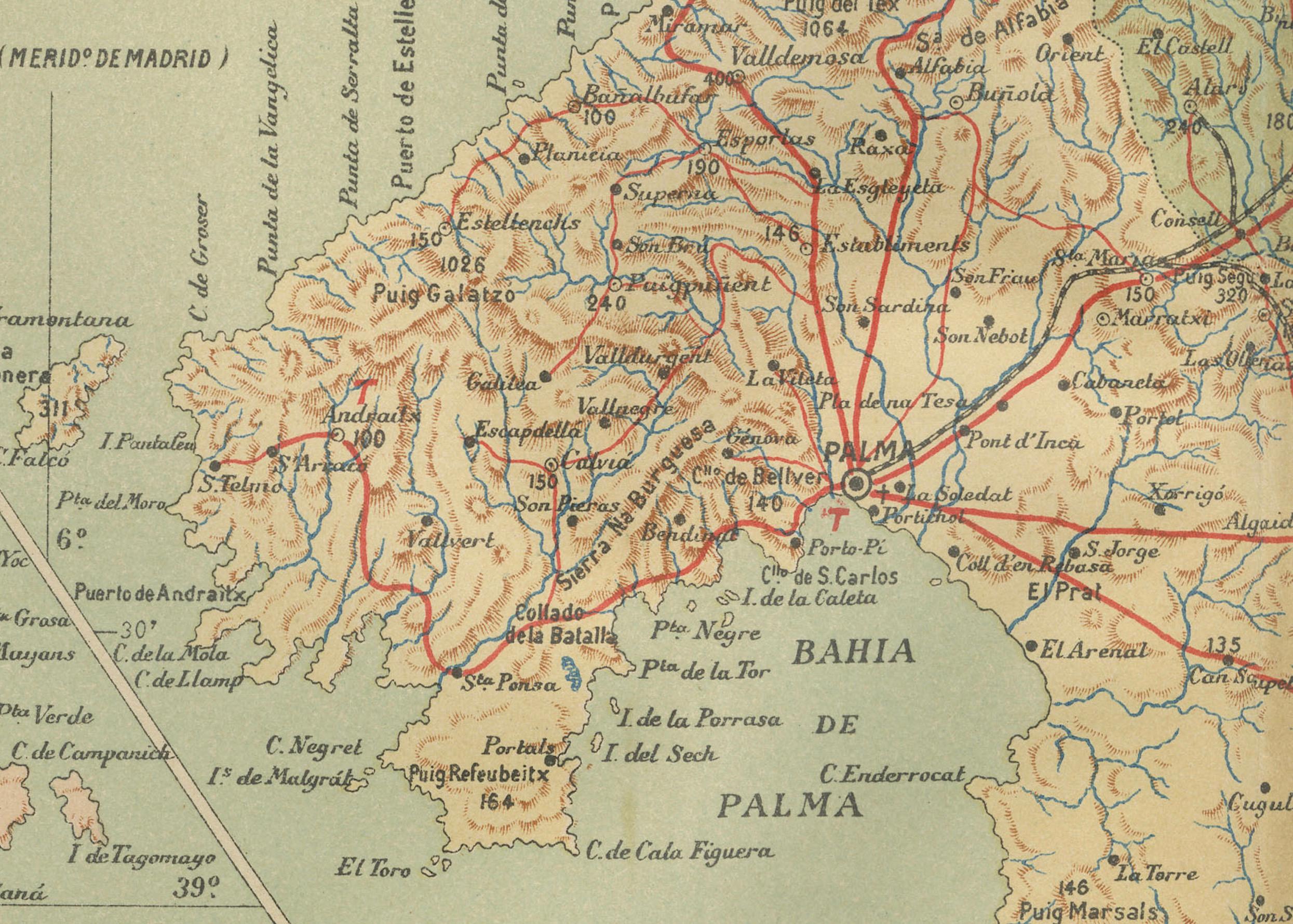
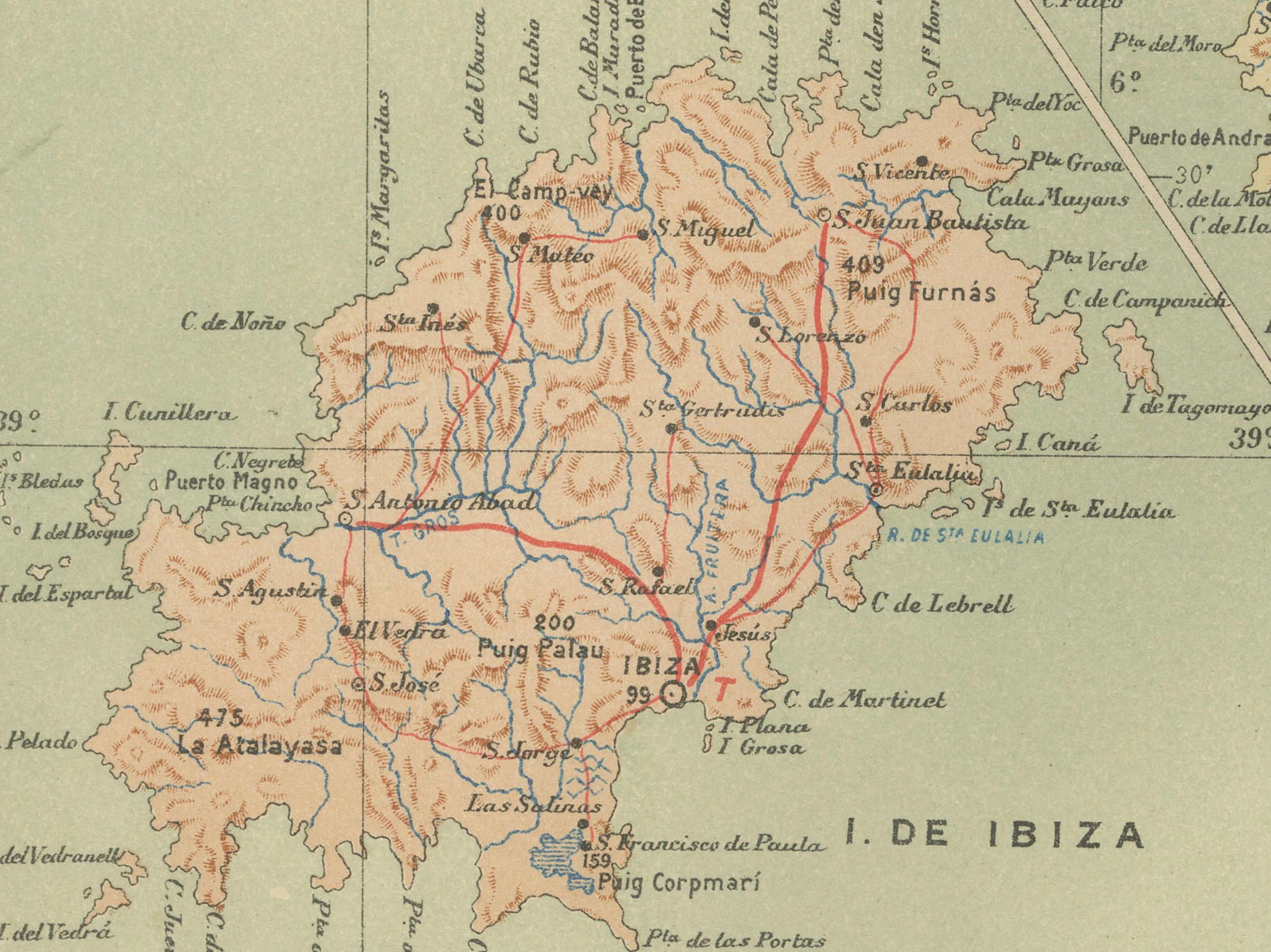
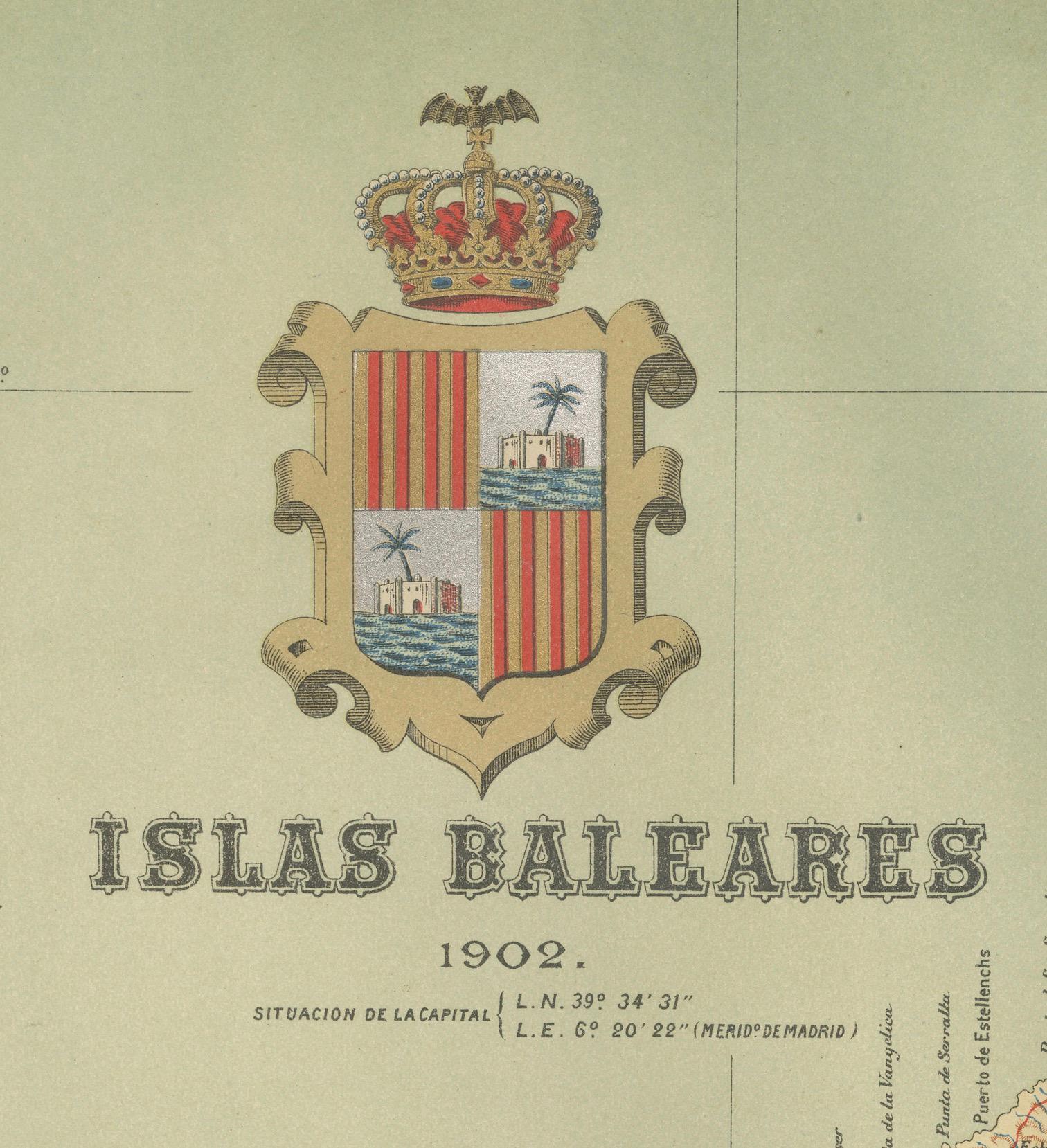
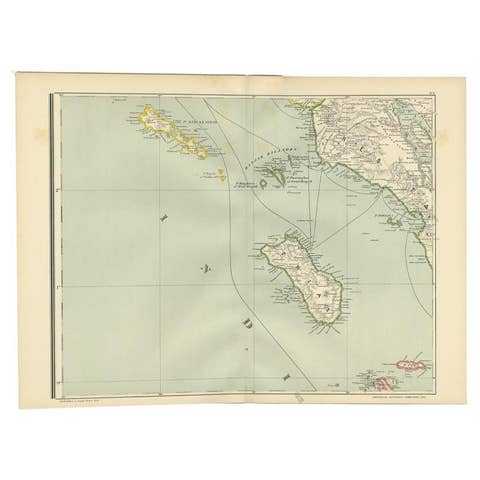
The Balearic Islands, Spain, from the year 1902. The title on the map is "ISLAS BALEARES 1902." This map illustrates the Balearic archipelago in the Mediterranean Sea, highlighting the islands of Mallorca, Menorca, Ibiza, and Formentera along with numerous smaller islets such as Cabrera.
The map features topographical contours, road networks, and maritime routes. It also includes a legend with symbols for provincial capitals, towns, roads, railroads, telegraph stations, and lighthouses. The Balearic Islands are known for their distinct cultural heritage, beautiful coastlines, and historical significance.
Special aspects of the Balearic Islands include:
1. **Diverse Landscapes**: From the mountainous terrain of the Serra de Tramuntana in Mallorca, a UNESCO World Heritage site, to the sandy beaches and coves scattered across the islands.
2. **Cultural Heritage**: The islands have a rich history, with influences from the Phoenicians, Romans, Moors, and Spanish. Each culture has left its mark on the architecture, language, and customs of the islands.
3. **Menorca's Biosphere Reserve**: Menorca was declared a UNESCO Biosphere Reserve due to its high degree of biodiversity and cultural landscapes.
4. **Ibiza's Nightlife**: Ibiza is world-renowned for its vibrant nightlife and electronic music scene, attracting DJs and party-goers from all over the globe.
5. **Traditional Crafts**: The islands are known for traditional crafts, such as shoe-making in Mallorca and basket-weaving in Menorca.
6. **Archaeological Sites**: There are numerous prehistoric megalithic sites, such as the Talayotic settlements on Menorca and the Phoenician ruins on Ibiza.
7. **Cuisine**: The Balearic cuisine is rich with Mediterranean flavors, featuring fresh seafood, local meats, fruits, and vegetables.