Antique Map of Egypt and the Nile Valley with City Index, 1715
€ 330
One of a kind: this is the sheet in the photographs. Ships from Langweer, the Netherlands.
Date
1715
Sheet size
30 × 30 cm (11.8 × 11.8 in)
Reference
BG-14078-42
Condition
Light toning and some faint creases from folding as issued. Minor foxing in places and waterstains along some borders. Strong impression with excellent detail. Paper remains robust with no significant tears or repairs.
About this sheet
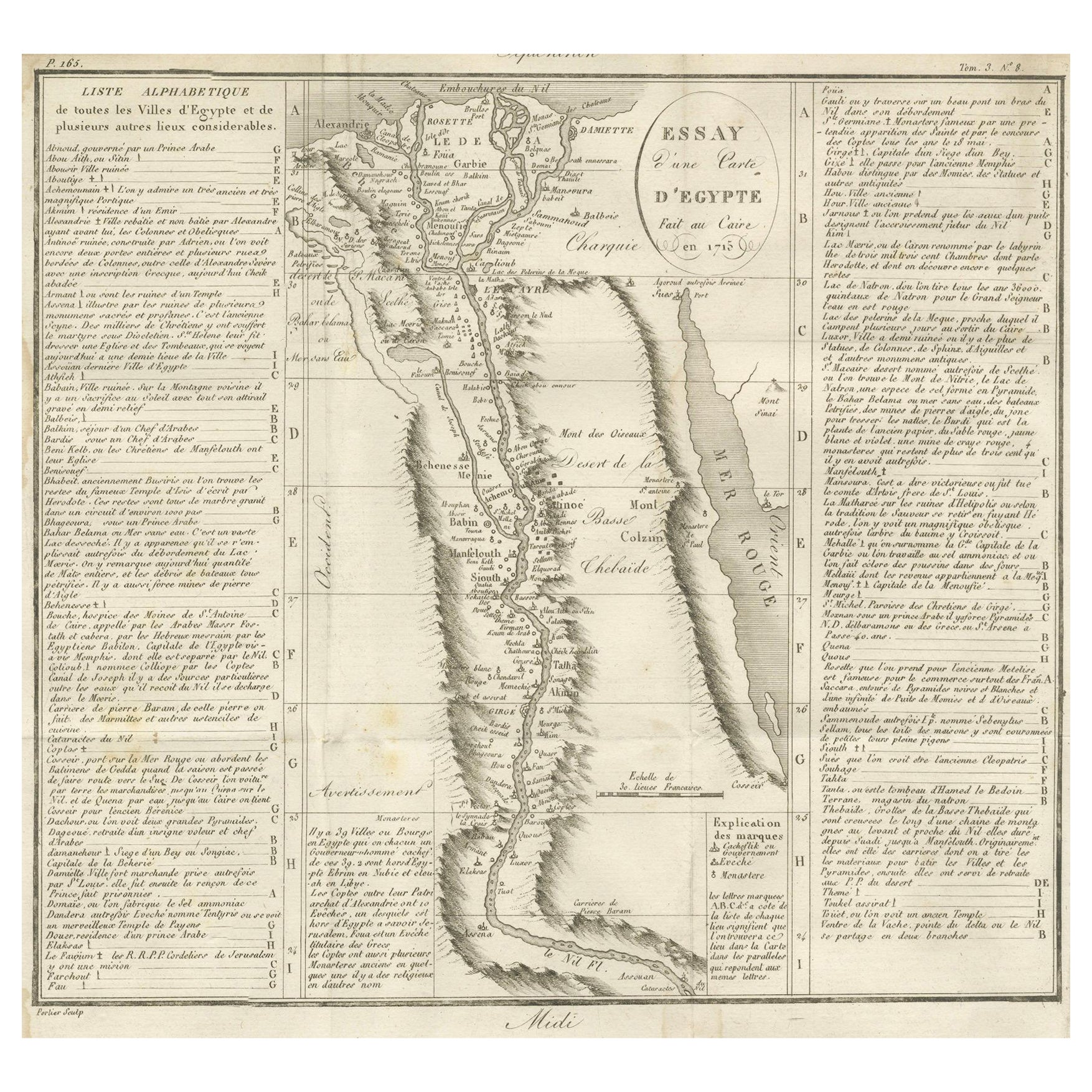
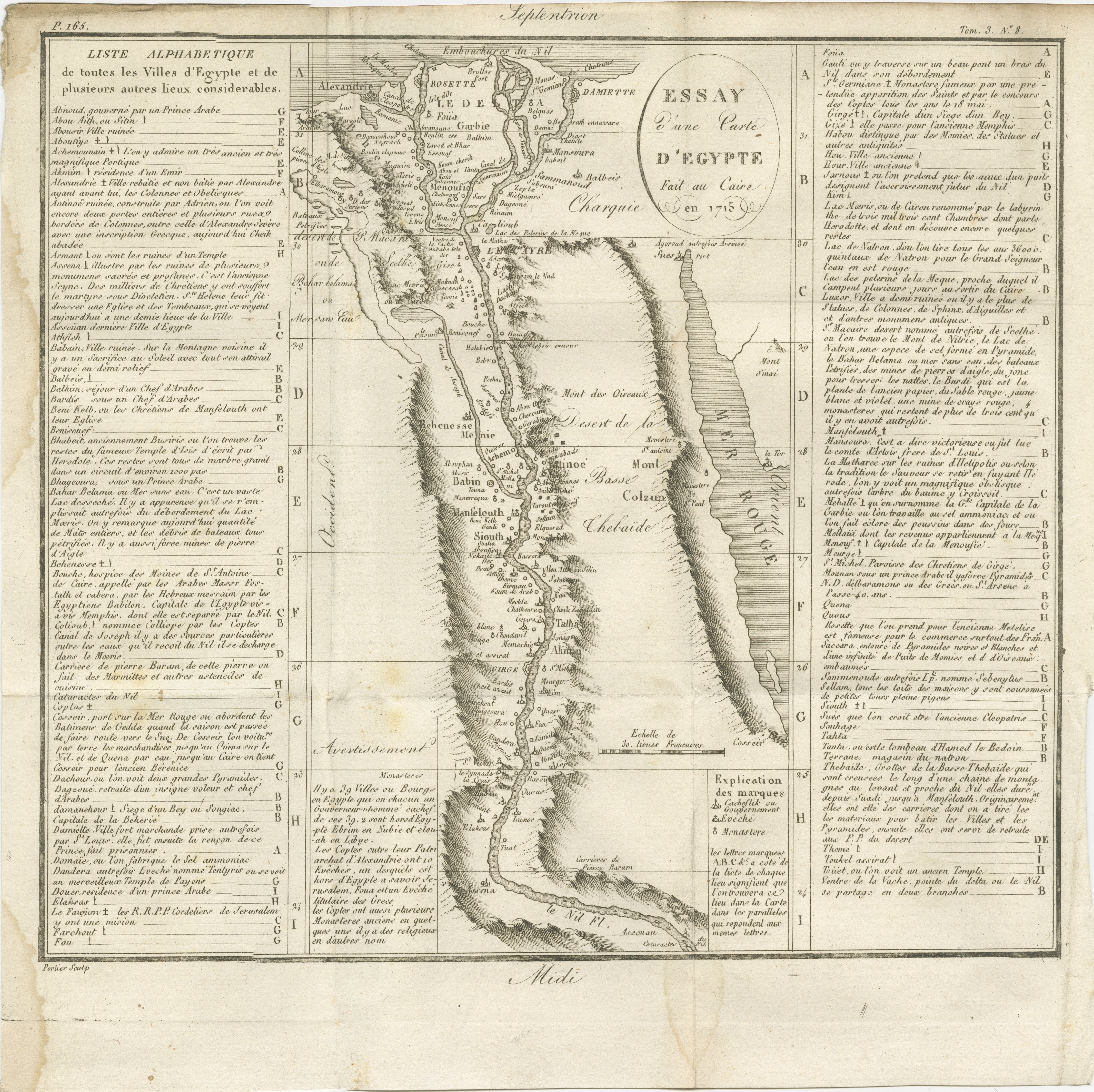
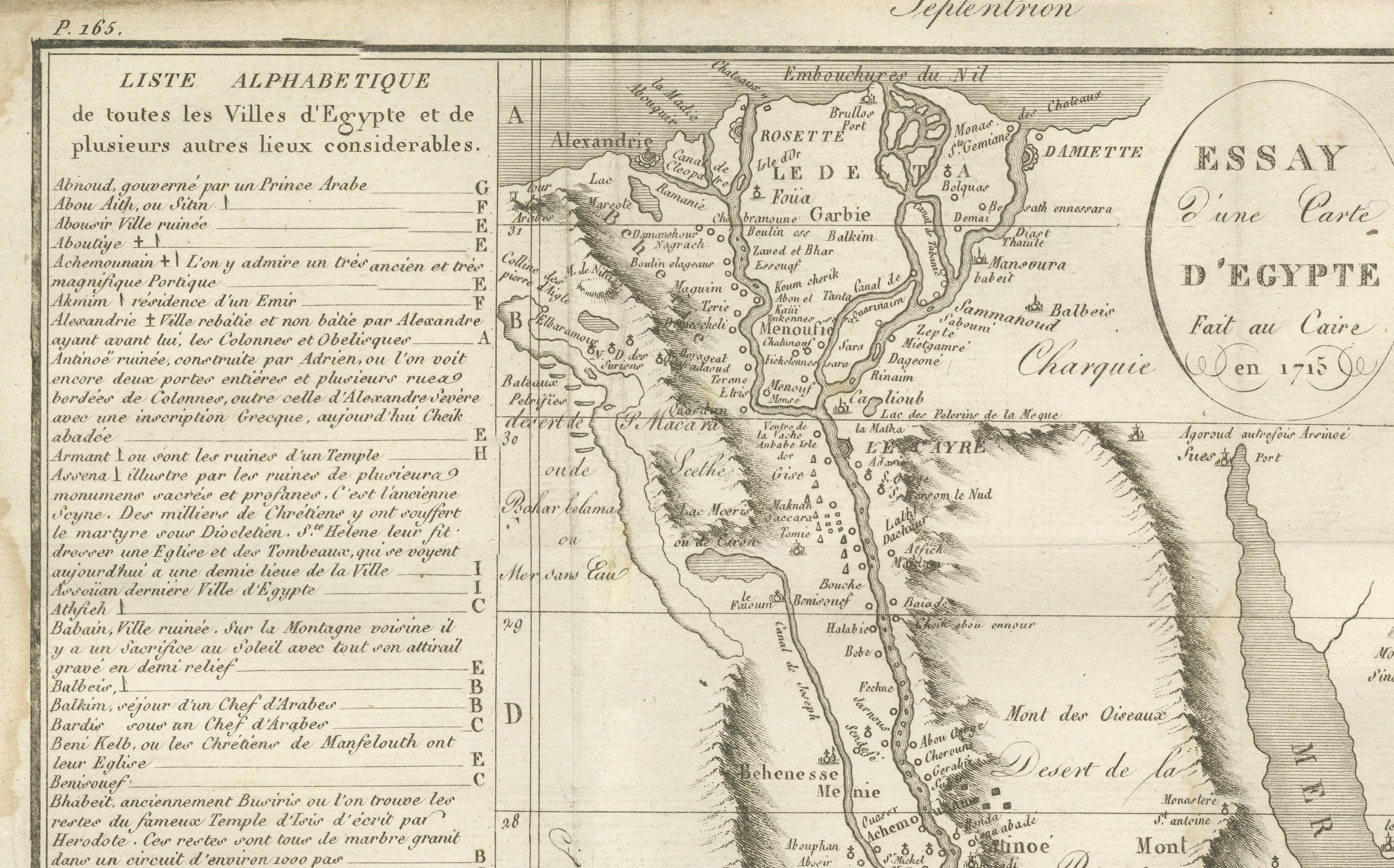
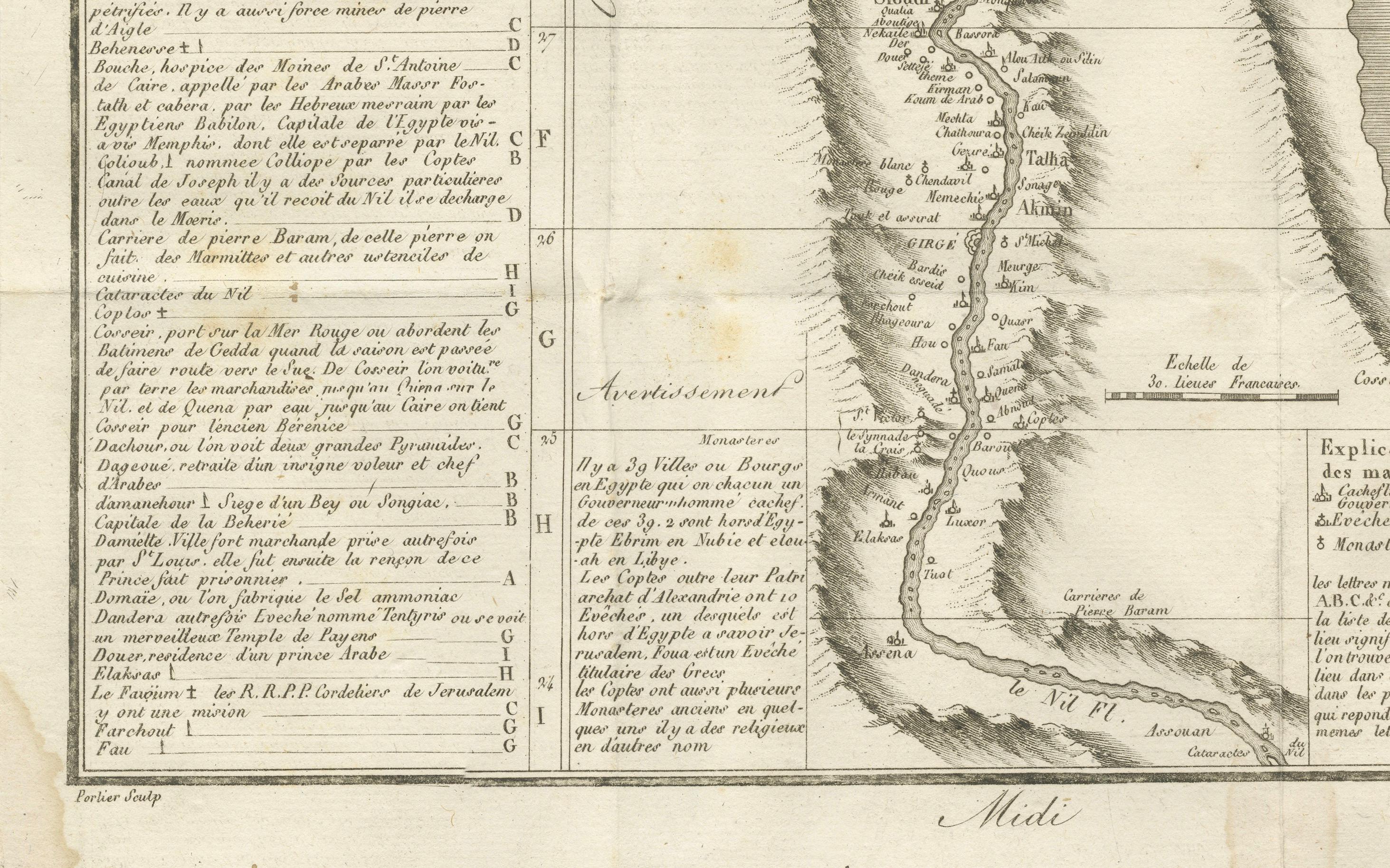
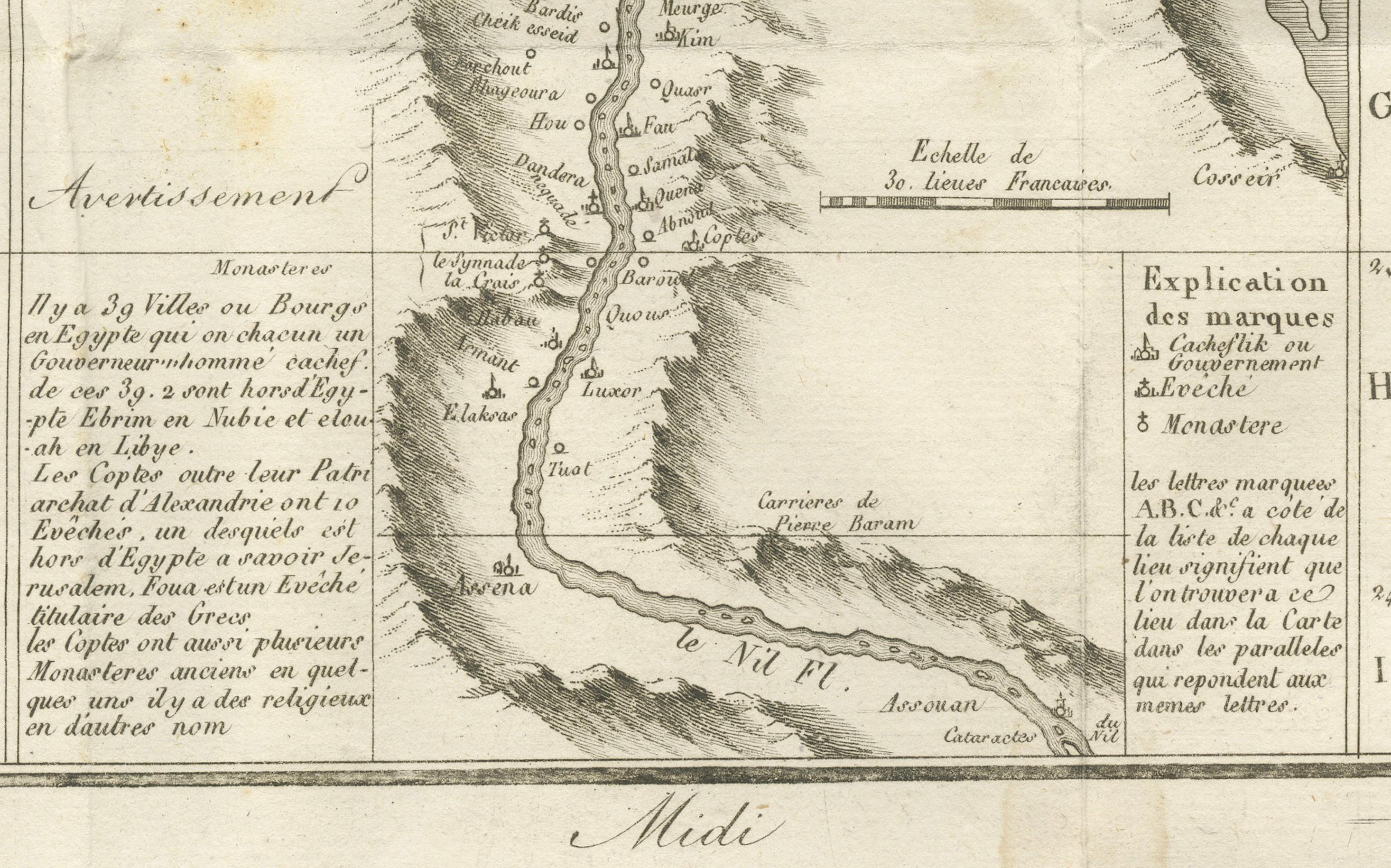
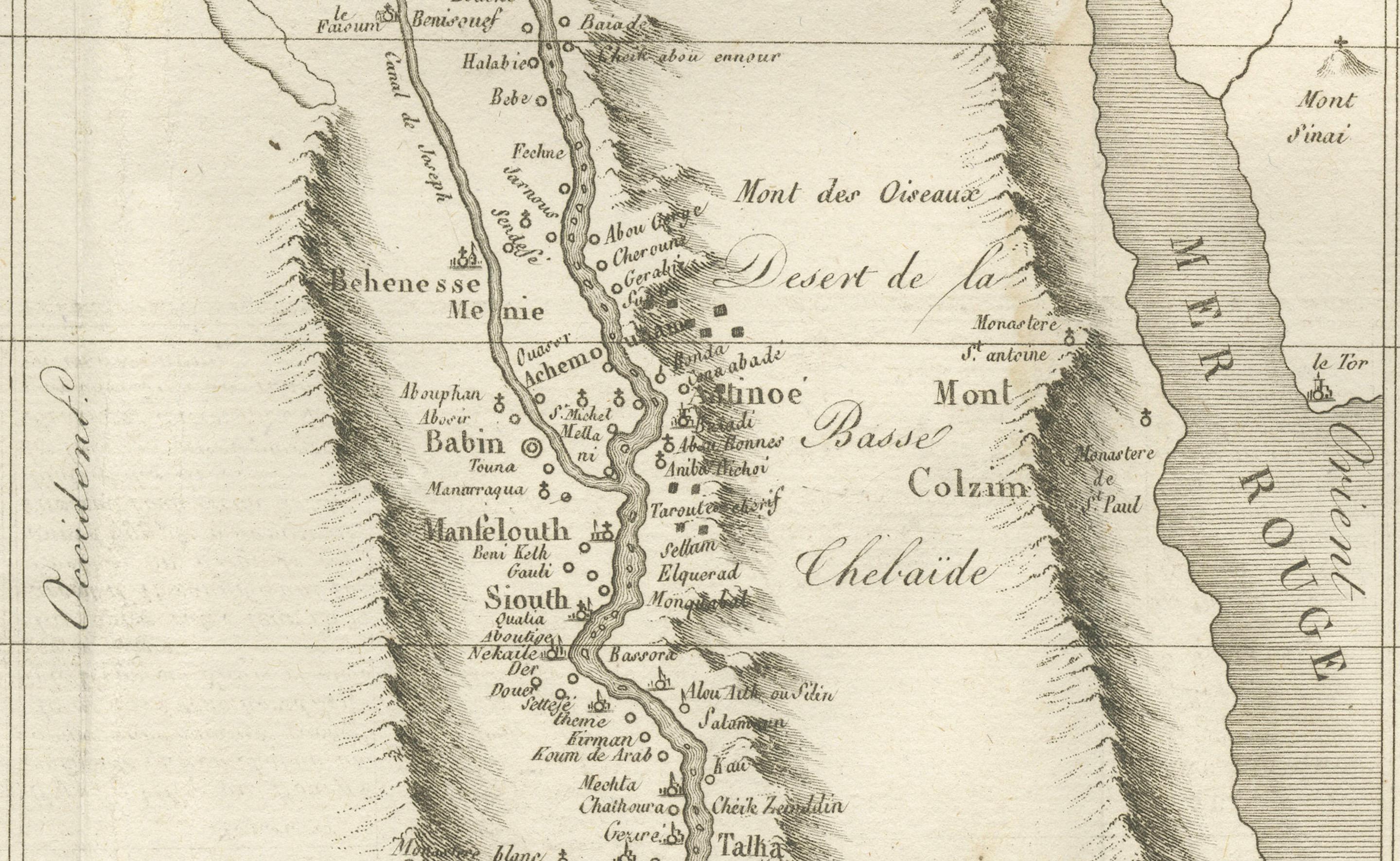
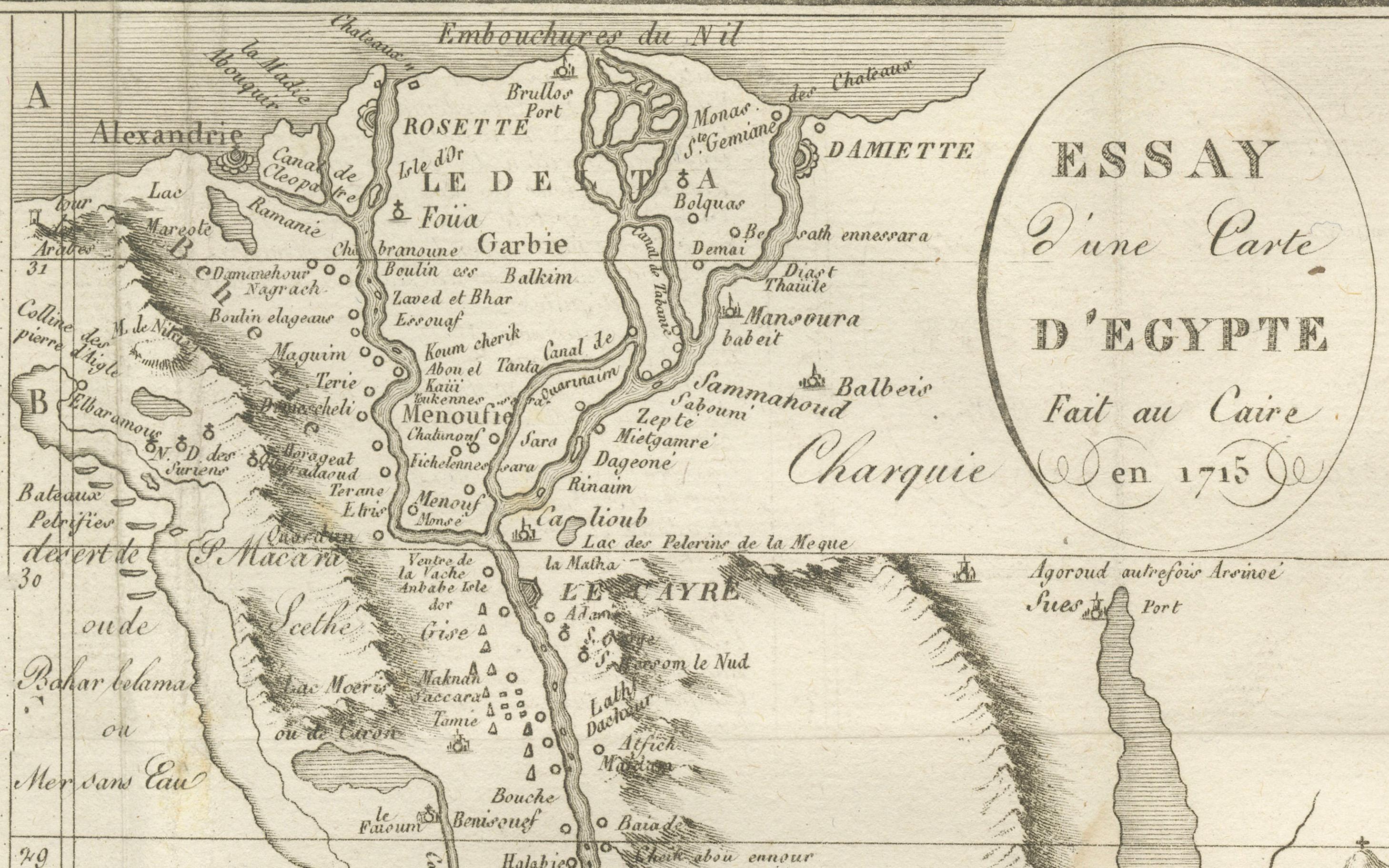
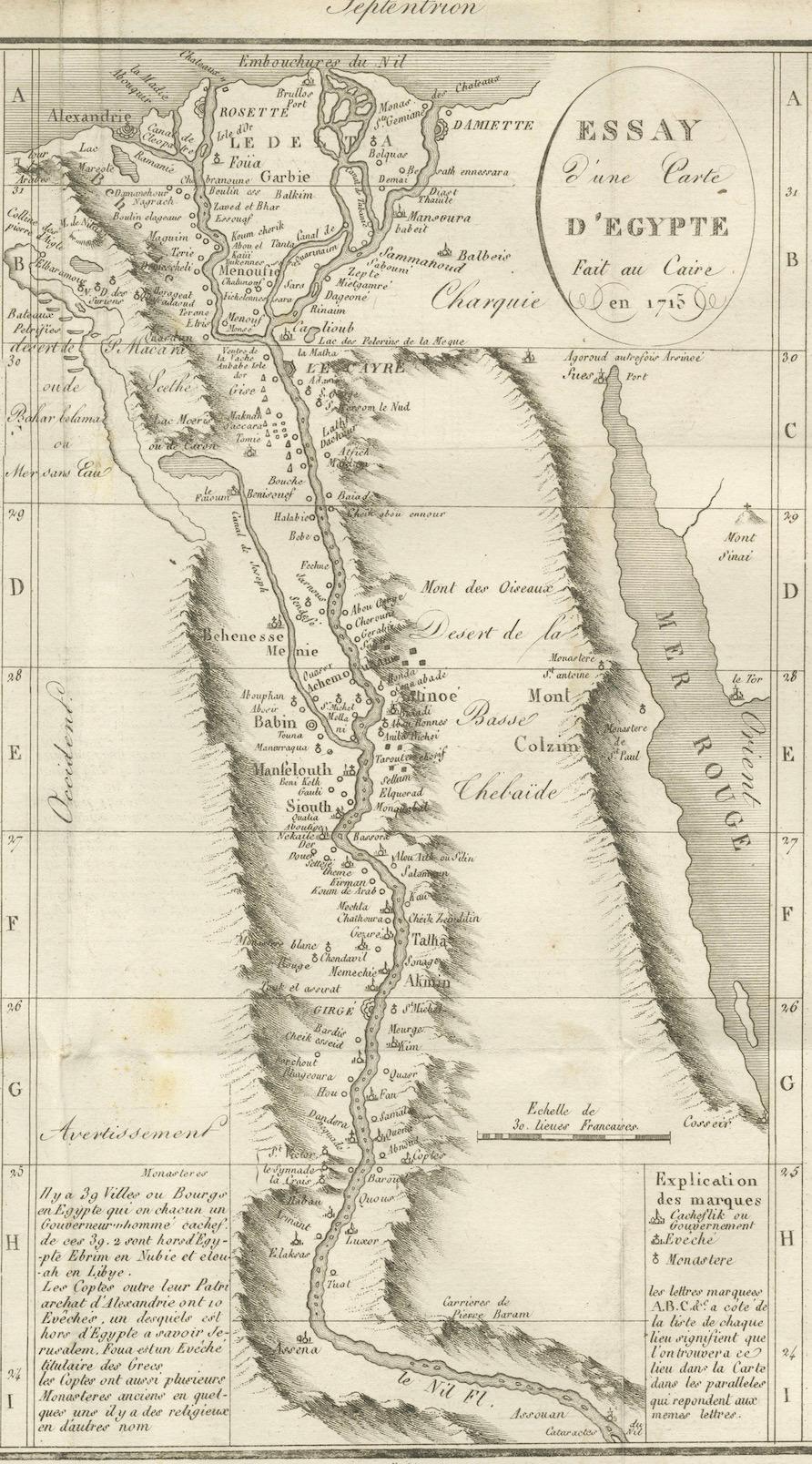
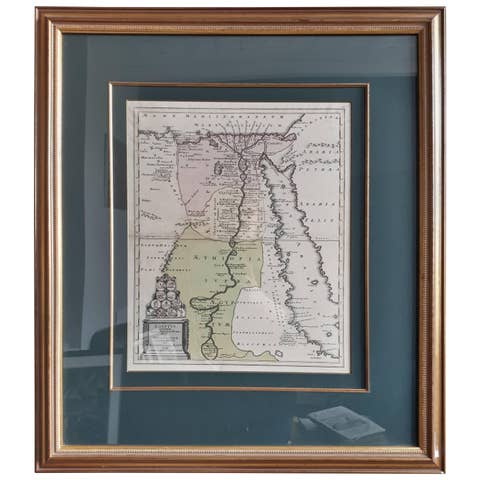
Antique map of Egypt, titled "Essay d'une Carte d'Égypte Fait au Caire en 1715".
This finely engraved map presents a detailed depiction of Egypt along the Nile River from the Mediterranean coast to the region of Nubia, accompanied by extensive side text providing an alphabetical list of towns and notable locations. The map includes Alexandria, Rosette, Damiette, Cairo, and numerous smaller settlements, as well as natural features such as mountains, lakes, and deserts. The Red Sea is shown to the east, with ports and coastal details, while to the west lie oases and desert regions.
Produced in 1715, this map reflects early 18th-century European cartographic knowledge of Egypt, combining geographic accuracy with descriptive annotations. Its creation in Cairo adds historical importance, suggesting firsthand observation or access to local sources. The engraved style, fine hachuring for mountains, and inclusion of river networks give the map both artistic and scholarly value.
As an object of historical interest, this map offers insight into Egypt’s geography before modern surveys, during a period when it was of strategic and cultural interest to European powers. Collectors of antique maps, especially those focusing on North Africa or early 18th-century cartography, will appreciate its rarity and the fact that it dates from before Napoleon’s Egyptian campaign.
Condition: Light toning and some faint creases from folding as issued. Minor foxing in places and waterstains along some borders. Strong impression with excellent detail. Paper remains robust with no significant tears or repairs.
Framing tips: A dark wood or black frame with a cream or light beige mount will highlight the engraving’s fine linework. For a more museum-style display, consider an archival mount with a gold fillet to emphasize the historical character of the piece.