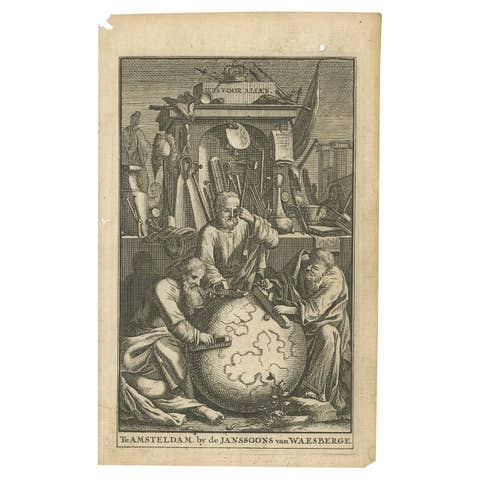
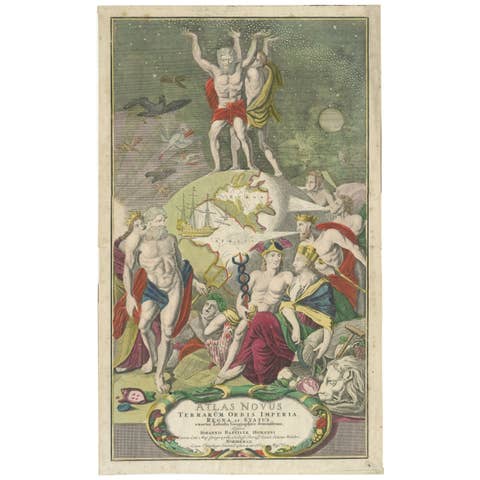
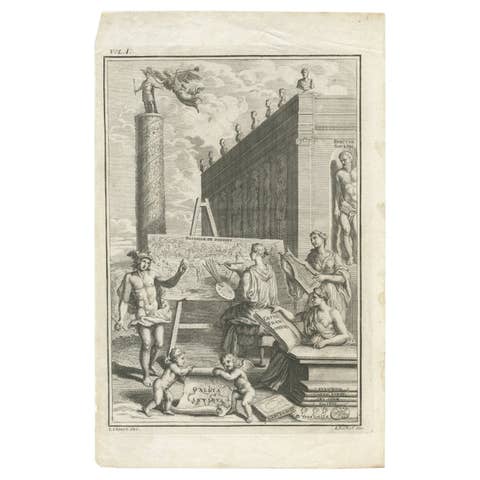
India Orientalis Title Page, Linschoten Voyages, de Bry Engraving c.1601
€ 240
Original antique · The actual sheet photographed · Certificate of authenticity on request · Sold unframed · Worldwide shipping from € 15 (rates)
Date
1601
Mapmaker / artist
After Jan Huygen van Linschoten, published by the de Bry workshop, Frankfurt, early 17th century
Technique
Copper engraving
Sheet size
30 × 20 cm (11.8 × 7.9 in)
Condition
Fair
Reference
BG-14127-7
What the condition grades mean
Excellent
Bright and clean, with no faults worth mentioning.
Very good
Only light signs of age, such as faint toning.
Good
Normal signs of age for a sheet of this period: toning, some foxing, small marks or neat old repairs.
Fair
Clear faults such as staining, tears or repairs, priced to match.
Every fault we see is written in the condition note, and the whole sheet is shown uncropped in the photos.
Condition
Early engraving on paper. Noticeable overall toning, edge wear, and surface staining consistent with age and use. Small losses and wear at the margins. The engraved image remains legible and visually compelling. Condition reflected in price.
About this sheet
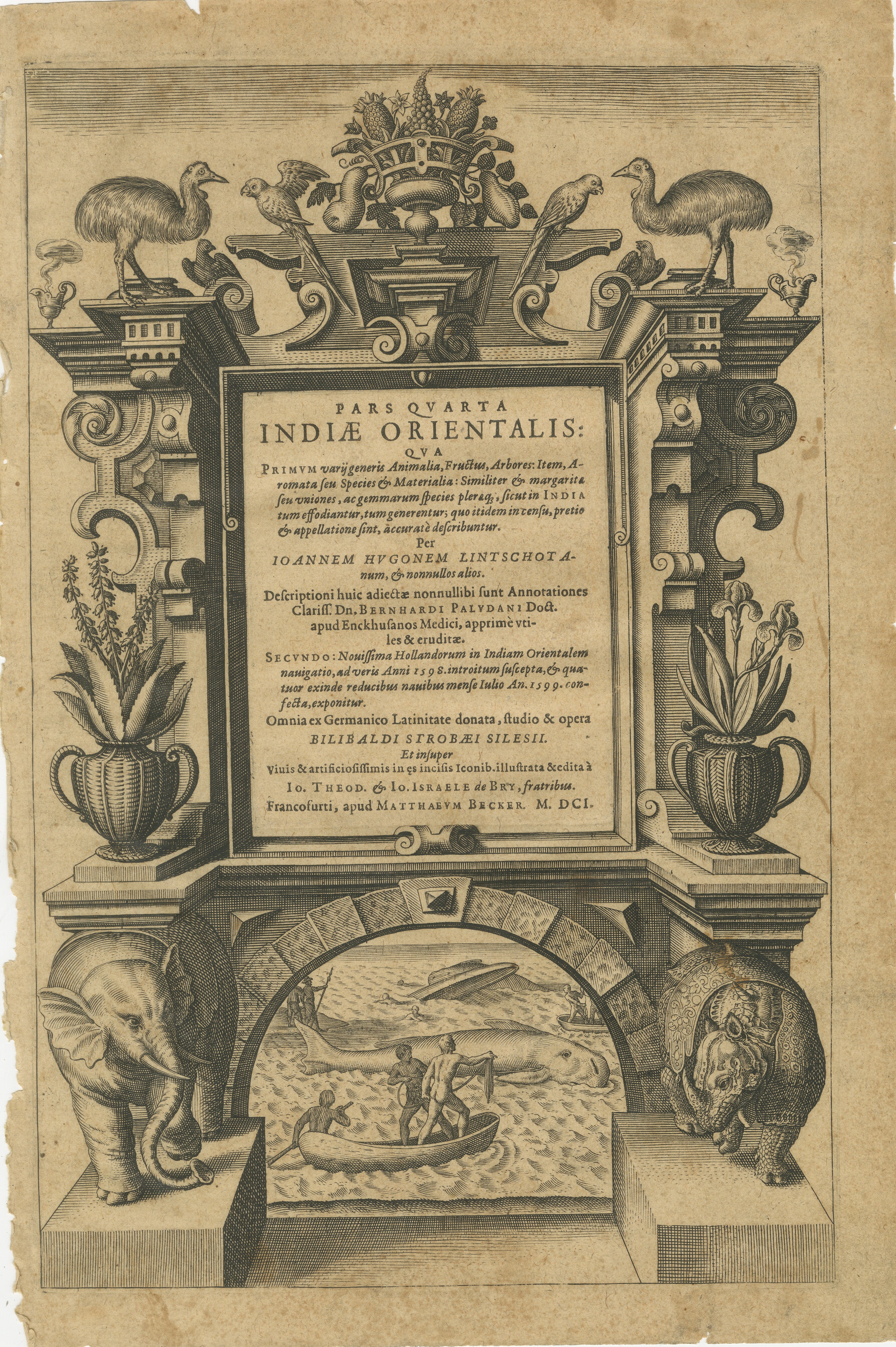
India Orientalis Title Page, Linschoten Voyages, de Bry Engraving c.1601
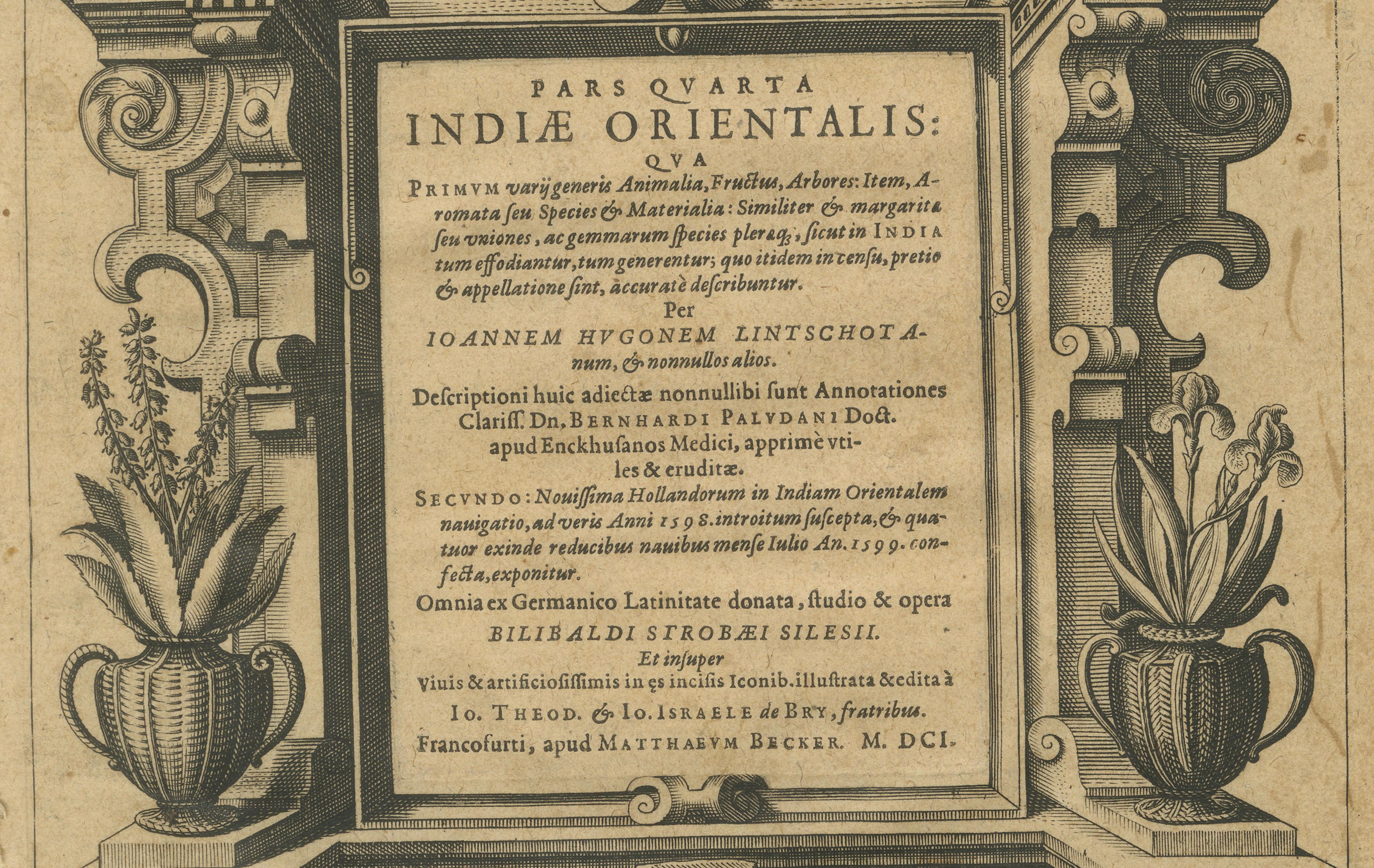
This engraved architectural title page originates from the early 17th-century publication India Orientalis, based on the voyages of Jan Huygen van Linschoten and issued by the de Bry family in Frankfurt. The elaborate composition frames the Latin title within a monumental cartouche populated by exotic animals, birds, fruit, and maritime imagery, reflecting early European fascination with Asia and overseas exploration.
At the base of the composition, a maritime vignette shows a whale encounter at sea, while elephants and other exotic creatures flank the architectural structure. Such imagery was deliberately chosen to evoke the abundance, danger, and wonder associated with the East Indies in early modern Europe. Title pages of this type functioned not only as textual introductions but also as powerful visual statements intended to attract and impress the reader.
The engraving is printed on early laid paper and survives as a working sheet, showing clear signs of age, use, and historical handling. While this example is not a pristine collector’s copy, it remains visually strong and highly decorative, making it well suited for interior framing or display rather than scholarly comparison.
Condition Report Early engraving on paper. Noticeable overall toning, edge wear, and surface staining consistent with age and use. Small losses and wear at the margins. The engraved image remains legible and visually compelling. Condition reflected in price.
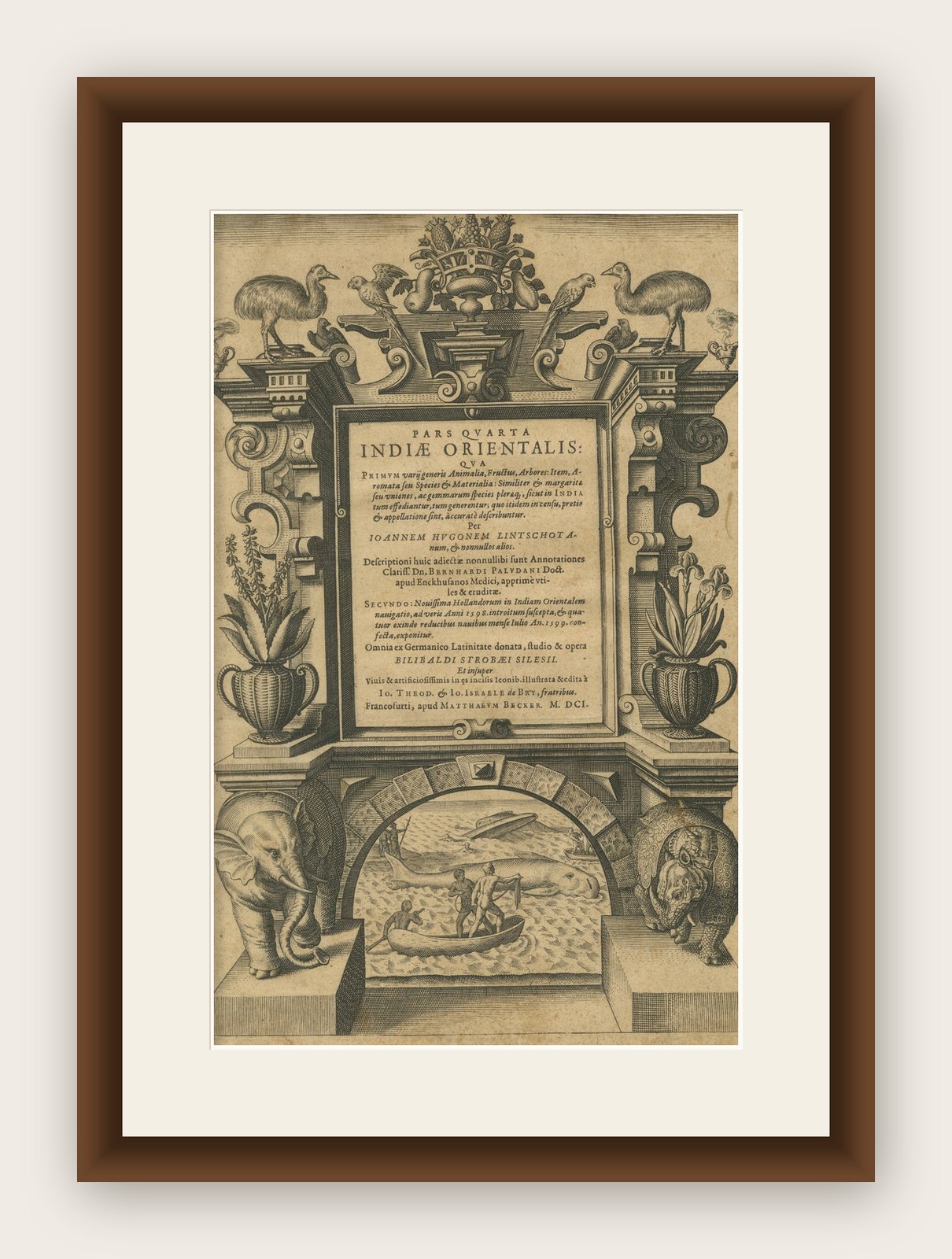
Framing Tips A floated mount or generous mat is recommended to accommodate the irregular edges and emphasize the engraving as an early historical object. Dark wood or black frames work particularly well with the dense graphic style.