Allegorical Frontispiece of Rome's Ruins, Pieter van der Aa & F. Halma, 1696
€ 440
One of a kind: this is the sheet in the photographs. Ships from Langweer, the Netherlands.
Date
1696
Sheet size
39.5 × 24 cm (15.6 × 9.4 in)
Condition
Good
Reference
BG-13675-57
Condition
Good condition with minor age-related toning, faint creases, and small edge wear.
About this sheet
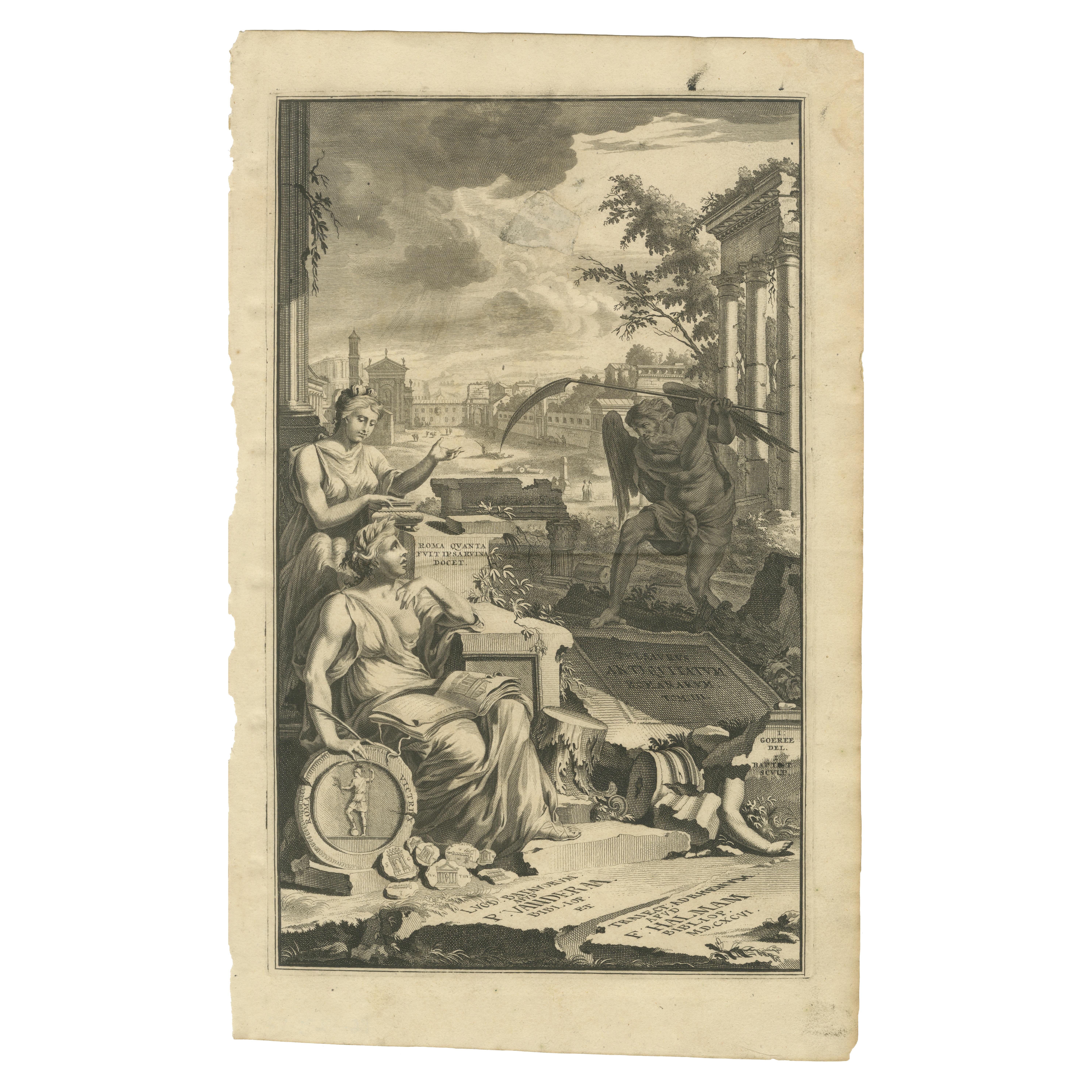
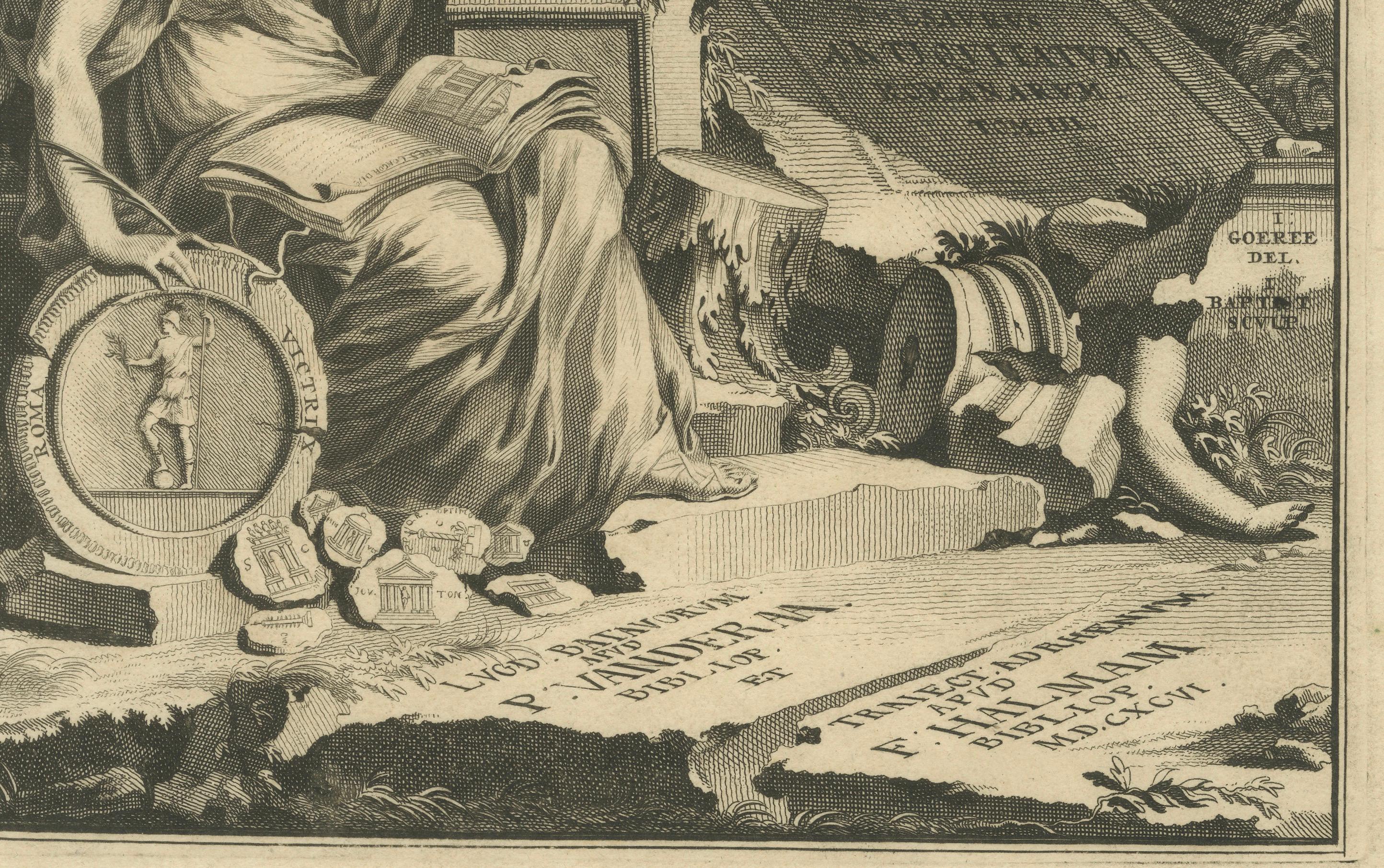
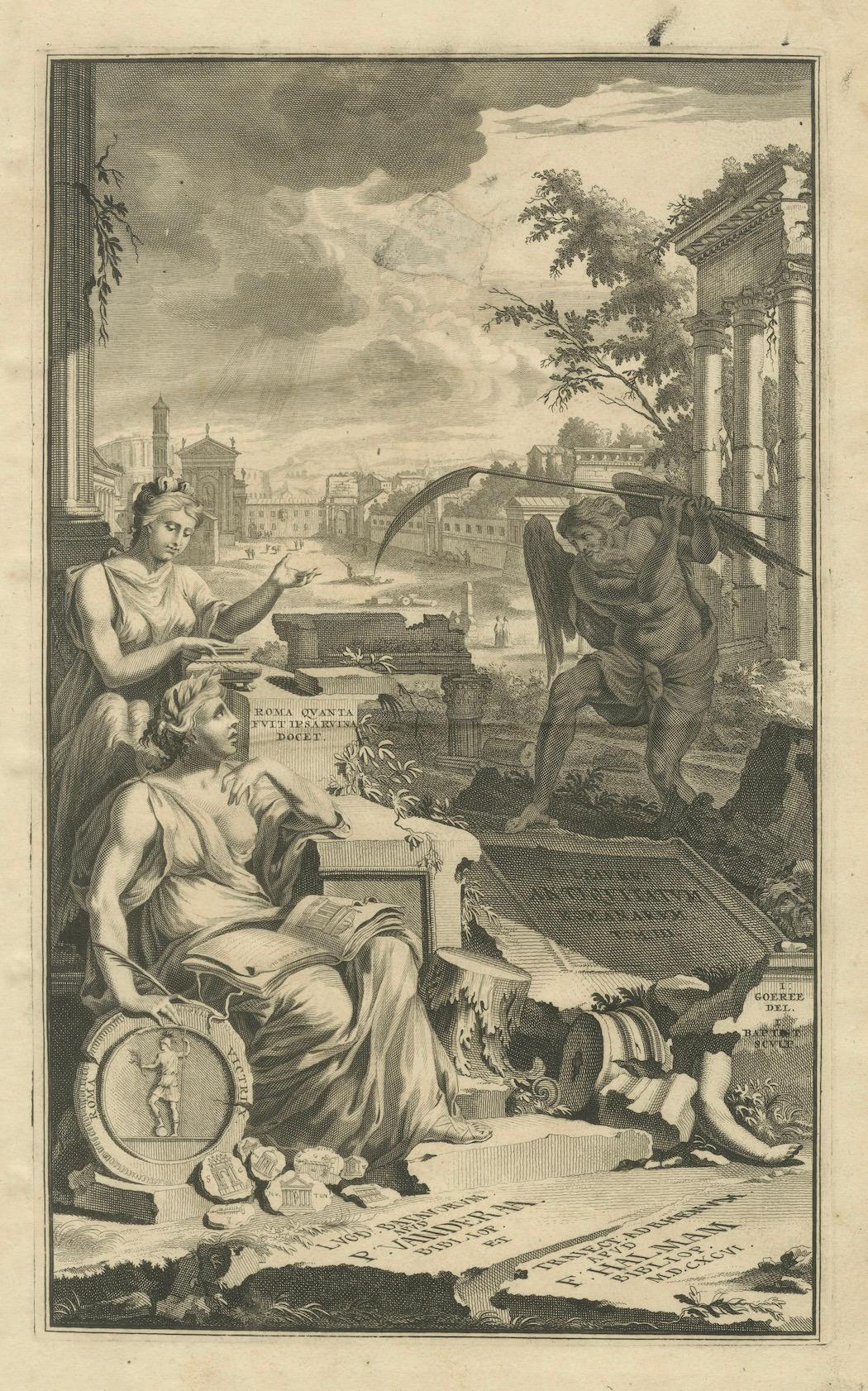
This engraving is an allegorical frontispiece featuring a depiction of the ruins of ancient Rome, emphasizing the enduring legacy of the city's grandeur through its remnants. The composition centers around two seated female figures, representing knowledge and history, surrounded by architectural fragments, including columns, capitals, and a Roman coin.
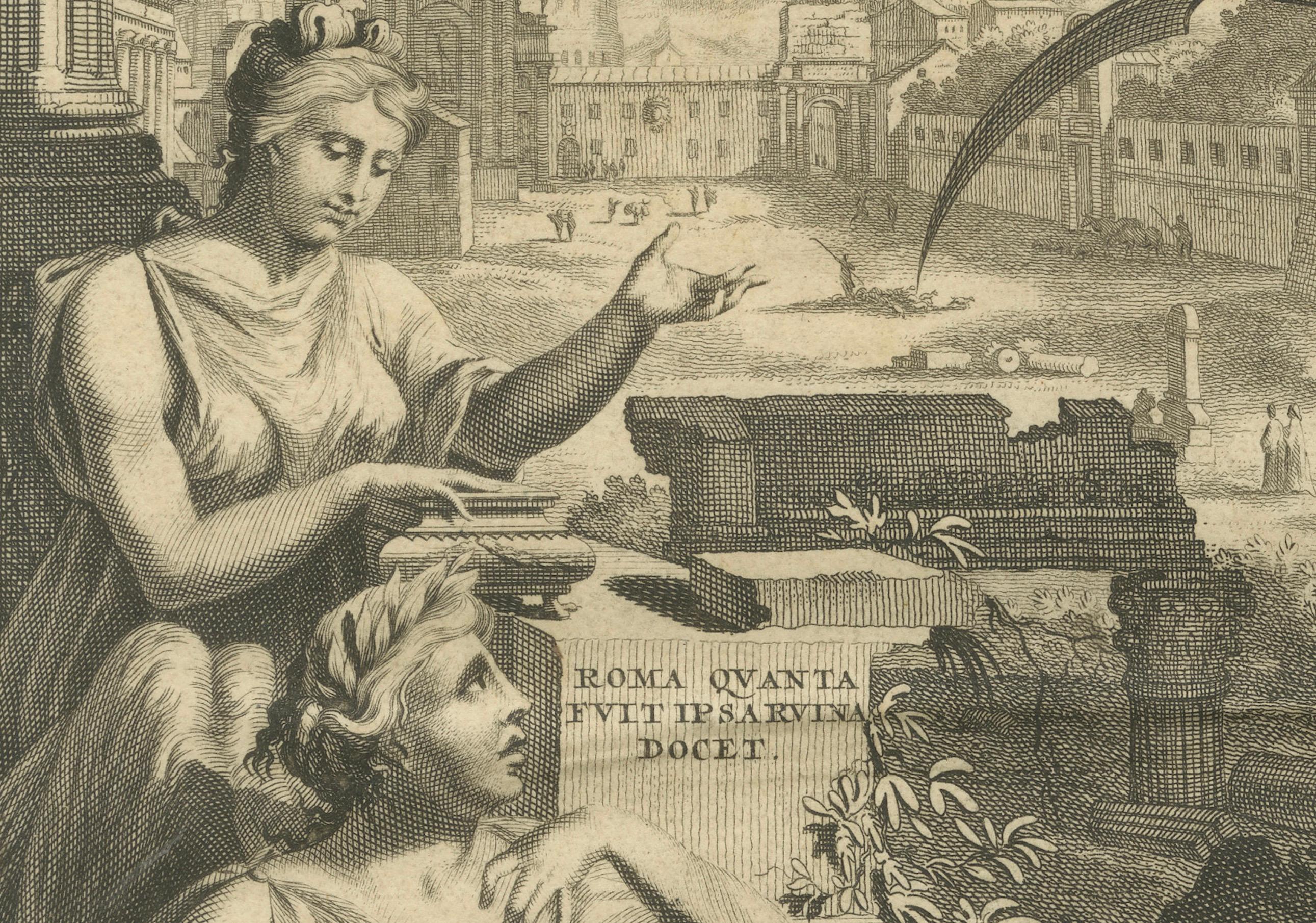
Above the scene, the Latin inscription Roma quanta fuit ipsa ruina docet (How great Rome was, its very ruins tell) is engraved on a plinth, reflecting on the historical and cultural significance of Rome's decay.
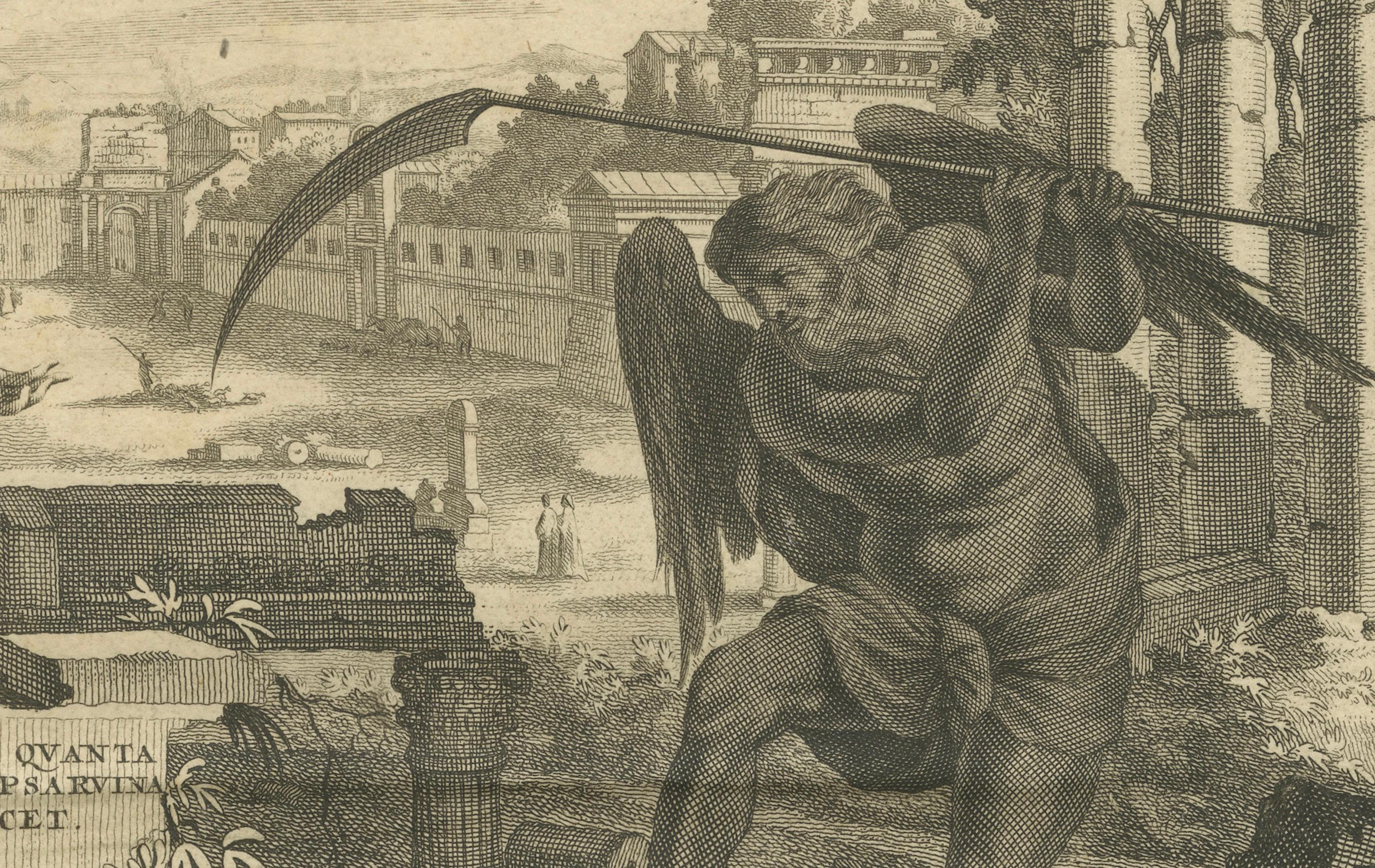
To the right of the image, the allegorical figure of Time is depicted as an aged man with wings and a scythe, symbolizing the inevitable passage of time and its impact on even the greatest civilizations. The background showcases a panoramic view of Rome, with ruins and classical architecture visible in the distance, further enhancing the theme of the city's former glory.
The engraving is attributed to Pieter van der Aa and François Halma, prominent Dutch publishers active during the late seventeenth century, as indicated by their names and the year MDCXCVI (1696) at the bottom of the image. This work likely served as a frontispiece for a scholarly book on Roman antiquities or history, such as Beschryving van Oud en Nieuw Rome, published by Halma in the early eighteenth century.
The detailed craftsmanship and allegorical elements highlight the publishers' dedication to combining art and scholarship in their works.
Good condition with minor age-related toning, faint creases, and small edge wear.