About this sheet
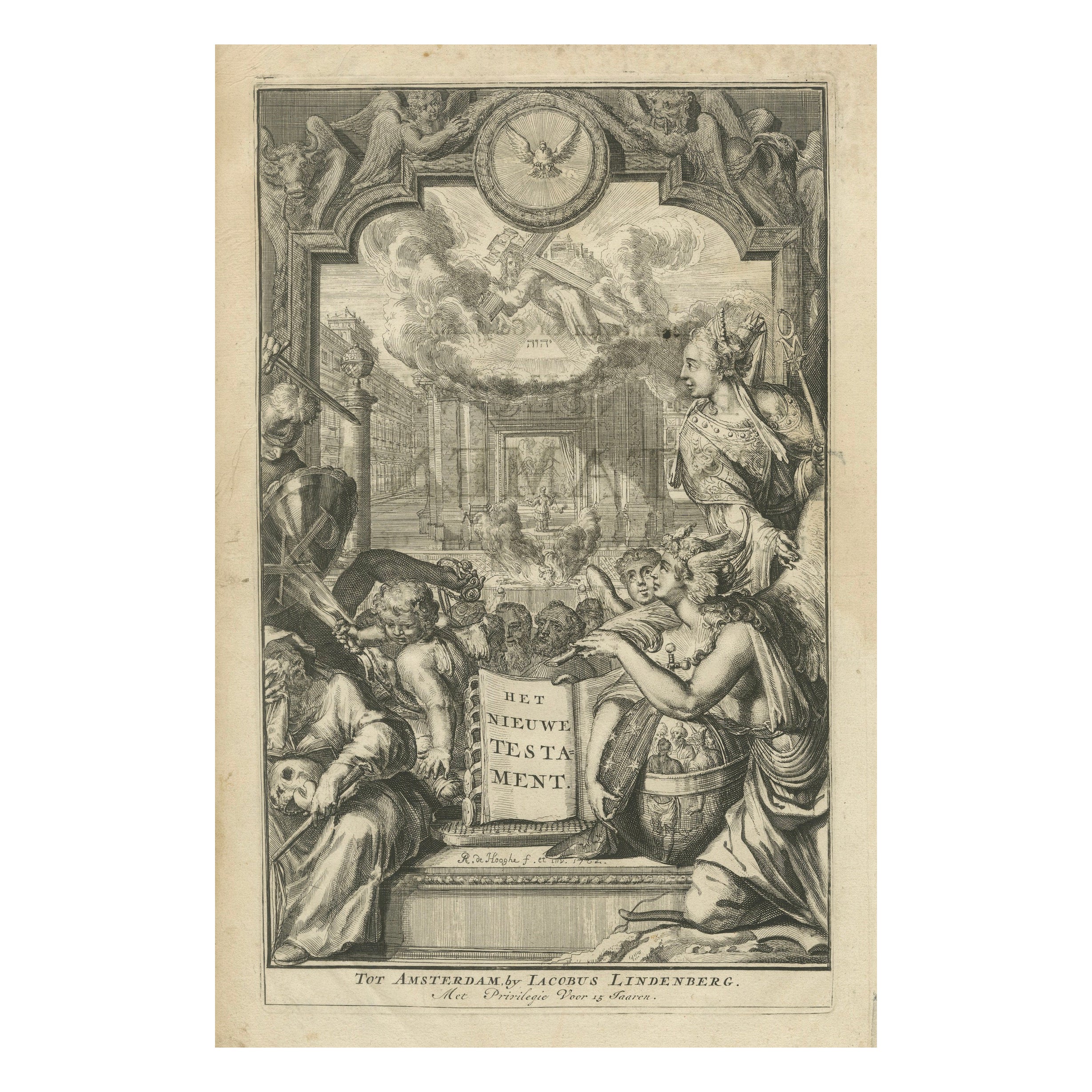
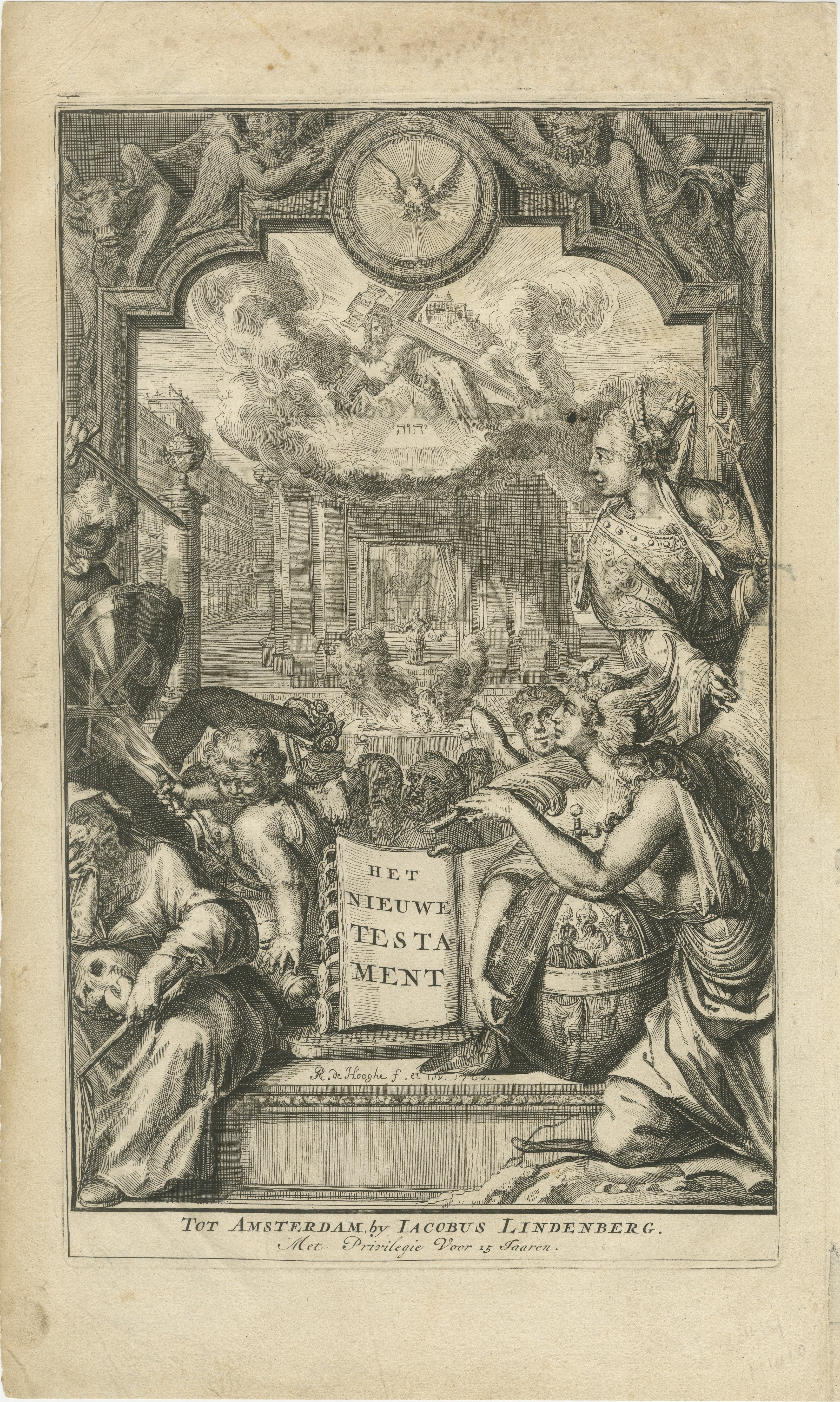
New Testament Title Page Engraving, Dutch Baroque, Circa 1700
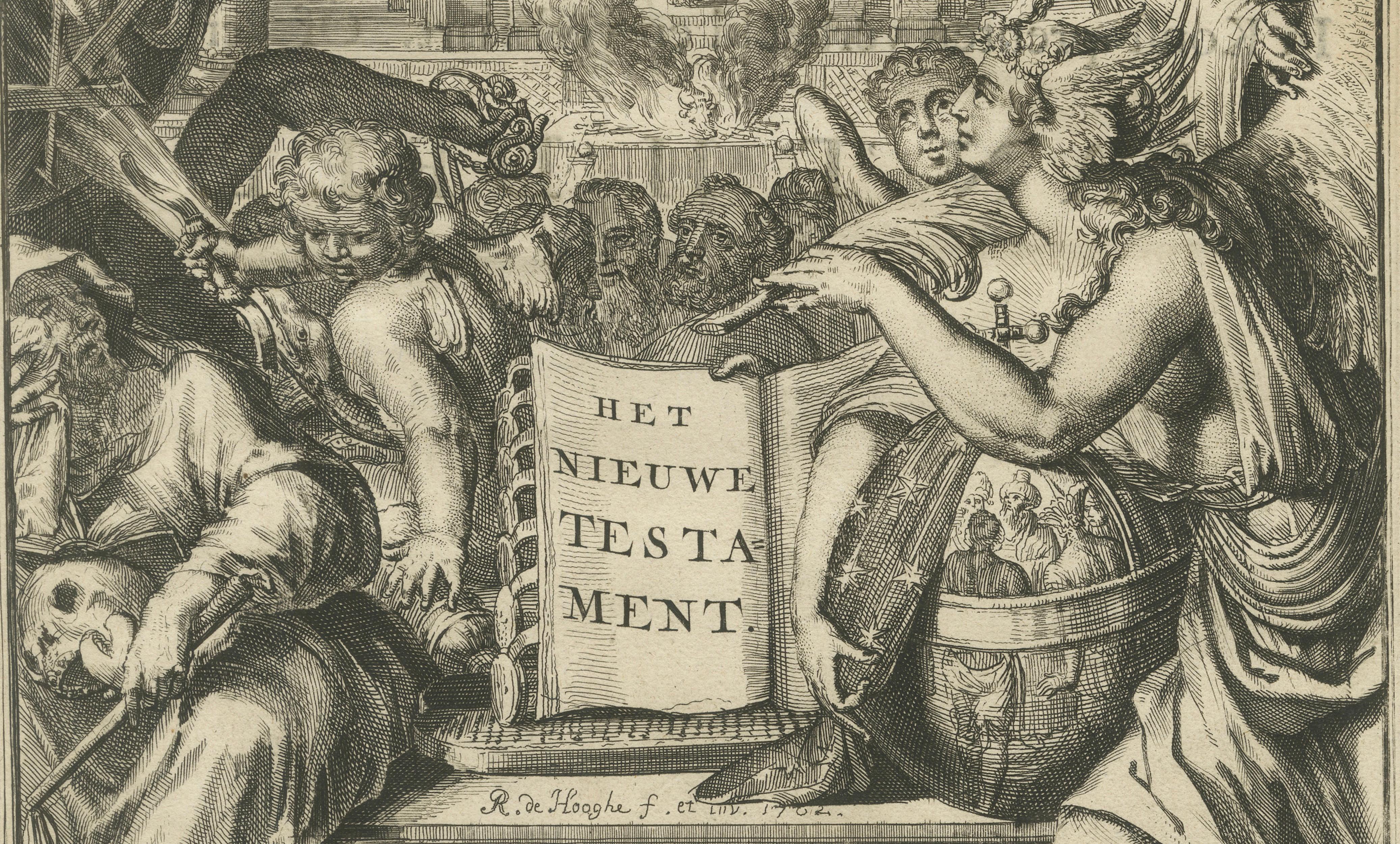
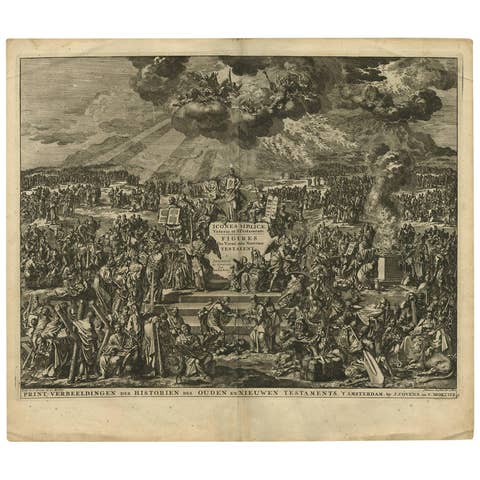
This richly engraved allegorical title page introduces a Dutch edition of the New Testament, published in Amsterdam around the turn of the 18th century. The composition is conceived in the dramatic Baroque style and presents a complex theological and symbolic program intended to frame and elevate the sacred text for the reader.
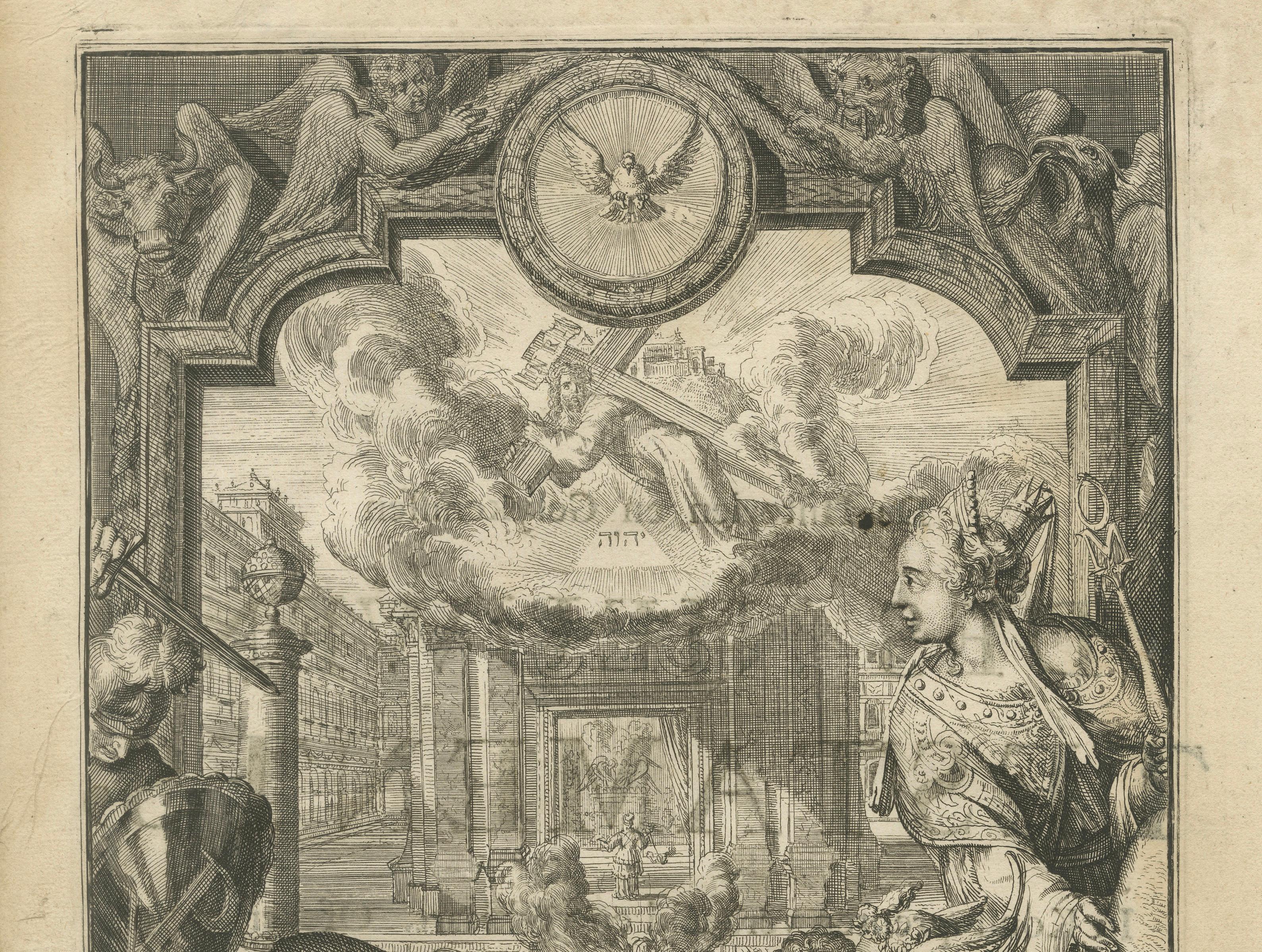
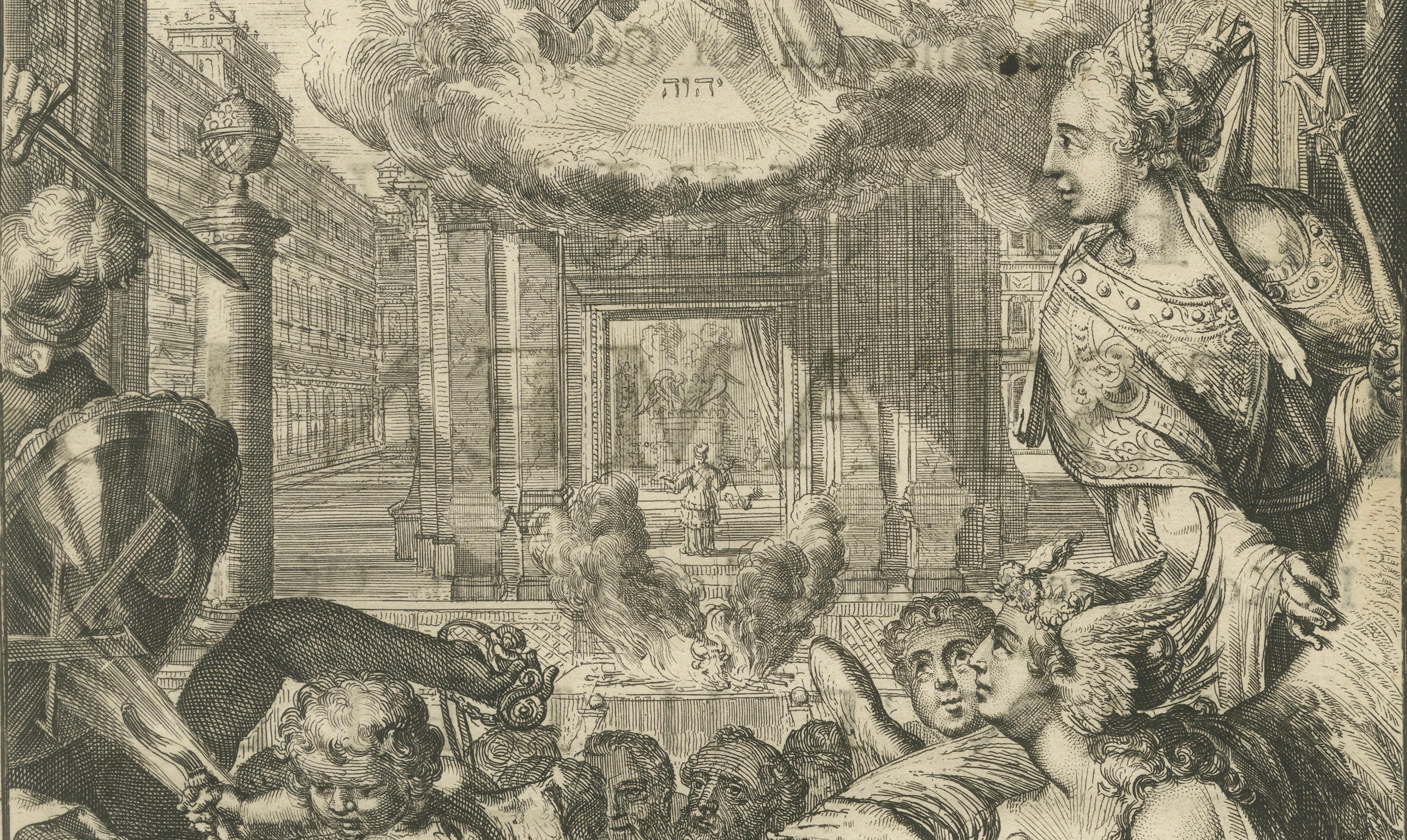
At the center foreground, the open book inscribed “Het Nieuwe Testament” is presented as the foundation of Christian faith. Surrounding it are allegorical and biblical figures rendered with great energy and theatricality. Above, Christ bearing the Cross emerges from swirling clouds, while the Holy Spirit appears as a radiant dove within a celestial medallion. Angels, prophets, and personifications populate the architectural setting, guiding the viewer’s eye from the earthly realm toward divine revelation.
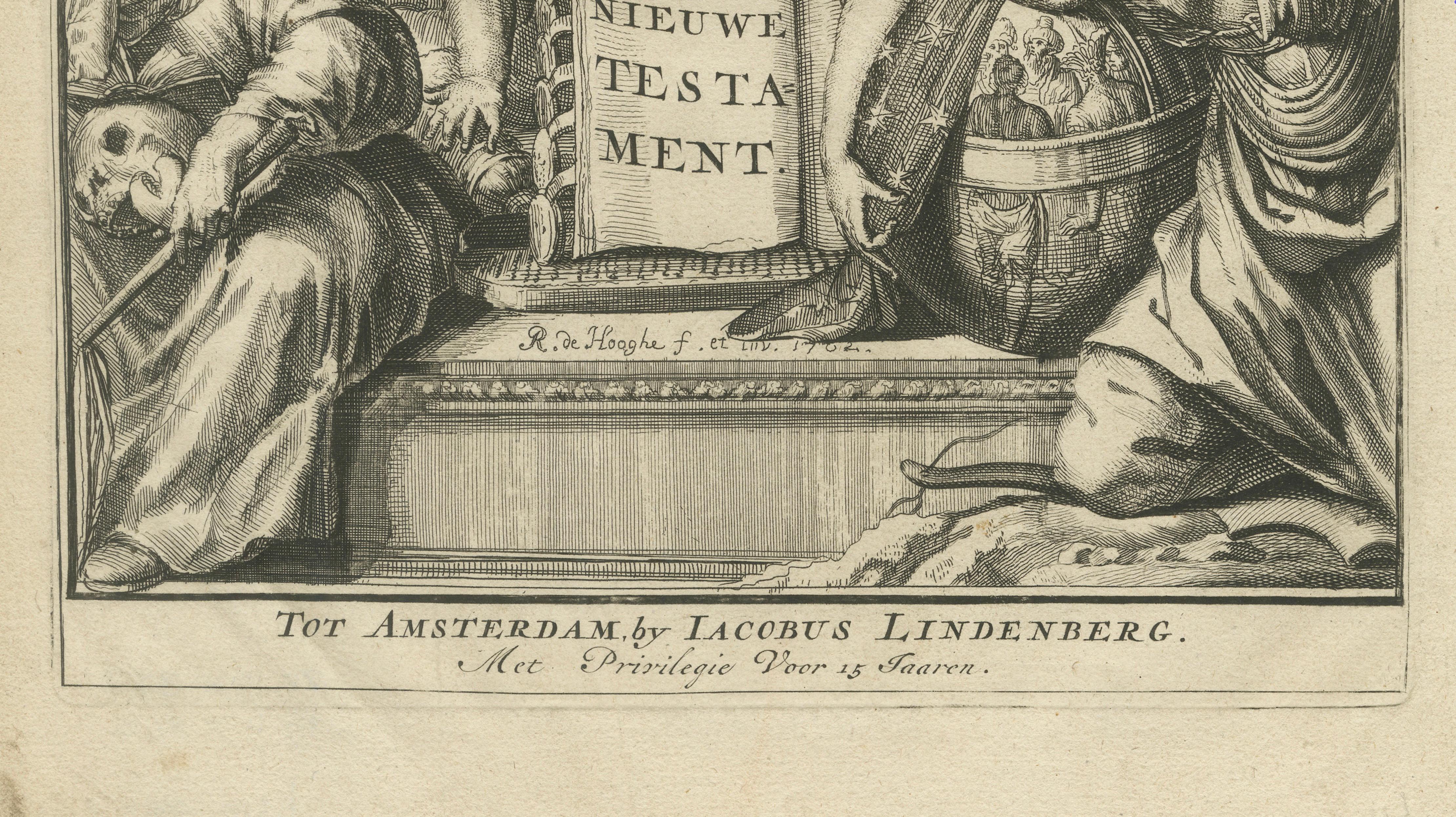
The engraving is traditionally attributed to Romeyn de Hooghe, one of the most accomplished and inventive Dutch engravers of the late 17th century, known for his expressive figures, dense symbolism, and masterful handling of complex allegorical scenes. The imprint at the bottom names the Amsterdam publisher Jacobus Lindenberg, who issued religious and scholarly works for a broad Protestant readership.
Such elaborate title pages served not merely as decoration but as visual theology, encapsulating the message and authority of Scripture in a single image. They were designed to impress, instruct, and prepare the reader for the sacred text that followed. Today, these engravings are appreciated both for their religious significance and for their strong decorative and graphic presence.
The print is offered as a working historical example rather than a pristine collector’s copy. It shows signs of age and use consistent with its origin from a bound volume, yet the engraved image remains clear, detailed, and visually compelling.
Condition report:
Engraving on paper. Overall age toning with light surface wear. Minor stains and handling marks visible. Margins present with some wear. Impression remains strong. Condition consistent with age and reflected in price.
Framing tips:
A generous mat is recommended to isolate the image from the frame and soften the aged paper tone. Dark wood, black, or ebonized frames complement the Baroque depth and contrast of the engraving. A floated presentation can also work well if the sheet edges are embraced as part of the object’s history.
Technique: Engraving
Maker: Attributed to Romeyn de Hooghe, published by Jacobus Lindenberg, Amsterdam, circa 1700