Sartorial Elegance of Kaluga: A Merchant and a Woman in Traditional Attire, 1814
€ 200
Original antique · The actual sheet photographed · Certificate of authenticity on request · Sold unframed · Worldwide shipping from € 15 (rates)
Date
1814
Sheet size
24 × 17 cm (9.4 × 6.7 in)
Condition
Good
Reference
BG-13605-4-23 & BG-13605-4-62
What the condition grades mean
Excellent
Bright and clean, with no faults worth mentioning.
Very good
Only light signs of age, such as faint toning.
Good
Normal signs of age for a sheet of this period: toning, some foxing, small marks or neat old repairs.
Fair
Clear faults such as staining, tears or repairs, priced to match.
Every fault we see is written in the condition note, and the whole sheet is shown uncropped in the photos.
Condition
Good, given age. General age-related toning and/or occasional minor defects from handling. Right edge rough, but leaving enough space for proper framing. Please study scan carefully.
About this sheet
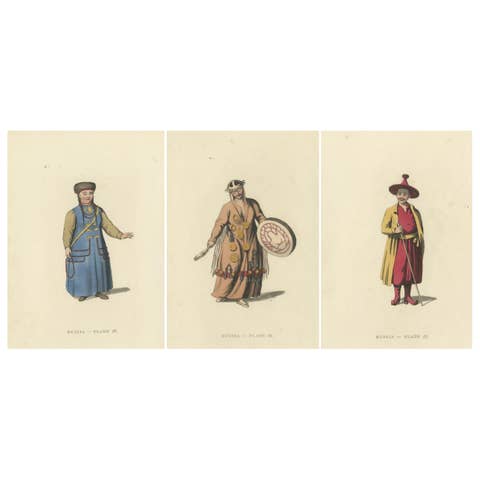
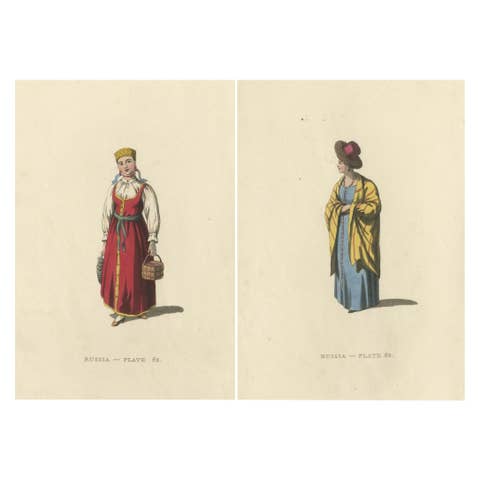
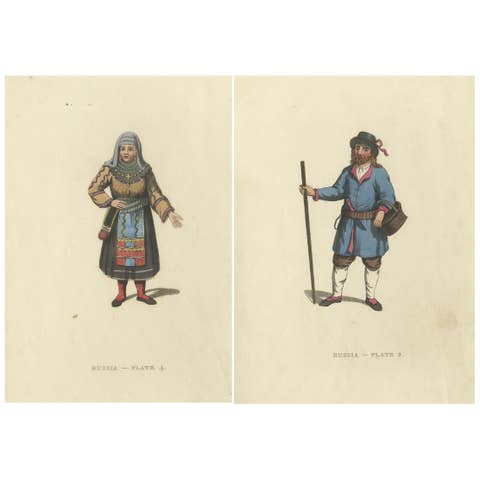
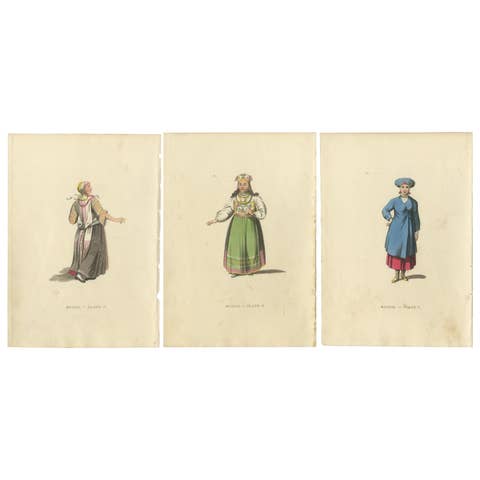
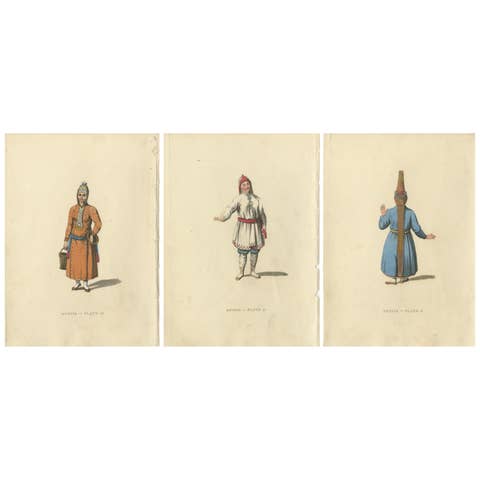
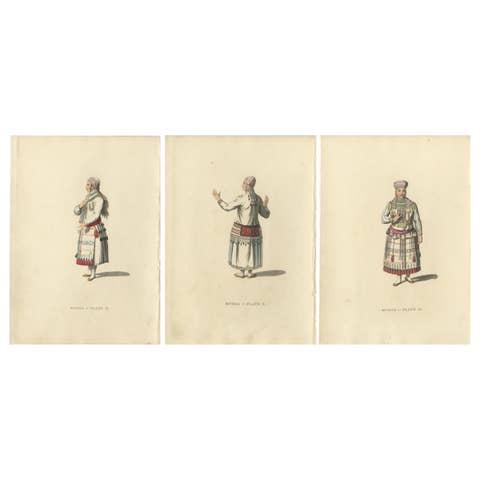
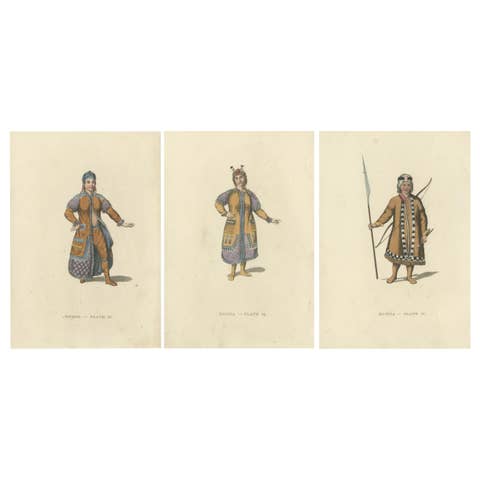
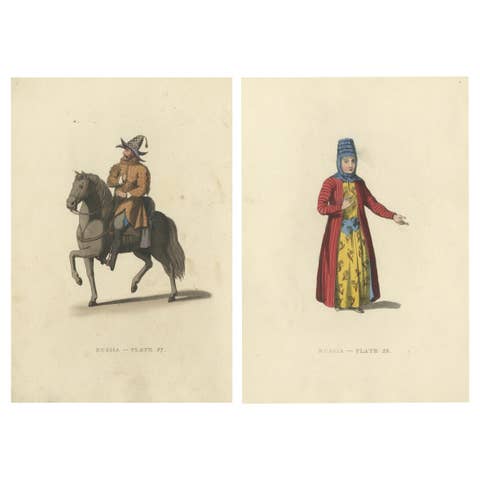
The two engravings illustrate the regional dress of inhabitants from Kaluga, Russia, highlighting the unique characteristics of their traditional attire:
1. A Woman from Kalouga in Her Summer Dress: This engraving would depict a woman dressed in the light, comfortable attire appropriate for the warmer season. Her outfit includes a long, flowing skirt and a bodice or blouse that is both decorative and practical. The woman's dress is adorned with local patterns and embroidery unique to the Kaluga region, reflecting the summer palette and style of the time.
2. A Merchant of Kalouga: The engraving of the merchant would typically show a man in the attire suitable for his profession, which includes practical yet presentable clothing. A merchant's outfit consists of a long coat, vest, and trousers, along with accessories such as a hat and boots. The attire would reflect his status and need for mobility and comfort as he conducts his business.
William Alexander’s "Picturesque Representations of the Dress and Manners of the Russians" serves as a significant historical compendium, capturing the essence of early 19th-century Russian dress across different classes and regions. These detailed engravings are invaluable in understanding the social customs, economic activities, and cultural aesthetics of the period, presented with an aim to acquaint Western viewers with the rich tapestry of Russian life beyond the metropolitan centers. The precision and vividness of these images bear witness to a world that was, at the time, largely inaccessible to many outside of Russia.