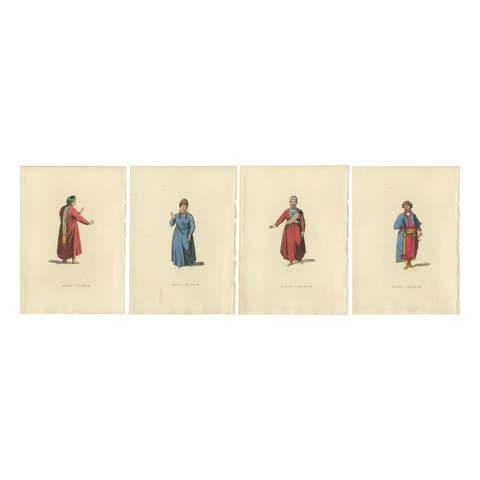
Engravings Depicting the Dress and Manners of the Yakouti Tribes in Russia, 1814
€ 330
One of a kind: this is the sheet in the photographs. Ships from Langweer, the Netherlands.
Date
1814
Sheet size
24 × 17 cm (9.4 × 6.7 in)
Condition
Good
Reference
BG-13605-4-2 & BG-13605-4-3 & BG-13605-4-61
Condition
Very good, given age. General age-related soiling, toning and/or occasional minor defects from handling, adding to its patina. Right side edge rough cut from the book, but leaving enough space for proper framing. Please study scans carefully.
About this sheet
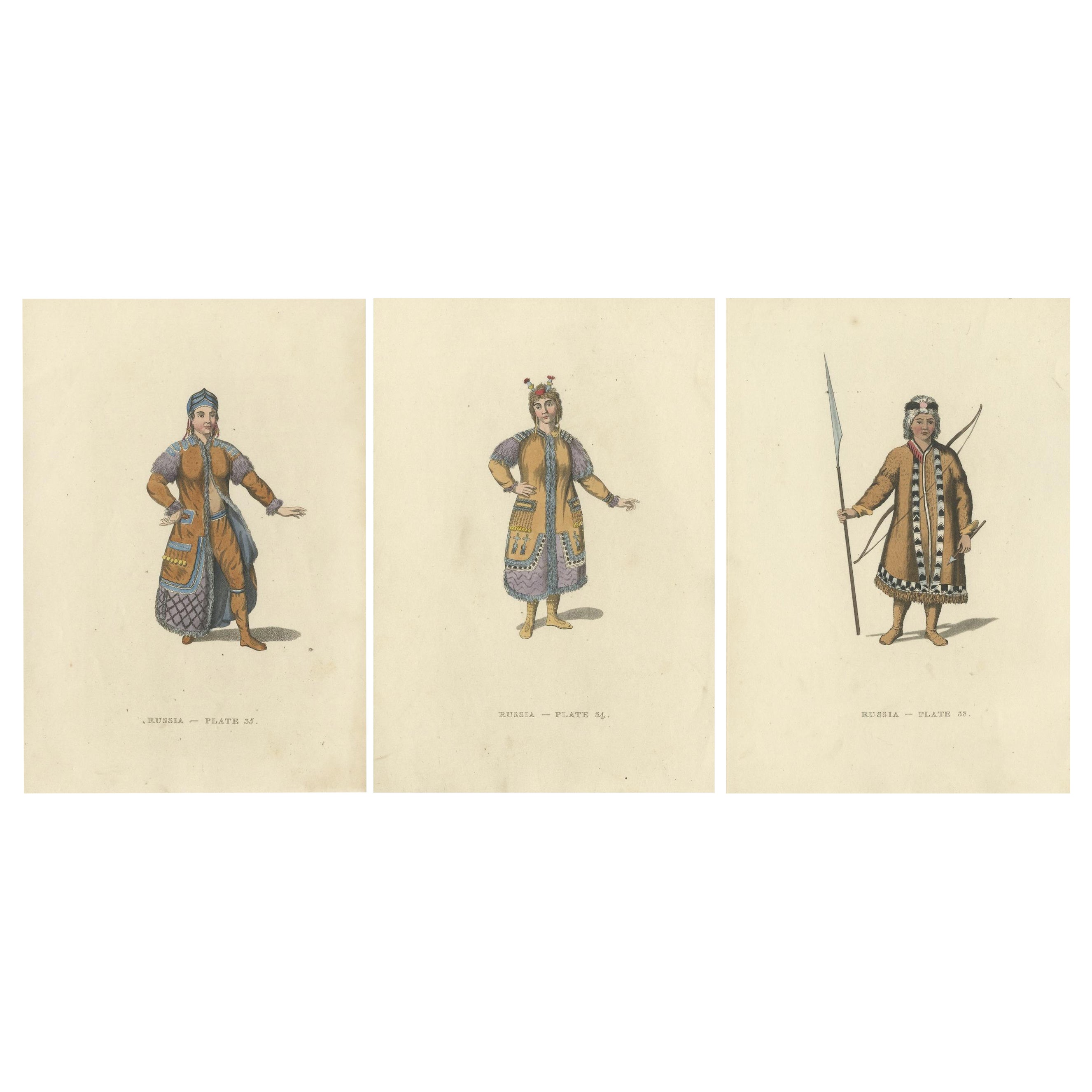
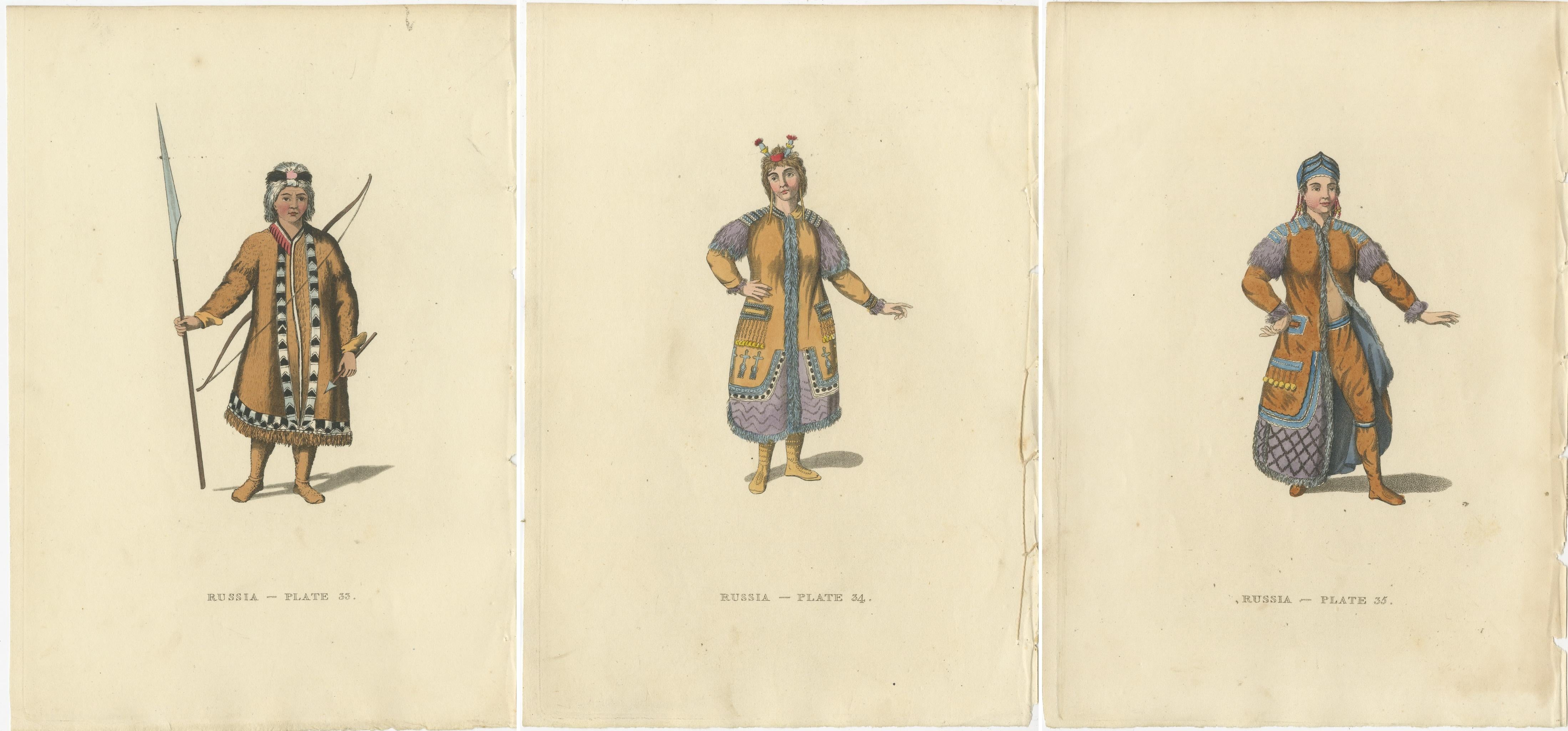
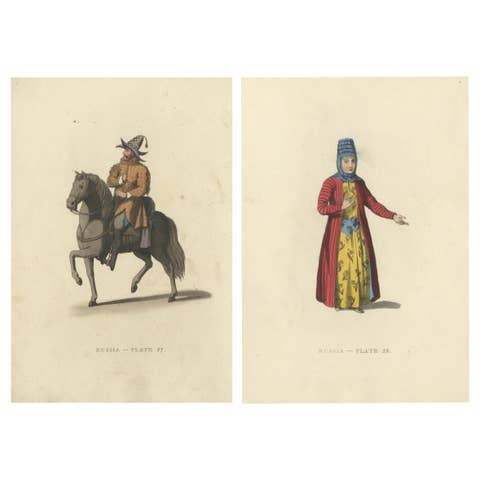
These original antique images are hand-colored and from the publication "Picturesque Representations of the Dress and Manners of the Russians," which includes sixty-four colored engravings with descriptions. The writer of this work is William Alexander, and it was published by John Murray in 1814. This work aimed to illustrate and describe the traditional dress and customs of various Russian peoples, including indigenous groups, at the beginning of the 19th century. It serves as an important historical record of cultural attire and practices of that era. The detailed colored engravings were a common method of such documentation in a time before photography, intended to provide the Western audience with a visual account of distant cultures.
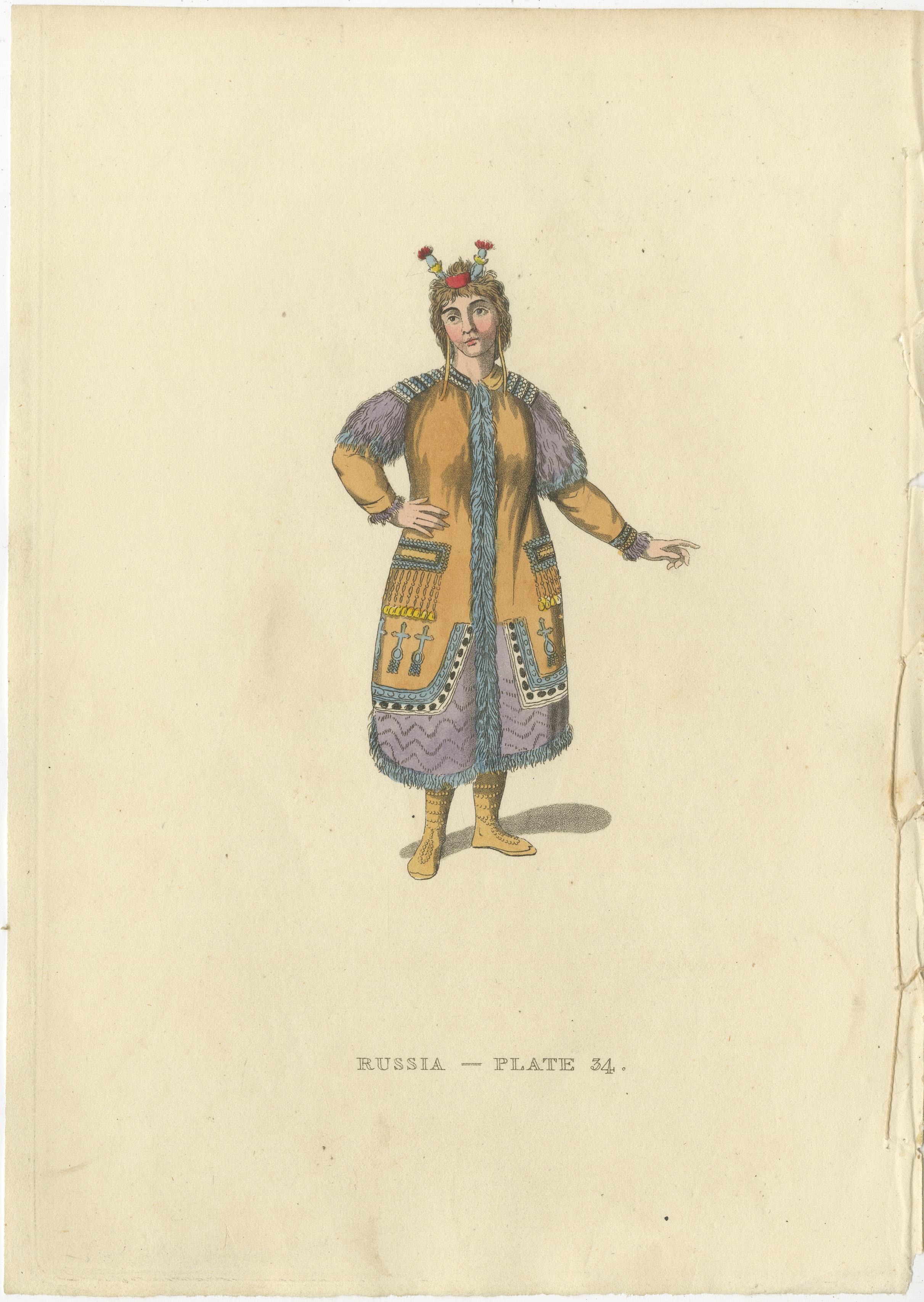
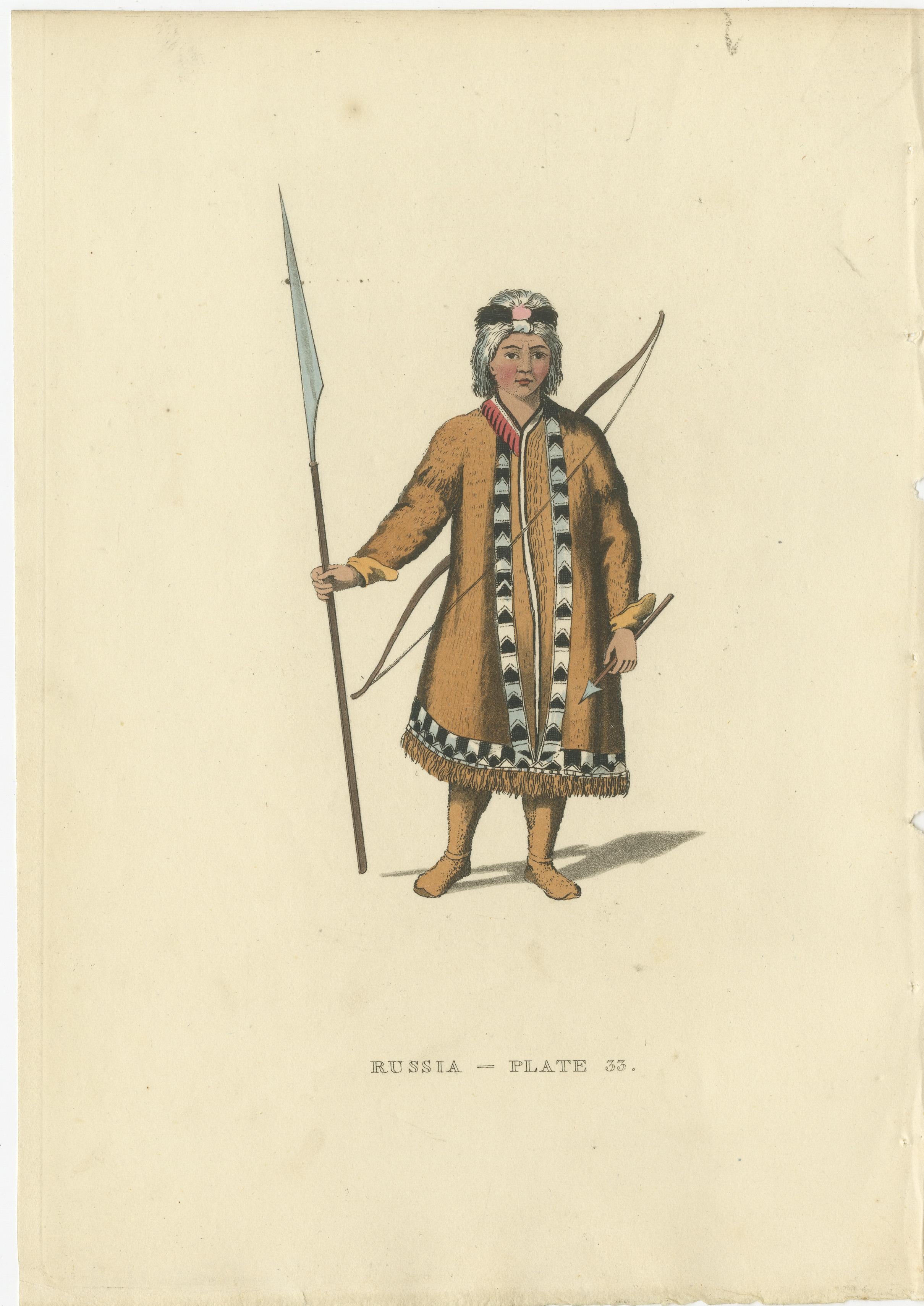
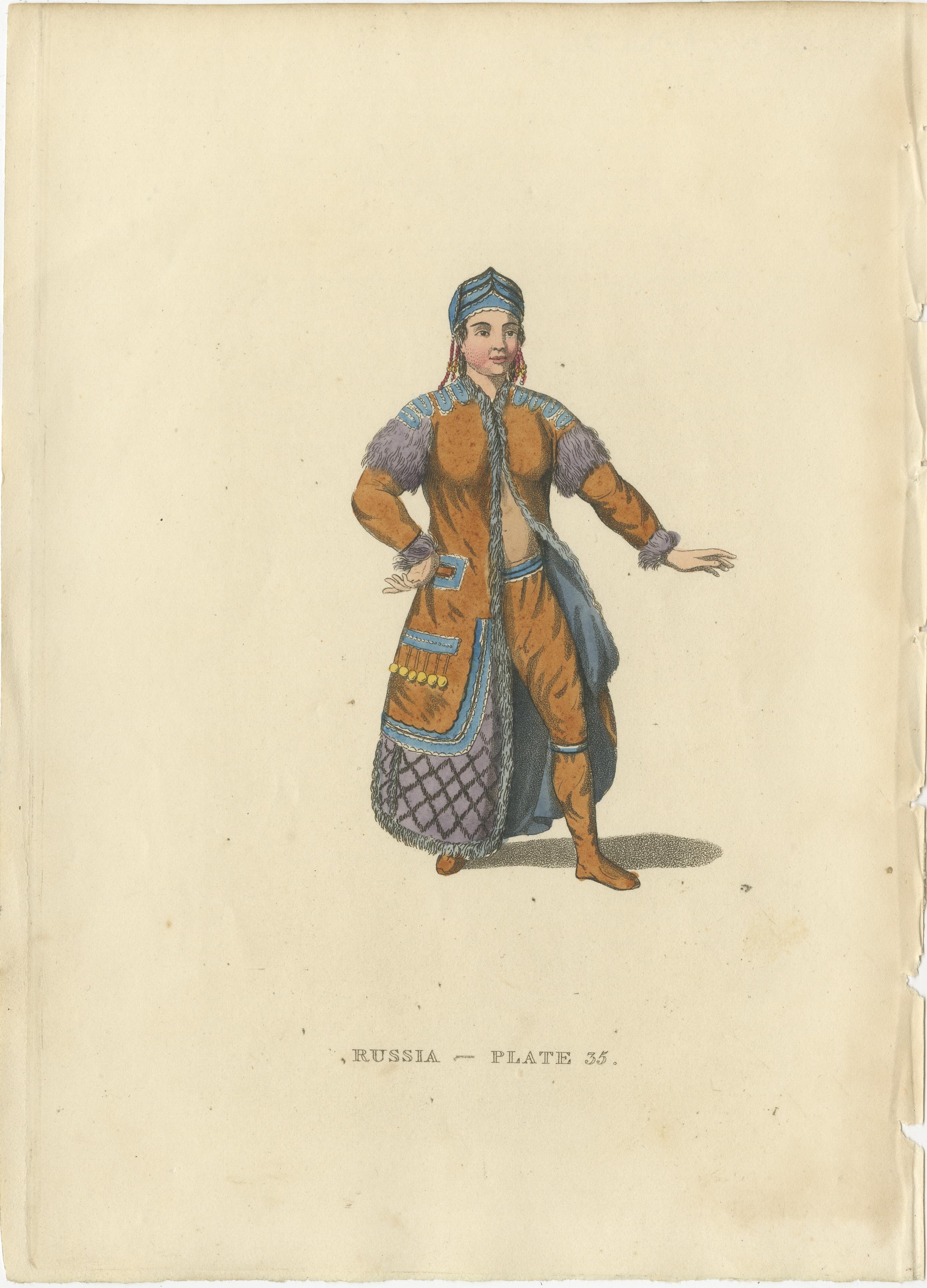
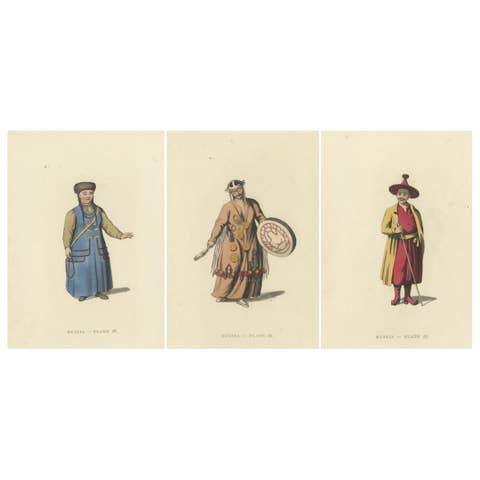
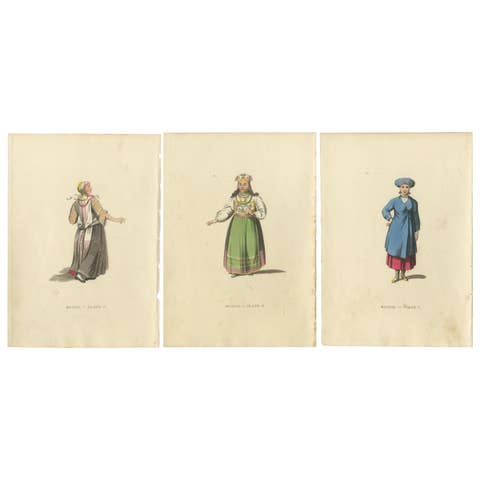
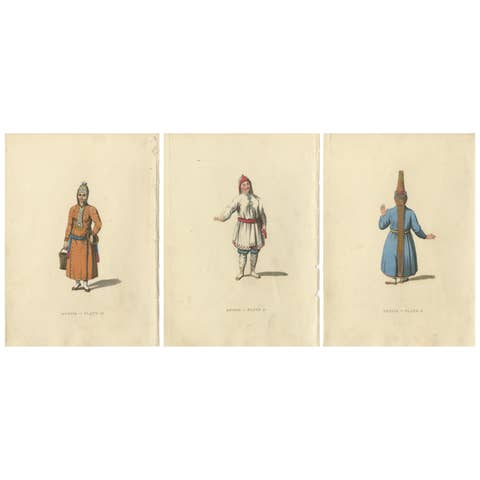
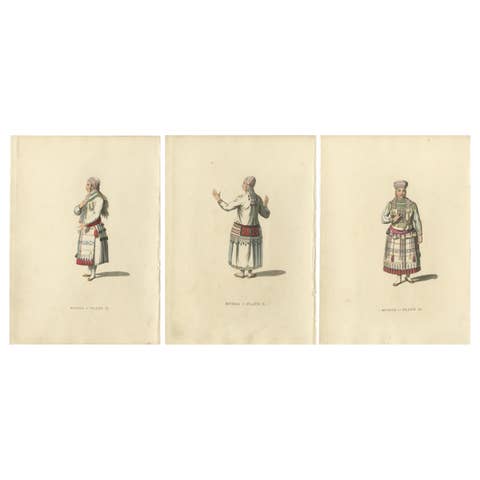
The three engravings depict individuals from the Yakut people, also known as the Sakha, an ethnic group who live in the Russian republic of Sakha (Yakutia). These images are specifically labeled as a Yakouti Tartar, a female Yakouti, and an unmarried female Yakouti.
The first image shows a Yakouti Tartar. This individual is depicted wearing a heavy coat adorned with intricate patterns and fur trimming, possibly indicating the cold climate they inhabit. The coat features a high collar and is cinched at the waist, flowing down to the mid-thigh. The sleeves are detailed with patterned bands at the wrists. The person wears boots and a hat with colorful details, possibly indicating a status or role within the community.
The second image presents a female Yakouti in traditional dress. Similar to the first figure, she is also clothed in a heavily adorned and fur-trimmed coat, highlighting the cultural emphasis on warmth and functionality in attire. Her outfit is ornamented with distinct patterns and appears to have an apron-like garment over the front, suggesting a layering of clothing typical of the region's traditional dress. Her headwear is less elaborate than the male's but still features colorful decoration.
The third image features an unmarried female Yakouti, distinguished by her attire and possibly her headwear or hairstyle, which may reflect her marital status according to cultural norms. Her coat is ornate, with colorful embroidery and fur trim, similar to the others but with its unique style and pattern, hinting at her individual status or family affiliation.
All three figures are standing in a neutral pose, which was common for portraiture of this period. The detailed colored engravings were designed to provide Western audiences with a visual account of distant cultures and are an essential historical record of cultural attire and practices from the early 19th century. These representations are valuable for understanding the traditional clothing and social structures of the Yakut people during this time.
The Yakut people, also known as the Sakha, primarily reside in the Sakha Republic (Yakutia), which is a large federal Russian republic in northeastern Siberia. Yakutia is known for its extreme climate, with some of the coldest winter temperatures on Earth, vast wilderness, and sparse population. The Yakuts have traditionally been engaged in occupations like horse breeding and cattle raising, adapted to the severe climate of the region. Their culture, language, and traditions are distinct and have been preserved over centuries, even with the changing political landscapes.