Traditional Mongolian Attire in Alexander's Russian Ethnographic Engraving, 1814
€ 330
One of a kind: this is the sheet in the photographs. Ships from Langweer, the Netherlands.
Date
1814
Sheet size
24 × 17 cm (9.4 × 6.7 in)
Condition
Good
Reference
BG-13605-4-20 & BG-13605-4-24 & BG-13605-4-25
Condition
Very good, given age. General age-related toning and/or occasional minor defects from handling. Lower edge and lower right corners rough and cut short, but leaving enough space for framing. Please study scans carefully.
About this sheet
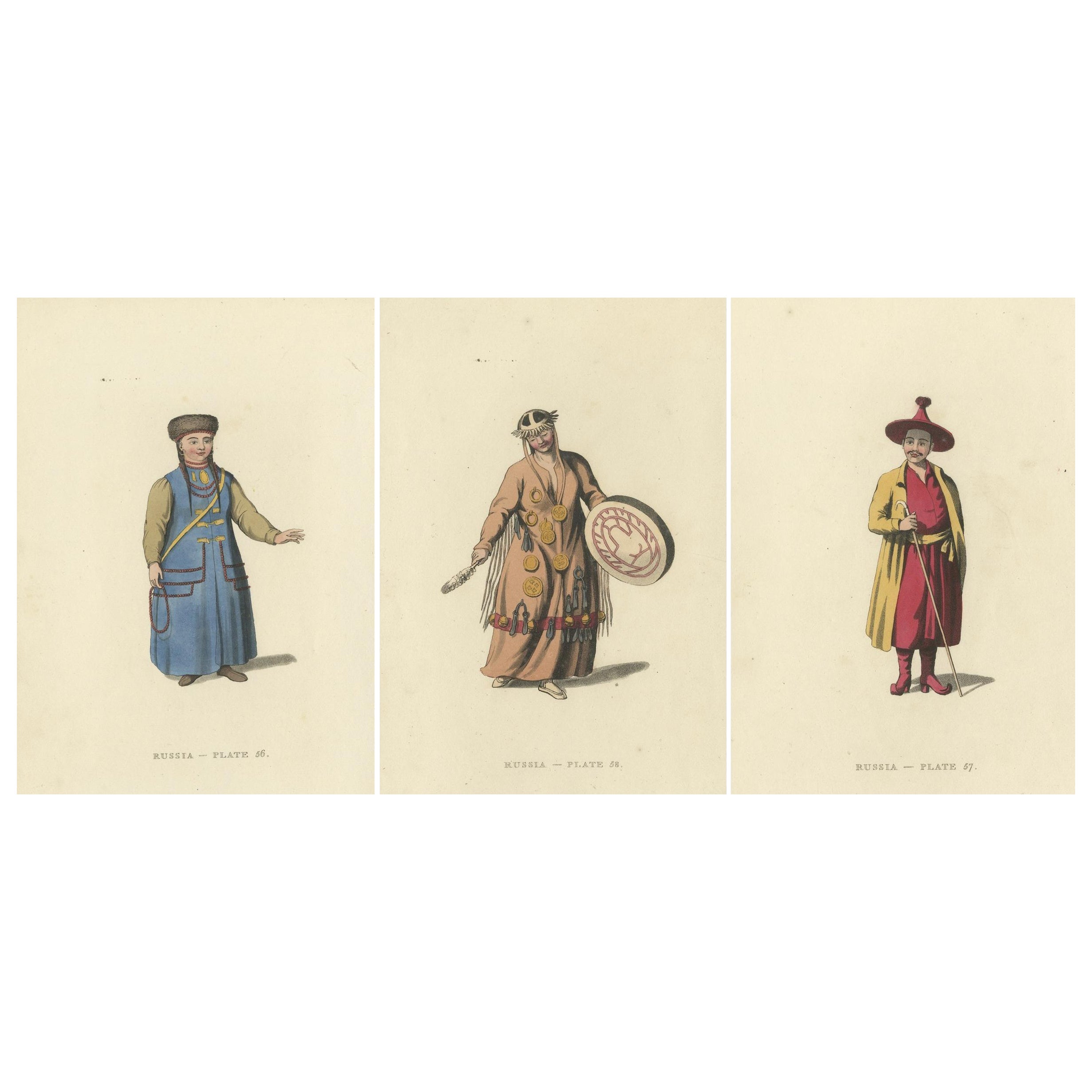
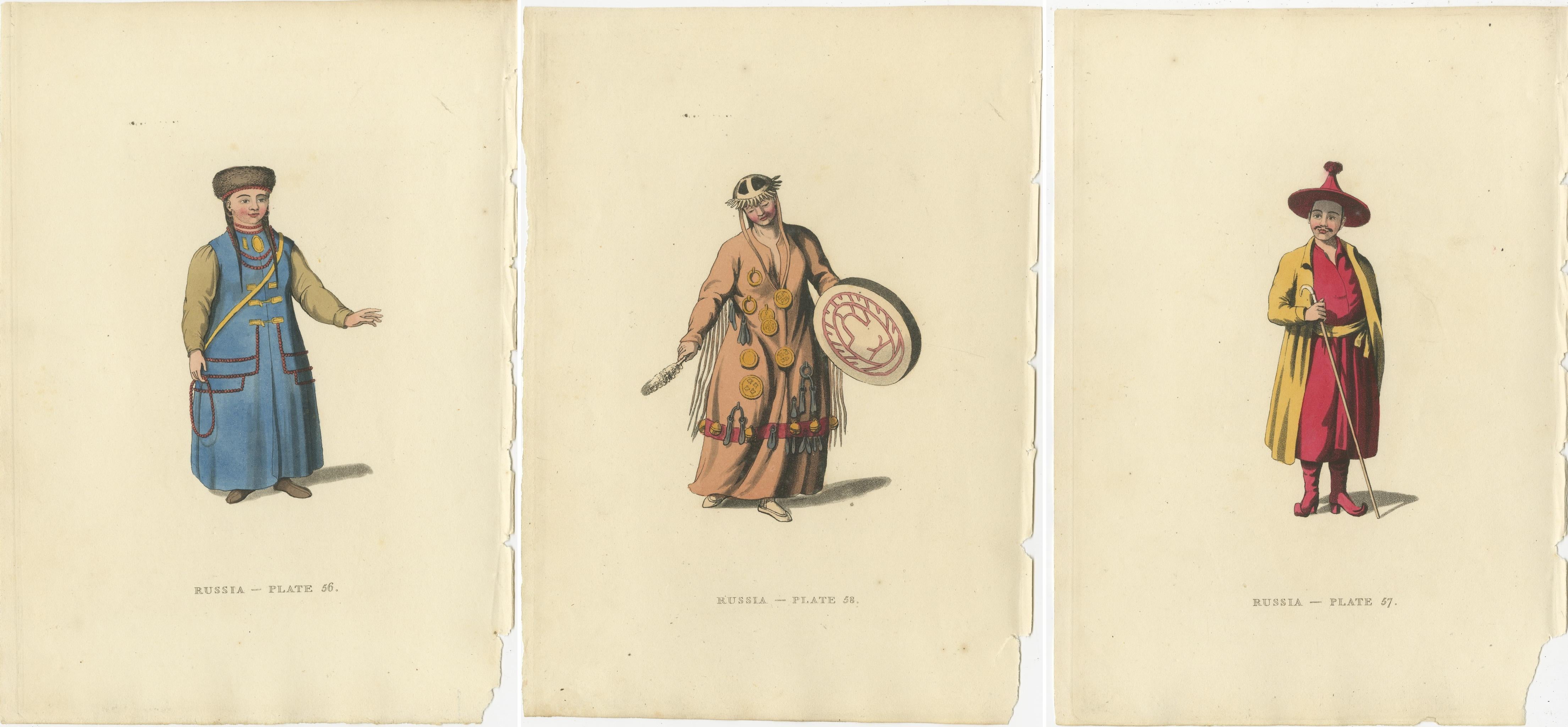
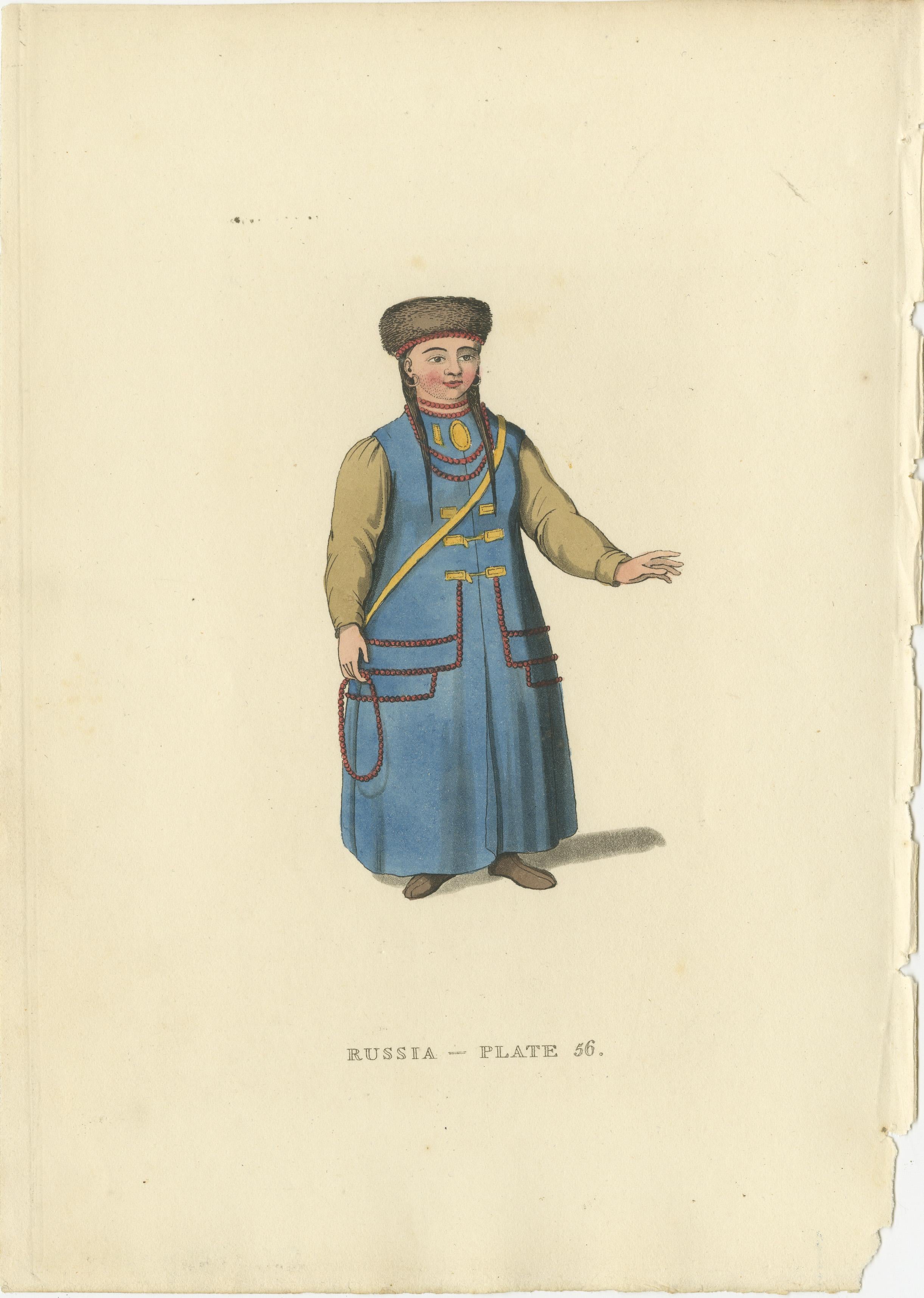
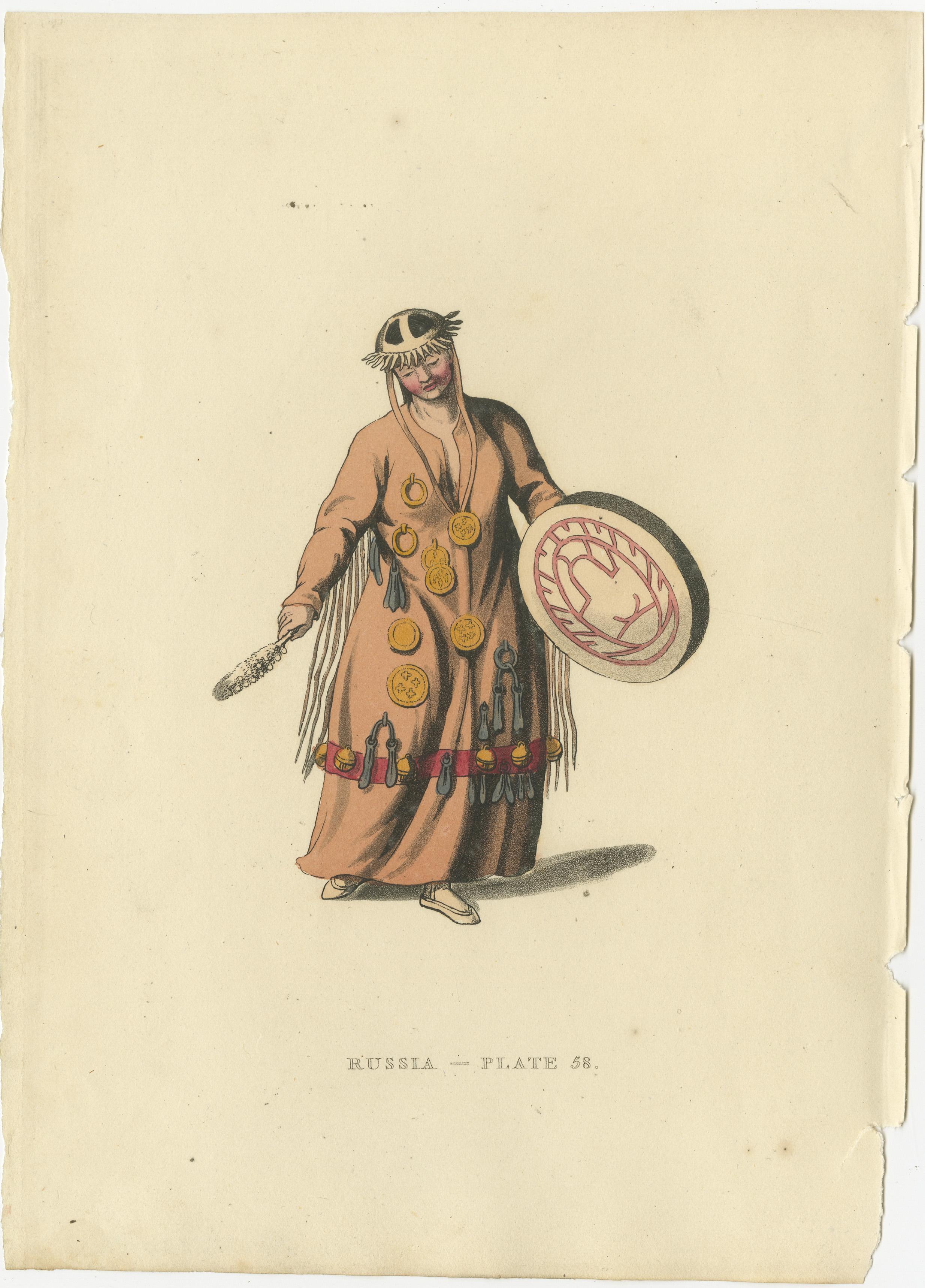
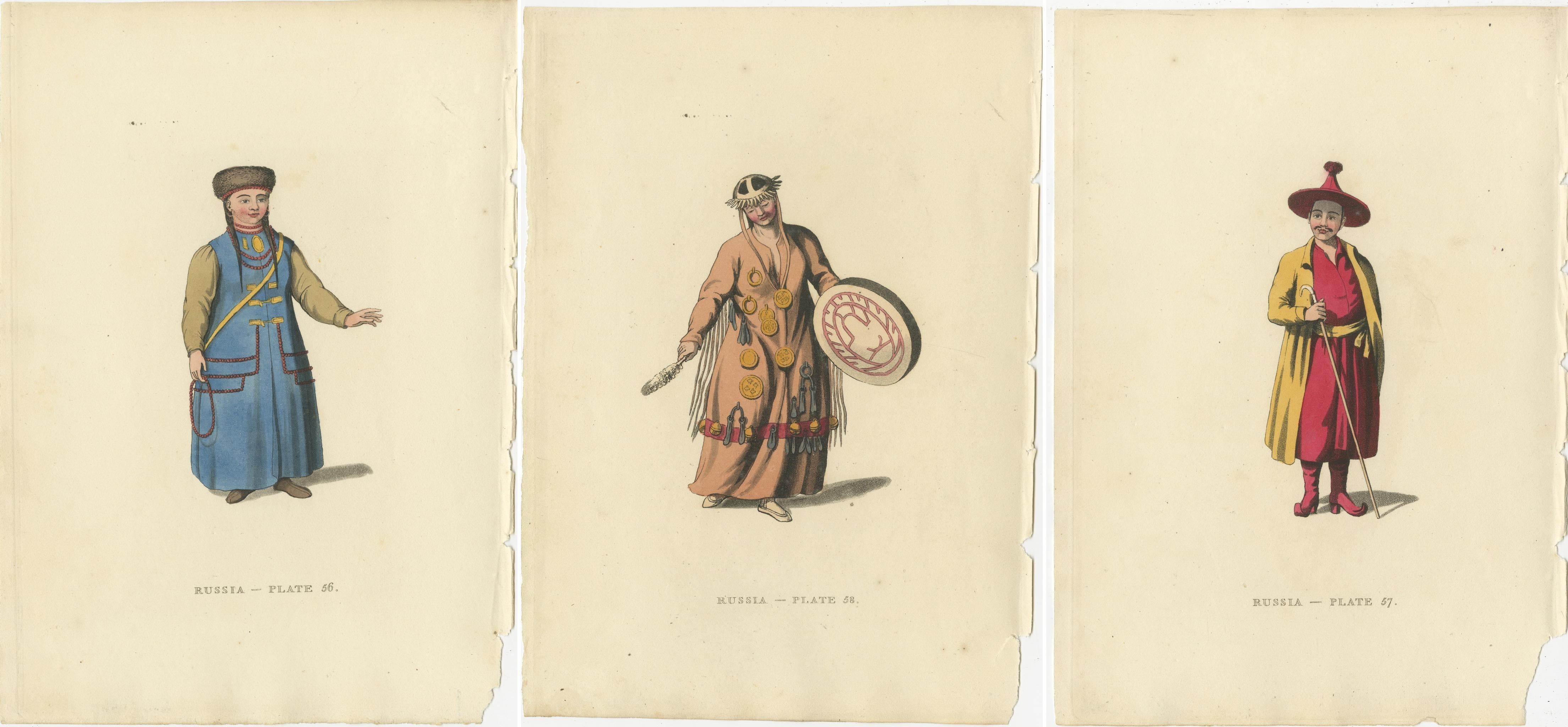
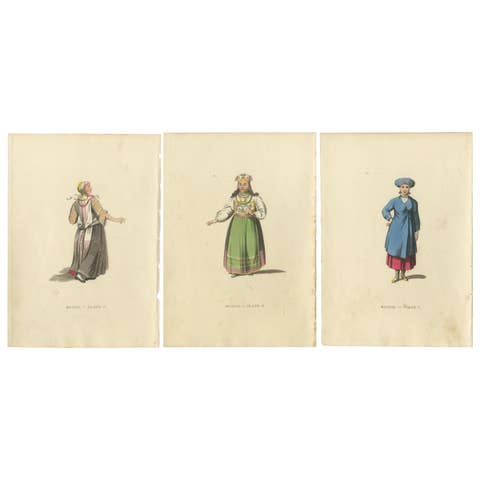
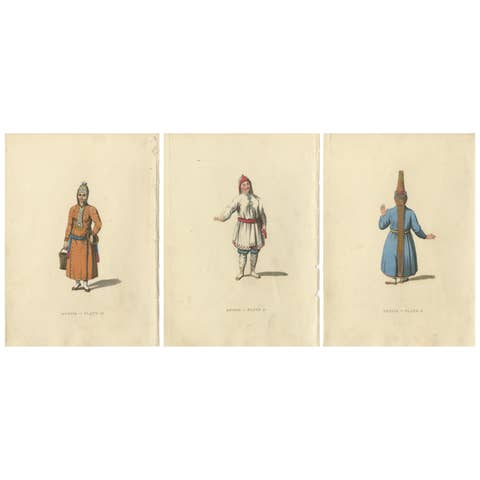
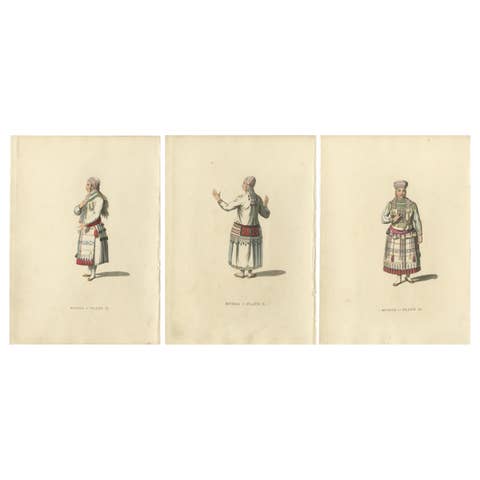
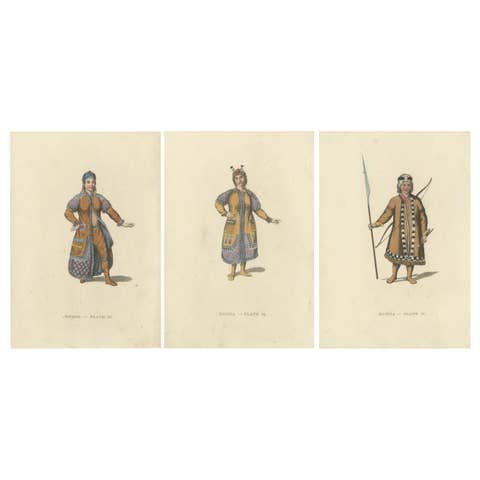
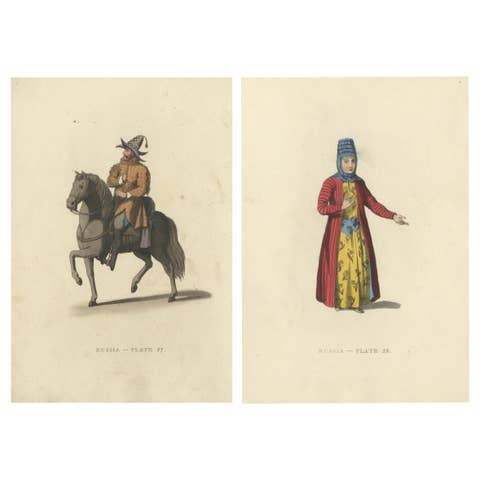
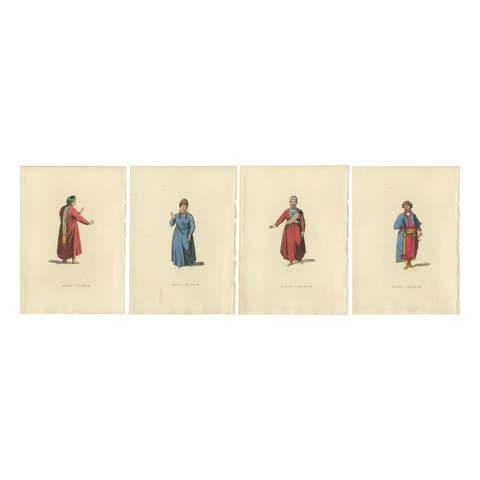
The images are original hand-colored engravings from William Alexander's "Picturesque Representations of the Dress and Manners of the Russians," published in 1814 by John Murray. This work is notable for its detailed illustrations of traditional Russian attire and cultural practices across various regions and peoples within the vast Russian Empire.
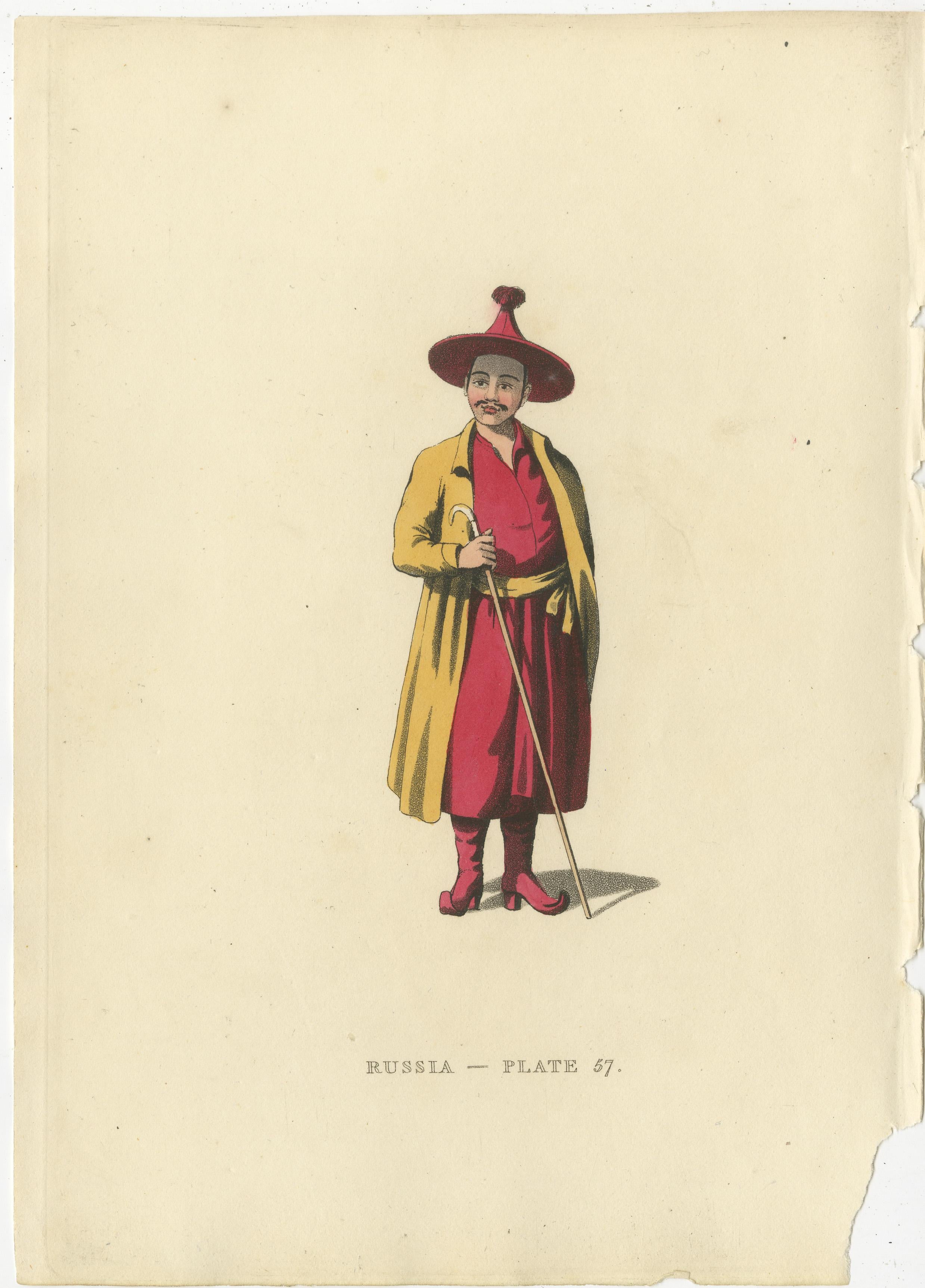
The original engravings from the early 19th-century work by William Alexander, are depicting traditional Mongolian attire and figures of cultural and religious significance in Mongolian society.
1. **A Mongole Woman**: This image shows a Mongole woman dressed in traditional attire. Her costume likely includes a long robe or deel, which is a characteristic element of Mongolian dress. The clothing is both practical for the climate and indicative of social status. The use of vibrant colors and accessories would be typical to represent her cultural identity.
2. **A Mongole Priest or Lama**: The second image depicts a Mongole priest or lama, identified by the religious attire and possibly the ritual objects he carries. Lamas are teachers and spiritual leaders within Tibetan Buddhism, which is also practiced in Mongolia. The illustration likely aims to represent the lama's important role in religious ceremonies and daily spiritual life.
3. **A Mongole Shaman**: The third engraving illustrates a Mongole shaman, recognizable by the ritualistic dress and objects, such as the drum used in shamanic practices. Shamans in Mongolian culture are believed to have the ability to interact with the spirit world, conduct rituals, and act as healers. The attire, with its symbolic decorations, is intended to protect the shaman and facilitate communication with spirits.
Each engraving is a vivid portrayal of the individuals that would have been central to the spiritual and cultural life in Mongolian society. They reflect the importance of religious and shamanic practices, the distinctiveness of traditional Mongolian dress, and the roles these individuals played within their communities. The images are valuable records of the cultural heritage and the diverse ethnic tapestry of early 19th-century Russia, as Mongolia was under Russian influence during this period. The attention to detail in these engravings provides a rich source for understanding the aesthetics and symbolism in traditional Mongolian attire and ceremonial dress.