Kirghiz Elegance Engraved: A Study of 19th Century Central Asian Attire, 1814
€ 240
One of a kind: this is the sheet in the photographs. Ships from Langweer, the Netherlands.
Date
1814
Sheet size
24 × 17 cm (9.4 × 6.7 in)
Condition
Good
Reference
BG-13605-4-7 & BG-13605-4-8
Condition
Very good, given age. General age-related toning and/or occasional minor defects from handling. Soiling on one print, adding to its patina. Right edge rough, but leaving enough space for proper framing. Please study scan carefully.
About this sheet
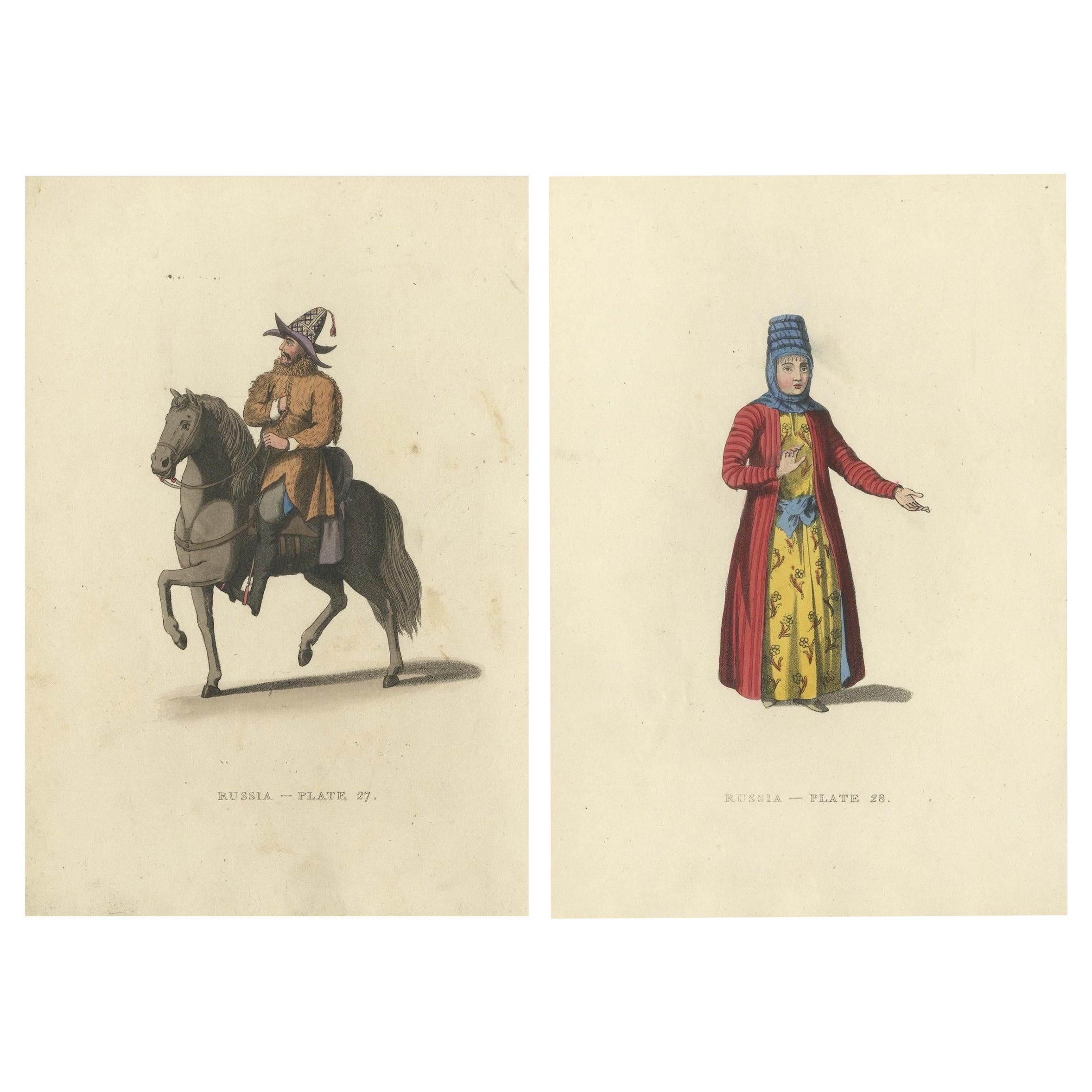
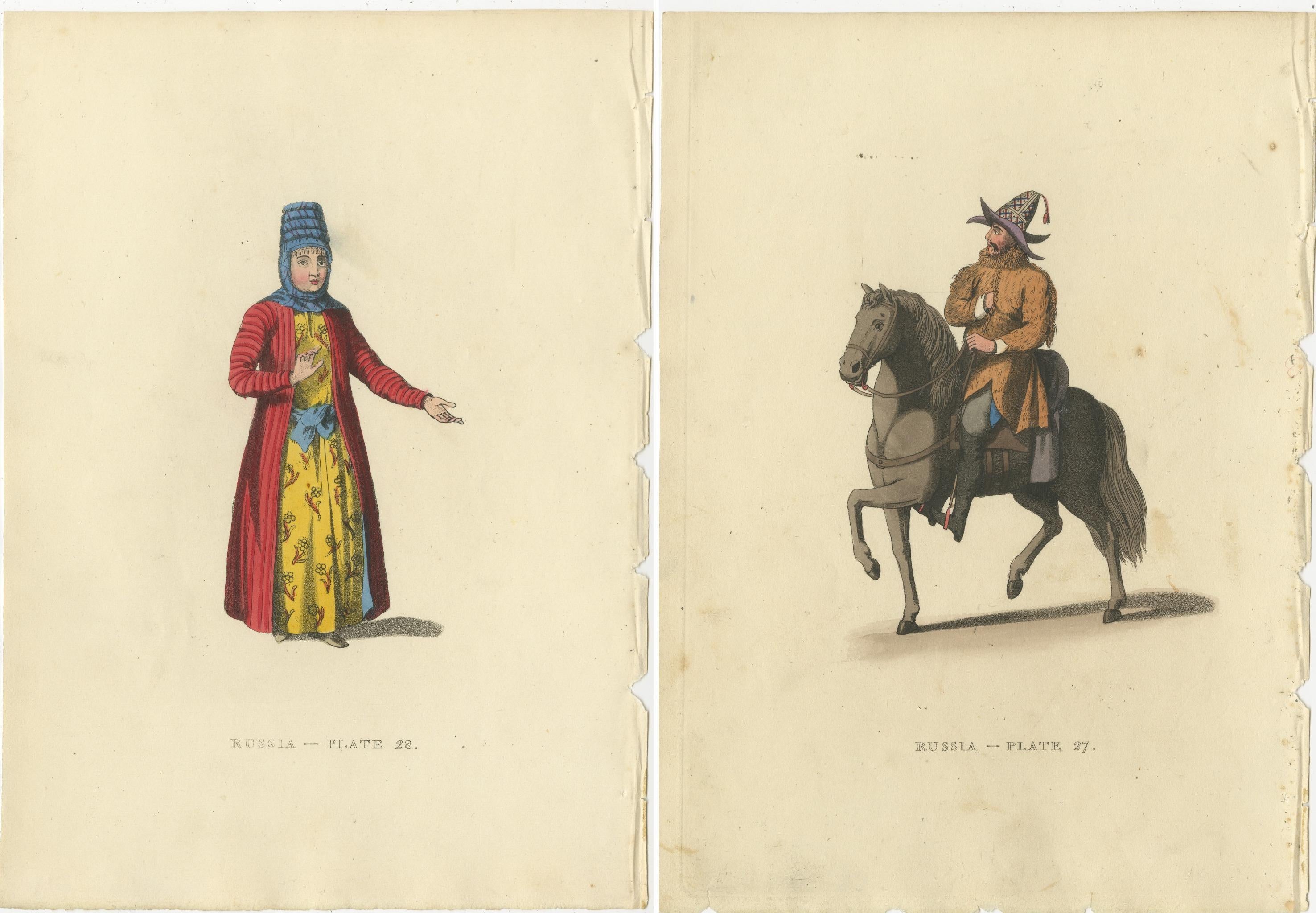
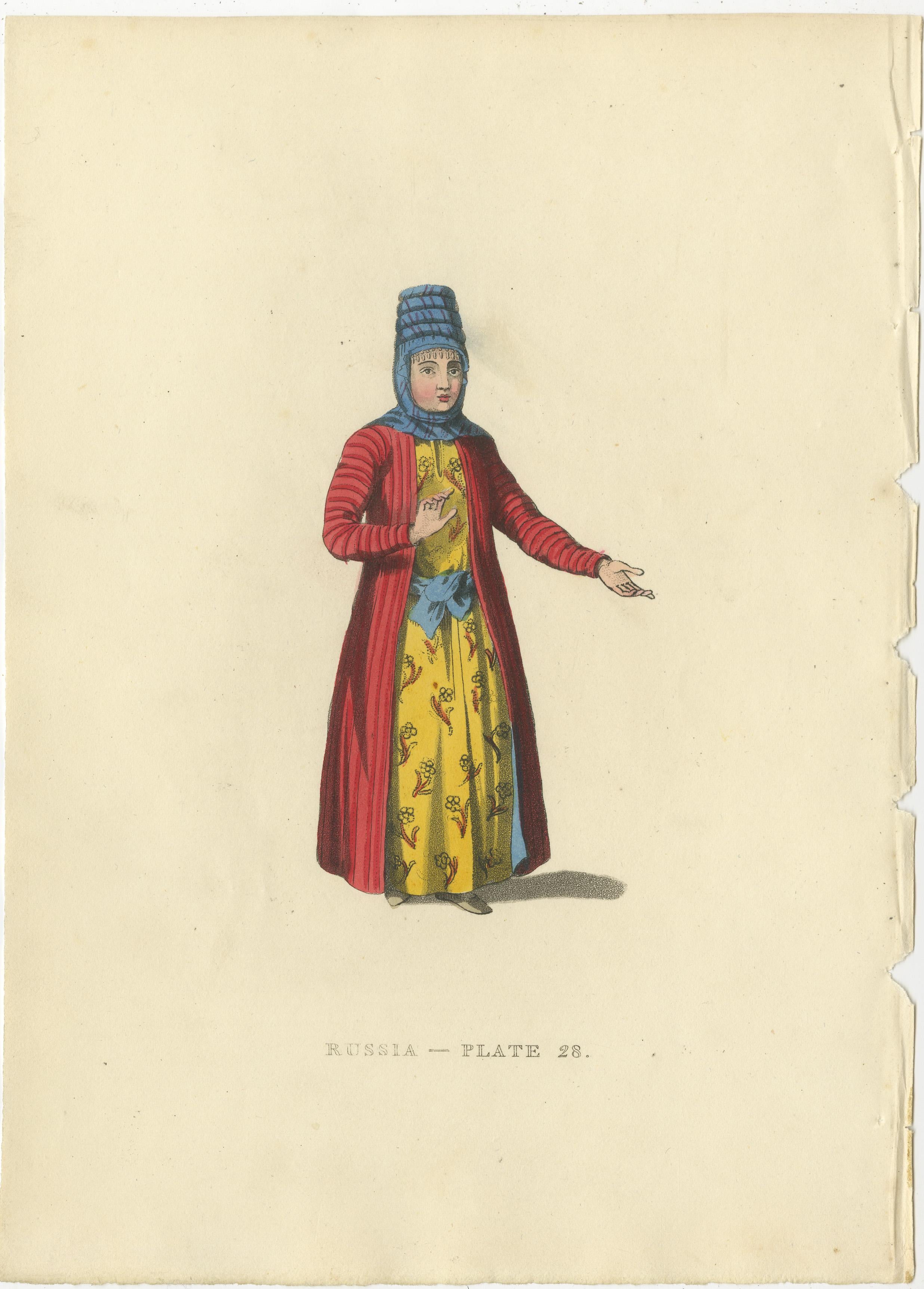
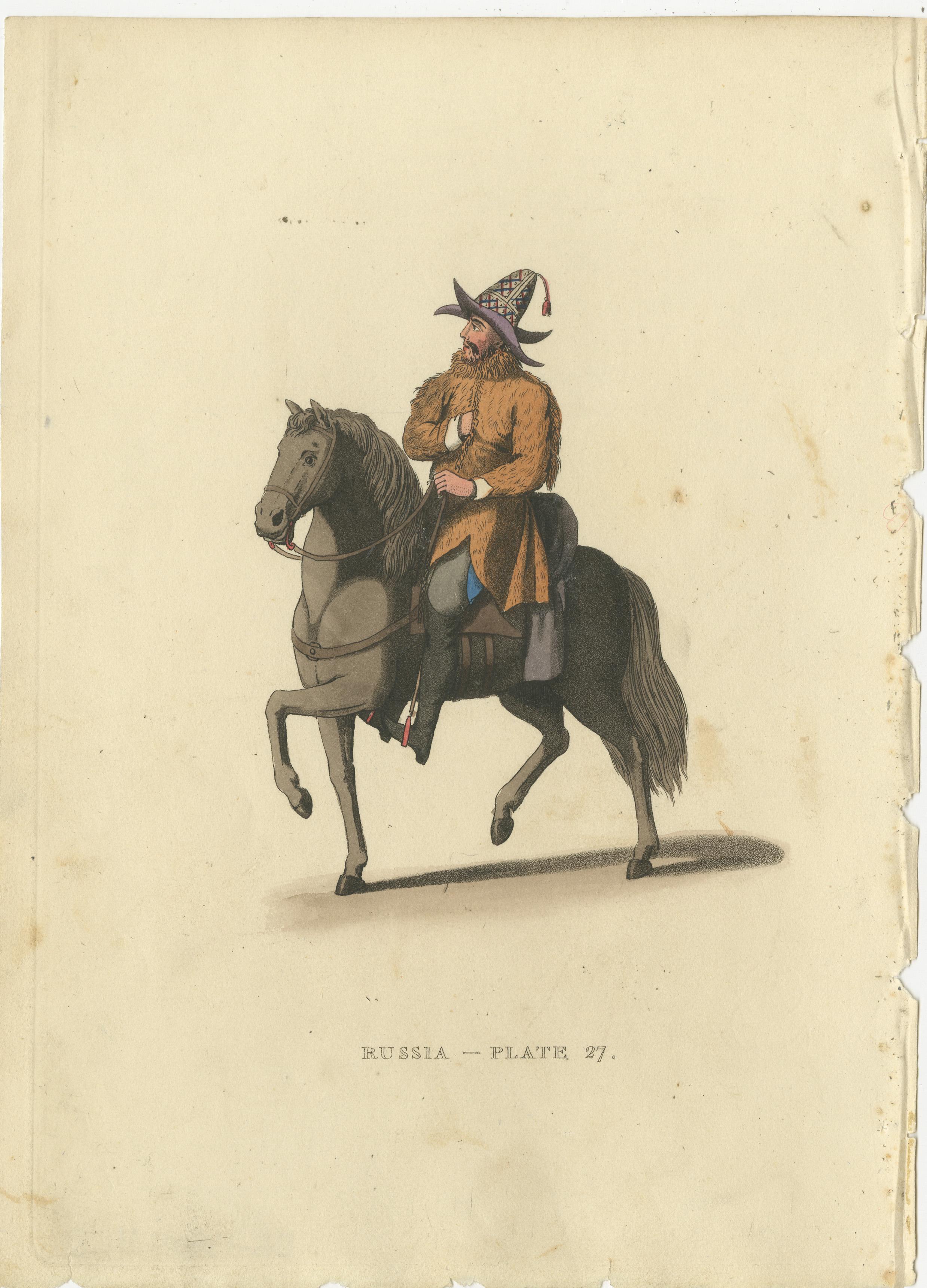
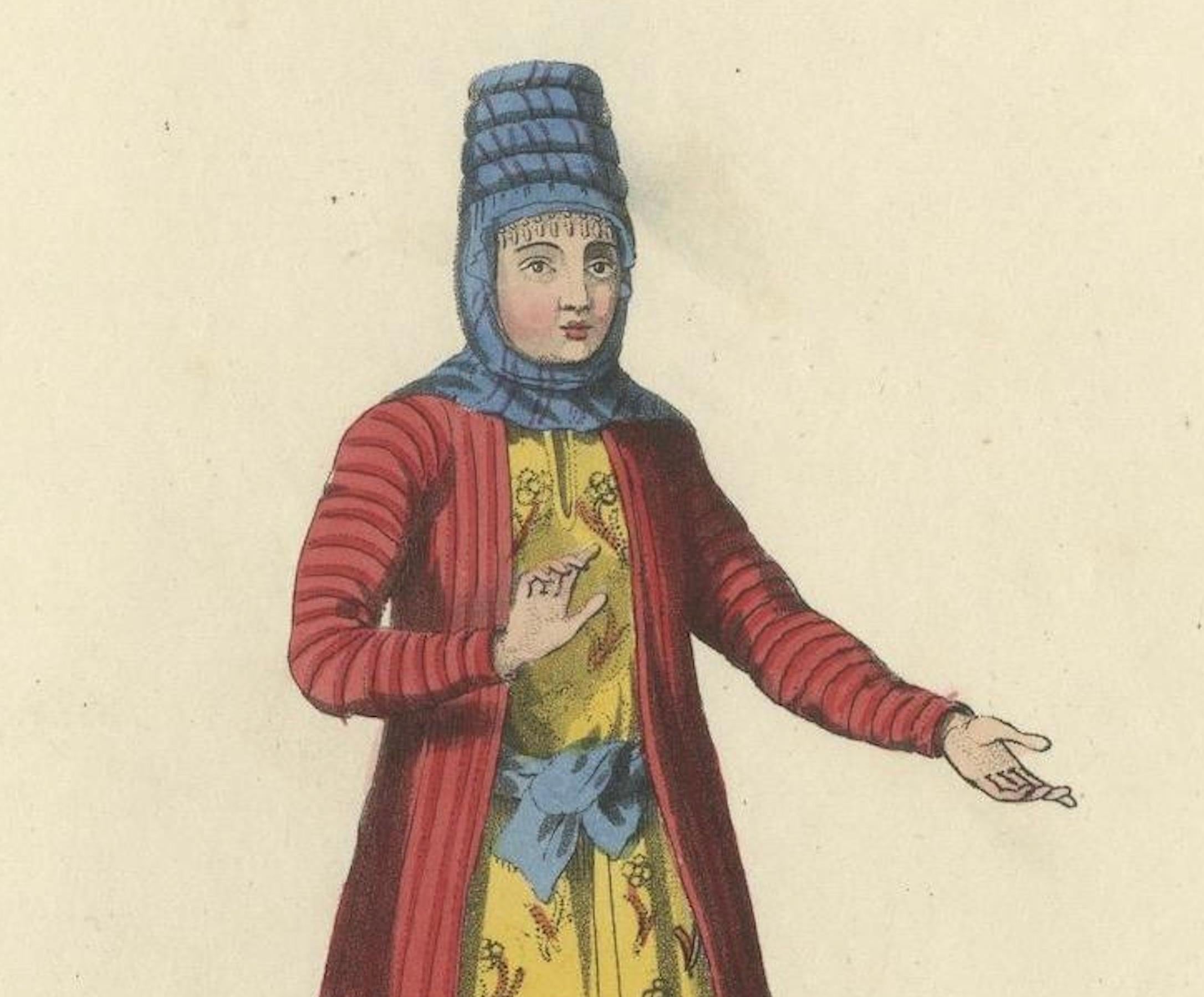
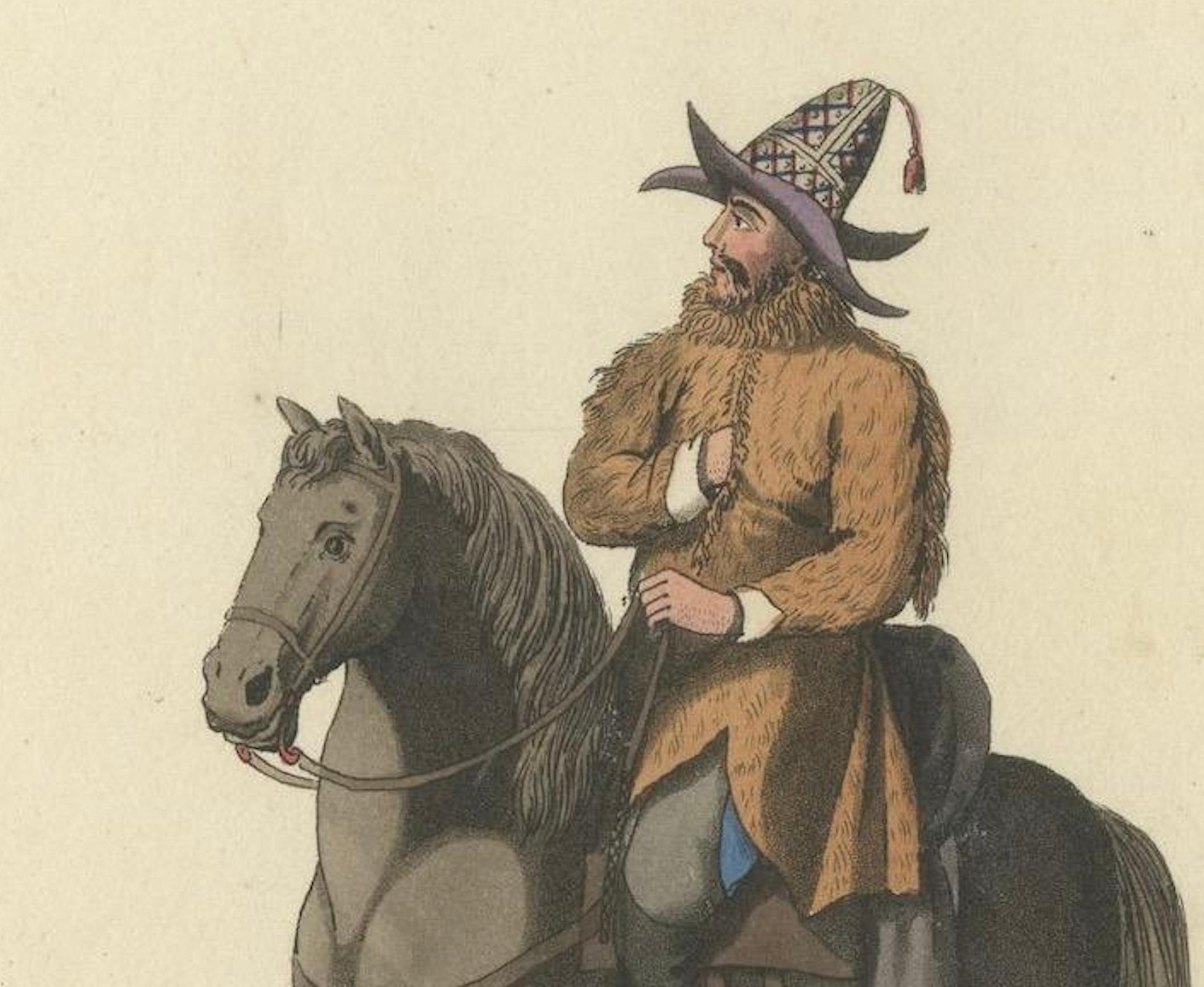
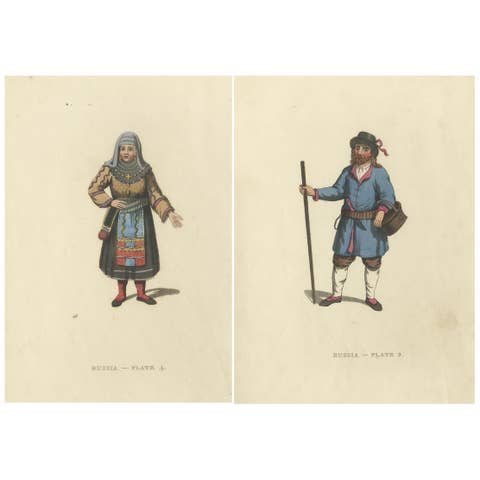
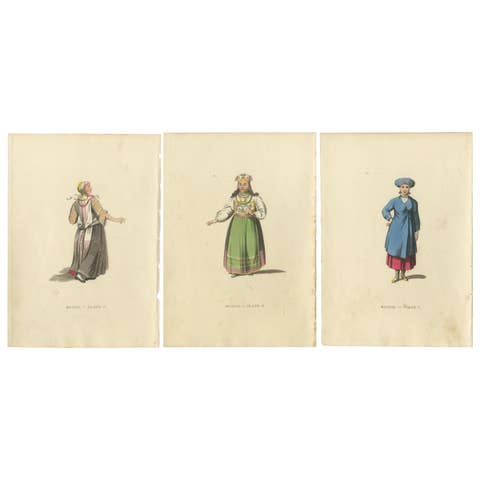
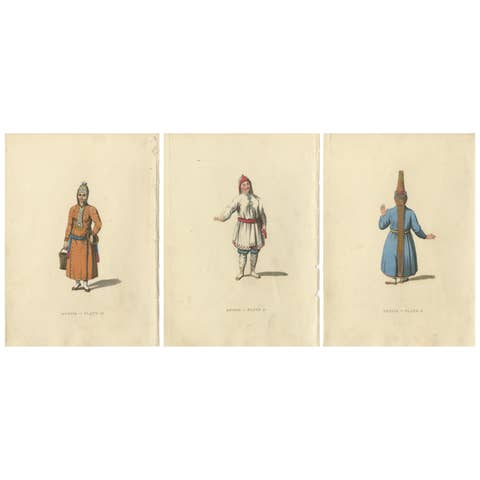
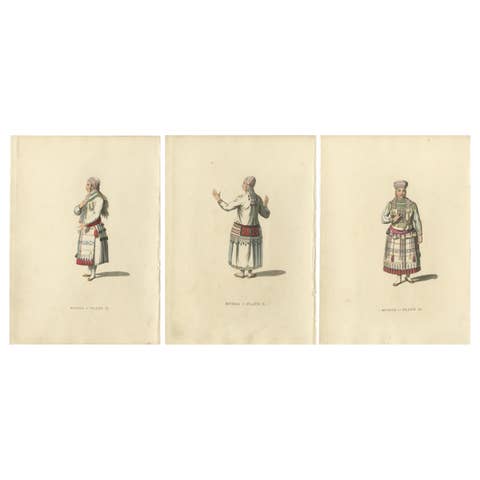
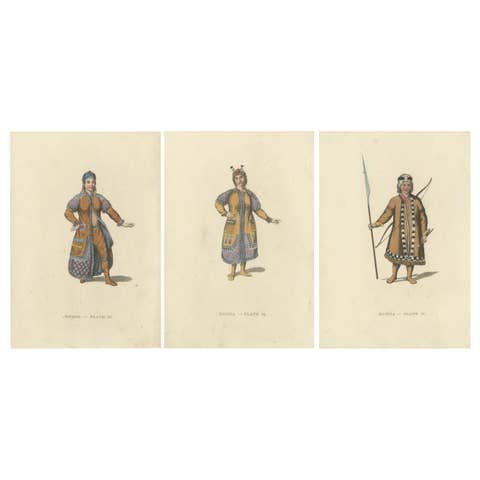
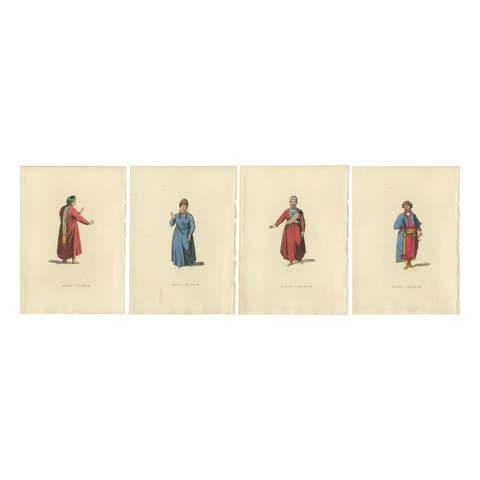
The two engravings vividly capture the traditional attire of the Kirghiz, a group native to the steppes of Central Asia.
1. The first engraving portrays a Kirghiz man mounted on horseback. The man is dressed in a fur-lined coat, reflecting the need for insulation against the cold climate of the region. Notably, his attire includes a distinctive tall hat, possibly indicating his status or a particular tradition within Kirghiz society. The attention to detail in the saddle and bridle of the horse suggests the importance of horsemanship in Kirghiz culture. The man carries a spear, hinting at hunting or combat practices.
2. The second image presents a female Kirghi, standing in a long, flowing robe with a vibrant floral pattern. Her outer garment is red, a color that stands out and may signify social significance or simply be a fashion choice. The headgear she wears is elaborate and decorative, suggesting that adornment plays a role in the cultural expression of identity among Kirghiz women. Her pose, with one hand extended, could be indicative of communication or may simply show the draping of her garments.
These engravings by William Alexander are intricate and informative, providing a rich visual representation of Kirghiz dress. The use of color and detail in these images was intended to give a Western audience a glimpse into the lives and customs of the Kirghiz people during this period. As an ethnographic record, they offer valuable insights into the textile patterns, garment structures, and accessory use of the era, contributing to our understanding of the cultural diversity within the Russian Empire of the early 19th century.
Source: The publication "Picturesque Representations of the Dress and Manners of the Russians," which includes sixty-four colored engravings with descriptions. The writer of this work is William Alexander, and it was published by John Murray in 1814.