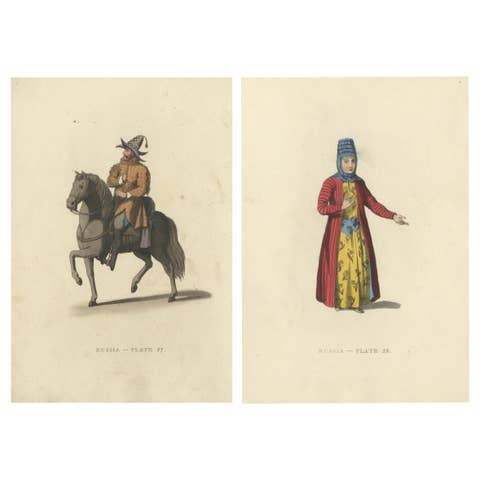
Cultural Tapestry: Traditional Female Attire of 19th Century Russia, 1814
€ 330
One of a kind: this is the sheet in the photographs. Ships from Langweer, the Netherlands.
Date
1814
Sheet size
24 × 17 cm (9.4 × 6.7 in)
Condition
Good
Reference
BG-13605-4-4 & BG-13605-4-6 & BG-13605-4-26
Condition
Good, given age. General age-related soiling, toning and/or occasional minor defects from handling, adding to its patina. Right side edge rough cut from the book, but leaving enough space for proper framing. Please study scans carefully.
About this sheet
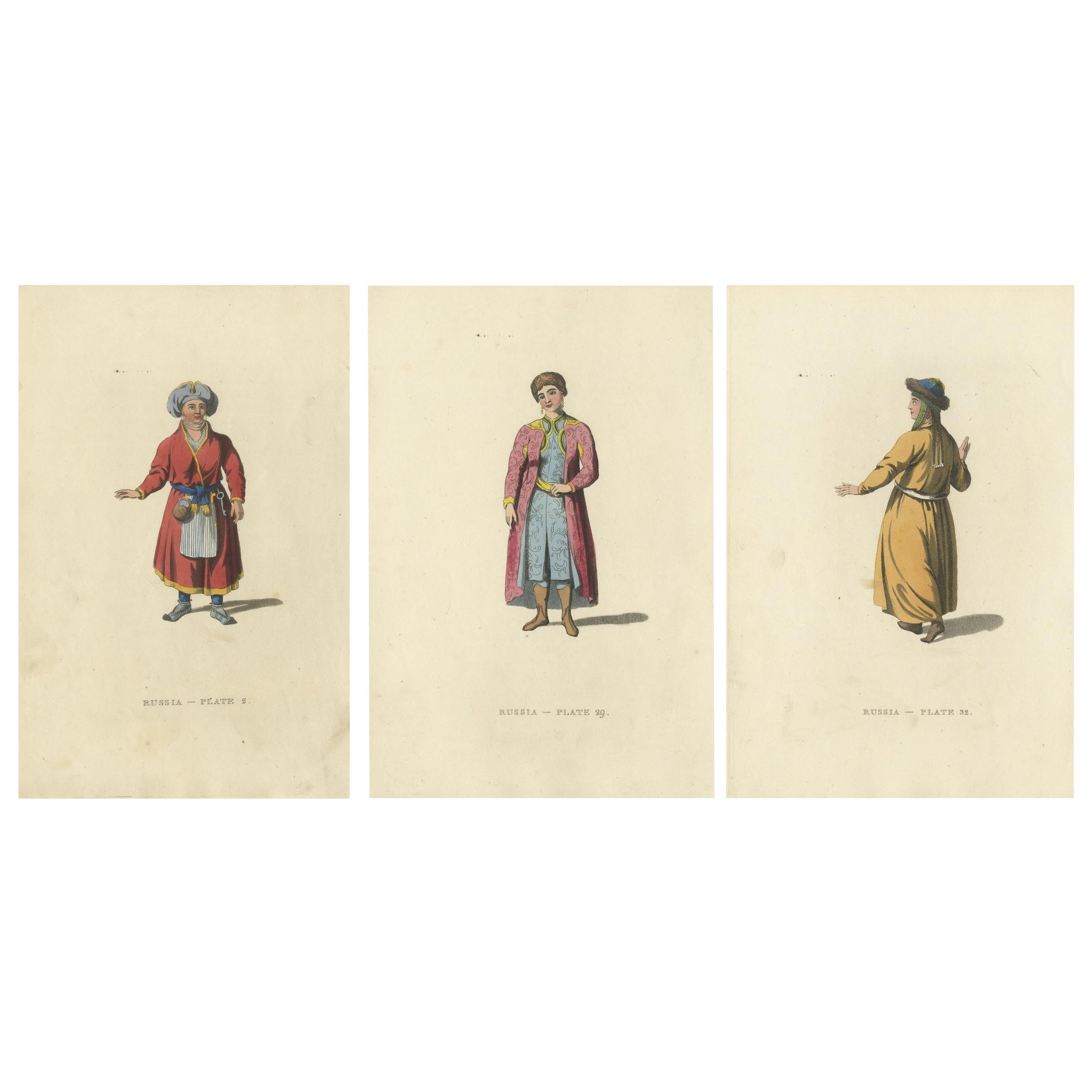
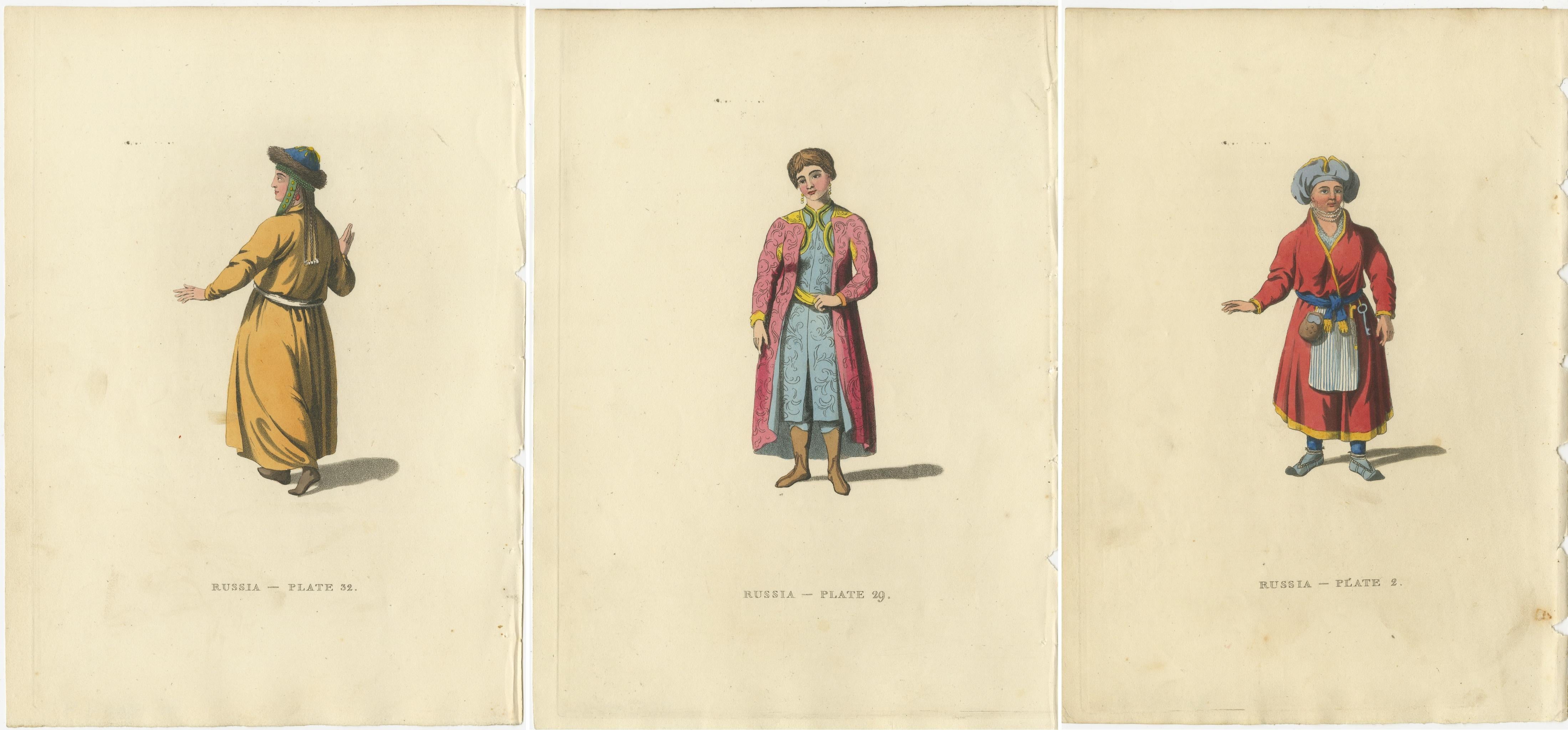
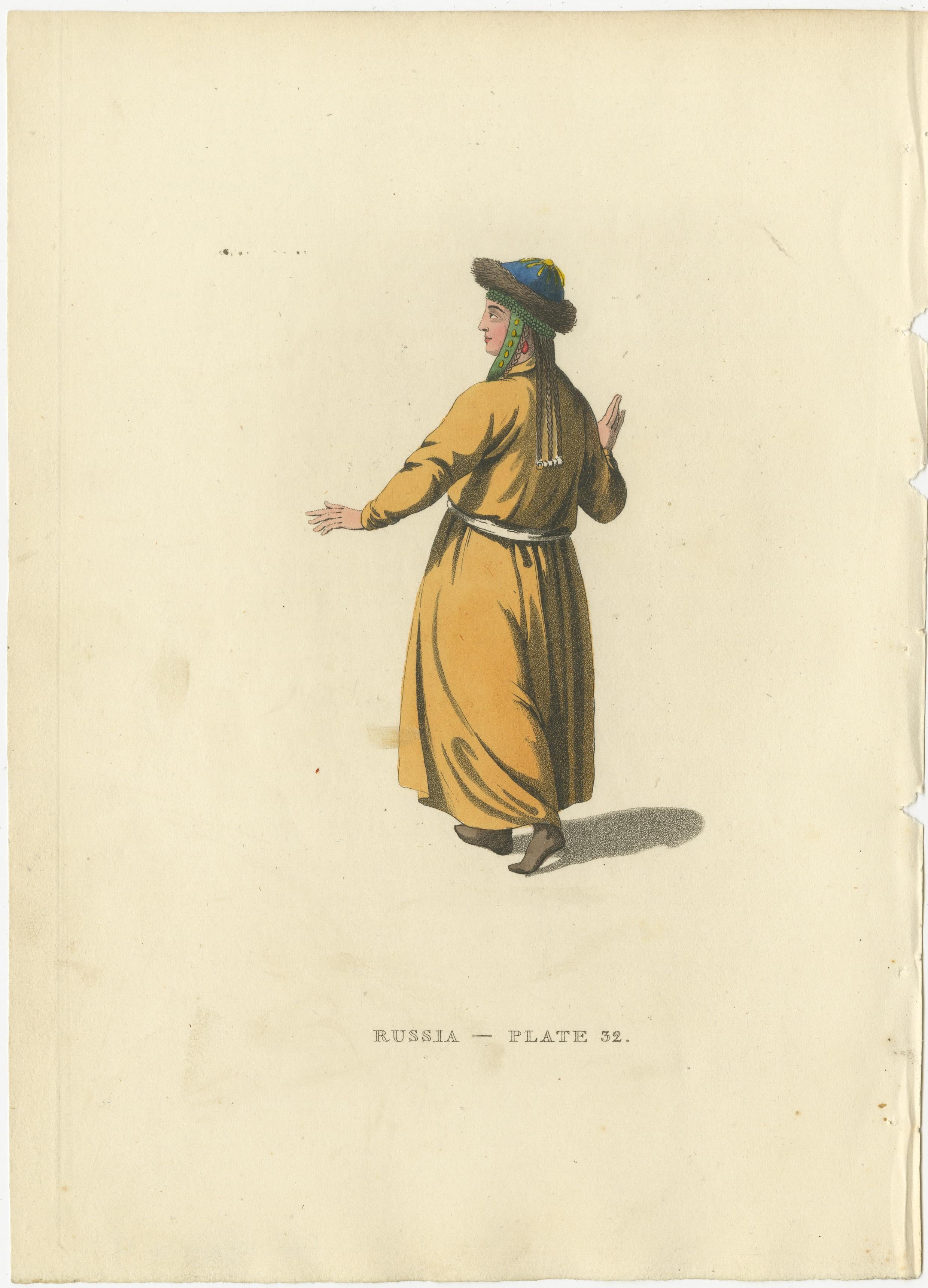
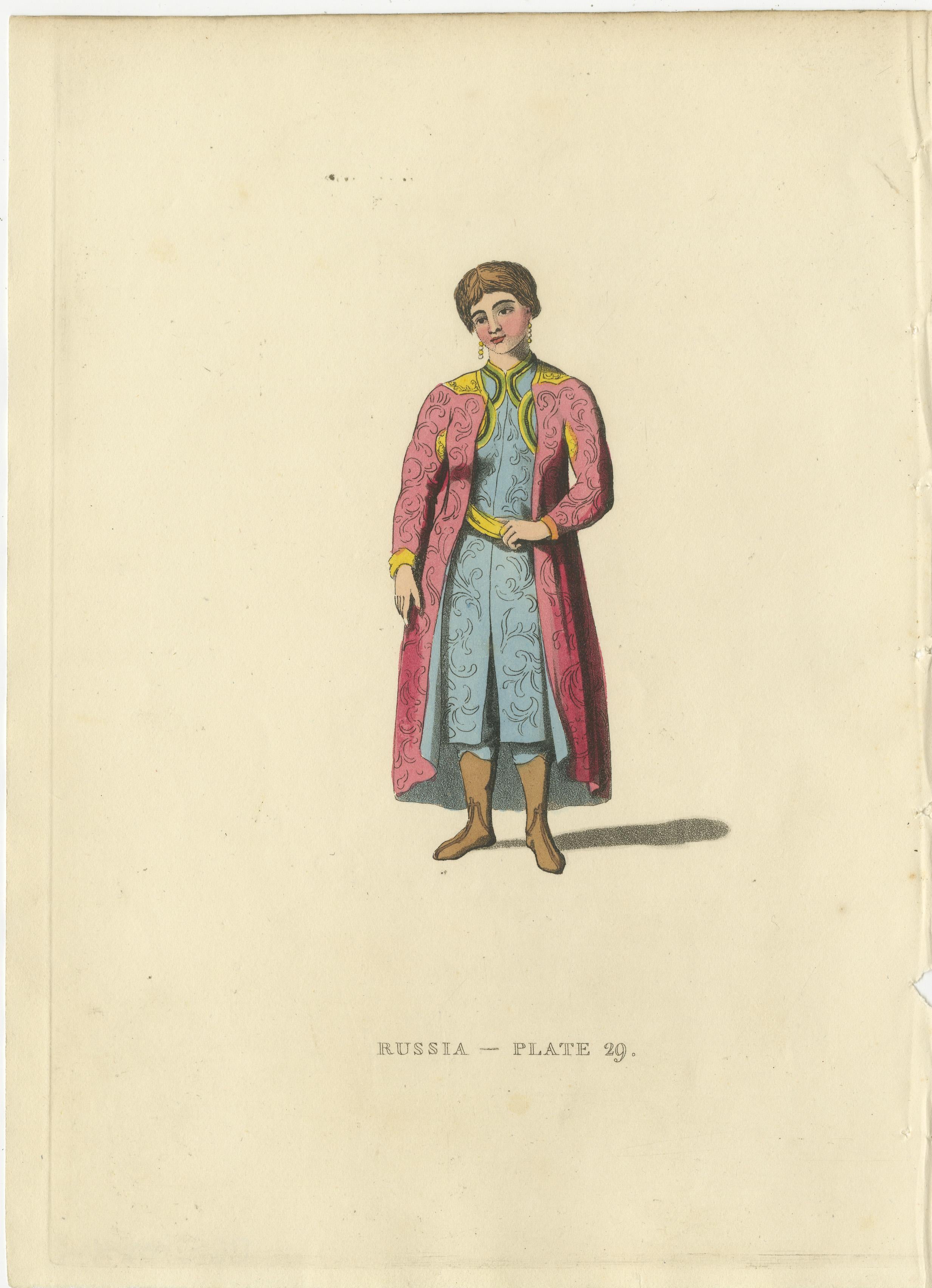
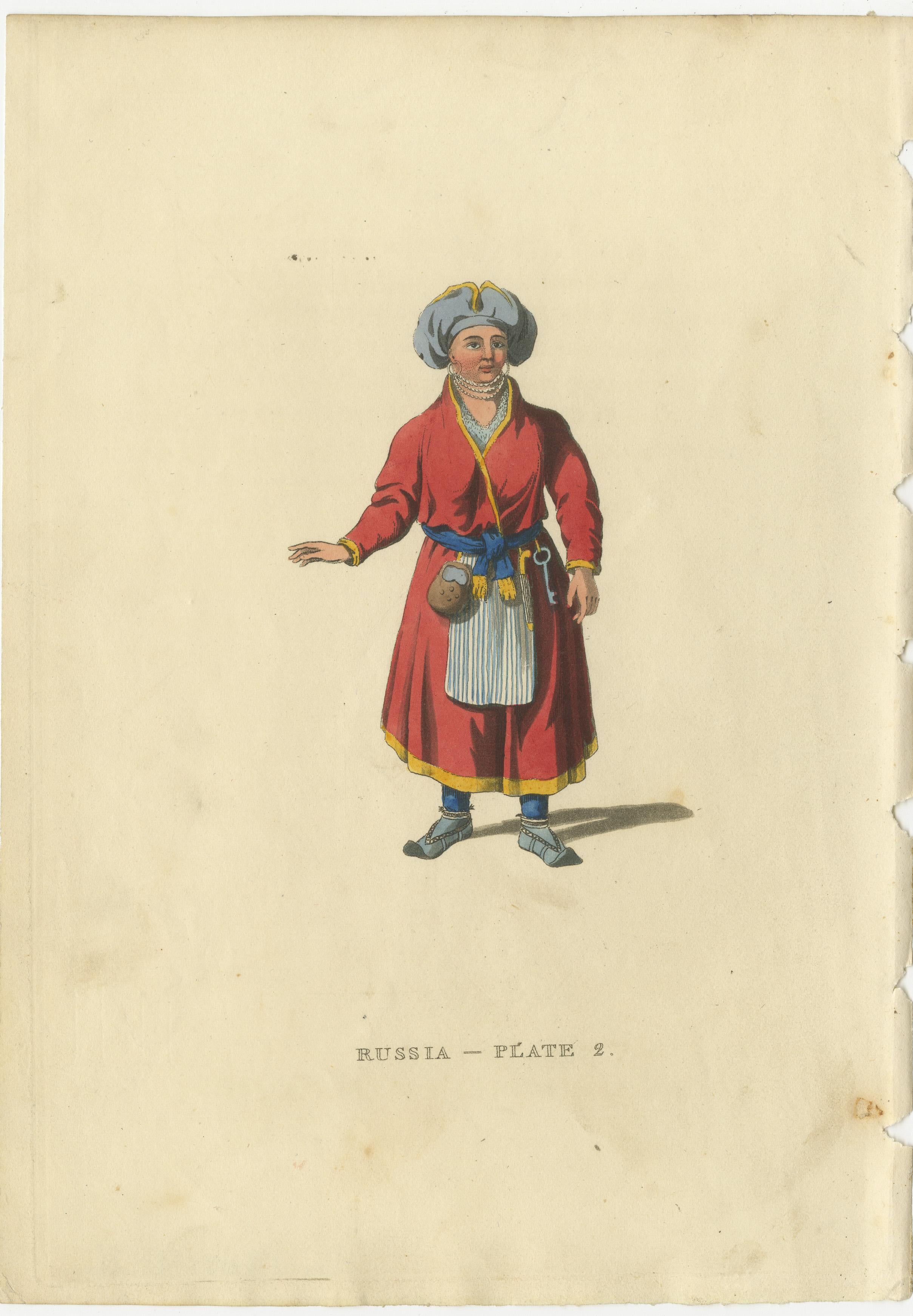
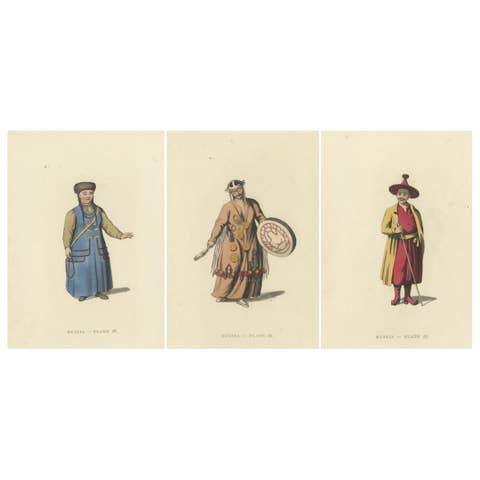
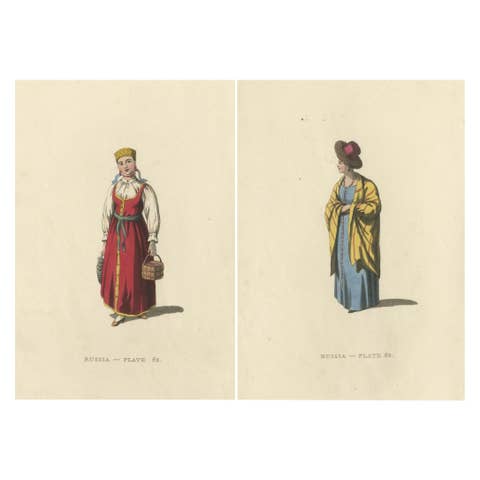
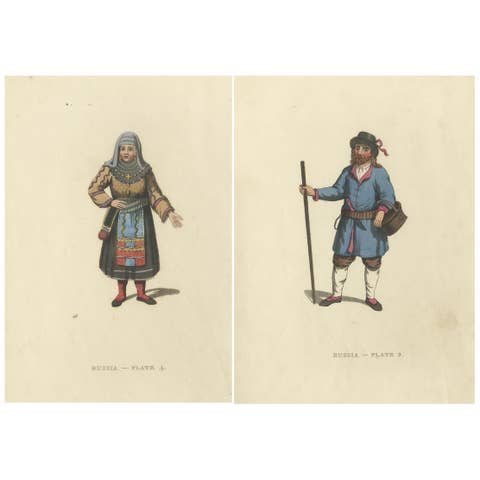
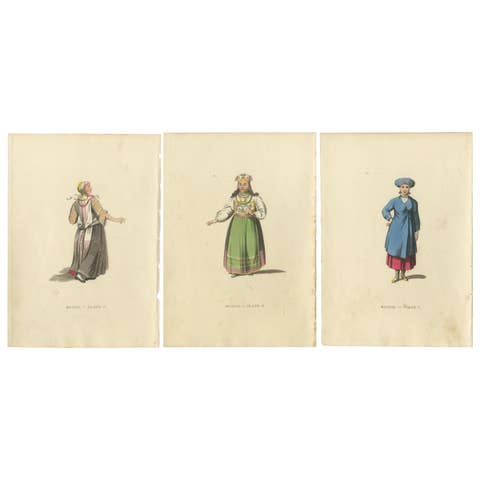
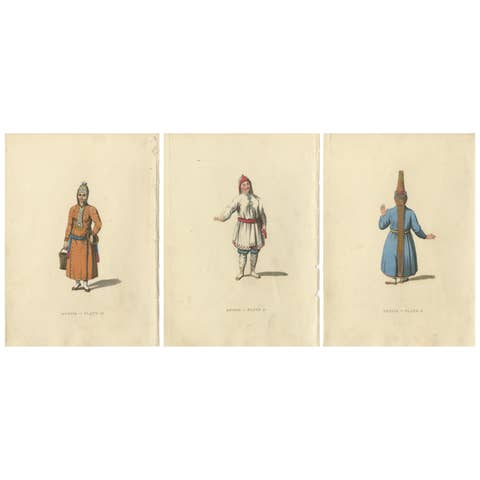
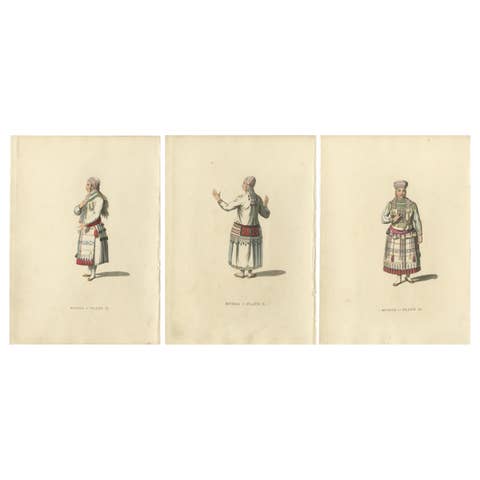
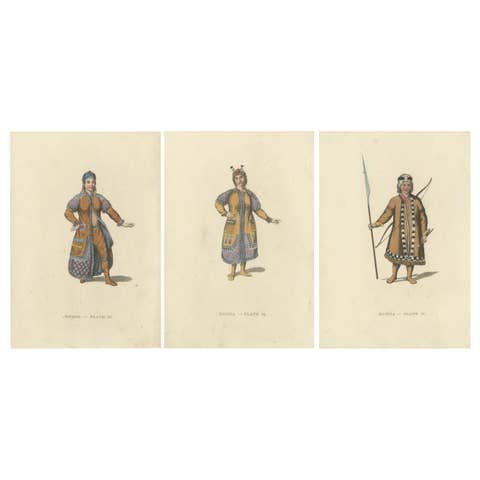
These original antique images are colored engravings that represent the traditional attire of three female inhabitants from different ethnic groups within the Russian Empire as of the early 19th century. The subjects of the engravings are a Lapland woman, a Katchintzian Tartar woman, and a Tartar woman from the Teleouti tribe.
The first engraving likely portrays a female inhabitant of Lapland, which would typically feature clothing suitable for the cold climate of the region, such as fur-lined garments and possibly layers to insulate against the harsh temperatures.
The second engraving is presumed to represent a Female Katchintzian Tartar, which might show clothing that includes elements of both Russian and Asiatic styles, as the Katchintzian Tartars were known for their distinctive and vibrant dress, reflecting their cultural traditions and the practical needs of their daily lives.
The third engraving probably depicts a Female Tartar of the tribe of Teleouti, likely highlighting the unique cultural aspects of the Teleouti tribe through clothing, which would include ornamental patterns, possibly signifying the wearer's social status, marital status, and regional affiliations.
The attire in these engravings would be meticulously detailed and colorful, reflecting the diverse cultural heritage within the vast territories of Russia at the time. These costumes would not only serve practical purposes but also carry significant cultural meanings, embodying the wearer's identity and community ties.
William Alexander's "Picturesque Representations of the Dress and Manners of the Russians" was an ambitious project that provided a comprehensive visual account of the traditional dress and customs of a wide range of Russian people. Such publications were crucial for educational and cultural exchange, offering Western audiences a glimpse into the lives and traditions of communities they might never have the chance to encounter firsthand. The careful attention to detail in such works ensured that they remained valuable resources for those studying the history of dress and cultural practices.