About this sheet
Chinese City Dwellers and Farmers – Ferrario Costume Print, c.1815
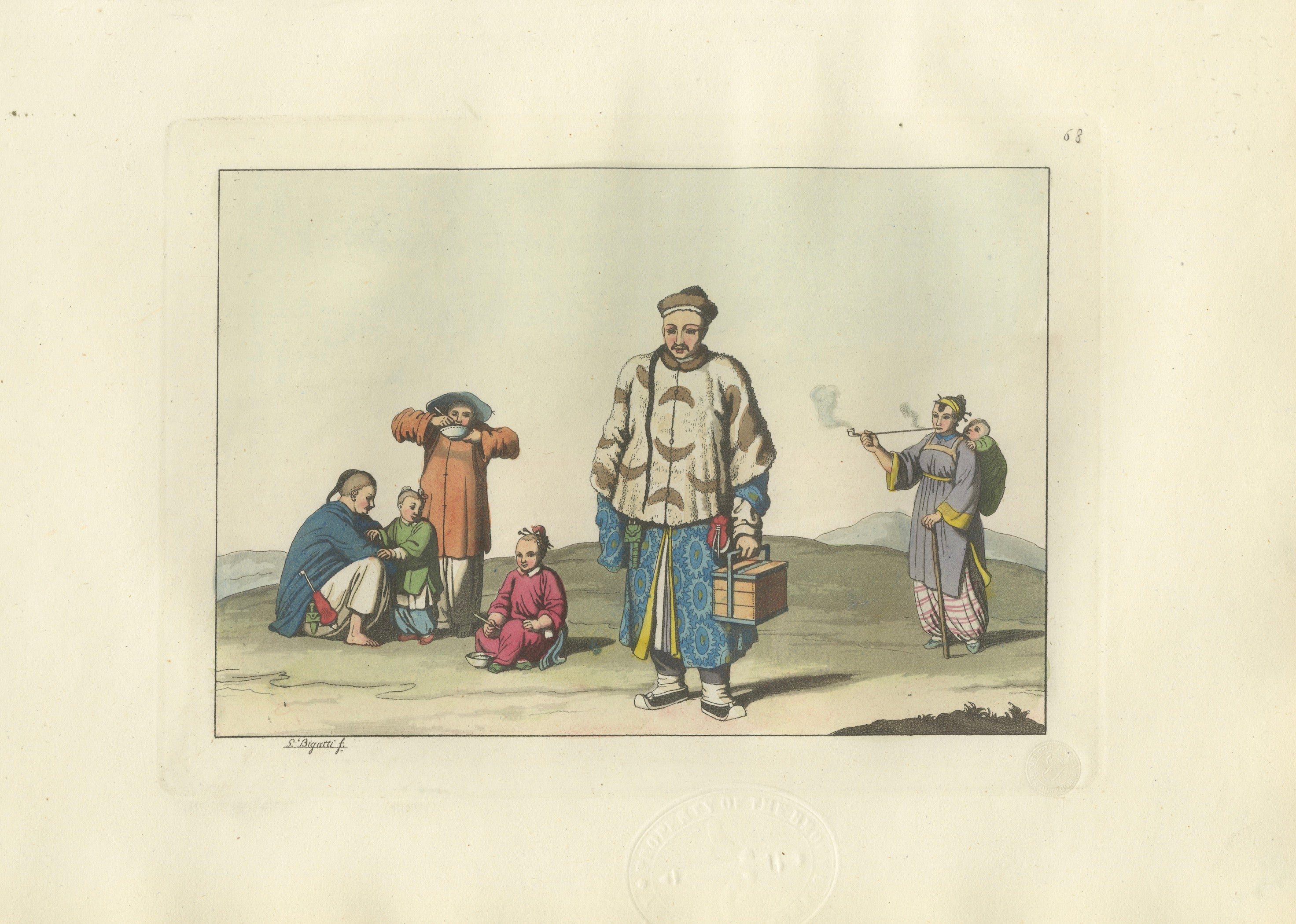
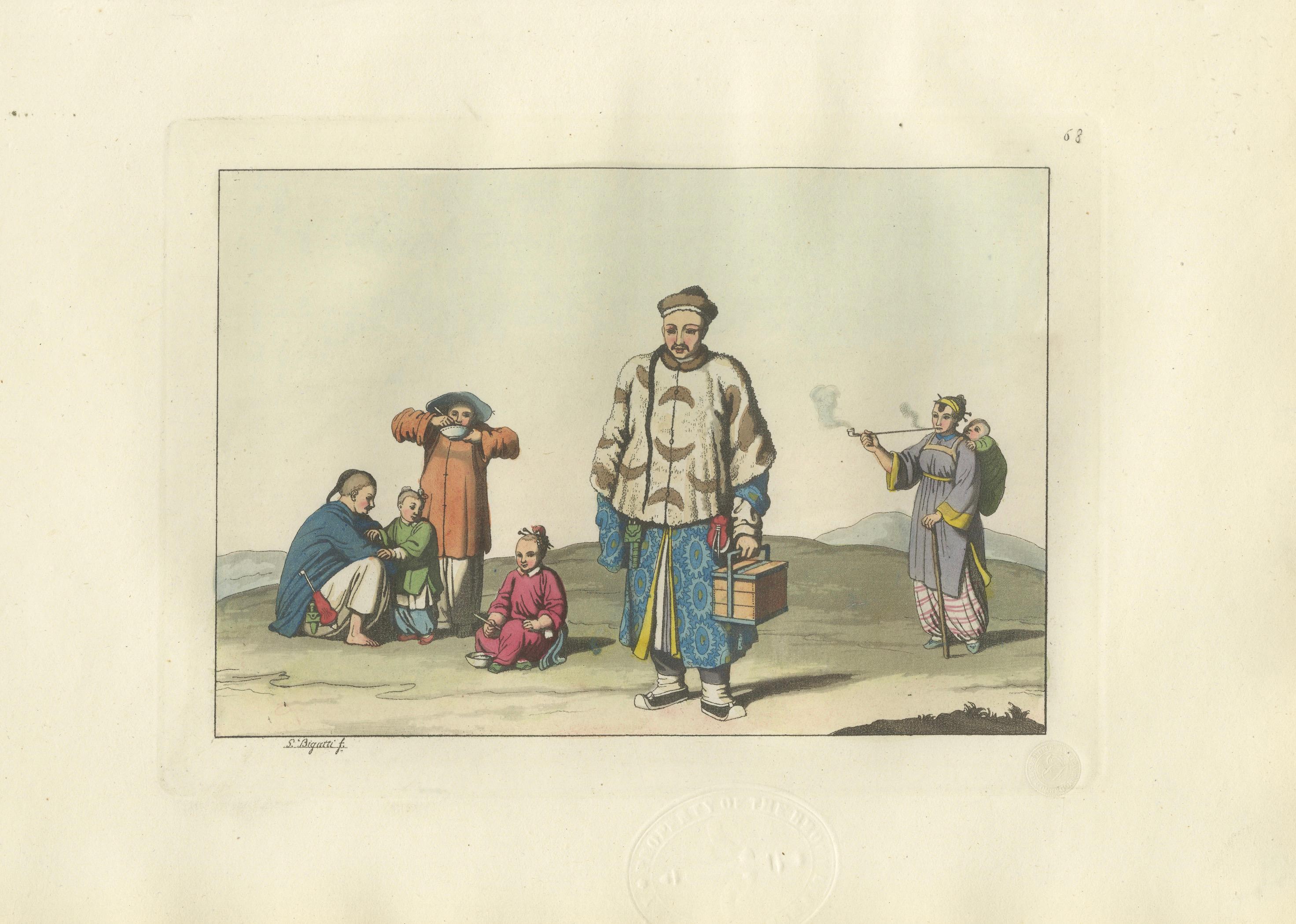
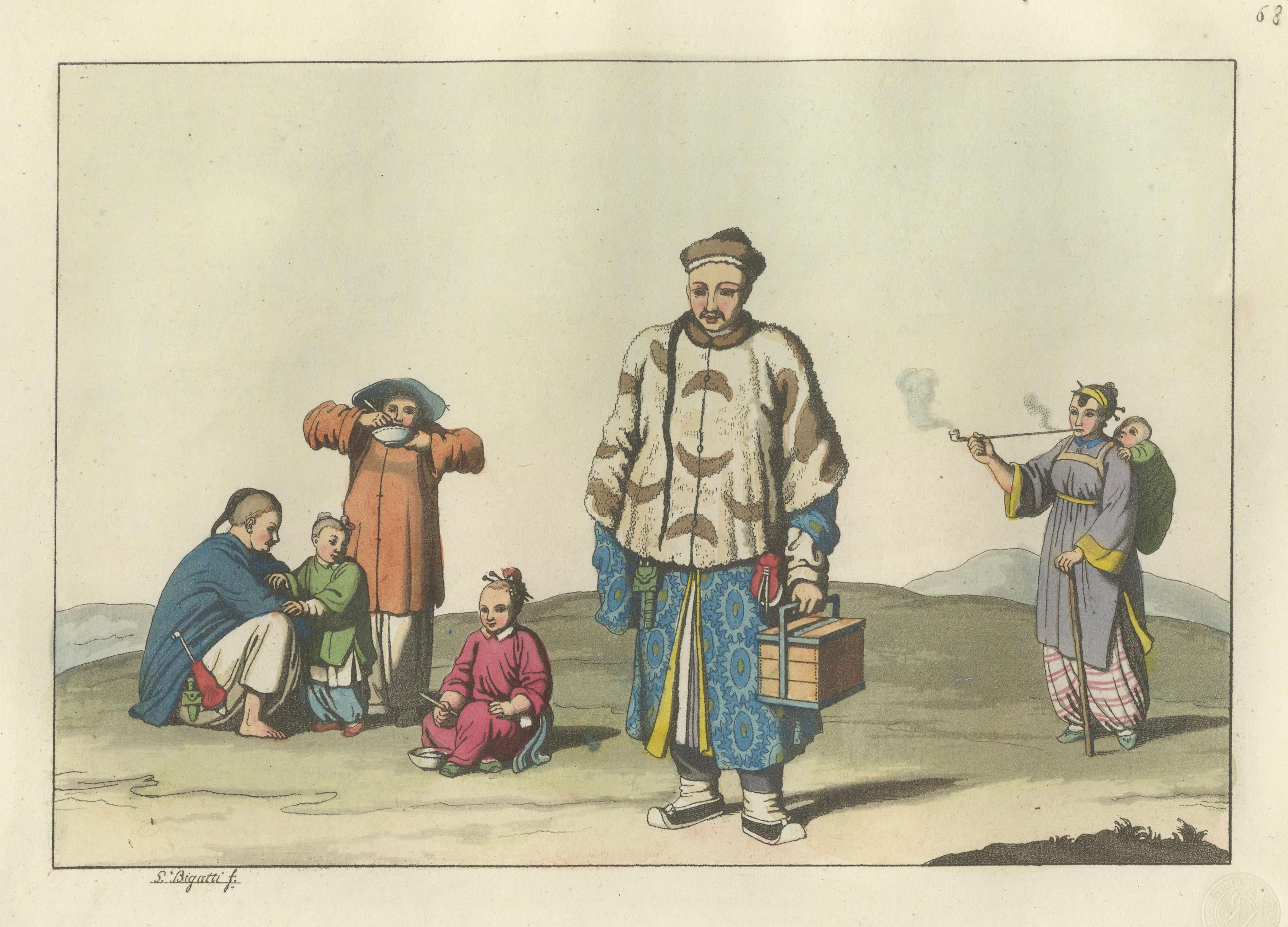
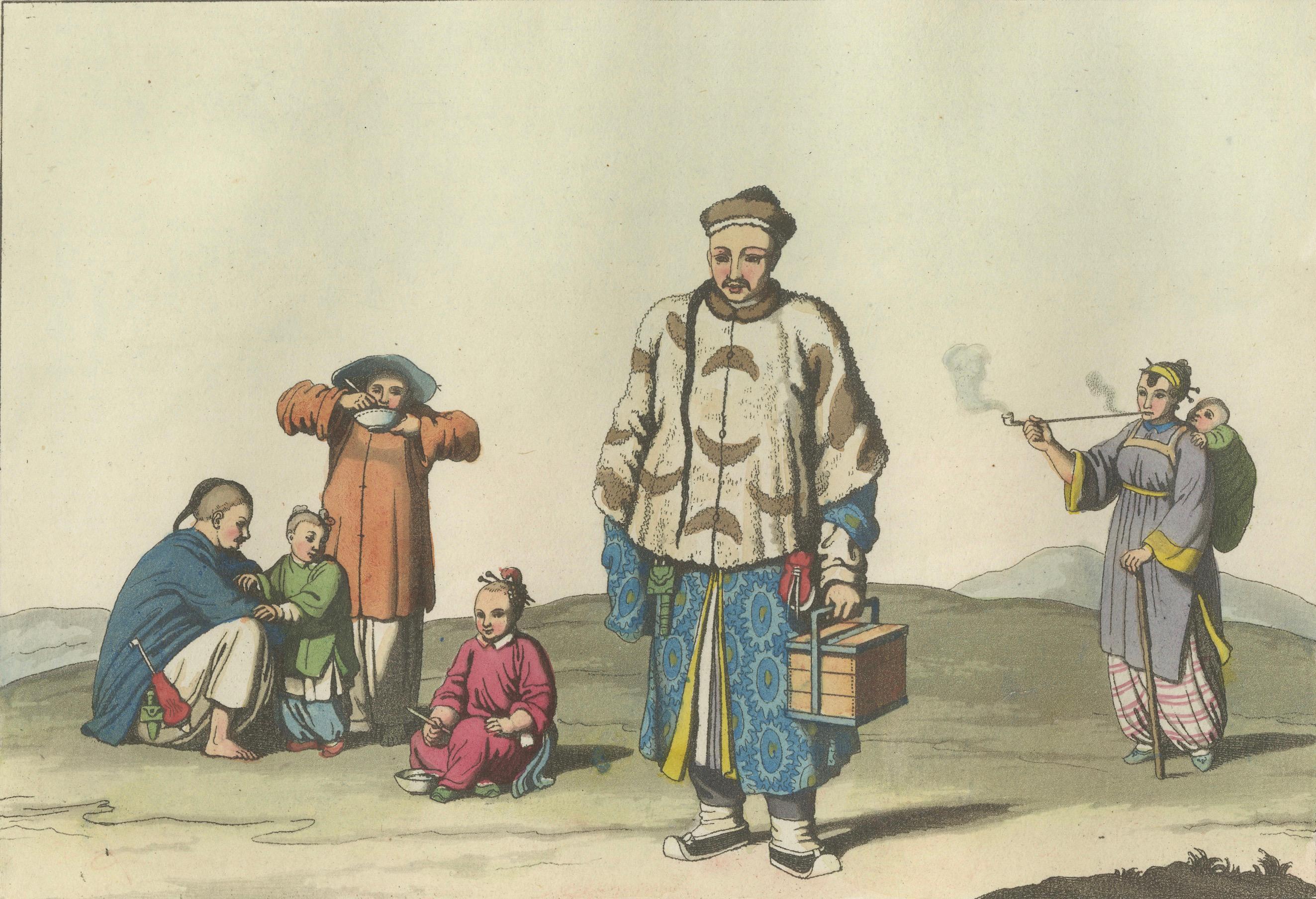
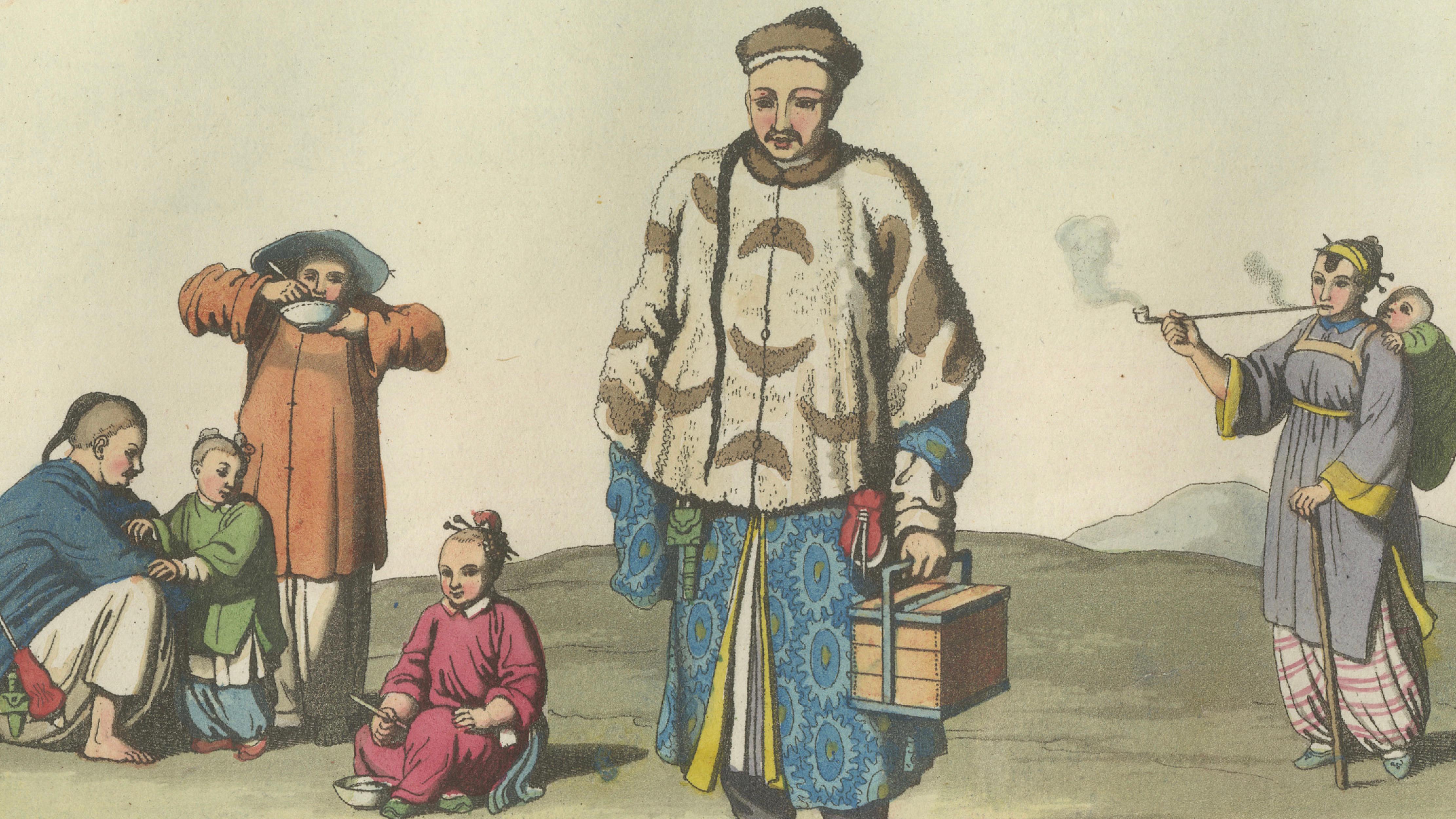
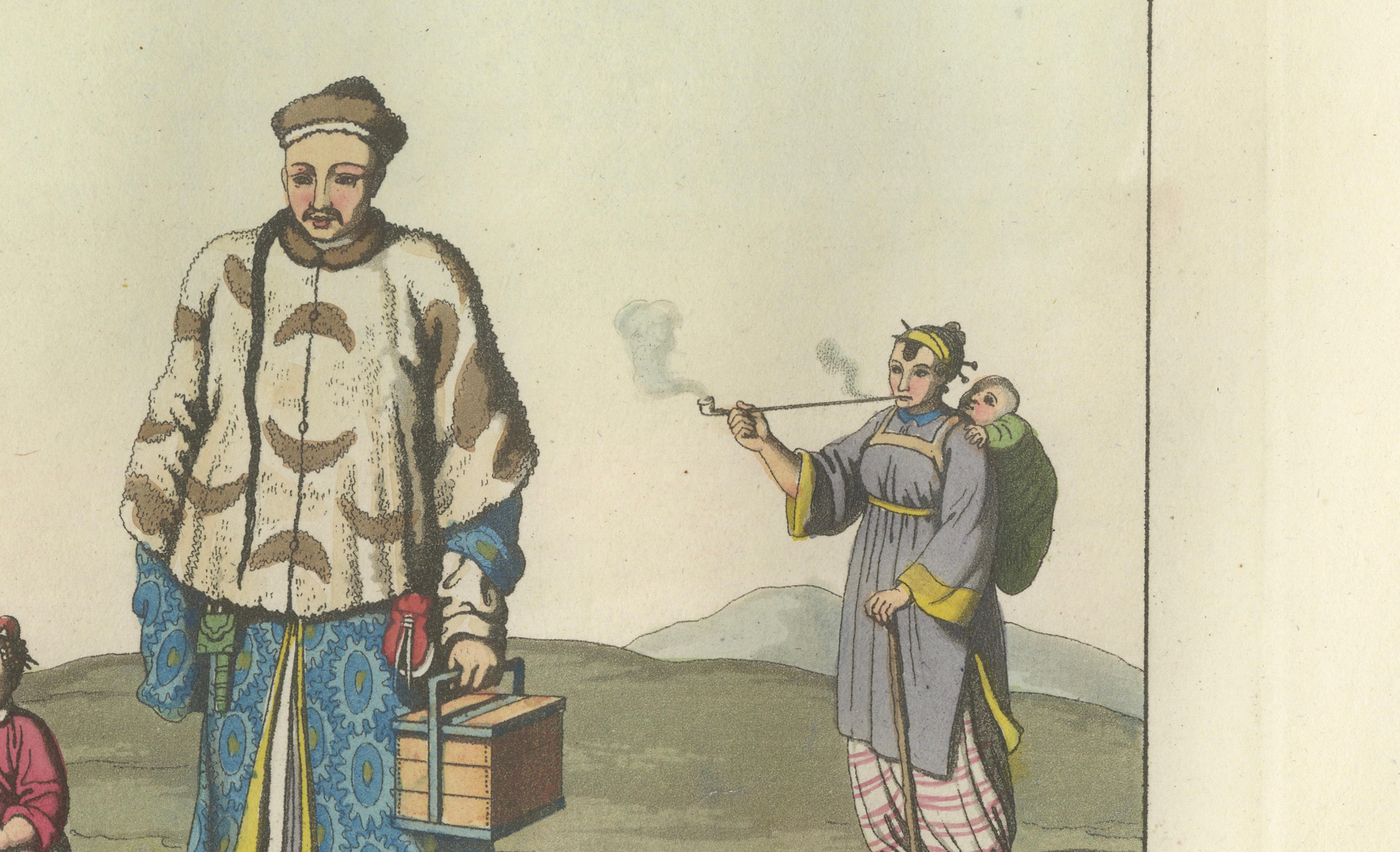
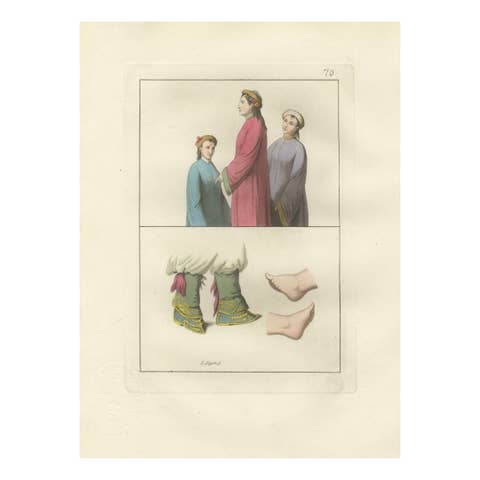
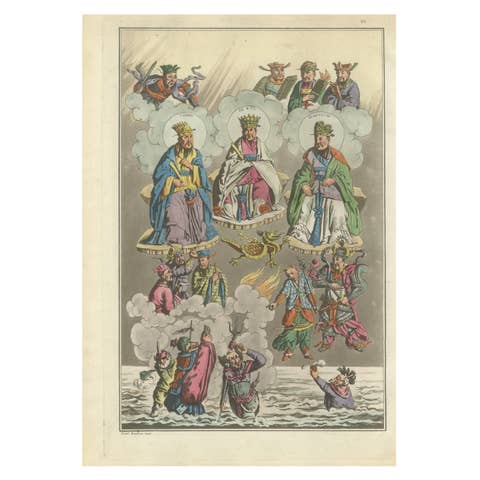
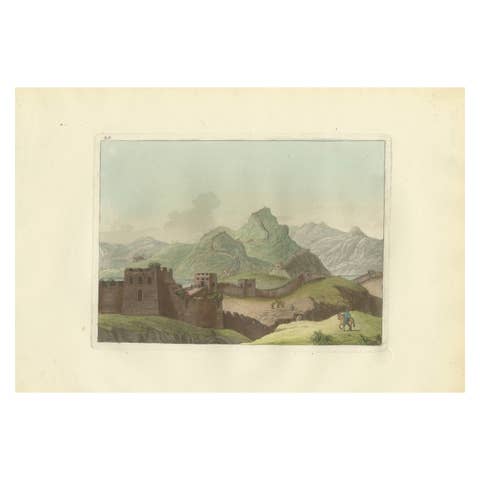
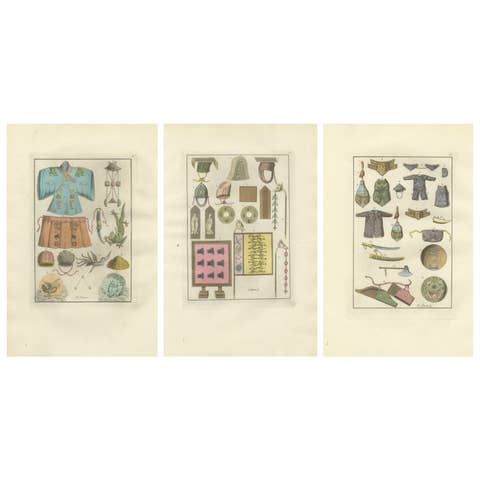
This finely hand-coloured copperplate engraving illustrates a comparative study of traditional Chinese dress, presenting figures identified as city dwellers and farmers in an elegant yet observational composition. At the center stands a middle-class man wearing a distinctive sheepskin overcoat decorated with half-moon motifs layered over a richly patterned silk robe, symbolizing urban status and refinement. Around him, additional figures represent everyday rural life, including seated adults, children, and a travelling figure carrying a child while smoking a pipe, offering a visual contrast between social classes and lifestyles.
The print originates from Giulio Ferrario’s renowned ethnographic publication *Il Costume Antico e Moderno di Tutti i Popoli* (Costumes Ancient and Modern of All Peoples), published in Milan circa 1815. This ambitious multi-volume work sought to document the clothing, customs, and social traditions of cultures across the world for a European readership fascinated by global exploration and comparative anthropology during the Enlightenment and early nineteenth century. Ferrario’s publication became one of the most influential costume encyclopedias of its time, blending artistic interpretation with contemporary travel accounts and scholarly research.
The composition functions not merely as a costume study but as a subtle social narrative. The urban figure’s layered garments and composed stance contrast with the practical clothing worn by rural families, emphasizing differences in occupation, environment, and economic standing. The restrained landscape background allows attention to focus on costume detail, while the delicate hand colouring enhances textures such as fur, silk, and cotton fabrics. Each figure is carefully individualized, reflecting European curiosity about daily life in Qing-era China rather than depicting a single historical event.
Engravings from Ferrario’s series are valued today for their combination of ethnographic interest and refined early nineteenth-century printmaking. Individually hand coloured at the time of publication, each impression retains slight tonal variations, contributing to its authenticity and charm. The balanced horizontal composition makes the print particularly suitable for decorative display, either alone or grouped with other Asian costume plates from the same series.
The engraving is offered unframed, allowing full flexibility in selecting a frame appropriate to both classical and contemporary interiors.
Condition:
Good antique condition with age-related toning and light scattered spotting primarily in the margins. Plate mark clearly visible. Original embossed blind stamps present as issued. Minor handling wear consistent with age; image remains clear and attractive.
Framing tips:
A dark walnut, bamboo-style, or lightly gilded frame paired with an ivory or warm cream mat enhances the subtle hand colouring and historical character. Museum glass is recommended to protect the paper while maintaining clarity. Works beautifully in thematic groupings of ethnographic or Asian costume prints.
Technique: Hand-coloured copperplate engraving
Maker: Giulio Ferrario workshop, Milan, circa 1815