About this sheet
Chinese Architectural Columns and Plinths – Ferrario Costume Antico 1820s
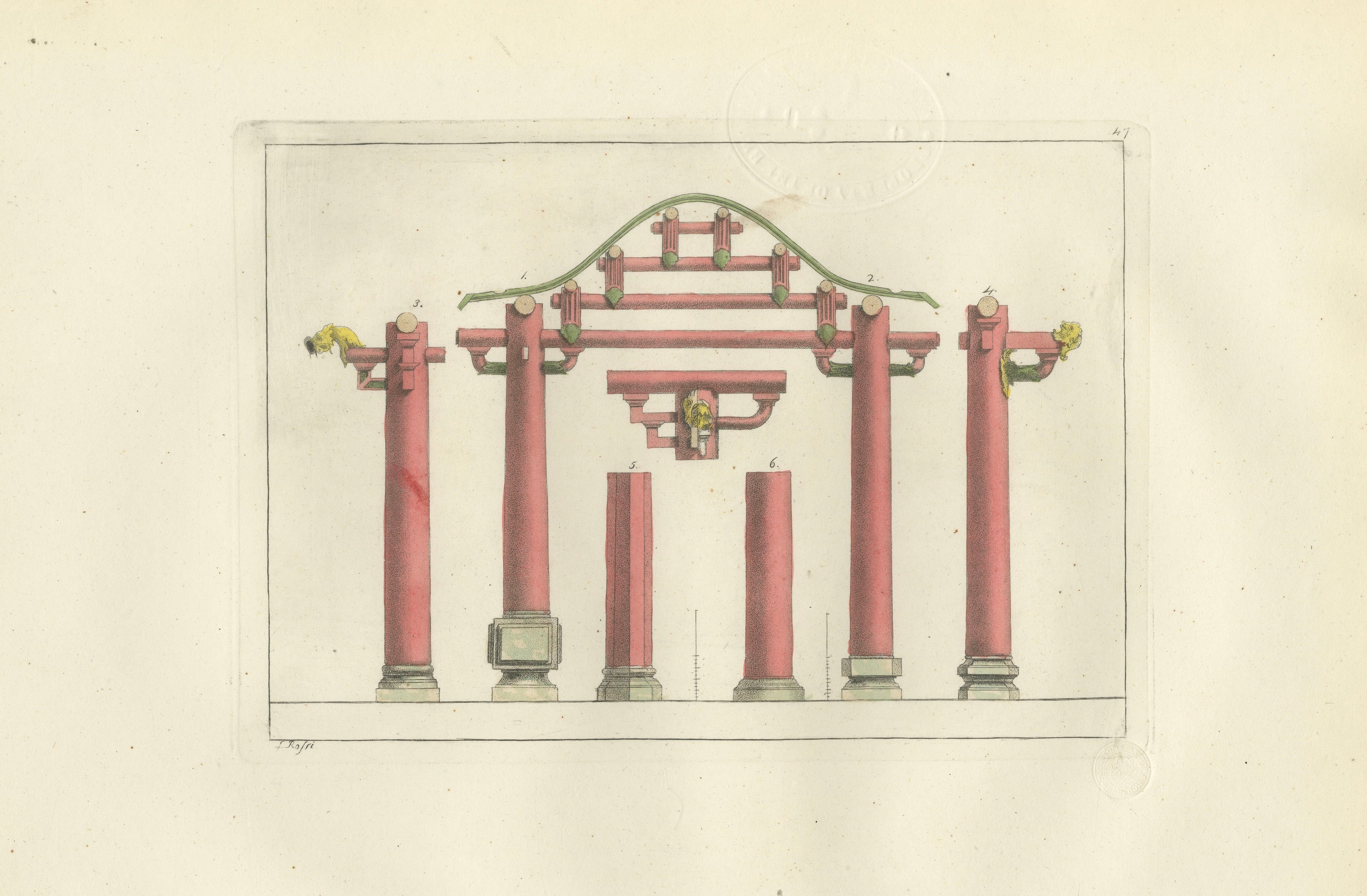
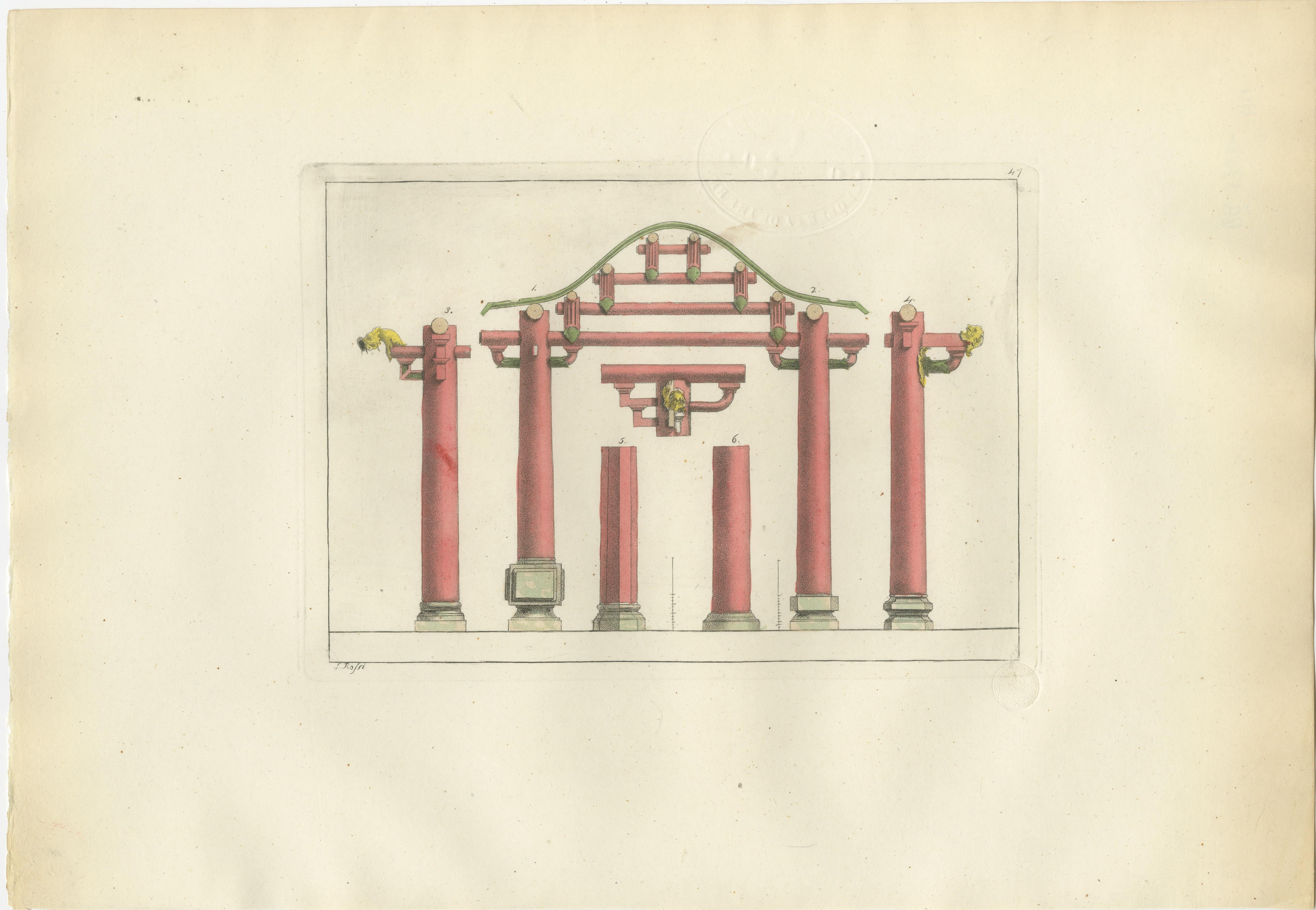
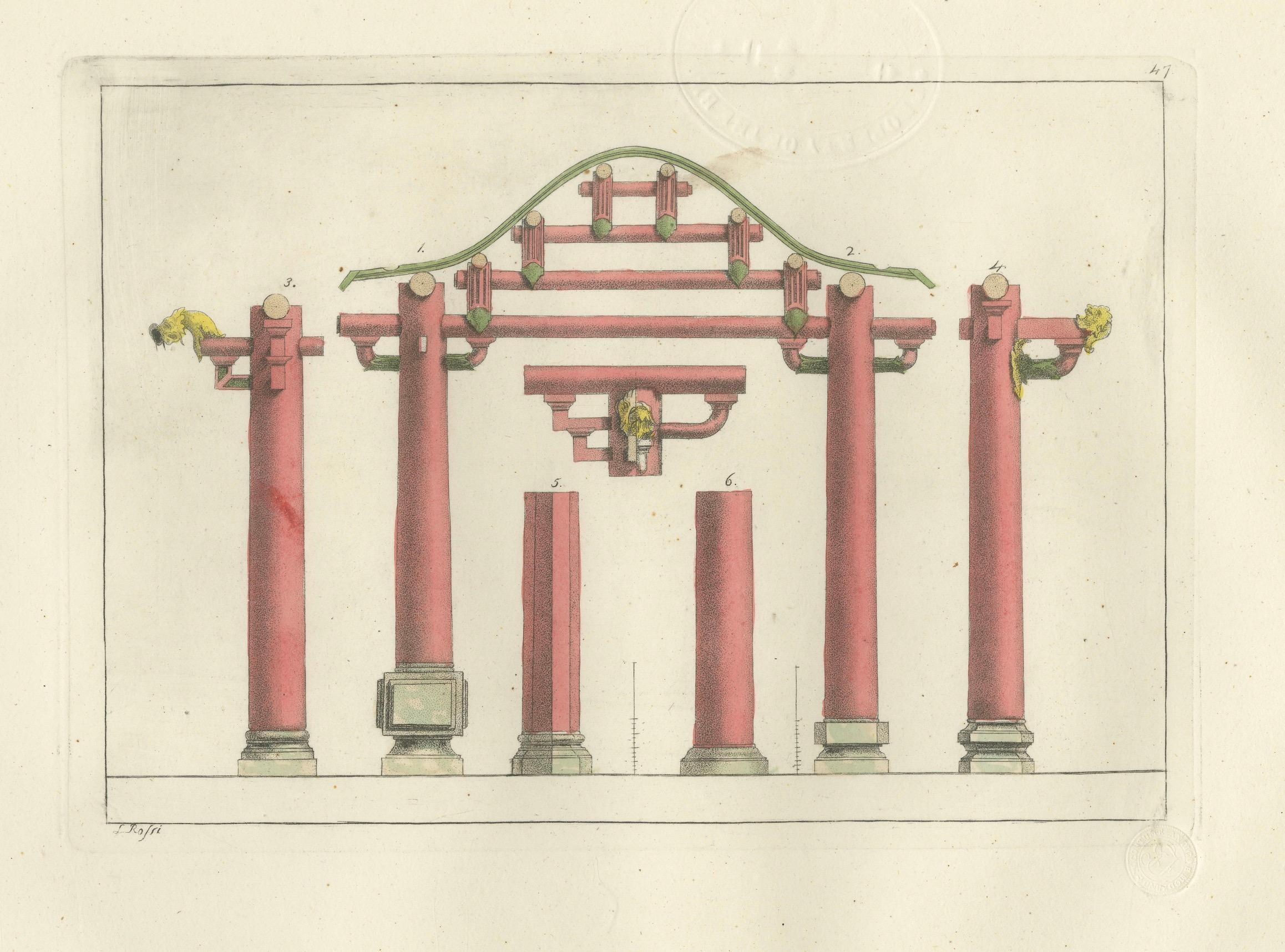
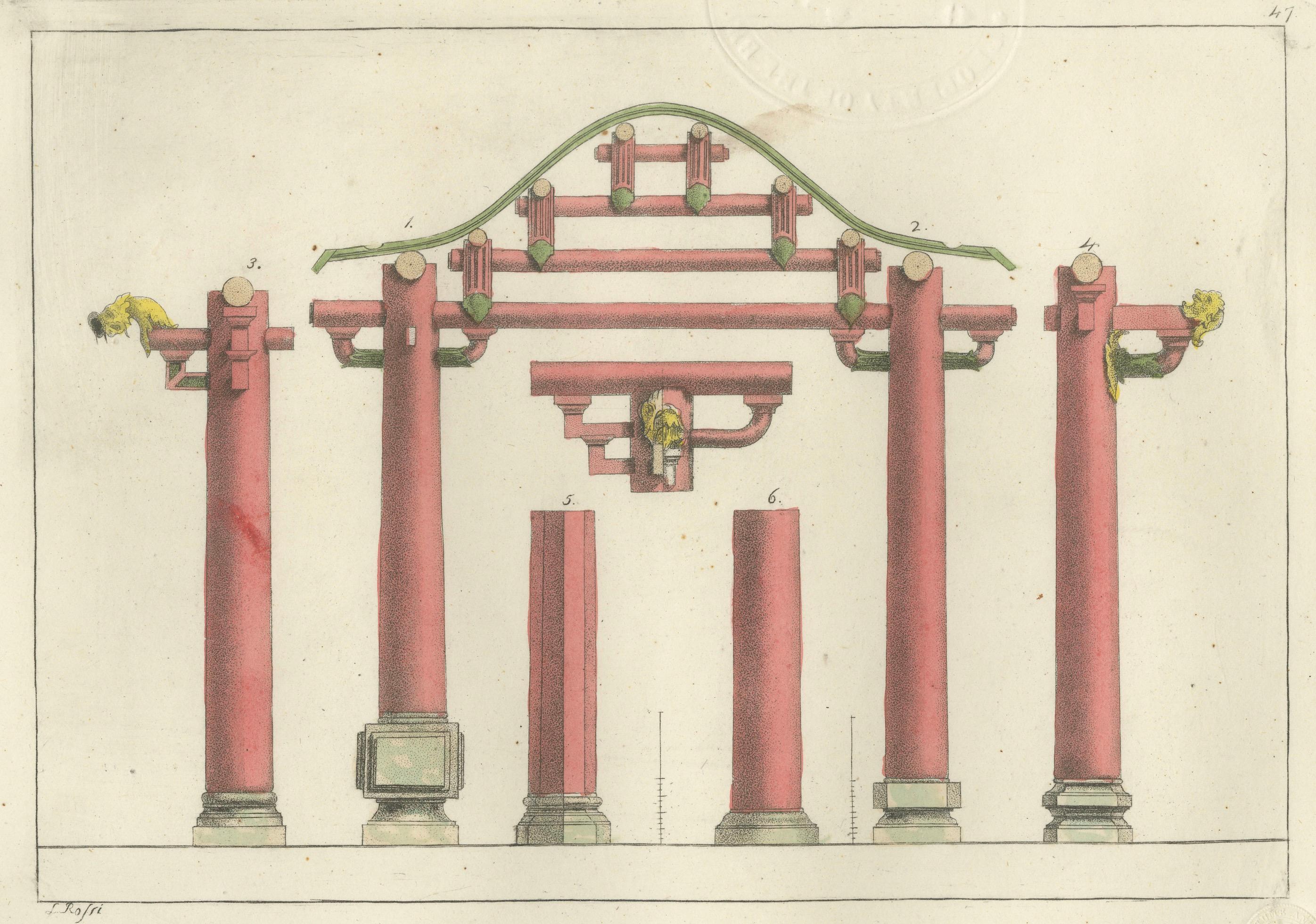
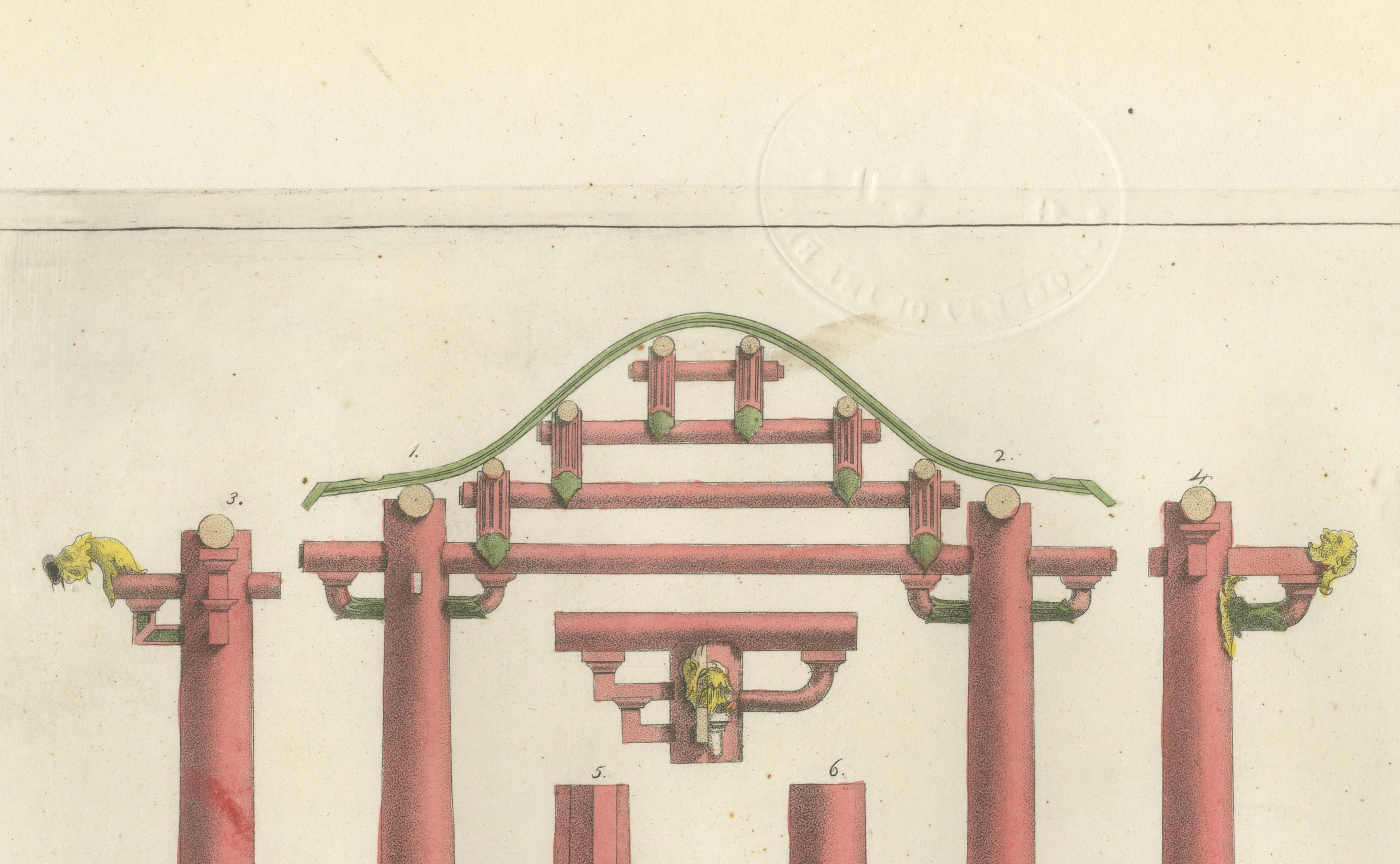
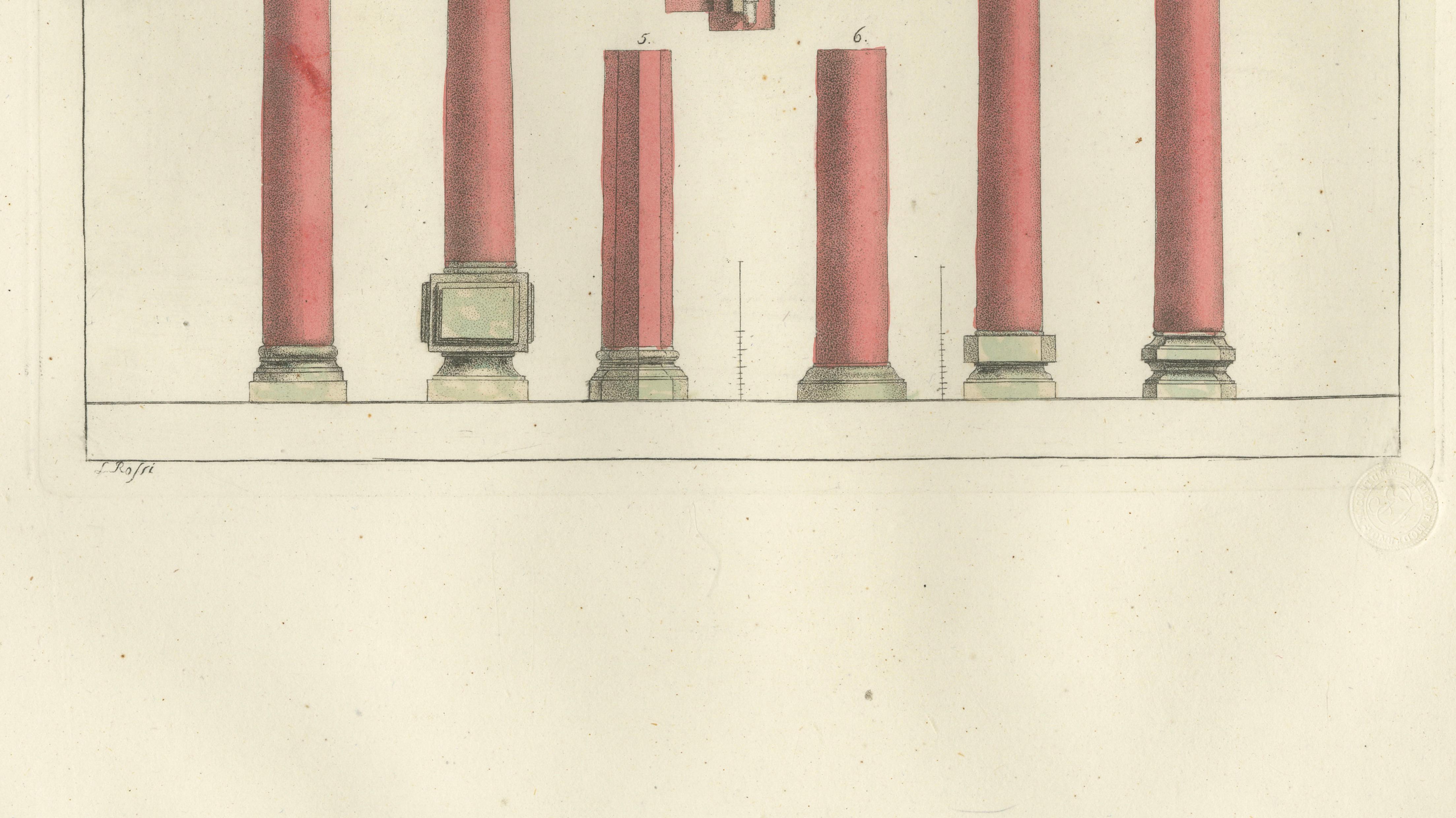
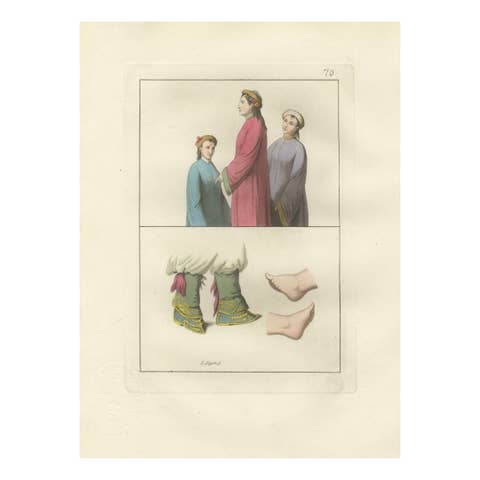
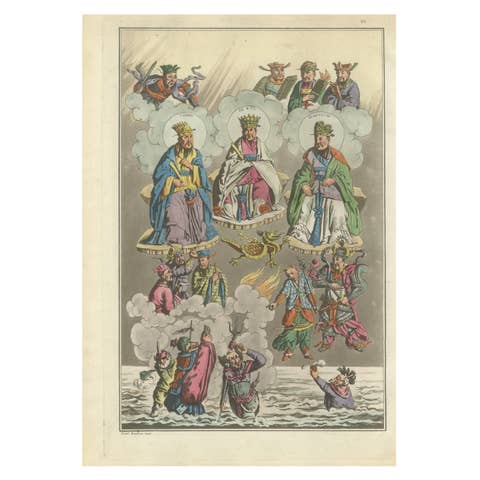
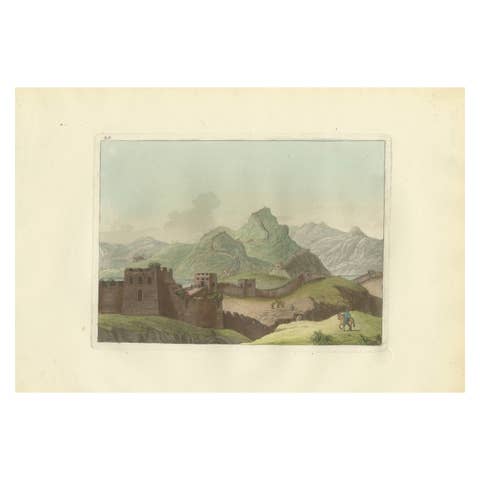
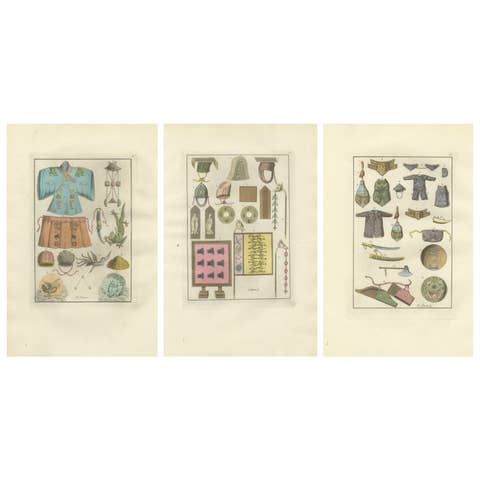
This finely hand-colored engraving illustrates traditional Chinese architectural columns and structural elements, presented with the precise clarity typical of early nineteenth-century European studies of Asian design. The plate was produced for Giulio Ferrario’s celebrated encyclopedic publication Il Costume Antico e Moderno di Tutti i Popoli (Costumes Ancient and Modern of All Peoples), issued in Milan in the early decades of the nineteenth century. Ferrario’s ambitious project sought to document the architecture, dress, customs, and daily life of cultures around the world, reflecting the European Enlightenment fascination with global knowledge and ethnographic observation.
The engraving shows a sequence of architectural elements used in traditional Chinese building design, including column bases, vertical posts, and a decorative beam assembly. The bright red columns immediately evoke the visual language of classical Chinese architecture, where vermilion lacquered timber pillars were widely used in temples, palaces, and ceremonial halls. In Chinese architectural tradition these columns were structural as well as symbolic, supporting roof systems while also expressing order, hierarchy, and harmony within the building’s layout.
At the center of the composition a beam structure with bracketed supports demonstrates how the horizontal roof elements connect to the vertical pillars. These bracket systems, known as dougong in Chinese architecture, allowed builders to distribute the weight of heavy tiled roofs while also creating elegant ornamental transitions between structural members. The engraved plate carefully separates the individual components, almost like a technical diagram, allowing viewers to understand how each element relates to the overall construction.
Ferrario’s work was one of the most visually rich ethnographic publications of the early nineteenth century. Drawing upon travel accounts, diplomatic reports, and earlier illustrated sources, the volumes attempted to present European readers with a comprehensive visual survey of world cultures. The architectural plates from the Asian sections are especially valued today for their clear presentation of decorative and structural forms from China, Japan, and other parts of East Asia.
The engraving was printed in Milan and subsequently finished by hand with delicate watercolor, highlighting the red columns and muted green bases. Such careful hand coloring gives the print both decorative appeal and historical authenticity, making it an attractive piece for collectors of architectural prints or Asian-inspired decorative art.
Today plates from Ferrario’s Il Costume Antico e Moderno are appreciated both for their ethnographic importance and their refined graphic style. The combination of precise engraving and subtle hand coloring makes them especially suitable for framing, where the strong vertical columns and balanced composition create an elegant visual statement.
This example is an original antique engraving with original hand coloring applied at the time of publication. It is not a modern reproduction. Any presentation images showing the print framed are for visual inspiration only. The map is supplied unframed.
Condition:
Good condition for a print of this age. Light age toning and minor scattered foxing visible in the margins. The original plate mark is clearly visible around the engraved image. Wide margins preserved. Original embossed blind stamp visible as issued.
Framing tips:
This print frames beautifully with a warm ivory or light cream mat that complements the aged paper tone. A dark walnut or black frame works particularly well and echoes the strong architectural lines of the columns, creating a refined interior-design piece suitable for both classical and modern interiors.
Technique: Hand-colored engraving
Maker: Luigi Rossi after designs for Giulio Ferrario, Milan, circa 1820s