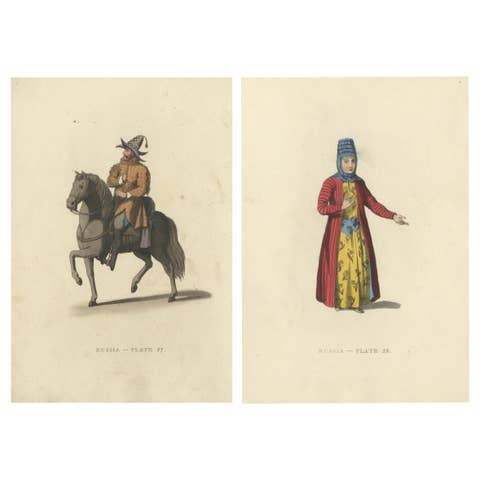
Bratzkian Attire and Shamanic Regalia in 19th Century Russian Engravings, 1814
€ 330
One of a kind: this is the sheet in the photographs. Ships from Langweer, the Netherlands.
Date
1814
Sheet size
24 × 17 cm (9.4 × 6.7 in)
Condition
Good
Reference
BG-13605-4-17 & BG-13605-4-18 & BG-13605-4-19
Condition
Very good, given age. General age-related toning and/or occasional minor defects from handling. One print with a scribble outside the image. Please study scans carefully.
About this sheet
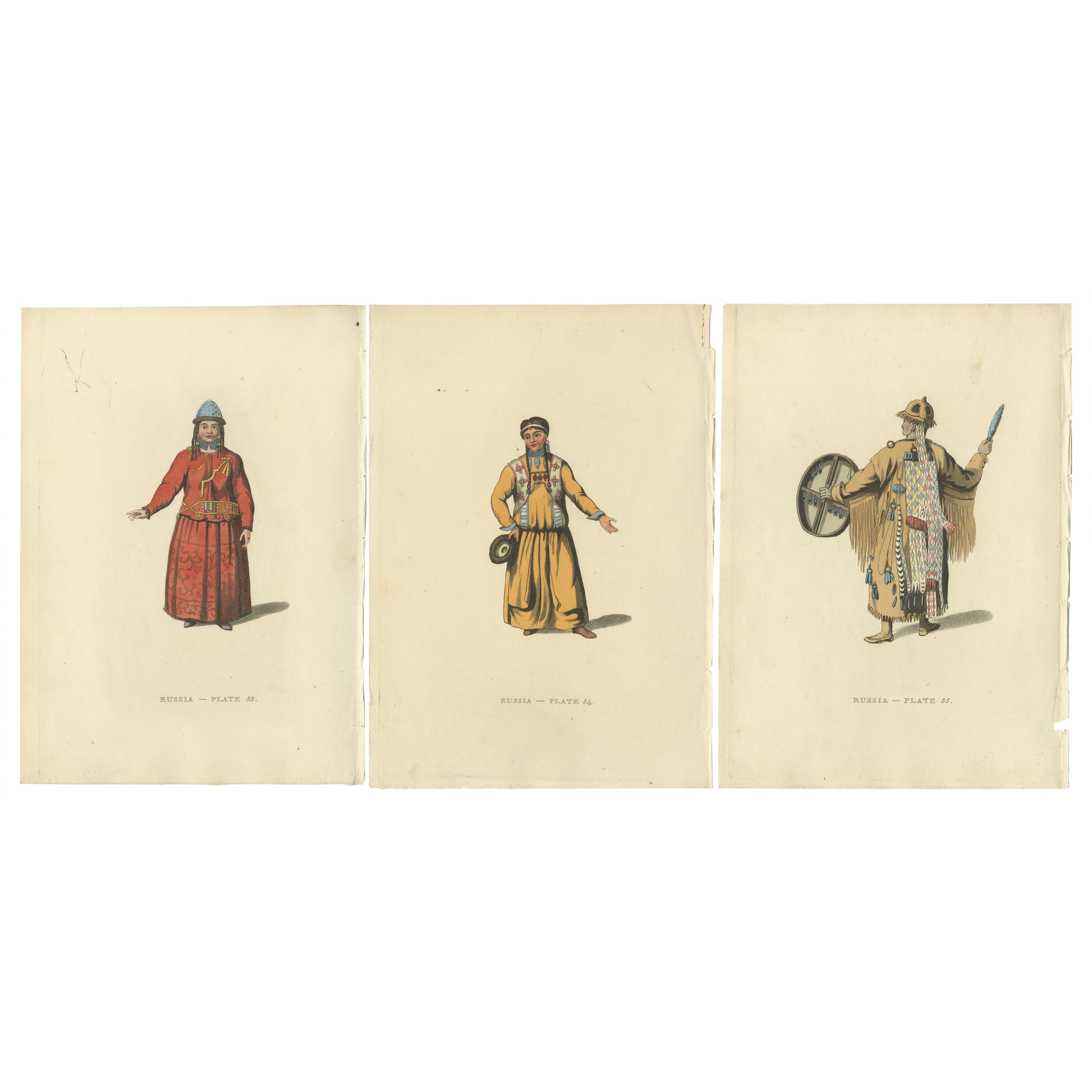
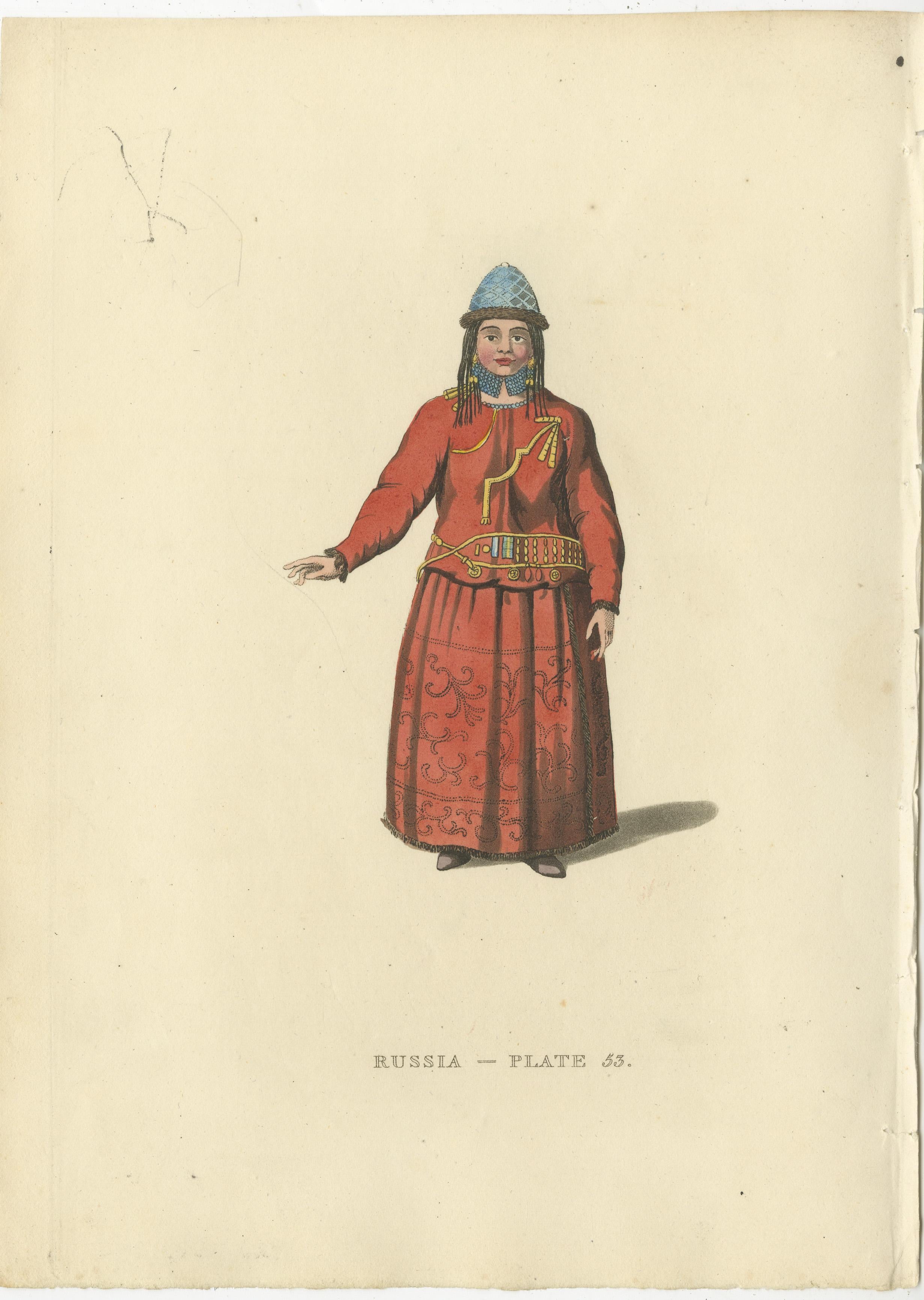
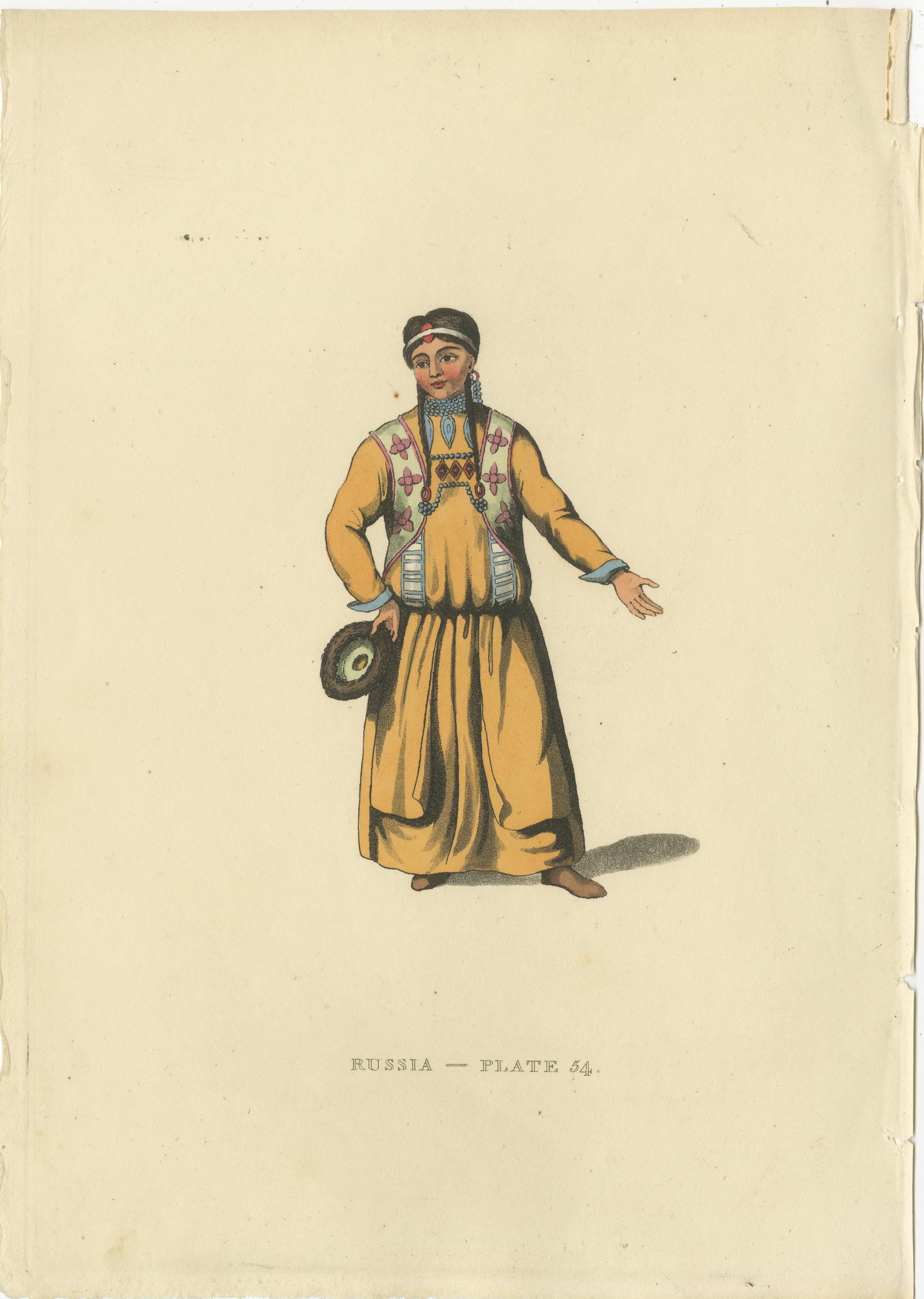
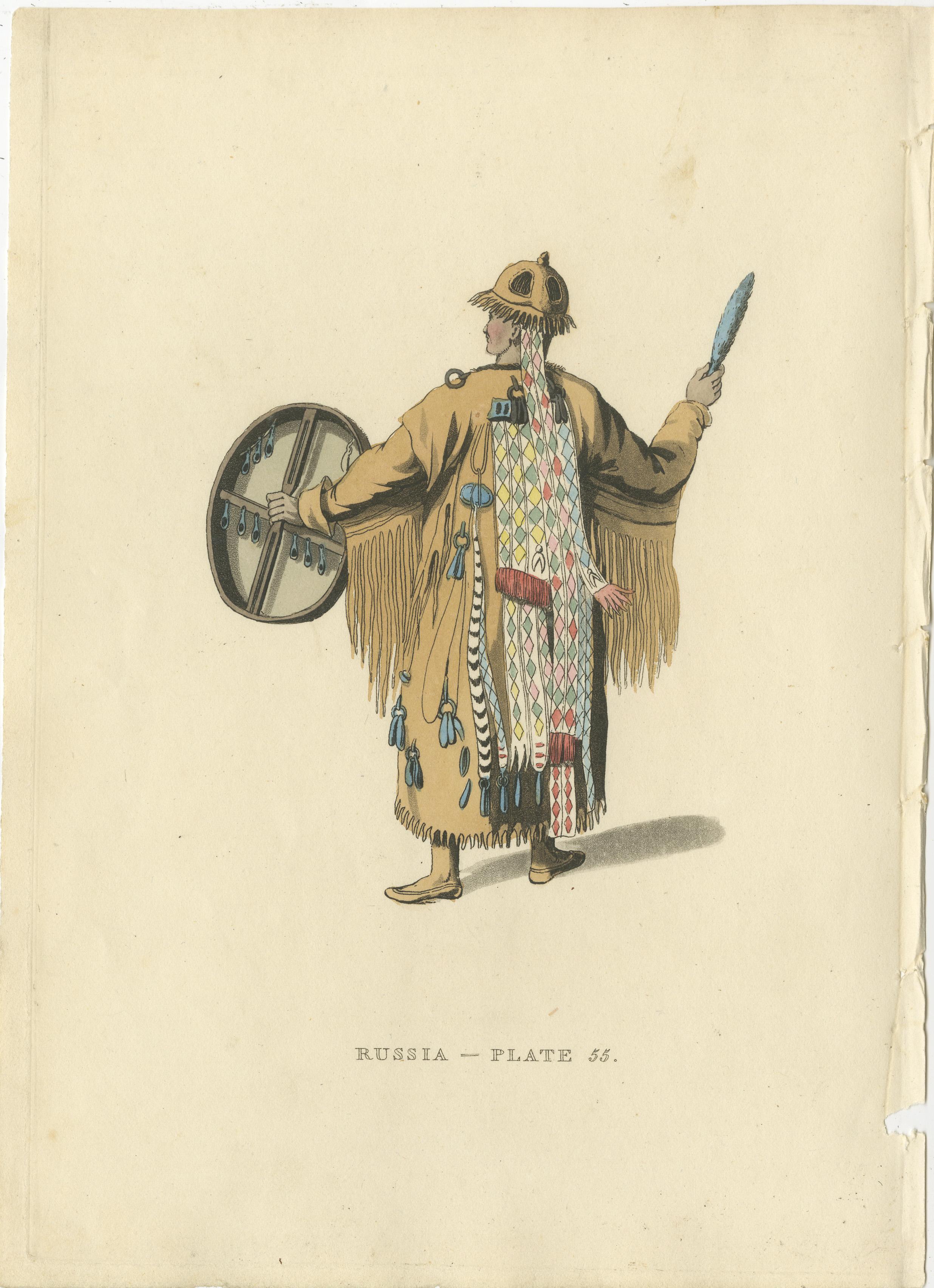
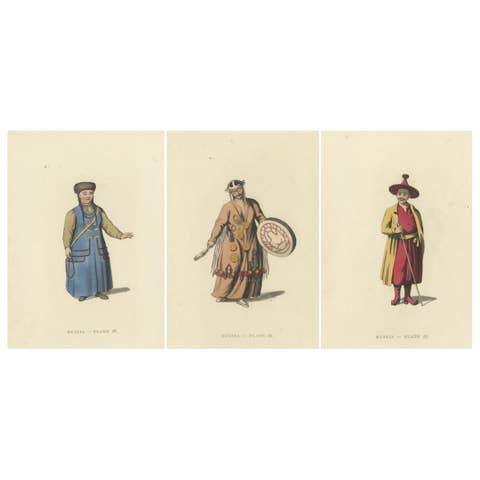
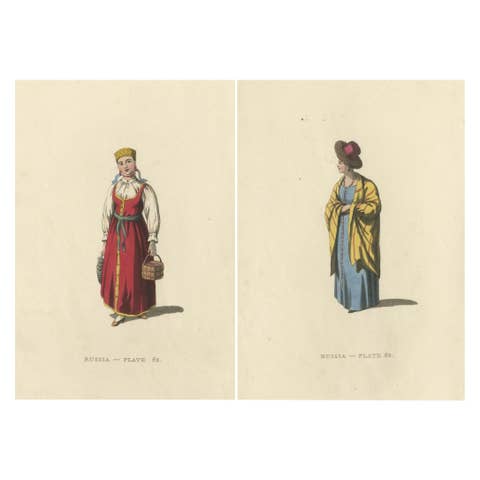
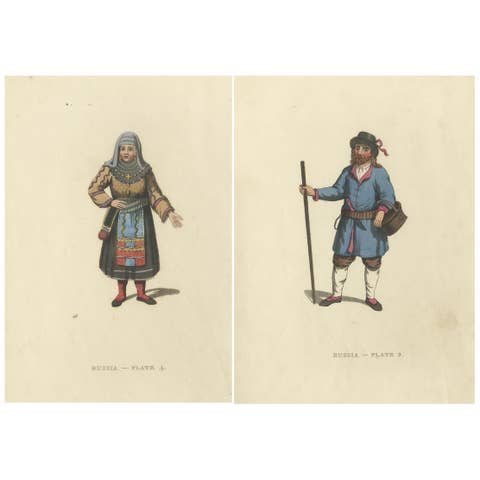
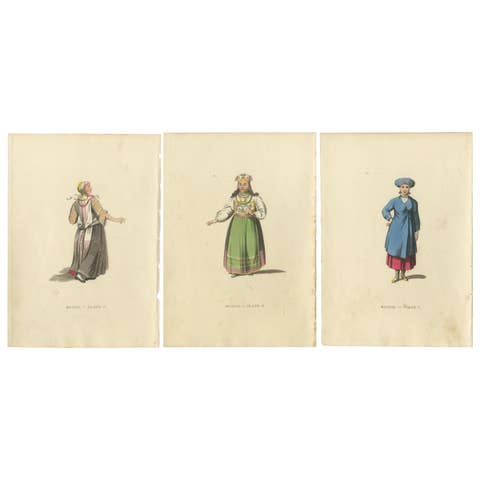
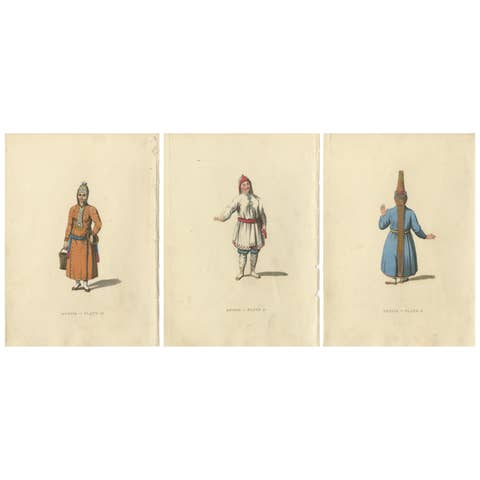
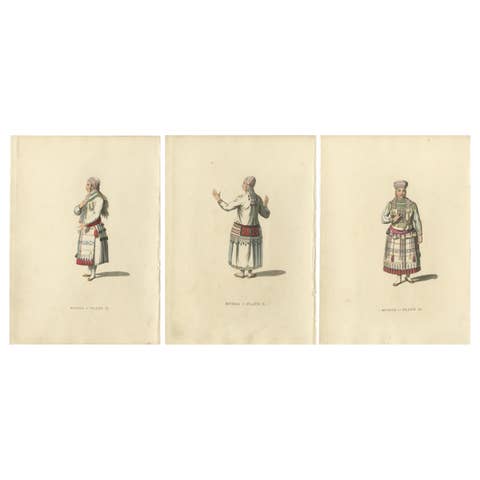
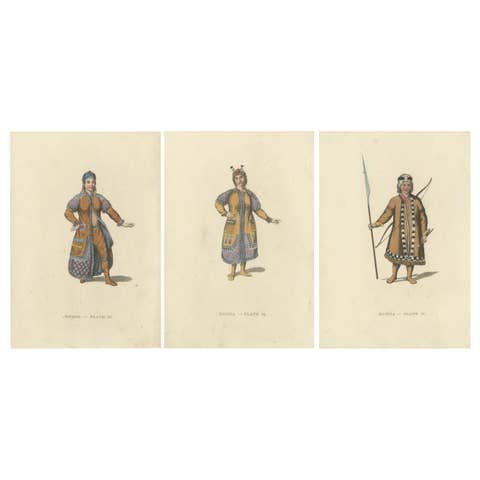
The images are original hand-colored engravings from William Alexander's "Picturesque Representations of the Dress and Manners of the Russians," published in 1814 by John Murray. This work is notable for its detailed illustrations of traditional Russian attire and cultural practices across various regions and peoples within the vast Russian Empire.
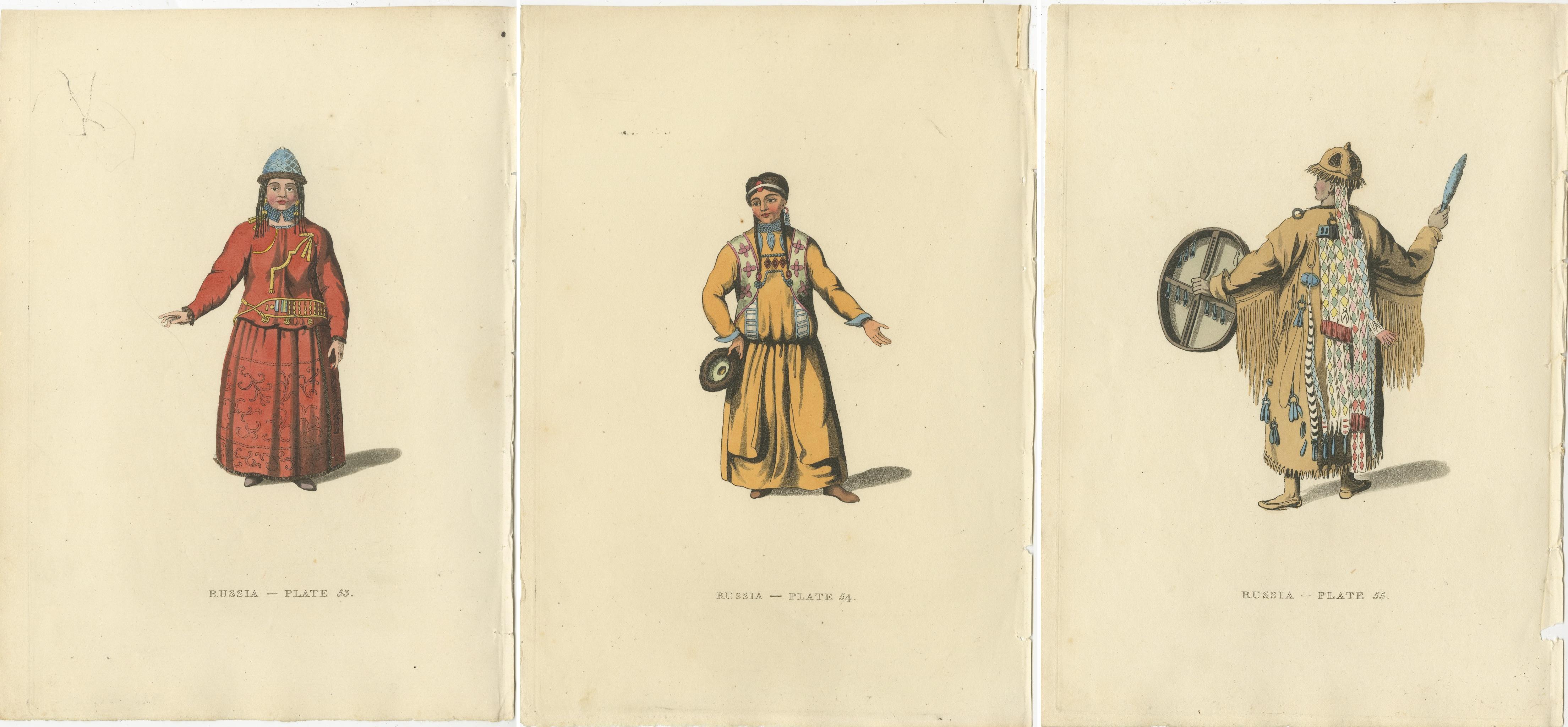
1. **A Female Bratzkiye**: This image depicts a woman dressed in traditional Bratzkiye clothing. The Bratzkiye were likely a subgroup or a family within a larger ethnic community in Russia. She is wearing a vibrant red dress with ornate patterns and a distinctive headdress, which suggests a specific regional or cultural significance. Her attire is richly decorated, indicating the importance of detailed embroidery and accessorizing in her culture.
2. **A Bratzkian Woman of Udinskoi Ostrog**: The second image shows a woman from Udinskoi Ostrog, which refers to a Siberian fort town, now Ulan-Ude near Lake Baikal, inhabited by the Bratzkian people. Her outfit is characterized by a layered look, with a yellow dress and a patterned vest over it, along with a headband and beaded jewelry, reflecting the traditional attire of the region.
3. **A Bratzkian Shaman or Female Magician**: The third image represents a Bratzkian Shaman or female magician. The attire includes a fringed robe which is typical for a shaman, signifying her role within the community as a spiritual leader and healer. The robe is adorned with symbolic patterns and she holds a drum and a feather, tools often associated with shamanic practices for conducting rituals and communicating with the spirit world.
Each of these engravings serves as a historical record of the cultural diversity within Russia during the early 19th century. They provide a visual account of the traditional costumes that were likely worn for special occasions or ceremonial purposes, revealing the richness of the local customs and the different roles individuals had within their societies.
The detail and colorfulness of the engravings reflect the time's fascination with ethnography and the documentation of cultures around the world. The work of William Alexander is especially valuable as it captures the intricacies of traditional dress and the distinctiveness of cultural practices in a period before photography could perform such a role.