About this sheet
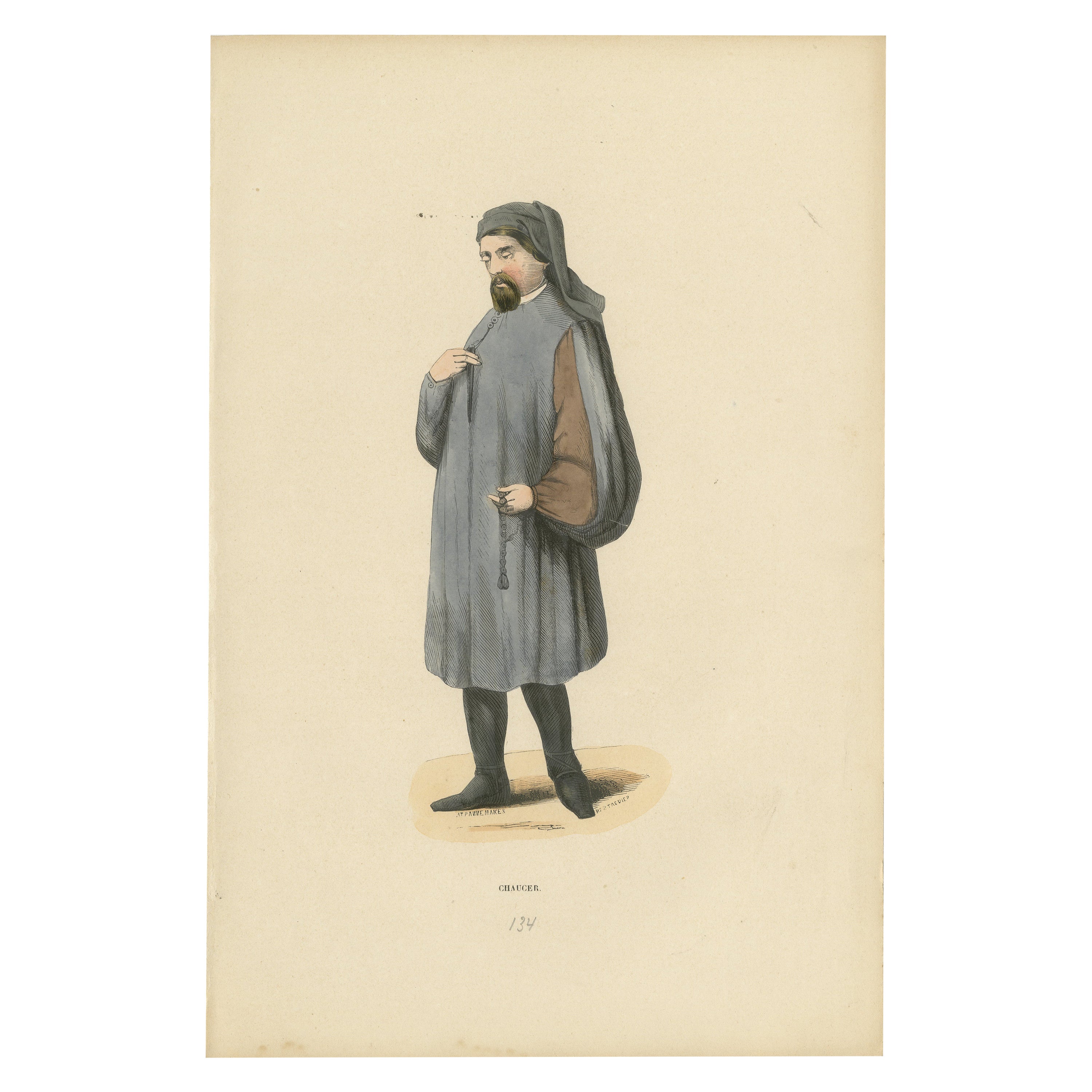
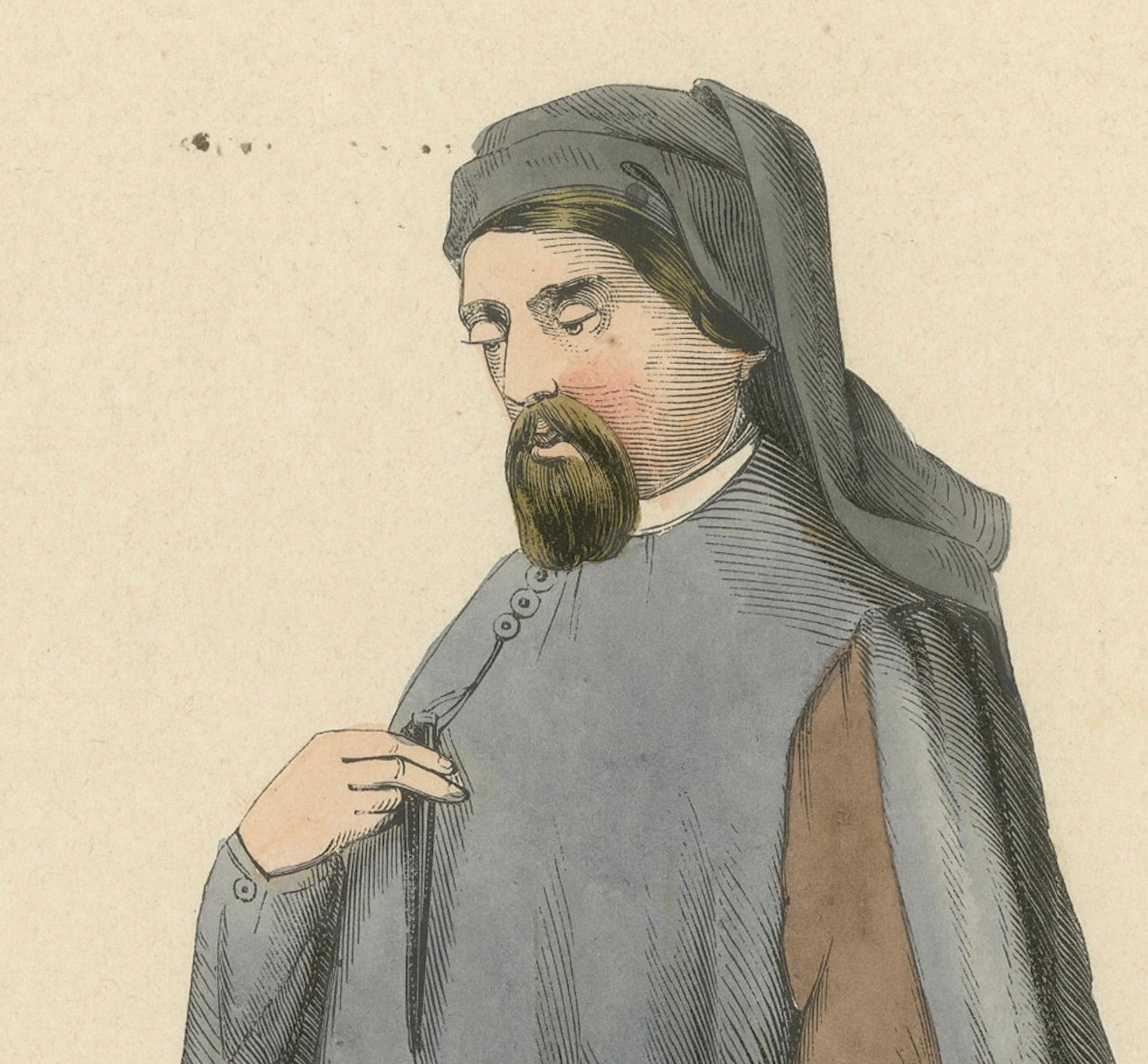
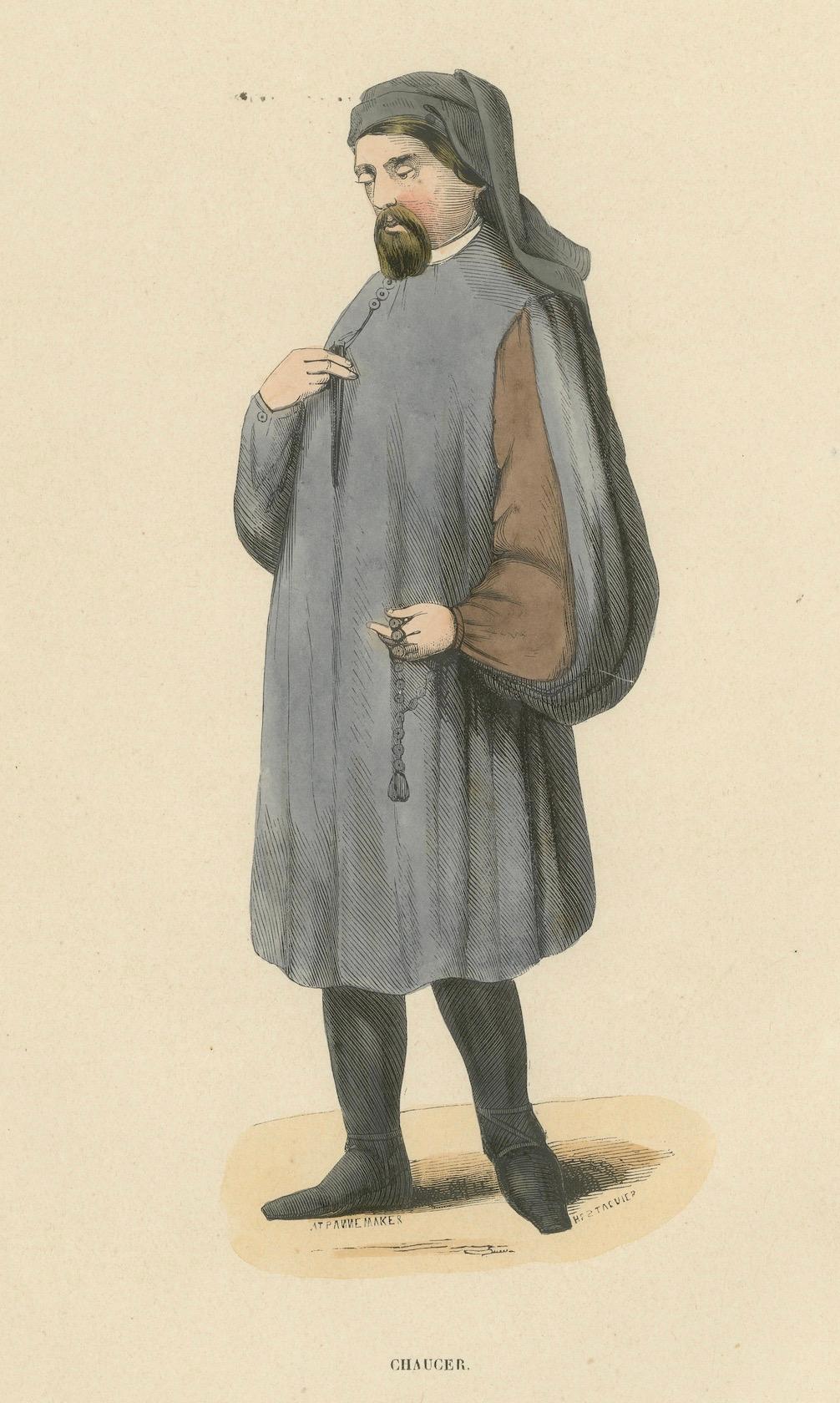
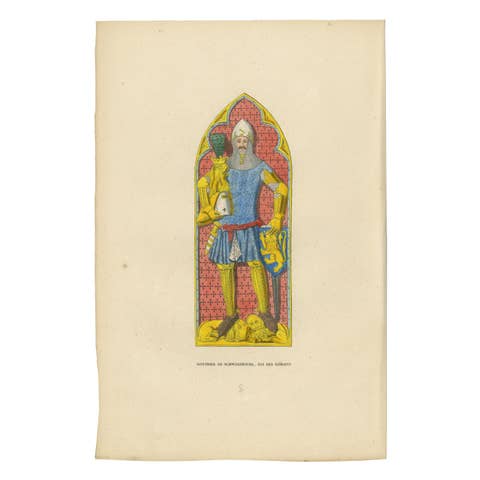
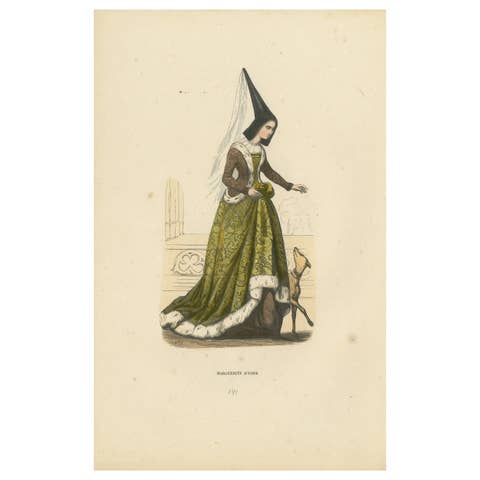
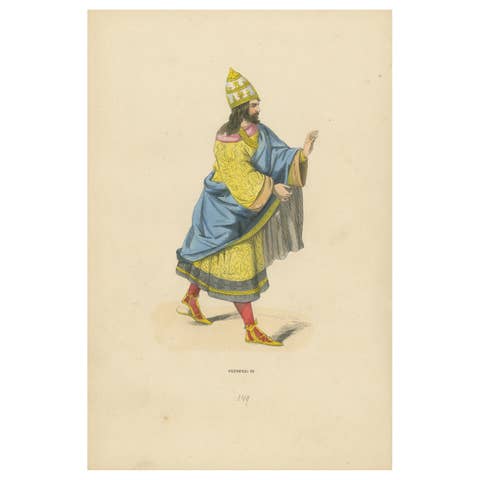
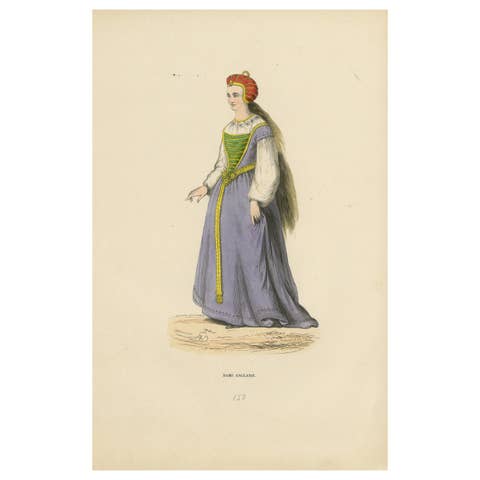
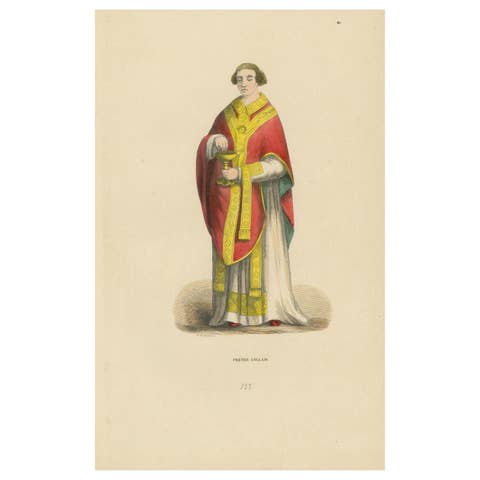
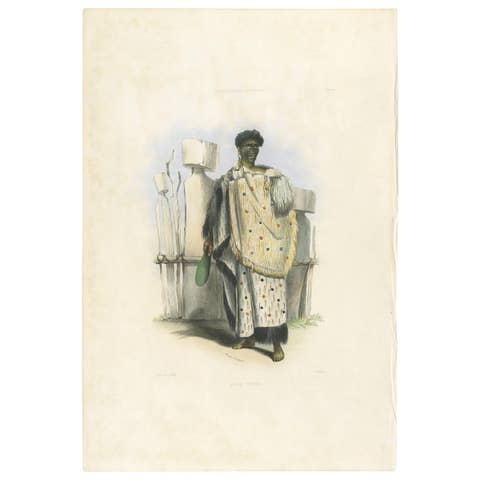
This lithograph from "Costume du Moyen Âge," published in 1847, portrays a scholarly figure, possibly a cleric or a merchant, from the medieval period. The individual is garbed in a long, hooded blue robe with a fur lining visible at the edges, suggestive of a need for warmth and indicative of a status that affords such luxury.
The subject's beard and hair are well-groomed, framing a contemplative expression that reflects a life of thought or academia. His right hand is raised to his chest, fingers lightly touching the fabric of his robe, while his left hand holds a small object, perhaps a pouch or a personal seal used for correspondence or official documents.
The figure's attire is completed with fitted black hose and practical shoes, the ensemble being both functional and befitting a man of learning or business in the medieval society. His stance is one of quiet dignity, with his weight shifted to one leg, providing a relaxed yet composed posture.
The simplicity of the background ensures that the viewer's attention remains on the subject and his attire. This lithograph is a visual study into the everyday life of the educated or mercantile class during the medieval period, highlighting the clothing choices that were both practical and representative of one's role within the social hierarchy. It provides a snapshot of the understated elegance that characterized the dress of the scholarly and middle classes of the time.
The colors have a nice glow over them. Historically, egg whites, known as glair, and sometimes egg yolk were indeed used in illumination and painting, particularly in manuscripts, to give colors a brighter appearance and to add a sheen or gloss to the work. This technique was quite common during the Middle Ages and into the Renaissance.
Egg whites can be applied as a varnish over pigments to enhance their brightness and to protect the colors. This application could make the colors appear more vivid and also add a slight glossy sheen to the surface of the image.
Egg yolk, on the other hand, was commonly used as a binding agent in paint. It forms the basis of tempera paint, a medium that was widely used before the advent of oil painting. Egg yolk helps to create a durable and long-lasting color that adheres well to various surfaces.
In the context of the print from 1847, it's less likely that egg whites or yolks were used directly on the print, as by that time, commercial printing processes would have been more advanced and less reliant on such manual methods. However, if this print is a representation of an earlier style or is meant to mimic the appearance of hand-painted manuscripts, the original artists might have employed techniques or materials that gave a similar effect to those achieved with egg-based binders and varnishes.