About this sheet
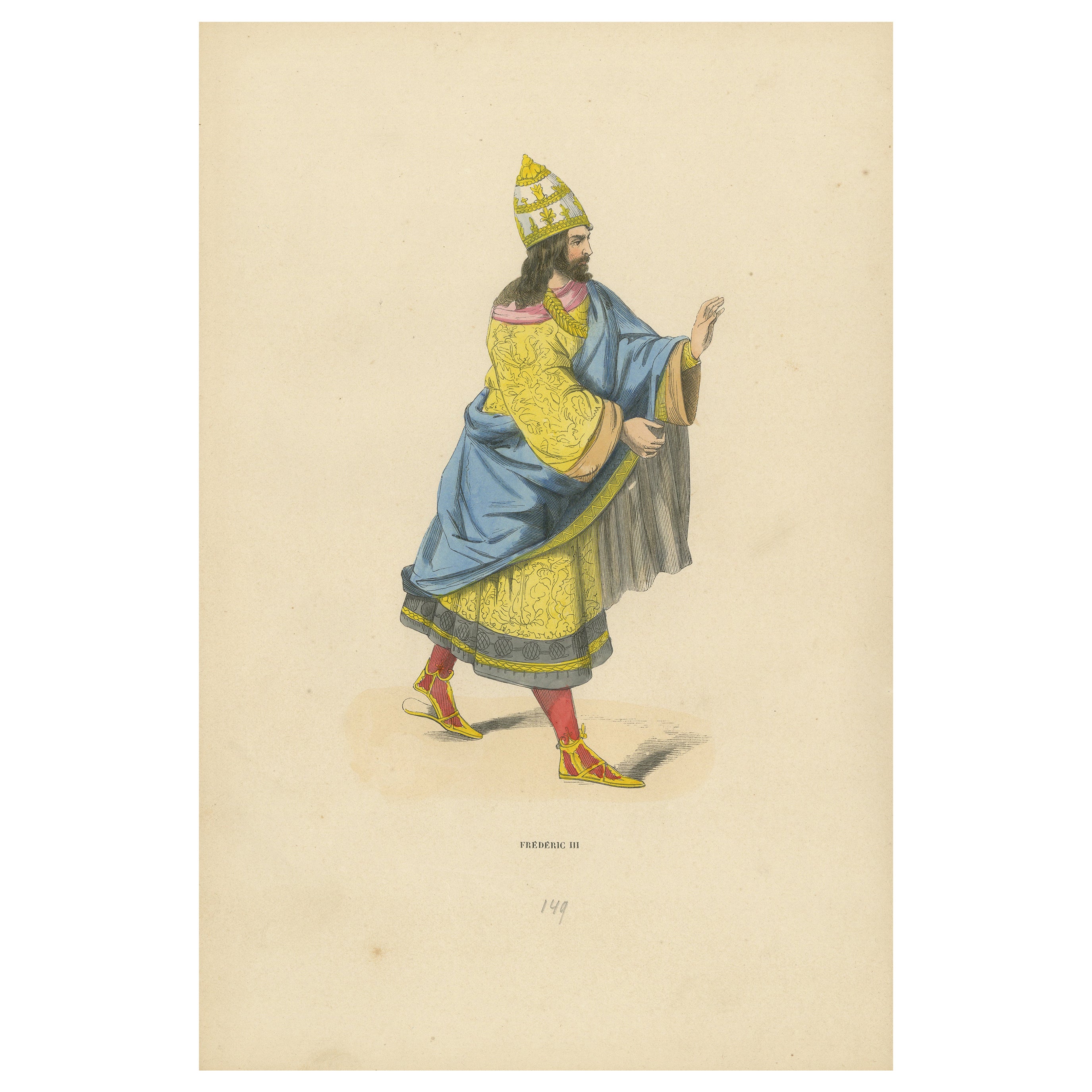
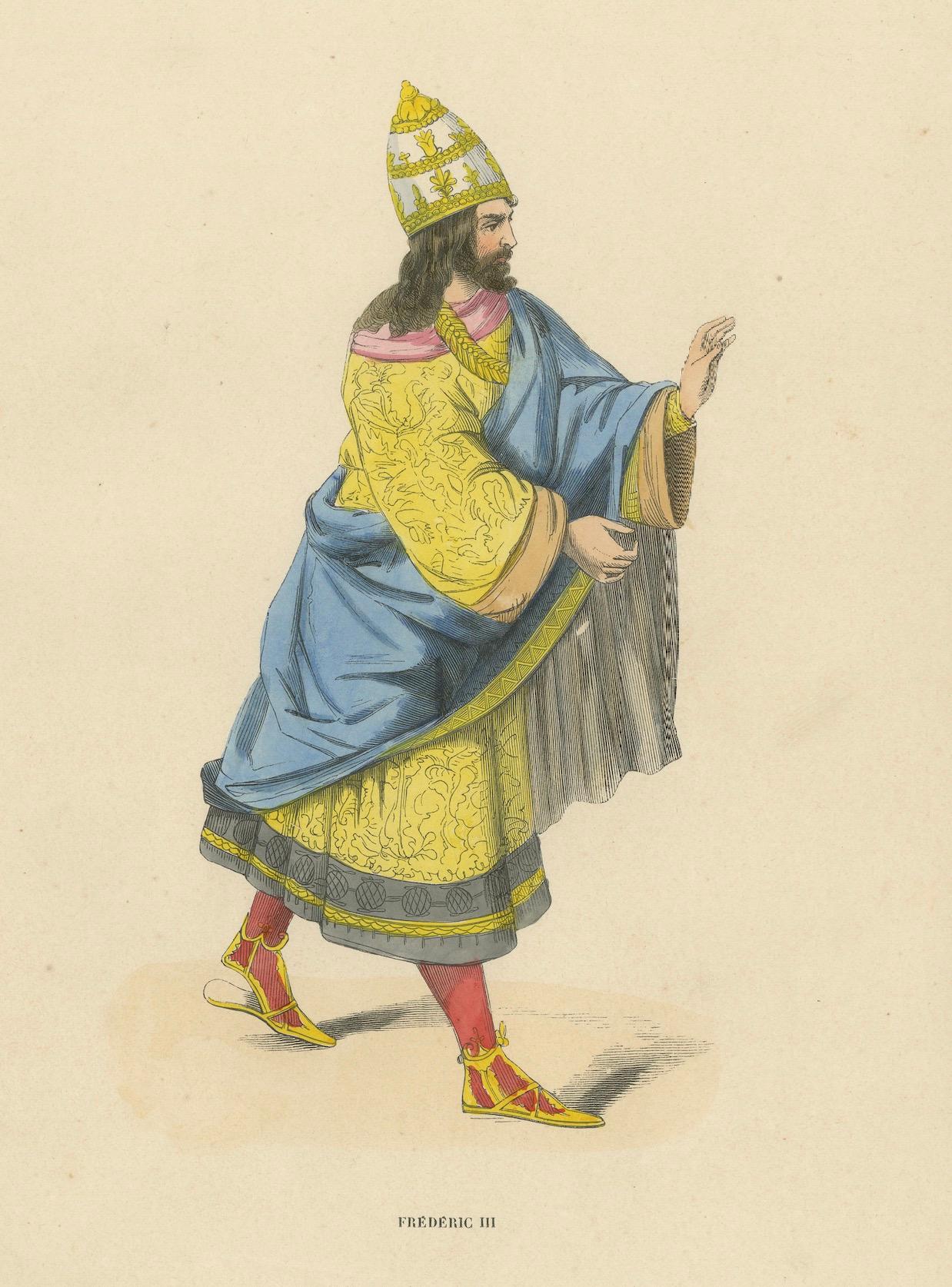
This lithograph from the "Costume du Moyen Âge" collection, printed in 1847, depicts Emperor Frederick III, ruler of the Holy Roman Empire in the 15th century. The emperor is shown in profile, in a stately pose that conveys his imperial authority. He is dressed in an elaborate ceremonial robe, richly decorated with detailed patterns, likely signifying his imperial power and the grandeur of his office.
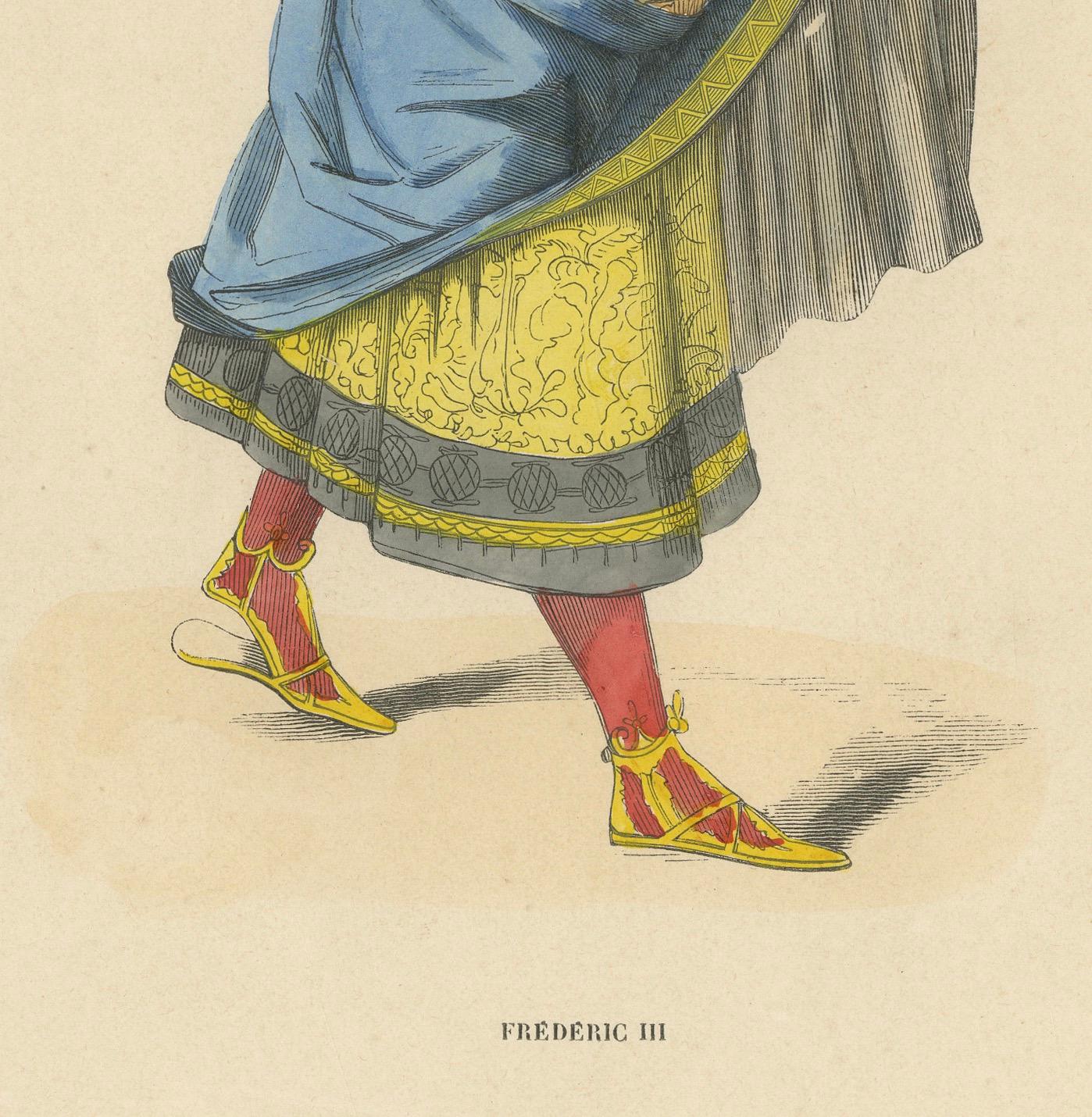
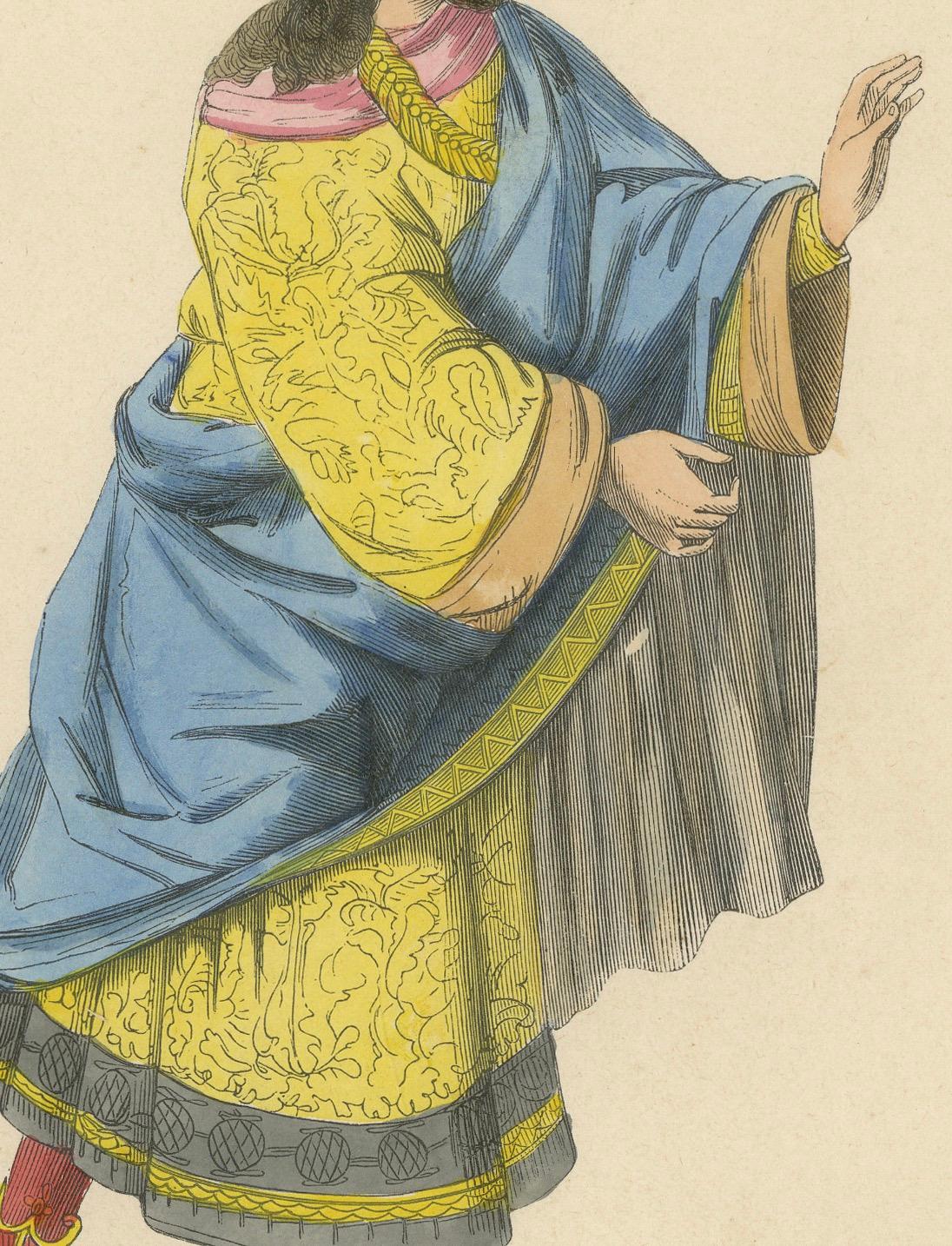
The robe is a vibrant yellow with intricate embellishments, which may symbolize the empire over which he reigned. It is trimmed with a dark band at the hem, perhaps velvet or another luxurious material, indicating the wealth and splendor associated with his status. Underneath, he wears a tunic in a contrasting blue, with sleeves that match the decorative pattern of his robe.
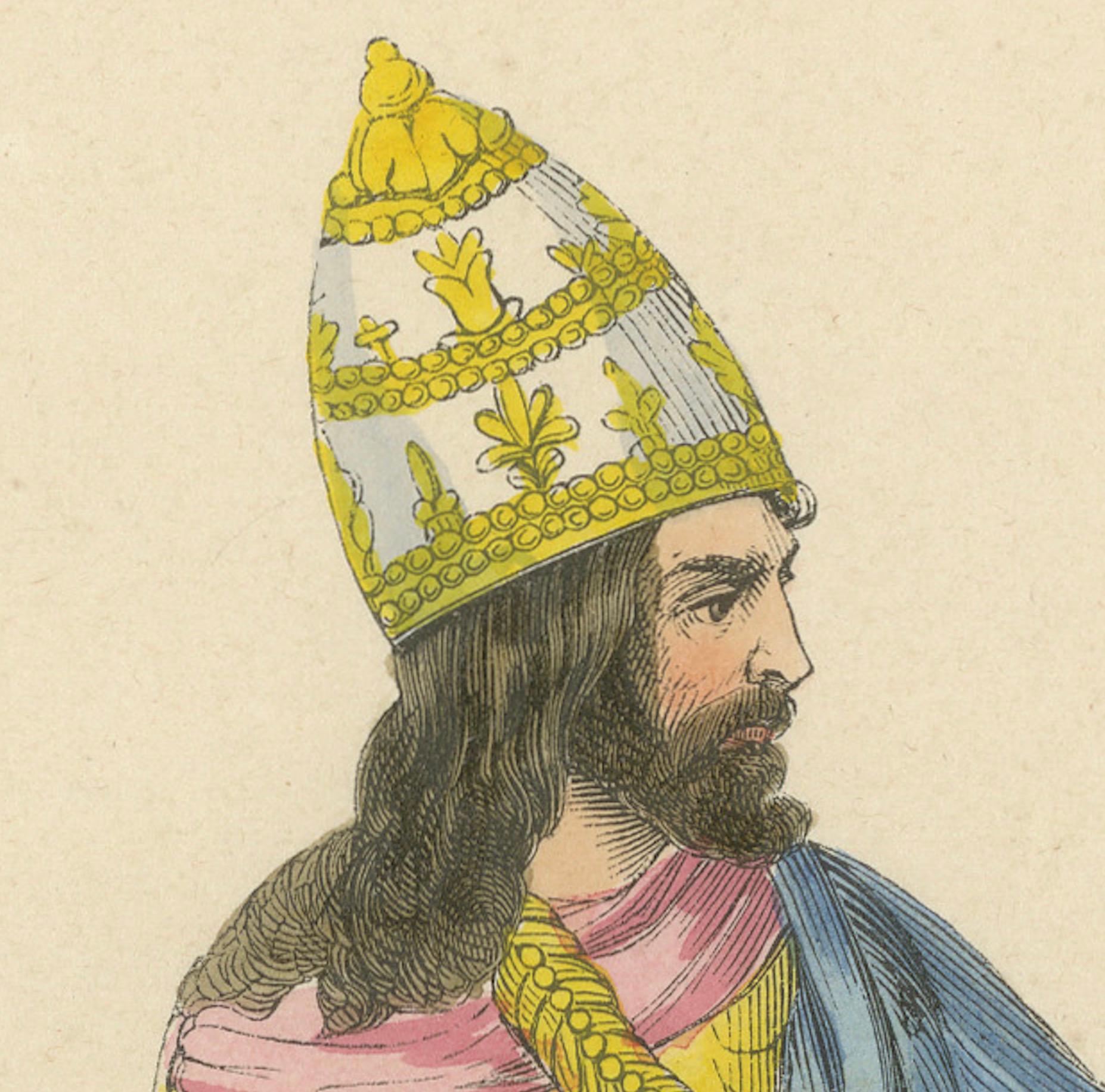
On his head, Frederick III wears a mitre-shaped hat, embellished with what appears to be heraldic symbols, further emphasizing his role as a monarch. His red stockings and yellow pointed shoes are consistent with the fashion of the time for men of high status.
The emperor's facial expression is serious and contemplative, befitting a ruler known for his political acumen and the long duration of his reign. His right hand is extended, possibly in a gesture of benediction or command.
This image serves not only as a study in the clothing of a medieval emperor but also as a representation of the imperial majesty and the role that fashion played in the visual language of power during the Middle Ages. The lithograph is a window into the past, providing a visual account of the splendor of imperial regalia.
The colors have a nice glow over them. Historically, egg whites, known as glair, and sometimes egg yolk were indeed used in illumination and painting, particularly in manuscripts, to give colors a brighter appearance and to add a sheen or gloss to the work. This technique was quite common during the Middle Ages and into the Renaissance.
Egg whites can be applied as a varnish over pigments to enhance their brightness and to protect the colors. This application could make the colors appear more vivid and also add a slight glossy sheen to the surface of the image.
Egg yolk, on the other hand, was commonly used as a binding agent in paint. It forms the basis of tempera paint, a medium that was widely used before the advent of oil painting. Egg yolk helps to create a durable and long-lasting color that adheres well to various surfaces.
In the context of the print from 1847, it's less likely that egg whites or yolks were used directly on the print, as by that time, commercial printing processes would have been more advanced and less reliant on such manual methods. However, if this print is a representation of an earlier style or is meant to mimic the appearance of hand-painted manuscripts, the original artists might have employed techniques or materials that gave a similar effect to those achieved with egg-based binders and varnishes.