About this sheet
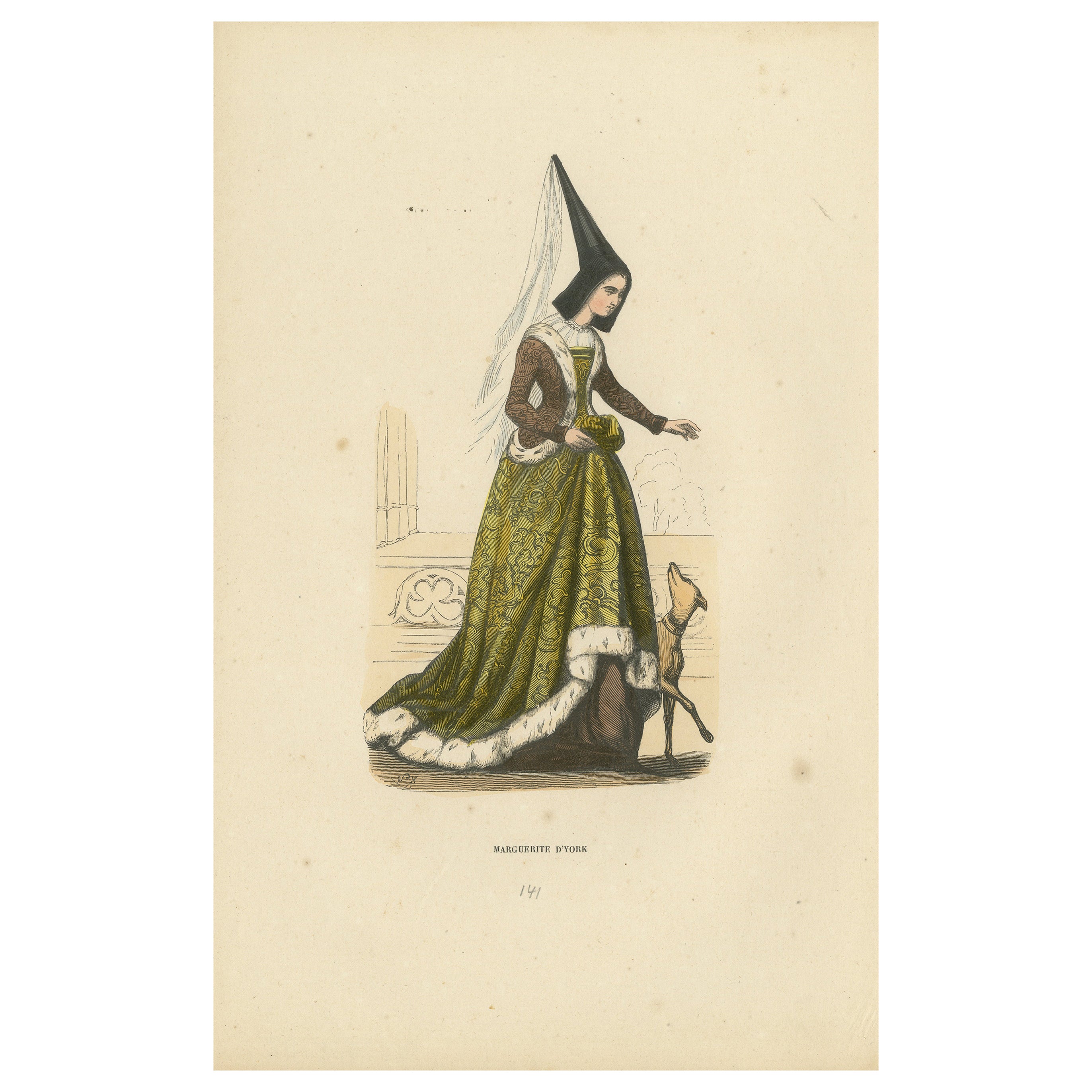
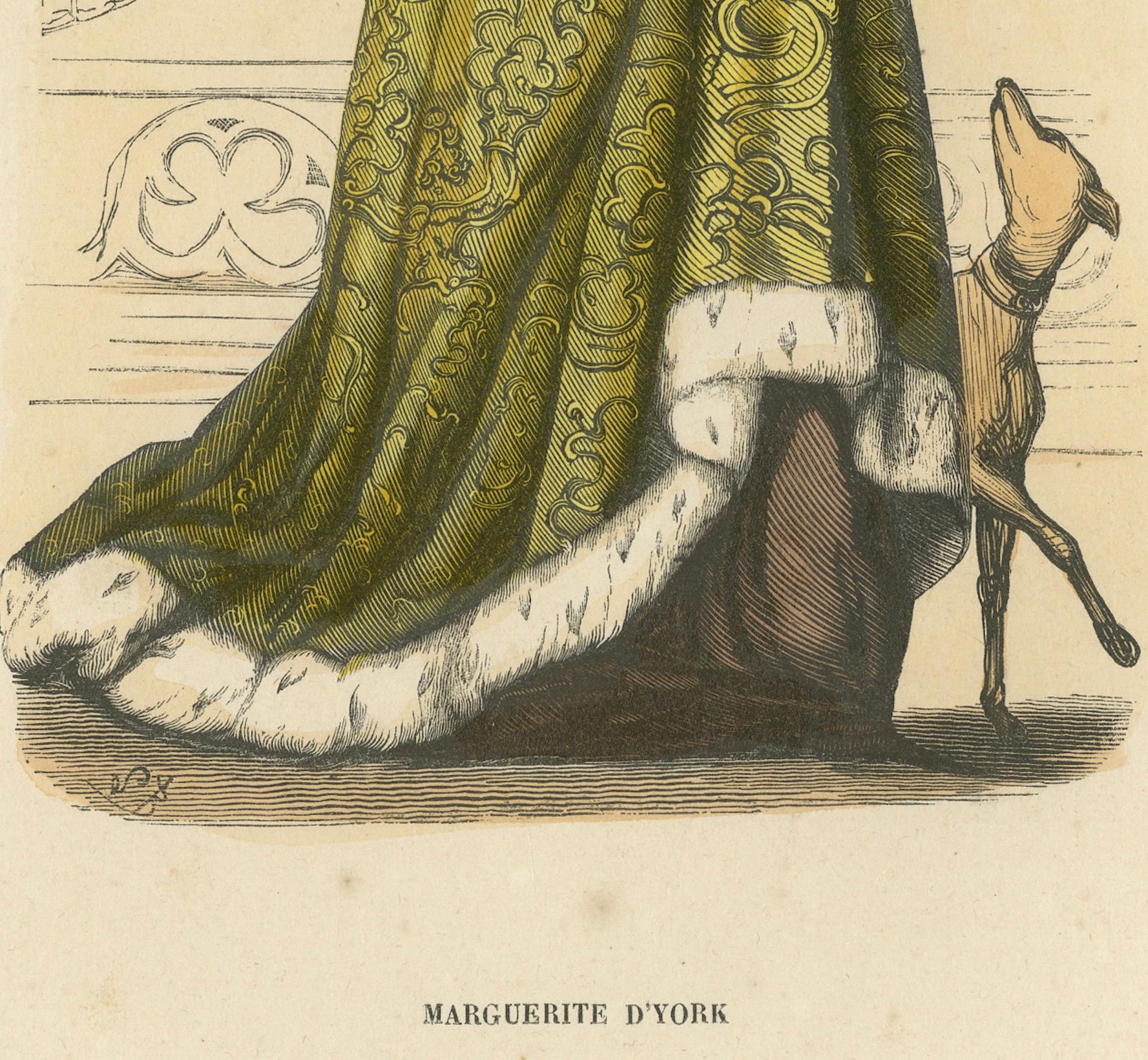
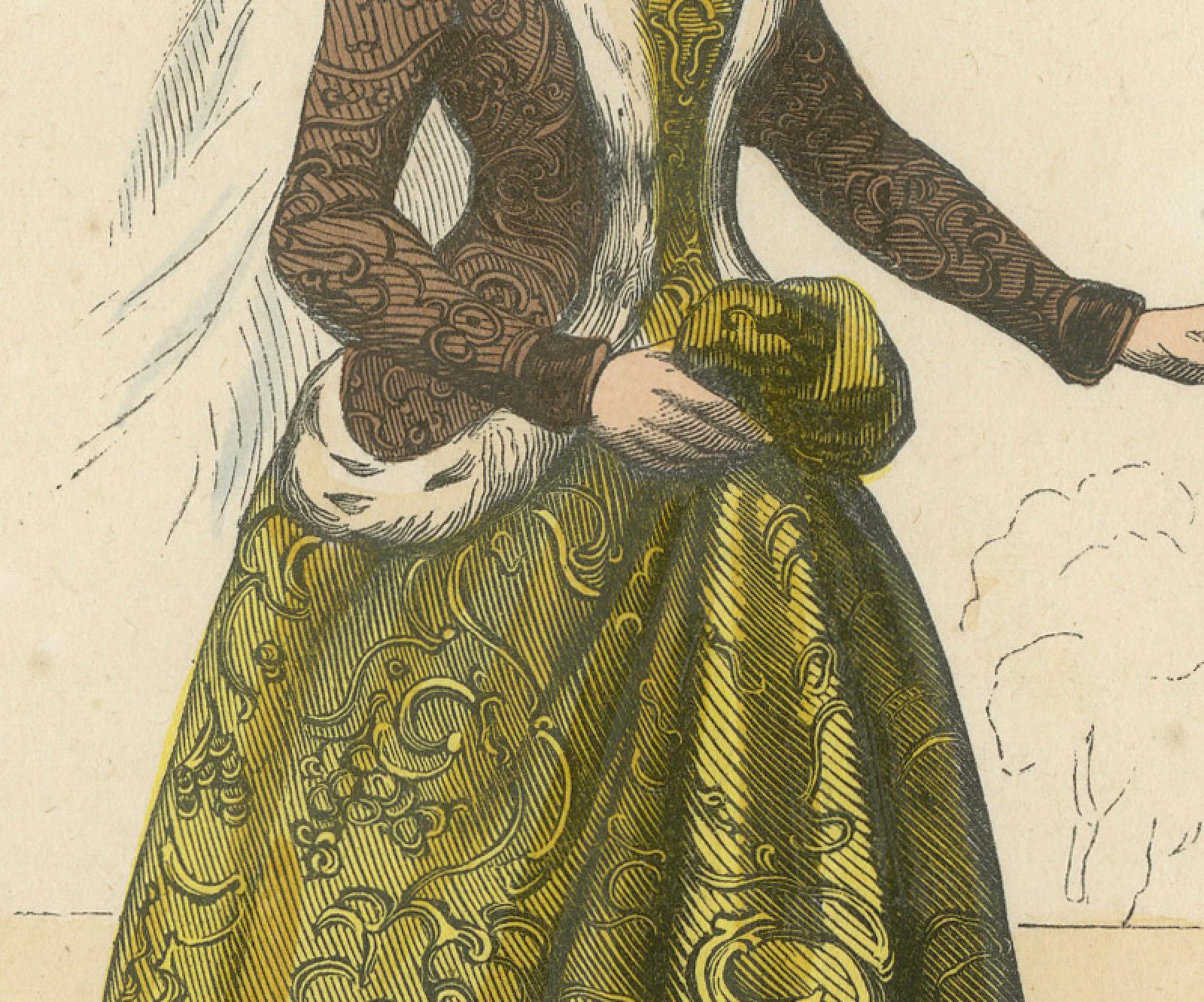
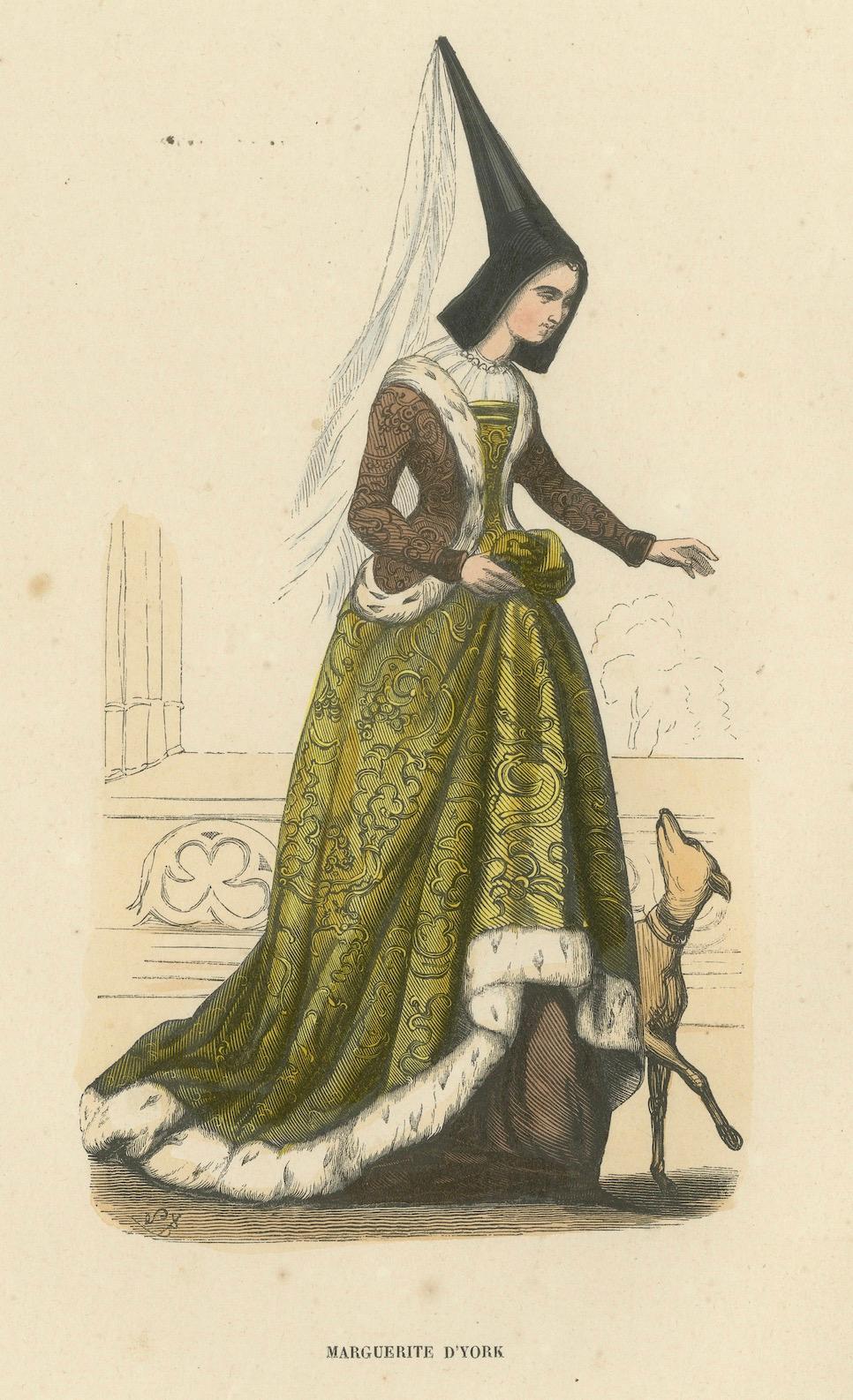
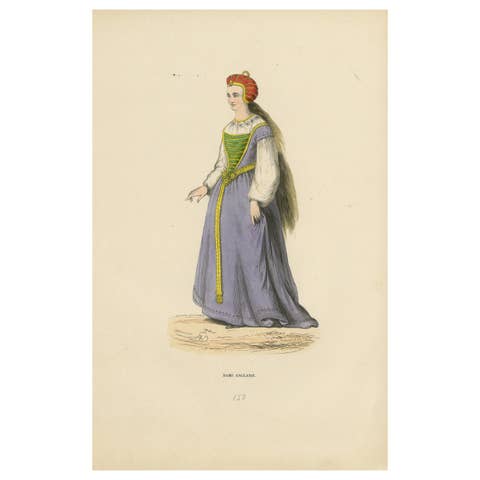
This lithograph from the "Costume du Moyen Âge" series, published in 1847, portrays Margaret of York, a notable historical figure. The illustration captures her in a moment of stately grace, emphasizing the luxurious attire appropriate to her status. She is adorned in a gown with a patterned bodice, featuring intricate swirls and floral designs, symbolizing both nobility and femininity. The garment is colored in a rich olive green, a popular hue for the period's fashion.
The gown is complemented by an ermine-trimmed cloak that cascades down her back, a traditional symbol of royalty and high status. Her sleeves are tight-fitting, which was characteristic of the era, allowing the elaborate cuffs of her undergarments to be displayed. Around her neck, she wears a white piece that could be part of the dress or a separate scarf, adding contrast to the ensemble.
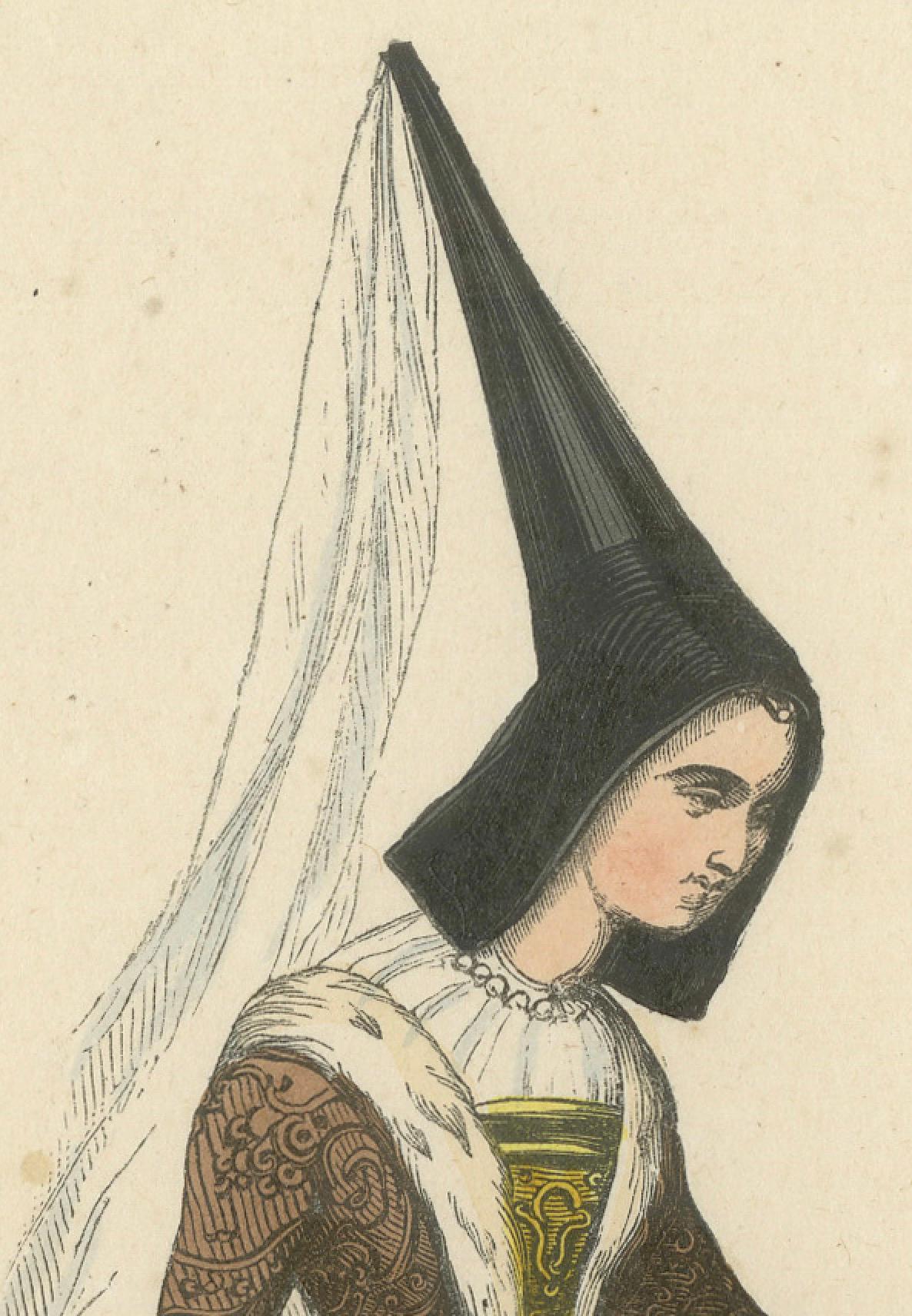
Margaret's headwear is particularly striking—a hennin, which is a tall, conical hat that was fashionable among noblewomen in the late Middle Ages. The hennin is draped with a sheer veil that falls elegantly behind her, lending an air of majesty and mystery.
Her posture, with one hand gently raised, suggests a moment of interaction, perhaps with the small dog that looks up at her, indicating her high social rank which would often be accompanied by such pets. The attention to detail in the clothing, along with her serene yet poised facial expression, brings to life the sophistication and decorum expected of a woman of her standing.
This lithograph serves as a rich visual record of the fashion and iconography of the medieval nobility. It is a testament to the opulence and detailed aesthetics that were prevalent in the attire of the time, offering a glimpse into the personal style of a duchess from the York family.
The colors have a nice glow over them. Historically, egg whites, known as glair, and sometimes egg yolk were indeed used in illumination and painting, particularly in manuscripts, to give colors a brighter appearance and to add a sheen or gloss to the work. This technique was quite common during the Middle Ages and into the Renaissance.
Egg whites can be applied as a varnish over pigments to enhance their brightness and to protect the colors. This application could make the colors appear more vivid and also add a slight glossy sheen to the surface of the image.
Egg yolk, on the other hand, was commonly used as a binding agent in paint. It forms the basis of tempera paint, a medium that was widely used before the advent of oil painting. Egg yolk helps to create a durable and long-lasting color that adheres well to various surfaces.
In the context of the print from 1847, it's less likely that egg whites or yolks were used directly on the print, as by that time, commercial printing processes would have been more advanced and less reliant on such manual methods. However, if this print is a representation of an earlier style or is meant to mimic the appearance of hand-painted manuscripts, the original artists might have employed techniques or materials that gave a similar effect to those achieved with egg-based binders and varnishes.