About this sheet
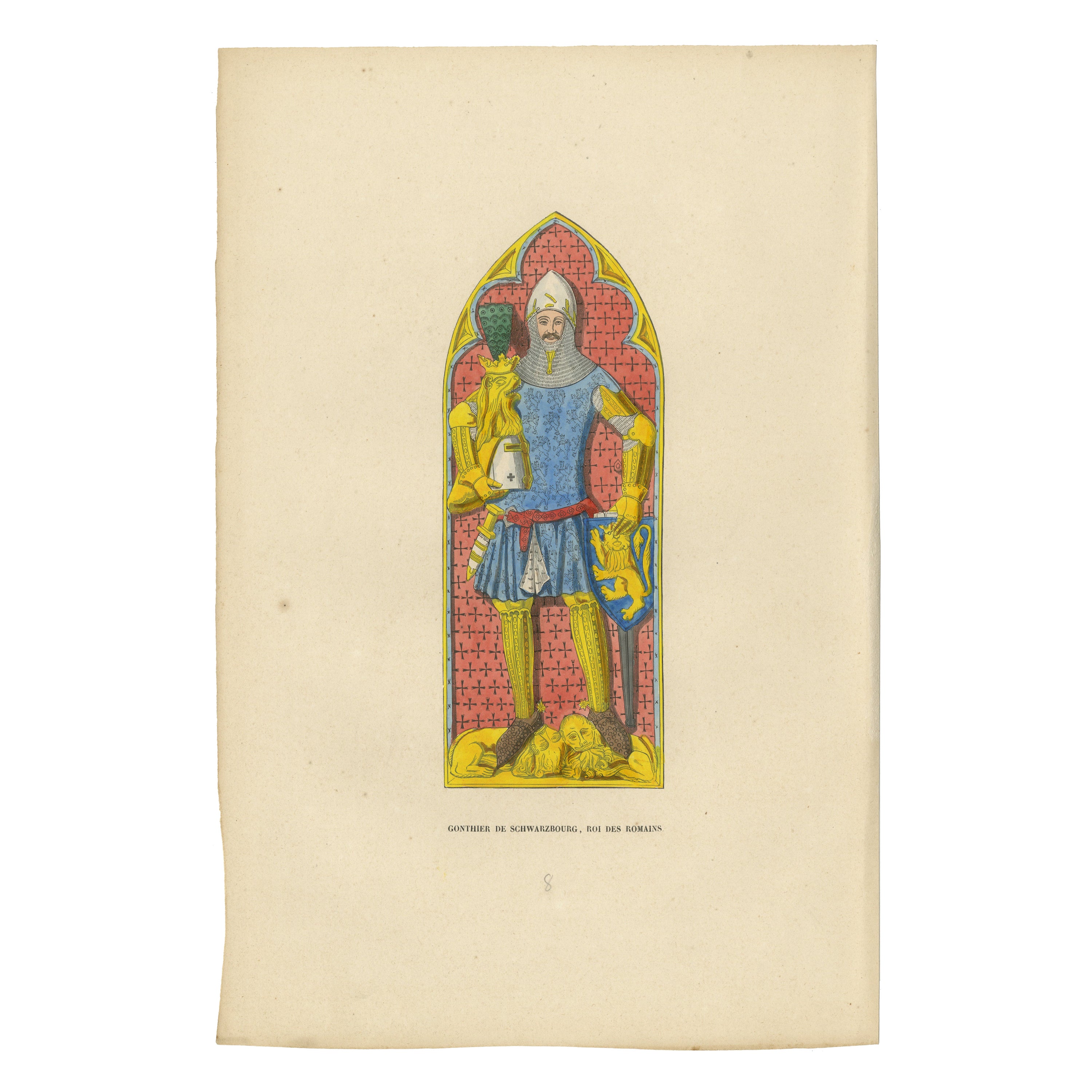
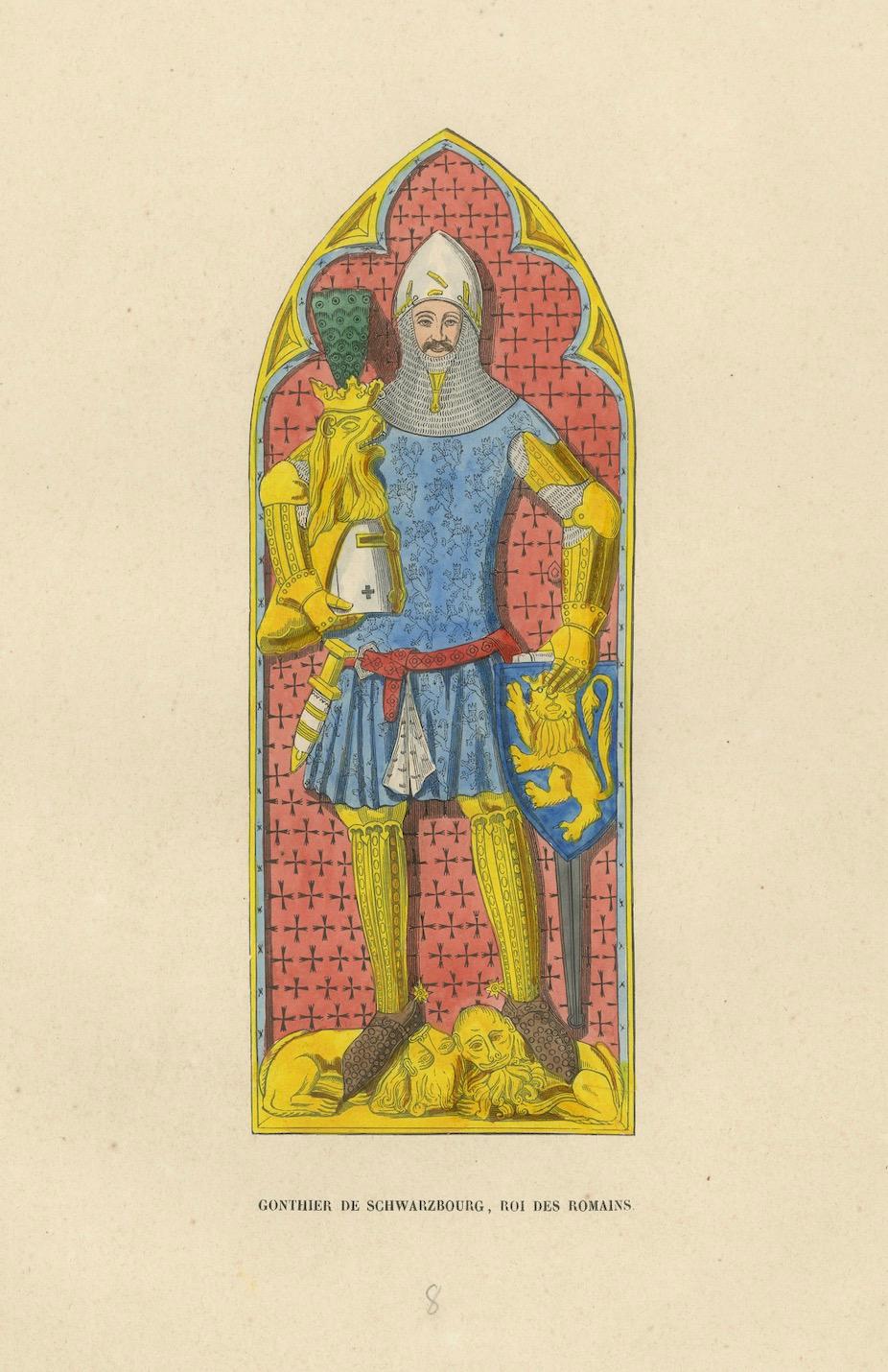
This handcolored original antique print features a figure labeled "Gunther de Schwarzbourg, roi des Romains," which identifies him as Günther von Schwarzburg, a German king. He is depicted in a traditional gothic archway that frames the illustration, reminiscent of a church's stained glass window.
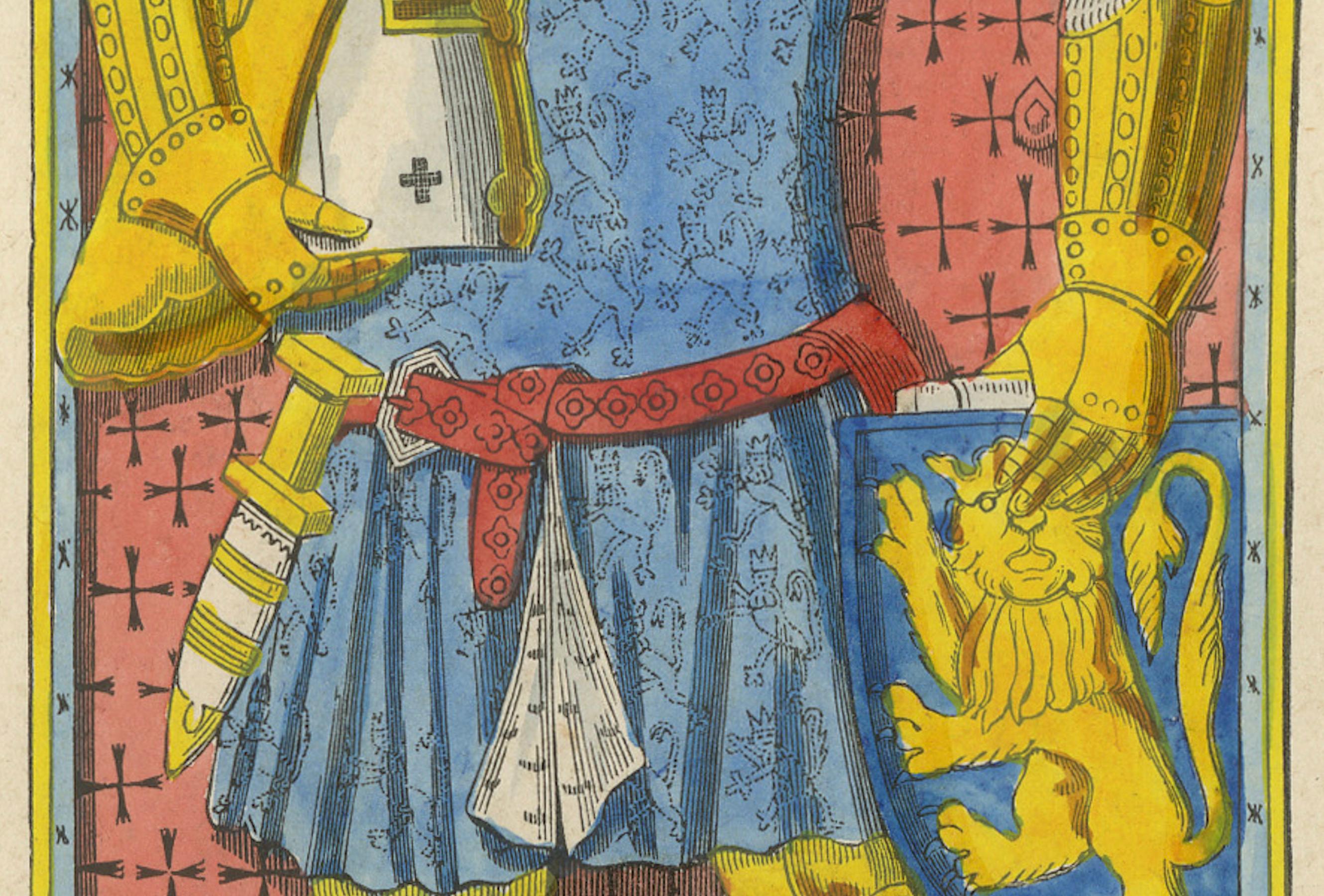
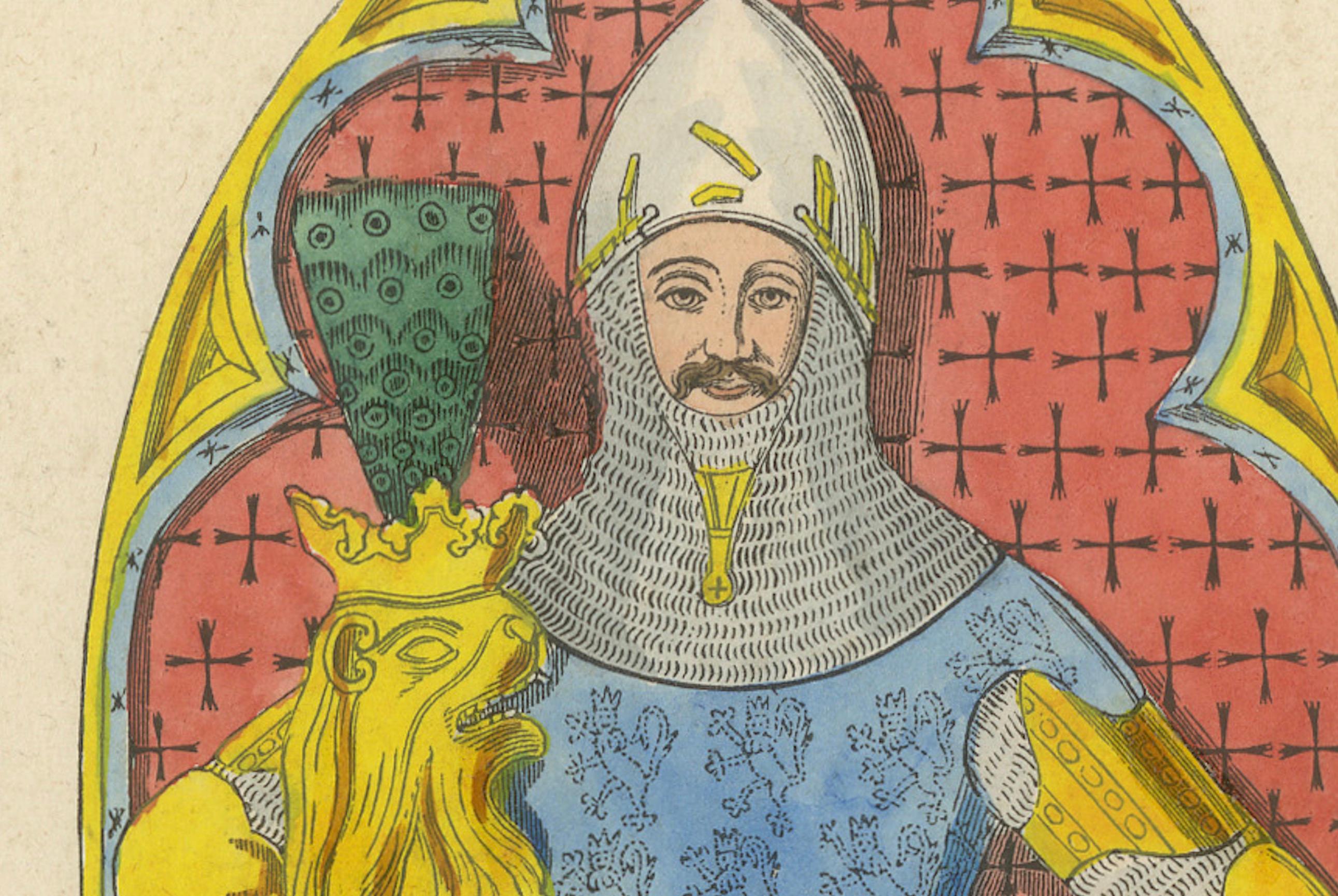
In the illustration, Günther is clad in armor, with a chainmail coif and a helmet adorned with a crown, indicating his royal status. The blue tunic worn over his armor is embellished with a pattern of fleur-de-lis, a symbol often associated with royalty. He also has golden arm and leg guards, and his red belt stands out against the blue tunic. In his left hand, he holds what appears to be a scepter, topped with a figure of a lion, which is a symbol of sovereignty and courage.
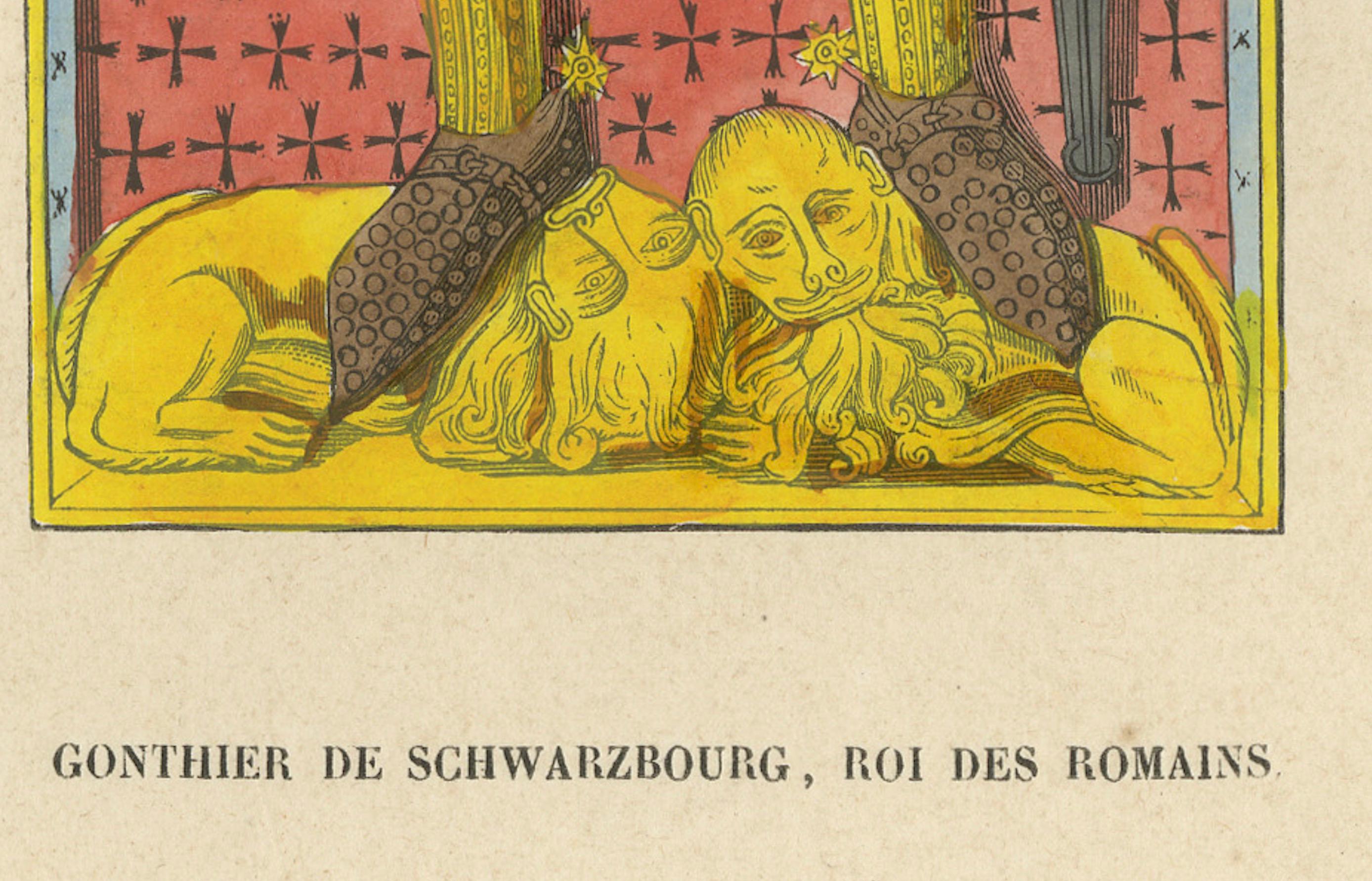
At his feet, there is a crestfallen figure, which could represent a vanquished foe or symbolize the king's triumph over his enemies. The background behind the figure is a rich, red tapestry patterned with crosses, which complements the regal and martial theme of the image.
Given the historical and regal subject matter of the print, a fitting title for this image could be "King Günther von Schwarzburg: The Warrior Monarch." This title captures both his royal status and his martial appearance as depicted in the print.
The colors have a nice glow over them. Historically, egg whites, known as glair, and sometimes egg yolk were indeed used in illumination and painting, particularly in manuscripts, to give colors a brighter appearance and to add a sheen or gloss to the work. This technique was quite common during the Middle Ages and into the Renaissance.
Egg whites can be applied as a varnish over pigments to enhance their brightness and to protect the colors. This application could make the colors appear more vivid and also add a slight glossy sheen to the surface of the image.
Egg yolk, on the other hand, was commonly used as a binding agent in paint. It forms the basis of tempera paint, a medium that was widely used before the advent of oil painting. Egg yolk helps to create a durable and long-lasting color that adheres well to various surfaces.
In the context of the print from 1847, it's less likely that egg whites or yolks were used directly on the print, as by that time, commercial printing processes would have been more advanced and less reliant on such manual methods. However, if this print is a representation of an earlier style or is meant to mimic the appearance of hand-painted manuscripts, the original artists might have employed techniques or materials that gave a similar effect to those achieved with egg-based binders and varnishes.