About this sheet
Japanese Deities Amida and Xaca Ceremony – Ferrario Print, Hand-Colored c.1815
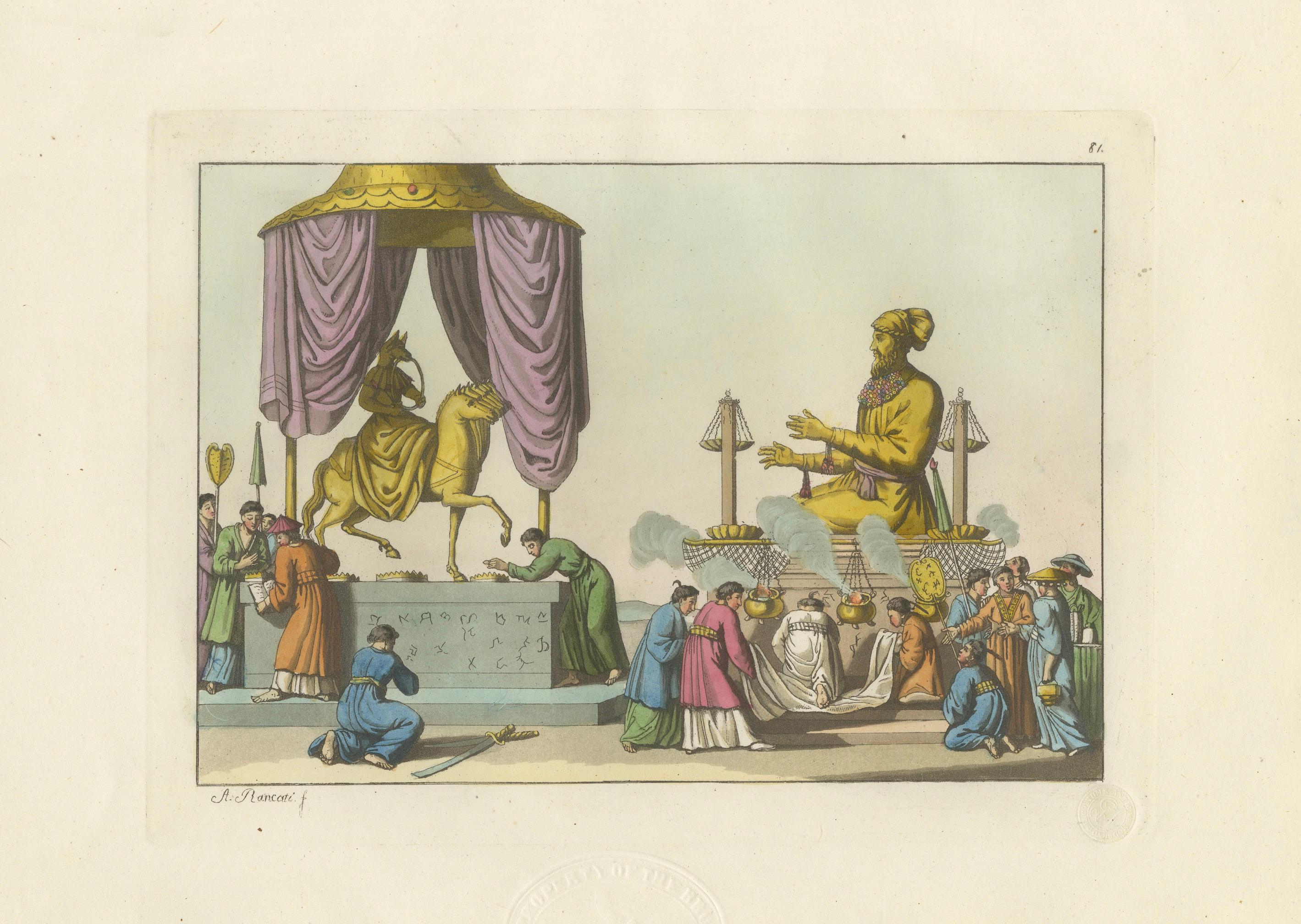
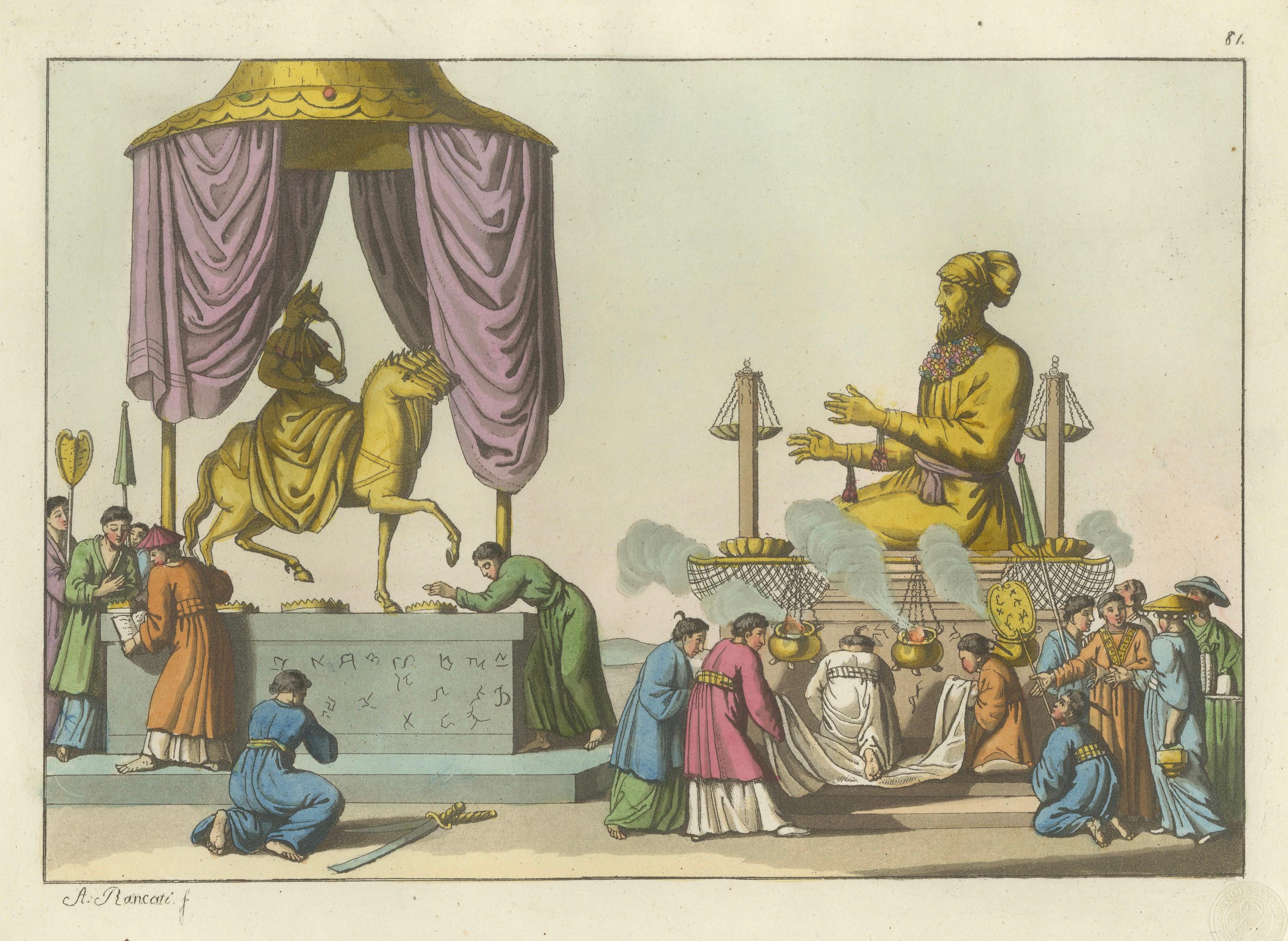
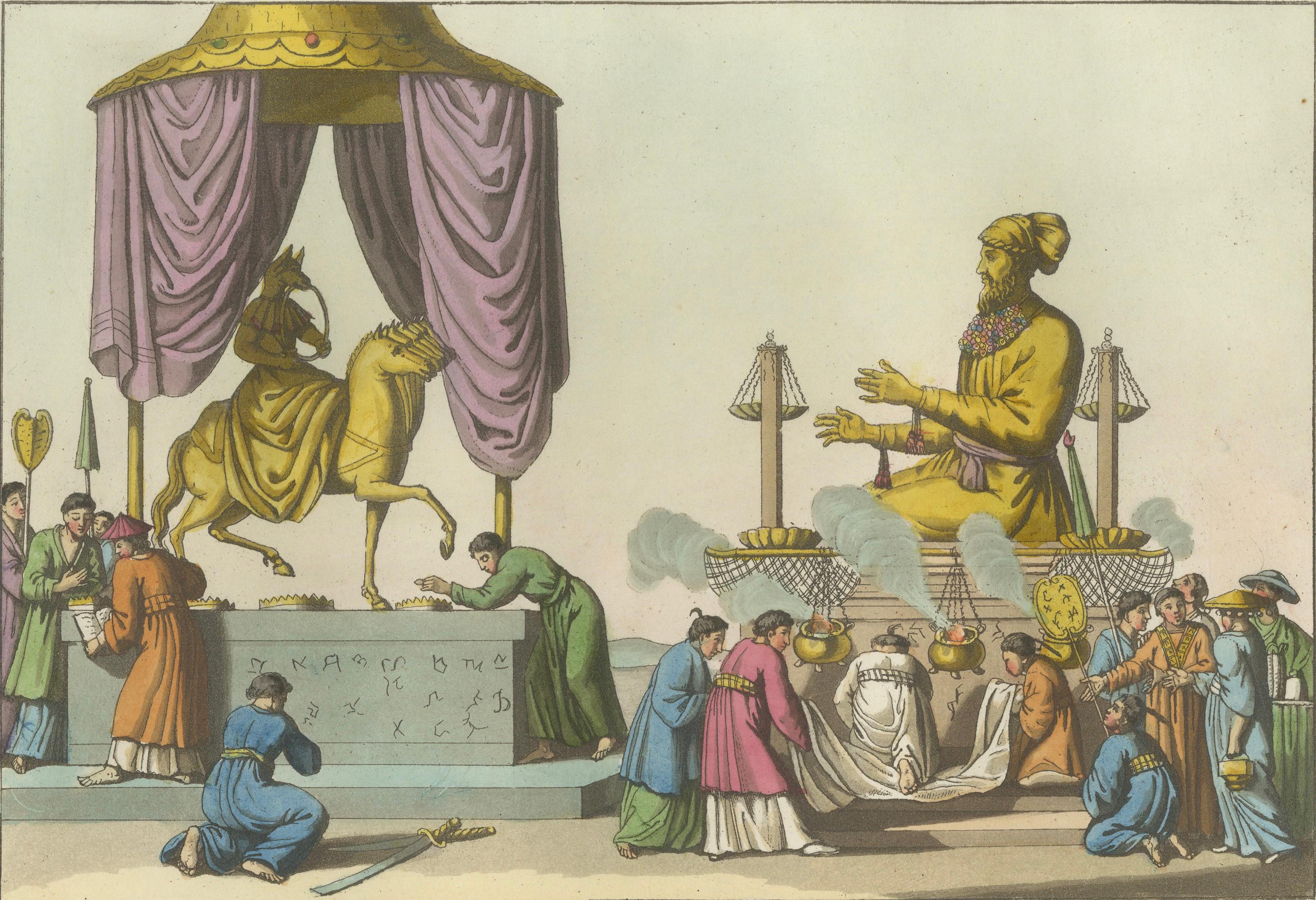
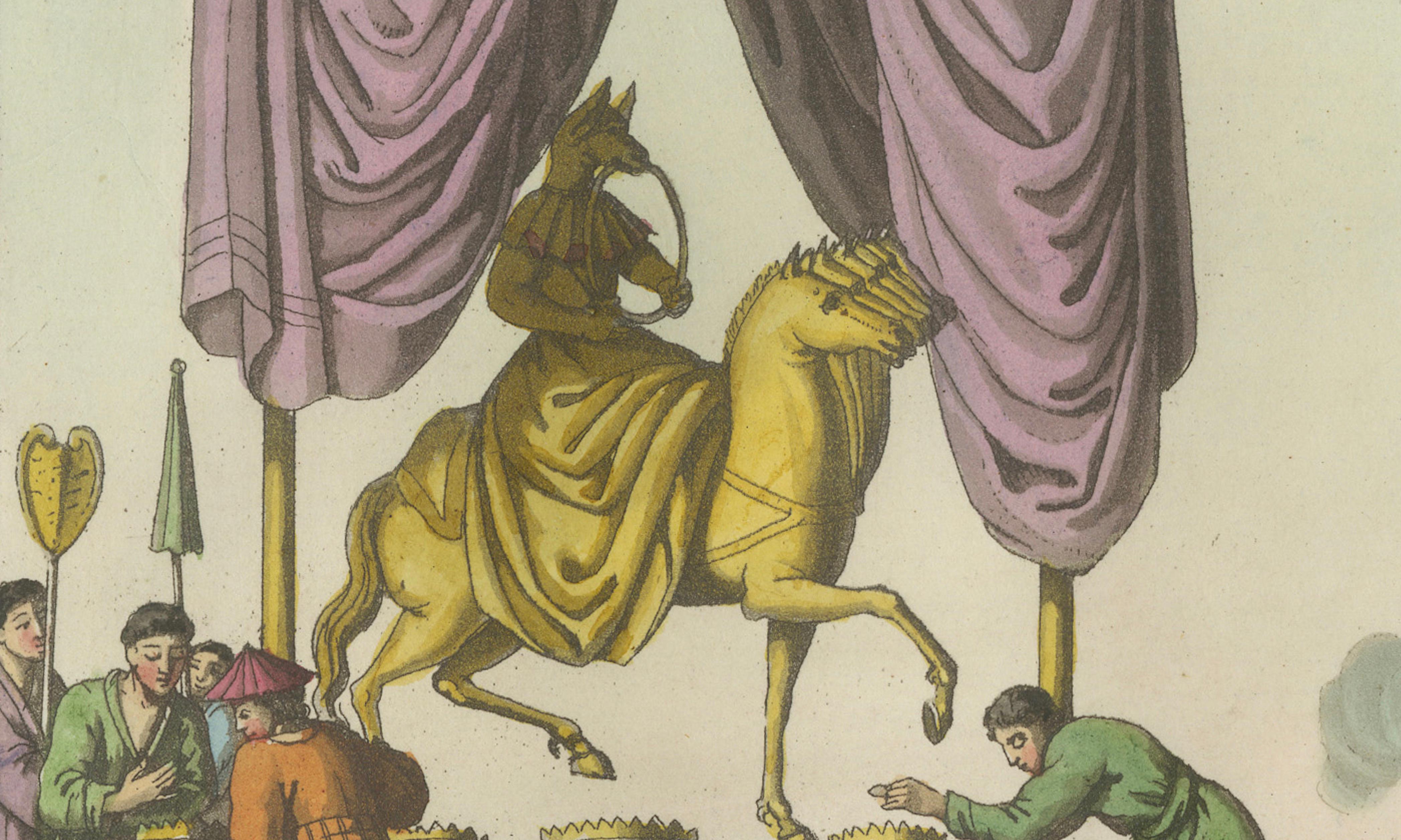
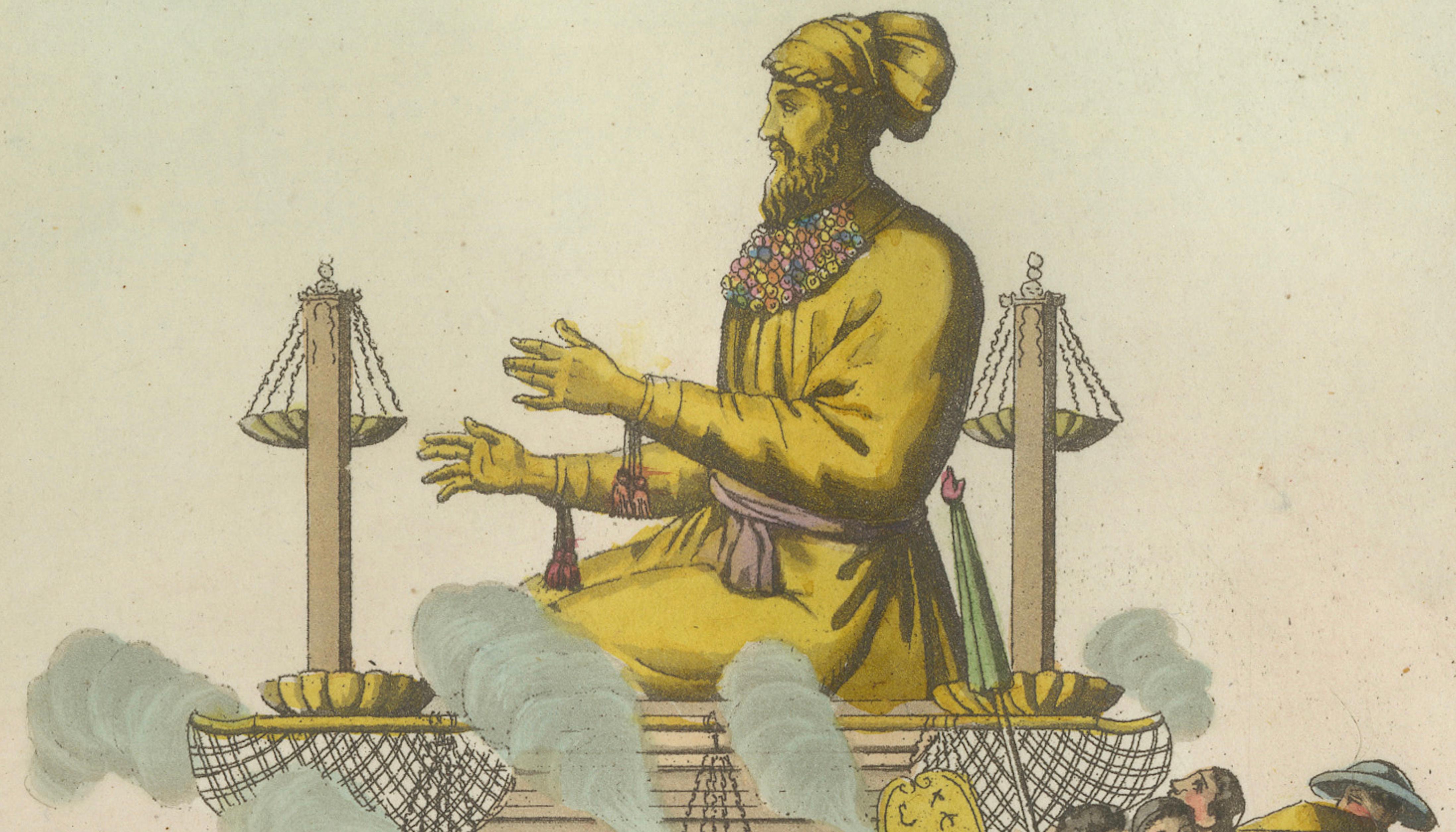
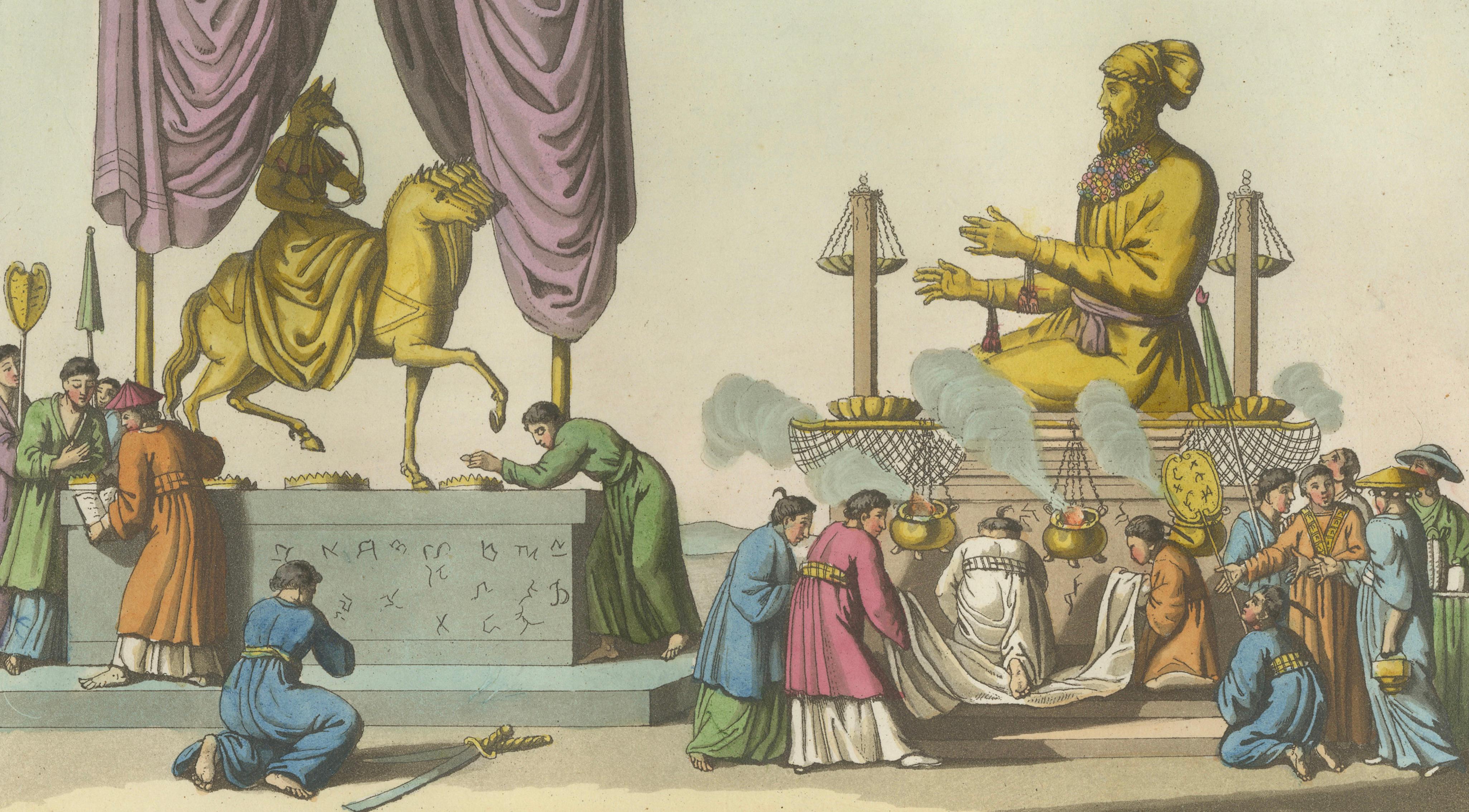
This finely hand-coloured copperplate engraving depicts a ceremonial religious scene representing the Japanese deities Amida and Xaca, presented through the early nineteenth-century European interpretation of Japanese Buddhist tradition. The composition shows a richly staged devotional setting in which worshippers gather to present offerings before sacred figures elevated on ceremonial platforms. At left, the deity Amida appears beneath an ornate canopy, mounted upon a fantastical multi-headed horse, while attendants kneel in reverence. To the right, Xaca—an interpretation of Shaka or Gautama Buddha—is shown seated in calm authority, surrounded by incense burners and ritual objects as devotees approach with gifts and gestures of devotion.
The engraving was executed by Antonio Rancati after designs prepared for Giulio Ferrario’s monumental ethnographic publication *Il Costume Antico e Moderno di Tutti i Popoli* (Costumes Ancient and Modern of All Peoples), published in Milan in the early nineteenth century, circa 1815. Ferrario’s ambitious project sought to compile a visual encyclopedia of global cultures, religions, and ceremonial life for a European audience fascinated by distant societies during the Enlightenment era. Drawing upon travel accounts, missionary reports, and earlier visual sources, the work blended scholarship with artistic imagination, often presenting stylized interpretations rather than strictly documentary images.
The scene reflects European perceptions of Japanese religious practice at a time when direct contact with Japan was limited. The combination of elaborate costume, theatrical staging, and symbolic ritual objects conveys the spiritual atmosphere as understood by contemporary Western observers. Delicate hand colouring enhances the visual hierarchy of the composition, highlighting textiles, ceremonial drapery, and offerings while maintaining clarity and balance across the horizontal format.
Ferrario engravings remain highly collectible today for their ethnographic significance and refined engraving technique. Each impression was individually coloured by hand at the time of publication, resulting in subtle tonal variations unique to every example. The print offers both historical interest and strong decorative appeal, particularly suited to collectors of Asian subjects, religious imagery, or early European costume books.
The engraving is offered unframed, allowing flexibility to select a frame that best complements the intended interior setting.
Condition:
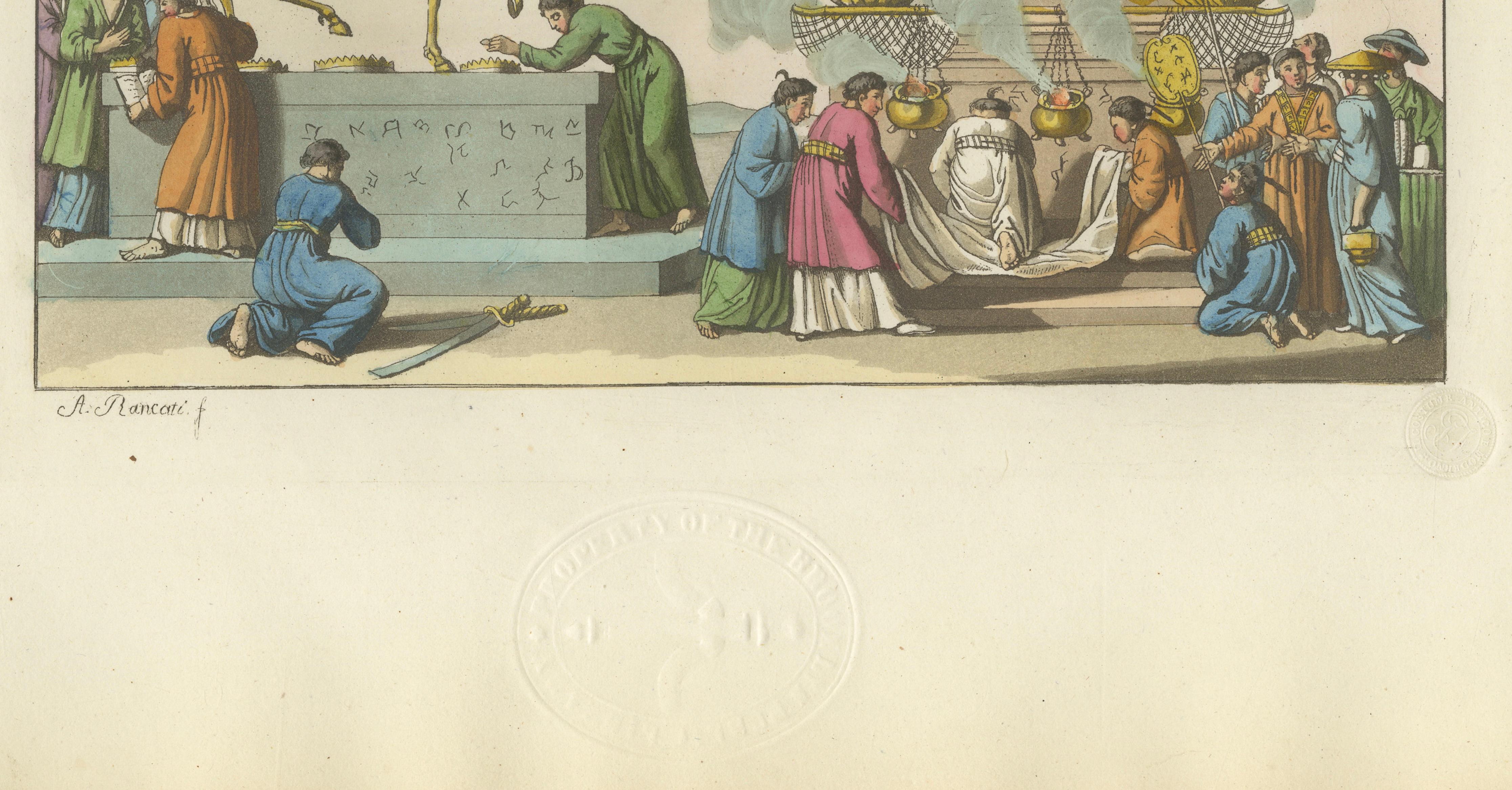
Good antique condition with age-related toning and light scattered spotting to the margins. Plate mark visible. Original embossed blind stamps present as issued. Minor handling wear consistent with age; image remains clear and well preserved.
Framing tips:
A dark walnut or black lacquer frame with a generous ivory mat complements the refined hand colouring and ceremonial subject. Museum glass is recommended for protection and clarity. Particularly effective when displayed alongside other Ferrario Asian plates as a thematic grouping.
Technique: Hand-coloured copperplate engraving
Maker: Antonio Rancati after Giulio Ferrario, Milan, circa 1815