About this sheet
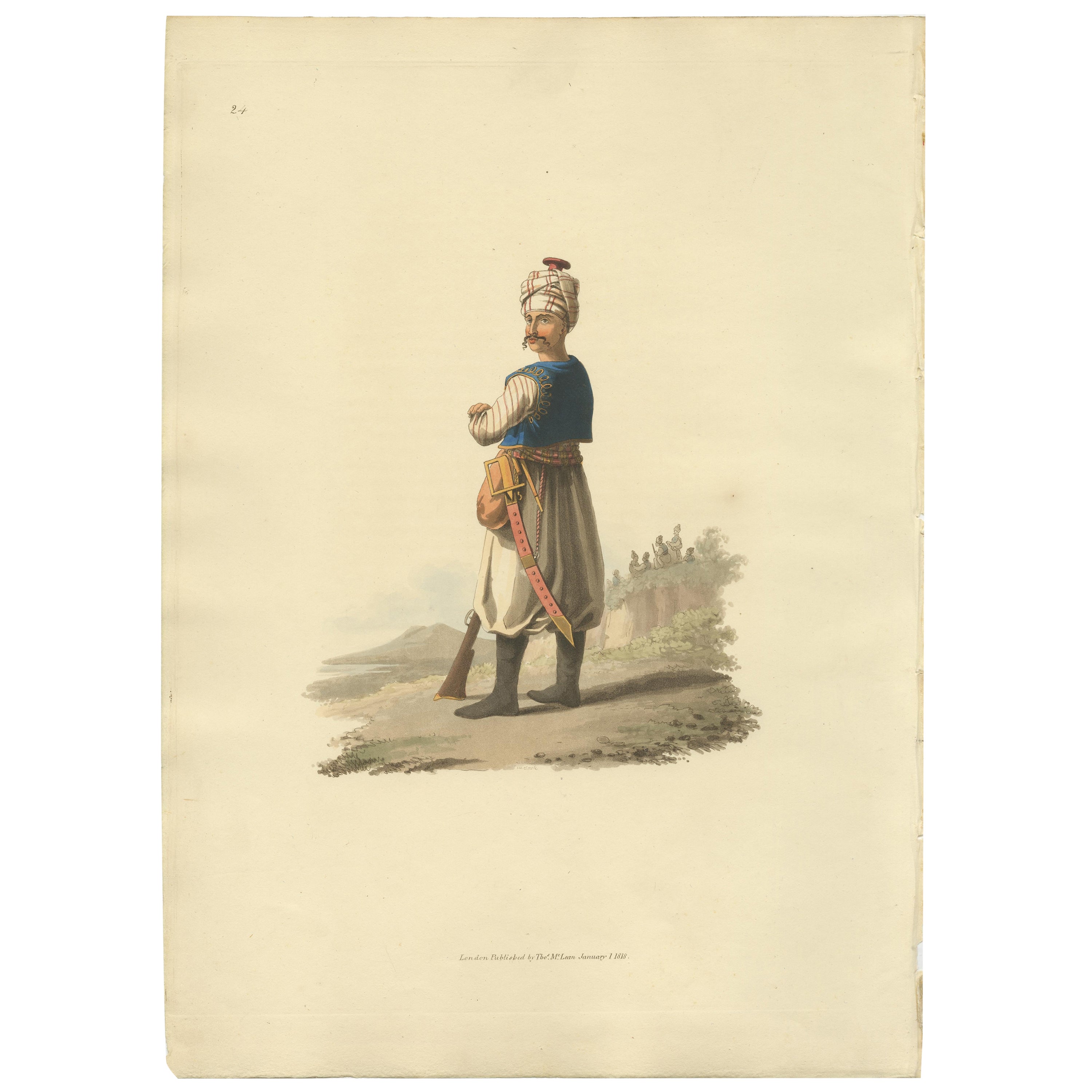
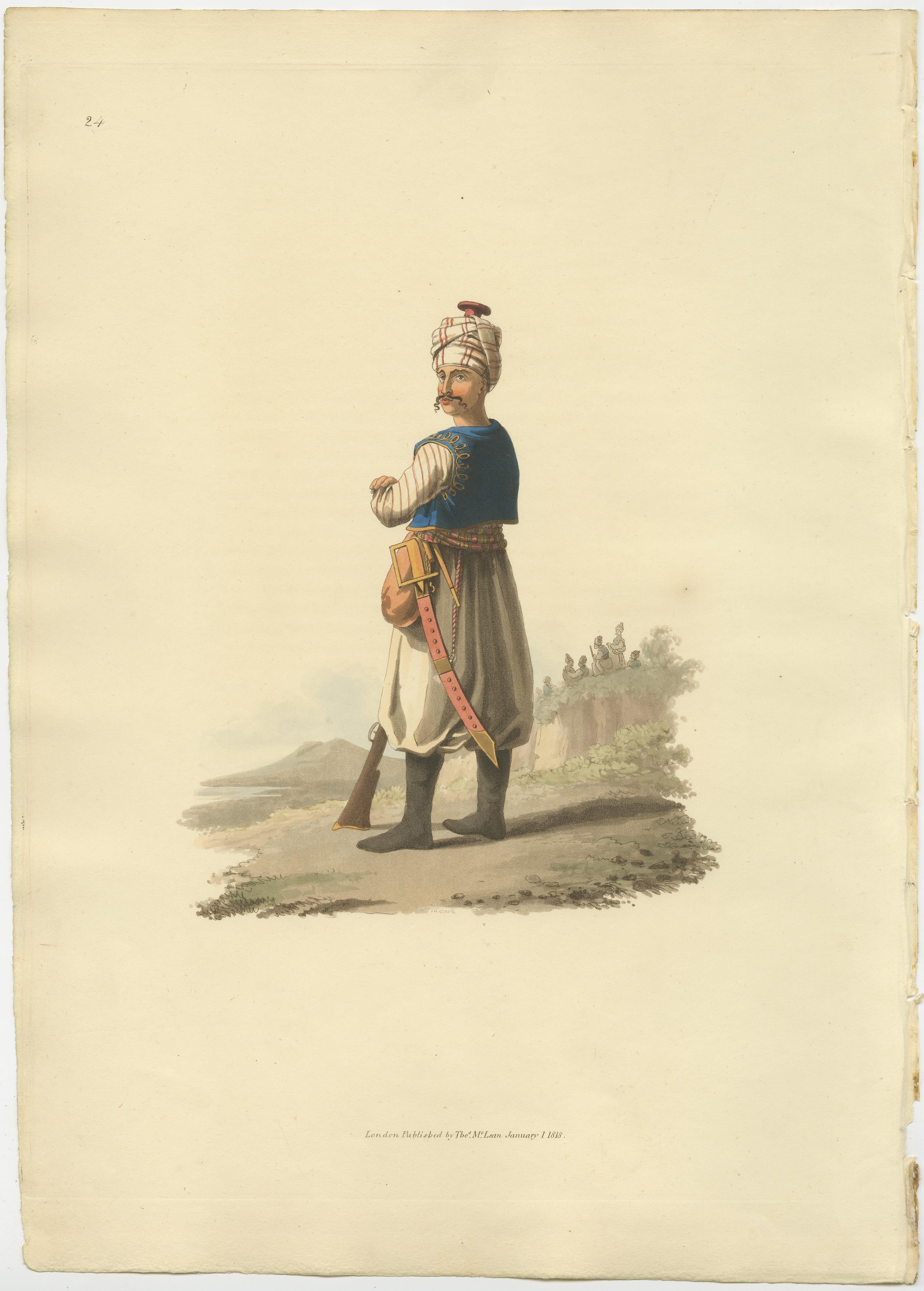
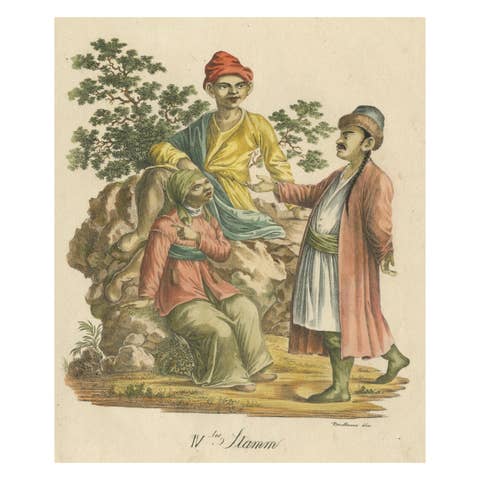
This print is from 'The Military Costume of Turkey. Illustrated by A Series of Engravings. From Drawings made on the Spot. Dedicated by Permission to His Excellency the Minister of the Ottoman Porte to his Britannic Majesty.'
London, Published by Thomas M'Lean, Haymarket, (1818). Folio. One of 29 fine handcoloured aquatint plates . Very light offsetting from plates. The original accompanying text of this print is as follows:
JANIZARY, in the Turkish language, (Yengicheri) means new soldier. The origin of this body is as follows:
When Amurath the First was subjecting the provinces which lay between the Danube and the Adriatic, be could not but observe the hardihood and courage of the natives; and being reminded by his Vizier, that he, as Sultan, was entitled to a fifth part of the captives taken in war, he caused the strongest and most beautiful Christian youths to be selected, whom he caused to be educated in the Mahometan faith, and trained to the use of arms. After Amurath had formed them into a body, he sent them to Haji Bektasb, a celebrated Turkish Santon, to bestow a banner on them. ‘The saint, when they appeared in his presence, put the sleeve of his gown upon one of their heads, and said, “Let them be called Yengicheri; let their countenance be ever bright, their hands victorious, their words keen; let their spear always hang over the heads of their enemies, and wherever they go, may they return with a shining face;” by these means the enthusiasm and zeal of a monkish institution was added to the martial ardour of soldiers.
At their first institution, the number of Janizaries was not considerable; since that they have increased very much, and are now said to amount to four hundred thousand men scattered over the provinces of the empire. The privileges enjoyed by this body, and the safety and consequence resulting to its members from a sort of esprit de corps, causes almost every one to endeavour to get enrolled in some one of its ortahs, or regiments; even the Sultan himself, at the ceremony of girding on the sabre, is enrolled at the head of the first. For a period of nearly two hundred years after its first institution, the courage and discipline of this body was not relaxed, but remained in its naive vigour; since that, however, it has gradually declined, and the Janizaries of the provinces can now only be considered as a sort of ill-disciplined militia, more often employed in fomenting intestine disorder than in repelling foreign aggressions.
The Janizaries, on occasions of ceremony, are obliged to wear red shoes, great blue breeches, and a particular sort of bonnet, the other part of their dress may be of what colour they please; their uniform, with the above exceptions, only consisting in the cut. When Haji Bektash named and consecrated the Janizaries, be put the sleeve of his garment on the head of one of them, and it is said that the long piece of cloth which hangs down from behind the bonnets of these troops, is worn as emblematic of that sleeve.
illustrated by a series of engravings, from drawings made on the spot. Dedicated, by permission, to His Excellency the Minister of the Ottoman Porte to His Britannic Majesty. Published By Thomas McLean, London, 1818.