About this sheet
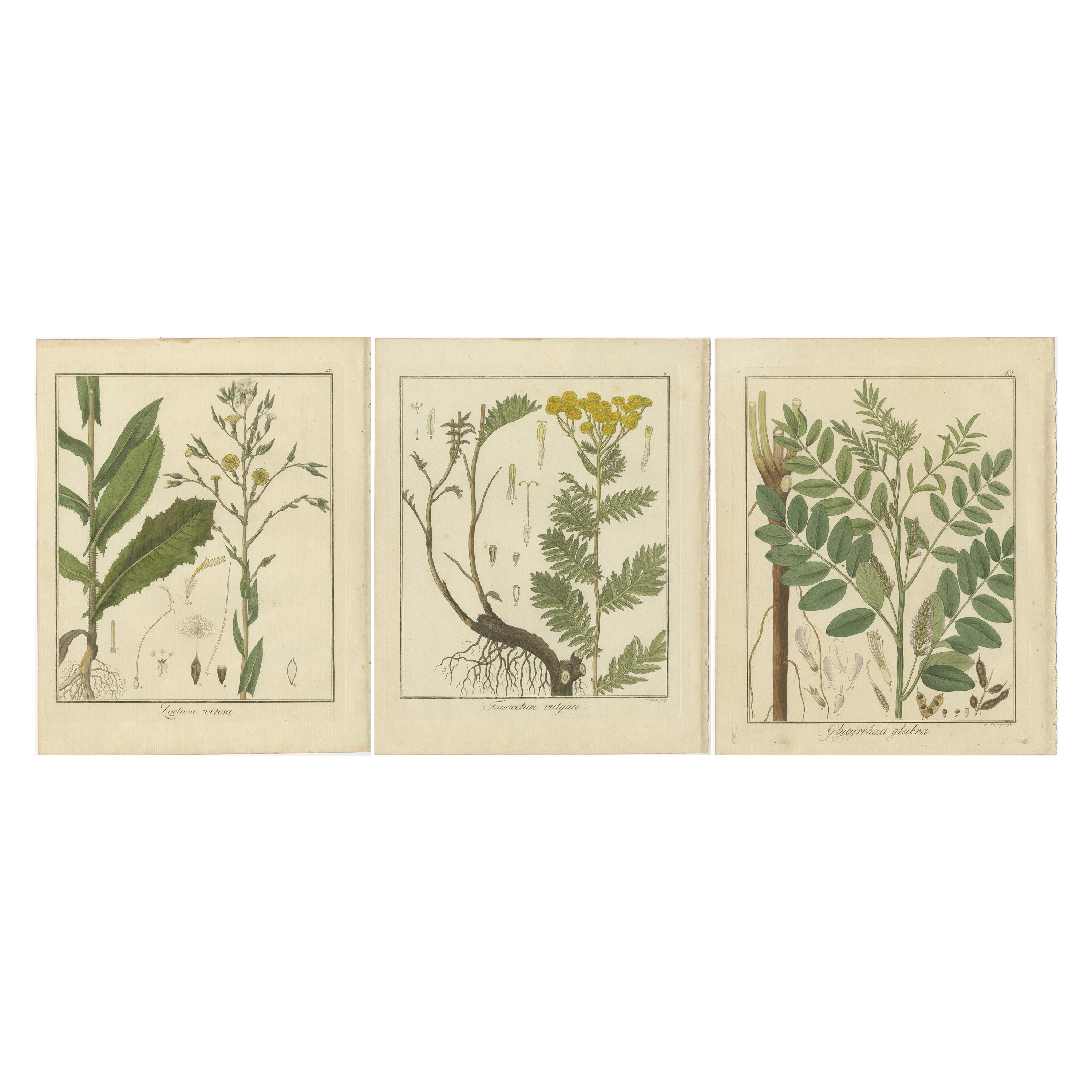
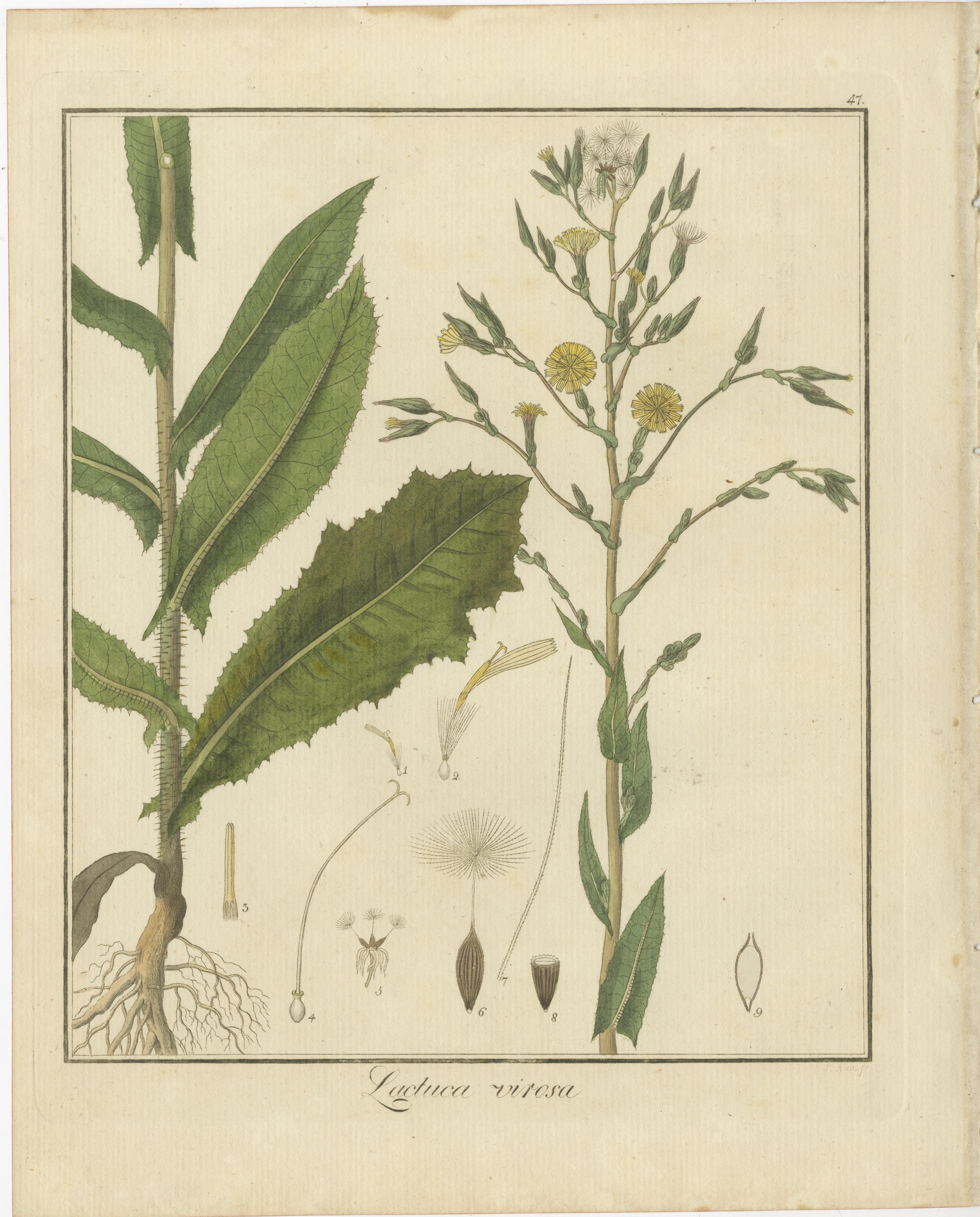
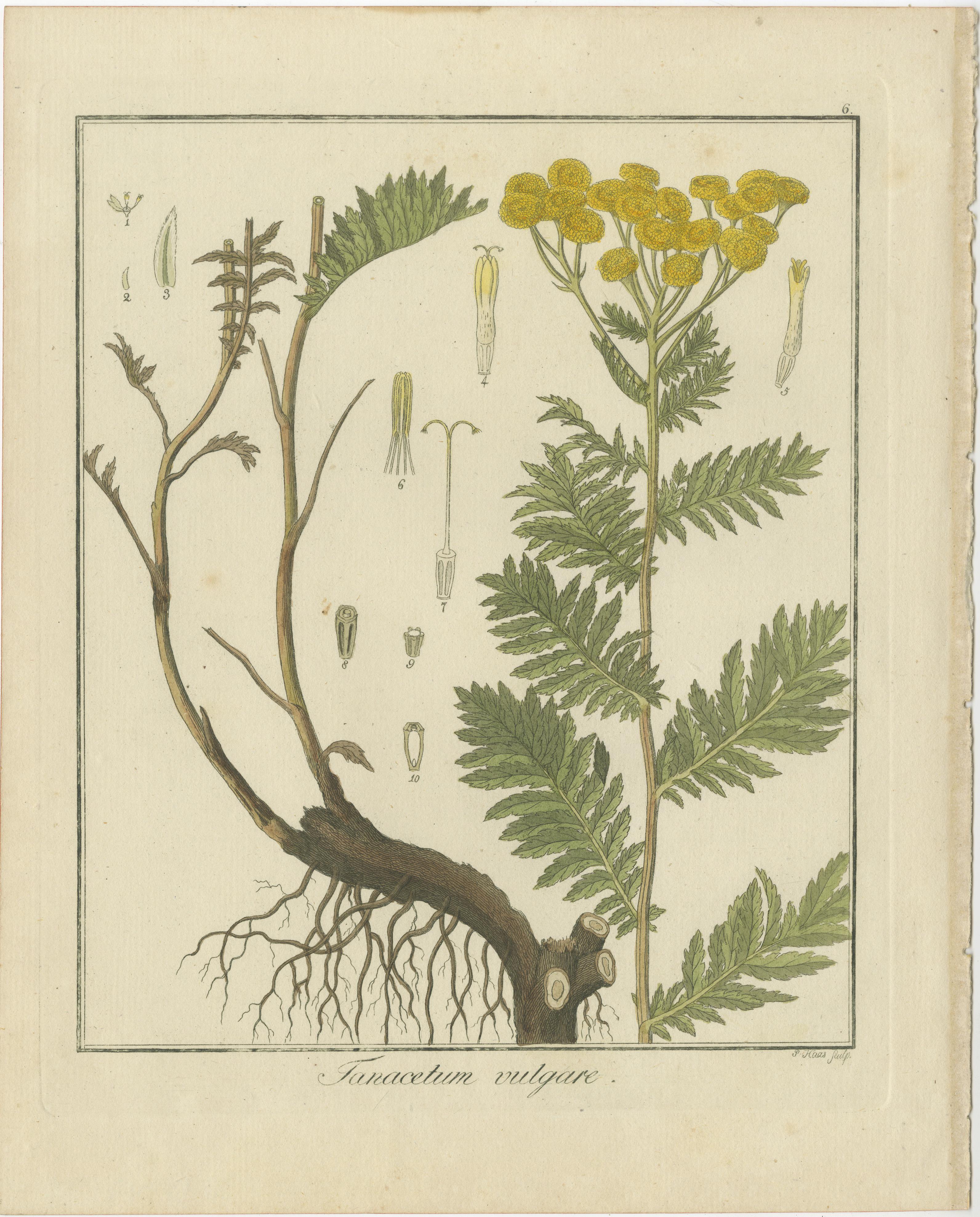
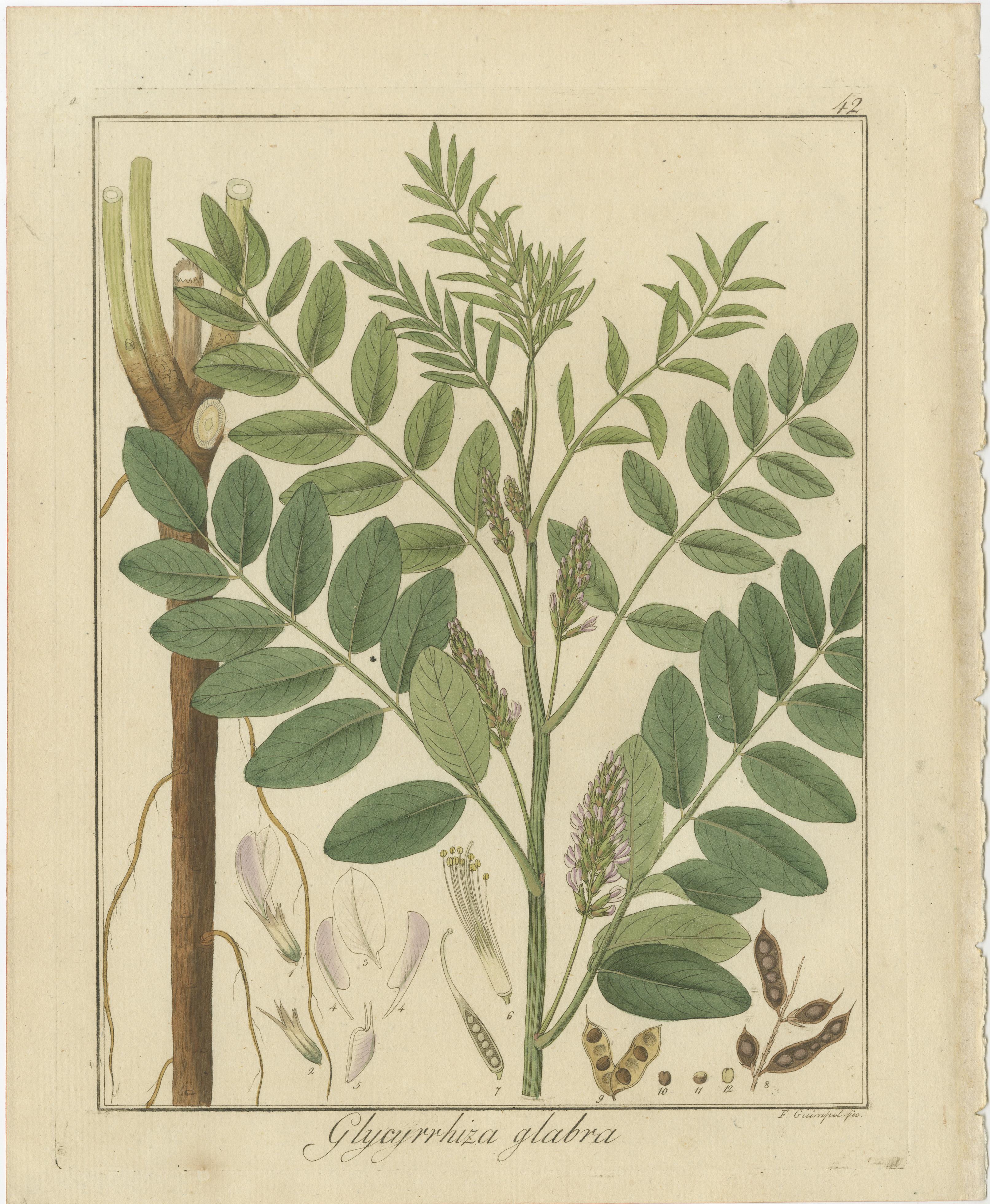
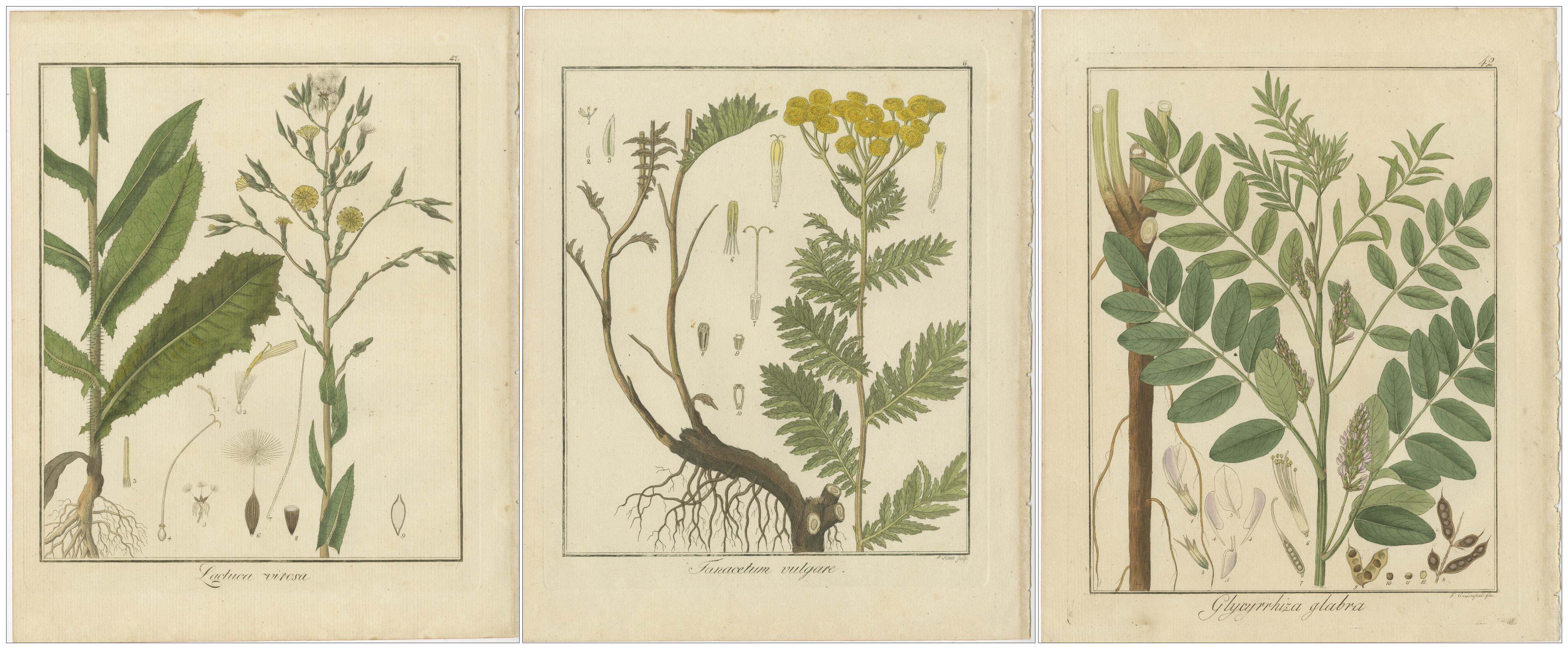
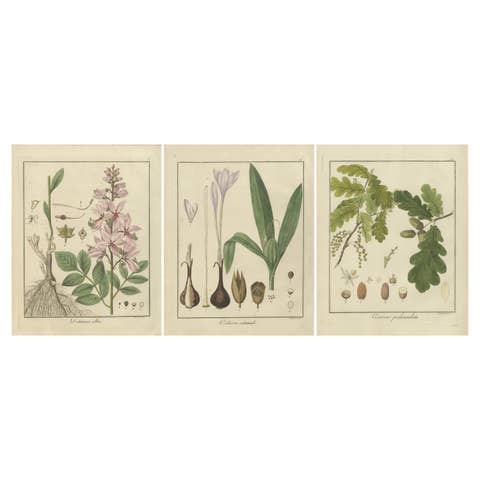
These original handcolored botanical engravings are from the work titled "Getreue Darstellung und Beschreibung der in der Arzenykunde gebrauchlichen Gewächse" (which translates to "Accurate Depiction and Description of Plants Used in Medicine"), specifically from the 6th edition published in 1819. This publication was authored by Friedrich Gottlob Hayne, a renowned German botanist, and focused on medicinal plants used in pharmacology at the time.
The engravings are:
1. Lactuca virosa (Wild Lettuce)
2. Tanacetum vulgare (Tansy)
3. Glycyrrhiza glabra (Licorice)
Hayne's work aimed to provide accurate and detailed botanical illustrations to aid in the identification and study of medicinal plants. The use of such detailed illustrations was crucial for pharmacists and botanists of that era, as they often relied on visual identification for their work.
The plates in Hayne’s publication are known for their accuracy and detail, reflecting the high standards of botanical illustration in the early 19th century.
In more details: Here’s a brief description of each engraving:
1. An illustration of a plant labeled "Lactuca virosa," which is commonly known as wild lettuce. The drawing includes details of the plant’s structure, such as its leaves, flowers, and roots, as well as smaller illustrations showing close-ups of parts like seeds or flower structures.
2. A plant labeled "Tanacetum vulgare," commonly known as tansy. The plant is shown with its characteristic yellow button-like flowers, fern-like leaves, and root structure. Smaller detailed parts of the plant are also depicted, which might represent different stages of the flower and seeds.
3. This drawing is of "Glycyrrhiza glabra," commonly known as licorice. The illustration features the plant’s compound leaves, flowers, and the branching root system. Additional details of flowers, seeds, and possibly the fruit are shown in smaller illustrations around the main plant image.
These botanical illustrations are detailed and seem to be educational or for scientific study, showcasing the different parts of each plant for identification and study purposes. If you have specific questions or need further analysis of these illustrations, feel free to ask!