About this sheet
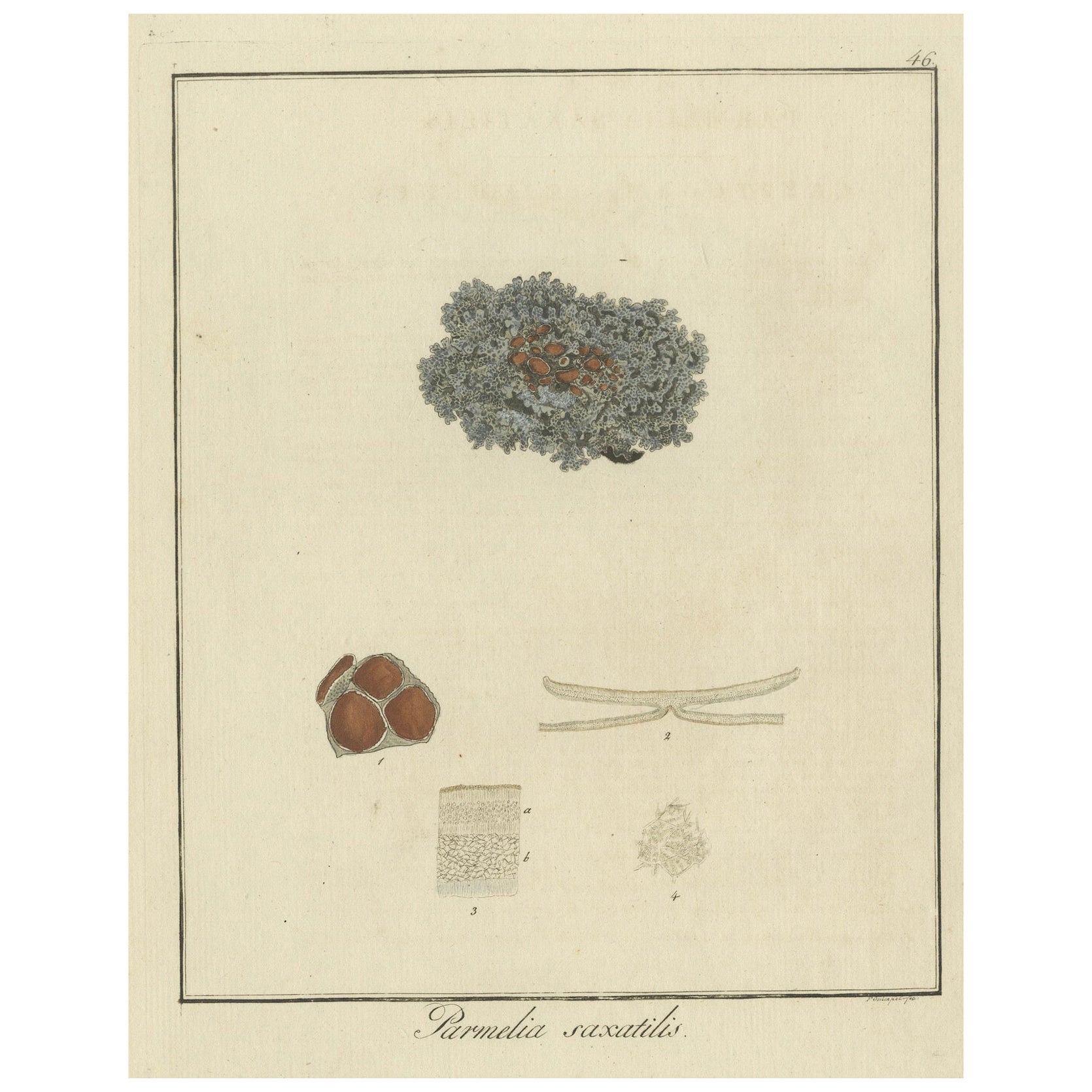
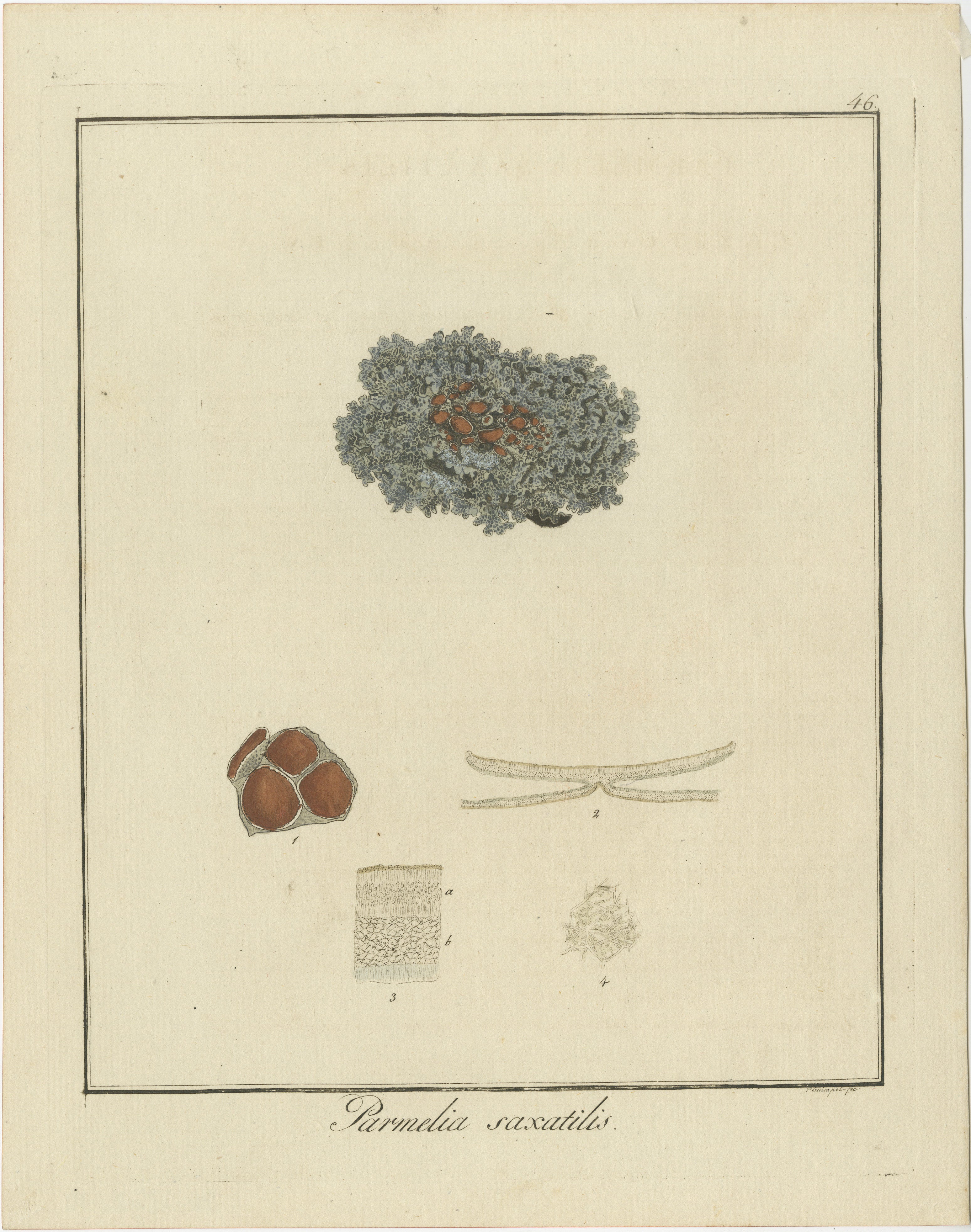
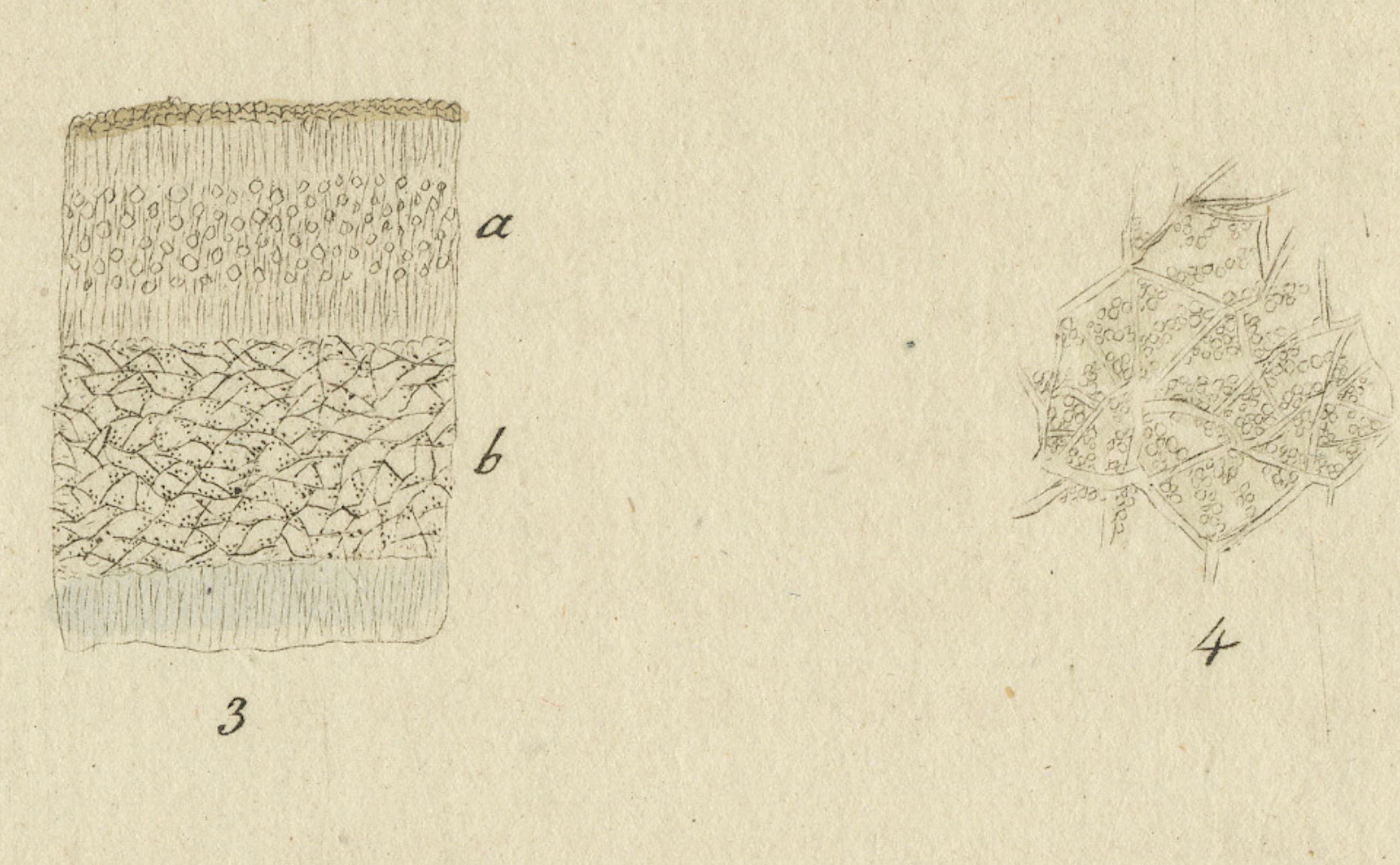
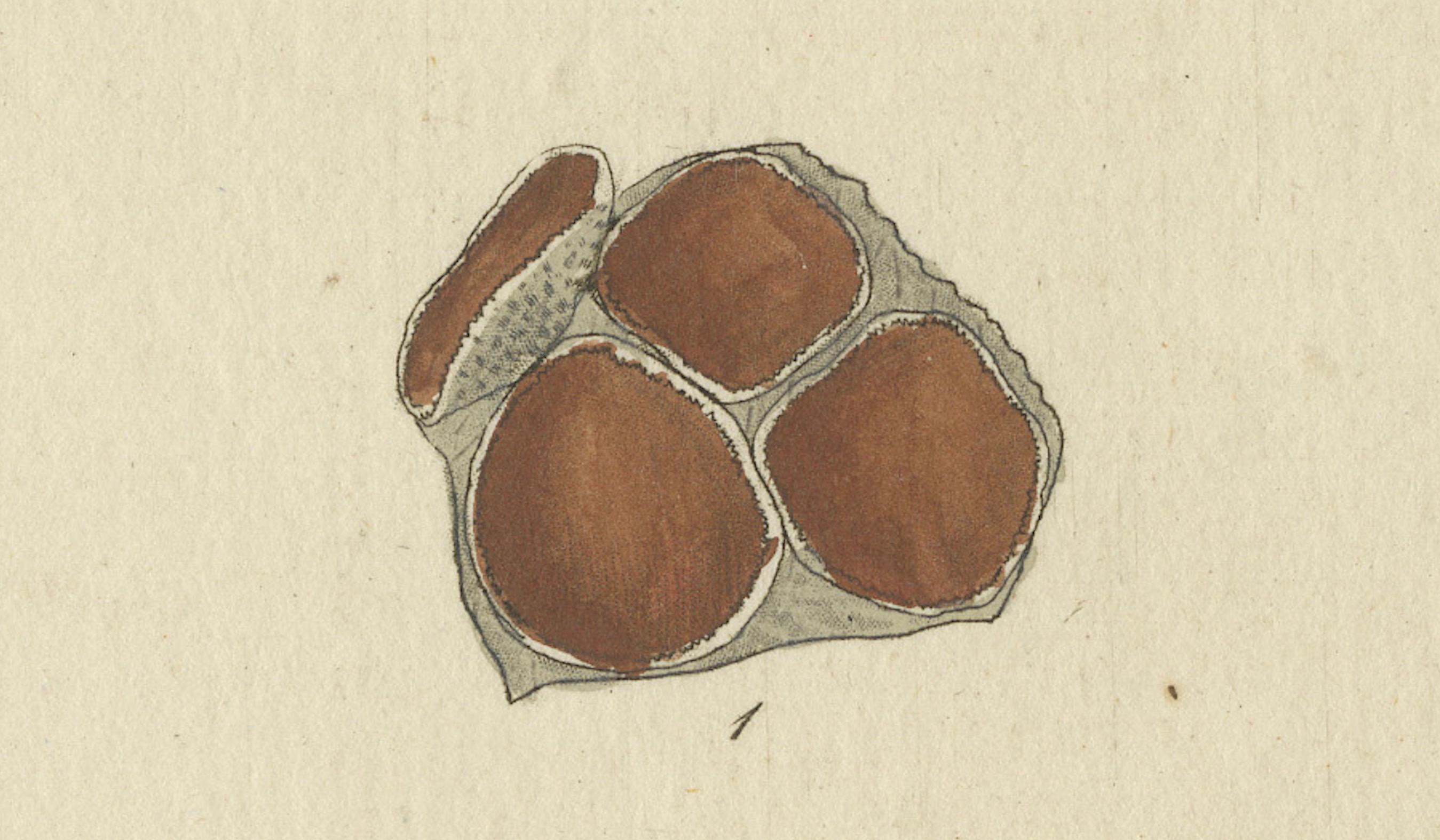
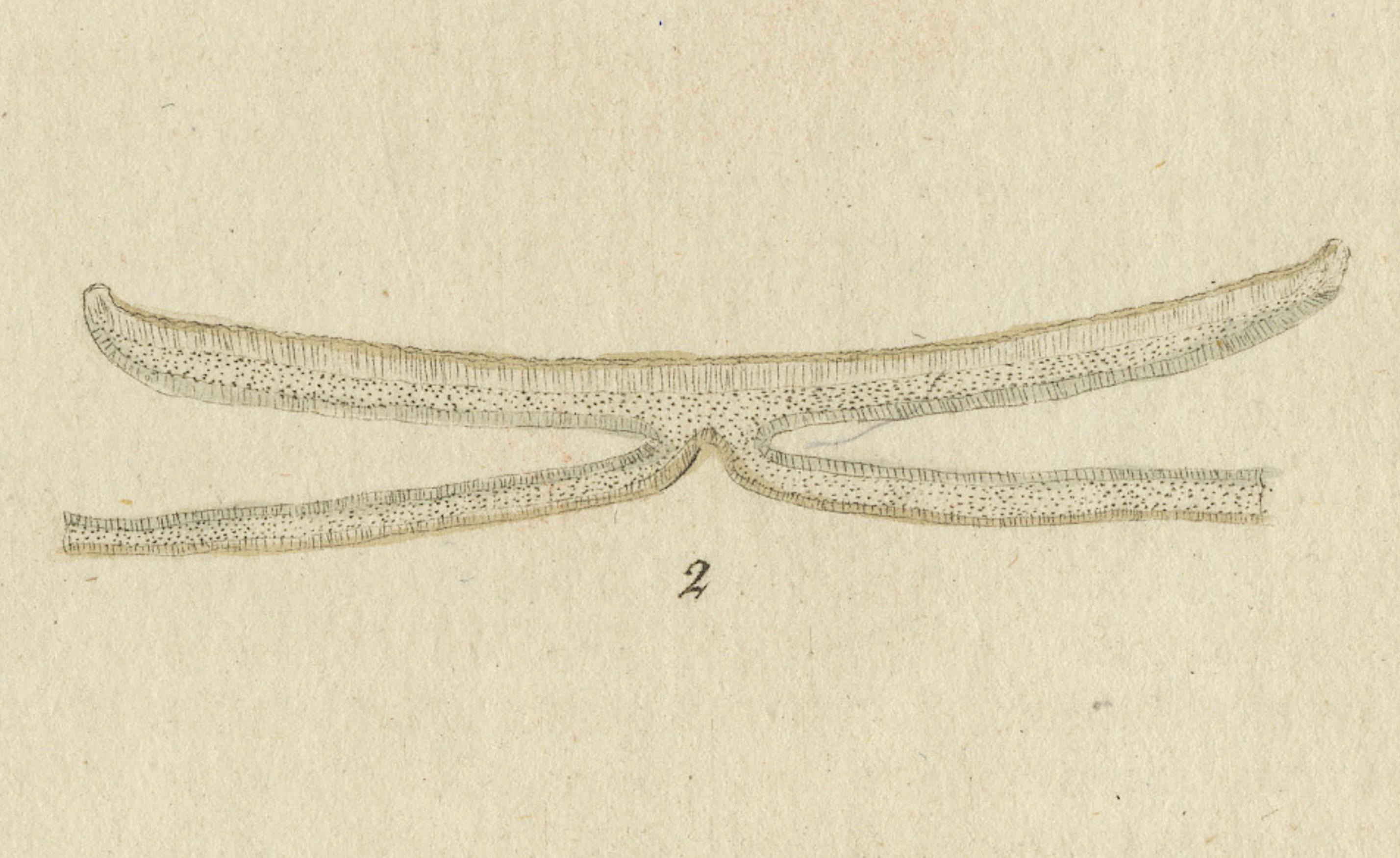
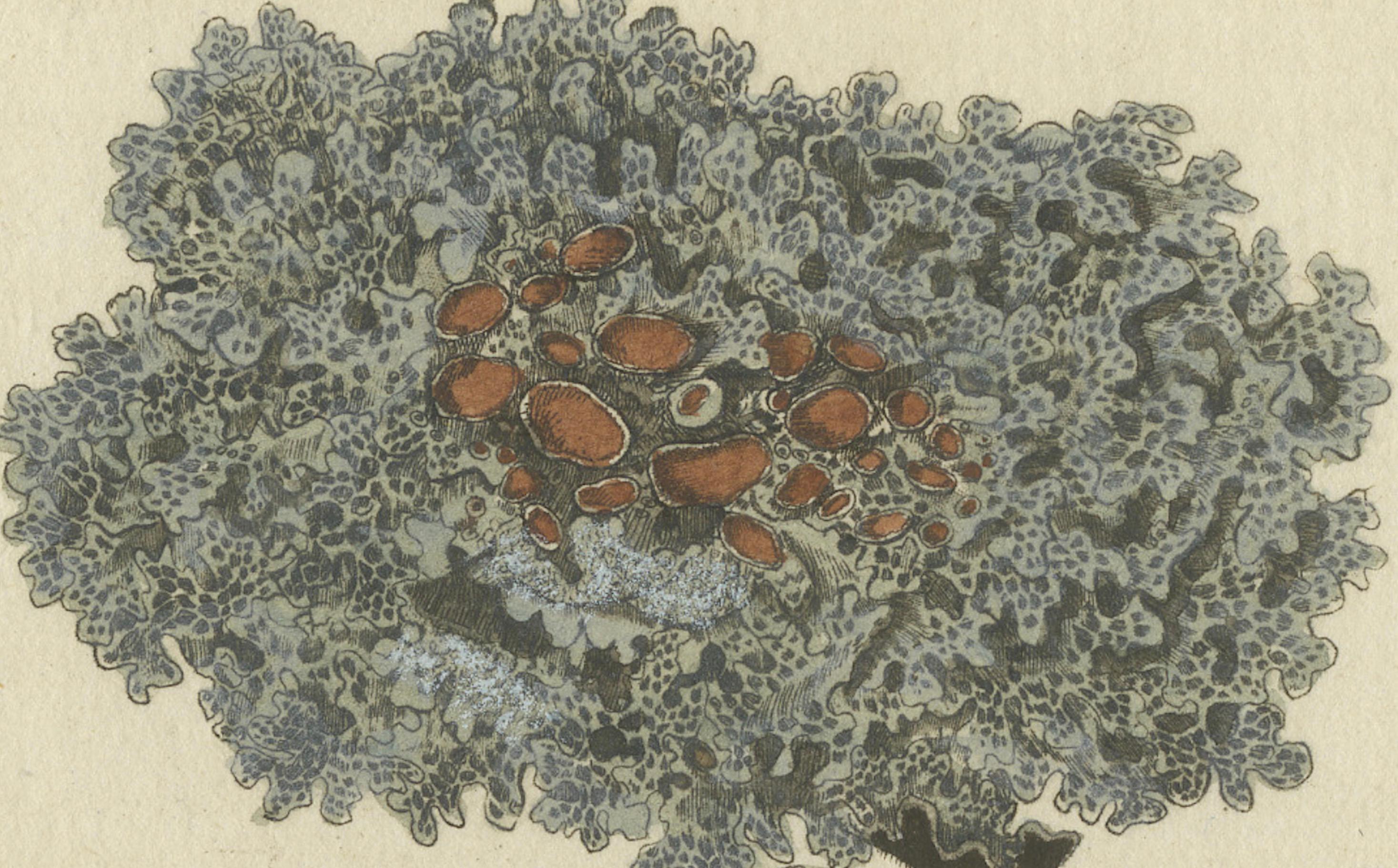
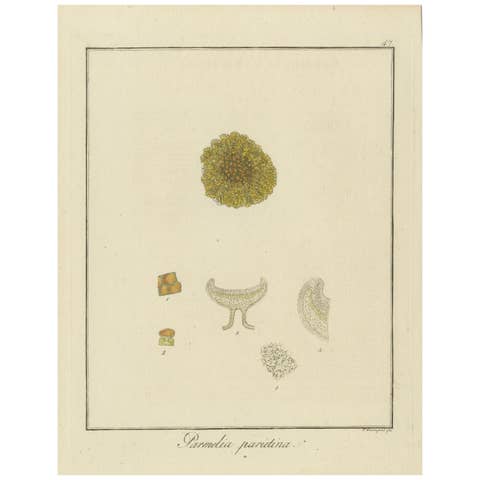
The image is an original antique hand-colored copperplate engraving of the lichen "Parmelia saxatilis", commonly known as the shield lichen. The detailed illustrations include different views and sections of the lichen to highlight its characteristics. The title given in the engraving is "Parmelia saxatilis."
The engraving of Parmelia saxatilis by F. Guimpel was published in the 6th edition of "Getreue Darstellung und Beschreibung der in der Arzenykunde gebrauchlichen Gewächse", which translates to "Faithful Representation and Description of Plants Used in Medicine." This work was authored by Dr. Friedrich Gottlob Hayne, a German botanist, and it is a detailed collection focused on plants of medicinal value.
The 6th edition was published in 1819. The title reflects the comprehensive nature of Hayne's work in documenting and illustrating plants, including lichens like Parmelia saxatilis, that were significant in pharmacology and botany of that time.
To summarize:
Title of Work: Getreue Darstellung und Beschreibung der in der Arzenykunde gebrauchlichen Gewächse (Faithful Representation and Description of Plants Used in Medicine)
Edition: 6th Edition
Publication Year: 1819
Engraver: F. Guimpel
The presence of a watermark on the handmade paper indicates the authenticity and quality of the material used during that period.
More in Detail:
Parmelia saxatilis, commonly known as the shield lichen, is a lichen that is widely distributed across various regions, particularly in the Northern Hemisphere. Here are some details about its habitat and uses:
Habitat:
- Geographical Distribution: Parmelia saxatilis can be found in many parts of the world, including North America, Europe, and parts of Asia. It thrives in temperate and boreal regions.
- Growth Environment: This lichen typically grows on rocks, but it can also be found on soil and tree bark. It prefers well-lit, open habitats such as mountainous areas, rocky outcrops, and sometimes open woodland.
- Climate Preferences: It is well-adapted to cold and temperate climates and can endure a range of environmental conditions, including high altitudes and areas with considerable exposure to wind and rain.
Uses:
- Traditional Medicine: Historically, Parmelia saxatilis has been used in folk medicine. It was believed to have medicinal properties, such as treating wounds and respiratory issues, although such uses are not well-documented in modern scientific literature.
- Dye Production: One of the well-known uses of this lichen is in dye production. It contains lichen substances that can produce a range of colors, from browns and purples to reddish hues, when treated with different chemical mordants.
- Indicator Species: As a lichen, Parmelia saxatilis is sensitive to air quality, making it an indicator species for environmental monitoring. The presence or absence of this lichen can provide insights into air pollution levels, especially sulfur dioxide pollution.
- Ecological Role: Lichens like Parmelia saxatilis play important roles in ecosystems. They help in soil formation by breaking down rocks, provide food and habitat for various organisms, and contribute to nutrient cycles.
While its use in traditional medicine is less common today, its ecological importance and application in natural dyeing processes still hold value.