About this sheet
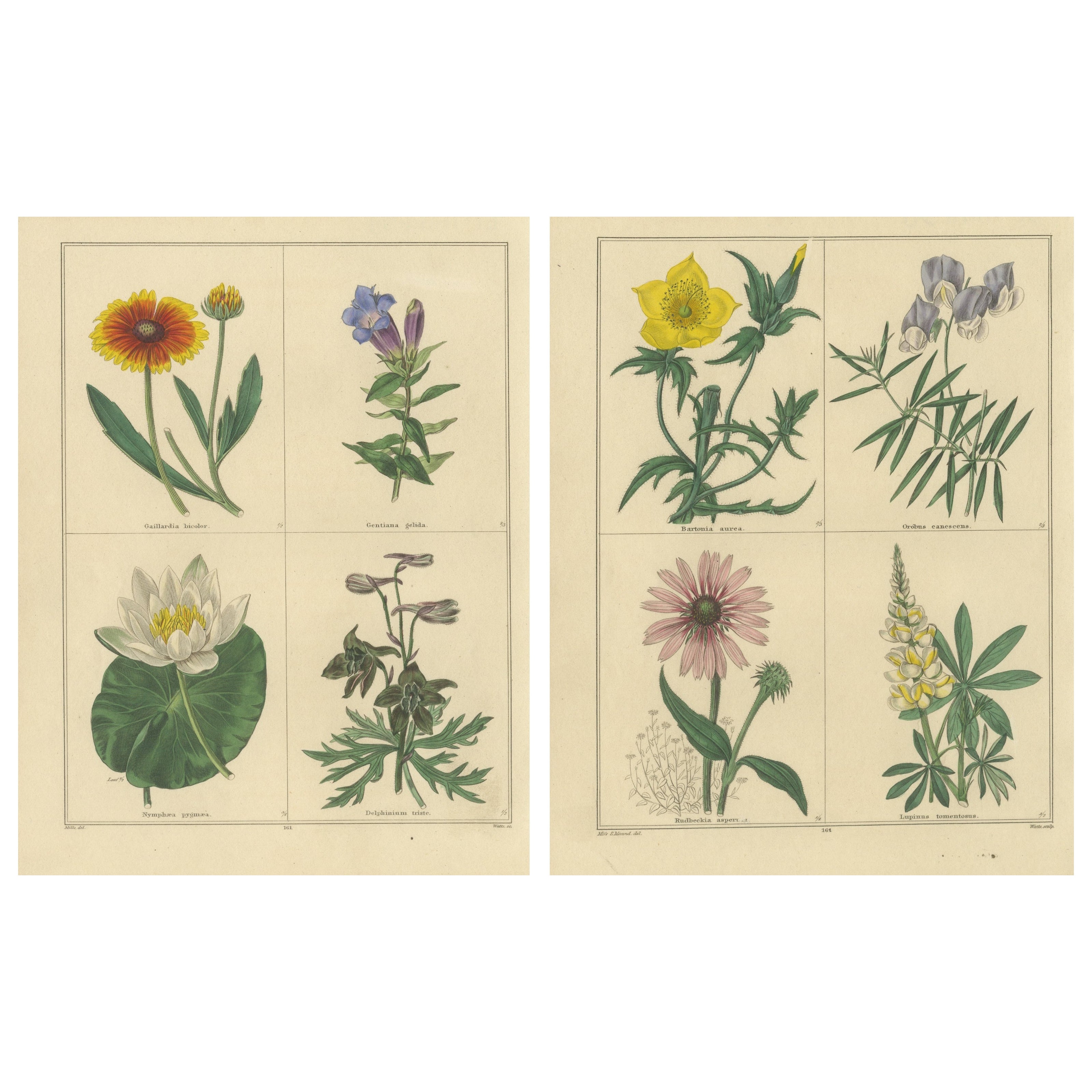
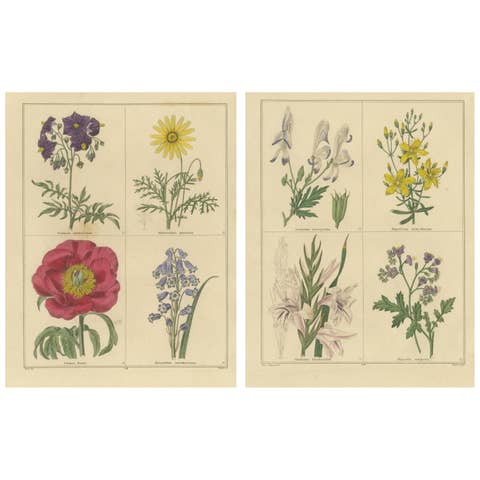
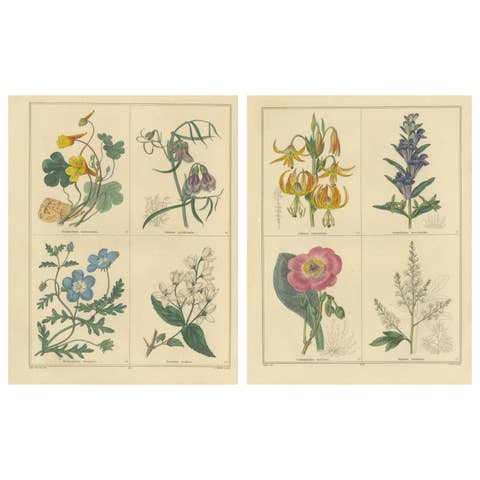
Pair of Botanical Engravings from The Botanic Garden by B. Maund, London c.1836
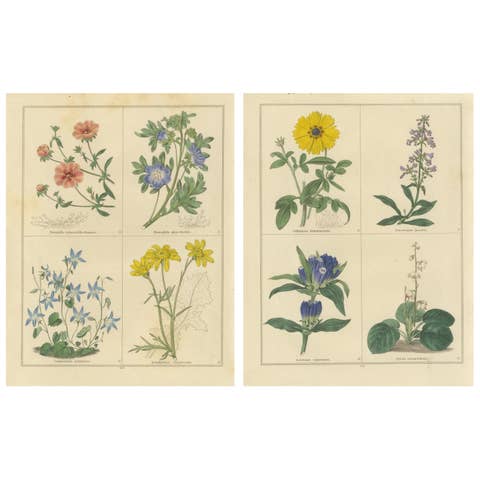
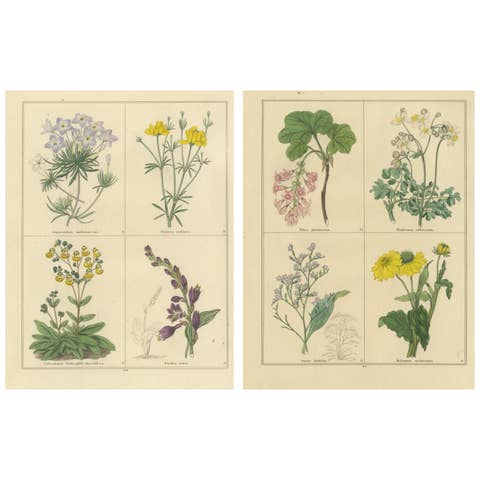
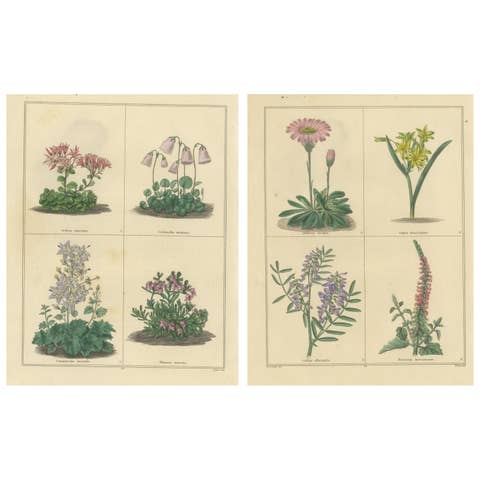
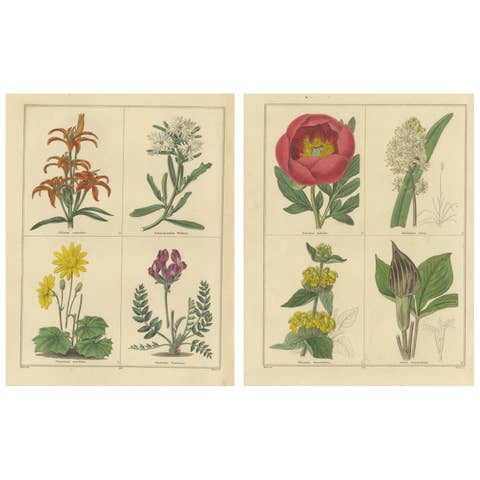
A striking pair of original hand-colored botanical engravings from *The Botanic Garden* by Benjamin Maund (1790–1864), Volume VII, published in London circa 1836. These finely detailed plates exemplify the golden age of botanical illustration, combining accuracy and artistry in equal measure. Each sheet presents four distinct species, beautifully arranged to highlight both their scientific form and natural elegance.
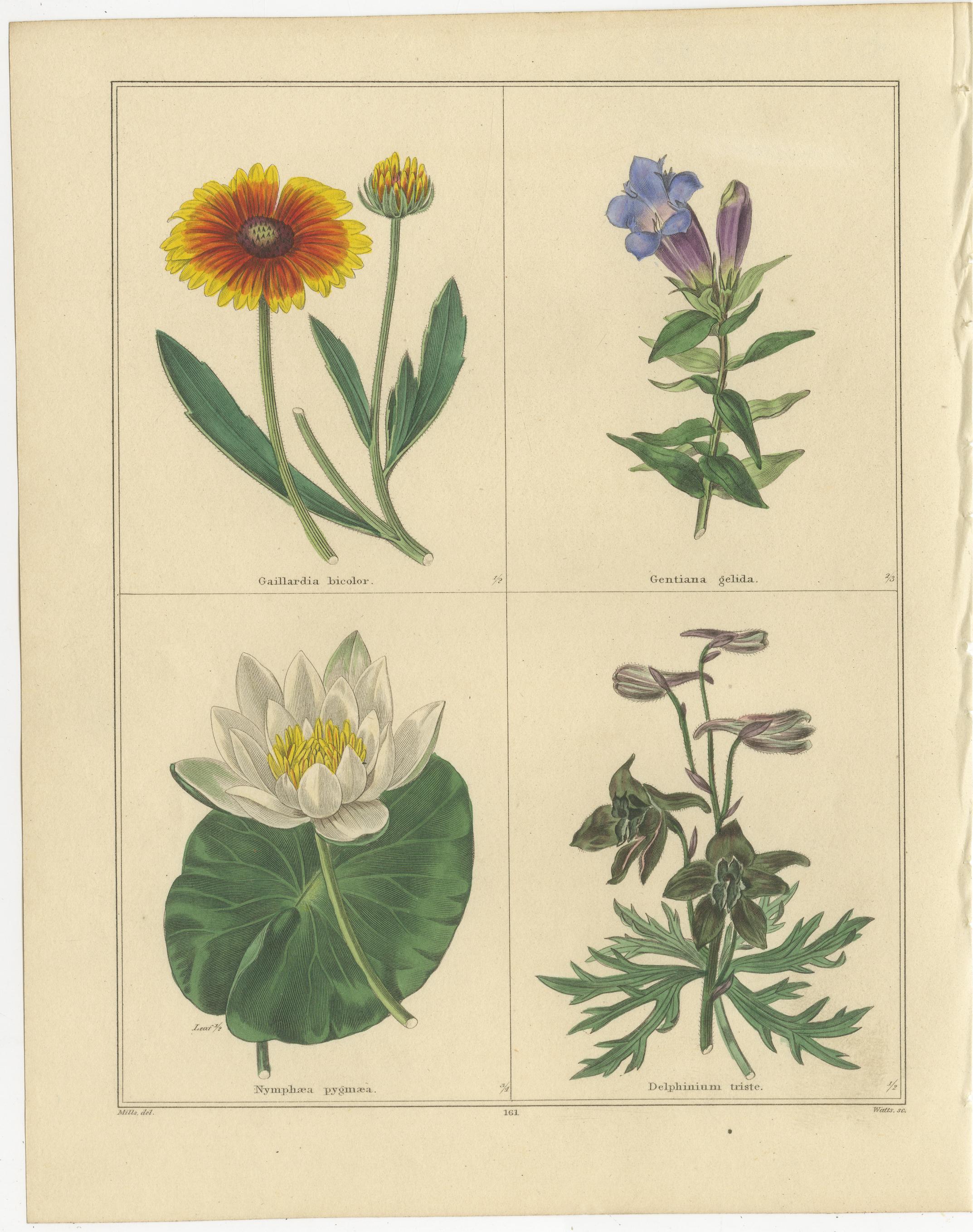
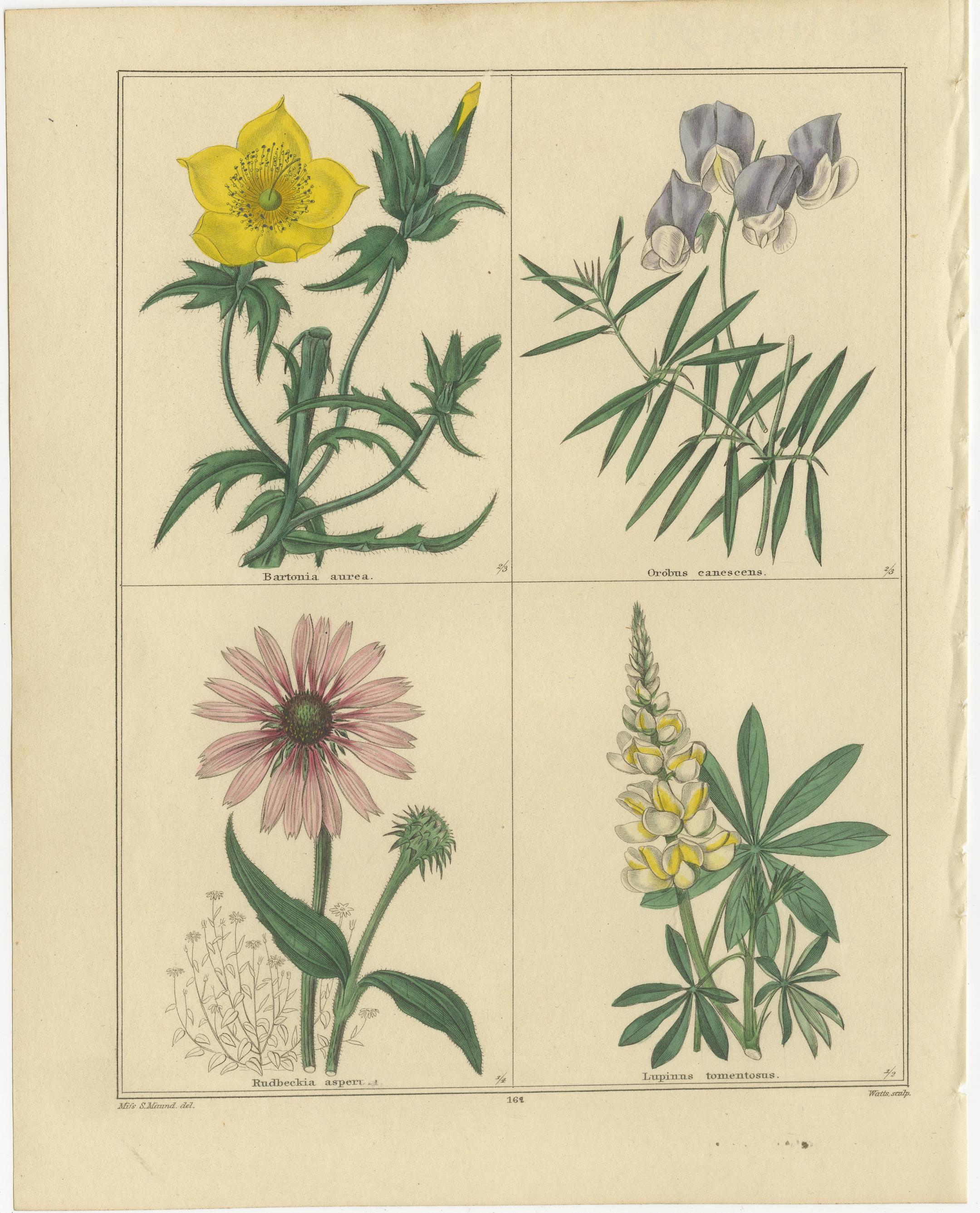
The left-hand engraving depicts *Gaillardia bicolor* (blanket flower), *Gentiana gelida* (gentian), *Nymphaea pygmaea* (water lily), and *Delphinium triste* (larkspur). The right-hand sheet features *Bartonia aurea* (golden bartonia), *Orobus canescens* (grey-flowered pea), *Rudbeckia aspera* (black-eyed Susan), and *Lupinus tomentosus* (woolly lupine). Each plant is meticulously engraved, with soft tonal shading and delicate hand-coloring in yellow, purple, blue, and pink hues.
Benjamin Maund’s *The Botanic Garden; consisting of Highly Finished Representations of Hardy Ornamental Flowering Plants Cultivated in Great Britain* was one of the most admired horticultural works of the early Victorian era. Maund, a Fellow of the Linnean Society, sought to make botanical knowledge both beautiful and accessible. Drawn by E.D. Smith and engraved by S. Watts, the plates combine scientific precision with a painterly sense of balance and texture.
These engravings are printed from finely etched copperplates and finished with expert watercolor application—each stroke preserving the natural liveliness of the species it represents. Today, Maund’s *Botanic Garden* is celebrated as a cornerstone of 19th-century botanical publishing and a timeless decorative statement.
Condition report:
Excellent impressions with strong, original hand-coloring. Very minor age toning and occasional foxing consistent with age. Visible plate marks and clean margins.
Framing tips:
Display together in matching ivory or pale green mats with gold or dark walnut frames to enhance their botanical harmony. These prints are ideal for interiors combining natural history and classic design.
Technique: Hand-colored copperplate engraving
Maker: Engraved by S. Watts after E.D. Smith; published by Benjamin Maund, London, c.1836