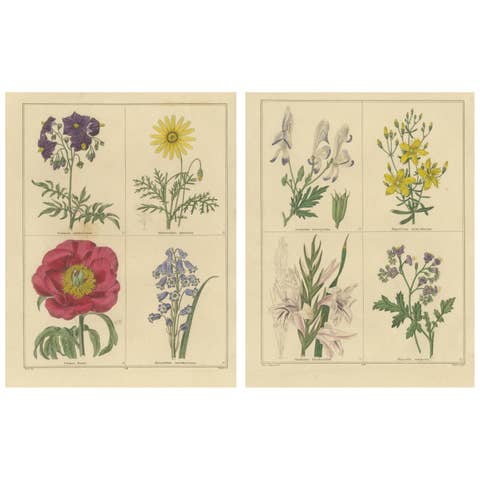
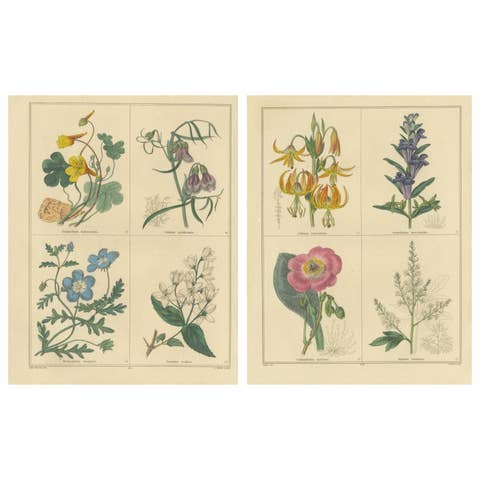
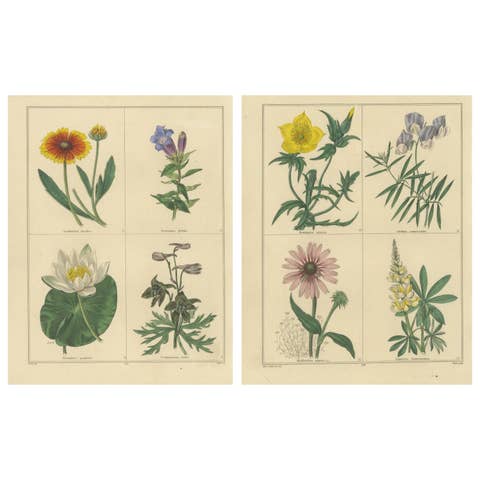
Pair of 1836 Hand-Colored Flower Prints from B. Maund’s Botanic Garden
€ 340
Original antique · The actual sheet photographed · Certificate of authenticity on request · Sold unframed · Worldwide shipping from € 15 (rates)
Date
1836
Mapmaker / artist
Engraved by S. Watts after E.D. Smith; published by Benjamin Maund, London, c.1836
Technique
Hand-colored copperplate engraving
Sheet size
24 × 18 cm (9.4 × 7.1 in)
Condition
Good
Reference
BG-14141-5 & BG-14141-6
What the condition grades mean
Excellent
Bright and clean, with no faults worth mentioning.
Very good
Only light signs of age, such as faint toning.
Good
Normal signs of age for a sheet of this period: toning, some foxing, small marks or neat old repairs.
Fair
Clear faults such as staining, tears or repairs, priced to match.
Every fault we see is written in the condition note, and the whole sheet is shown uncropped in the photos.
Condition
Superb early impressions with fine original hand-coloring. Minor foxing near upper margin and light toning consistent with age. Paper remains crisp, with strong plate marks and no tears or repairs.
About this sheet
Pair of Botanical Engravings from The Botanic Garden by B. Maund, London c.1836
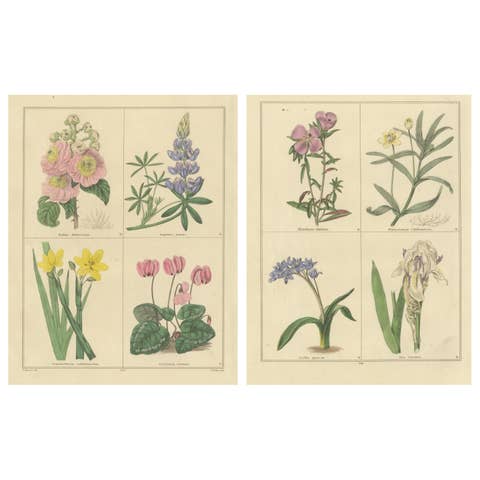
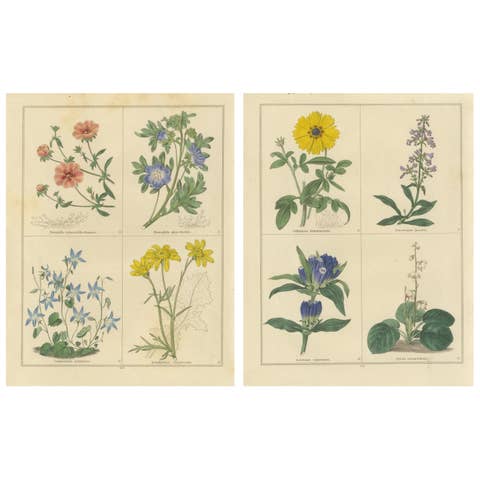
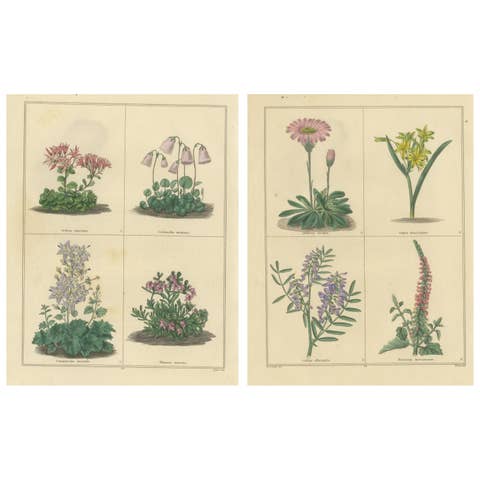
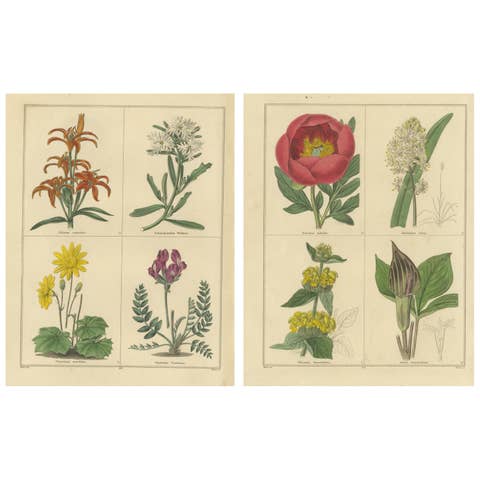
This elegant pair of hand-colored botanical engravings originates from Benjamin Maund’s celebrated publication The Botanic Garden; consisting of Highly Finished Representations of Hardy Ornamental Flowering Plants Cultivated in Great Britain, Volume VII, published in London circa 1836. Maund’s series is regarded as one of the most beautifully executed botanical works of the 19th century, blending scientific detail with artistic refinement.
The first engraving presents Leptosiphon androsaceus (false babystars), Genista radiata (winged broom), Calceolaria Fothergilli-thyrsiflora (pocketbook flower), and Funkia ovata (hosta). The second plate features Ribes glutinosum (flowering currant), Thalictrum tuberosum (tuberous meadow rue), Statice latifolia (sea lavender), and Helenium undulatum (sneezeweed). Each plant is delicately rendered, revealing both structural precision and natural color harmony, characteristic of Maund’s distinguished approach to botanical art.
Benjamin Maund (1790–1864), a Fellow of the Linnean Society, sought to unite horticultural scholarship and visual elegance. His Botanic Garden featured copperplate engravings drawn by E.D. Smith and engraved by S. Watts, later finished by hand with watercolors to capture the freshness and subtleties of living specimens. Maund’s work not only celebrated horticultural diversity but also educated Victorian gardeners and collectors about ornamental plant cultivation in Great Britain.
These particular compositions exemplify the technical and aesthetic excellence of early Victorian botanical illustration—each subject carefully arranged to emphasize both form and botanical clarity. Together, they create a refined visual record of the era’s fascination with exotic and native flora alike.
Condition report: Superb early impressions with fine original hand-coloring. Minor foxing near upper margin and light toning consistent with age. Paper remains crisp, with strong plate marks and no tears or repairs.
Framing tips: Frame the pair in matching ivory or light green mats with slim gilt or natural wood frames. Their balanced design and luminous coloring make them ideal for display in botanical-themed or classical interiors.