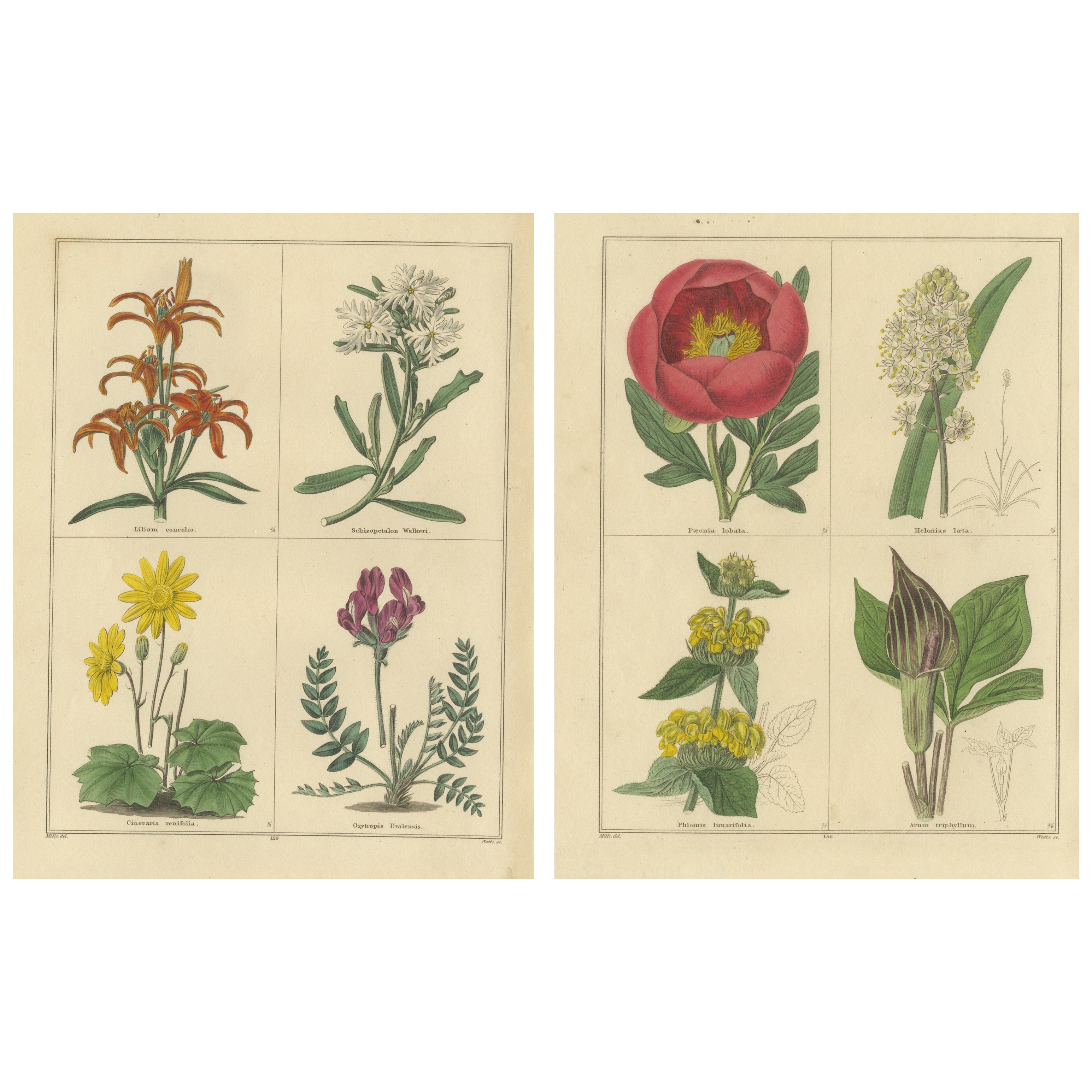
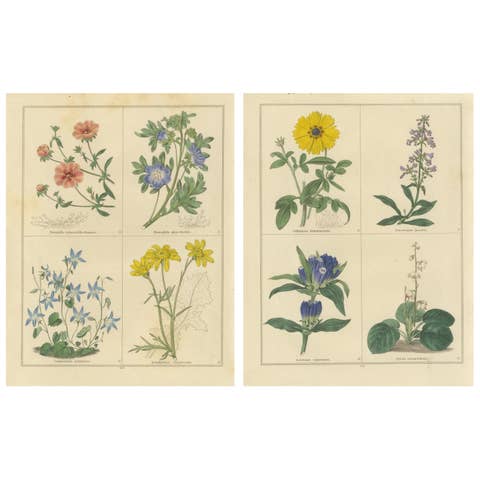
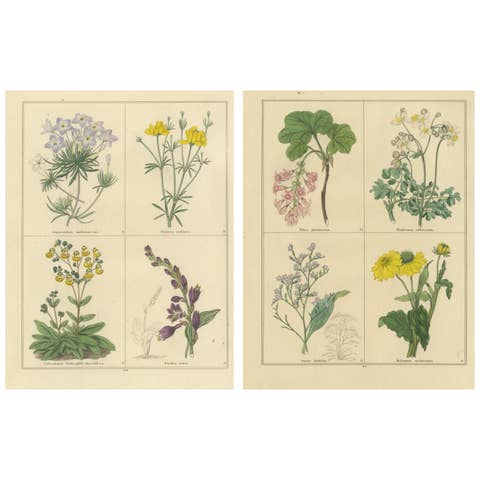
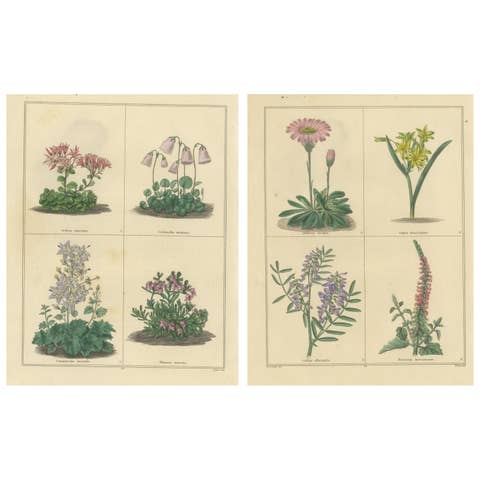
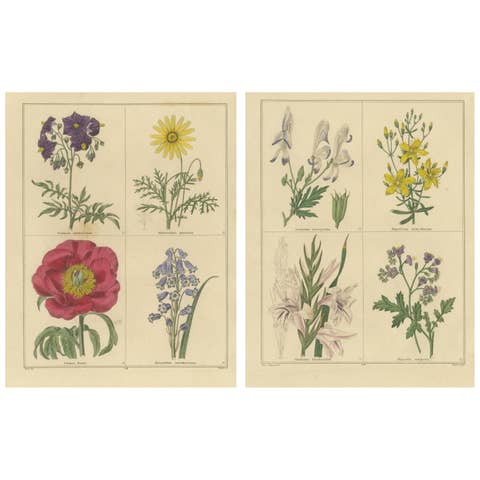
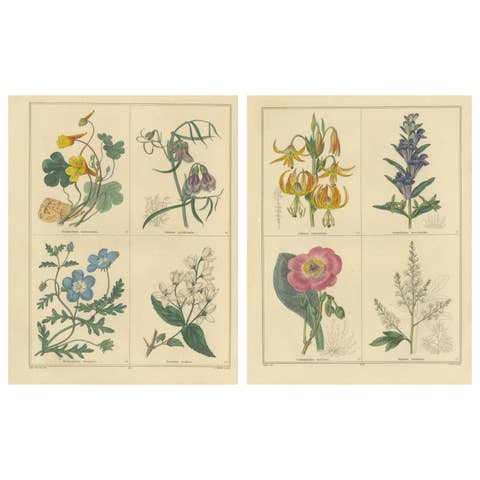
Pair of Rare 1836 Botanical Flower Prints by B. Maund, London
€ 340
One of a kind: this is the sheet in the photographs. Ships from Langweer, the Netherlands.
Date
1836
Sheet size
24 × 18 cm (9.4 × 7.1 in)
Condition
Good
Reference
BG-14141-11 & BG-14141-12
Condition
Fine impressions with bright, original hand-coloring. Light marginal foxing and mild age toning, otherwise crisp and clean with visible plate marks.
About this sheet
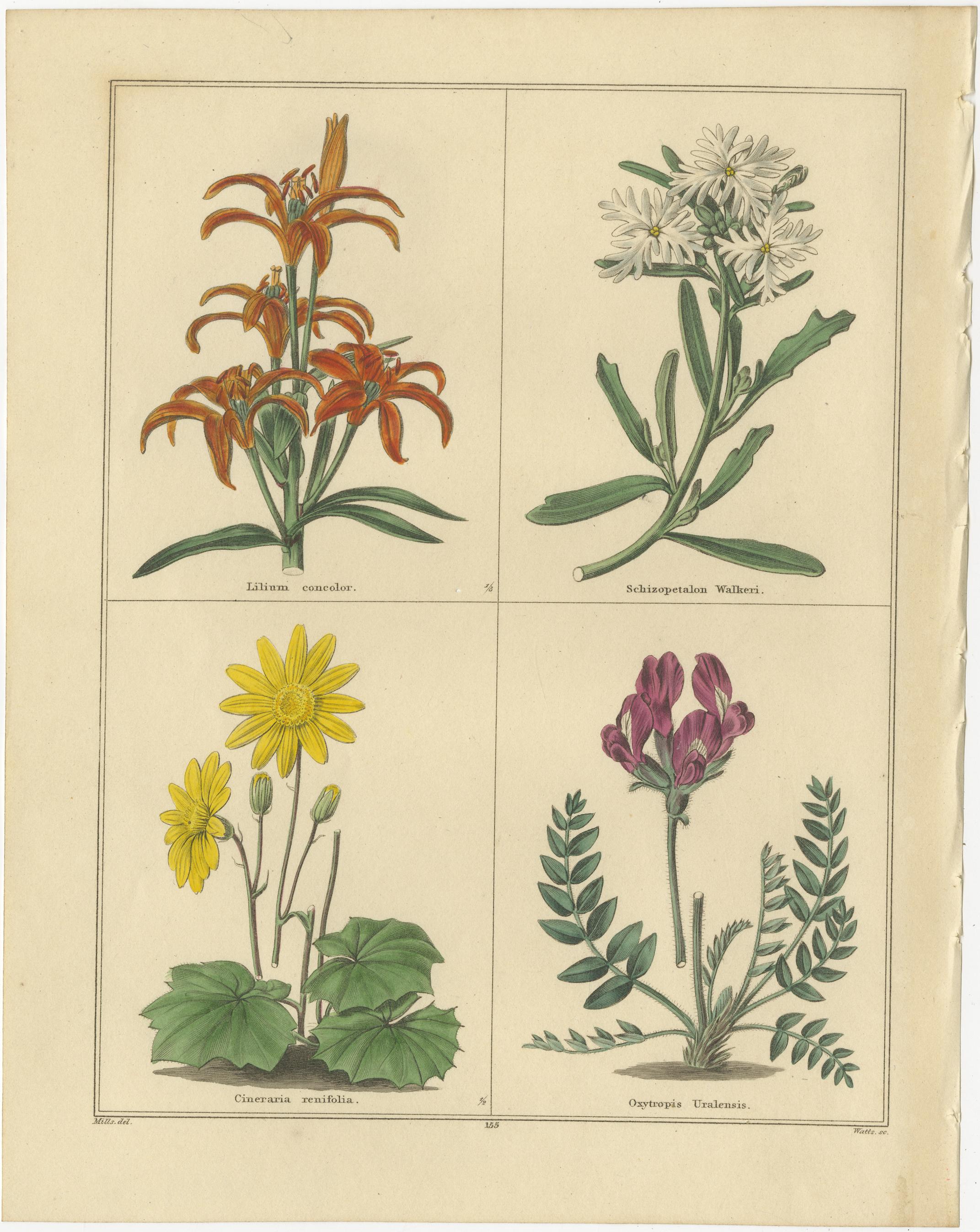
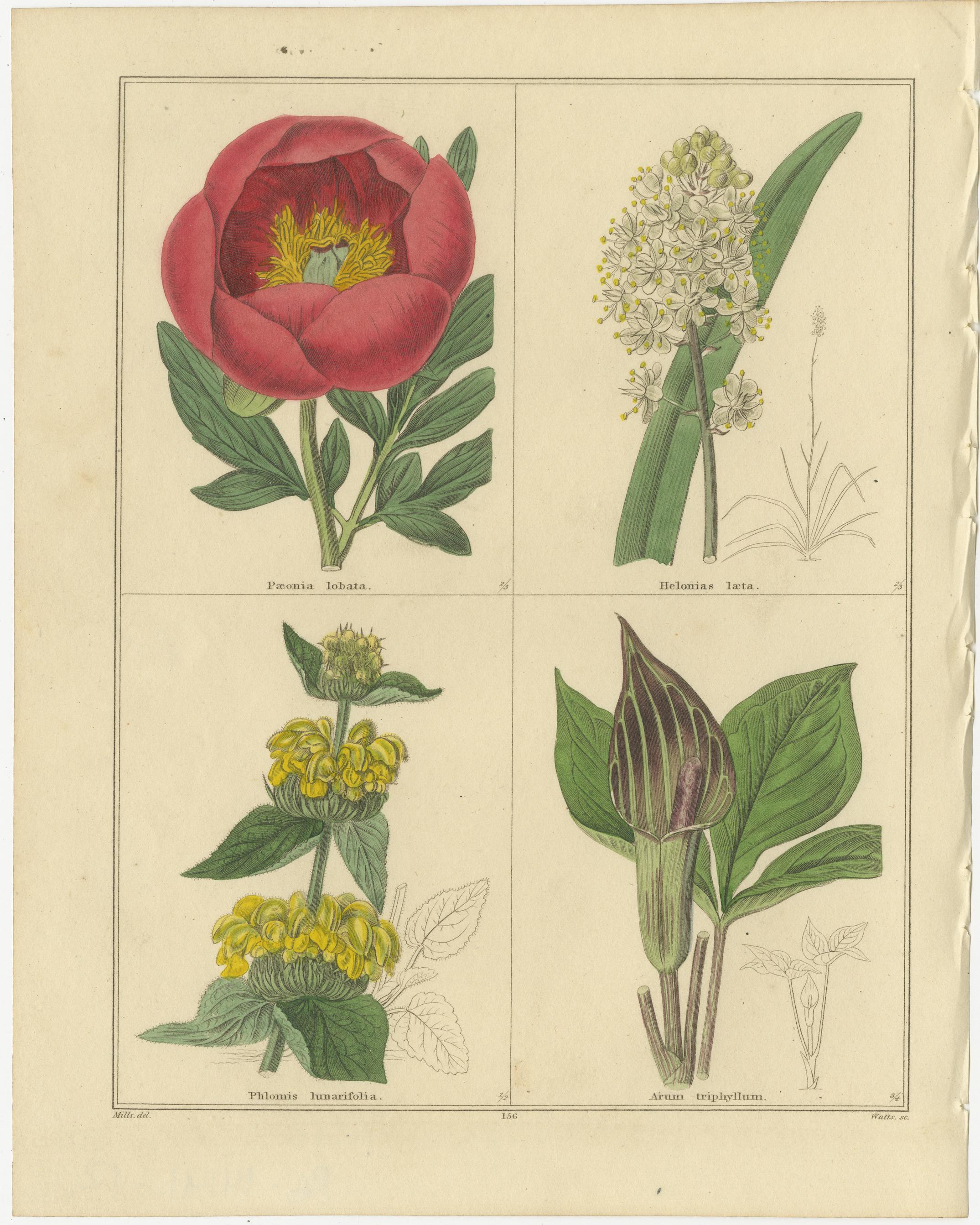
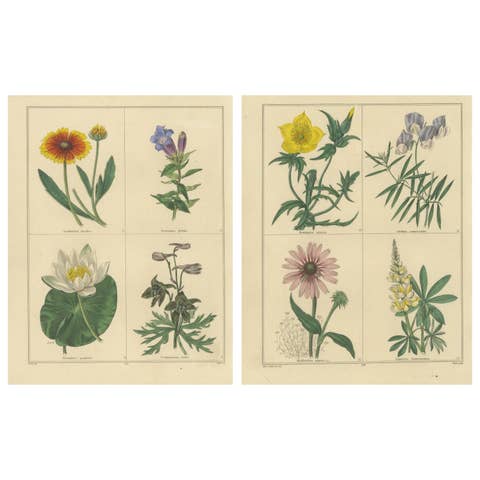
Pair of Botanical Engravings from The Botanic Garden by B. Maund, London c.1836 An exquisite pair of original hand-colored botanical engravings from *The Botanic Garden* by Benjamin Maund (1790–1864), published in London around 1836. Each sheet presents four meticulously rendered floral species, engraved with scientific precision and finished with soft, naturalistic watercolor tones typical of the finest Victorian botanical art.
The left-hand plate features *Lilium concolor* (orange lily), *Schizocentron Walberti*, *Cineraria renifolia* (kidney-leaved cineraria), and *Oxytropis Uralensis* (Ural oxytrope). The right-hand plate depicts *Paeonia lobata* (lobed peony), *Helonia leta* (swamp pink), *Phlomis lunariifolia* (Jerusalem sage), and *Arum triphyllum* (Jack-in-the-pulpit). Each specimen is delicately engraved, combining scientific observation with a refined sense of color and composition.
Benjamin Maund’s *The Botanic Garden; consisting of Highly Finished Representations of Hardy Ornamental Flowering Plants Cultivated in Great Britain* was issued in parts between 1825 and 1851. It is one of the most admired works of 19th-century botanical illustration, distinguished by its detailed copperplate engravings drawn by E.D. Smith and engraved by S. Watts, with hand-coloring of exceptional quality. Maund, a Fellow of the Linnean Society, sought to make horticultural knowledge accessible through art, offering both accuracy and aesthetic pleasure.
These plates represent a perfect marriage of botanical science and artistic refinement. Their elegant symmetry, fine line work, and subtle coloring make them ideal examples of the period’s natural history publishing. Each engraving celebrates the diversity of hardy ornamental plants cultivated in Great Britain during the early Victorian era.
Condition report: Fine impressions with bright, original hand-coloring. Light marginal foxing and mild age toning, otherwise crisp and clean with visible plate marks.
Framing tips: These complementary sheets form a balanced pair. They look superb when mounted in soft cream or pale green mats, paired with slim gilt or walnut frames to highlight their 19th-century botanical character.
Technique: Hand-colored copperplate engraving Maker: Engraved by S. Watts after E.D. Smith; published by Benjamin Maund, London, c.1836