About this sheet
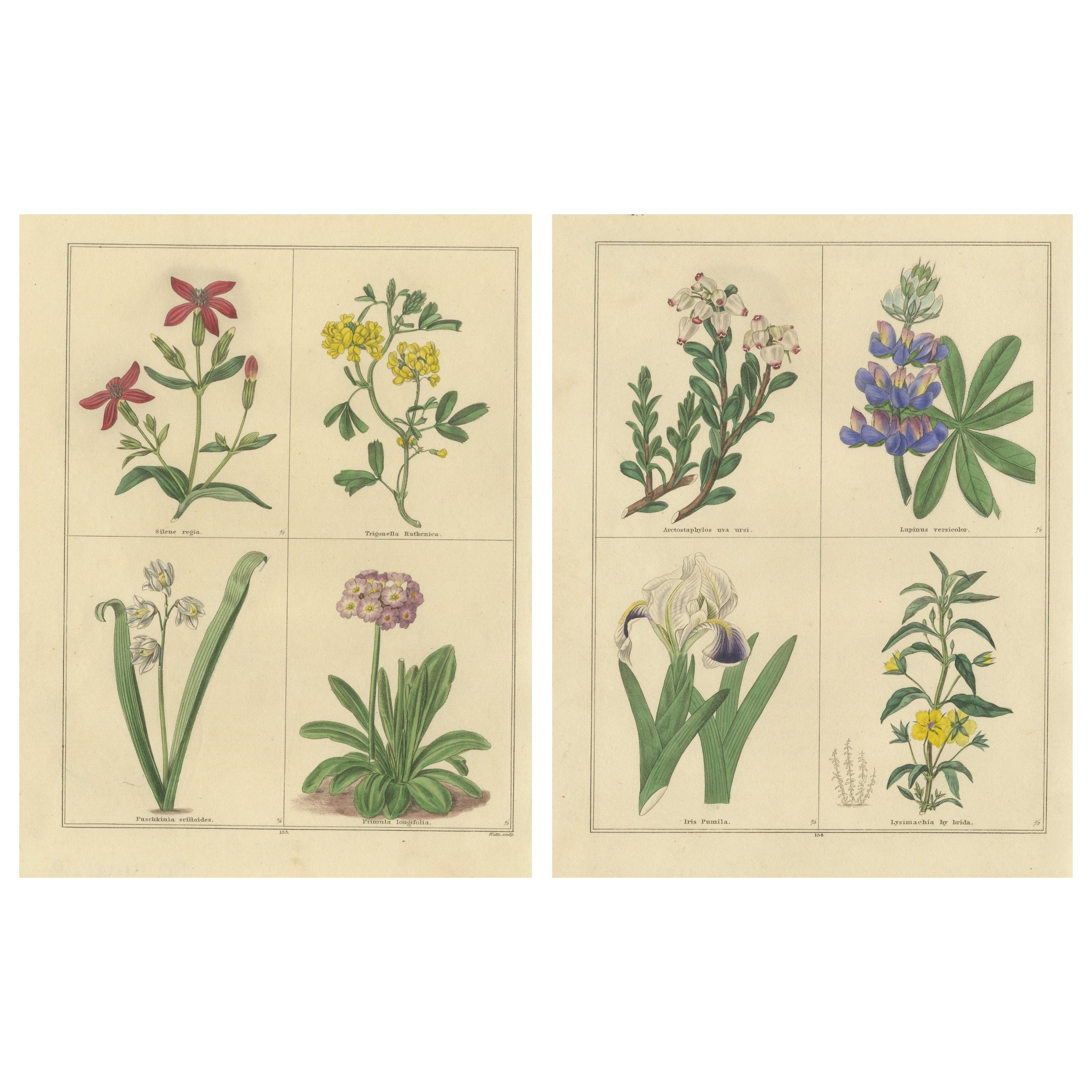
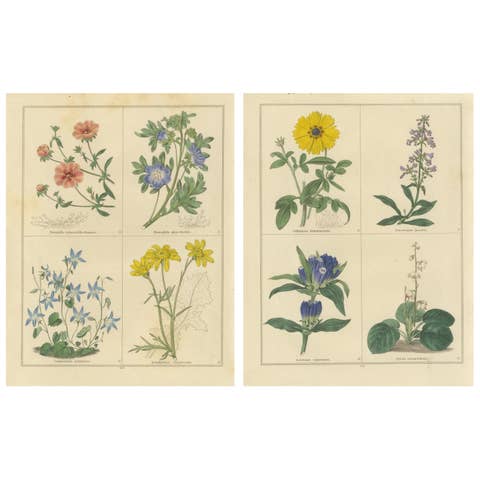
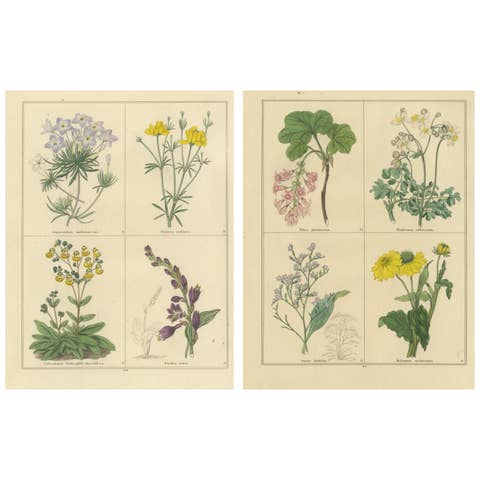
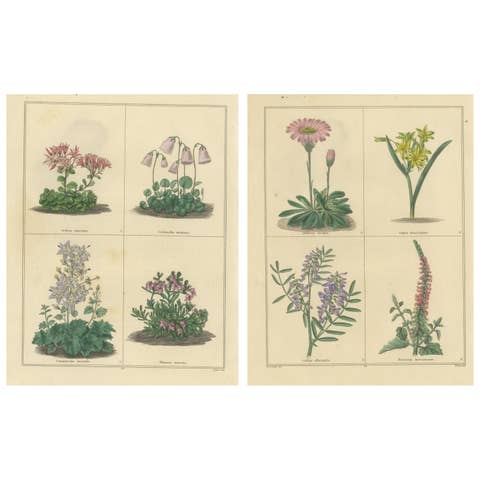
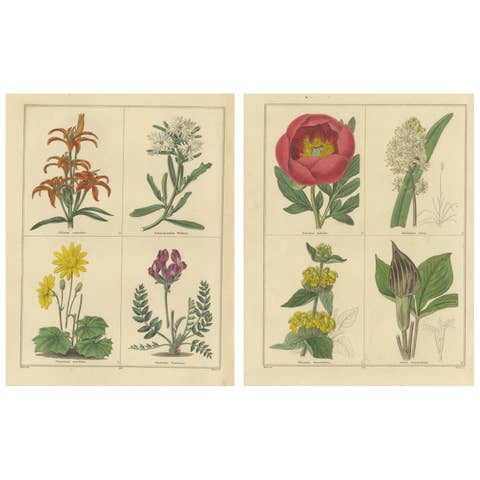
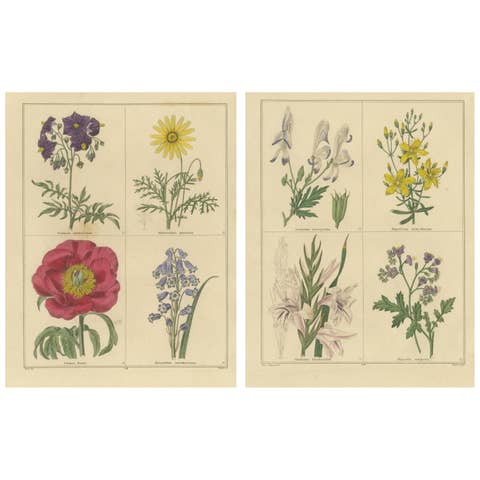
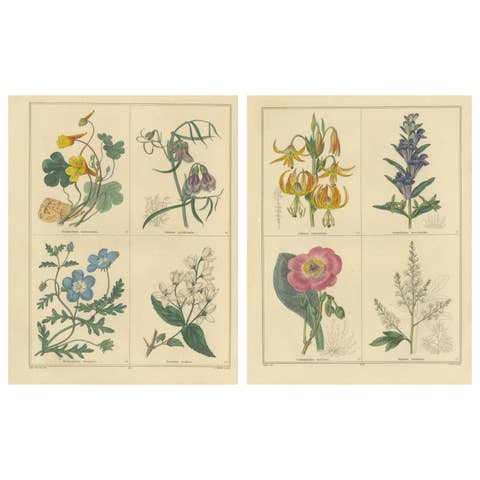
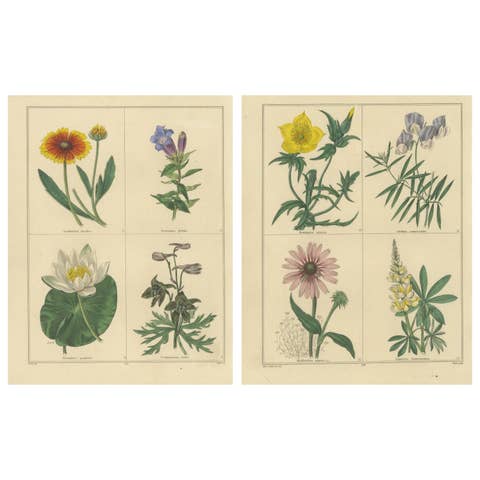
Pair of Botanical Engravings from The Botanic Garden by B. Maund, London c.1836
A beautifully matched pair of hand-colored botanical engravings from *The Botanic Garden* by Benjamin Maund (1790–1864), Volume VII, published in London around 1836. This renowned Victorian botanical work is admired for its harmonious combination of scientific precision and aesthetic grace, with each plate featuring four flowering species rendered in exquisite detail.
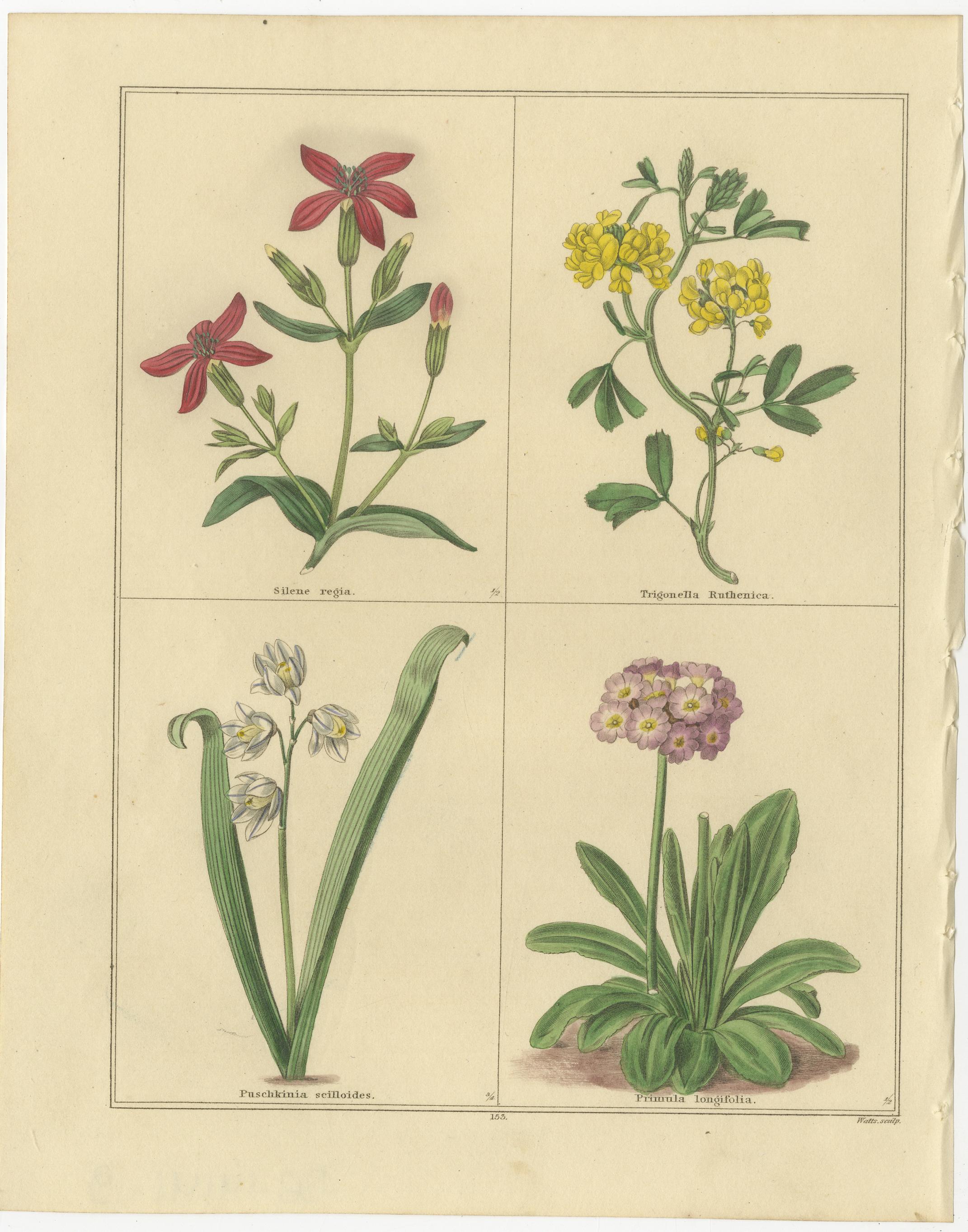
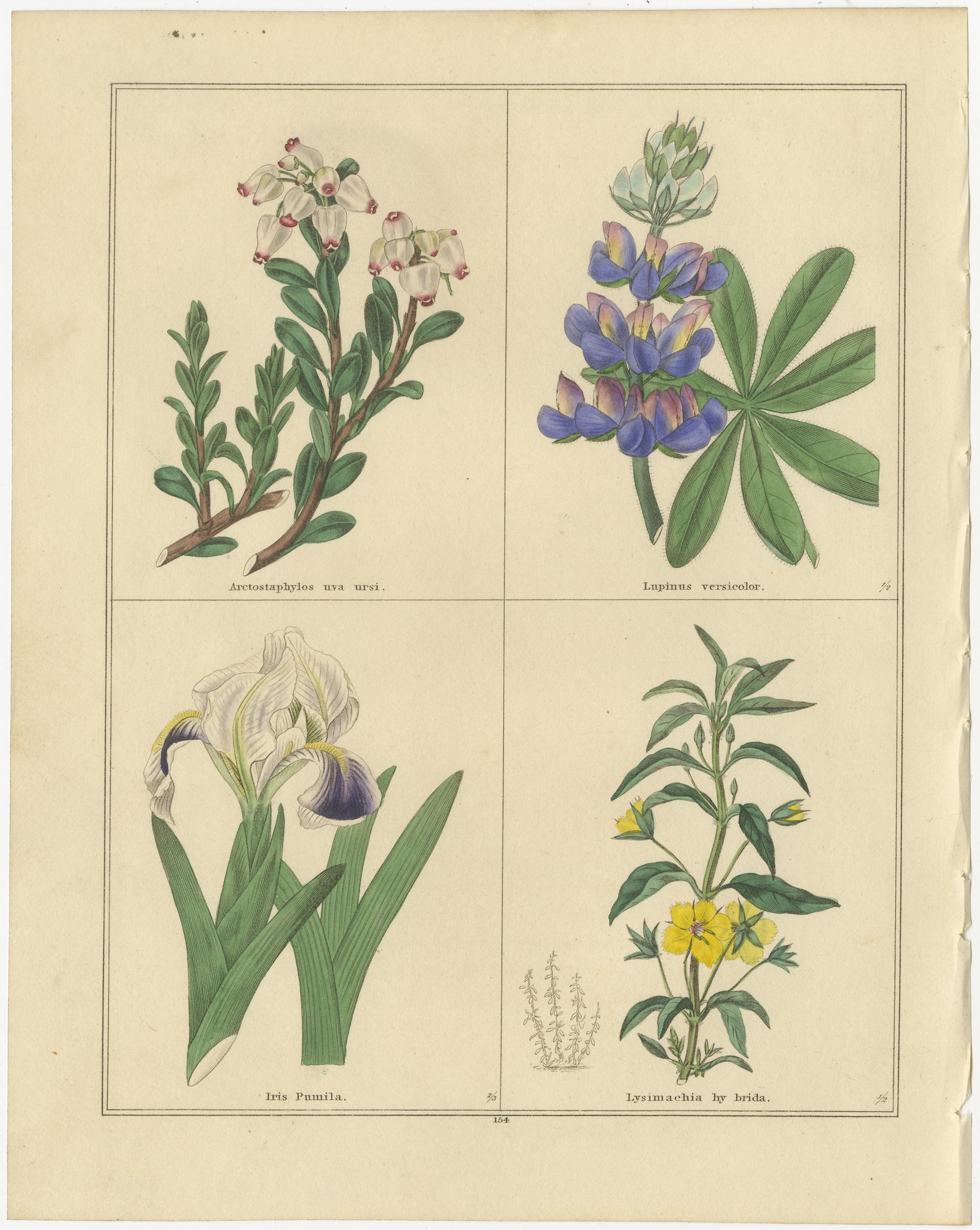
The left-hand engraving presents *Silene regia* (royal catchfly), *Trigonella Ruthenica* (ruthenian fenugreek), *Puschkinia scilloides* (striped squill), and *Primula longifolia* (long-leaved primrose). The companion plate features *Arctostaphylos uva-ursi* (bearberry), *Lupinus versicolor* (blue lupine), *Iris pumila* (dwarf iris), and *Lysimachia hybrida* (yellow loosestrife). Together, they form a refined botanical study, displaying both horticultural diversity and the painterly charm typical of early 19th-century natural history illustration.
Benjamin Maund’s *The Botanic Garden; consisting of Highly Finished Representations of Hardy Ornamental Flowering Plants Cultivated in Great Britain* was a landmark publication in British botanical art. Each engraving was drawn by E.D. Smith and engraved by S. Watts, then meticulously hand-colored by skilled colorists. Maund, a Fellow of the Linnean Society, sought to combine botanical accuracy with visual elegance, making his work as informative as it was beautiful.
The series was widely appreciated among both scholars and amateur gardeners of the period, valued for its scientific fidelity, graceful composition, and subtle color palette. These plates, featuring species from both European and exotic origins, perfectly represent the botanical enthusiasm and refinement of the Victorian age.
Condition report:
Very good impressions with bright, original hand-coloring. Minor marginal foxing and gentle age toning consistent with 19th-century paper. Plate marks distinct, no tears or stains affecting the image area.
Framing tips:
Display the pair in matching ivory mats and gold or dark wood frames. Their soft, natural coloring and symmetrical layout make them ideal for elegant interiors or botanical-themed collections.
Technique: Hand-colored copperplate engraving
Maker: Engraved by S. Watts after E.D. Smith; published by Benjamin Maund, London, c.1836