Roses, Clovers and the Carob, Antique German Botanical Set of Three, 1890
€ 425
Original antique · The actual sheet photographed · Certificate of authenticity on request · Sold unframed · Worldwide shipping from € 15 (rates)
Date
circa 1890
Technique
Chromolithograph
Coloring
Printed color
Sheet size
34 × 45 cm (13.4 × 17.7 in)
Condition
Good
Reference
BG-12369-1-59
What the condition grades mean
Excellent
Bright and clean, with no faults worth mentioning.
Very good
Only light signs of age, such as faint toning.
Good
Normal signs of age for a sheet of this period: toning, some foxing, small marks or neat old repairs.
Fair
Clear faults such as staining, tears or repairs, priced to match.
Every fault we see is written in the condition note, and the whole sheet is shown uncropped in the photos.
Condition
Light uneven toning, browner toward the edges. Handling soiling along the edges of all three sheets. Light foxing in the margins of two of the three sheets. Slight wear at the corners of all three sheets.
About this sheet
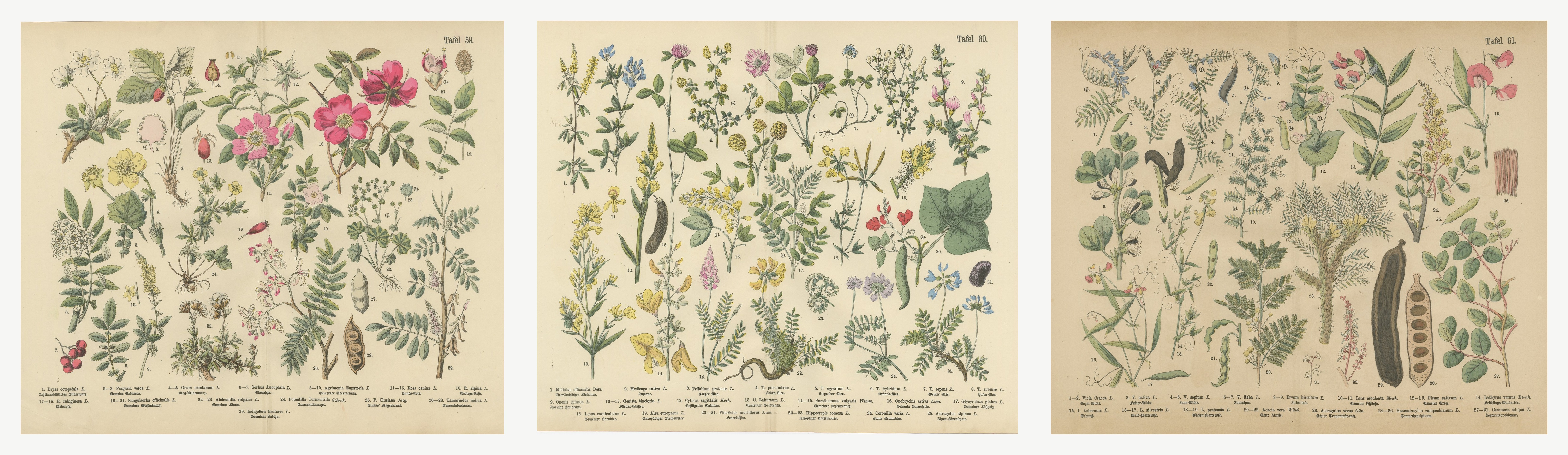
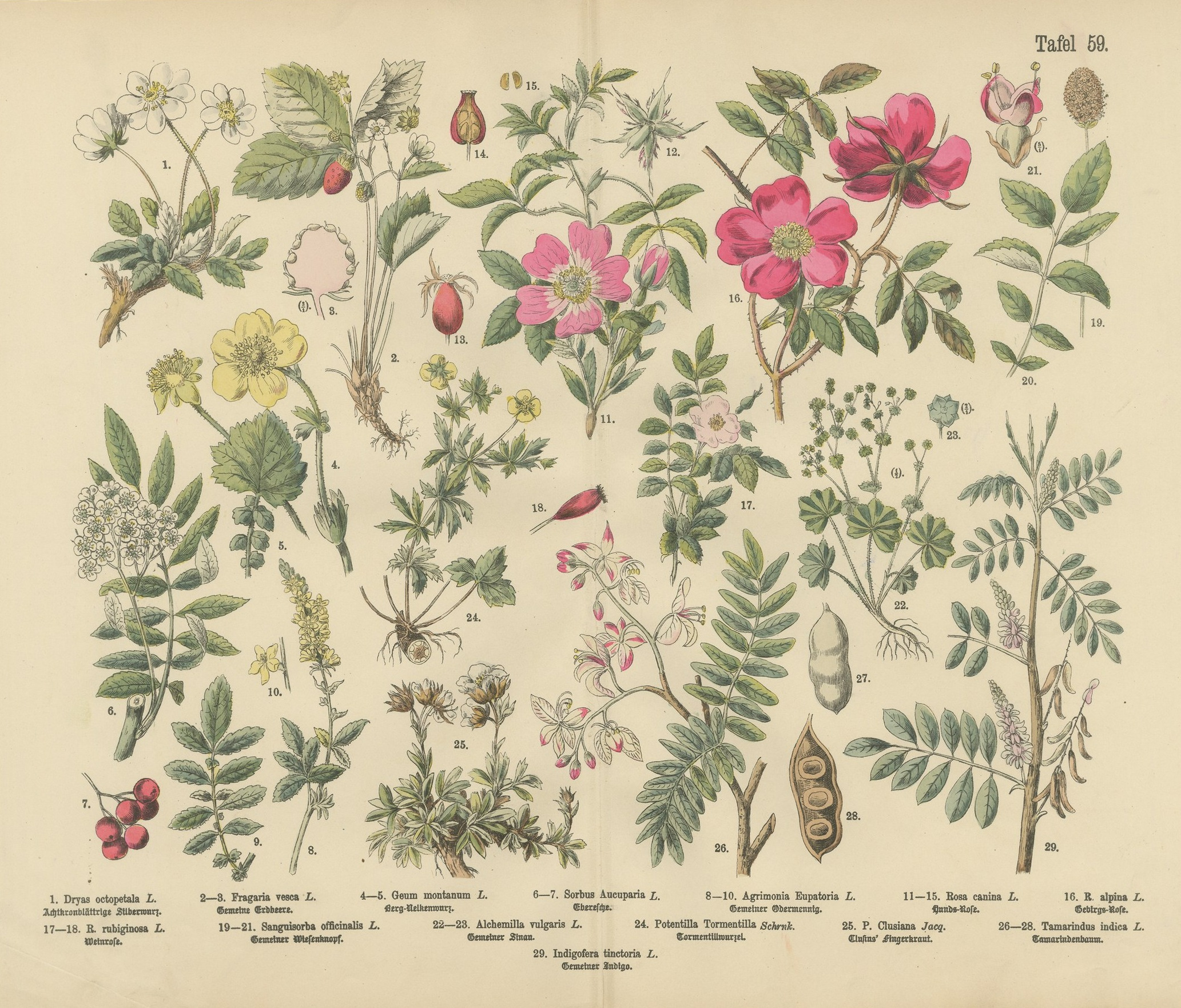
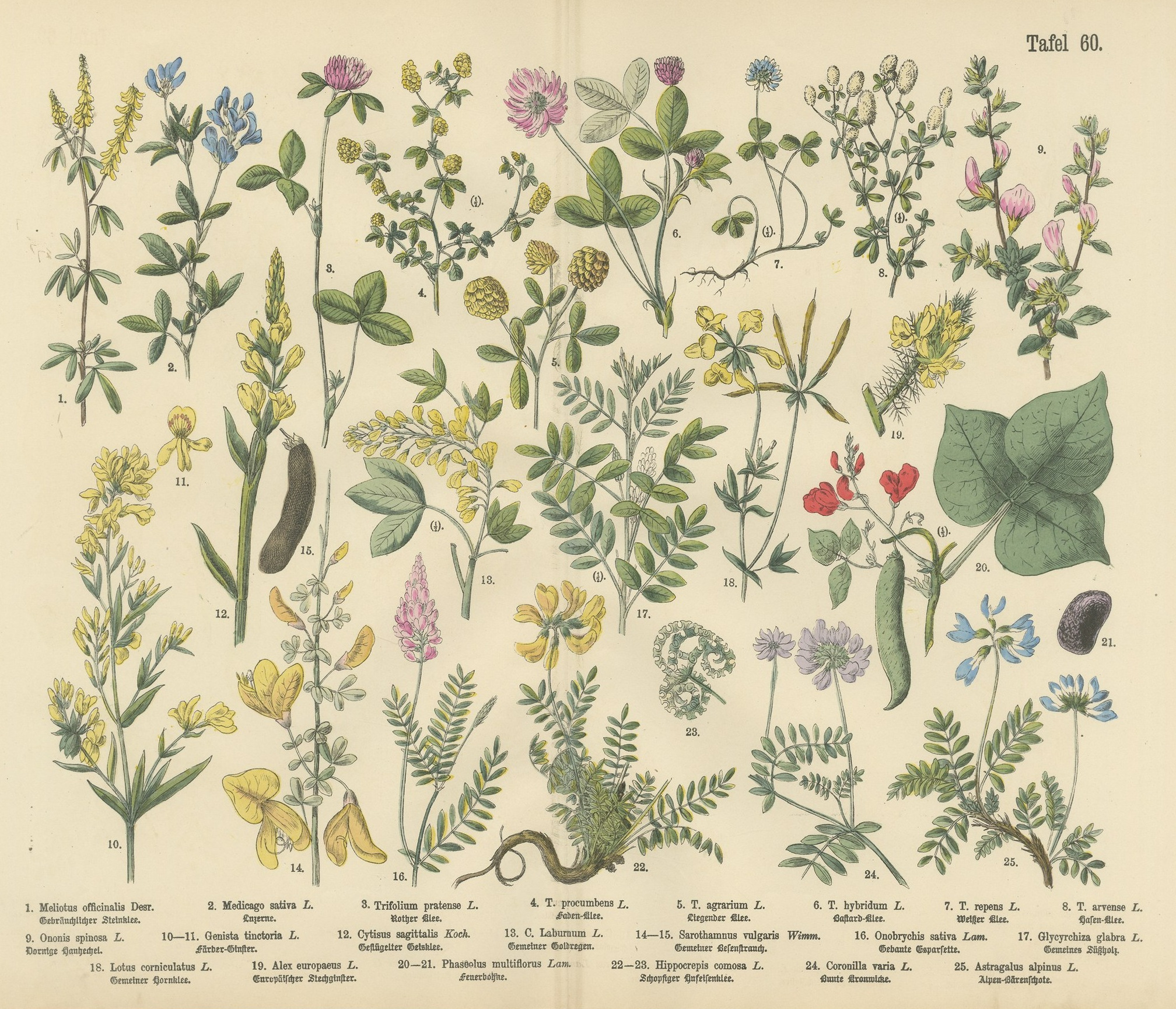
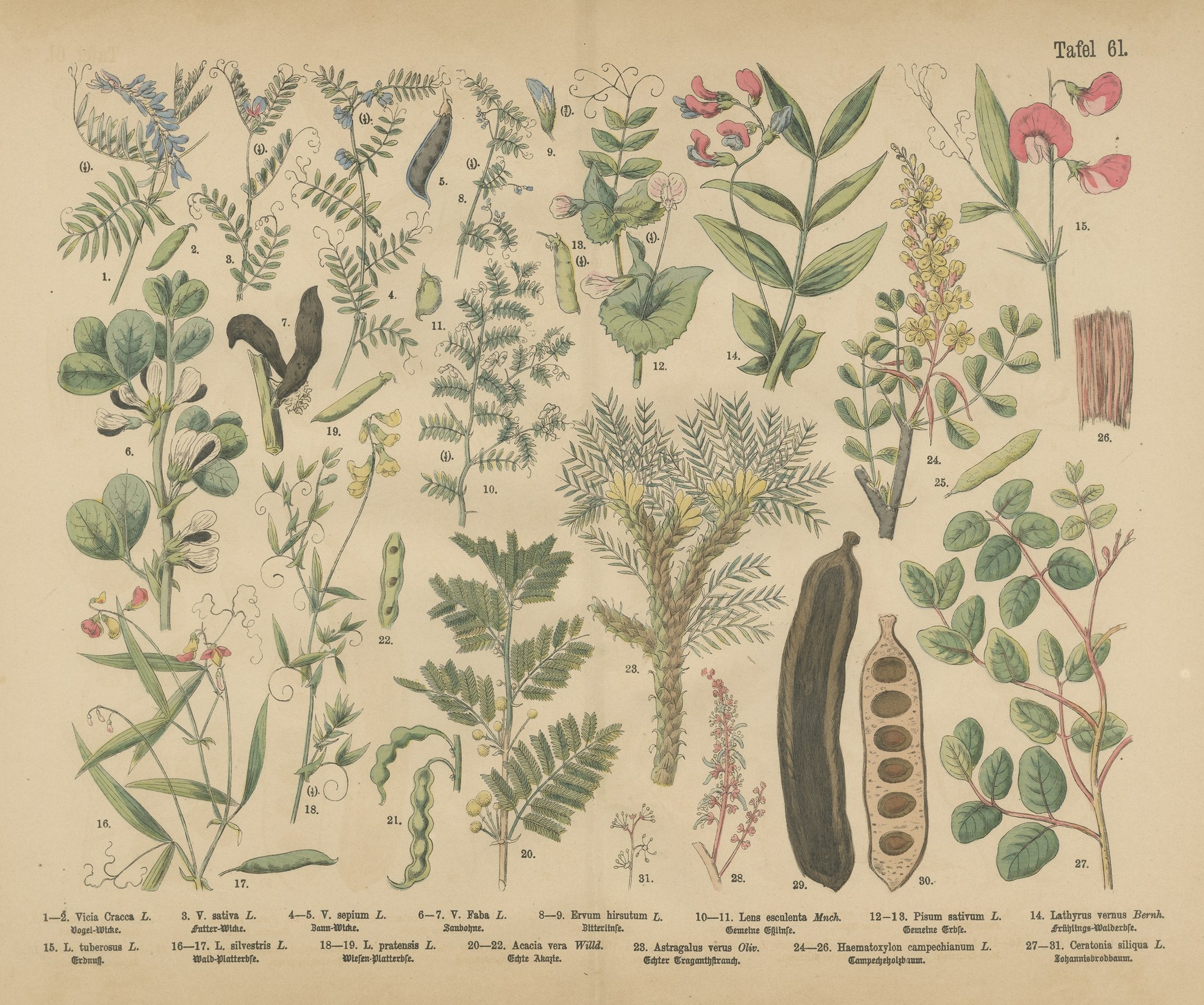
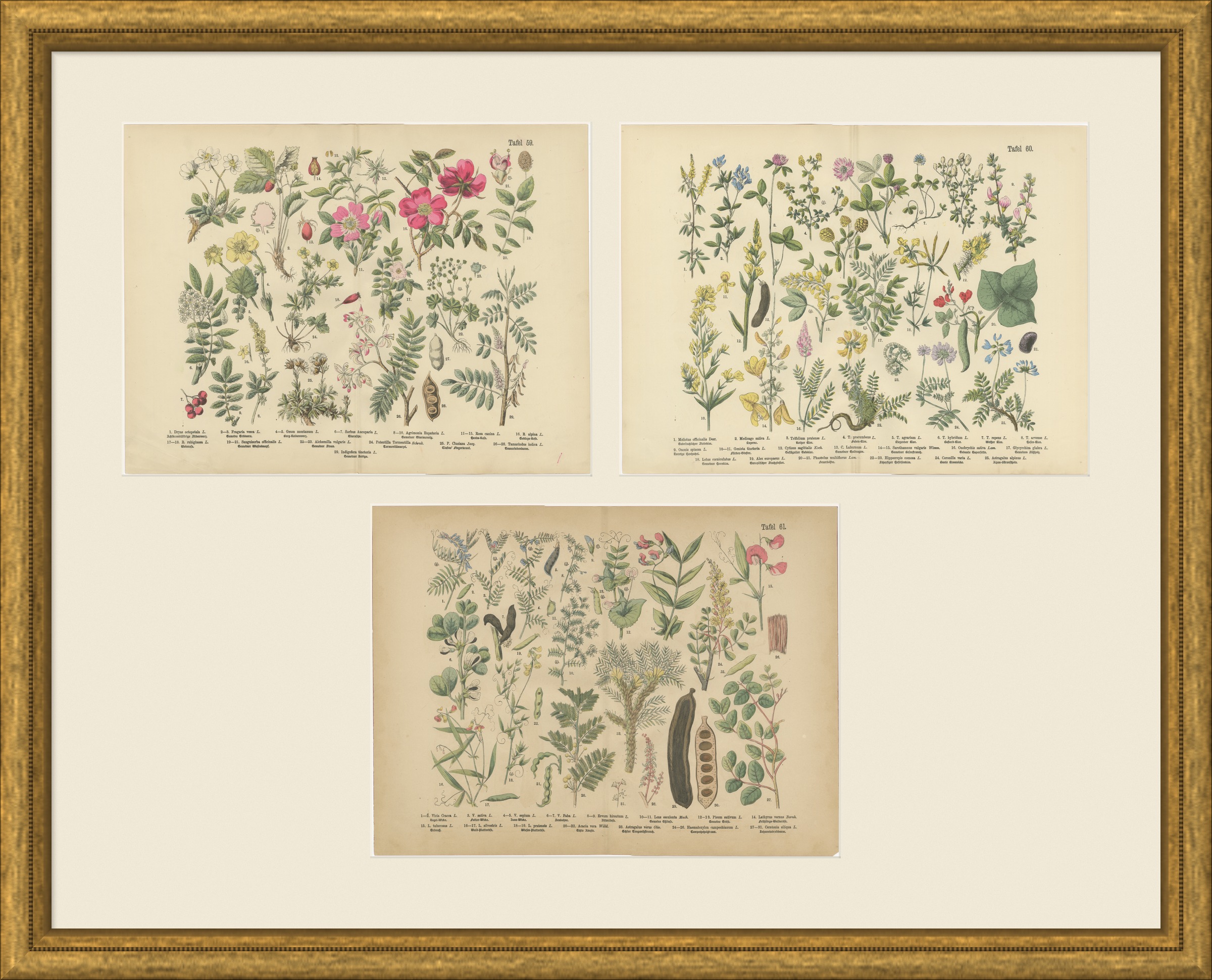
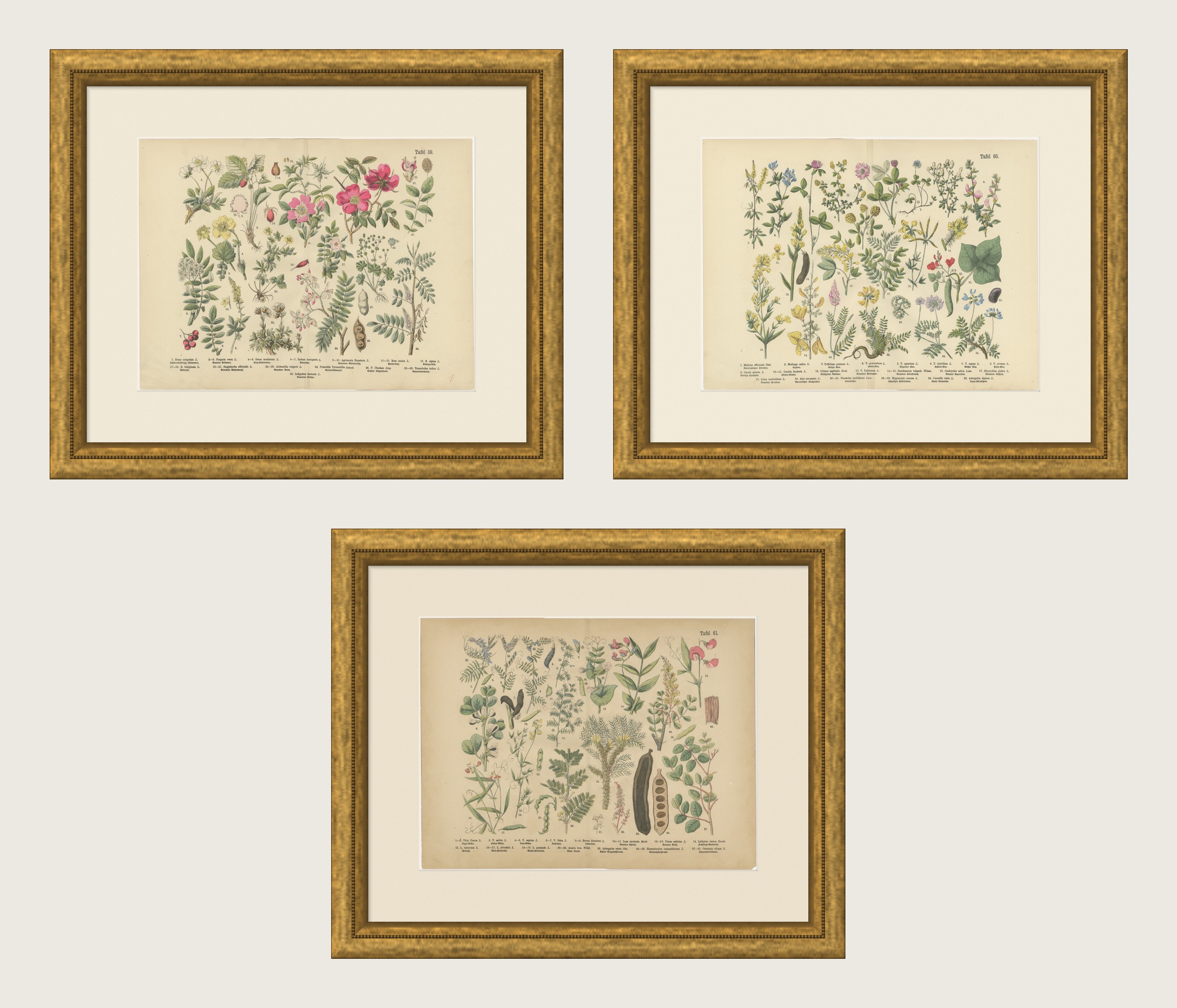
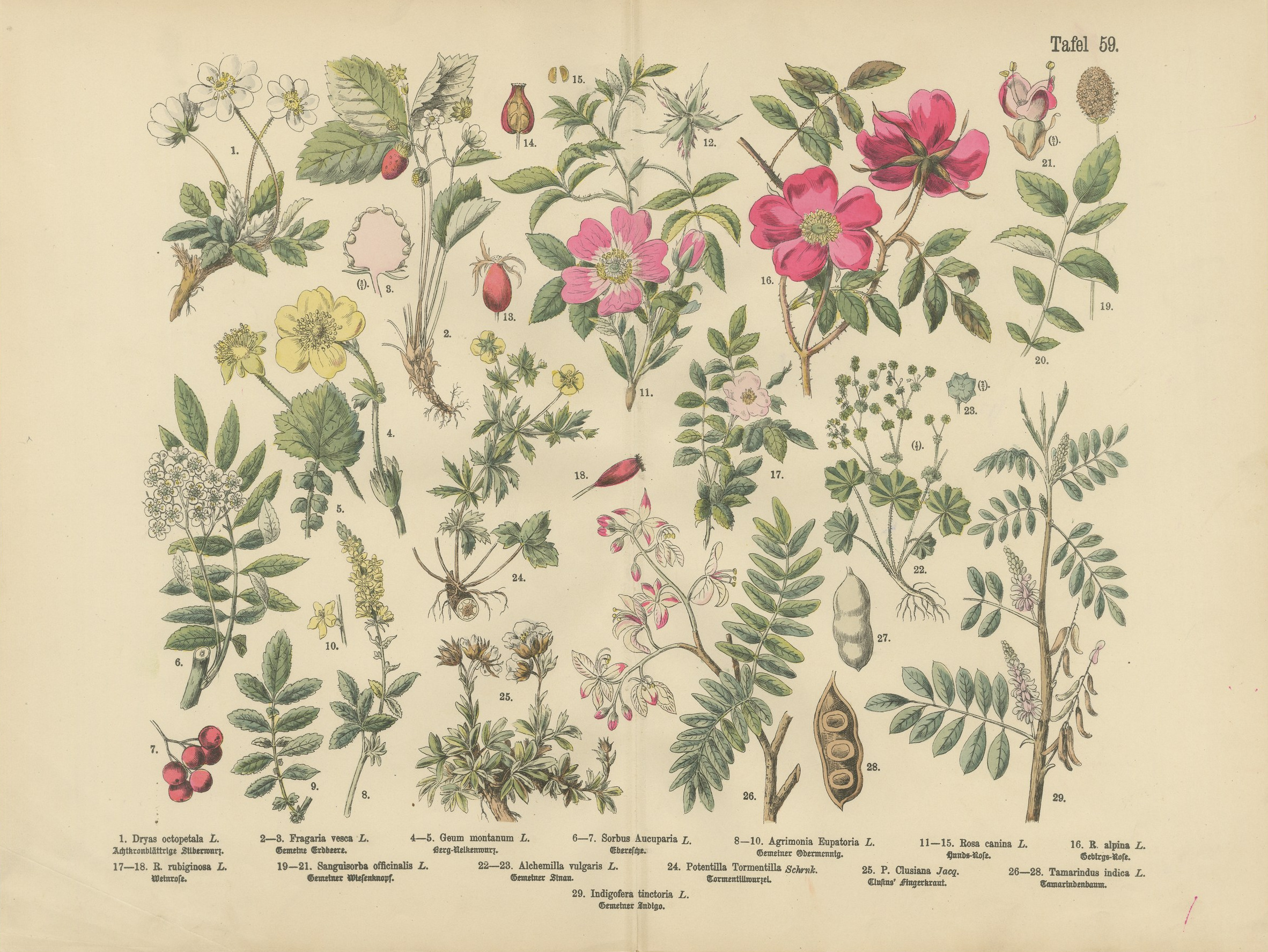
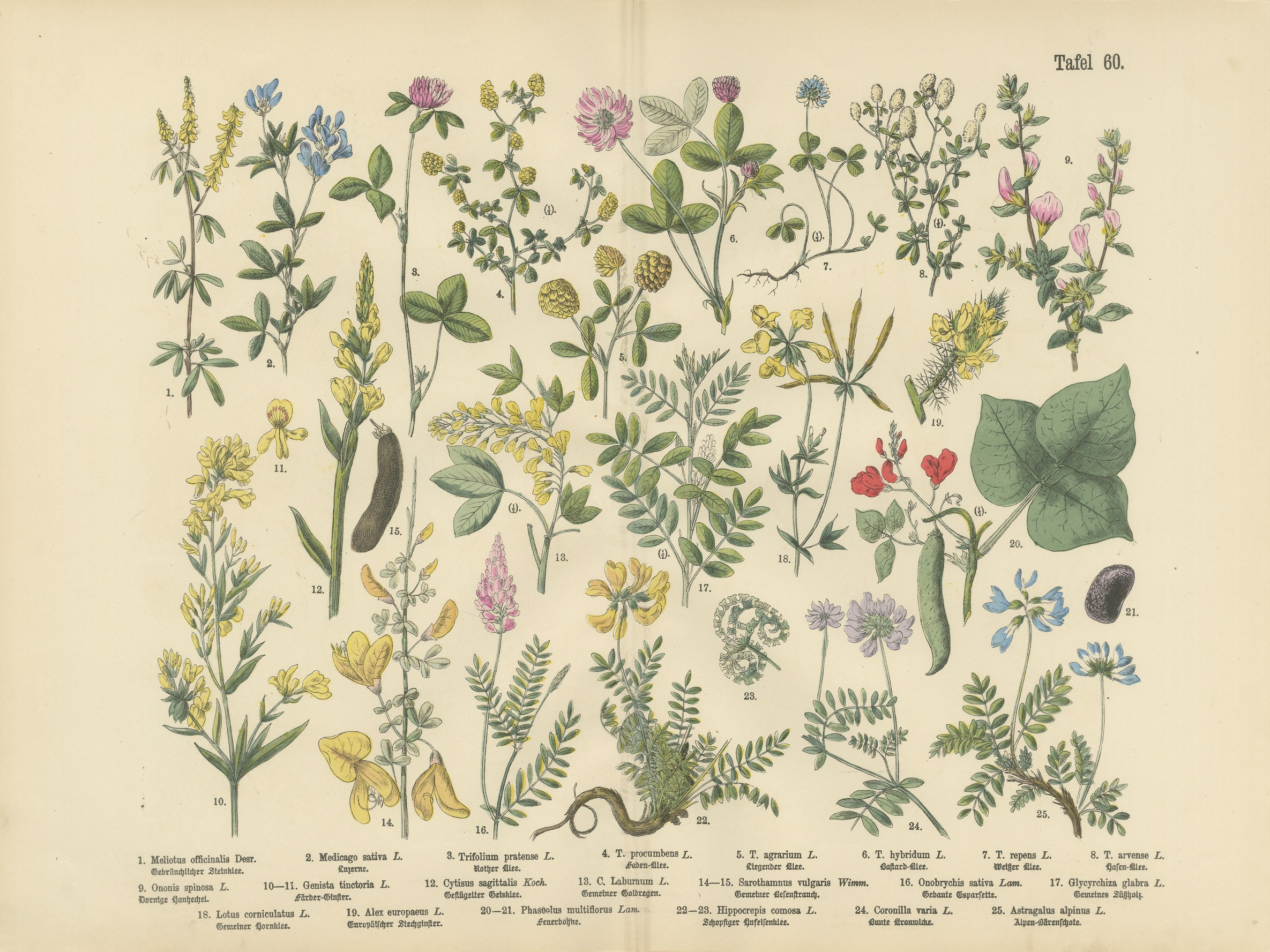
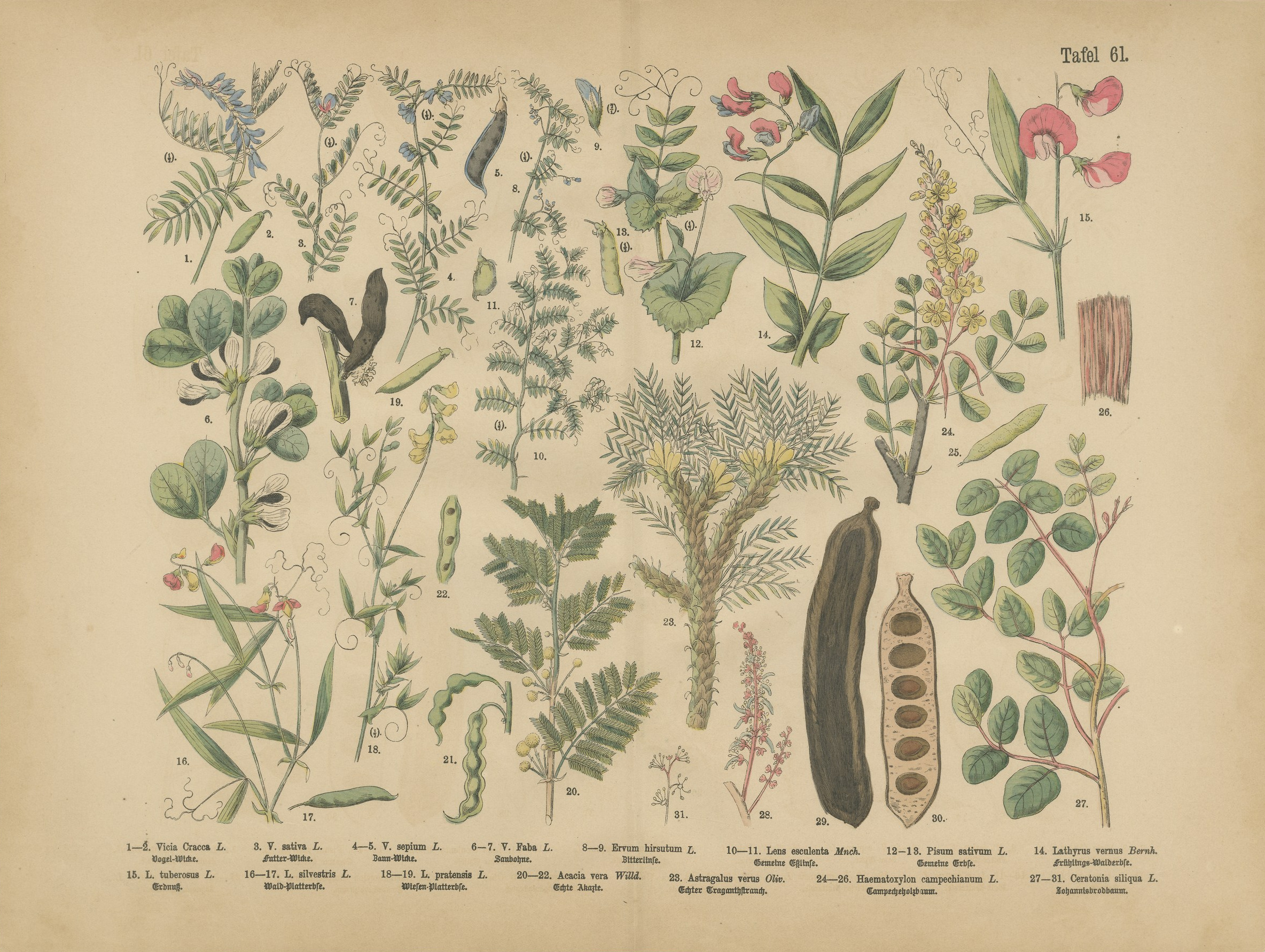
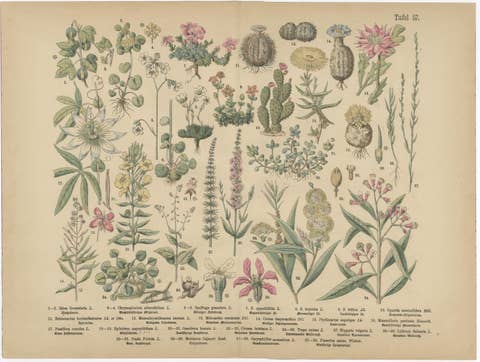
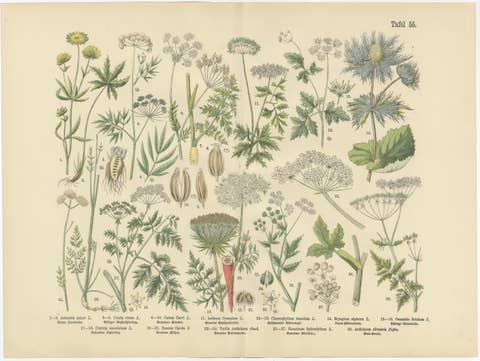
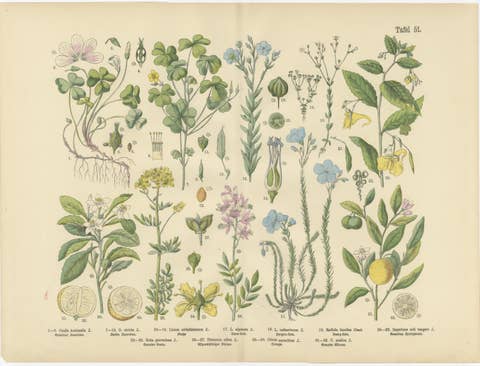
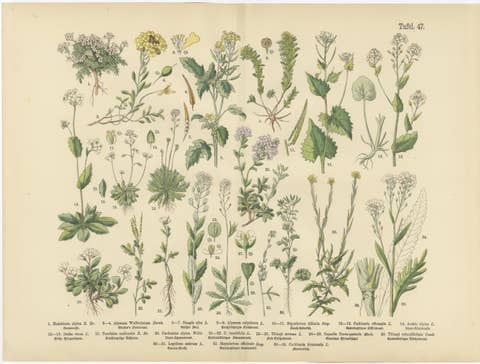
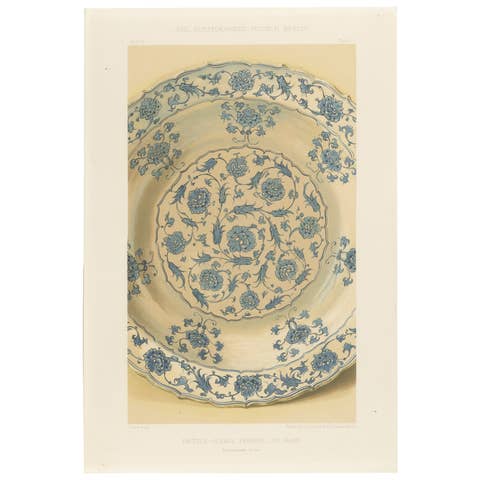
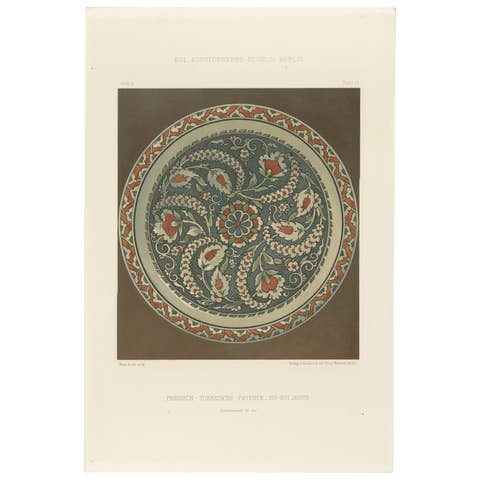
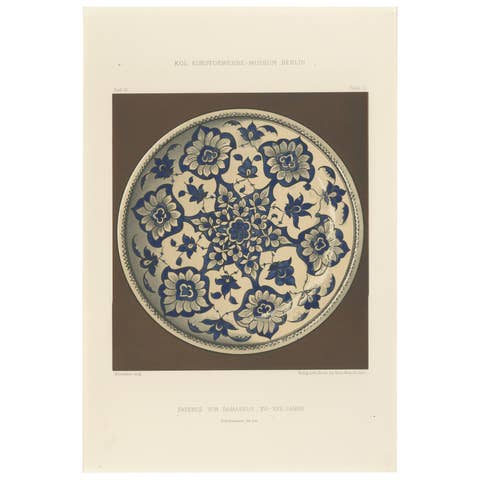
A set of three original antique German botanical chromolithographs. They are three original sheets sold together, and the set is never split. The three plates are Tafel 59, the rose family, with the tamarind and the indigo plant added at the right; Tafel 60, the pea family; Tafel 61, the pea family and the tropical pod bearing trees of commerce. They were printed in color in Stuttgart about 1890.
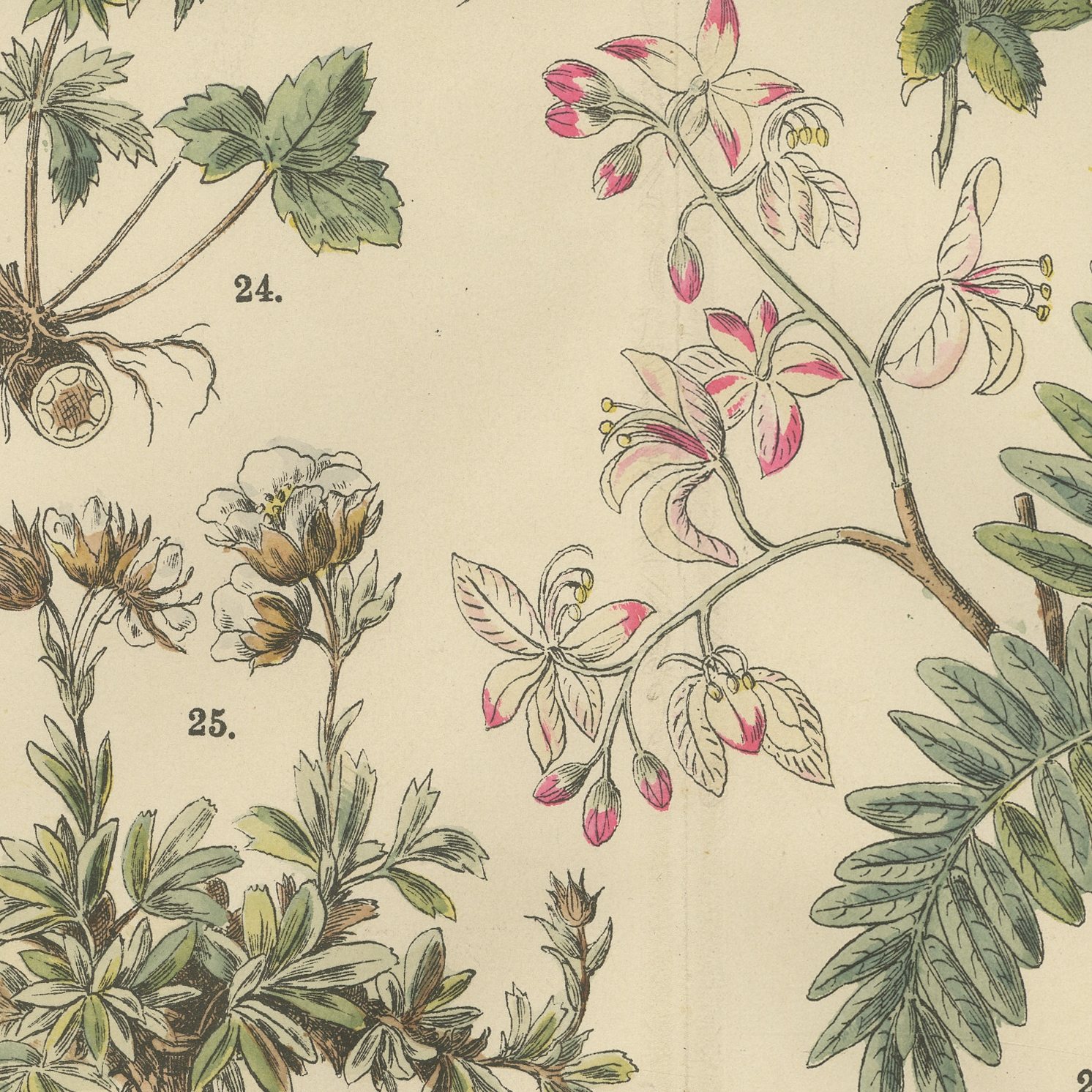
All three plates come from a German botanical atlas published in Stuttgart about 1890, a folio work in which each numbered plate gathers a whole plant family and prints the Latin name of every figure with its German name beneath. Each sheet is numbered as a Tafel at the upper right and carries a caption band in which every figure is numbered and named in Latin with the German name beneath. No artist, engraver, printer or publisher line is printed on any of them, which is normal for plates taken from a bound atlas of this kind. The printing is lithographic throughout, a fine black key line with crayon hatching and flat color laid from separate stones, with no halftone screen anywhere.
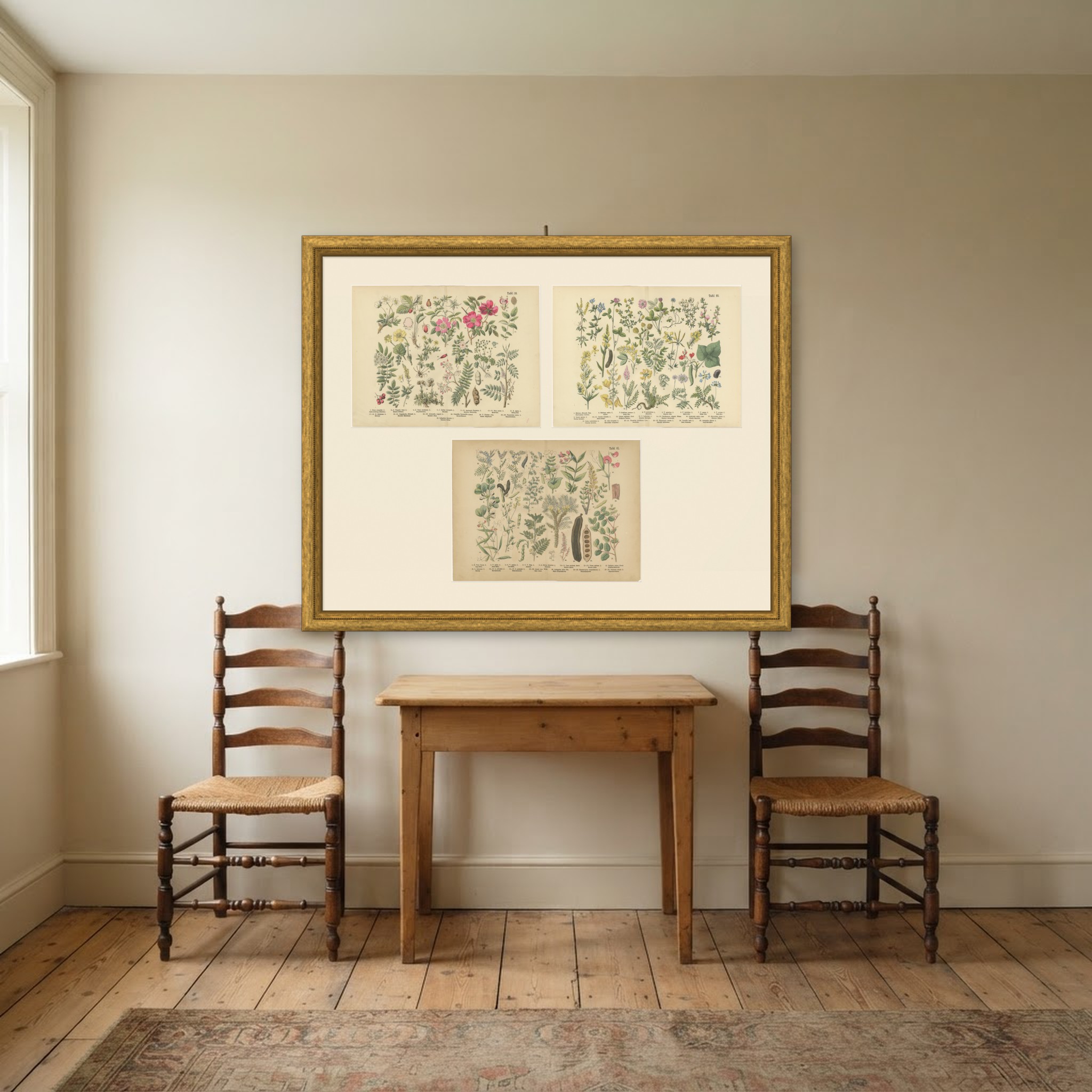
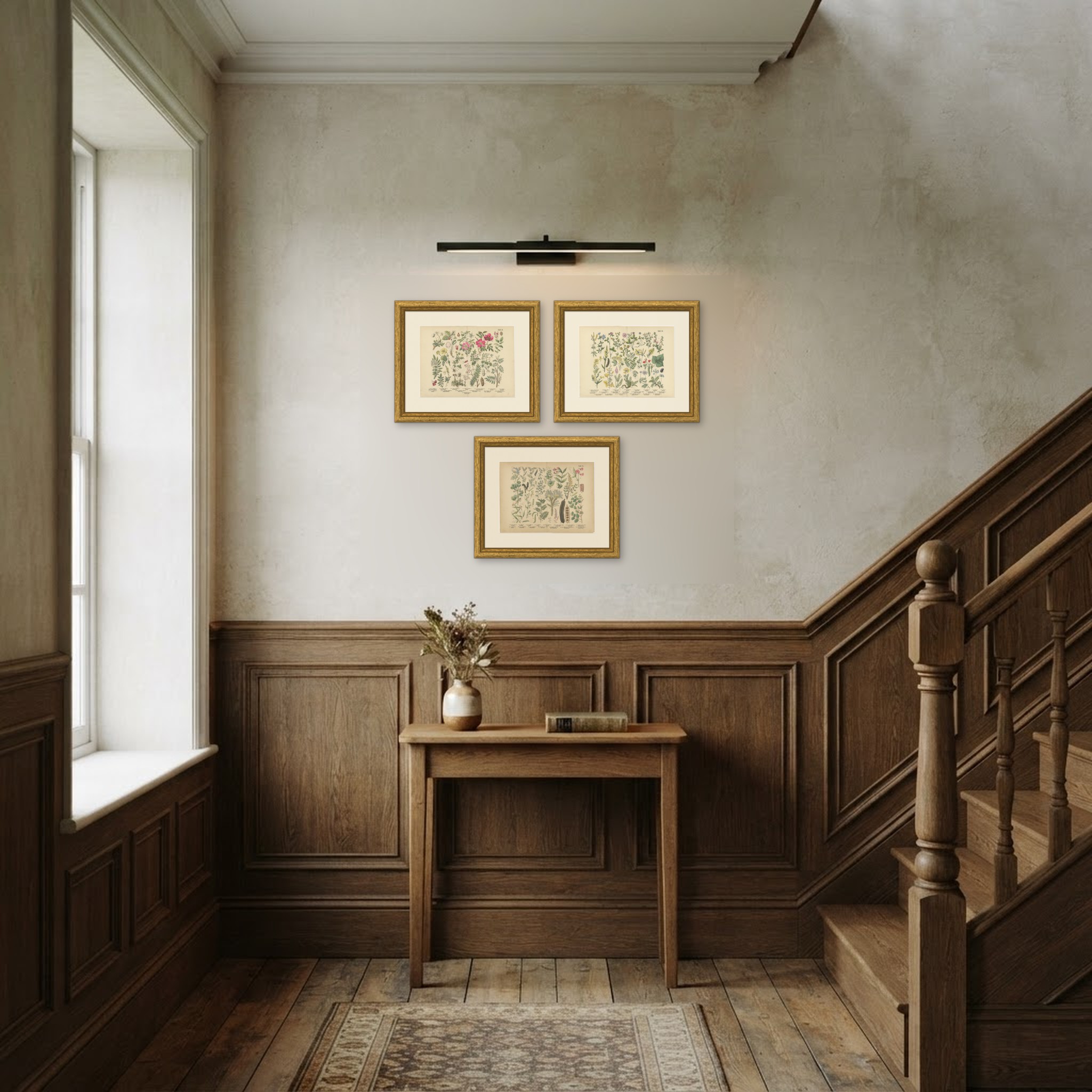
Sold as a set these sheets do something a single plate cannot: they run consecutively through the same part of the plant kingdom, so the grouping on the wall is the same grouping the botanist made. They are the same size, the same orientation and the same palette, so one frame specification covers all of them. A run of three in matching frames above a sideboard, along a hallway or over a dining table is a simple arrangement that works in most rooms.
Light uneven toning, browner toward the edges. Handling soiling along the edges of all three sheets. Light foxing in the margins of two of the three sheets. Slight wear at the corners of all three sheets.
These are original antique plates, not modern reproductions. This item is sold unframed. Any framed or interior images are shown for presentation and inspiration only, unless the listing explicitly states that the item is sold framed.