About this sheet
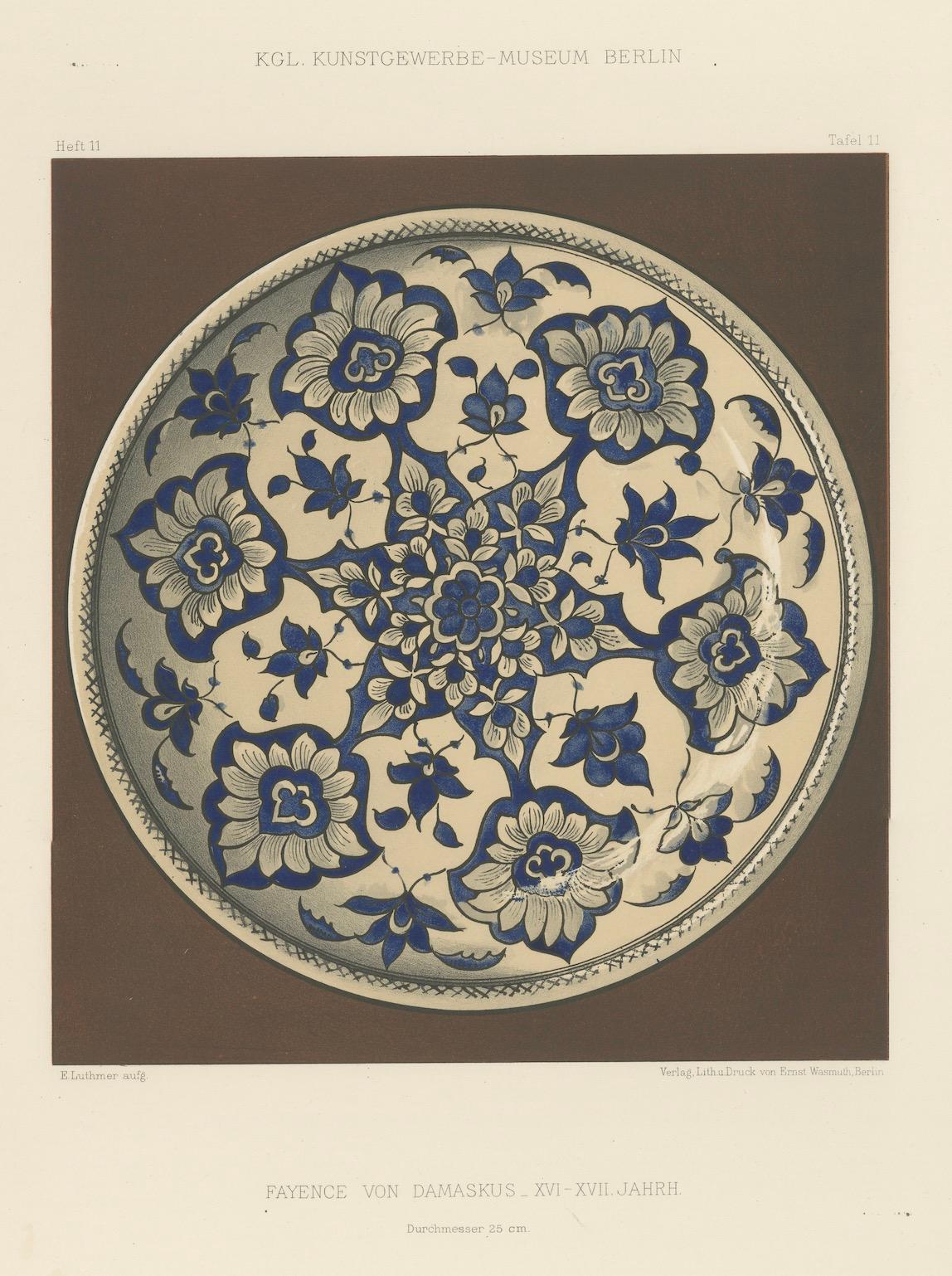
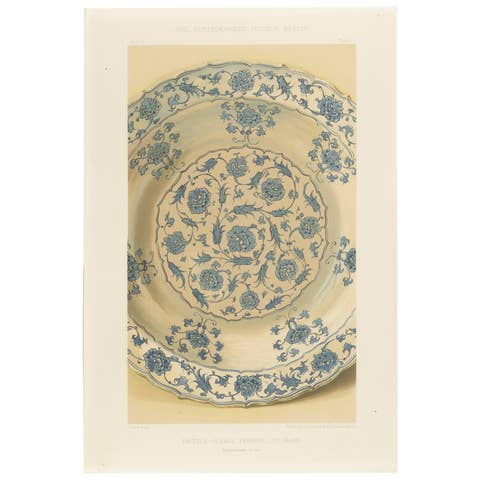
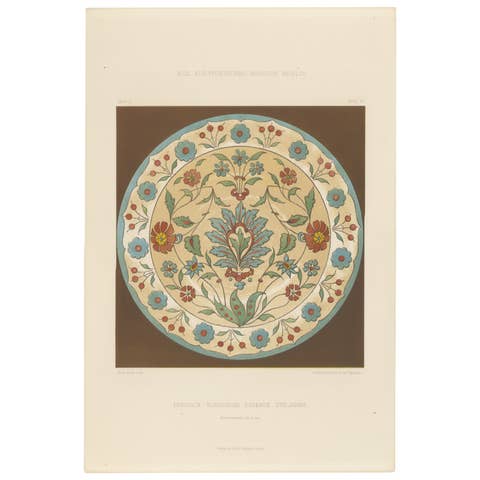
Damascus Faience Plate with Blue Floral Ornament – Julius Lessing, Berlin 1890
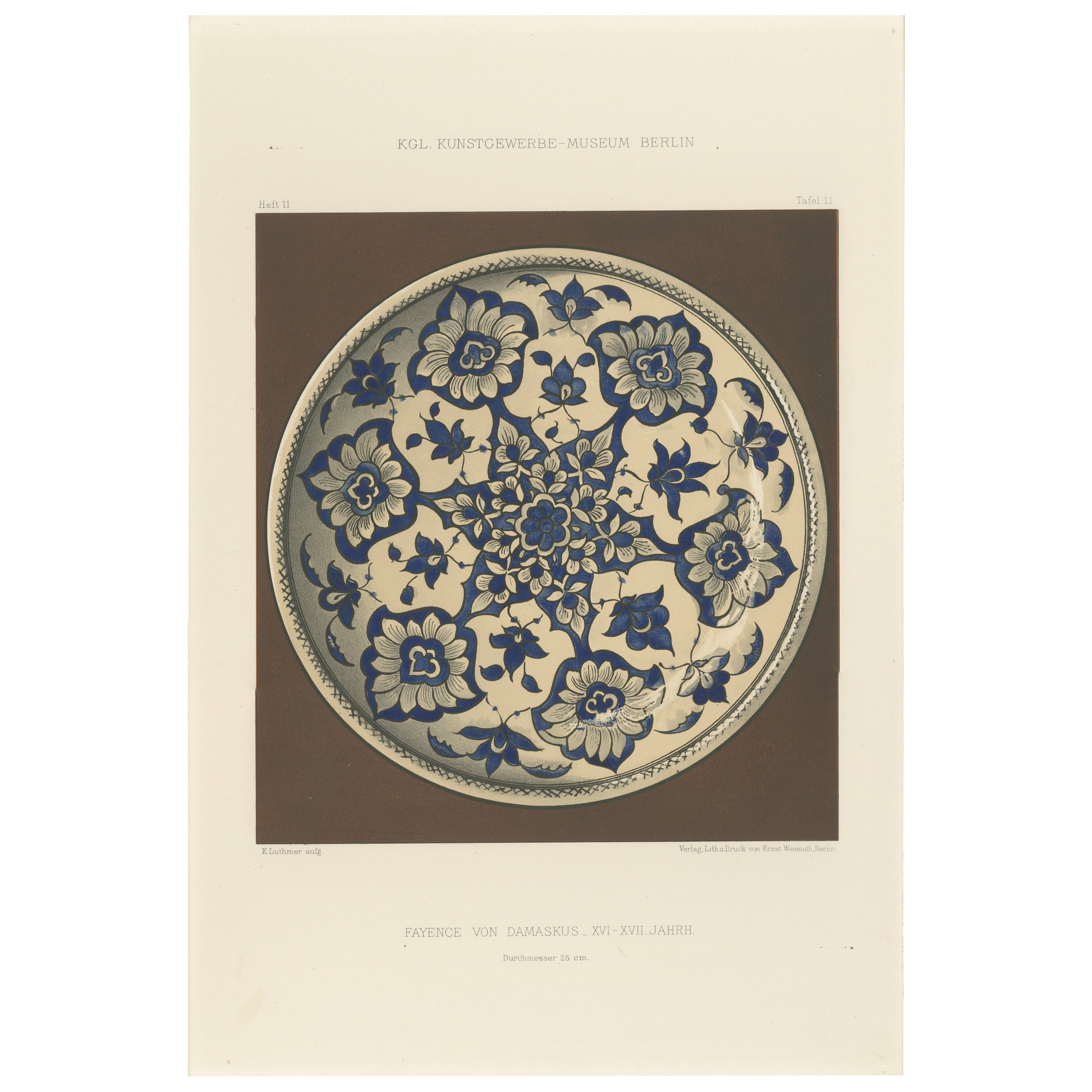
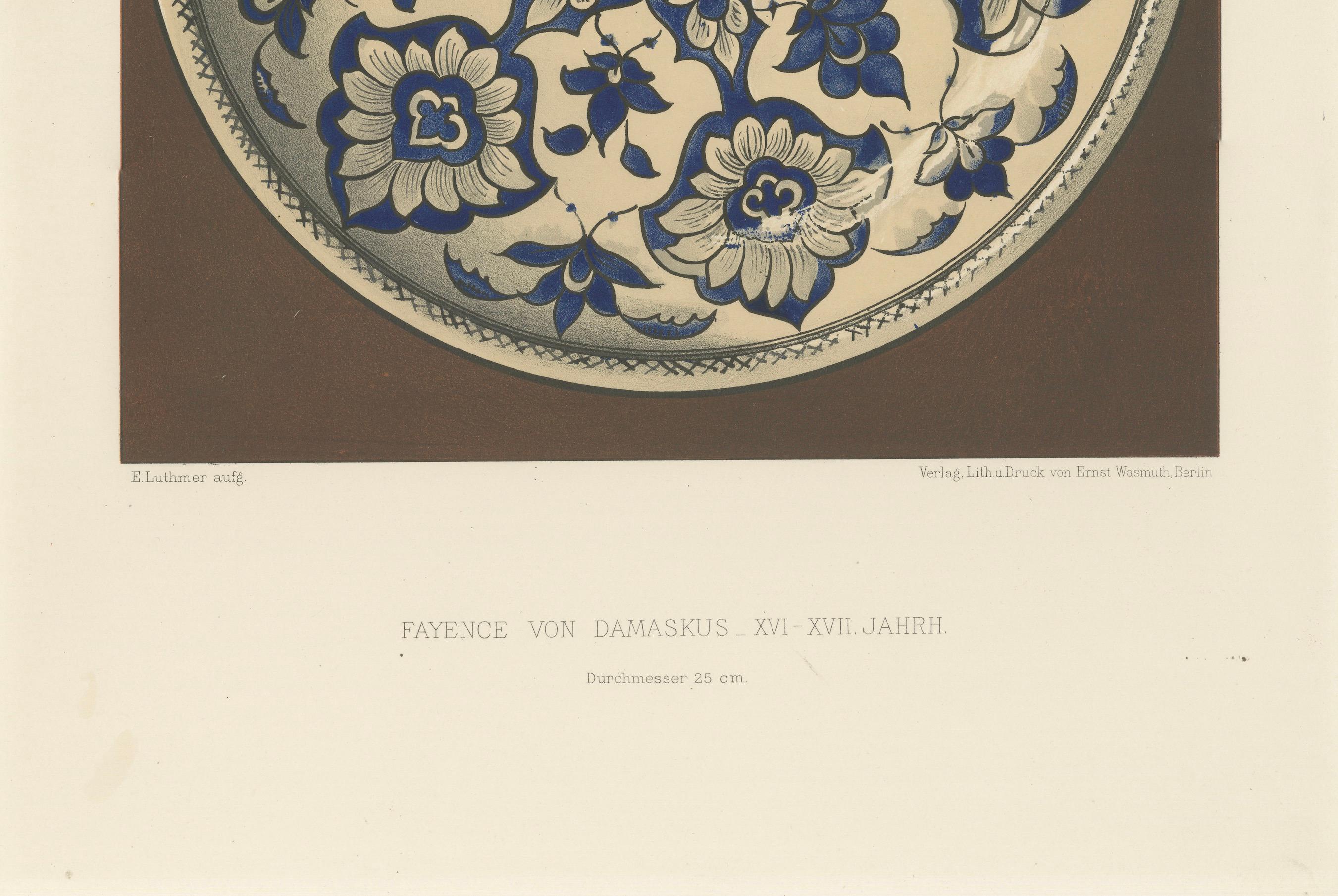
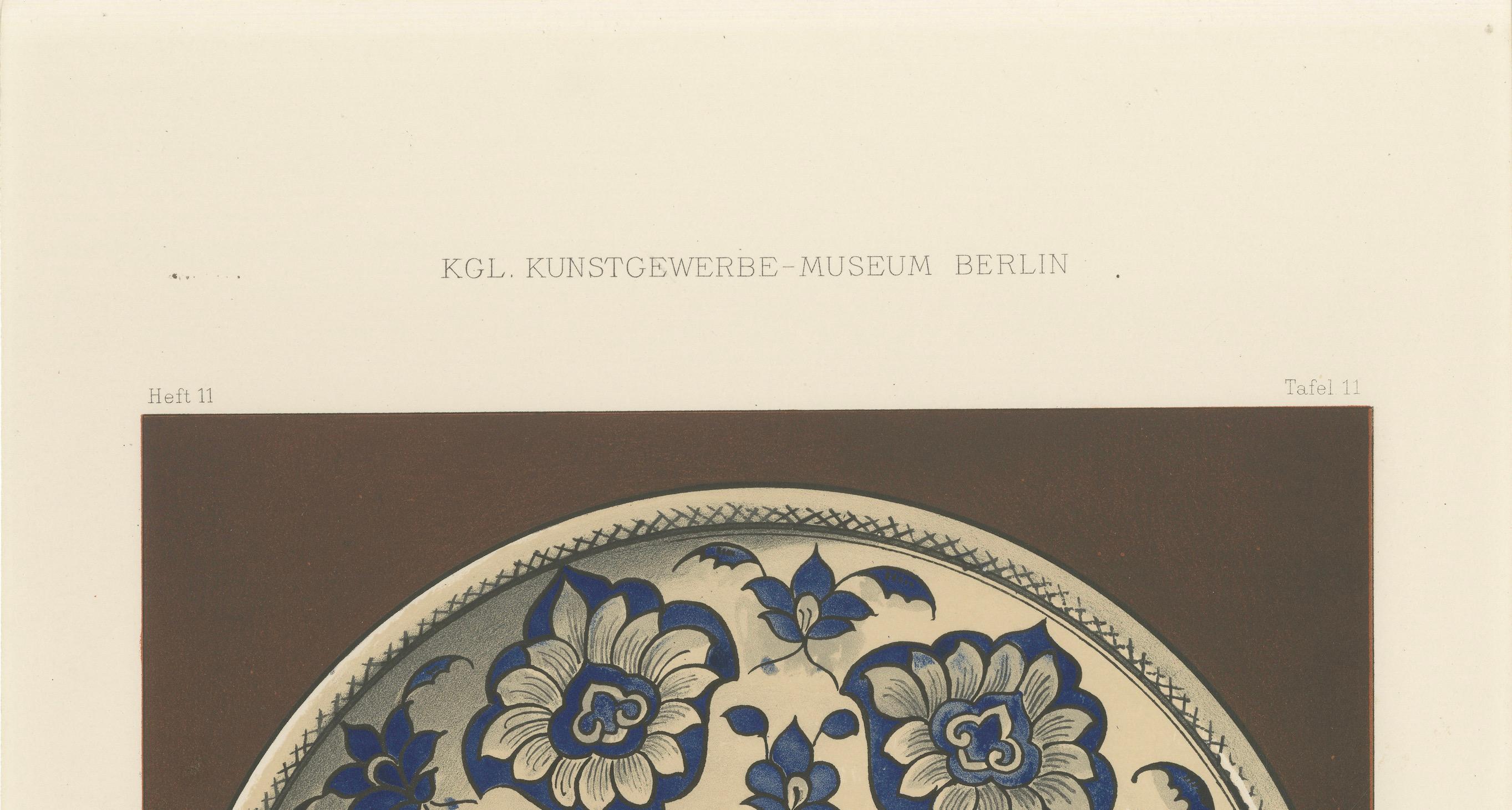
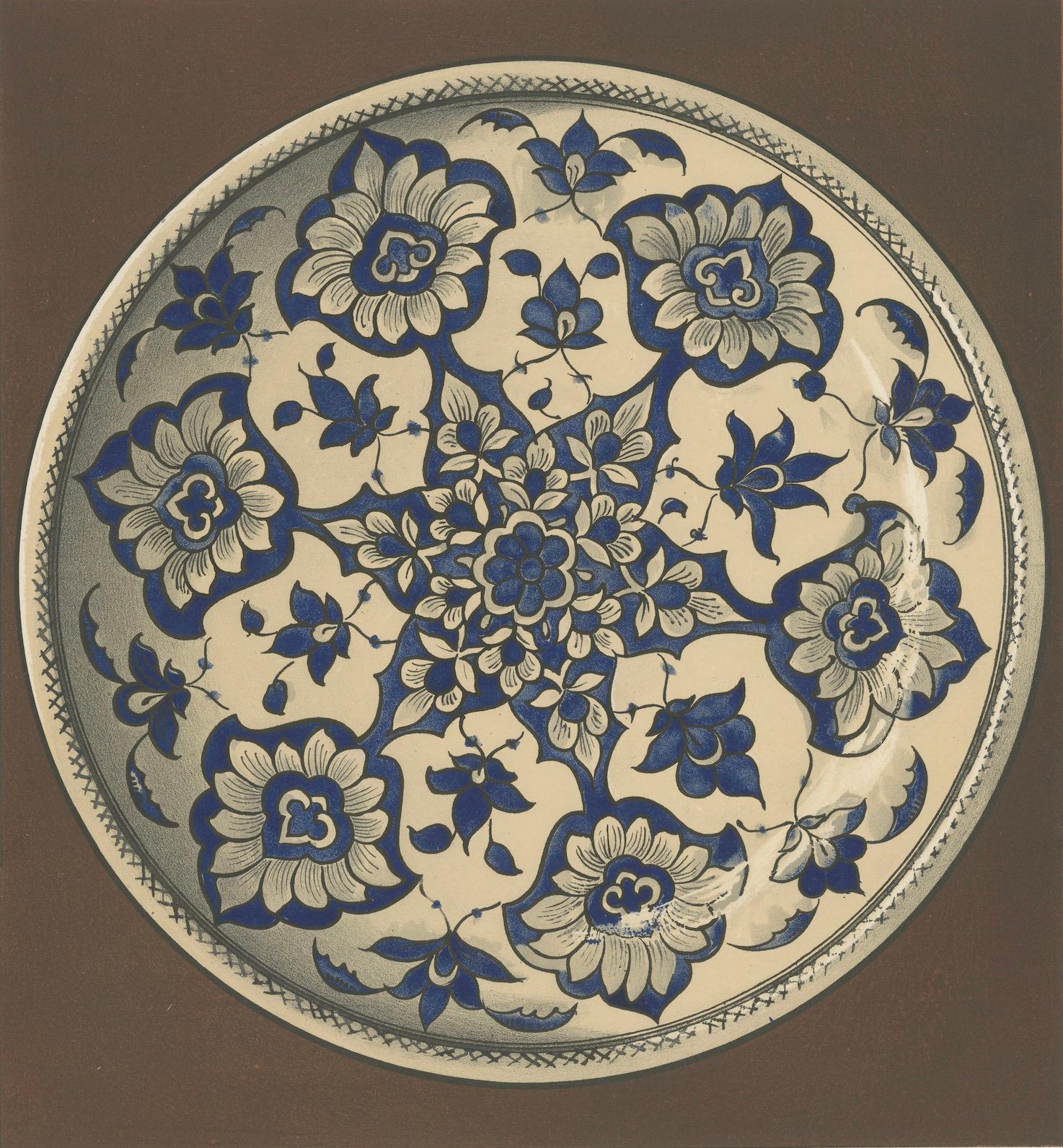
A striking chromolithograph from Julius Lessing’s Persisch-Türkische Fayencen (Persian-Turkish Faience), published by Ernst Wasmuth in Berlin, 1890, as part of Vorbilder-Hefte aus dem Königlichen Kunstgewerbe-Museum, Heft 11. This plate (Tafel 11) reproduces an exceptional example of Syrian faience from Damascus, dating from the 16th–17th century, housed in the Royal Museum of Decorative Arts in Berlin (Kgl. Kunstgewerbe-Museum Berlin).
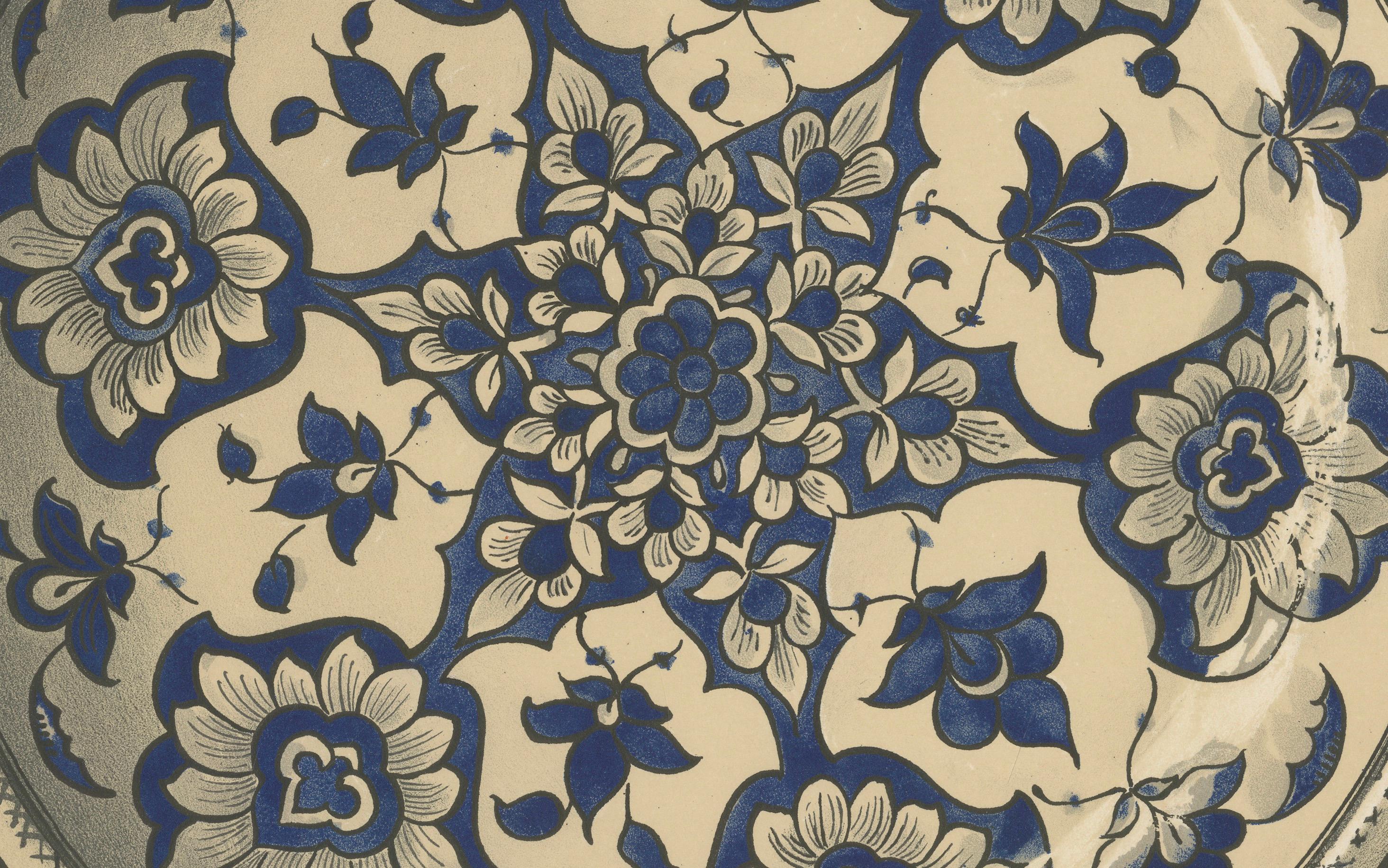
The print presents a sophisticated example of underglaze-painted faience, distinguished by its deep cobalt-blue palette on an ivory background. The symmetrical composition centers on a radiant floral medallion, surrounded by large stylized blossoms, leaves, and tendrils arranged in rhythmic harmony. The use of curving stems and balanced intervals reveals the refined aesthetics of Ottoman-period Damascus ceramics, which merged Persian and Anatolian design influences with a distinctive Levantine delicacy.
Damascus faience was celebrated for its luminous cobalt and turquoise tones, applied over a slightly crackled glaze, and for the crisp precision of its floral motifs. This plate exemplifies the city’s golden period of ceramic production, when craftsmen adapted the motifs of Iznik pottery to their own local tradition, resulting in works admired throughout the Islamic world.
Drawn by E. Luthmer and printed by *Verlag Lith. Druck von Ernst Wasmuth, Berlin*, this lithograph captures the plate’s elegant contrasts and fine craftsmanship in exquisite detail. Under Julius Lessing’s direction, the *Vorbilder-Hefte* series documented masterworks from the world’s great artistic traditions, offering visual resources for 19th-century designers and collectors seeking inspiration in the timeless beauty of historical ornament.
Condition report:
Excellent condition with full margins and vibrant coloration. Slight paper toning around the outer edges consistent with age, otherwise pristine and well-preserved.
Framing tips:
Ideal for display in a cool-toned mat such as ivory or soft gray, paired with a black or brushed silver frame to enhance the deep cobalt hues. This plate pairs elegantly with other Damascus and Iznik designs from the same series.
Technique: Chromolithograph
Maker: Julius Lessing, Berlin, 1890