About this sheet
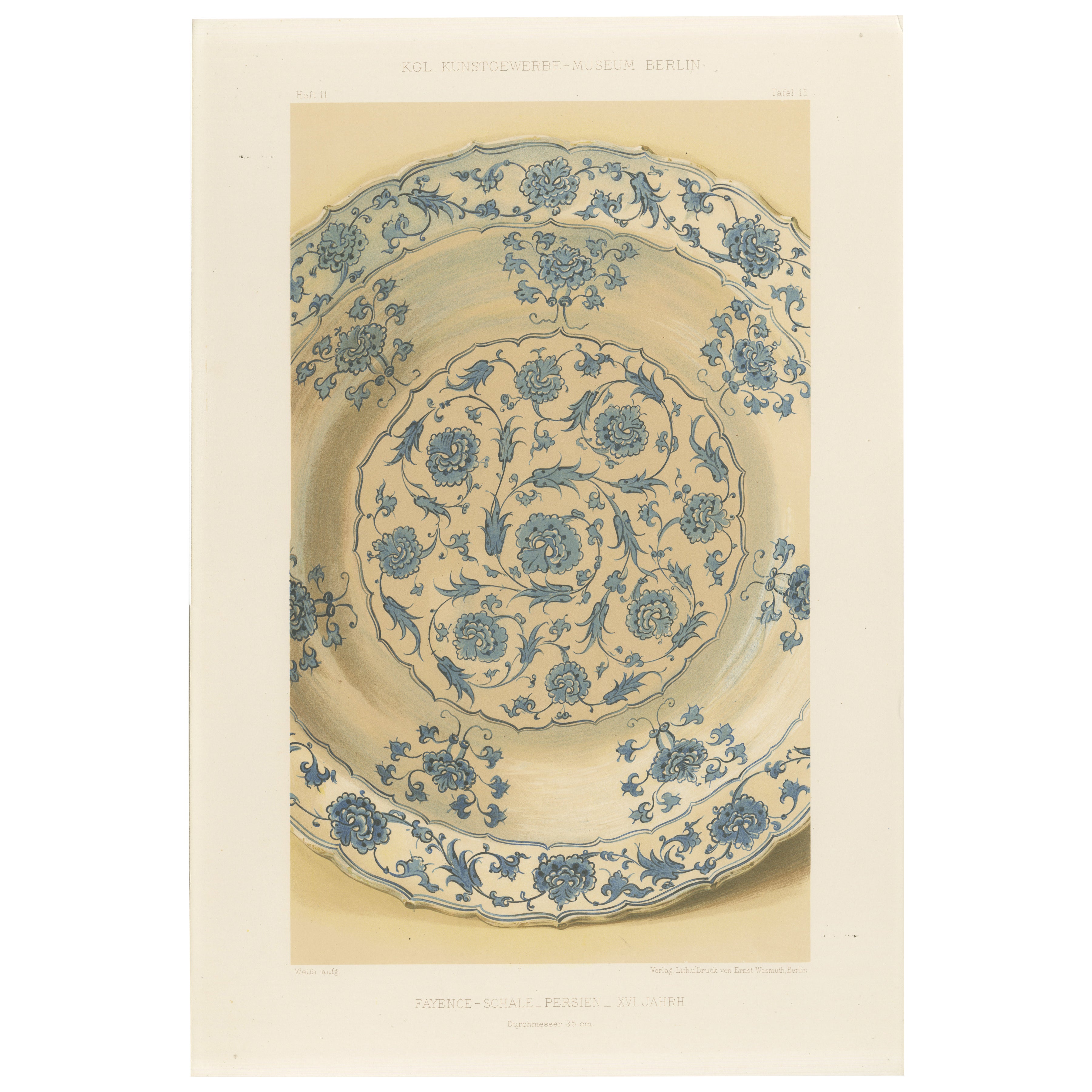
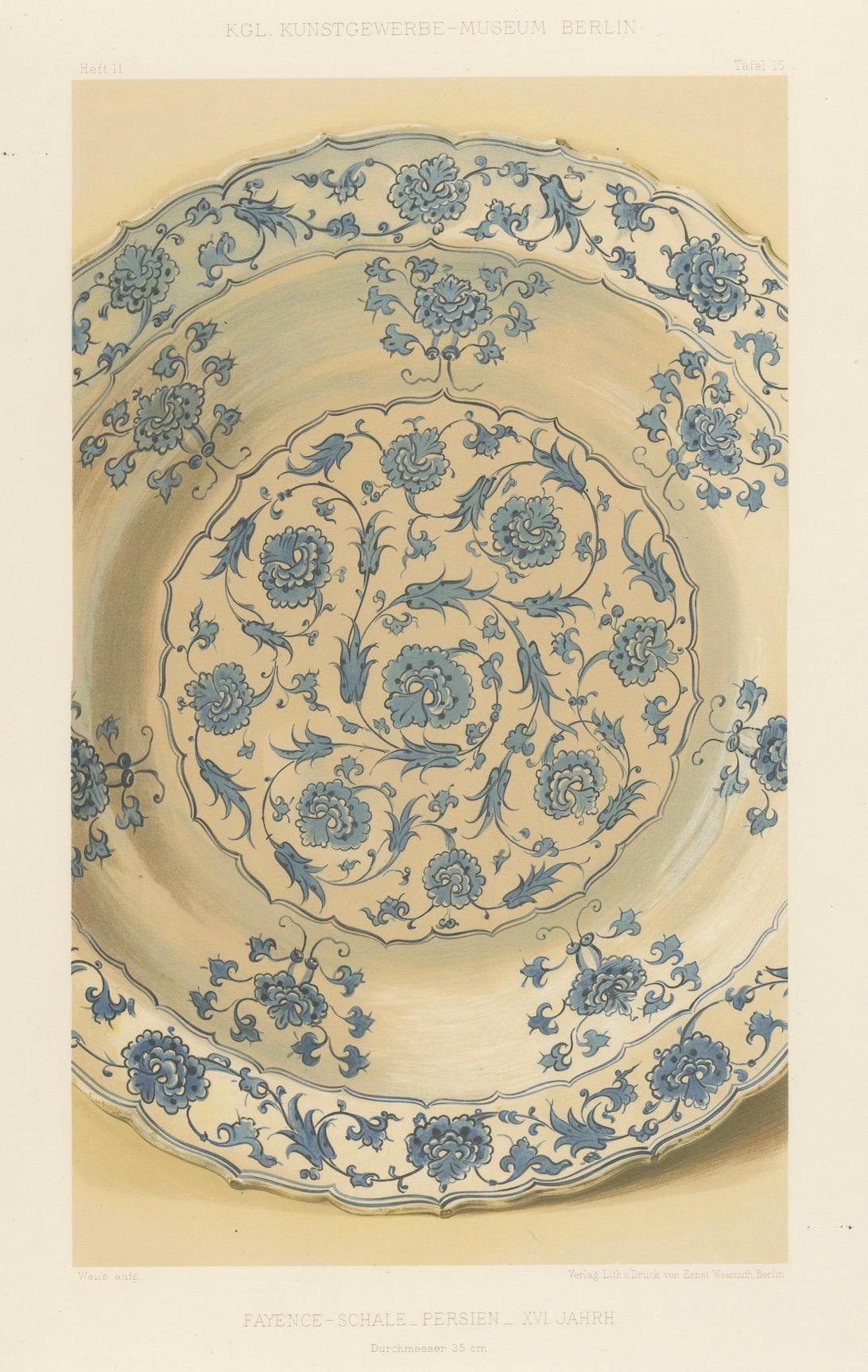
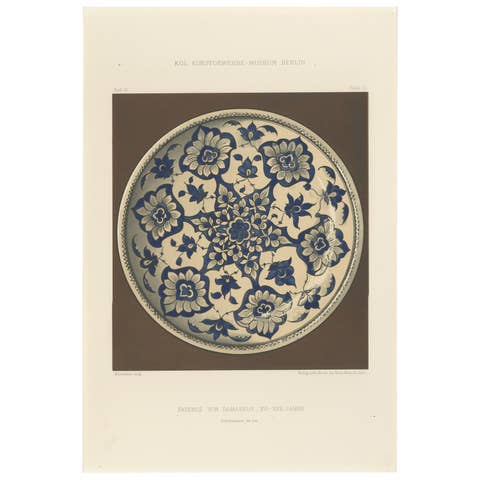
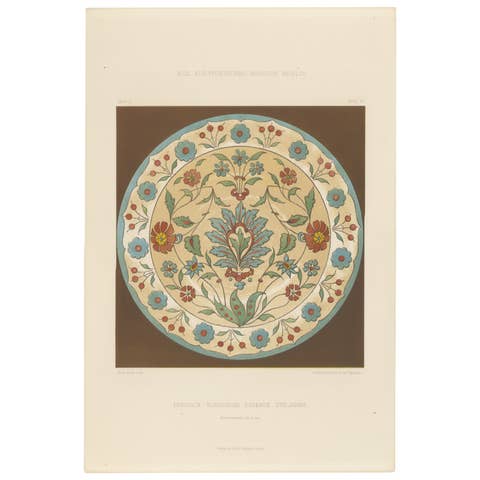
Persian Faience Dish with Blue Floral Ornamentation – Julius Lessing, Berlin 1890
A finely detailed chromolithograph from Persisch-Türkische Fayencen (Persian-Turkish Faience), published in Berlin by Ernst Wasmuth in 1890 as part of Vorbilder-Hefte aus dem Königlichen Kunstgewerbe-Museum, Heft 11. Edited by Julius Lessing, this remarkable series illustrated masterpieces from the Kgl. Kunstgewerbe-Museum Berlin (Royal Museum of Decorative Arts, Berlin).
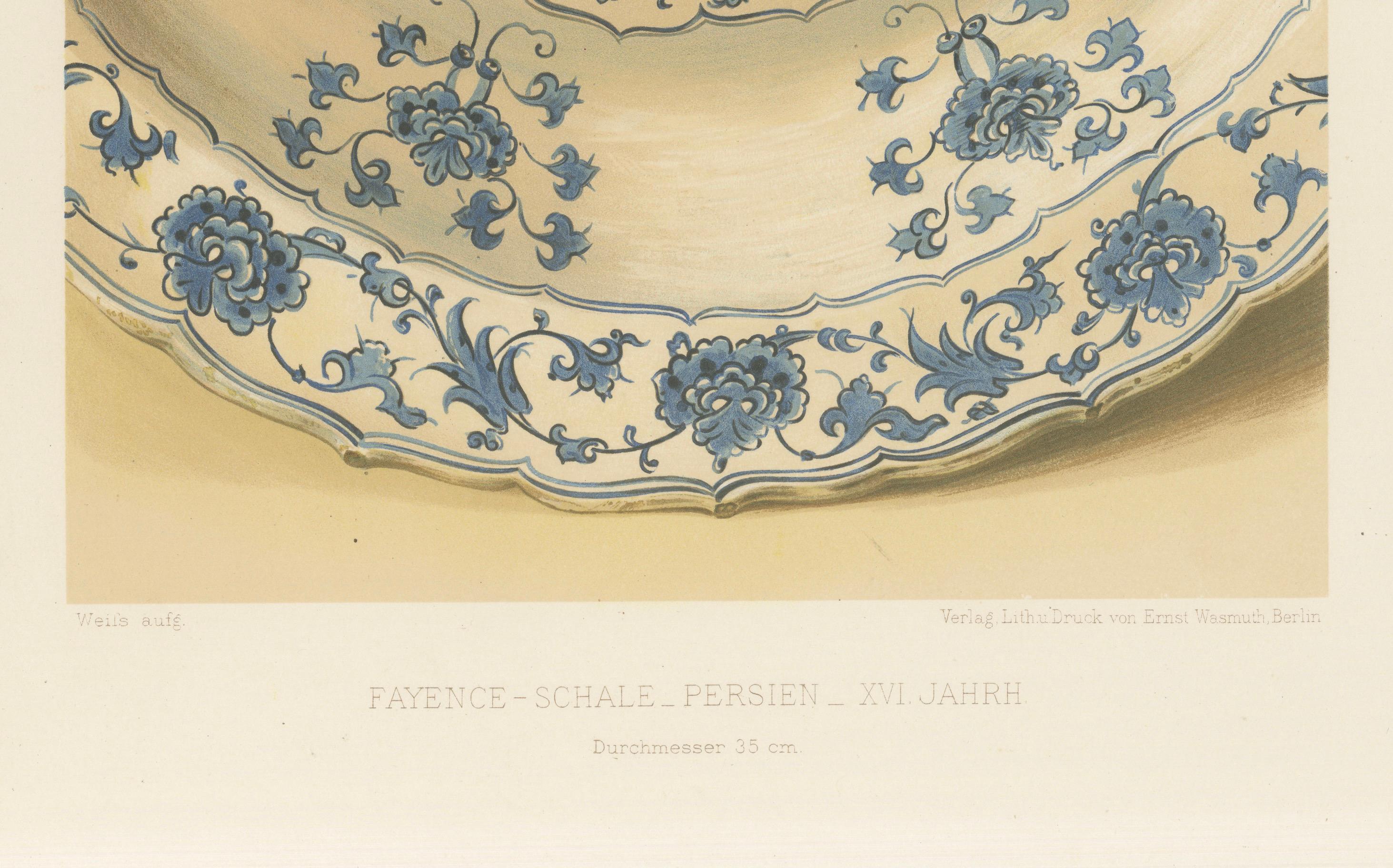
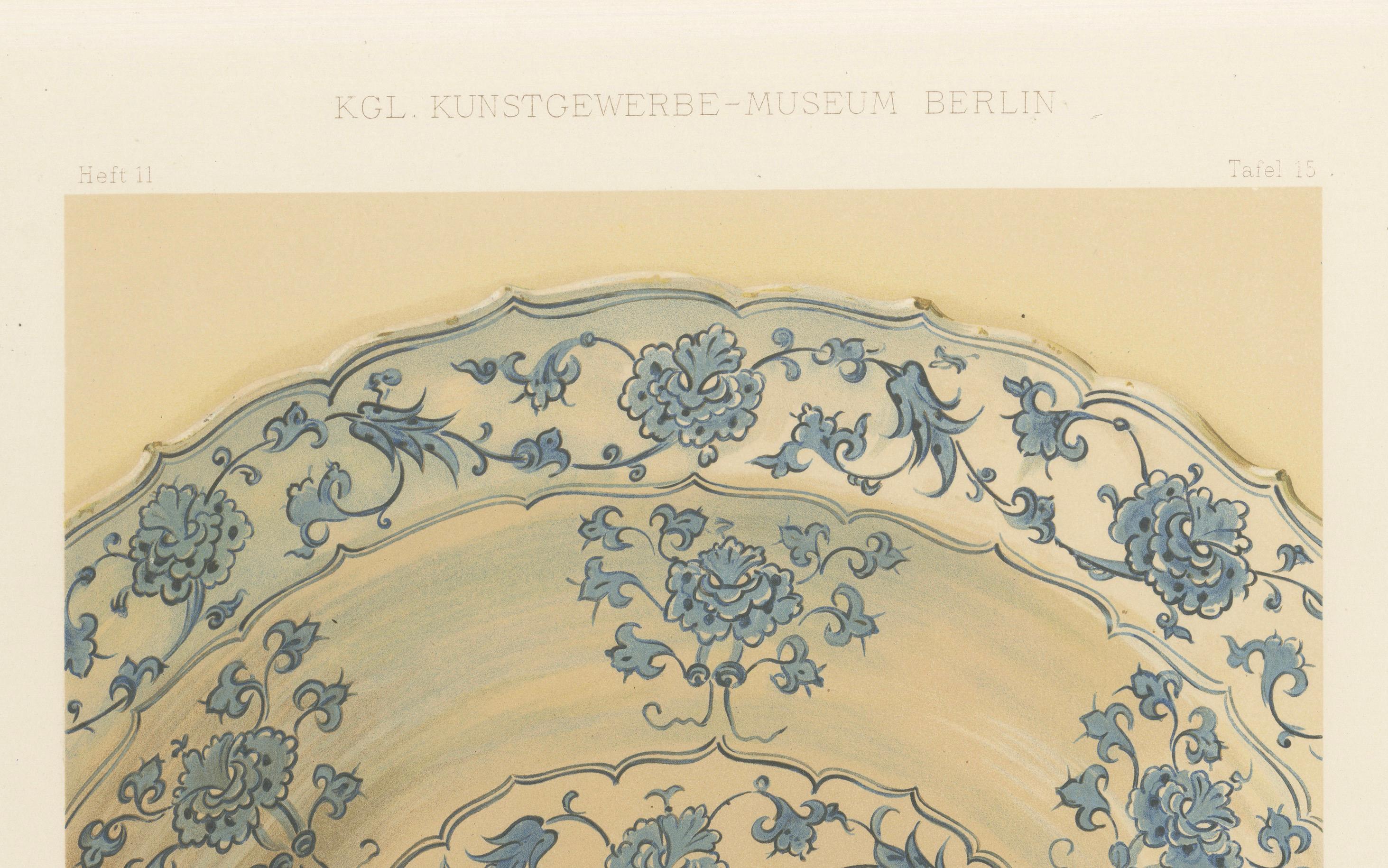
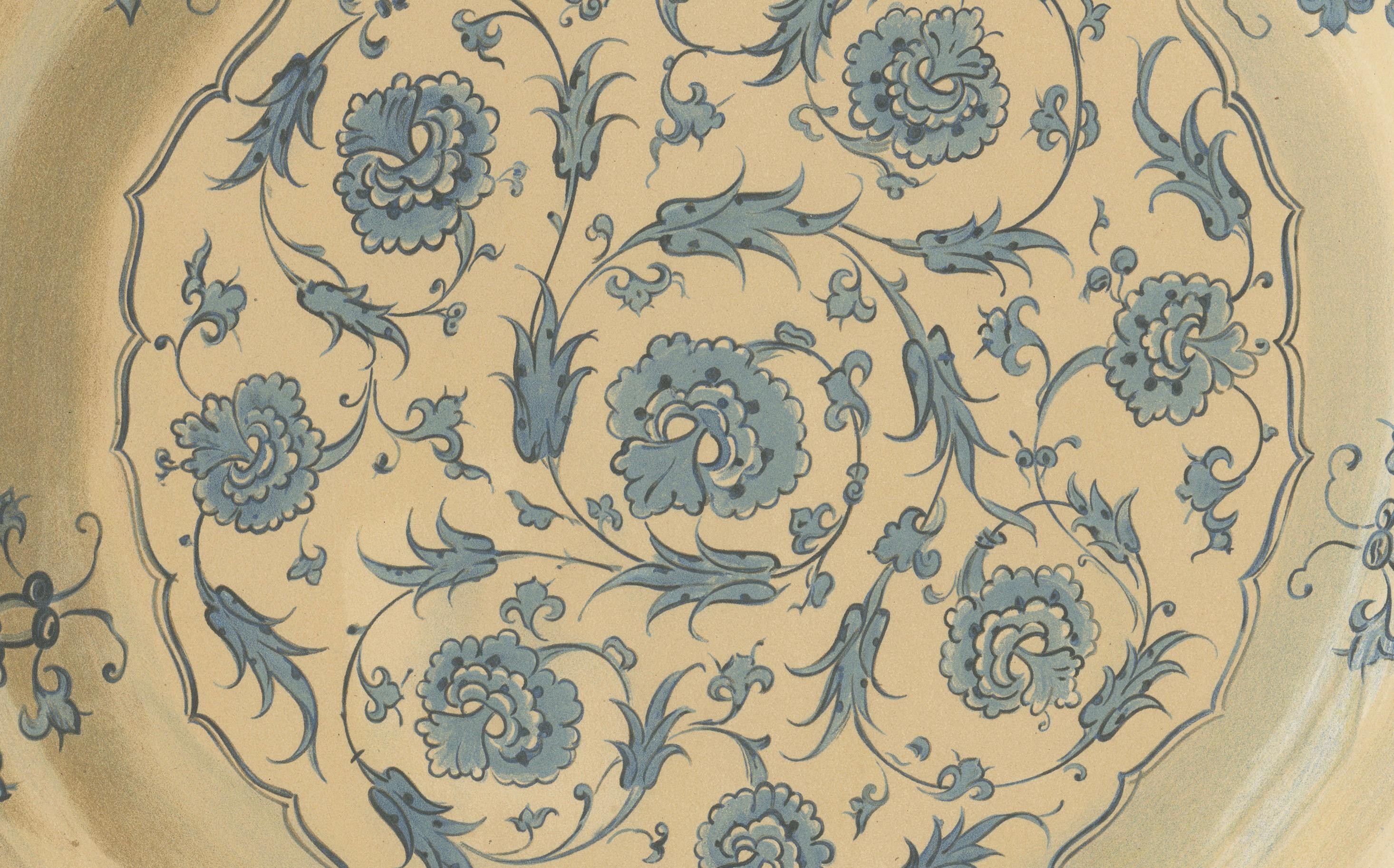
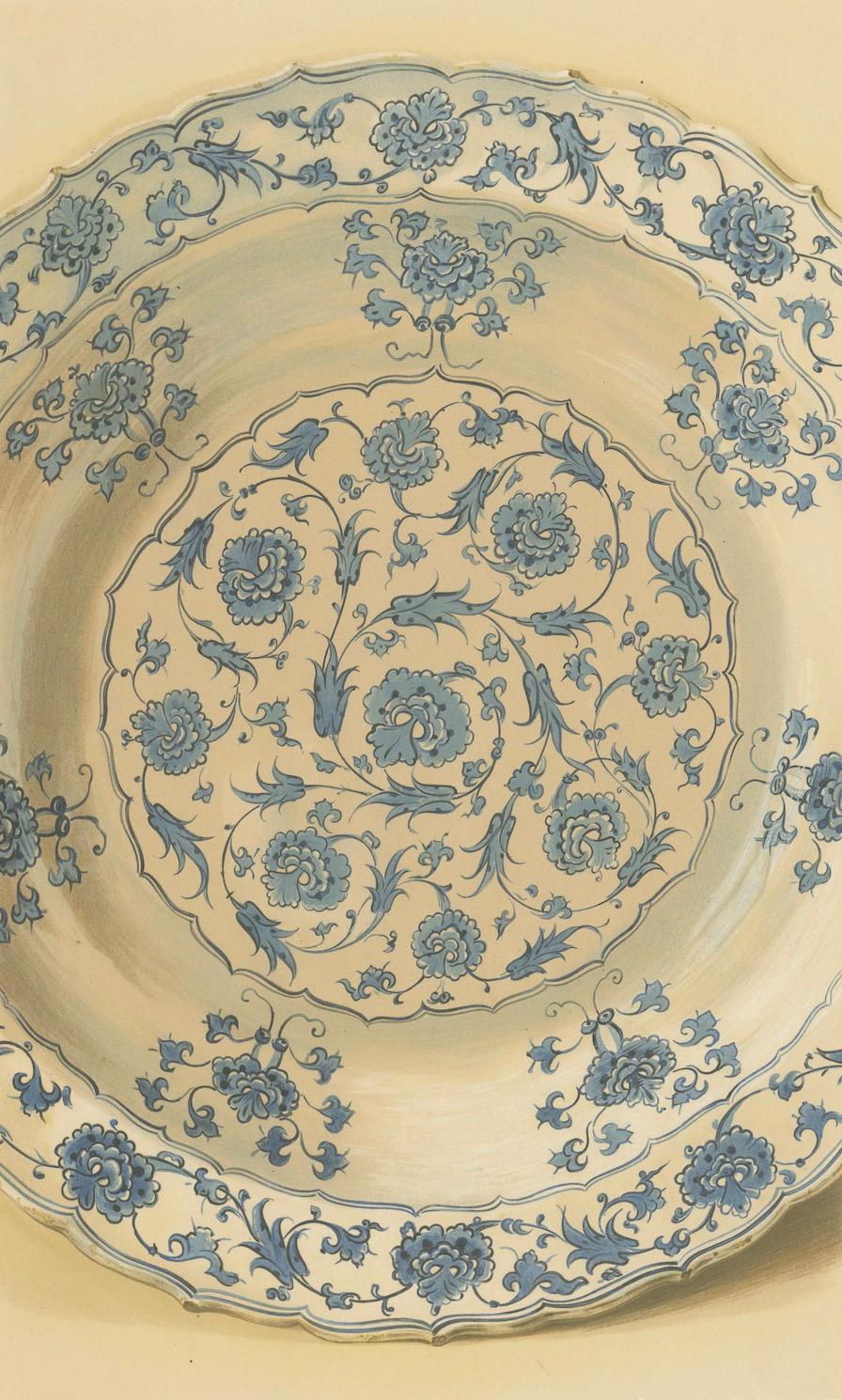
This plate (Tafel 15) represents a 16th-century Persian faience dish of exceptional refinement and balance. Measuring 35 cm in diameter, it displays a delicate underglaze blue floral decoration against a pale ivory ground. The ornamentation consists of graceful scrolling tendrils interwoven with stylized rosettes, peonies, and lotus blossoms, all rendered in a harmonious rhythm typical of Safavid-period ceramics. The floral pattern radiates elegantly from a central rosette medallion, framed by a gently scalloped rim with a border of continuous blossoms.
This piece reflects the influence of Chinese blue-and-white porcelain, which inspired Persian potters to create their own distinctive interpretations using cobalt oxide decoration beneath a transparent glaze. Such works were produced in Kashan and later in Isfahan, celebrated centers of Safavid ceramic artistry. The lightness of the floral tracery and subtle shading in the glaze give this work a serene, almost ethereal quality—an ideal blend of craftsmanship and spiritual symbolism.
Drawn by Wechs and printed by Verlag Lith. Druck von Ernst Wasmuth, Berlin, this lithograph exemplifies the late 19th-century passion for Islamic decorative art, which profoundly influenced the Art Nouveau and Arts and Crafts movements.
Condition report:
Excellent preservation, with strong color and crisp detail. Slight marginal toning and faint age marks consistent with its 19th-century origin. Clean verso, full margins.
Framing tips:
This composition pairs beautifully with other blue-and-white designs. Ideal for a classic or minimalist frame in light wood, ivory, or brushed silver to emphasize its calm, refined color palette.
Technique: Chromolithograph
Maker: Julius Lessing, Berlin, 1890