Persian-Turkish Faience Plate with Floral Medallion – J. Lessing, Berlin 1890
€ 340
One of a kind: this is the sheet in the photographs. Ships from Langweer, the Netherlands.
Date
1890
Sheet size
49 × 33 cm (19.3 × 13.0 in)
Condition
Good
Reference
BG-14139-10
Condition
Excellent condition with strong, unfaded colors and wide margins. Slight toning to the outer edges, consistent with age. No tears or stains within the image area.
About this sheet
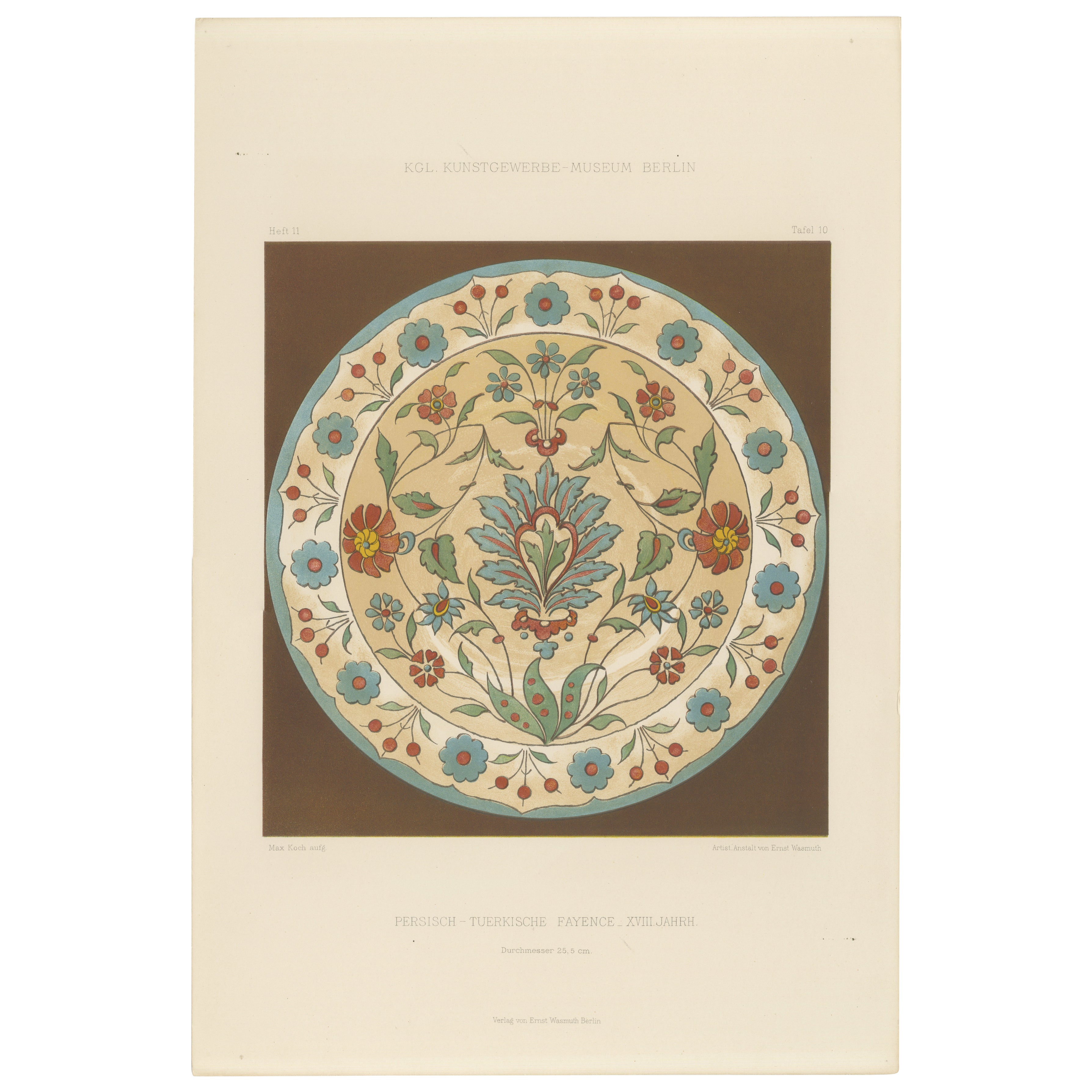
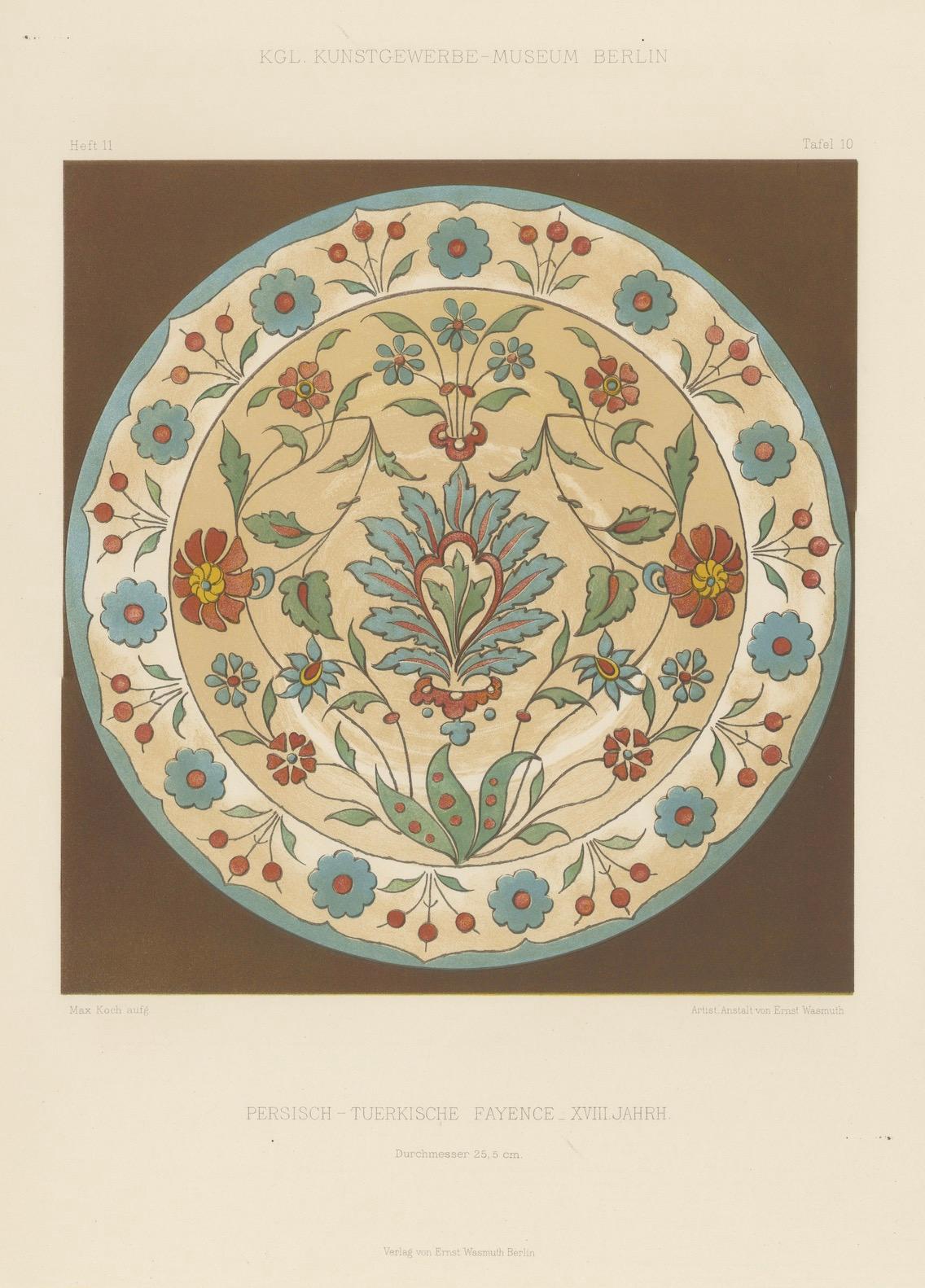
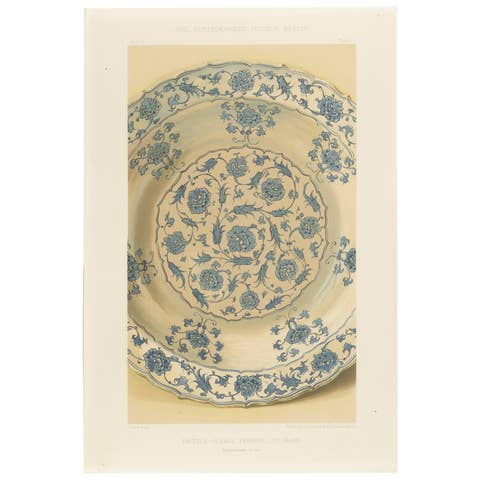
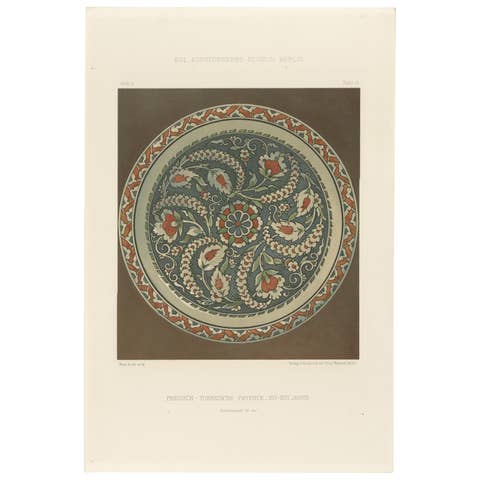
Persian-Turkish Faience Plate with Floral Medallion – Julius Lessing, Berlin 1890 A refined chromolithograph from Persisch-Türkische Fayencen (Persian-Turkish Faience), published by Ernst Wasmuth, Berlin, in 1890 as part of Vorbilder-Hefte aus dem Königlichen Kunstgewerbe-Museum, Heft 11, under the editorship of Julius Lessing. This print (Tafel 10) depicts an 18th-century Persian-Turkish faience plate from the collection of the Royal Museum of Decorative Arts in Berlin (Kgl. Kunstgewerbe-Museum Berlin).
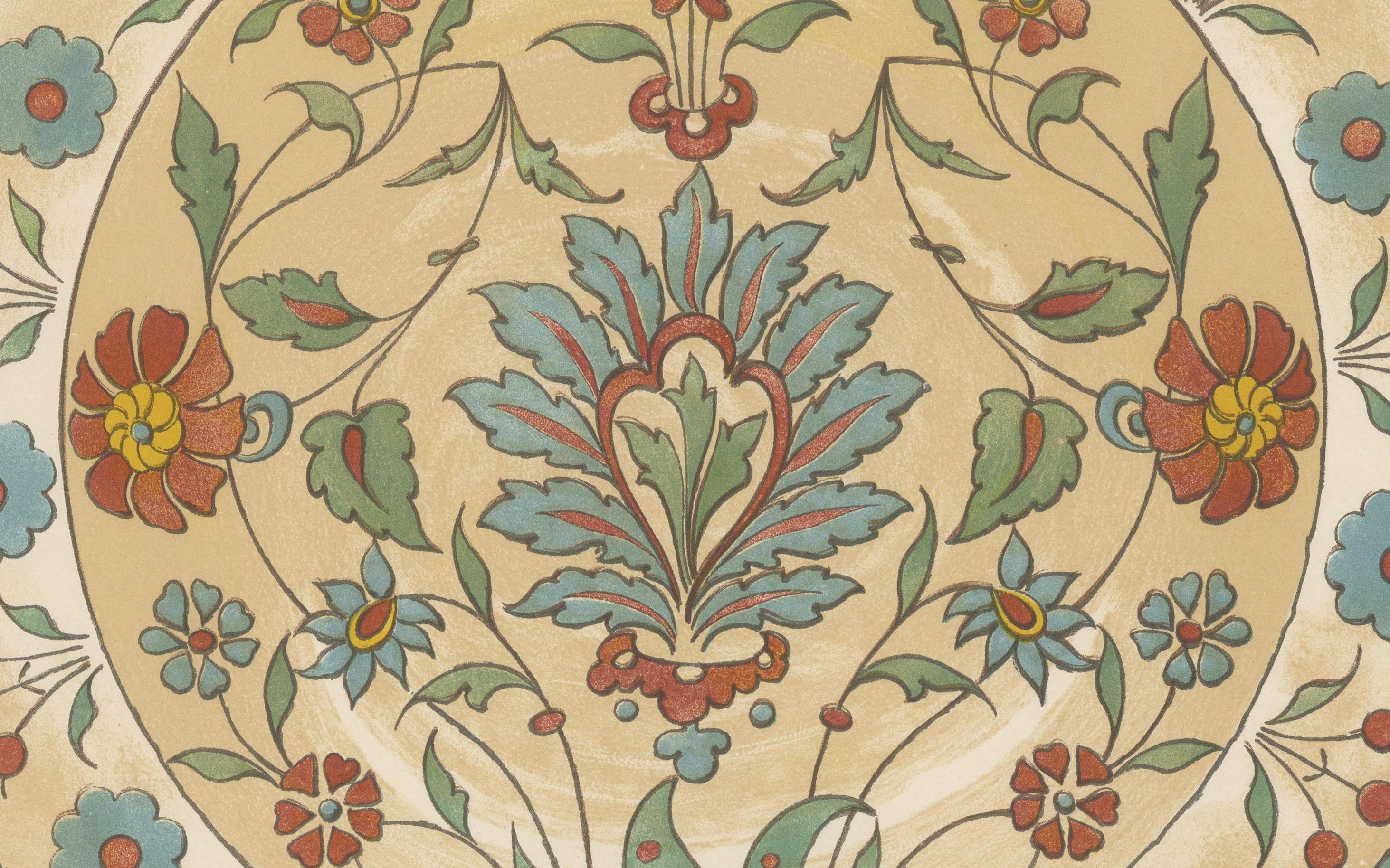
The plate features a beautifully stylized floral design centered on a symmetrical leaf and blossom medallion. Surrounding this are delicate branches bearing tulips, carnations, and rosettes — motifs deeply rooted in the decorative vocabulary of Ottoman ceramics. The border, adorned with alternating red and blue blossoms, completes the harmonious circular composition.
Executed in soft shades of turquoise, brick red, and celadon green on a warm ivory background, the design demonstrates the late Ottoman era’s graceful reinterpretation of classical Iznik ornamentation. While retaining Persian influence in the rhythm and symmetry of its layout, this piece reflects the lighter, more ornamental character of 18th-century faience production — an evolution from the bolder color schemes of the 16th and 17th centuries.
Drawn by Max Koch and printed by the *Artist. Anstalt von Ernst Wasmuth*, this lithograph exemplifies the exceptional quality and precision of the *Vorbilder-Hefte* series, which brought world art treasures to a broader public. Julius Lessing’s pioneering project preserved and shared the artistic traditions of Islamic and Oriental design, significantly influencing European decorative arts and architecture during the late 19th century.
Condition report: Excellent condition with strong, unfaded colors and wide margins. Slight toning to the outer edges, consistent with age. No tears or stains within the image area.
Framing tips: Ideal for framing with a cream or light beige mat and a gold or walnut frame to emphasize the warm palette of the plate. When displayed with other plates from the Persisch-Türkische Fayencen series, it forms a visually stunning ensemble.
Technique: Chromolithograph Maker: Julius Lessing, Berlin, 1890