About this sheet
New Zealand Botanical Fruit Studies – Set of Three Lithographs, 1890
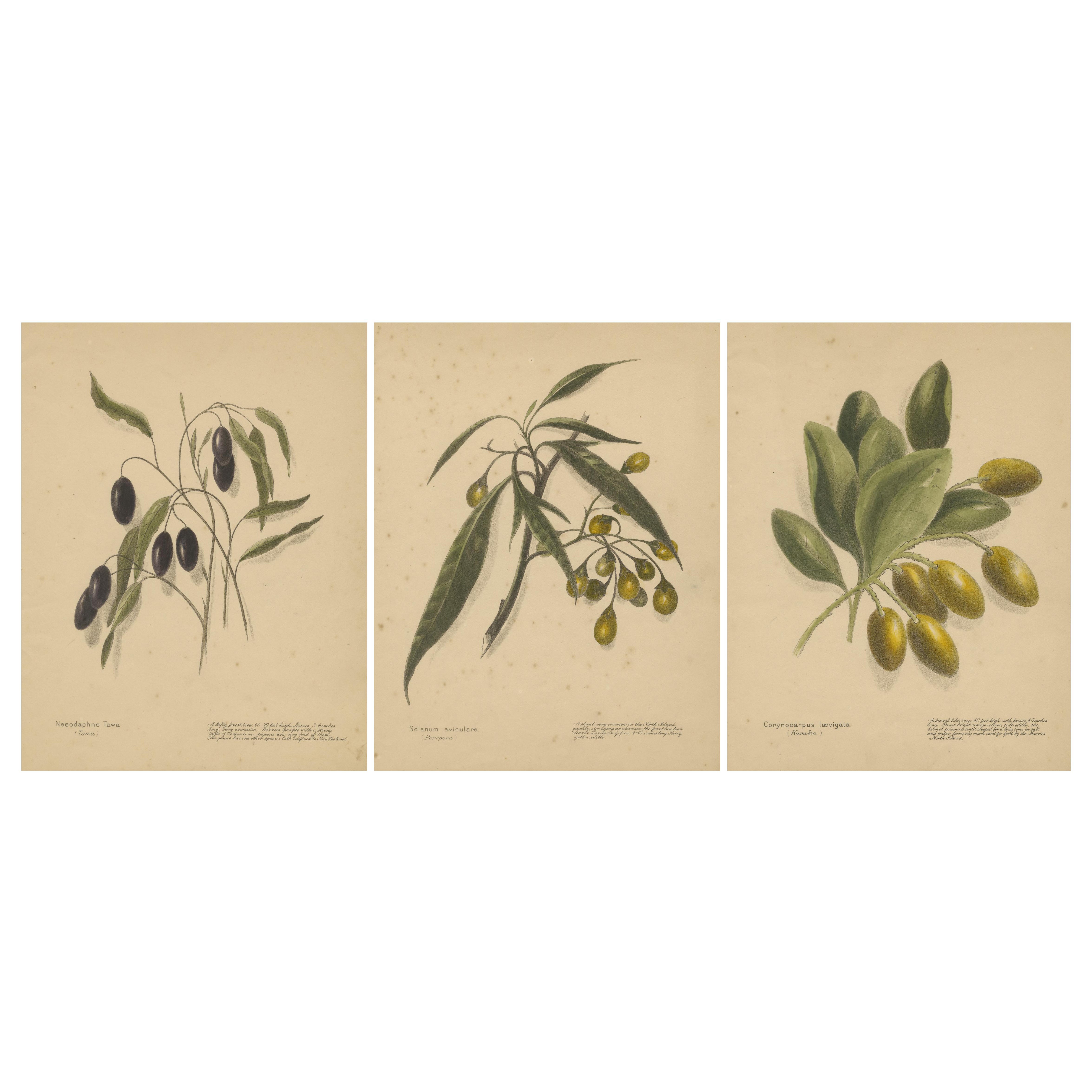
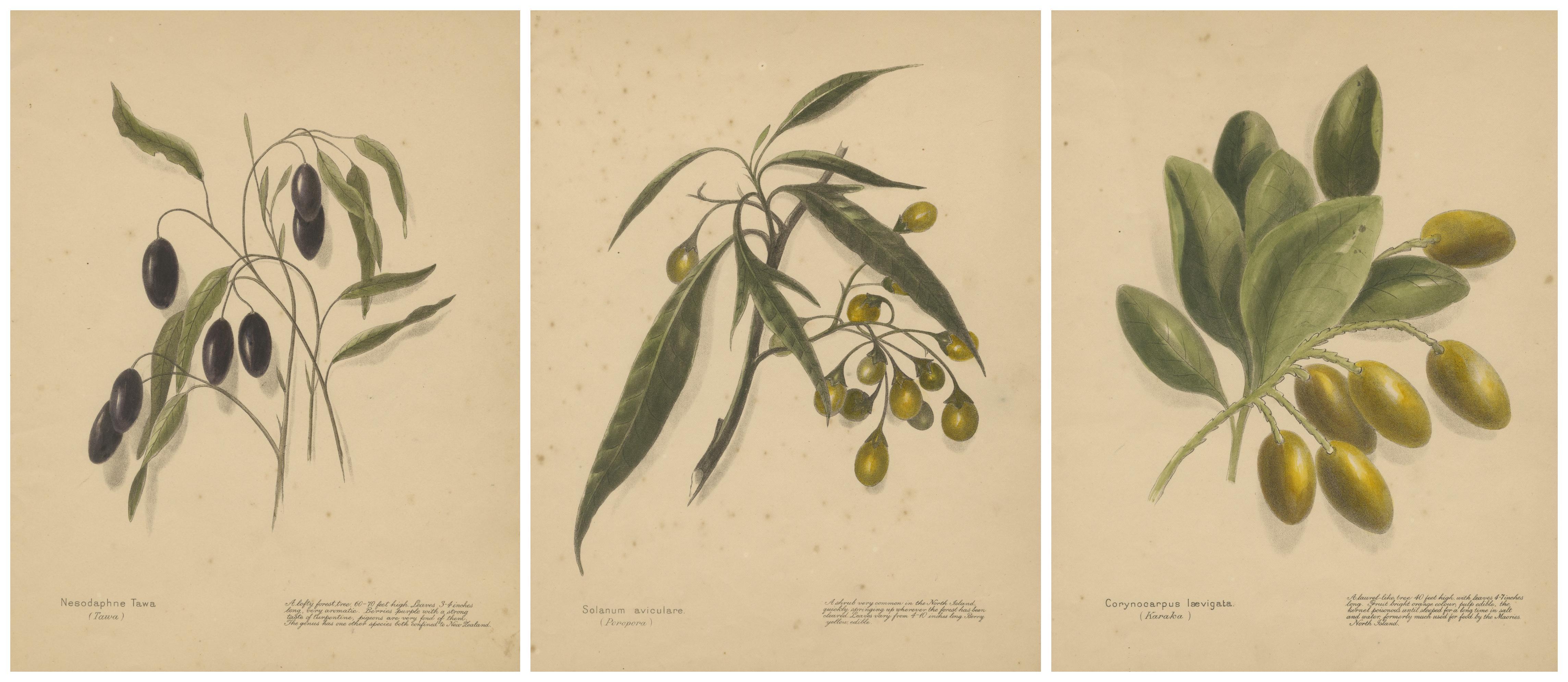
A captivating trio of hand-colored lithographs from the rare 1890 publication New Zealand Berries, this set showcases indigenous fruiting plants native to New Zealand in scientific yet artistic detail.
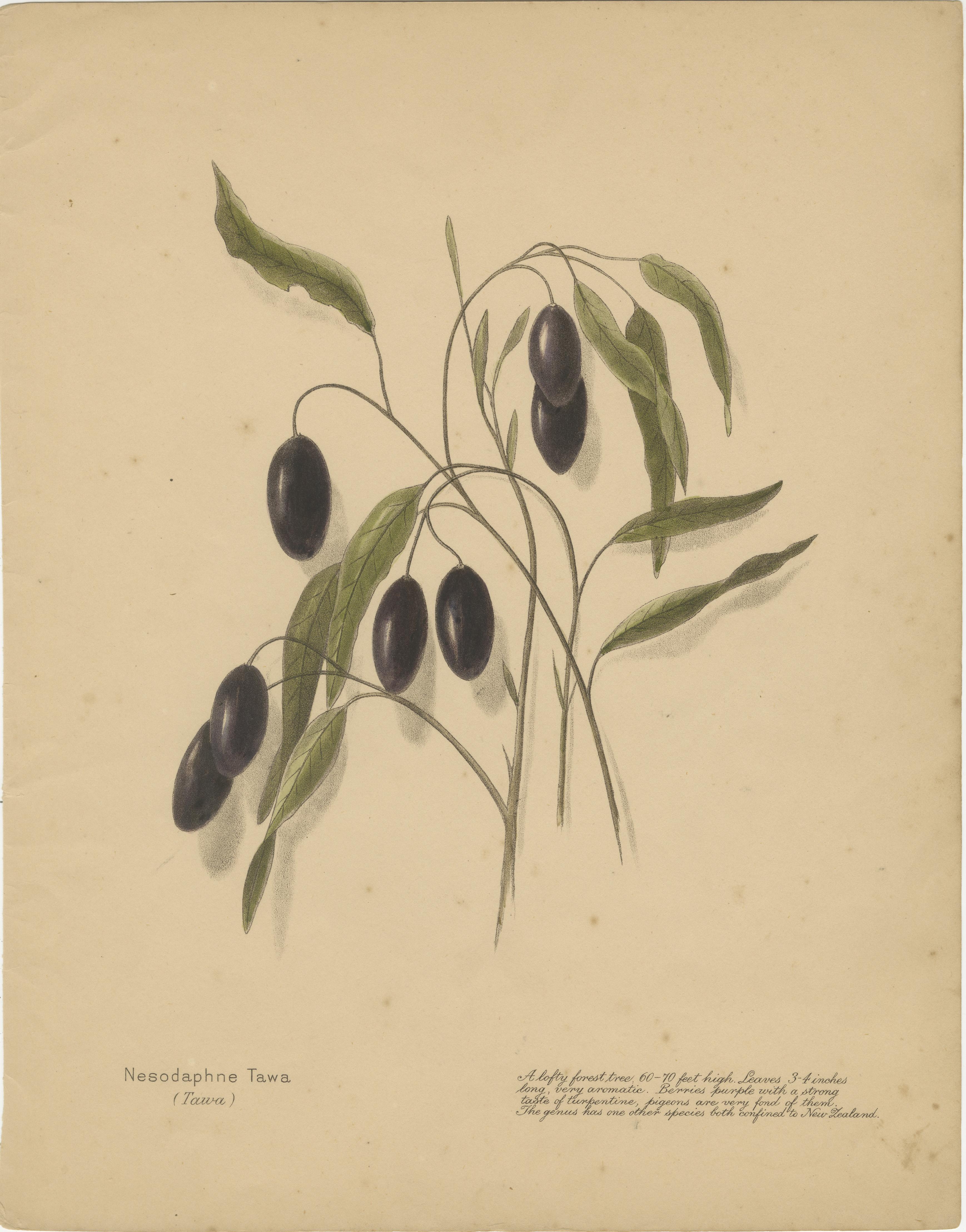
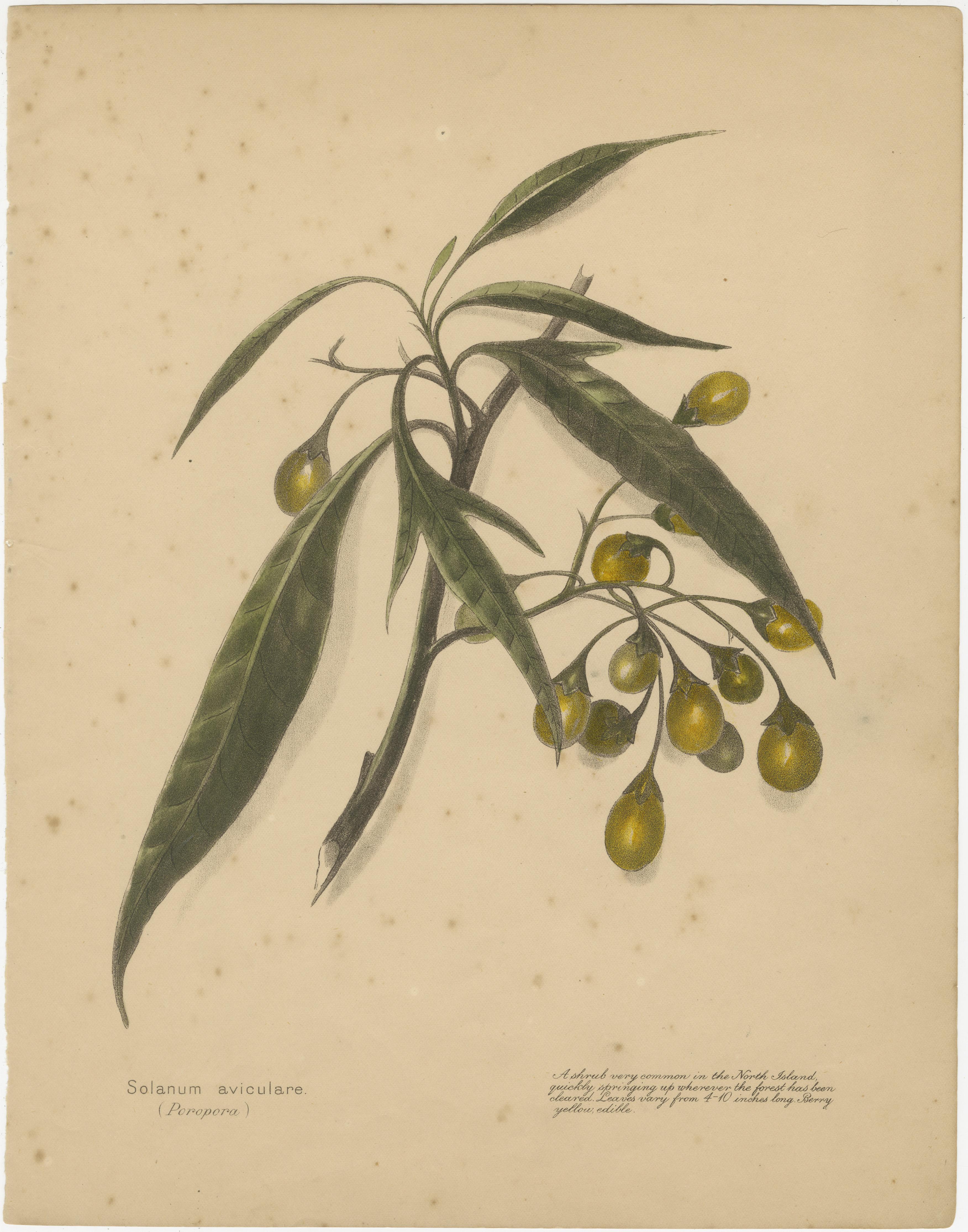
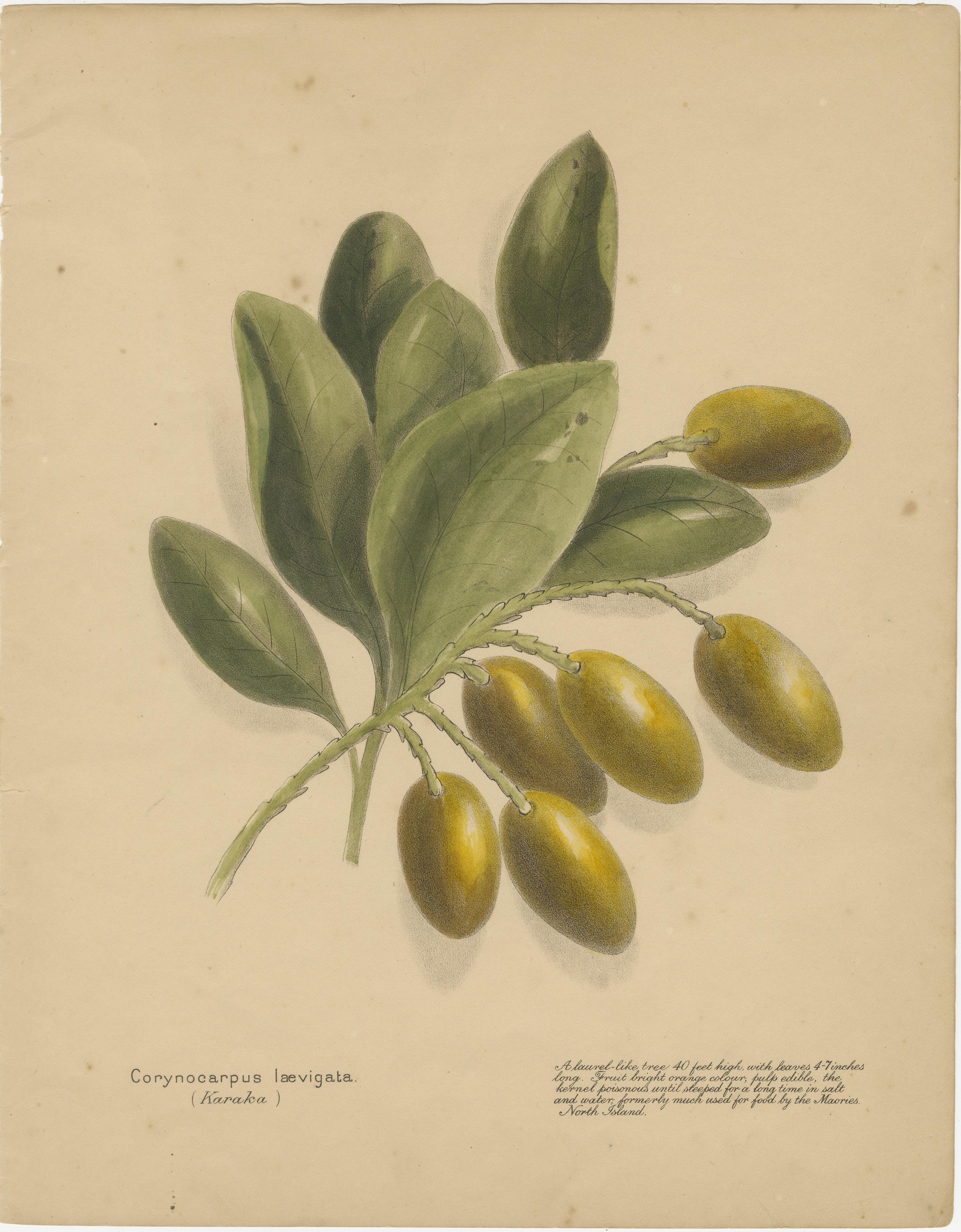
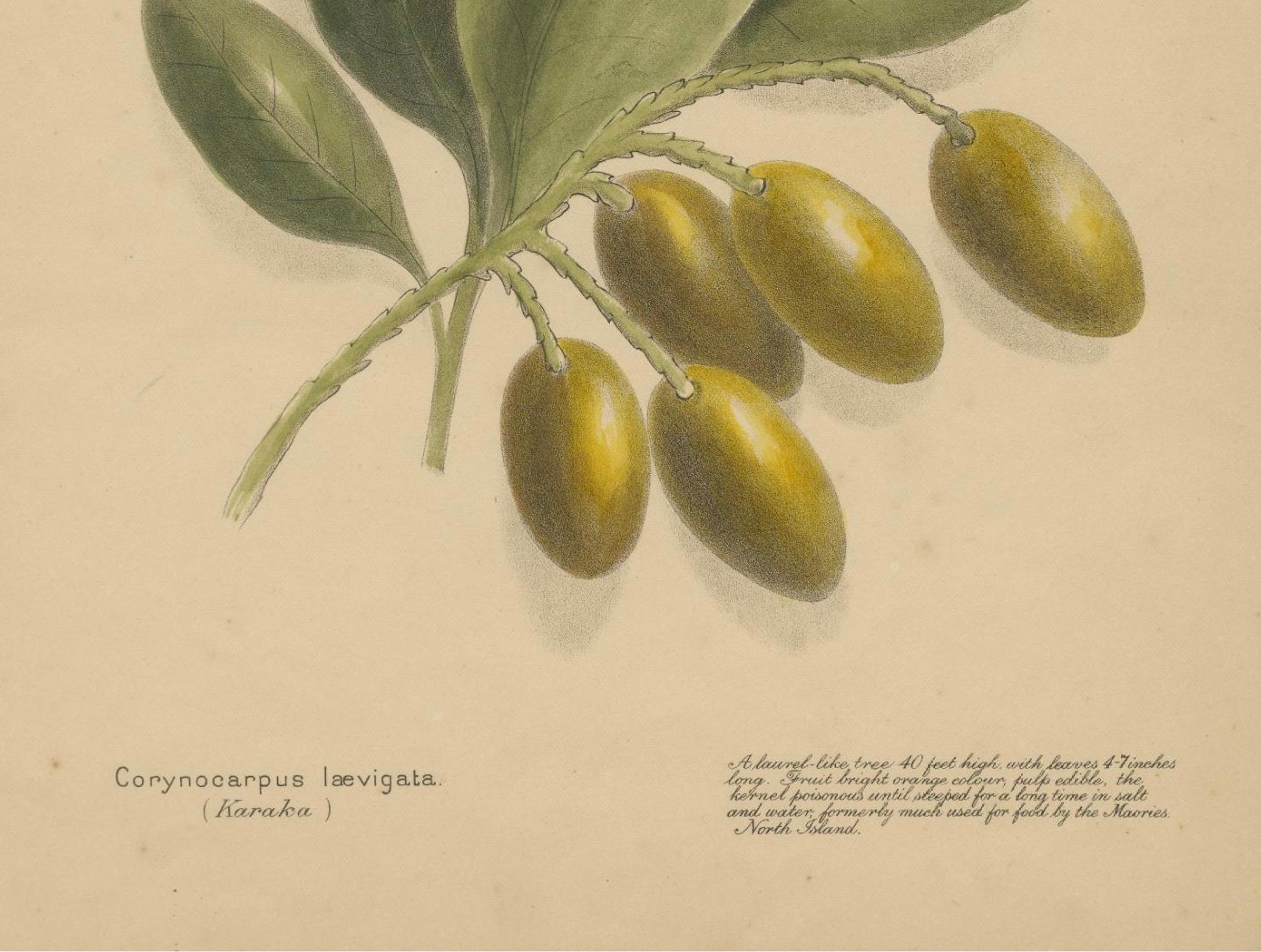
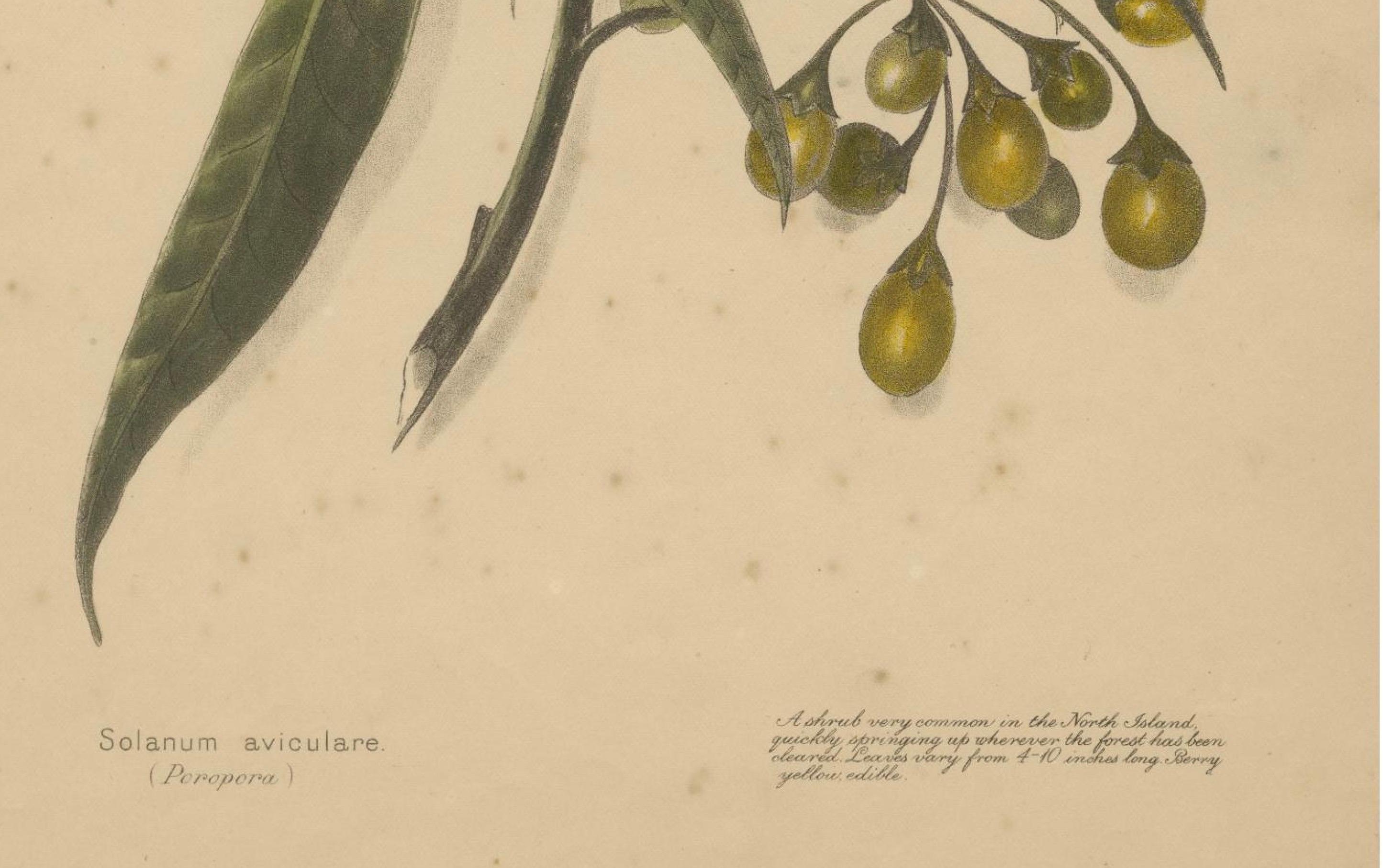
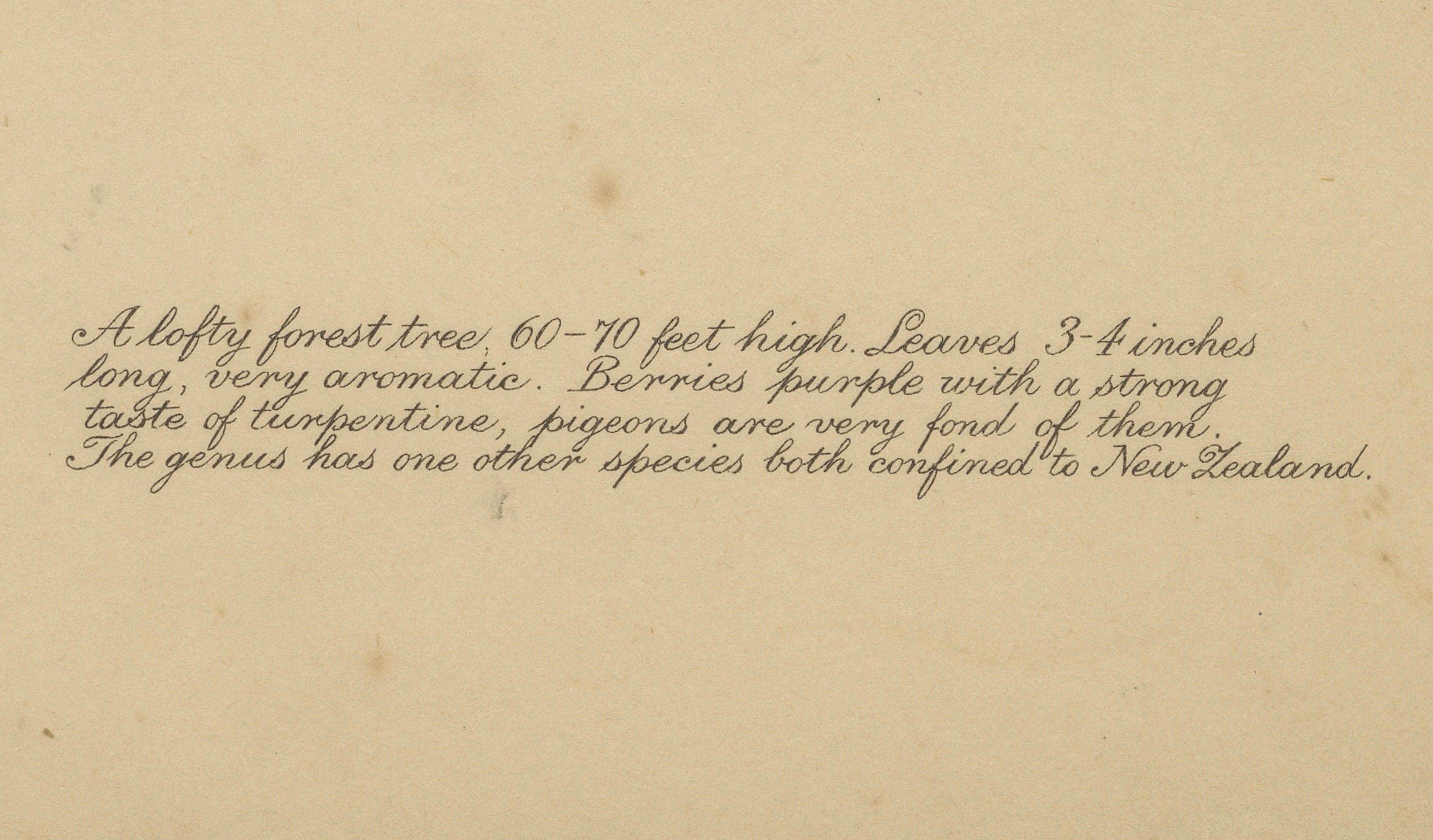
The images include depictions of three labeled species: Nesodaphne Tawa (Tawa), Solanum aviculare (Poroporo), and Corynocarpus laevigata (Karaka). Each plate features vibrant, realistic renderings of the berries and leaves, accompanied by descriptive English text noting their size, habitat, and local significance.
The Tawa plate presents slender, drooping leaves and deep purple-black berries, accurately portraying this tall forest tree known for its hardwood and native to New Zealand's North Island. The accompanying notes remark on the tree’s dimensions and local uses.
The Poroporo plate captures the Solanum shrub with its elongated leaves and clusters of small golden fruits. As noted in the print, it is a shrub very common across the North Island, used traditionally by Māori for various applications, despite the plant's mild toxicity.
The third plate shows the Karaka, a broad-leaved evergreen bearing large, glossy green fruits. These berries, while poisonous when raw, were historically detoxified by Māori and used as a food source. The print details its growth habits and importance as a food plant, especially on the coast and near the Maraes.
These botanical studies were published by H. D. Jackson of Nelson, New Zealand, as part of a rare and visually appealing series intended to highlight the native flora of the region. The original artwork is credited to E. C. Harris, whose name appears on the title page. Each lithograph was skillfully printed and then hand-colored with delicate attention to tone and shading, enhancing their aesthetic and scientific value.
Condition: Good condition for age. Patina rich. Mild age-related toning and faint foxing throughout. No major tears or repairs. Strong impressions with fresh, well-preserved colors on sturdy paper. Minor corner wear consistent with age.
Framing tips: These prints will present beautifully when framed in natural wood or black frames, with off-white or light taupe acid-free mounts to complement the neutral background and vivid botanical colors. Displayed as a horizontal triptych, they make a striking decorative ensemble.
Technique: Hand-colored lithograph
Maker: E. C. Harris, New Zealand, 1890