About this sheet
Hand-Colored Botanical Engravings of Water-Parsnip and Parsley Varieties, 1902
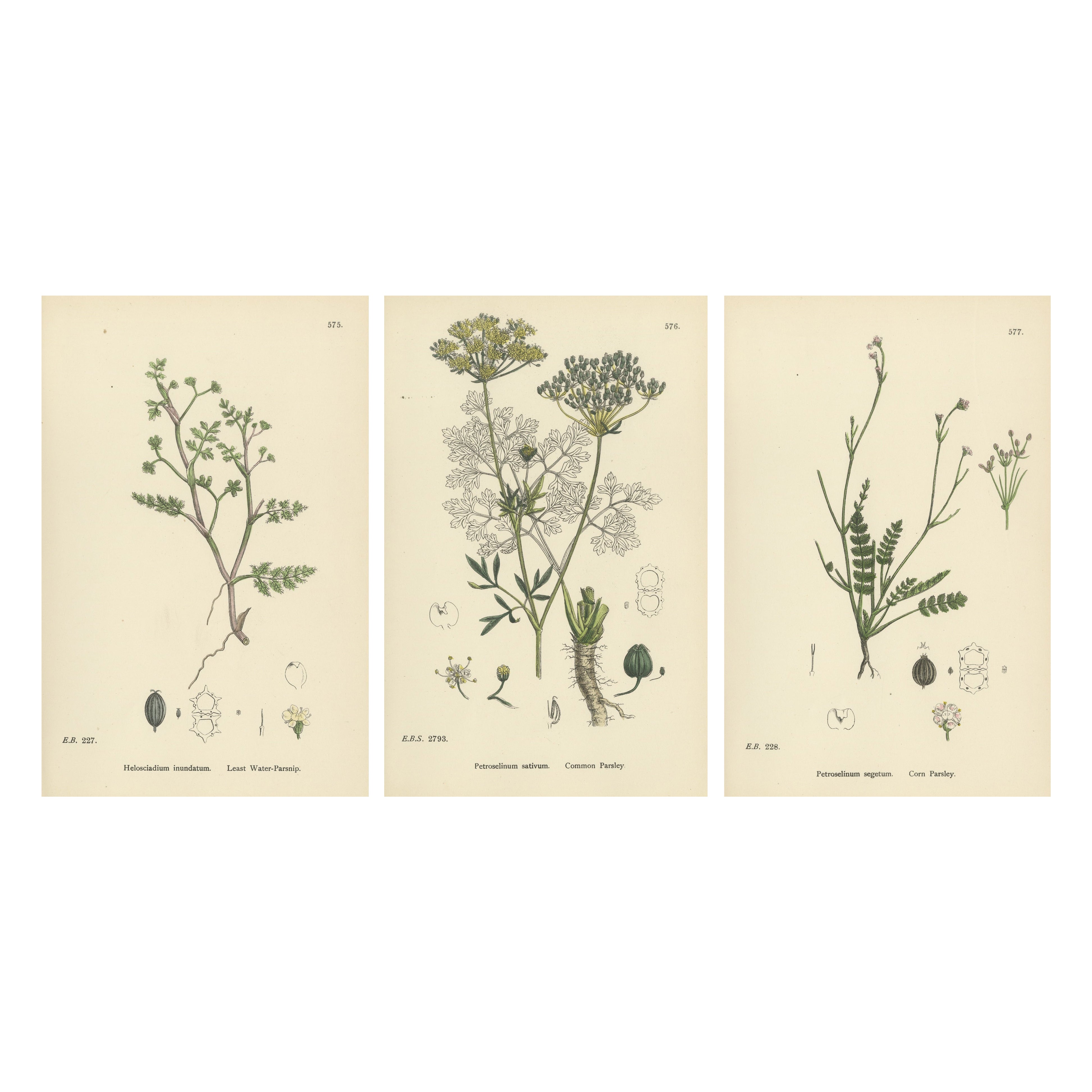
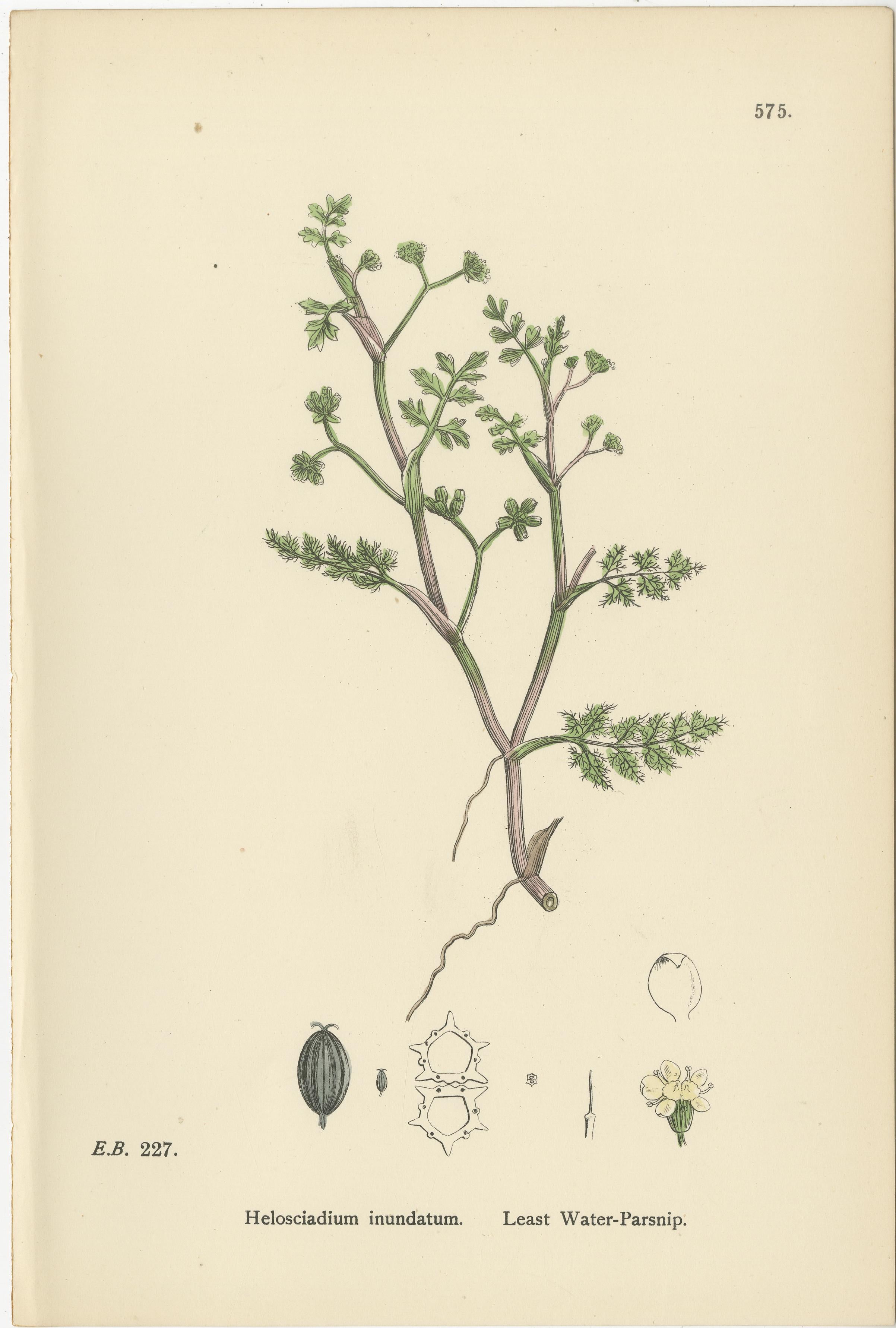
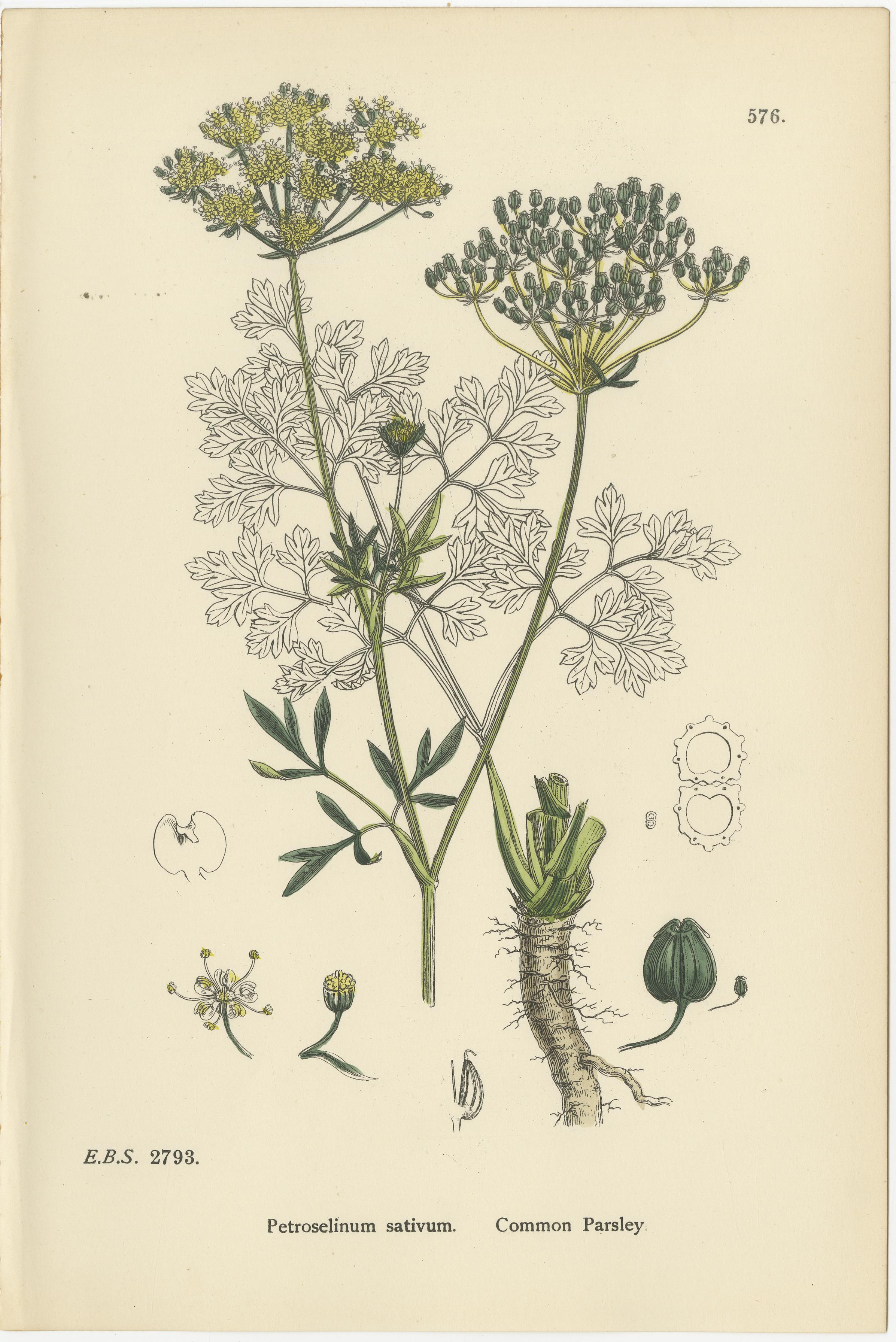
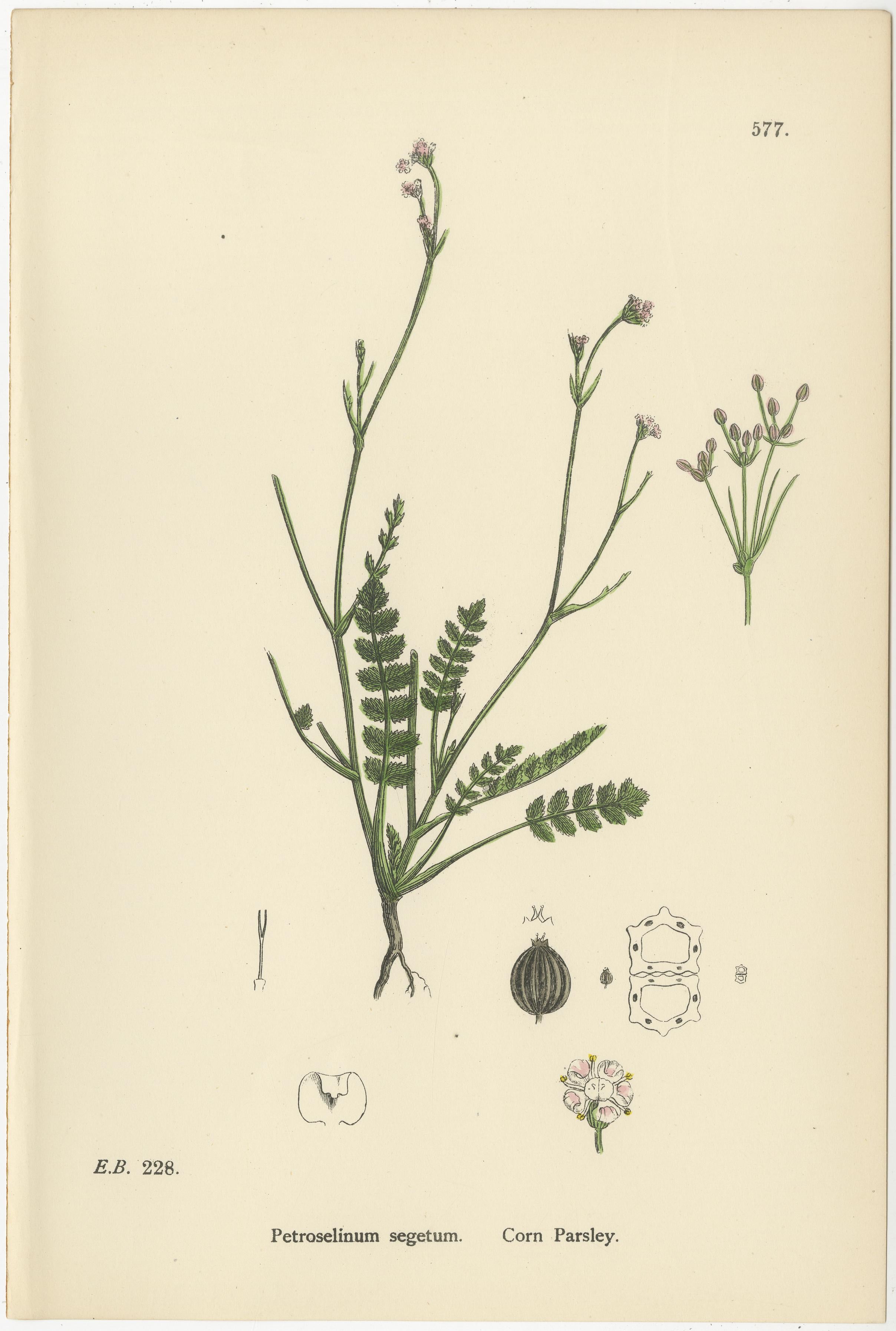
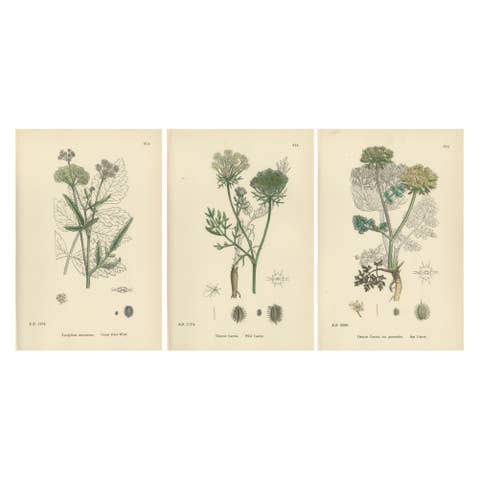
This refined set of three hand-colored botanical engravings from 1902 presents Helosciadium inundatum (Least Water-Parsnip), Petroselinum sativum (Common Parsley), and Petroselinum segetum (Corn Parsley). These detailed studies of the Apiaceae family demonstrate the artistry and scientific precision typical of late Victorian and Edwardian botanical illustration, capturing both the elegance and ecological diversity of umbelliferous plants.
The first plate, Helosciadium inundatum, depicts a delicate aquatic species with finely divided, feathery leaves and small clusters of pale flowers. Commonly found in shallow pools and ditches, this “Least Water-Parsnip” is elegantly rendered here with graceful linework and subtle shading that emphasize its underwater form and fragile beauty.
At the center, Petroselinum sativum—better known as Common Parsley—shows the familiar kitchen herb in its wild form, complete with deeply divided, glossy leaves and a strong taproot. The engraving carefully reveals both its botanical structure and its practical identity as one of Europe’s most cultivated culinary plants. The artist enriches the composition with detailed dissections of flowers, seeds, and cross-sections, balancing aesthetic appeal with botanical rigor.
The third engraving, Petroselinum segetu or Corn Parsley, presents a rarer field variety native to Western Europe. Its finer foliage and slender stems are portrayed with understated delicacy, highlighting the natural variation within the parsley genus. The engraving reflects the careful observation and stylistic restraint characteristic of early 20th-century natural history prints.
Together, the three plates form a coherent botanical narrative—from aquatic environments to cultivated fields—showcasing the adaptability of similar plant families in different habitats.
Condition report: Excellent condition with strong plate marks, crisp impressions, and delicate original hand-coloring. Slight age toning and minimal foxing in margins, consistent with age.
Framing tips: These engravings pair beautifully in a triptych arrangement. Use light oak or black frames with off-white or sage green mounts to enhance the fine green tones and scientific aesthetic. Perfect for kitchens, studies, or naturalist-inspired interiors.
Technique: Hand-colored engraving
Maker: British, published London, 1902