About this sheet
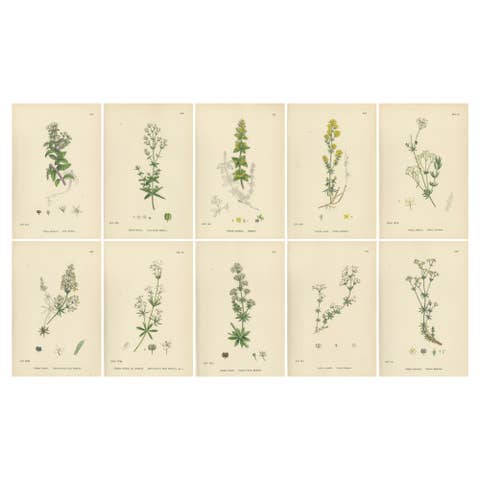
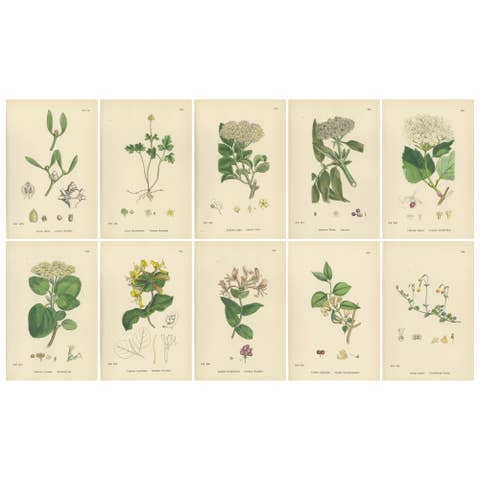
Set of 10 English Botanical Prints 1902 – Valerian & Lamb’s-Lettuce
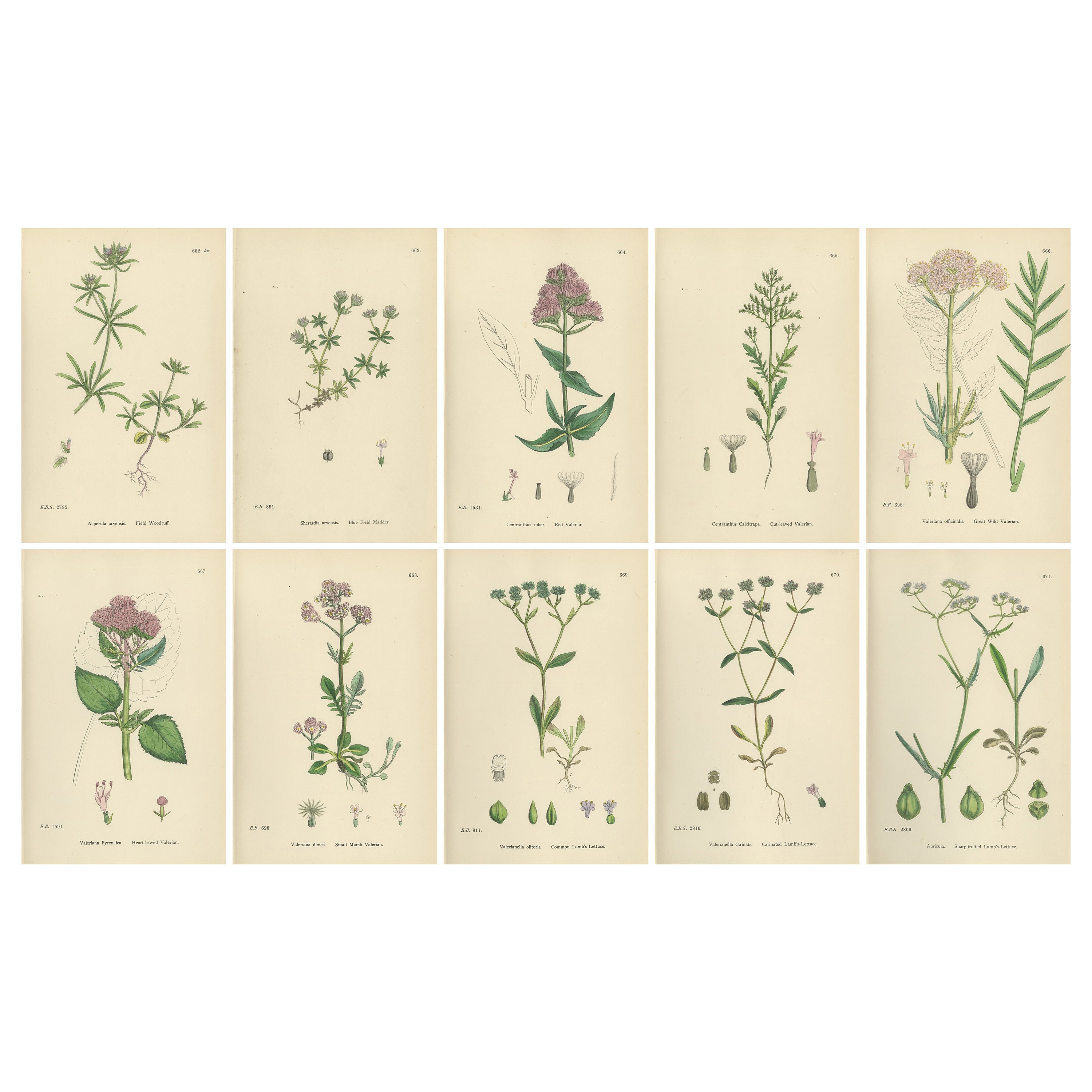
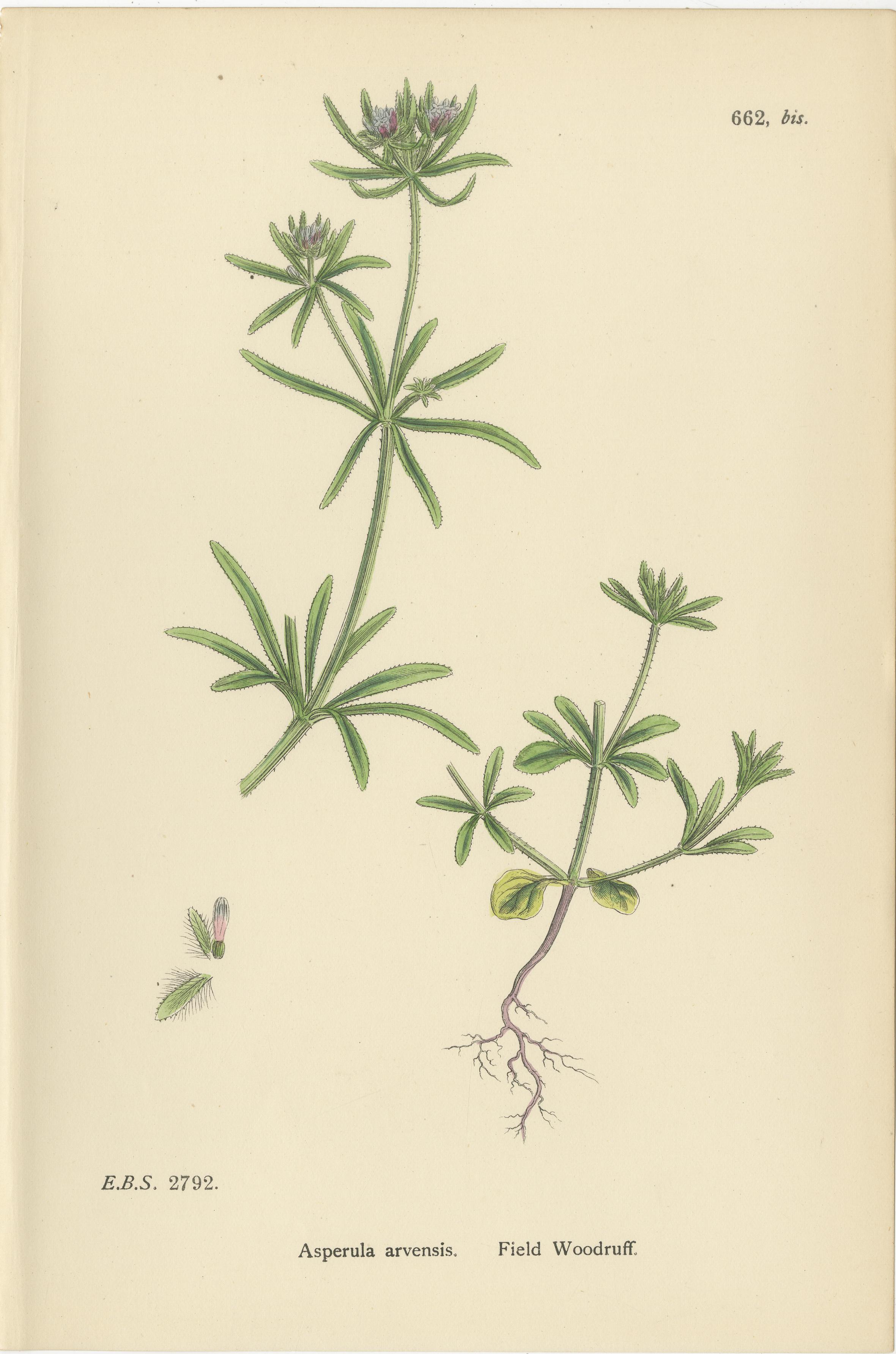
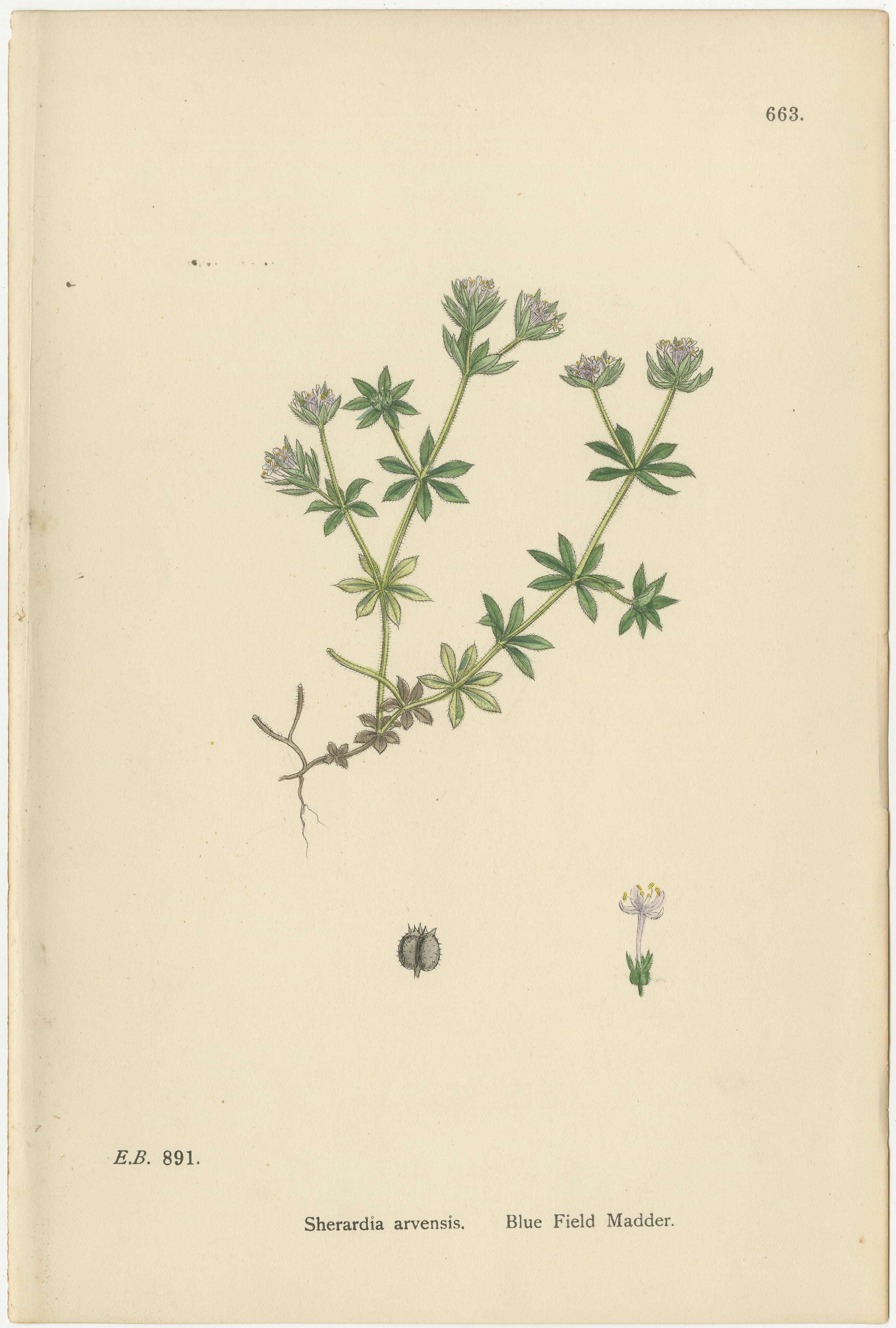
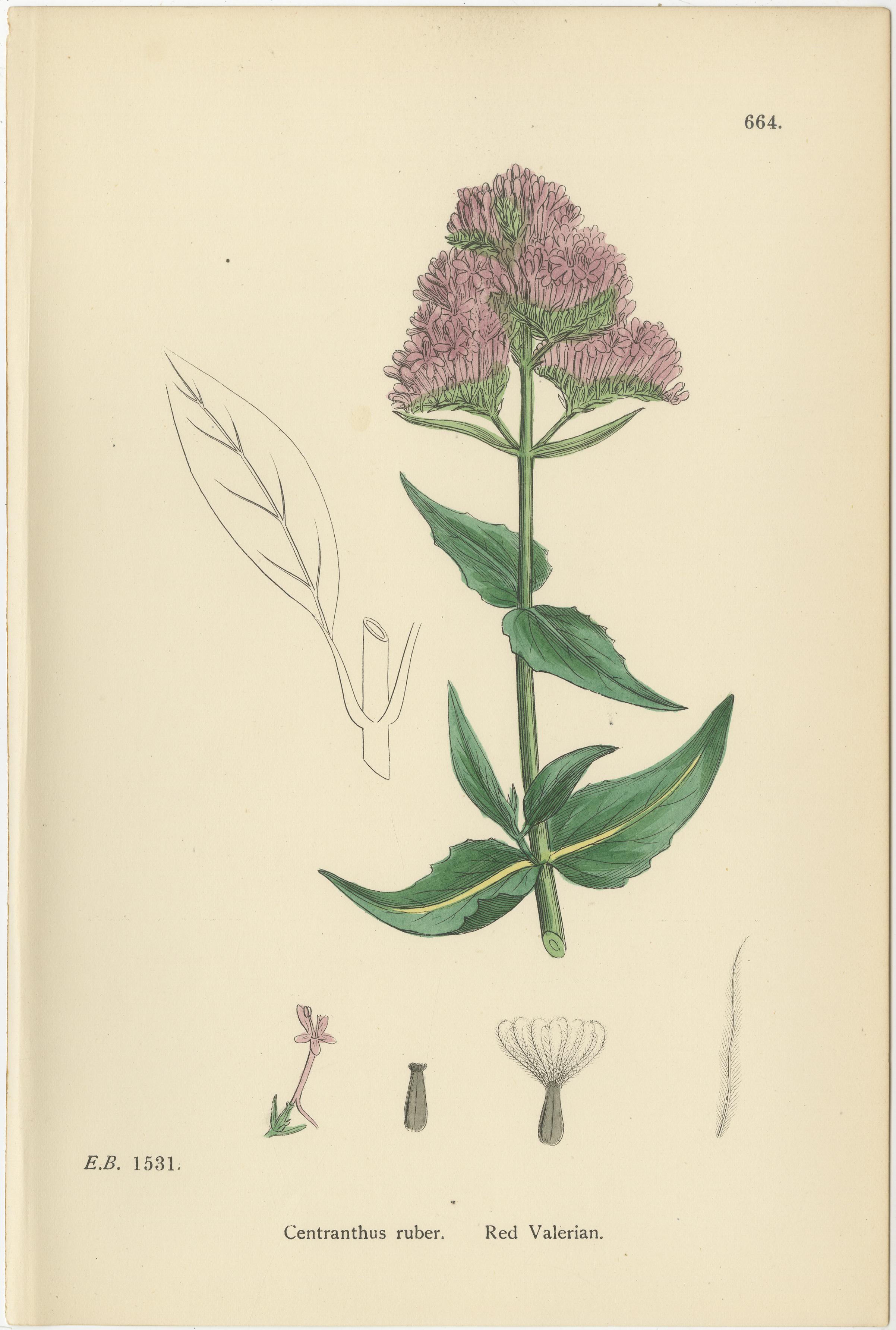
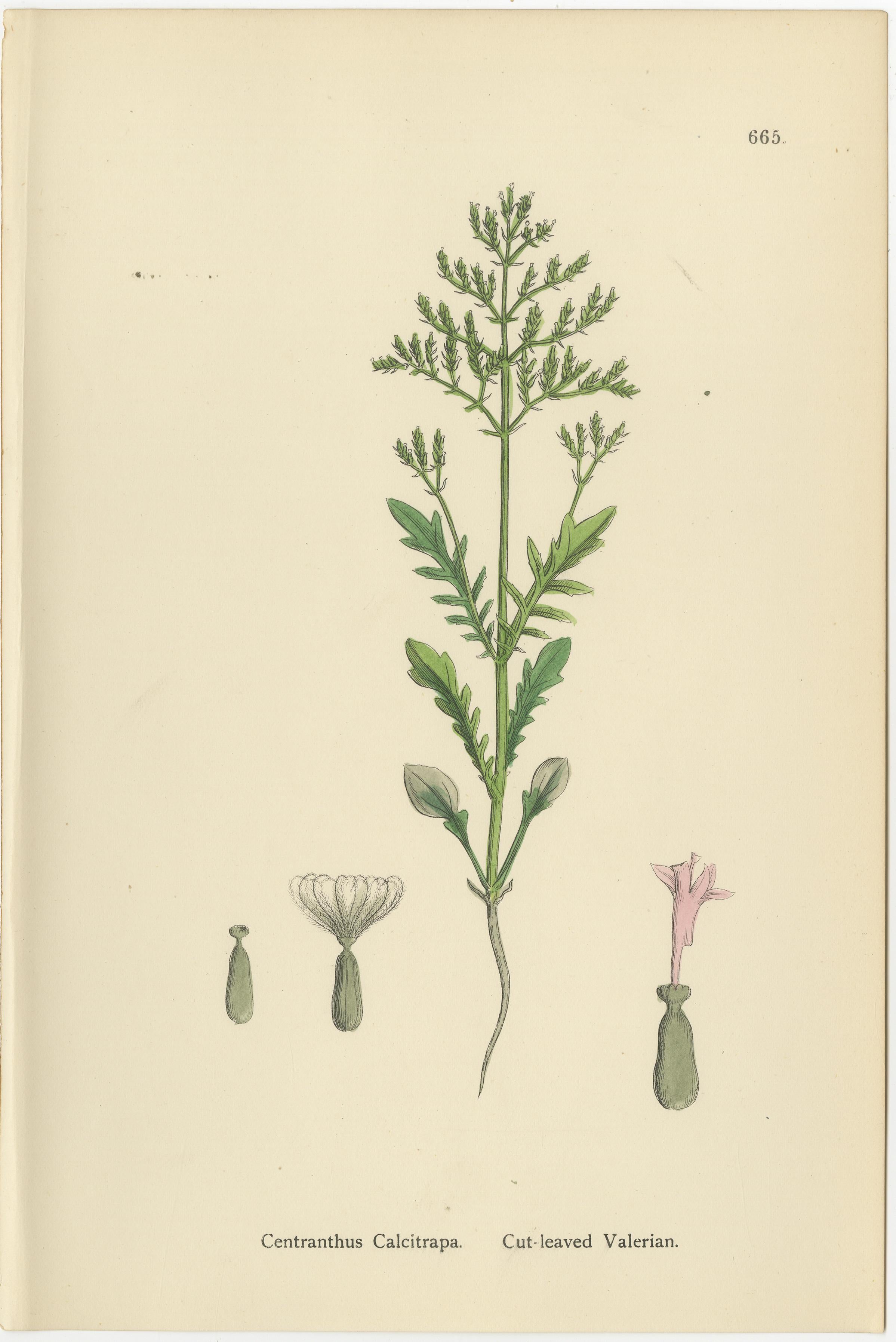
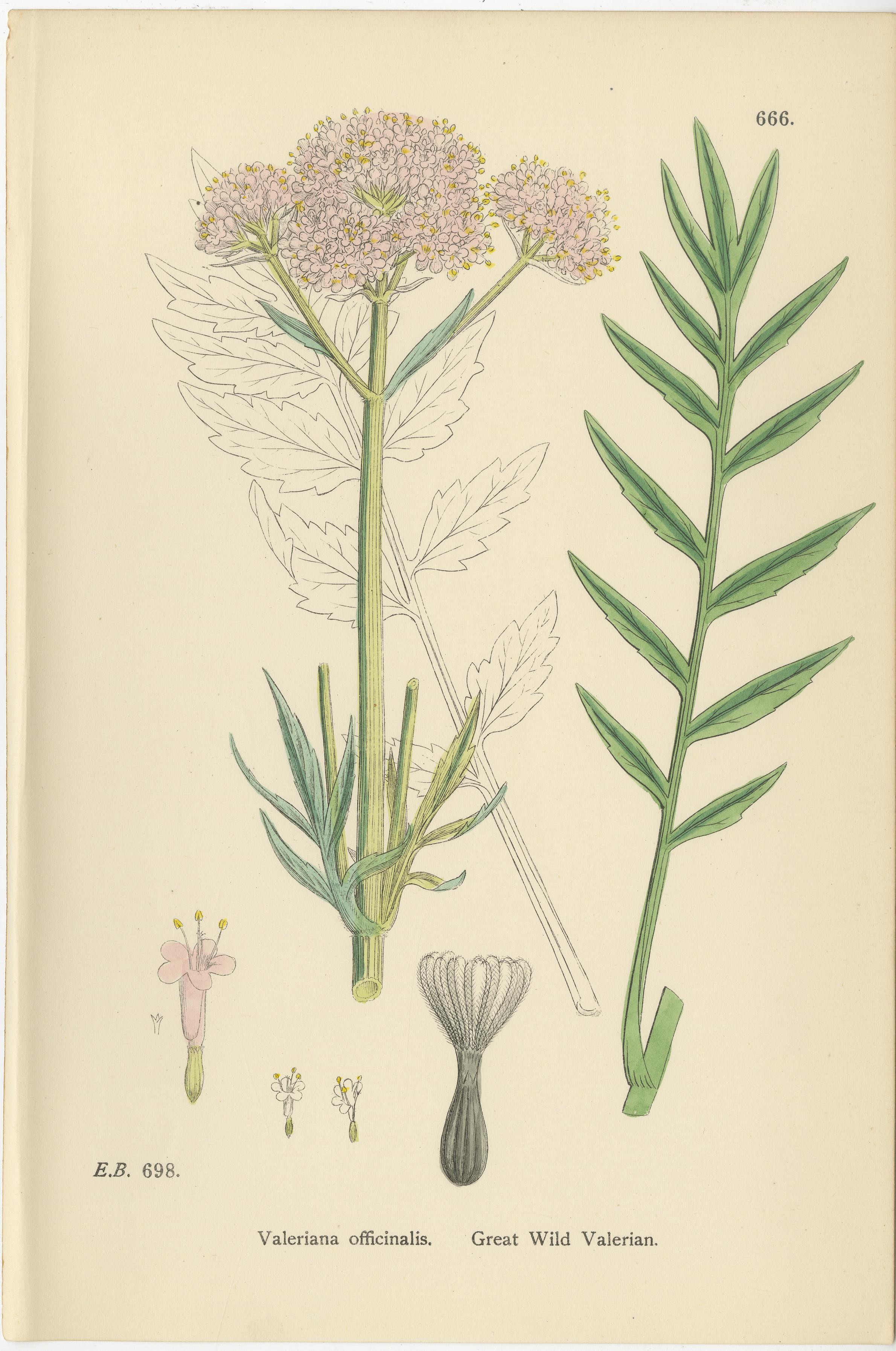
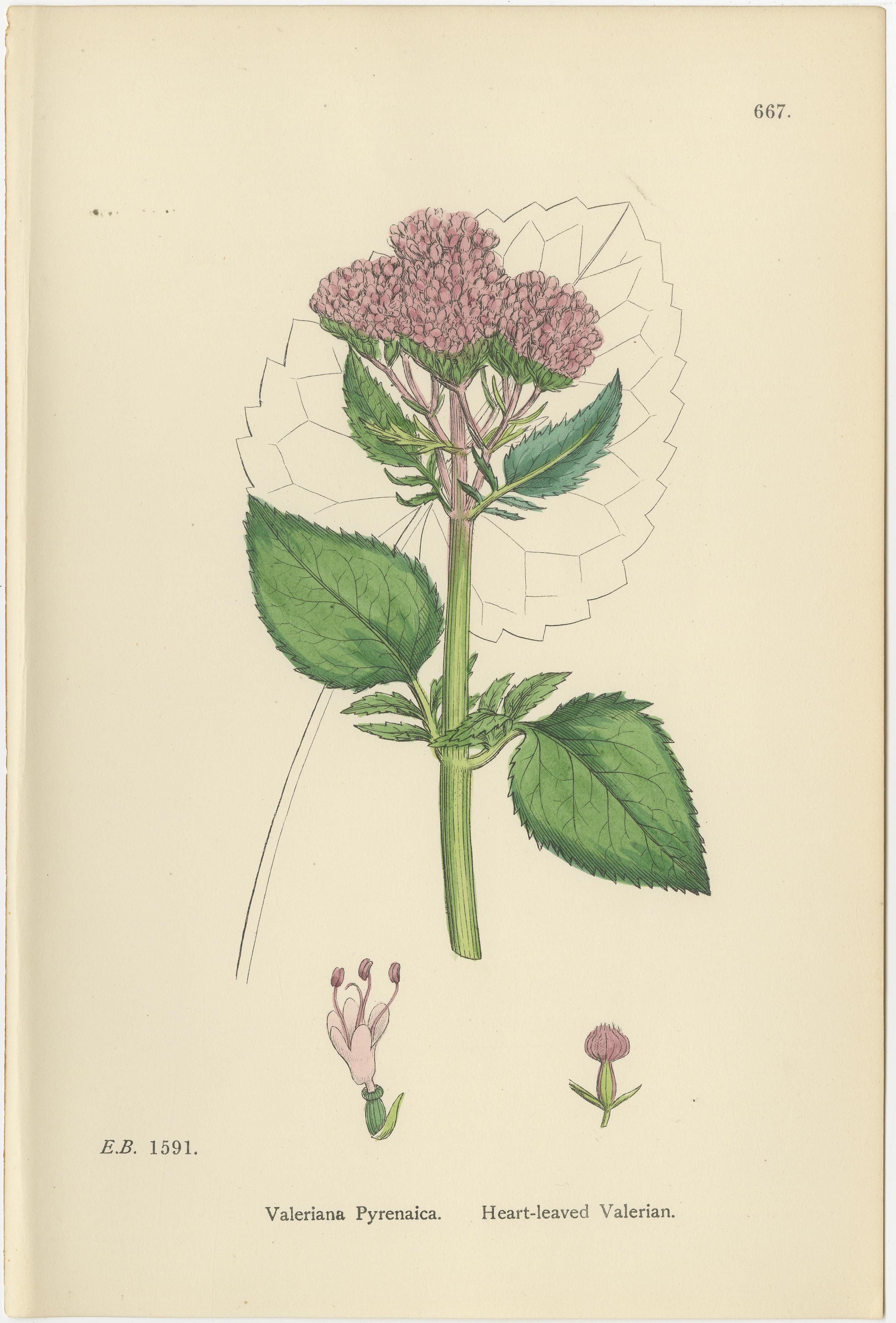
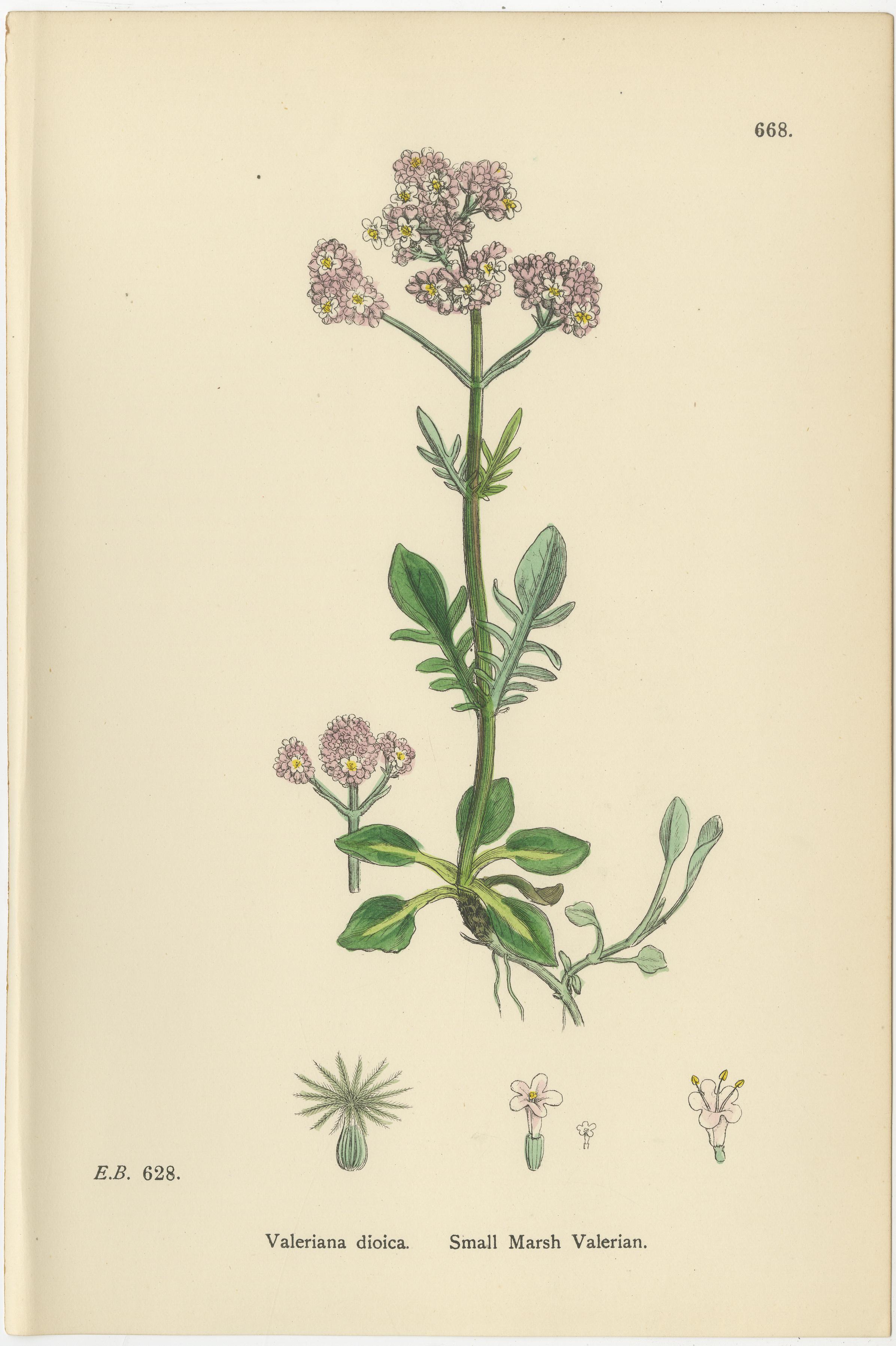
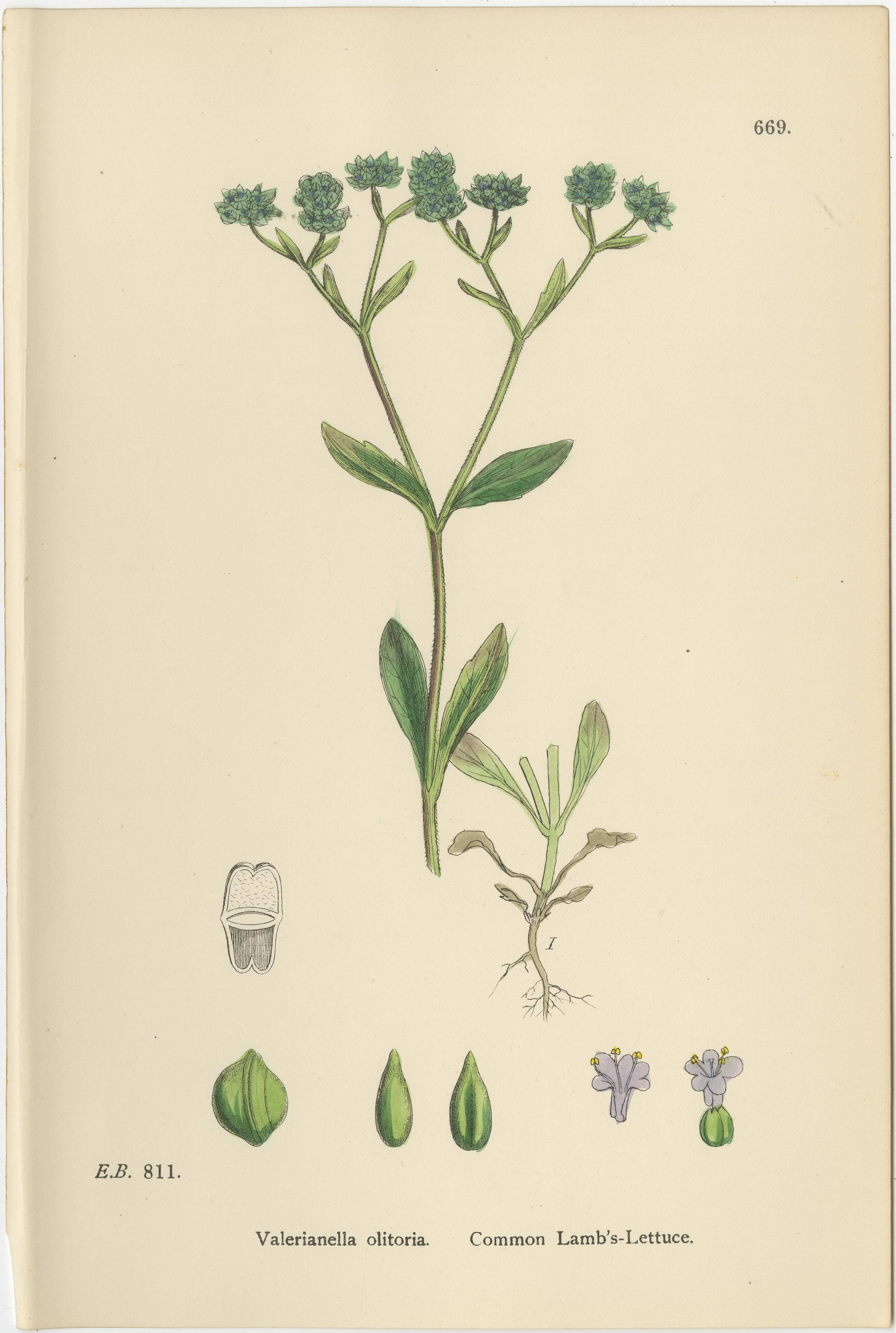
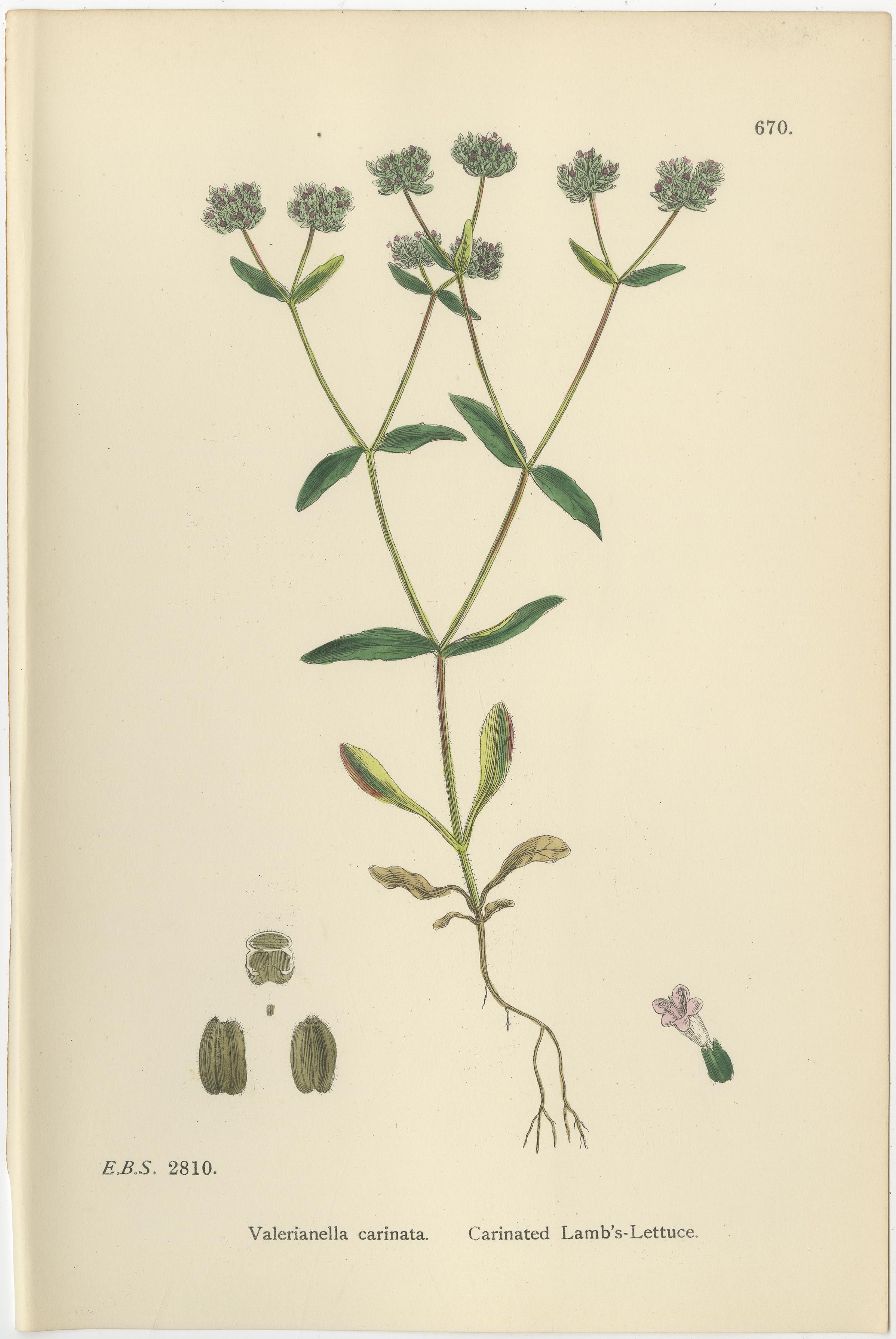
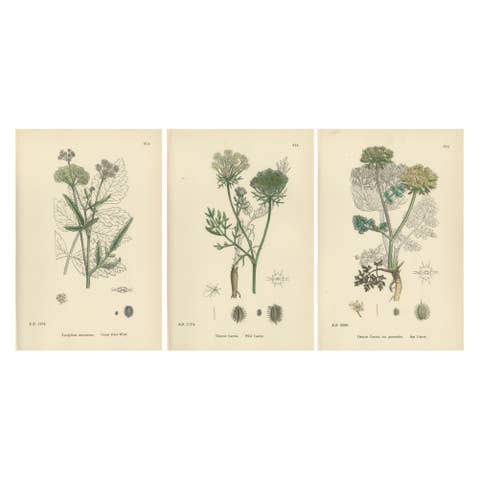
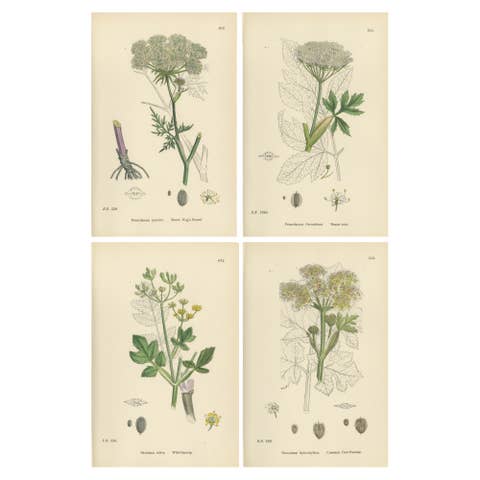
This refined and visually cohesive set of ten botanical plates comes from the 1902 continuation of English Botany, published in London by the Sowerby firm. The group focuses on species within the Valerianaceae, including Valerian (Valeriana and Centranthus) and Lamb’s-lettuce (Valerianella), offering a harmonious sequence of closely related plants rendered with scientific clarity and decorative restraint.
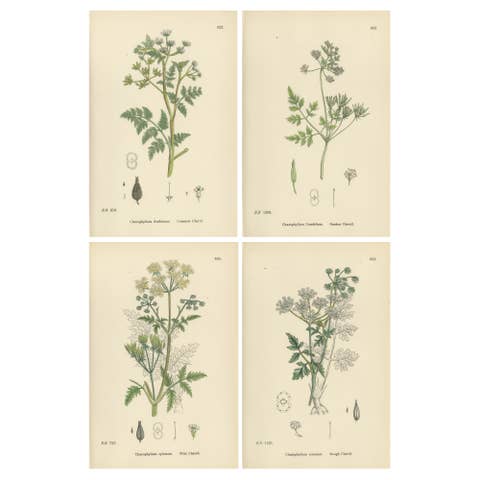
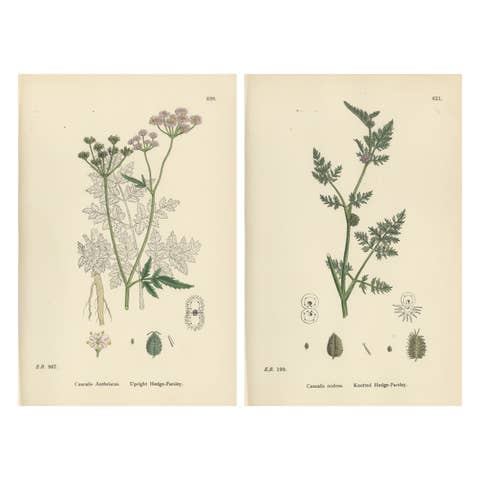
Each plate presents a full botanical specimen shown in its natural habit, accompanied by finely observed details of flowers, seed capsules, and root structures. The compositions are elegantly spaced on the page, allowing the plants to breathe against the warm, lightly toned paper. The palette is particularly appealing: soft botanical greens, muted purples, and gentle pinks that give the set a calm, sophisticated presence. Subtle differences in form between the upright valerian stems and the lighter, branching lamb’s-lettuce create visual rhythm across the series while maintaining strong unity.
*English Botany* is one of the landmark achievements of British botanical illustration. Founded in the late eighteenth century by James Sowerby, the publication continued for generations, maintaining its reputation for accuracy, elegance, and accessibility. These early twentieth-century plates belong to the final phase of the project, representing a moment when traditional botanical illustration had reached full maturity, just before photography began to replace hand-drawn and lithographed studies. As such, they combine scientific authority with a distinctly decorative quality that is highly appreciated today.
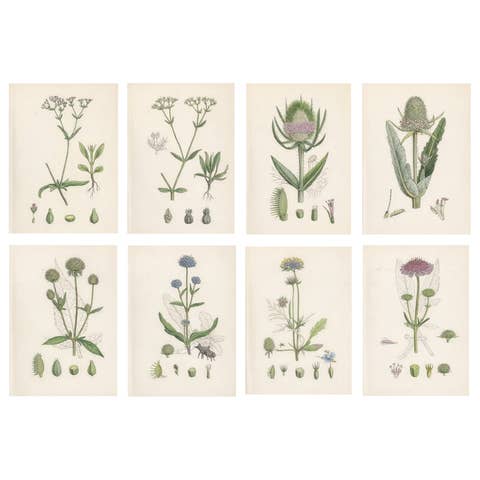
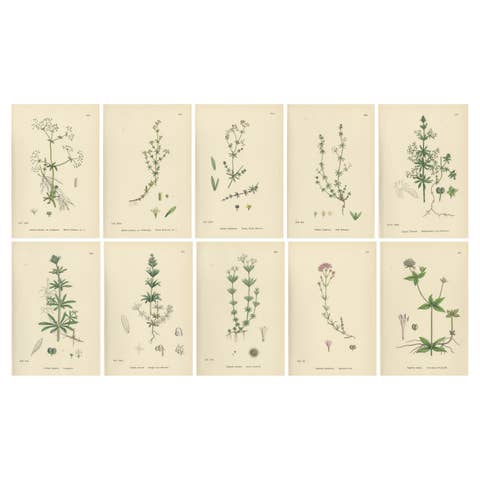
Offered as a complete set of ten, these plates are especially effective when displayed together. Framed identically and arranged in a 2×5 grid or long horizontal row, they form a serene, scholarly wall composition with strong decorative impact. This makes the set particularly attractive for interior designers, collectors of natural history imagery, and projects in libraries, staircases, hospitality interiors, country houses, or modern naturalist spaces. Keeping the group intact preserves the visual dialogue between the plates and significantly enhances their aesthetic and commercial value.
Condition report: Overall very good condition. Light, even age toning consistent with early 20th-century paper. Occasional faint foxing or minor surface marks may be present, typical for the period. Plate impressions remain clear and colors well preserved. No major tears, losses, or repairs observed.
Framing tips: Present all ten plates in identical frames to emphasize the unity of the set. Dark walnut, ebonized wood, or antique black frames paired with wide ivory or soft off-white mats work particularly well. Maintain consistent spacing between frames for a museum-style grid with calm, decorative balance.
Technique: Color-printed lithographs with hand-finished color
Maker: Sowerby & Co., London, circa 1902