About this sheet
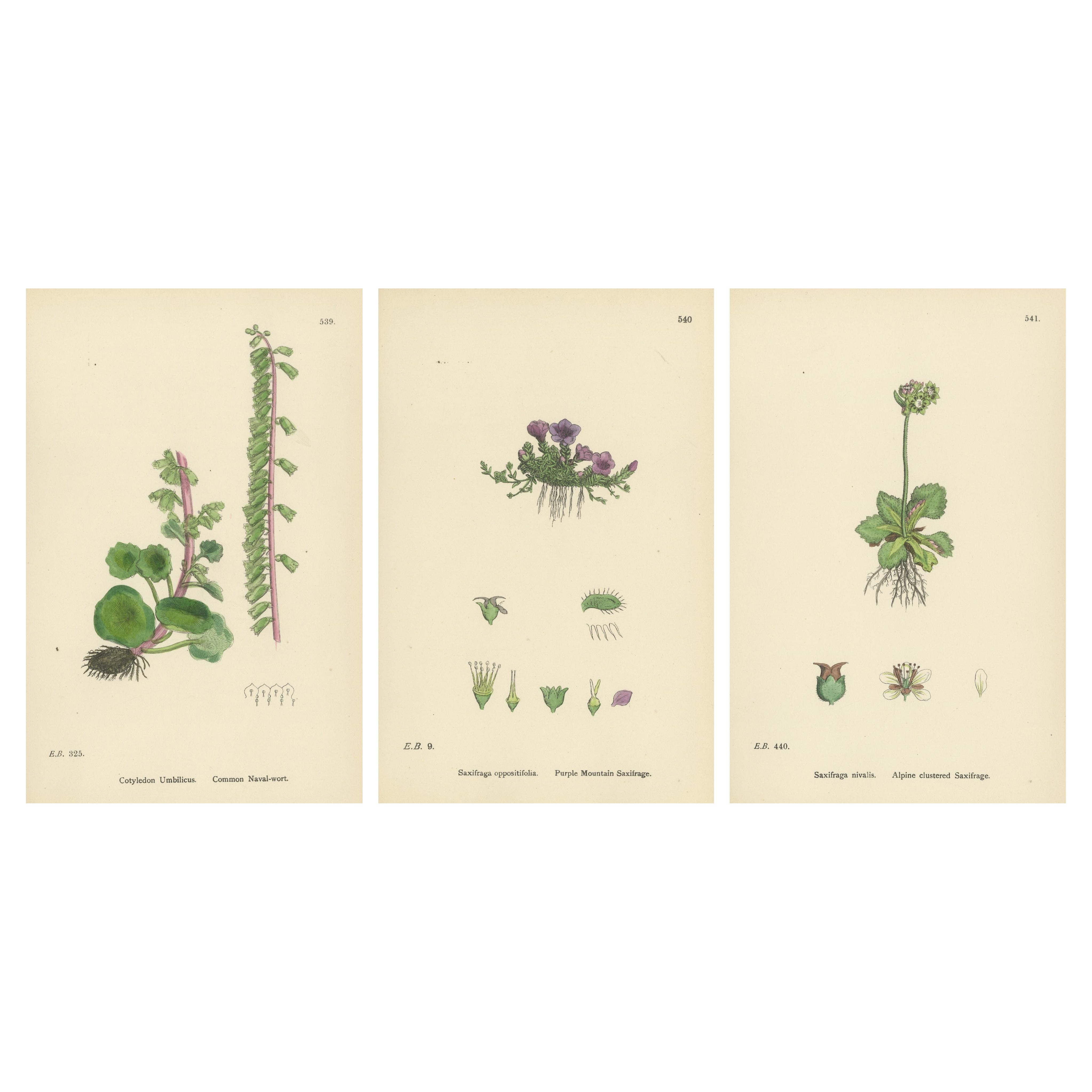
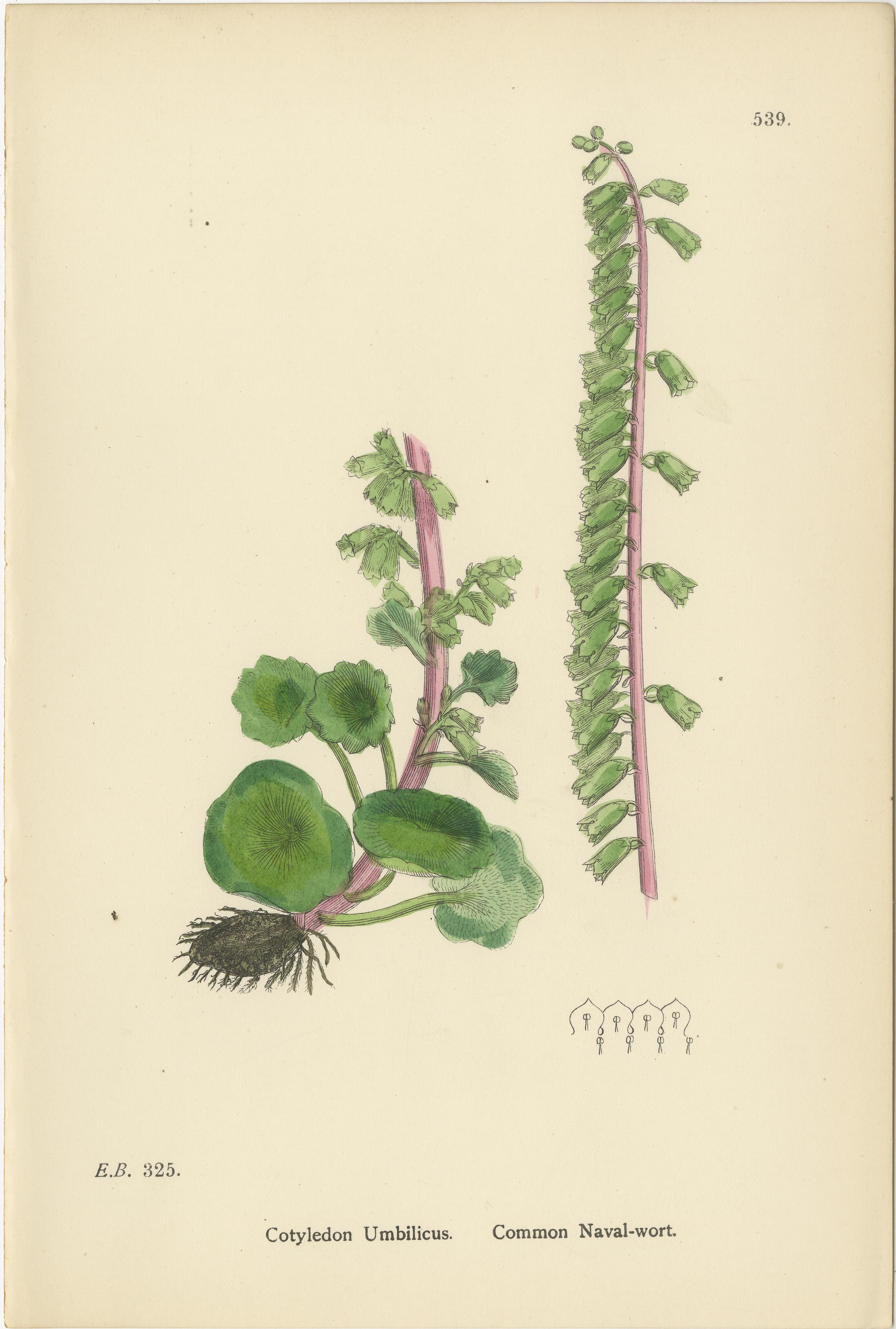
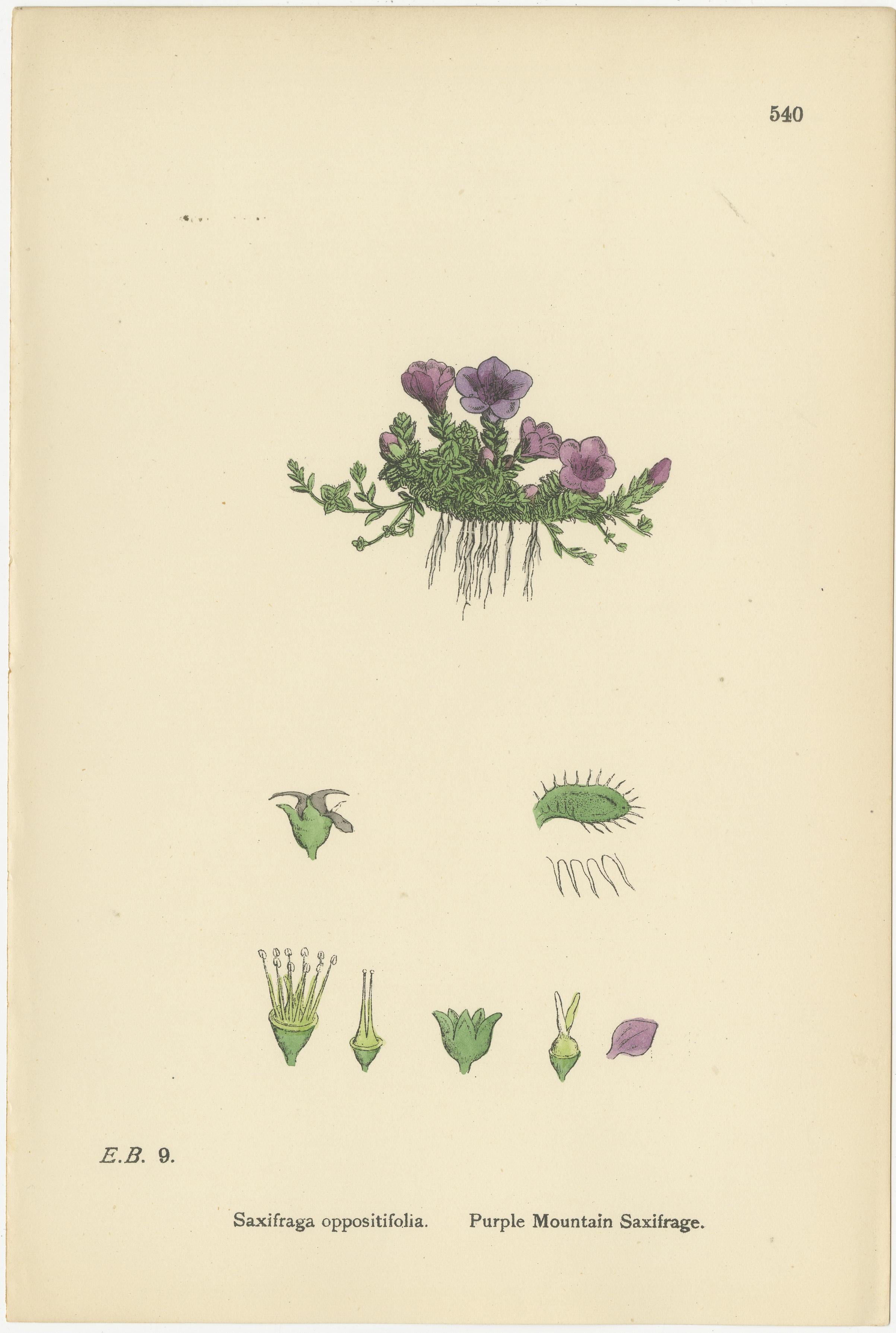
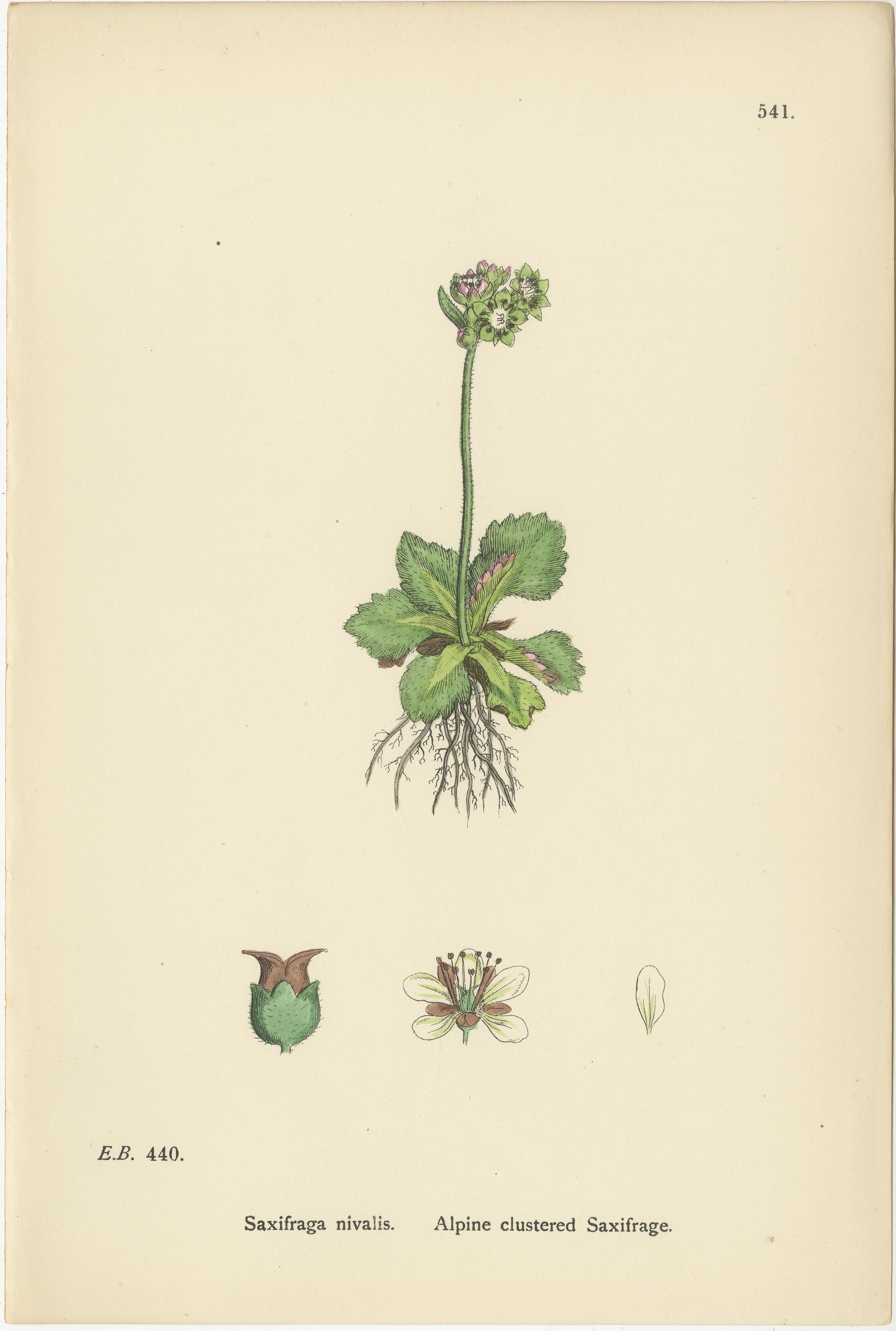
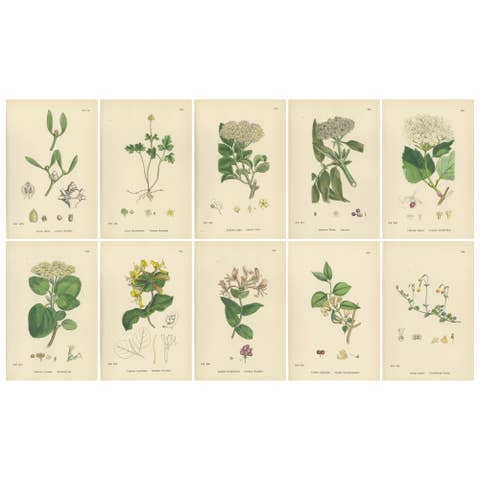
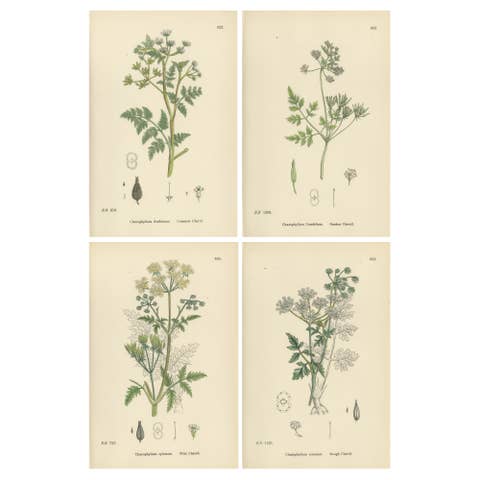
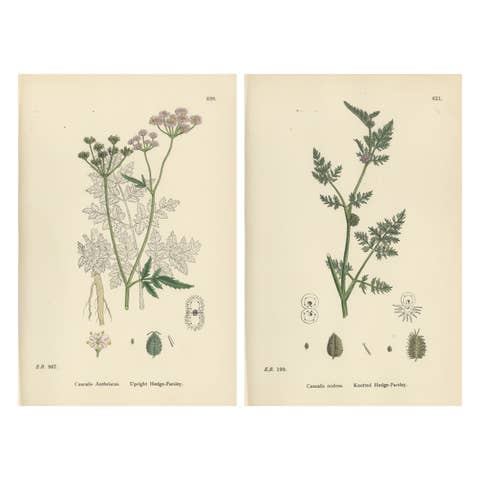
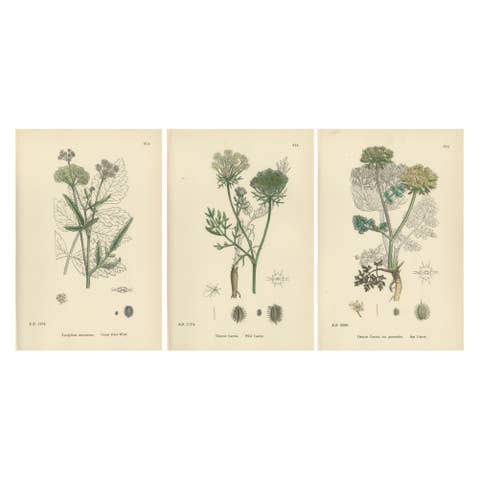
This refined trio of hand-colored botanical engravings from 1902 illustrates Cotyledon umbilicus (Common Naval-wort), Saxifraga oppositifolia (Purple Mountain Saxifrage), and Saxifraga nivalis (Alpine Clustered Saxifrage). These alpine and rock-dwelling plants, native to rugged European highlands and stone crevices, are depicted with the graceful precision typical of early 20th-century English botanical art.
The first plate, Common Naval-wort, features the distinctive rounded, navel-like leaves of *Cotyledon umbilicus*, rising from a rosette base with a tall flowering stalk of small bell-shaped blooms. The fleshy green leaves and fine pink stems are rendered with remarkable delicacy, capturing the plant’s succulent character. In the center, the Purple Mountain Saxifrage is portrayed as a dense, low-growing alpine cushion with vivid purple blossoms — one of the earliest spring flowers to appear amidst melting snow. Its accompanying floral details show the intricate structure of the petals and reproductive organs in fine engraving. The final composition, Alpine Clustered Saxifrage, shows a small yet striking species with bright white flowers clustered atop a single slender stem, its veined leaves forming a neat basal rosette.
Each engraving combines scientific exactitude with soft, hand-applied color washes, enhancing the natural beauty of these mountain plants. The subtle greens, purples, and pinks are carefully balanced, reflecting the aesthetic harmony prized in Edwardian botanical illustration. Together, the three plates form a graceful study in alpine botany, celebrating nature’s resilience and elegance.
Condition report: Excellent condition with very minor toning at sheet edges. Plate impressions are crisp, with all colors bright and original. Margins full and untrimmed.
Framing tips: These engravings harmonize beautifully when framed together in light oak, maple, or antique gold frames with pale green or cream mounts. The cool alpine tones make them ideal for calm, natural interiors such as garden rooms, studies, or conservatories.
Technique: Hand-colored engraving
Maker: British, published London, 1902