Hand-Colored Botanical Engravings of Marsh Pennywort, Astrantia & Sanicle, 1902
€ 270
One of a kind: this is the sheet in the photographs. Ships from Langweer, the Netherlands.
Date
1902
Sheet size
26 × 17 cm (10.2 × 6.7 in)
Condition
Good
Reference
BG-13347-75, -76, -77
Condition
Condition report: Excellent condition with crisp plate impressions, original hand coloring, and full margins. Light, even toning consistent with age; visible plate marks confirm authenticity.
About this sheet
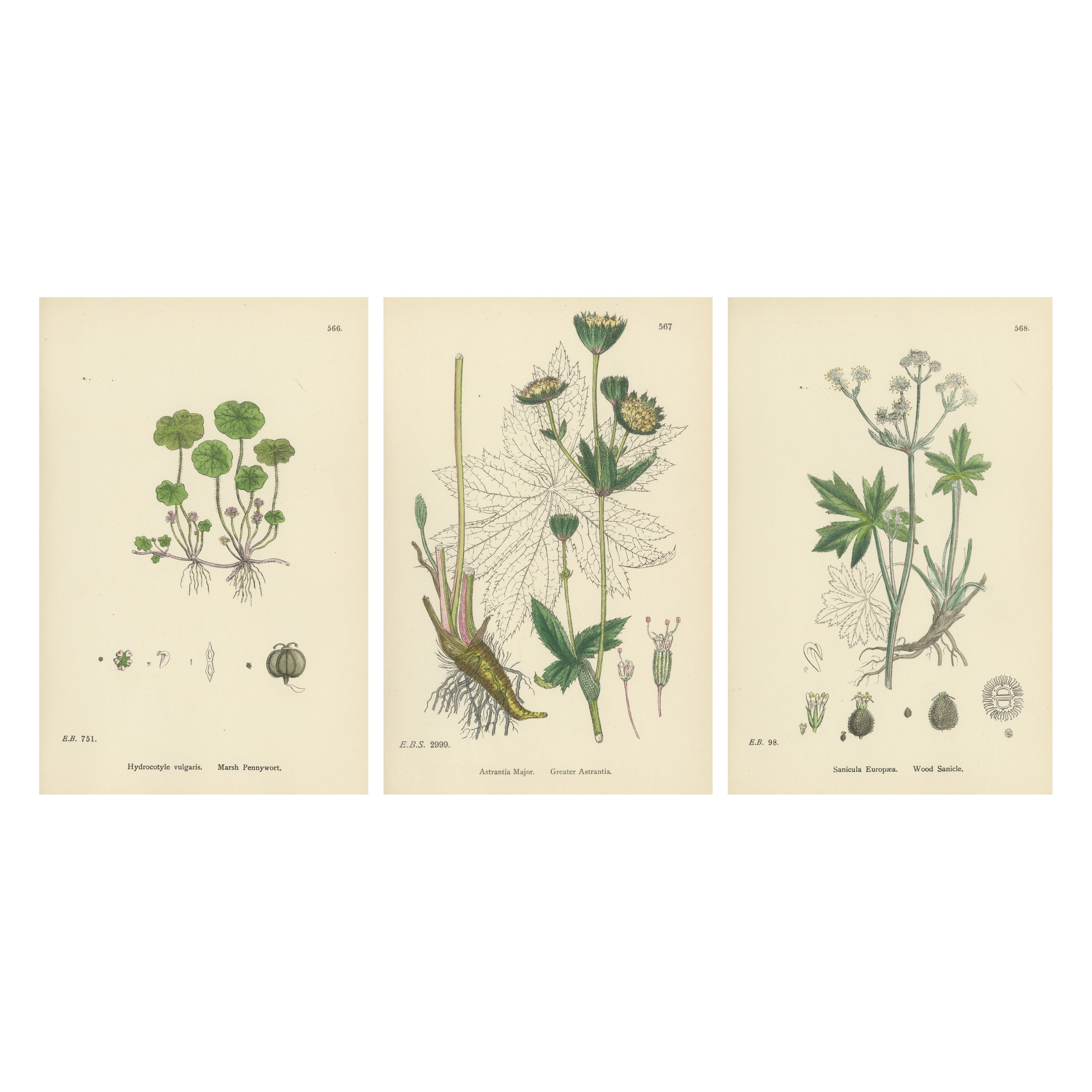
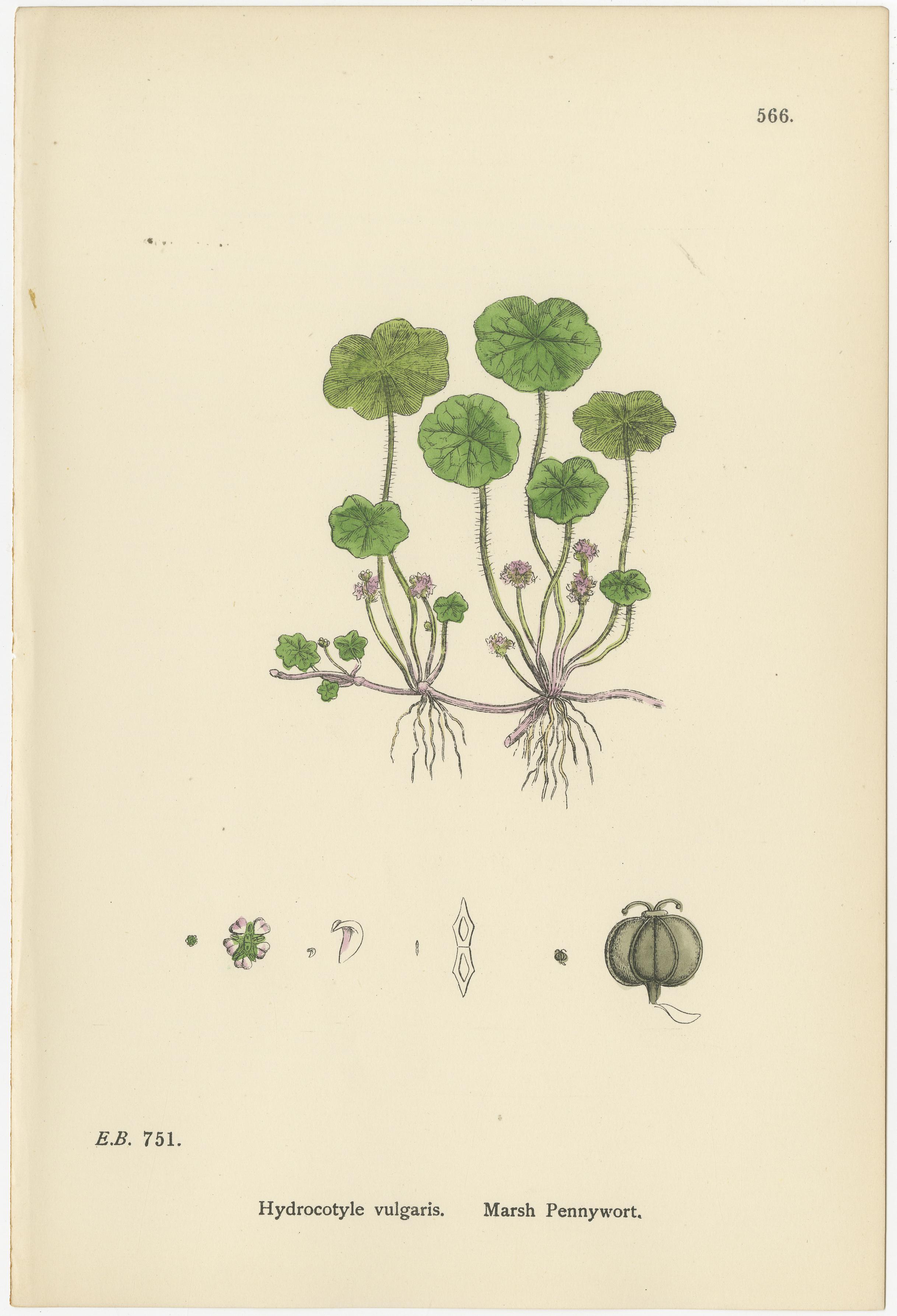
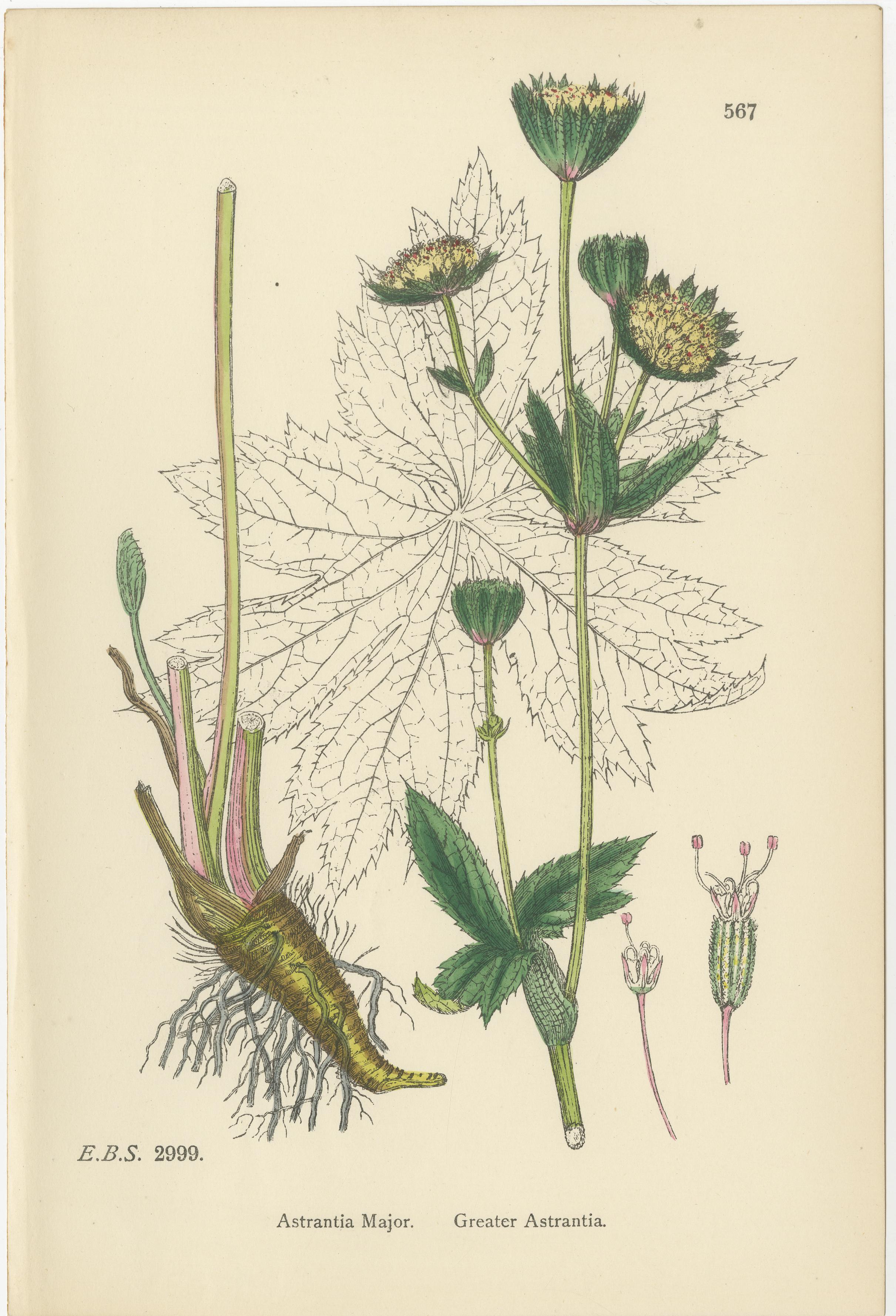
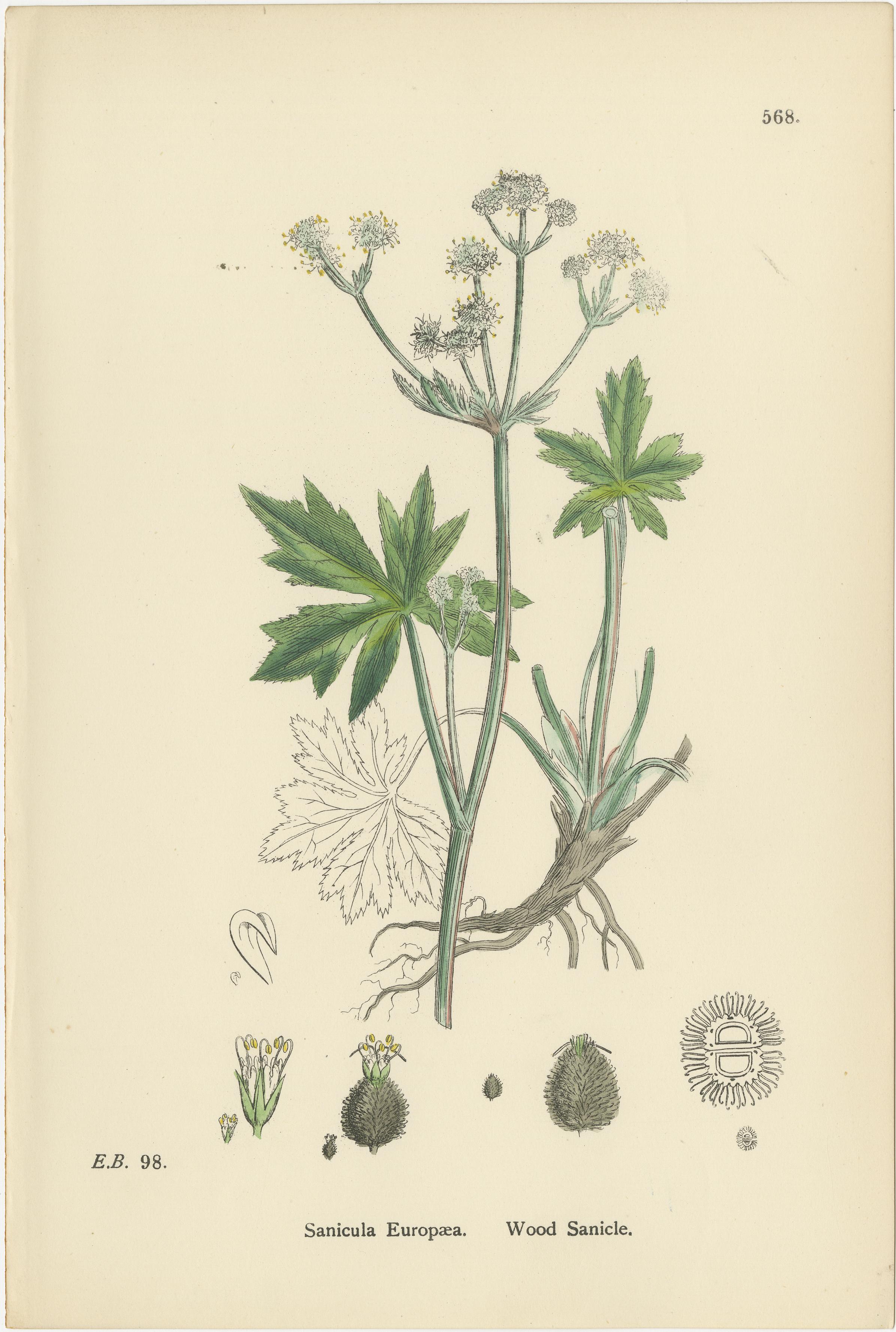
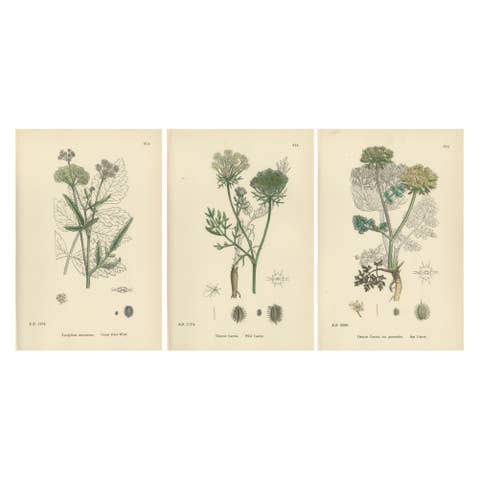
Hand-Colored Botanical Engravings of Marsh Pennywort, Astrantia, and Sanicle, 1902 This elegant set of three hand-colored botanical engravings from 1902 features *Hydrocotyle vulgaris* (Marsh Pennywort), *Astrantia major* (Greater Astrantia), and *Sanicula europaea* (Wood Sanicle). Each plate displays the careful precision and subtle coloration characteristic of early 20th-century British botanical illustration, merging scientific accuracy with artistic refinement.
The first plate, *Hydrocotyle vulgaris*, illustrates a delicate marsh plant with round, penny-shaped leaves held aloft by thin stems that creep horizontally across moist ground. Its small, pinkish-white flowers and graceful rooting habit are rendered in fine watercolor, evoking the calm stillness of European wetlands. The center engraving, *Astrantia major*, shows the well-known “Masterwort,” with its distinctive starry umbels enclosed by papery green bracts and deeply divided leaves. The artist’s attention to the plant’s structure—from its rhizomatous base to the intricate floral details—reflects both scientific study and aesthetic appreciation. The final engraving, *Sanicula europaea*, known as Wood Sanicle, completes the trio with its lobed leaves and pale white flowers arranged in compact umbels. Often found in woodland shade, this plant was traditionally valued for its healing properties and appears here as both elegant and robust.
Together, the three plates form a harmonious composition of contrasting forms: from the creeping habit of the Pennywort to the upright presence of Astrantia and Sanicle. Their naturalistic colors and balanced arrangement make them equally suitable for collectors of botanical art or for refined interior display.
Condition report: Excellent condition with crisp plate impressions, original hand coloring, and full margins. Light, even toning consistent with age; visible plate marks confirm authenticity.
Framing tips: Best presented as a vertical or horizontal triptych in matching gold, oak, or dark walnut frames with soft ivory or pale green mounts. The earthy tones and scientific charm make them ideal for study rooms, conservatories, or vintage-inspired interiors.
Technique: Hand-colored engraving Maker: British, published London, 1902