About this sheet
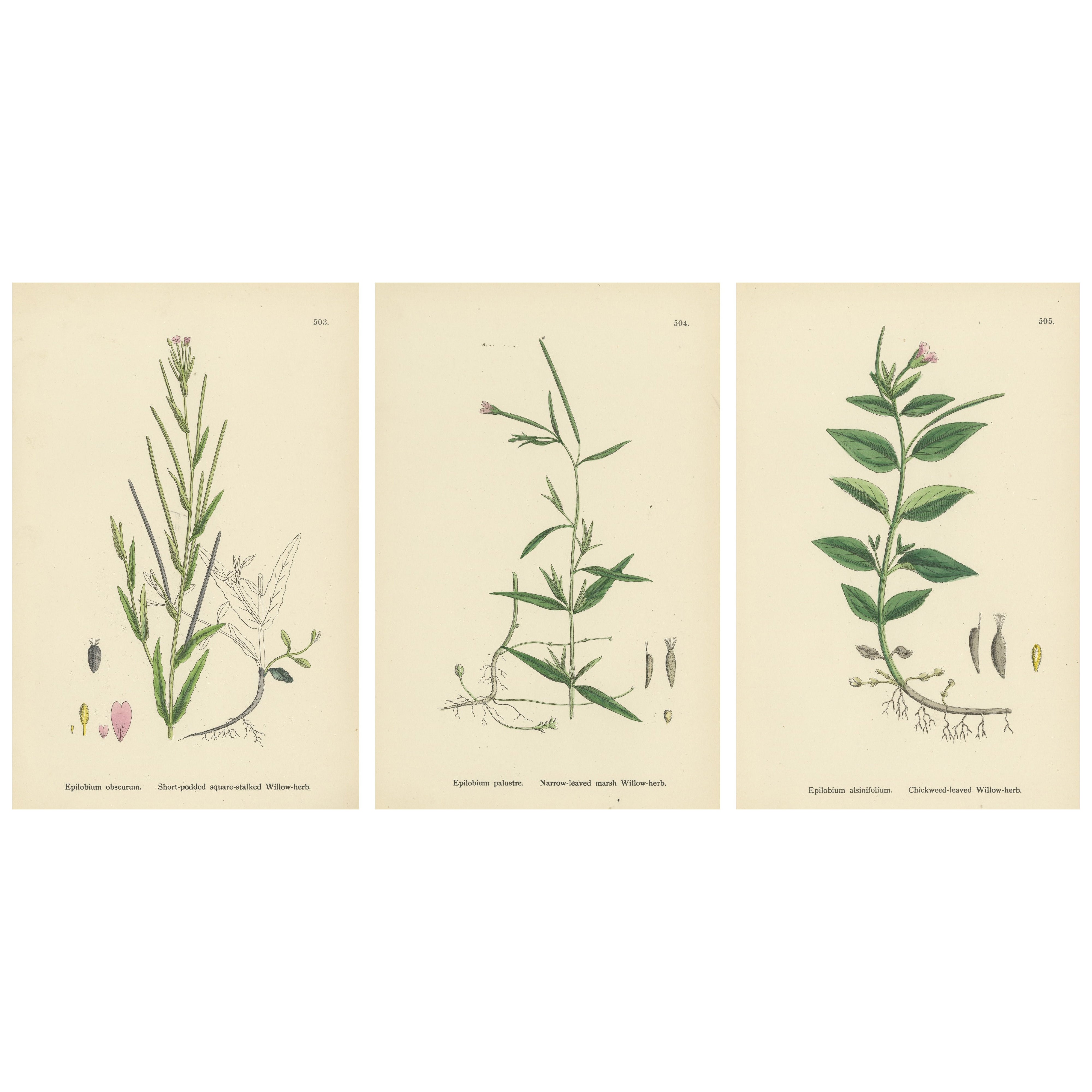
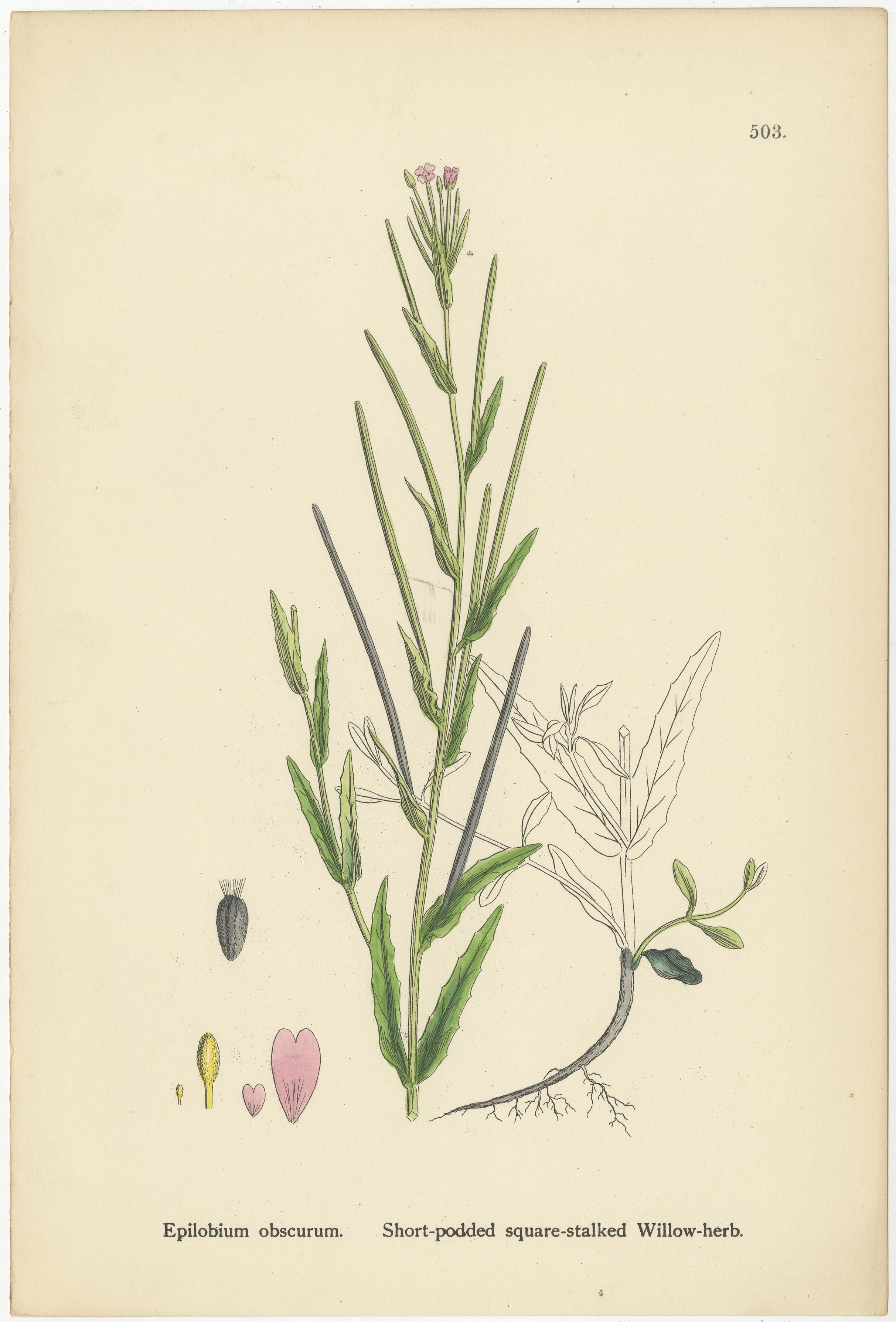
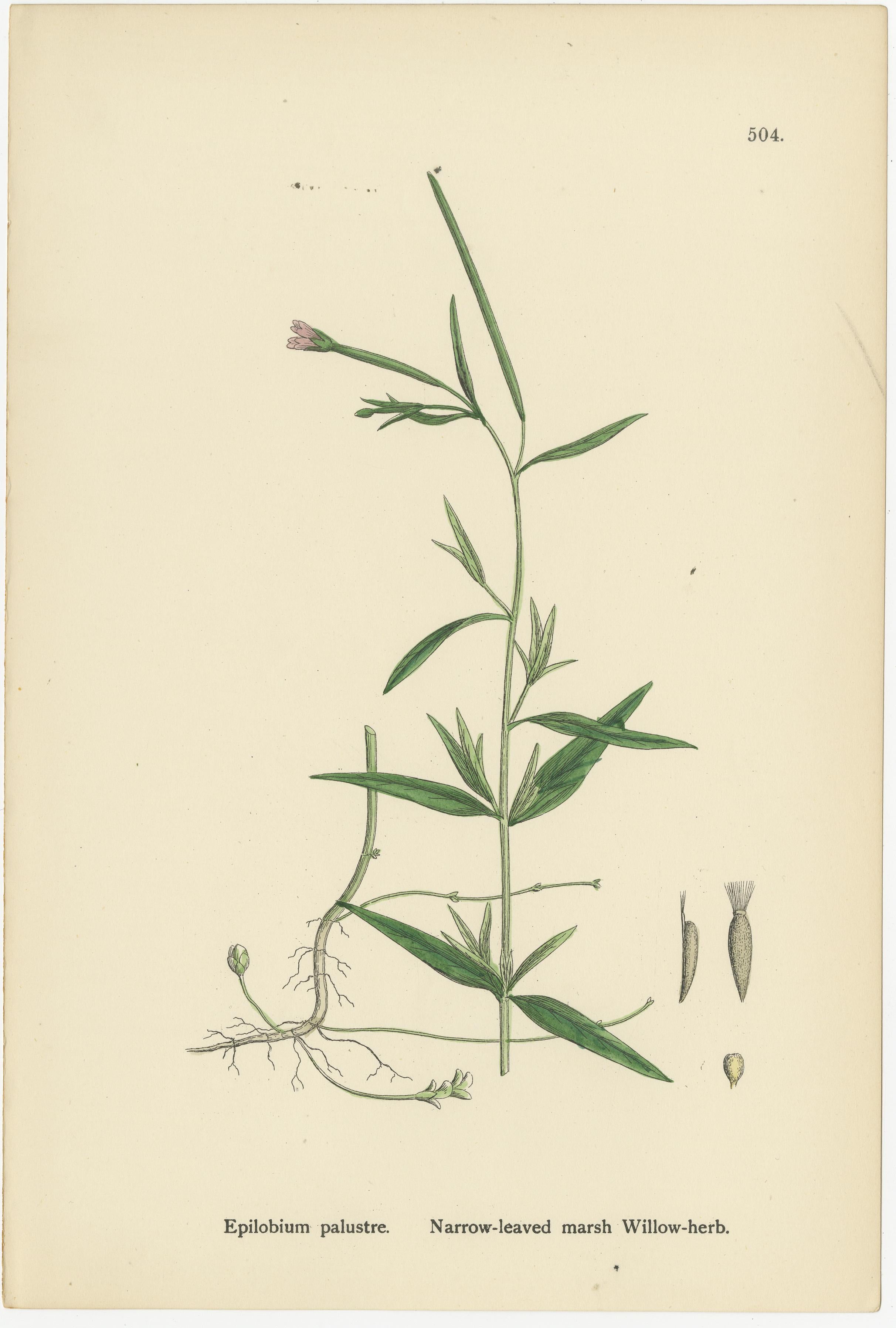
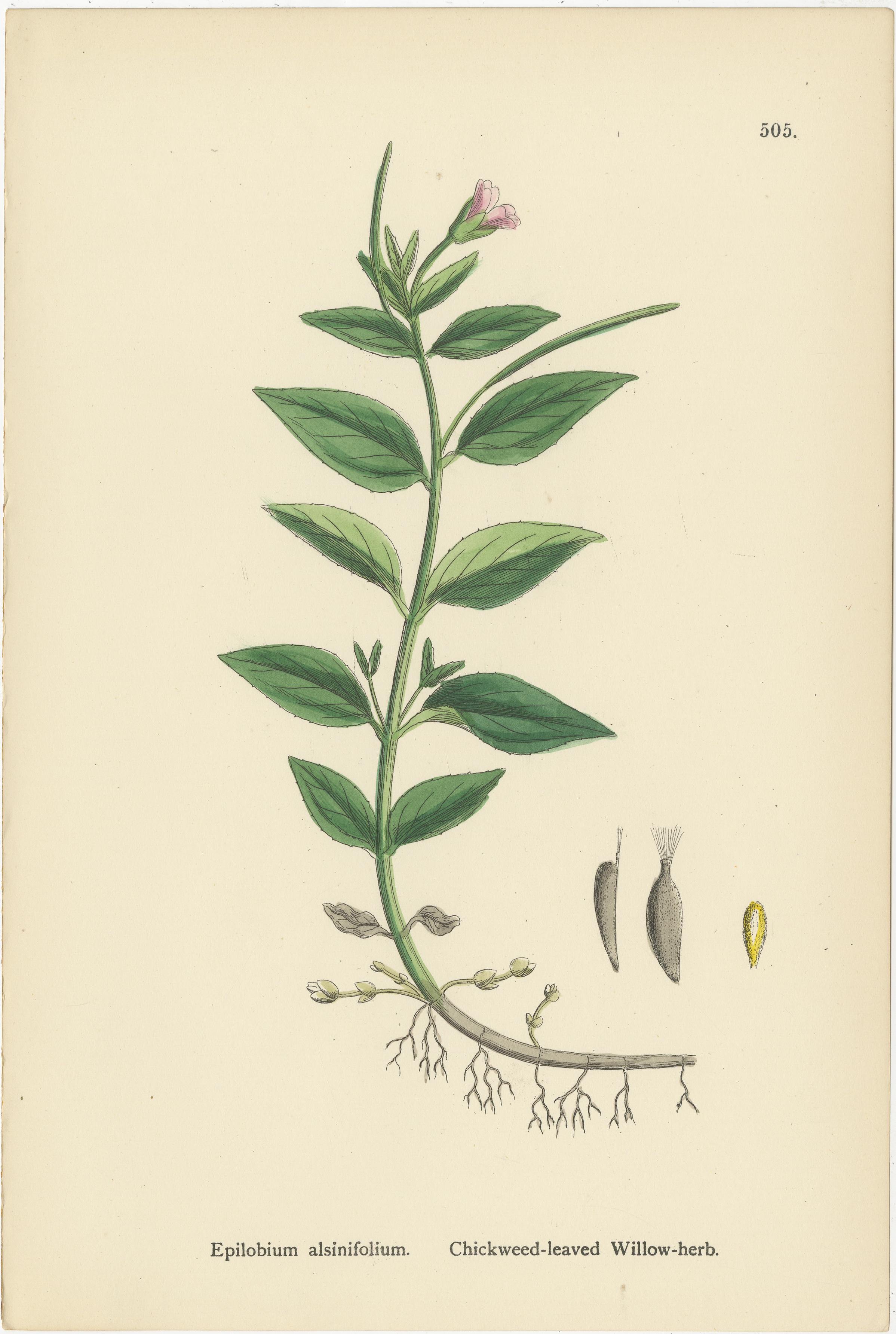
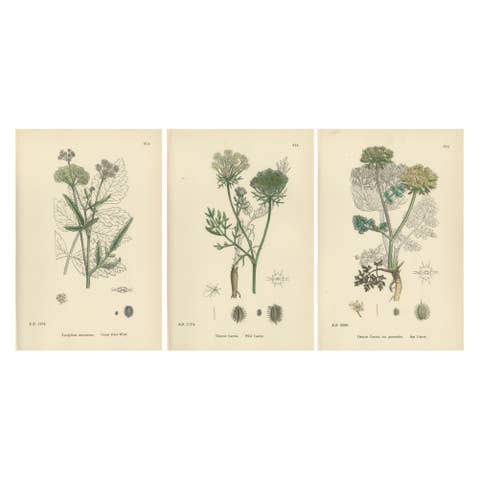
This delicate botanical trio from 1902 features three beautifully hand-colored engravings of the Willow-herb (Epilobium) family, each representing species native to Britain’s wetlands and damp meadows. The plates illustrate Epilobium obscurum (Short-podded Square-stalked Willow-herb), Epilobium palustre (Narrow-leaved Marsh Willow-herb), and Epilobium alsinifolium (Chickweed-leaved Willow-herb). Together, these three compositions capture the quiet beauty of modest wild plants often overlooked yet essential to the balance of marshland ecosystems.
The first plate, Short-podded Square-stalked Willow-herb, shows a tall, slender plant with angular stems, elongated seed pods, and small pink blossoms. The middle image, Narrow-leaved Marsh Willow-herb, depicts a graceful, upright plant with thin leaves and a rooting base that hints at its preference for wet, low-lying soils. The final plate, Chickweed-leaved Willow-herb, offers a visual contrast with broader, more rounded foliage and a creeping rhizome, characteristic of species that spread along stream edges and boggy ground.
Rendered with fine engraved lines and subtle hand coloring, each plate combines clarity of scientific observation with quiet artistry. The engraved dissections and seed structures at the lower margin demonstrate the careful botanical study typical of late Victorian natural history works, while the delicate pink and green tones remain fresh and harmonious.
Condition report: Excellent condition with light toning and minimal specks in the margins. Strong plate impressions with ample borders and clean paper. No tears or repairs.
Framing tips: These three prints make a particularly elegant set when framed together in simple gilt, natural wood, or dark green frames. Use soft cream or light grey mounts to enhance the pastel hues. Their vertical format and botanical restraint suit both traditional and contemporary interiors, perfect for hallways, studies, or garden rooms.
Technique: Hand-colored engraving
Maker: British, published London, 1902