About this sheet
Hand-Colored Botanical Engravings of Golden Saxifrage and Grass-of-Parnassus, 1902
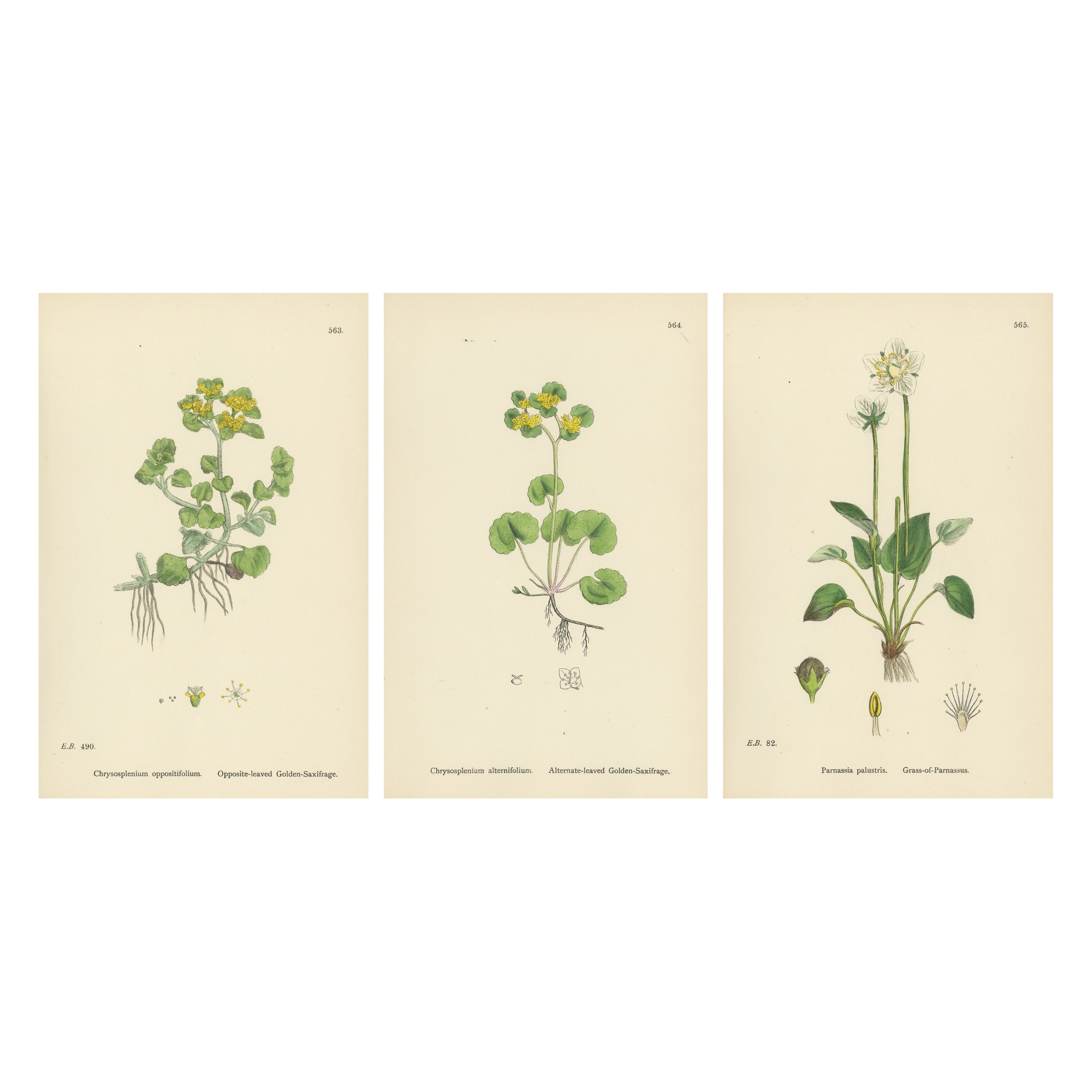
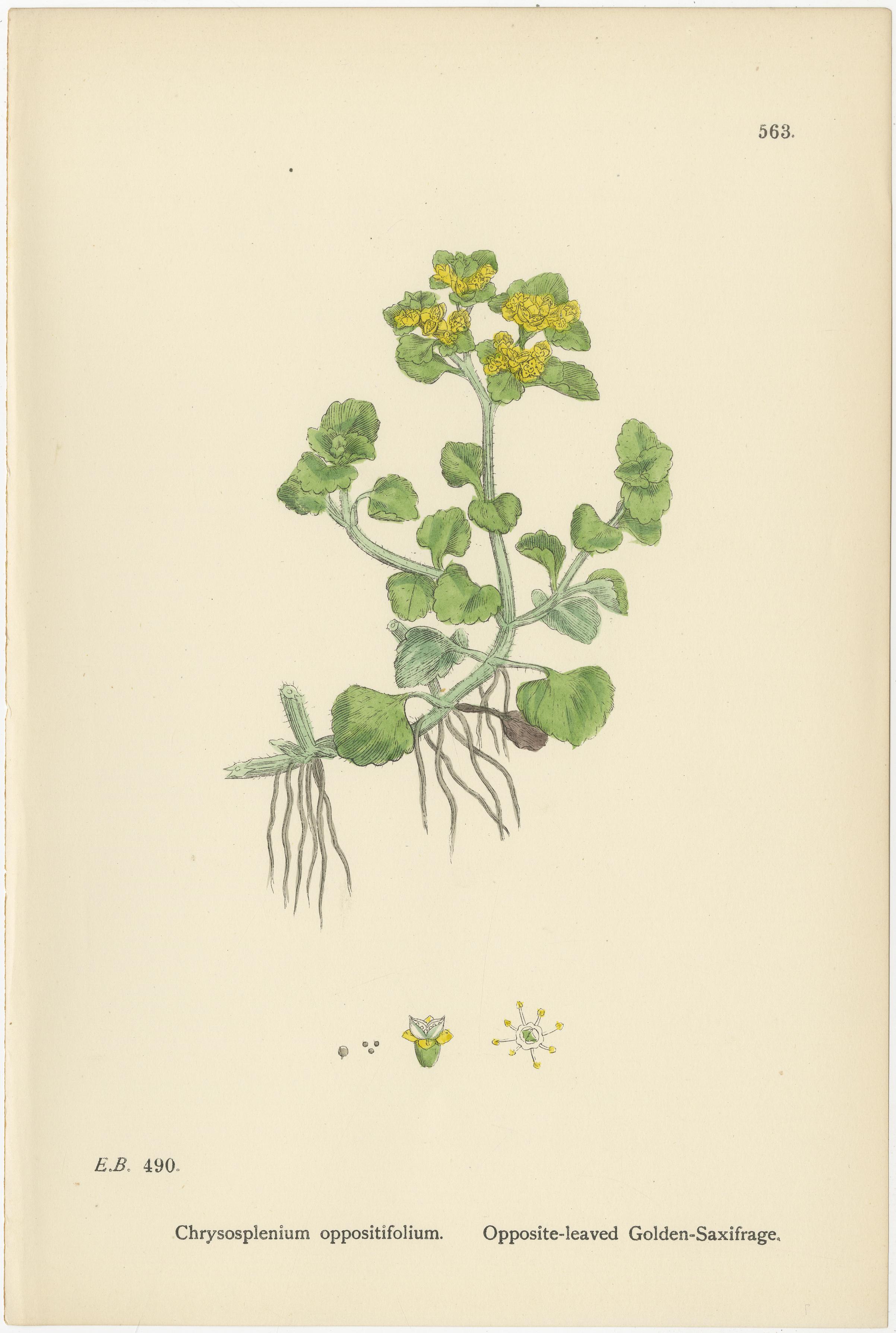
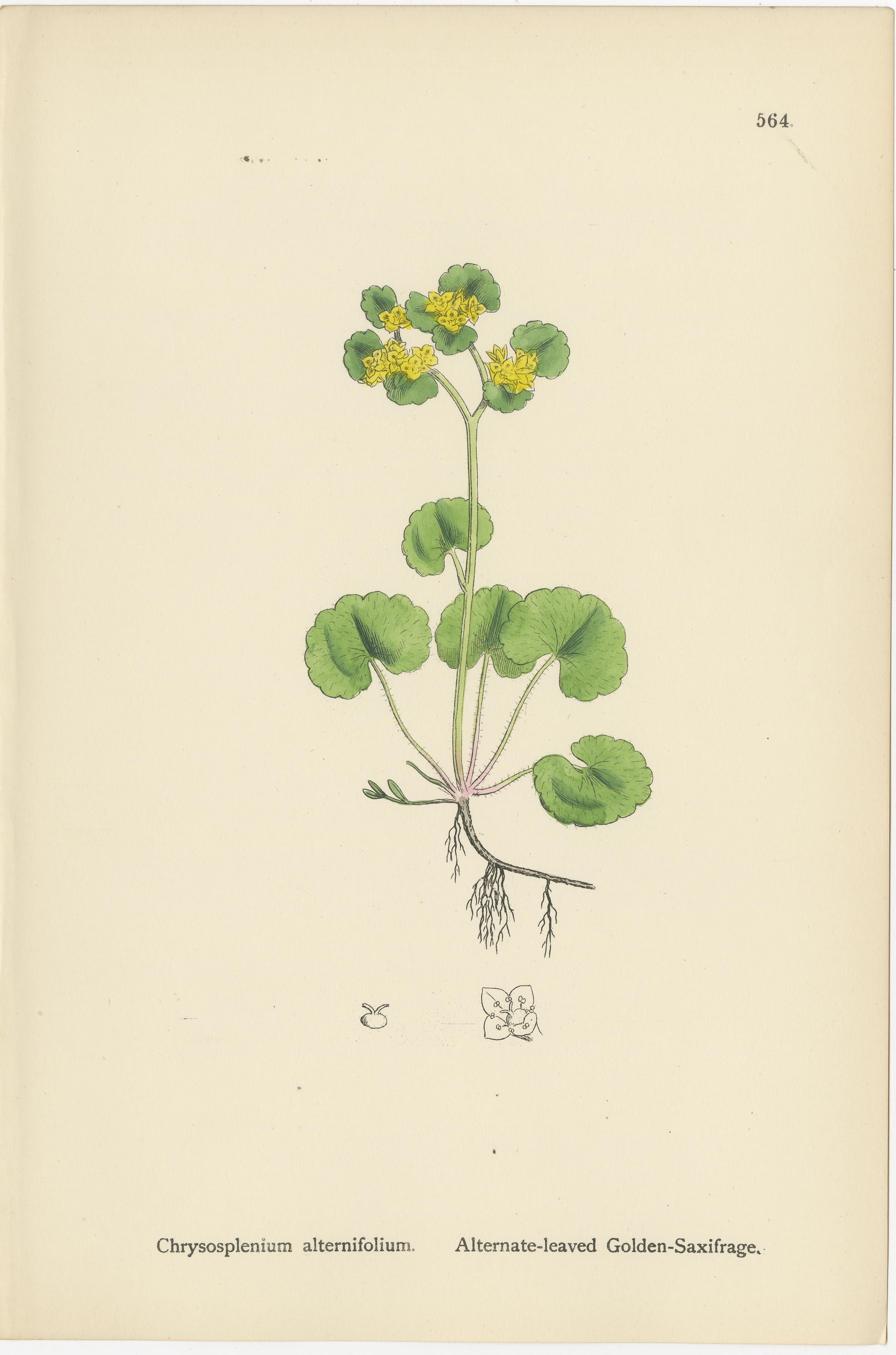
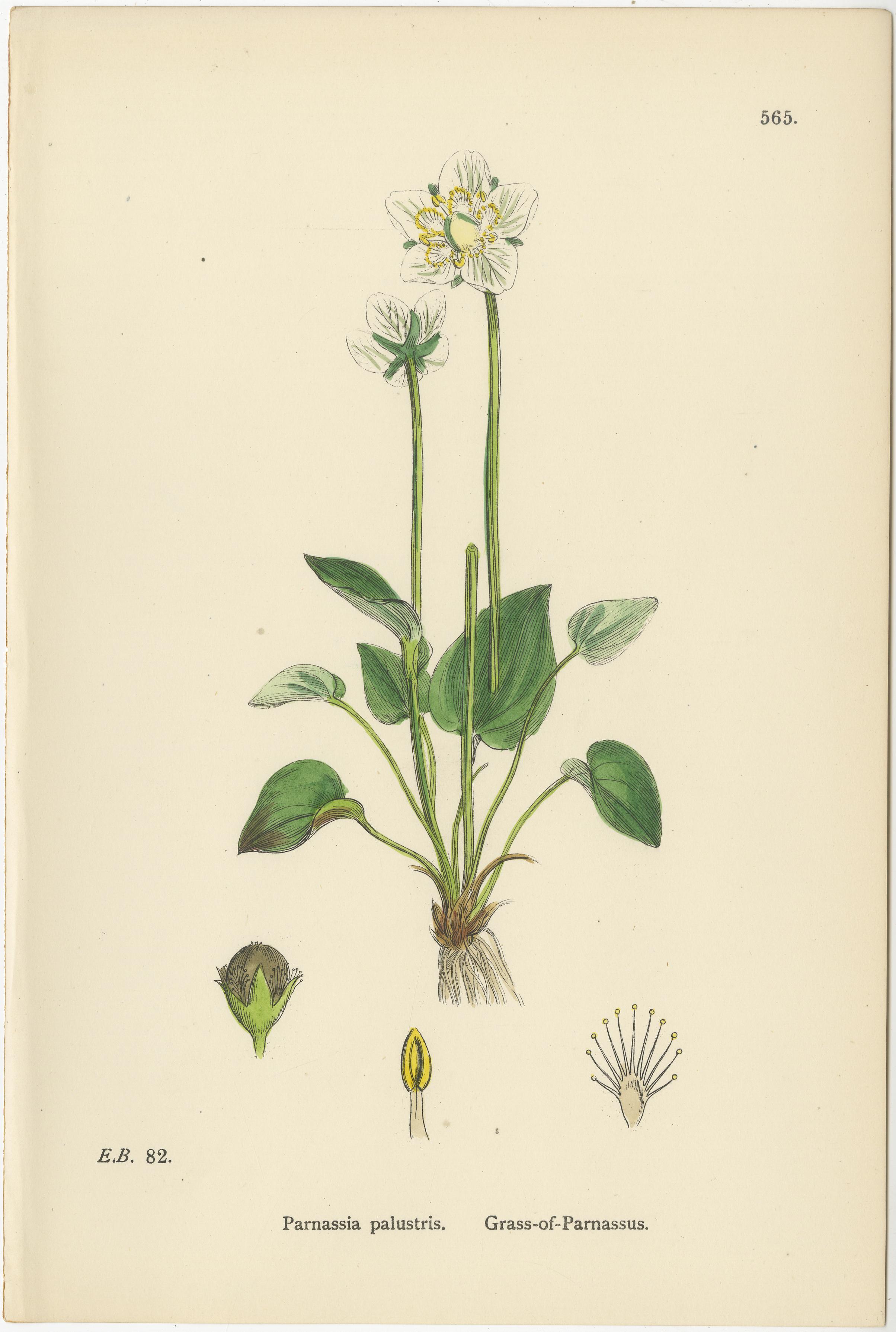
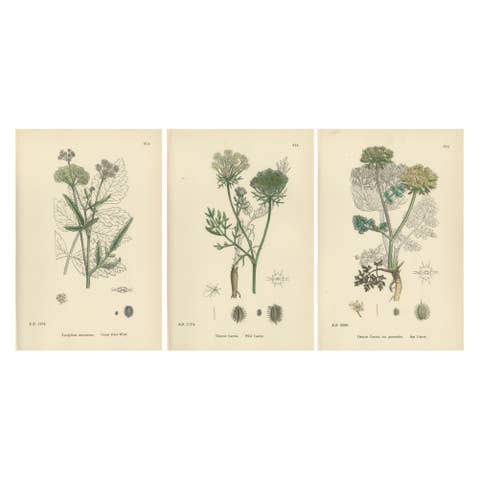
This refined trio of hand-colored botanical engravings from 1902 illustrates Chrysosplenium oppositifolium (Opposite-leaved Golden Saxifrage), Chrysosplenium alternifolium (Alternate-leaved Golden Saxifrage), and Parnassia palustris (Grass-of-Parnassus). These elegant depictions capture the luminous delicacy of moisture-loving wildflowers native to shaded woodlands, stream banks, and alpine meadows across Europe.
The first engraving, Chrysosplenium oppositifolium, shows a dense cluster of rounded, opposite leaves from which arise sprays of tiny golden-green flowers. The artist’s fine watercolour work highlights the subtle variation in hue between leaf and bloom, emphasizing the plant’s fresh, verdant charm. In the second plate, Chrysosplenium alternifolium presents a similar but more open composition, where alternate leaf arrangement gives the plant a lighter, airier structure—its slender stems and bright yellow blossoms perfectly illustrating its preferred damp woodland habitat.
The third engraving, Parnassia palustris, contrasts beautifully with the others through its elegant white, star-shaped flowers veined in pale green. Known poetically as the Grass-of-Parnassus, this alpine species has long been admired for its harmonious symmetry and purity of form. The artist renders its solitary stems and heart-shaped leaves with remarkable precision, reflecting both botanical accuracy and artistic grace.
Together, these prints form a balanced study of tone and composition, uniting the golden luminosity of the Chrysosplenium species with the ethereal beauty of Parnassia palustris.
Condition report: Excellent condition with strong plate impressions and delicate original coloring. Minor, even toning consistent with age; plate marks clearly visible.
Framing tips: Best displayed in soft gold or pale wood frames with ivory or warm cream mounts to highlight the subtle greens and yellows. When hung as a trio, they create a serene botanical statement suitable for living spaces, hallways, or conservatories.
Technique: Hand-colored engraving
Maker: British, published London, 1902