About this sheet
Hand-Colored Botanical Engravings of Caraway and Earth-Nut Species, 1902
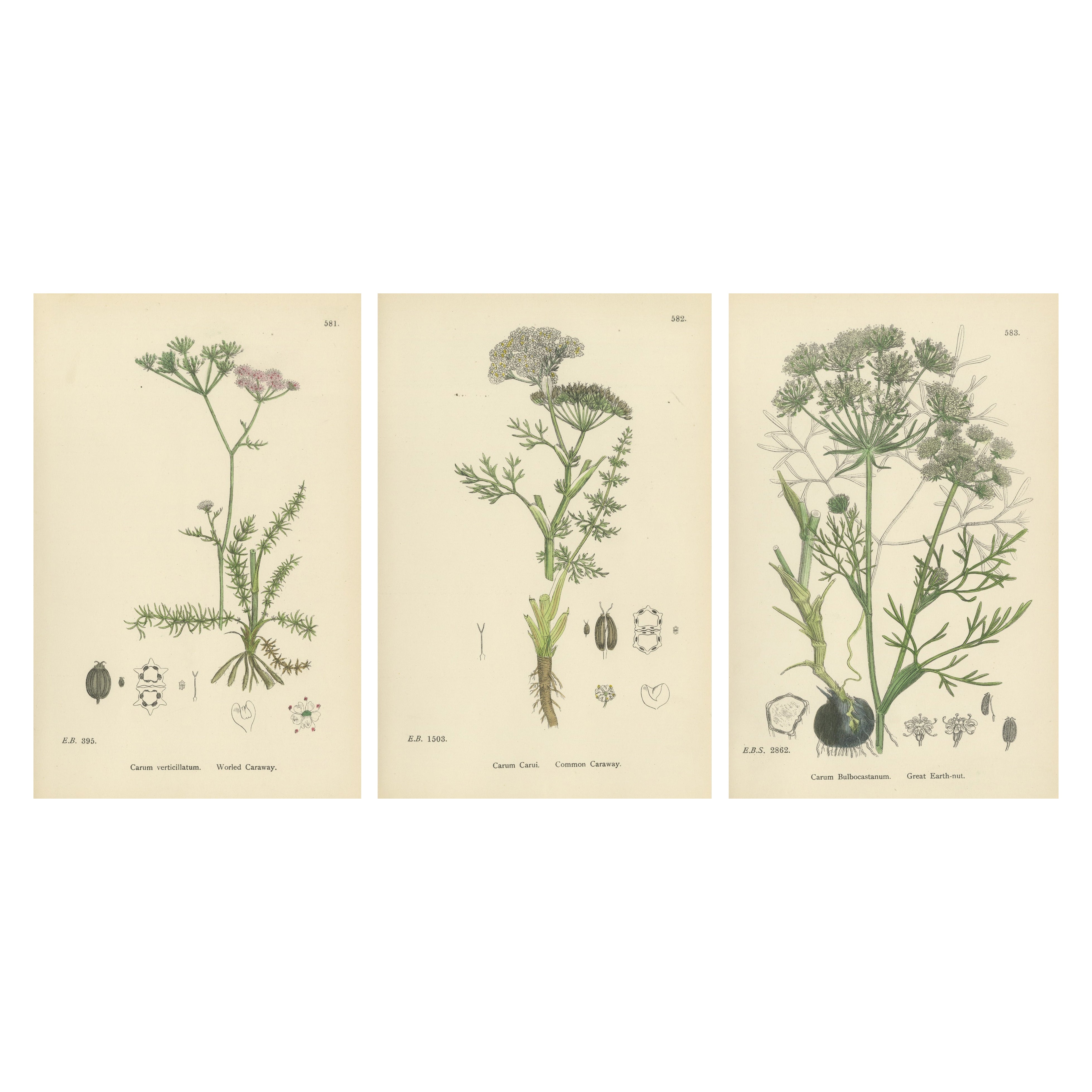
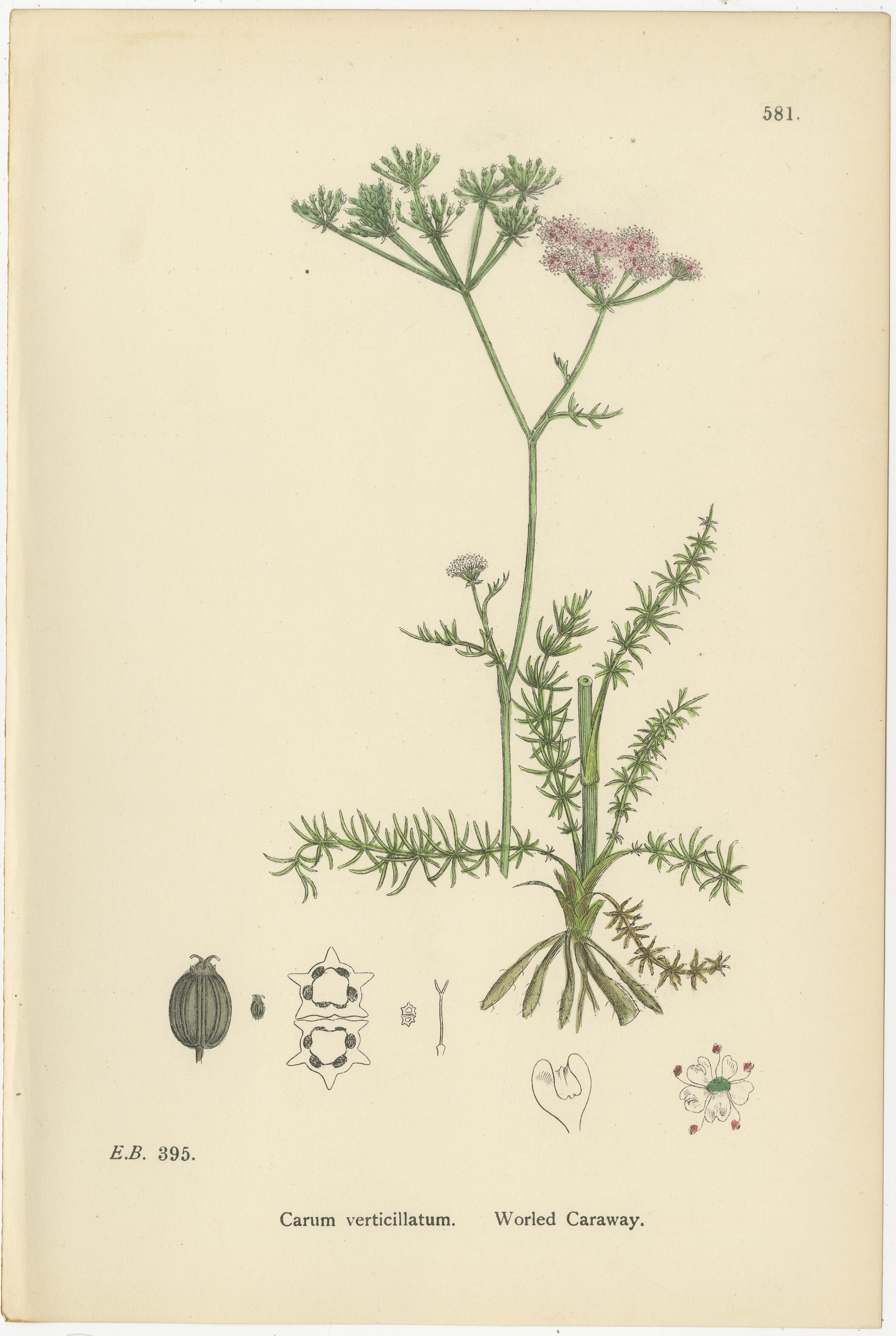
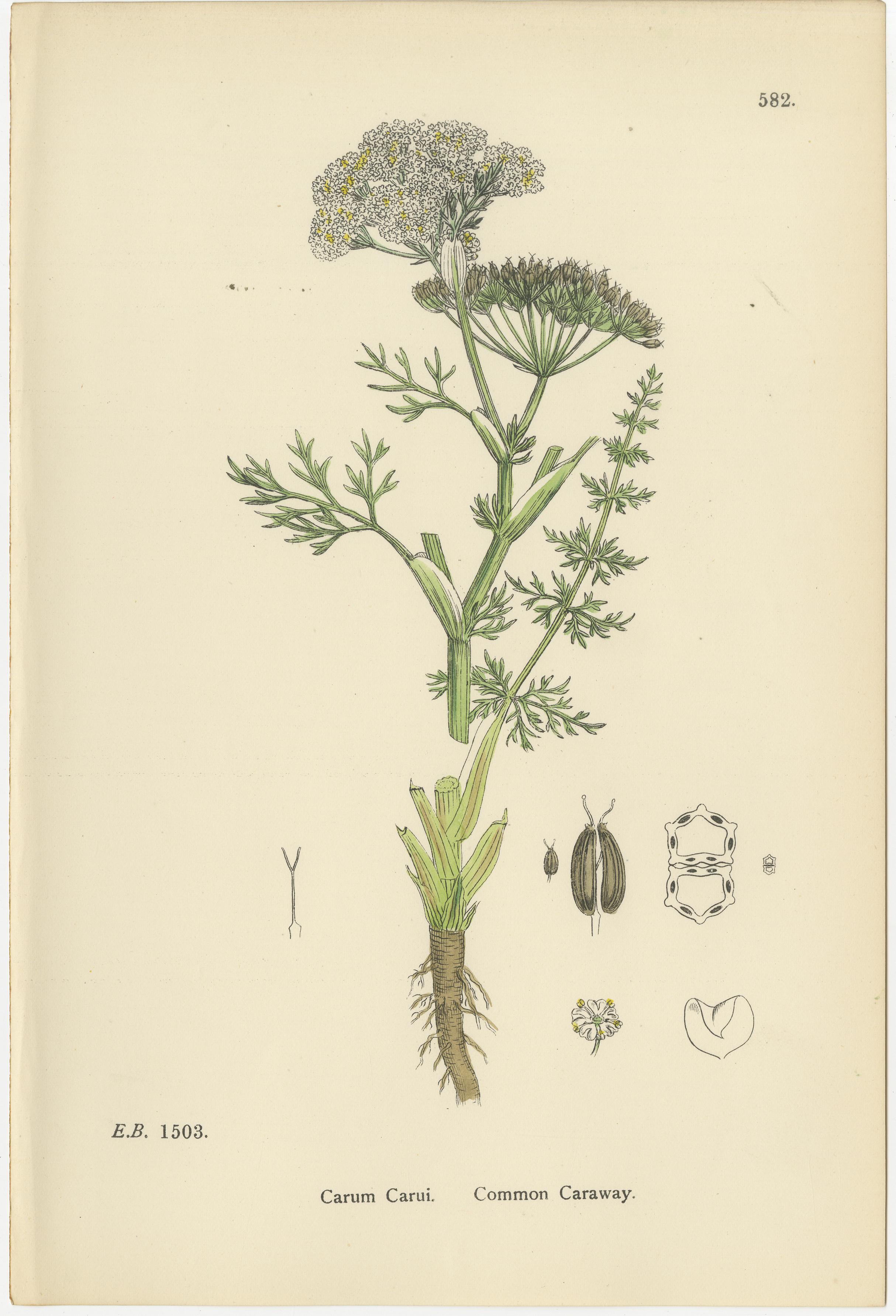
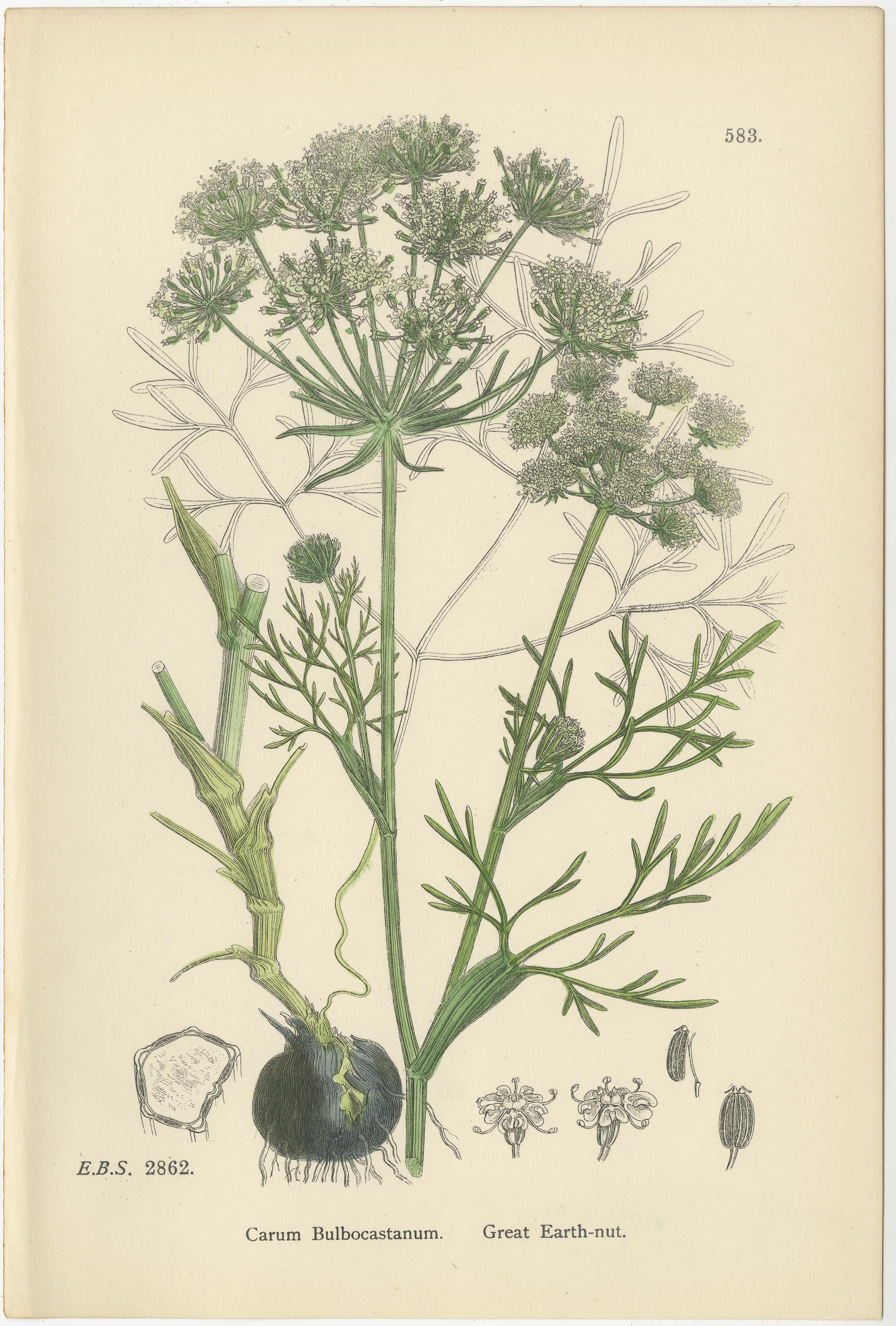
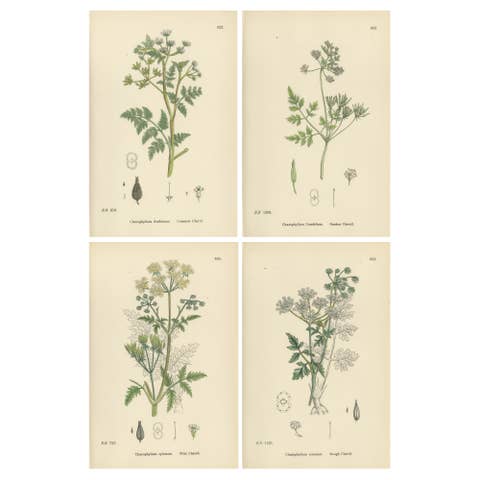
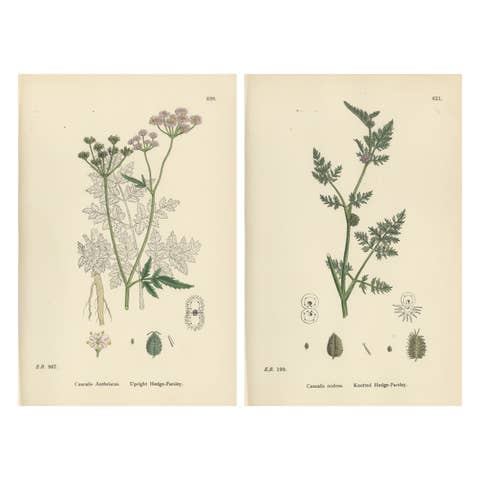
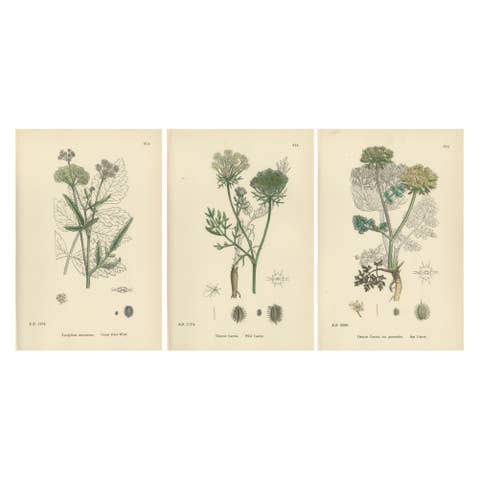
This graceful trio of hand-colored botanical engravings from 1902 presents three elegant members of the Apiaceae family — Carum verticillatum (Worled Caraway), Carum Carui (Common Caraway), and Carum Bulbocastanum (Great Earth-nut). These plates exemplify the precision and charm of early 20th-century botanical illustration, uniting artistic delicacy with scientific accuracy.
The first print, Carum verticillatum, known as Worled Caraway, depicts a slender perennial native to damp meadows of Western Europe. Its finely divided leaves and soft lilac-pink flower umbels are rendered with particular sensitivity, showcasing the subtle color gradations typical of skilled hand-coloring. The careful inclusion of seed and flower dissections below emphasizes both aesthetic and educational value.
The central engraving features Carum Carui, the Common Caraway, one of the oldest cultivated spices in Europe. With its upright stems, delicate fern-like foliage, and characteristic umbel of small white flowers, the plate captures the plant’s dual nature as both a useful herb and a botanical beauty. The enlarged seed drawings demonstrate the distinct ribbed texture of caraway fruits — the same seeds prized for their aromatic qualities in cooking and herbal medicine.
The third illustration, Carum Bulbocastanum, or Great Earth-nut, shows a lesser-known relative of the caraway, with a thicker, tuberous root. This engraving stands out for its attention to structural realism — from the swollen underground bulb to the branching umbel above. The combination of detailed botanical studies and delicate coloring provides a clear scientific portrayal while maintaining a refined decorative appeal.
Together, these three engravings form a coherent botanical study of the caraway genus, balancing aesthetic grace with horticultural depth — ideal for collectors or interiors celebrating natural forms and traditional craftsmanship.
Condition report: Excellent condition with crisp impressions, visible plate marks, and rich, original hand-coloring. Minimal toning and light foxing in the margins consistent with age.
Framing tips: These three prints display beautifully as a set. Use narrow walnut, black, or gilded frames with off-white or soft sage mounts to enhance the warm tones of the roots and foliage. Perfect for a kitchen, herbarium wall, or natural history-inspired decor.
Technique: Hand-colored engraving
Maker: British, published London, 1902