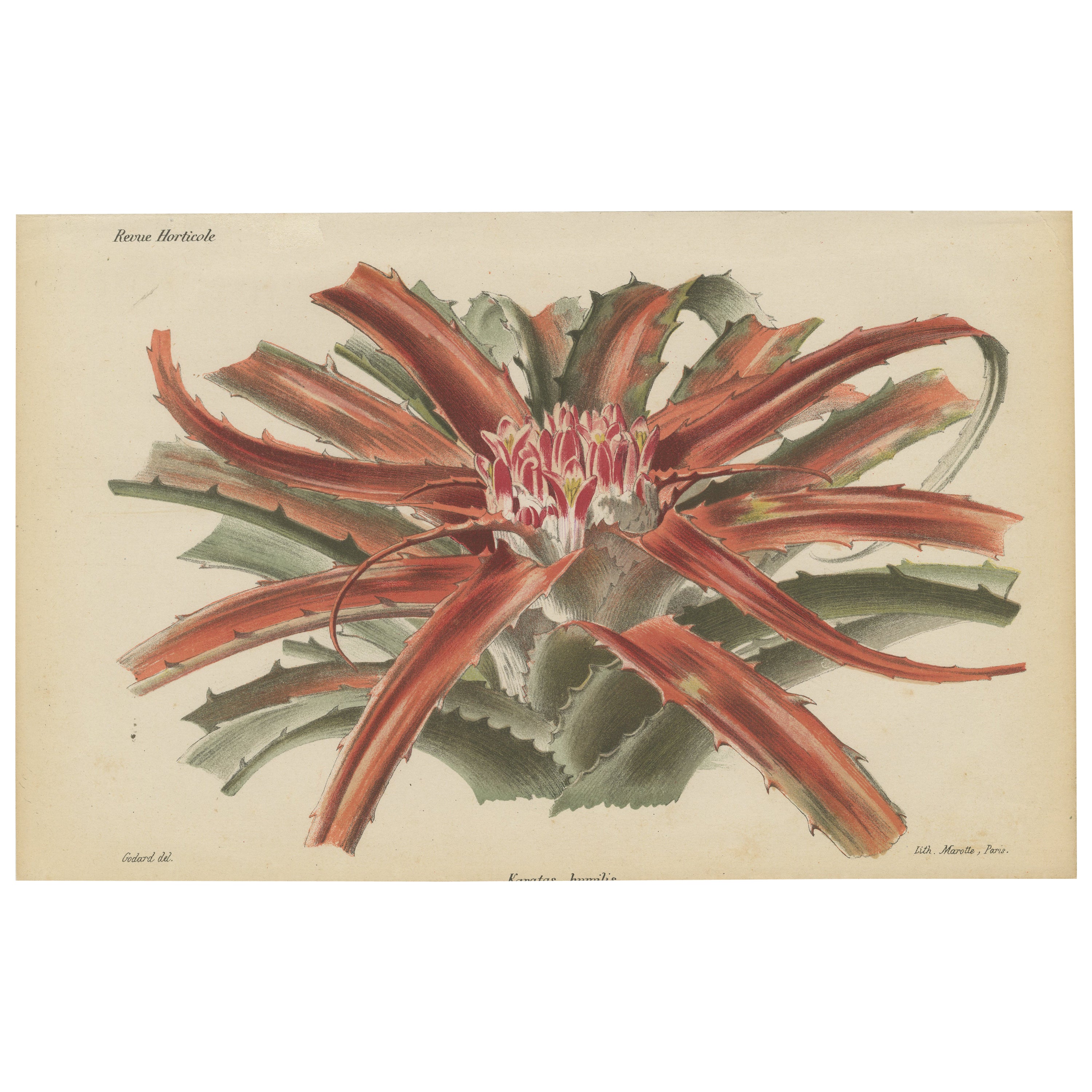
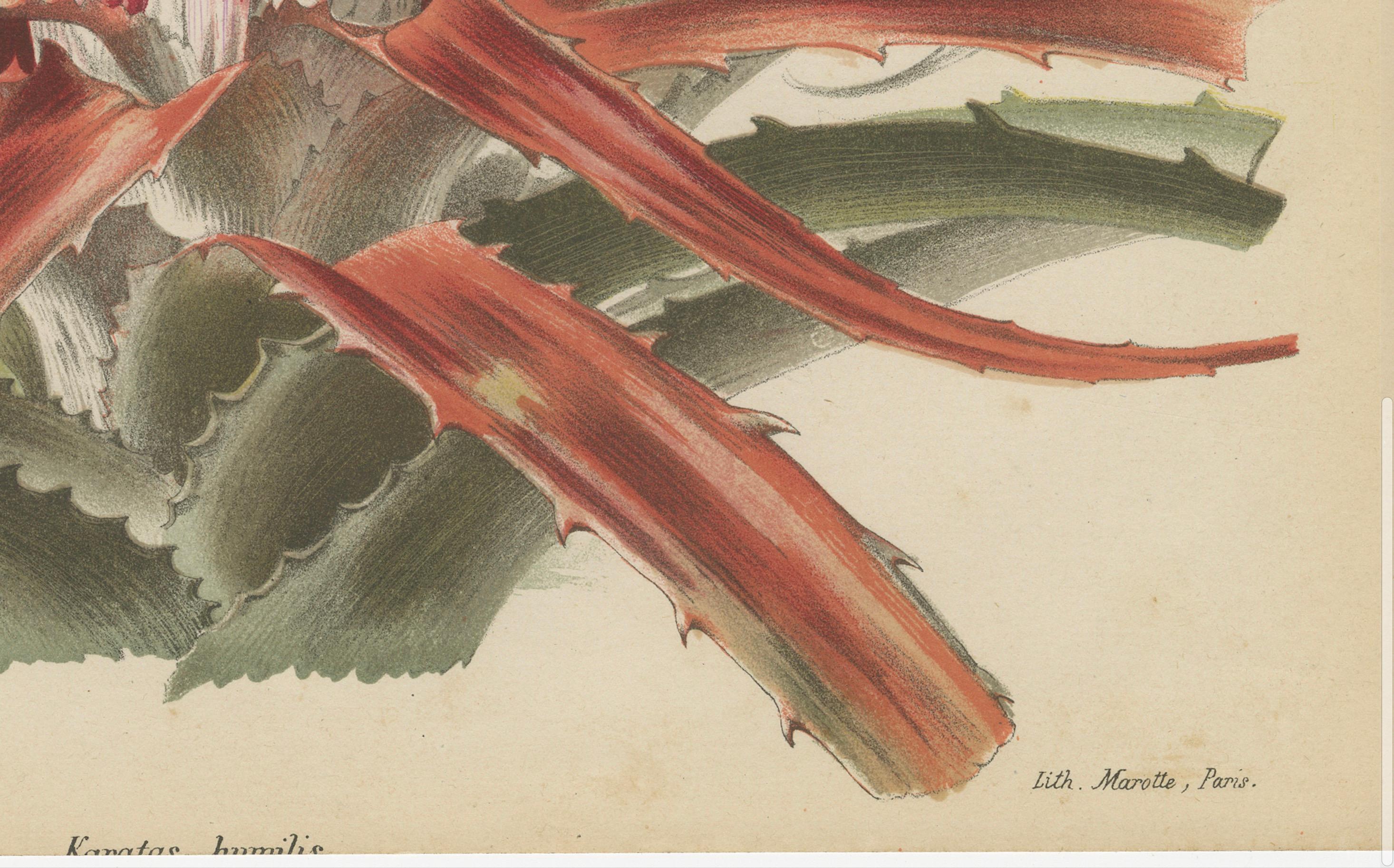
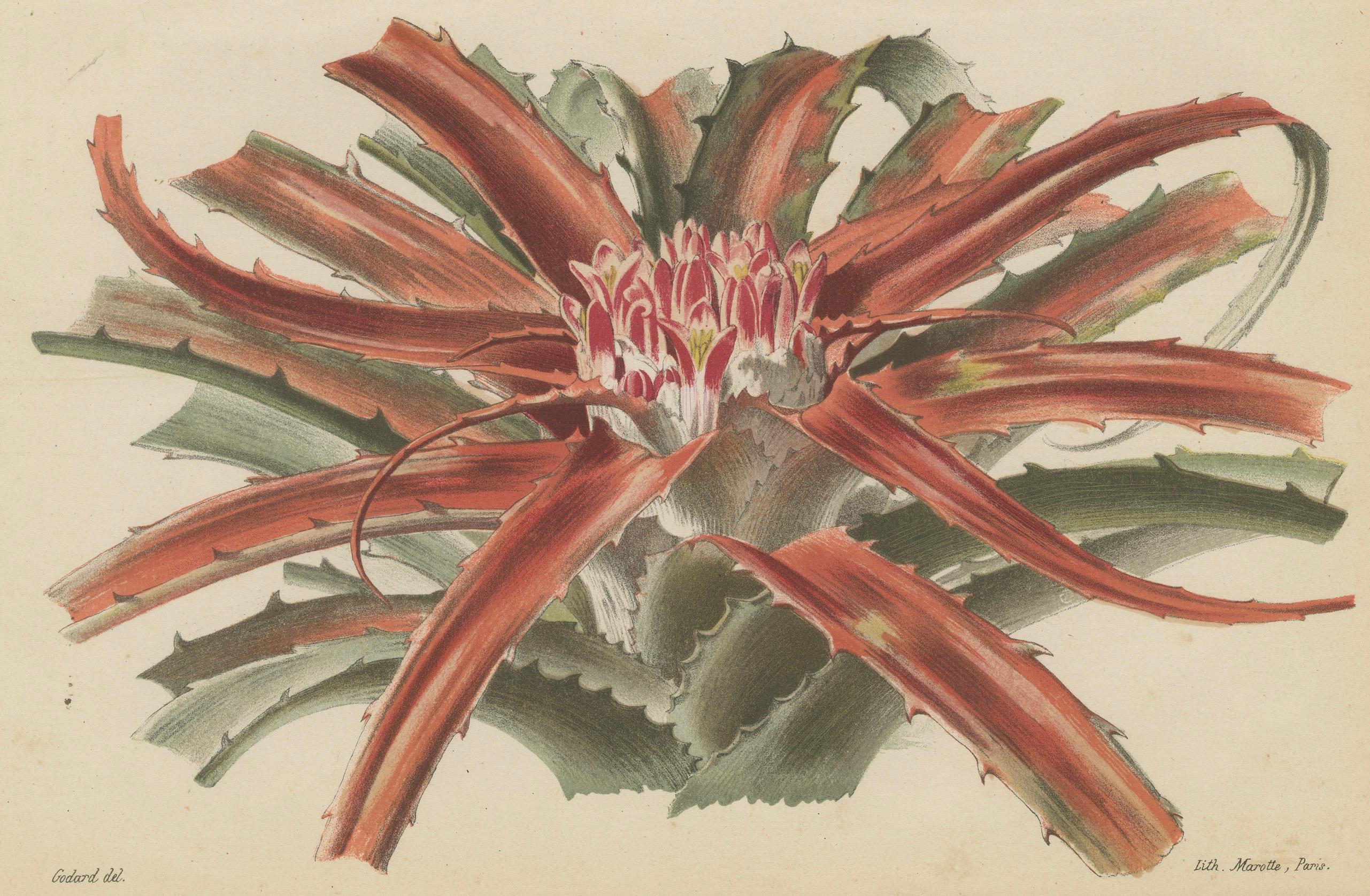
Exotic Elegance: Silver Vase Plant in Vintage Chromolithographic Art, circa 1890
€ 120
One of a kind: this is the sheet in the photographs. Ships from Langweer, the Netherlands.
Date
1890
Sheet size
15.7 × 25 cm (6.2 × 9.8 in)
Condition
Good
Reference
BG-13761-13
Condition
given age. General age-related toning and/or occasional minor defects from handling. One crease in the right top corner. Text in bottom border cut short. Please study scan carefully.
About this sheet
The print is named the Aechmea fasciata, commonly known as the Silver Vase Plant or Urn Plant. This is a fine colored chromolithographic print from the 'Revue de l'Horticulture Belge et Étrangère,' which was published between 1875 and 1906.
Description of Aechmea fasciata:
- Botanical Characteristics: This bromeliad features a rosette of broad, flat, silver-striped leaves. The plant is best known for its stunning pink flower spike that bears numerous violet blooms. - Special Attributes: The Silver Vase Plant is particularly admired for its long-lasting, brightly colored inflorescence and the striking pattern of its leaves, which can also accumulate water. The plant’s durability and the dramatic contrast between its vivid flowers and variegated foliage make it a popular choice for indoor and tropical gardens.
Cultural and Botanical Significance: Aechmea fasciata is native to Brazil and is often grown as an ornamental plant in many parts of the world due to its minimal care requirements and visually appealing structure. It is especially favored in floral arrangements and as a potted plant in homes and offices for its air-purifying qualities and low water needs, thriving in environments with indirect light and moderate humidity.
The inclusion of Aechmea fasciata in the 'Revue de l'Horticulture Belge et Étrangère' underscores its popularity and horticultural interest during the late 19th and early 20th centuries, reflecting the era’s fascination with exotic tropical plants which gardeners in Europe and beyond endeavored to cultivate and breed.
This print not only serves as a botanical study but also as an example of the period's art and printing techniques, demonstrating the high level of detail and color accuracy achievable in chromolithography at the time.