About this sheet
English Moths on Oak & Elm – Hand-Colored Entomology Engraving, Albin 1720
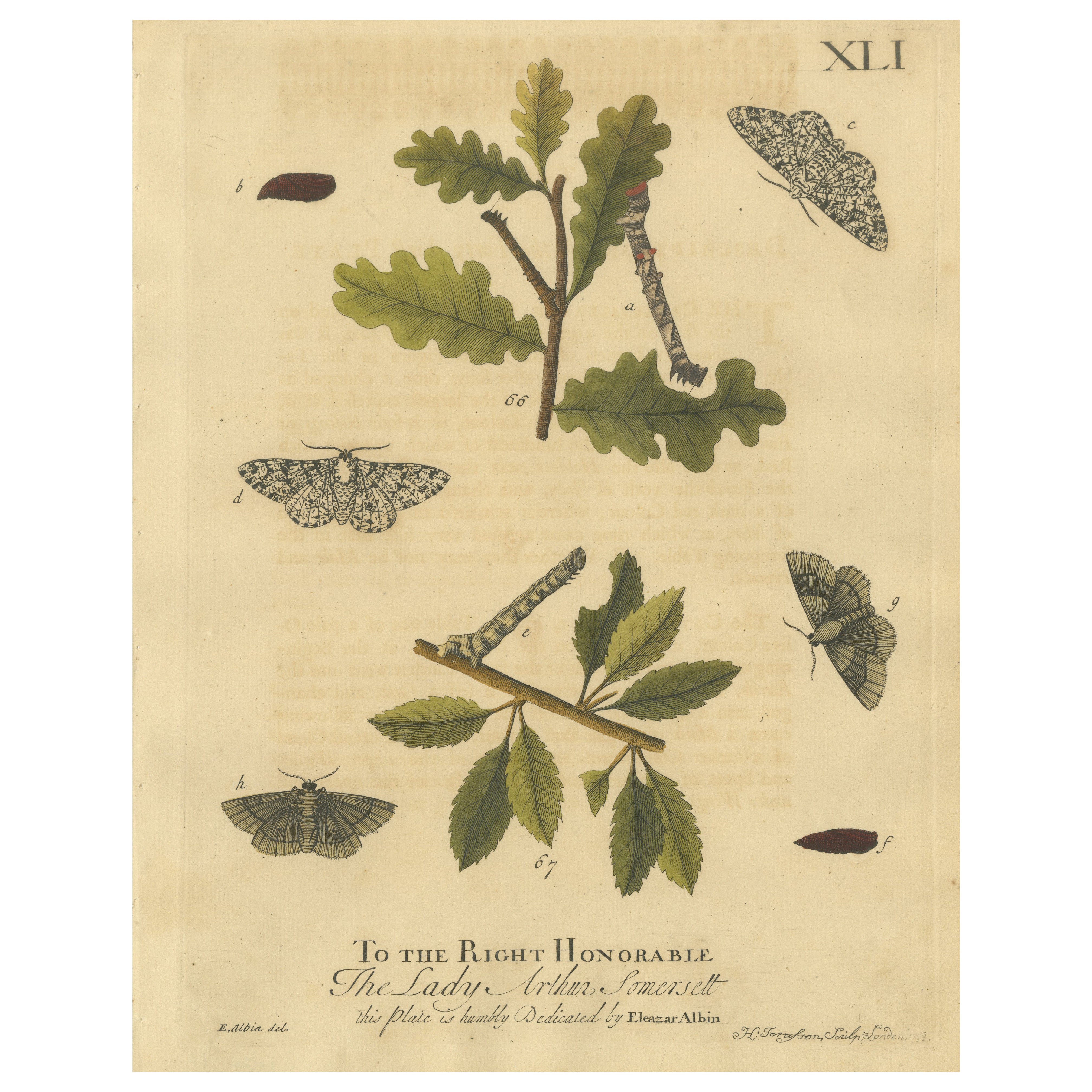
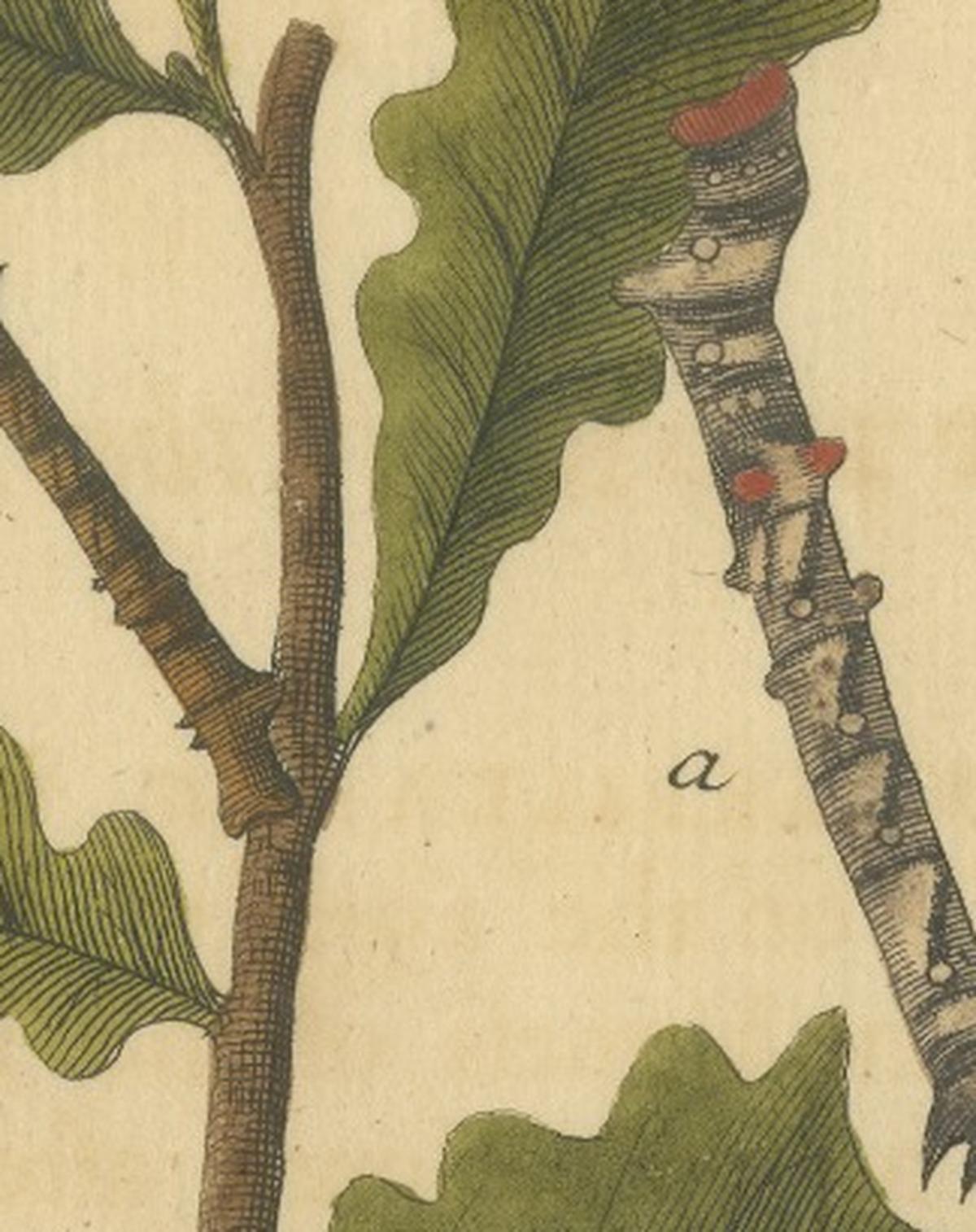
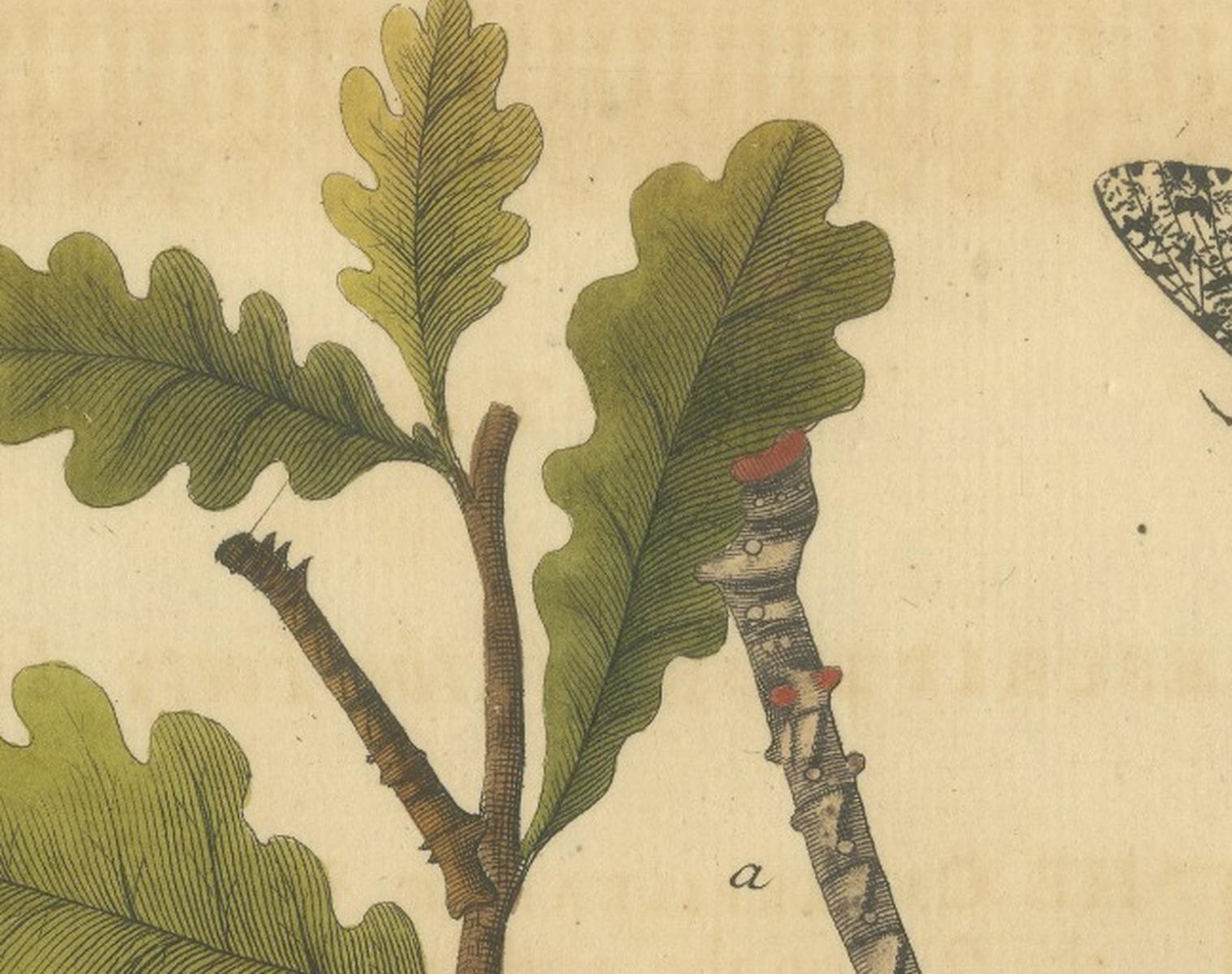
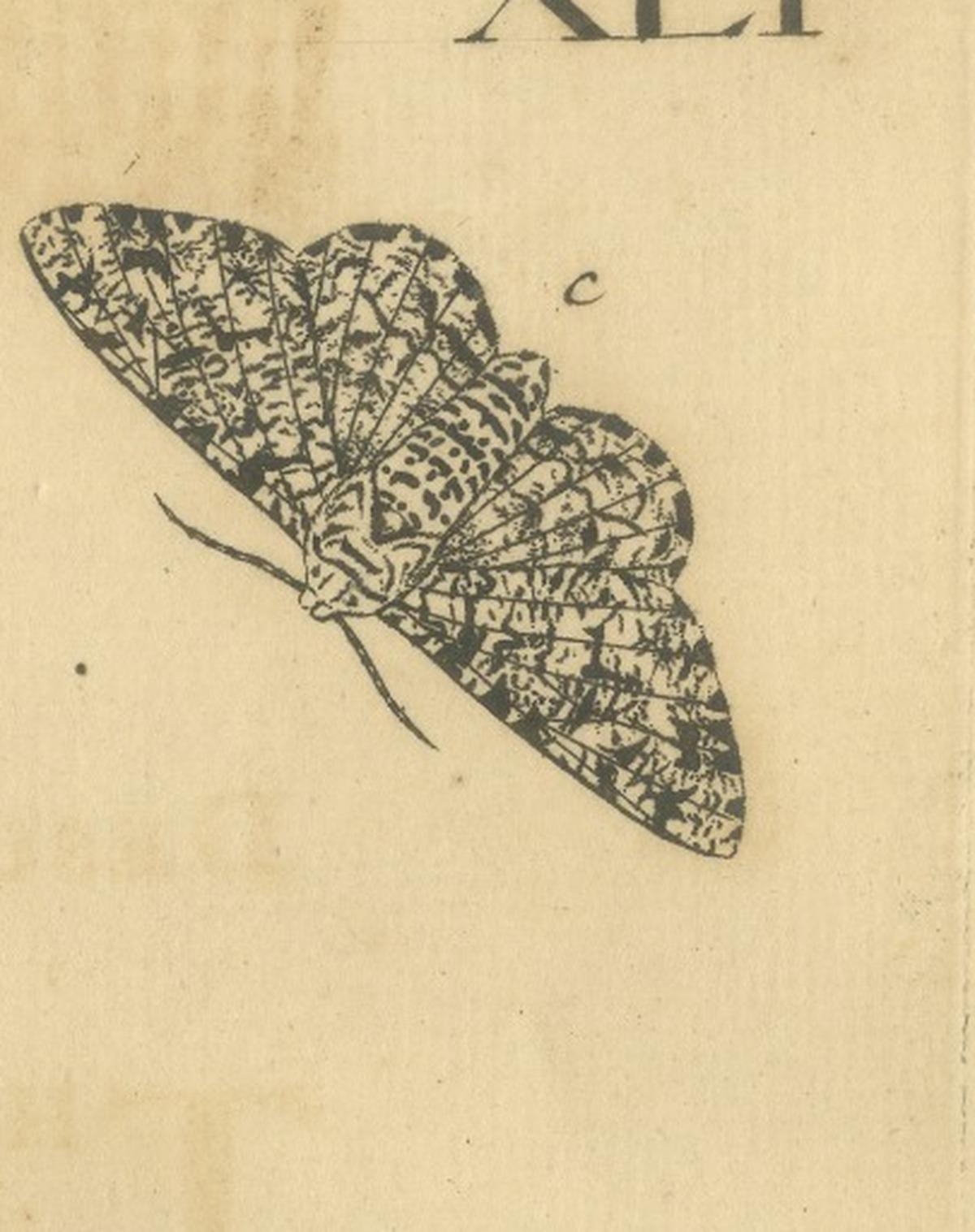
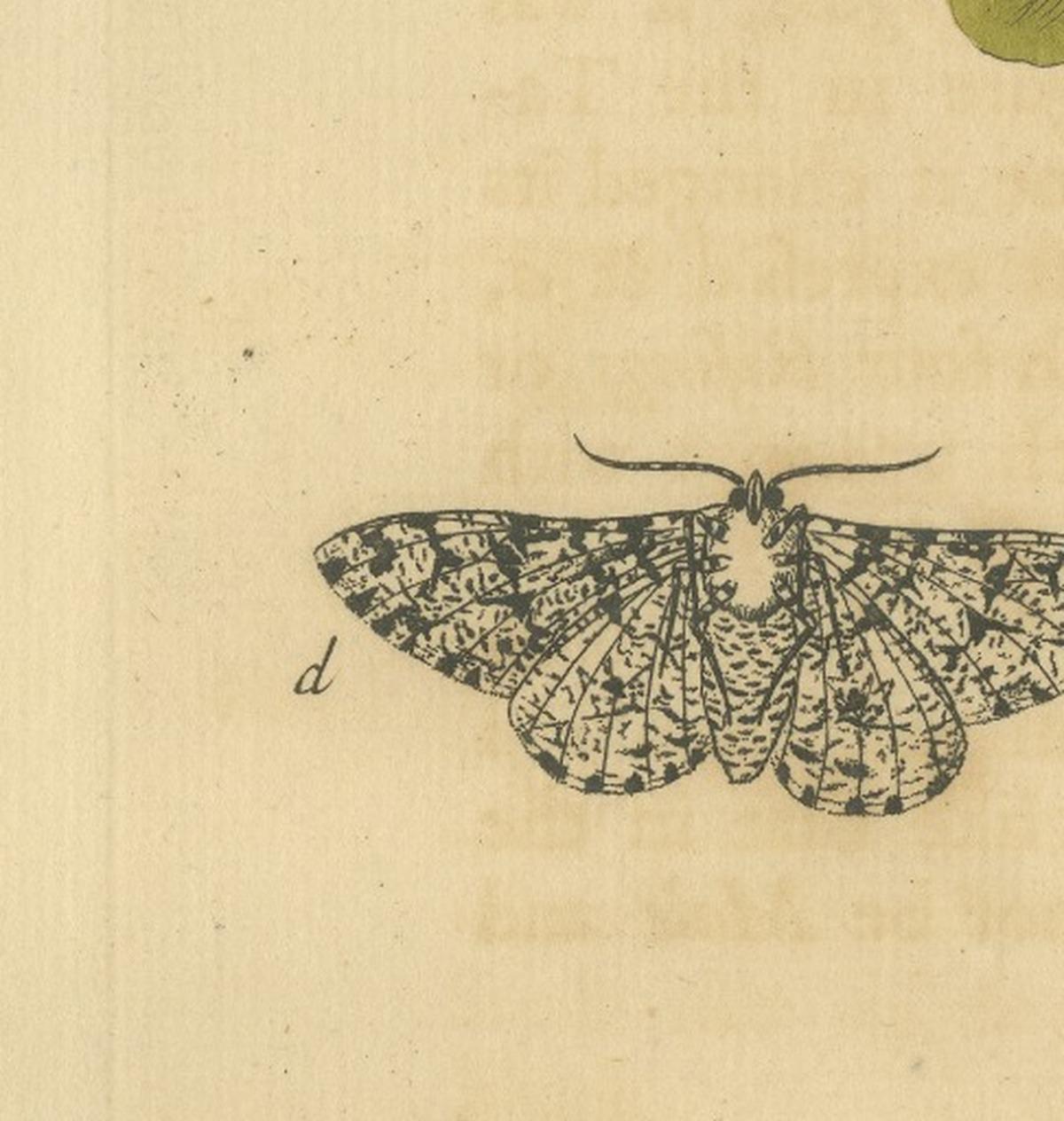
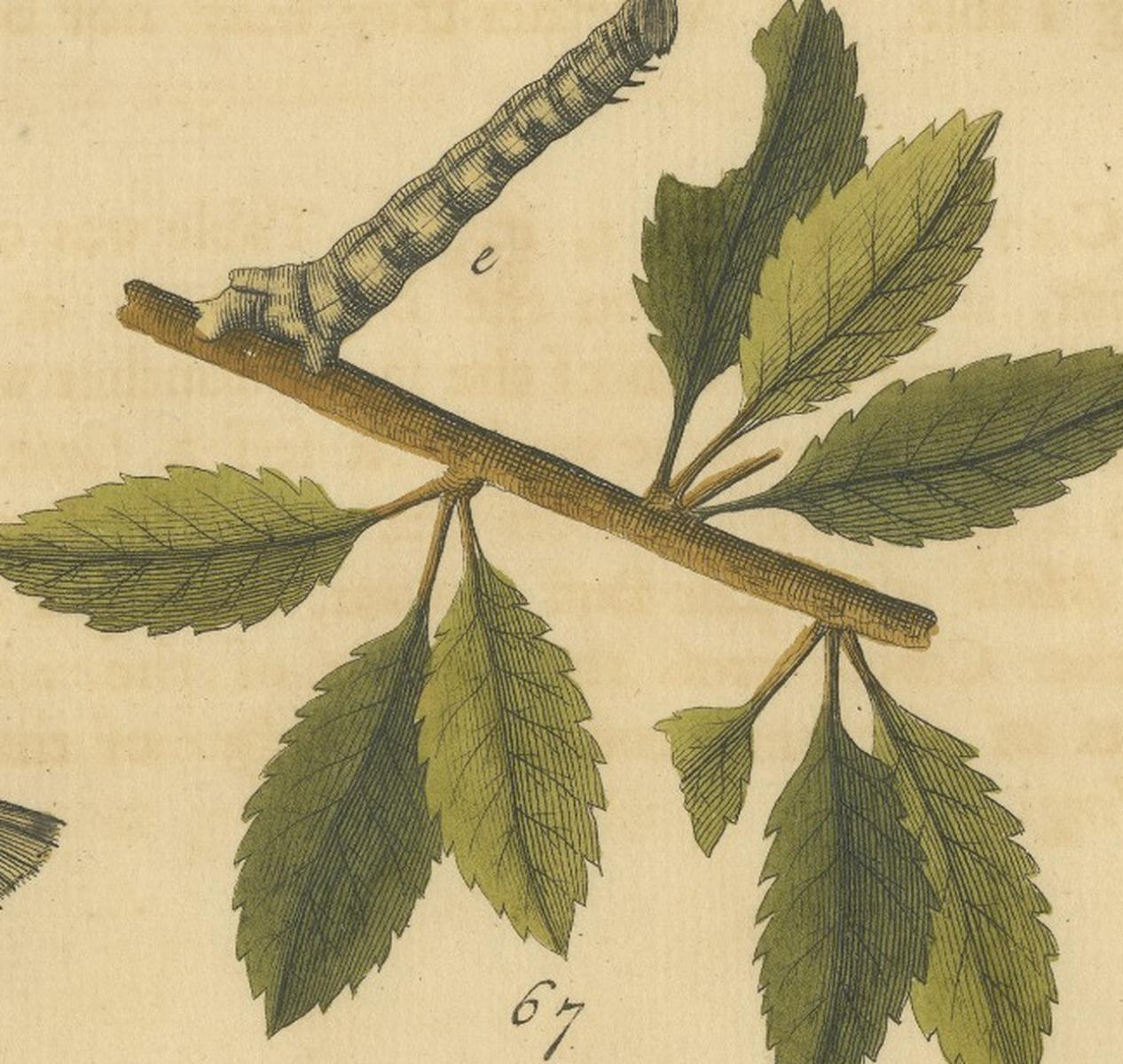
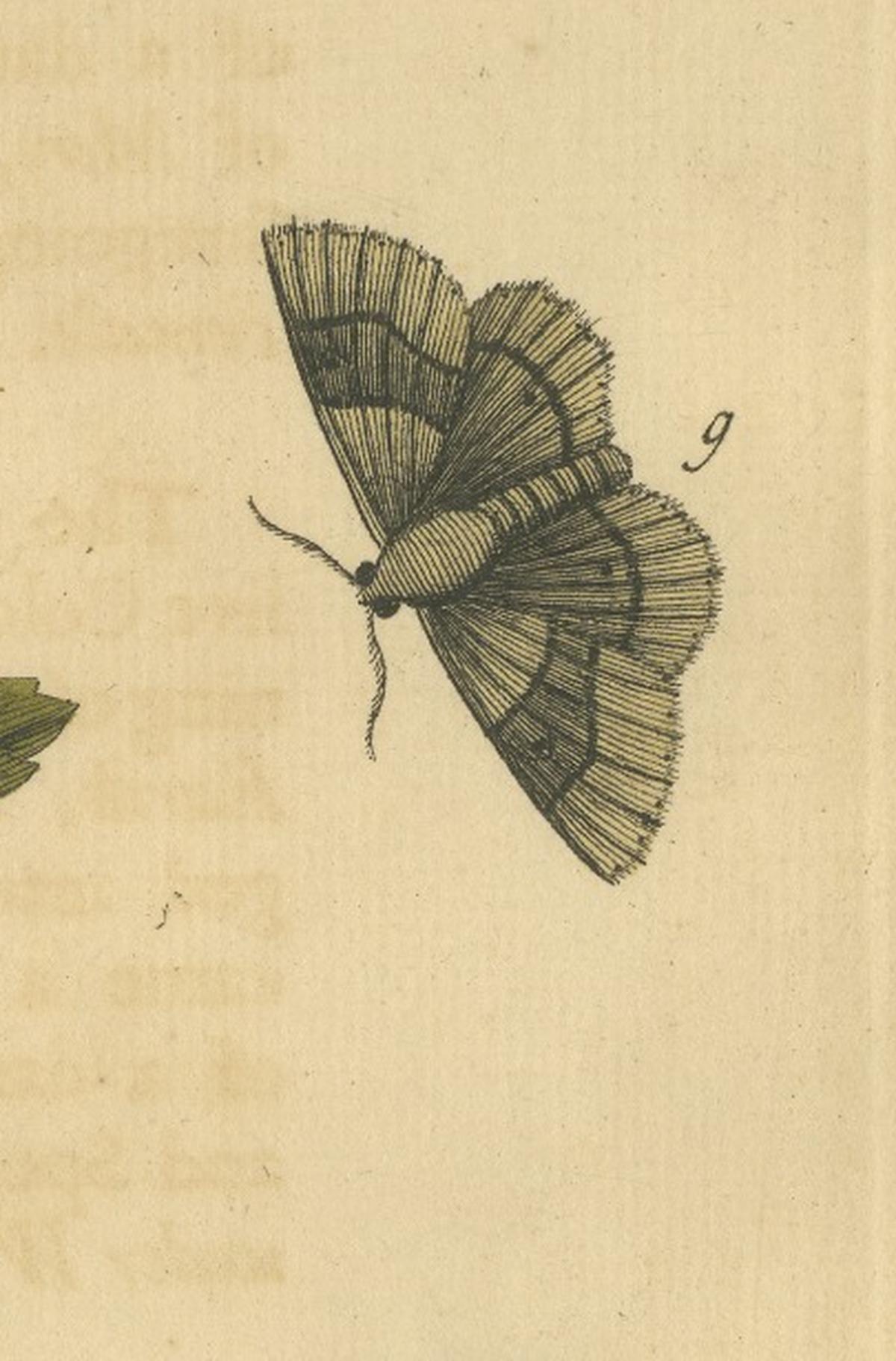
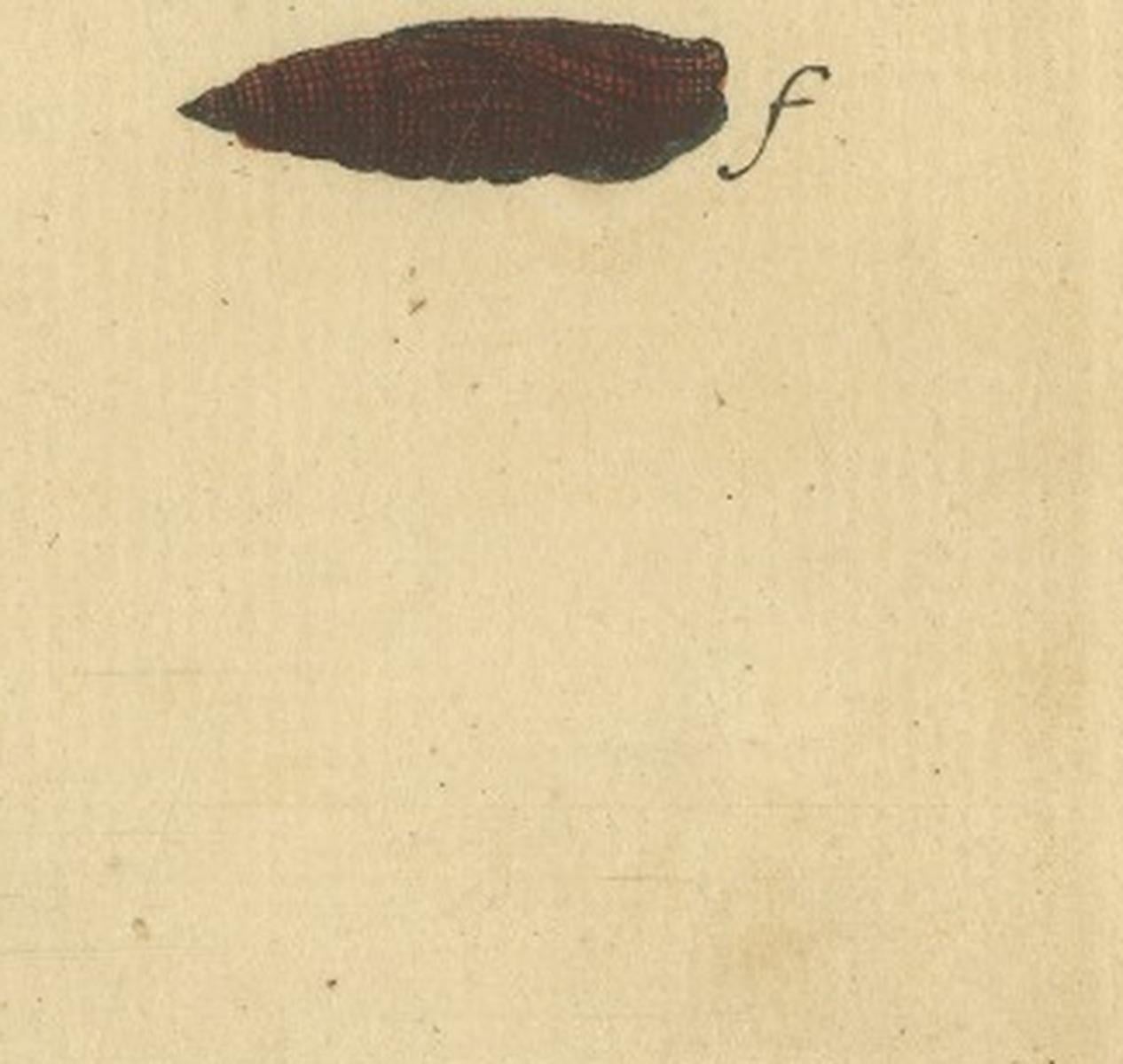
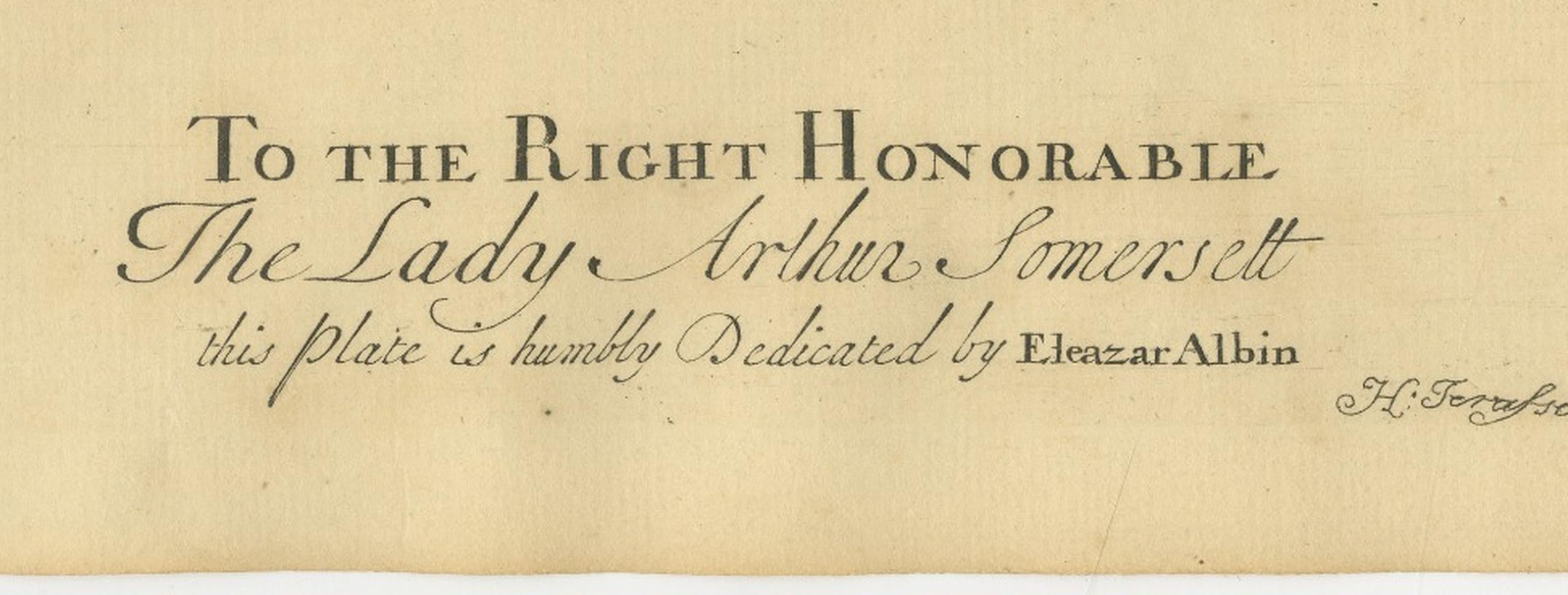
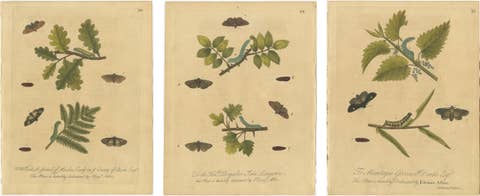
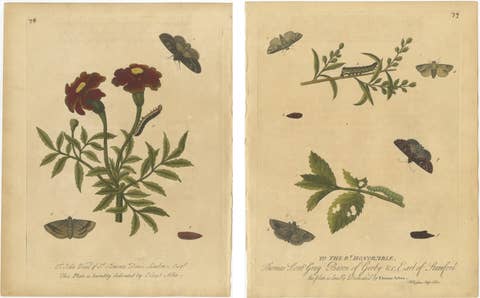
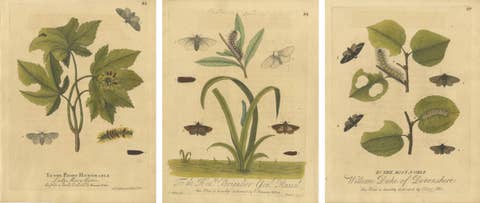
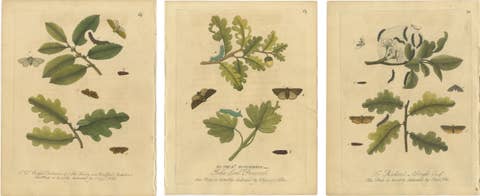
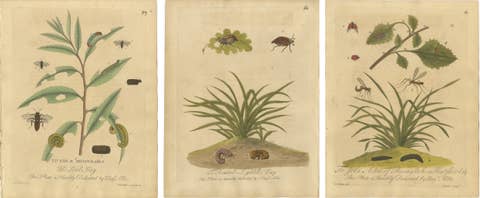
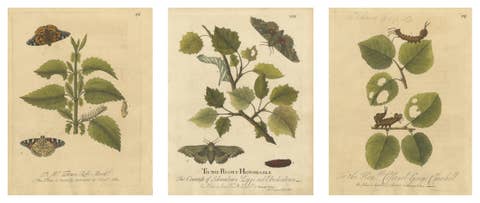
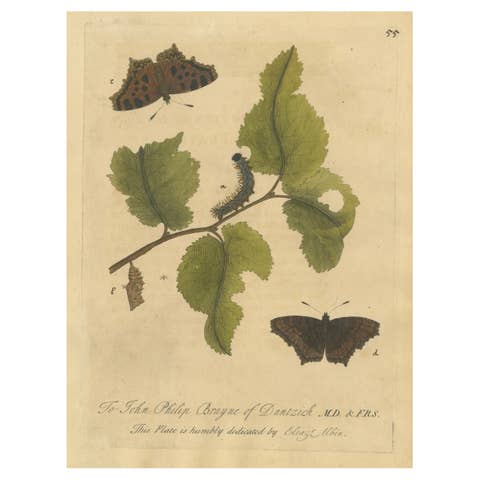
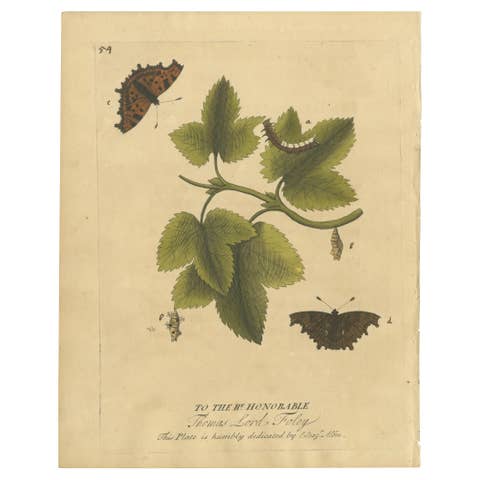
This finely hand-colored copper engraving was published in London in 1720 as part of A Natural History of English Insects, the landmark entomological work by Eleazar Albin. The composition depicts moths and caterpillars shown in successive stages of development, carefully arranged around oak and elm branches. Albin’s practice of illustrating insects in direct relation to their host plants was innovative for its time and places this work among the earliest systematic studies of English insects.
The plate is dedicated “To the Right Honorable The Lady Arthur Somerset,” following early 18th-century aristocratic convention. Lady Arthur Somerset was the wife of Lord Arthur Somerset, a British courtier and member of one of England’s most prominent noble families. Such dedications reflect the strong connection between scientific publishing and aristocratic patronage in Georgian England.
The insects shown are moths and caterpillars associated with deciduous woodland trees, likely including oak-feeding and elm-feeding moth species commonly observed in England. The plants depicted are oak (Quercus) and elm (Ulmus), rendered with botanical clarity and decorative balance. The restrained palette of greens and soft neutrals, combined with the natural symmetry of the layout, gives the engraving strong visual appeal beyond its scientific importance.
Printed on early 18th-century paper and finished with original hand coloring applied under Albin’s supervision, this engraving is an authentic period work, not a later reproduction. It functions equally well as a collector’s piece of early natural history and as a refined decorative artwork suited to classic or contemporary interiors.
Condition:
Light to moderate, even age-related toning consistent with early 18th-century paper. Minor edge wear from original binding. Original hand coloring remains clear and well preserved.
Framing tips:
For a classic interior, frame in dark walnut or ebonized wood with a generous ivory or soft cream mat to complement the aged paper tone. For a lighter, contemporary look, a pale oak or natural wood frame with a museum-white mat works beautifully. UV-protective glazing is recommended to preserve the original hand coloring. These engravings are sold unframed, allowing full flexibility for custom presentation.
Keywords: Eleazar Albin, English insects, antique insect print, entomology engraving, hand colored engraving, Georgian natural history, 18th century print, British insects, moth engraving, caterpillar illustration, oak leaves, elm leaves, botanical entomology, antique scientific illustration, natural history art, interior designer wall art, decorative antique print, London 1720, early entomology, collector print
Technique: Copper engraving with original hand coloring
Maker: Eleazar Albin, London, 1720