About this sheet
Decorative Set of Three Antique Butterfly and Moth Engravings, Eleazar Albin 1720
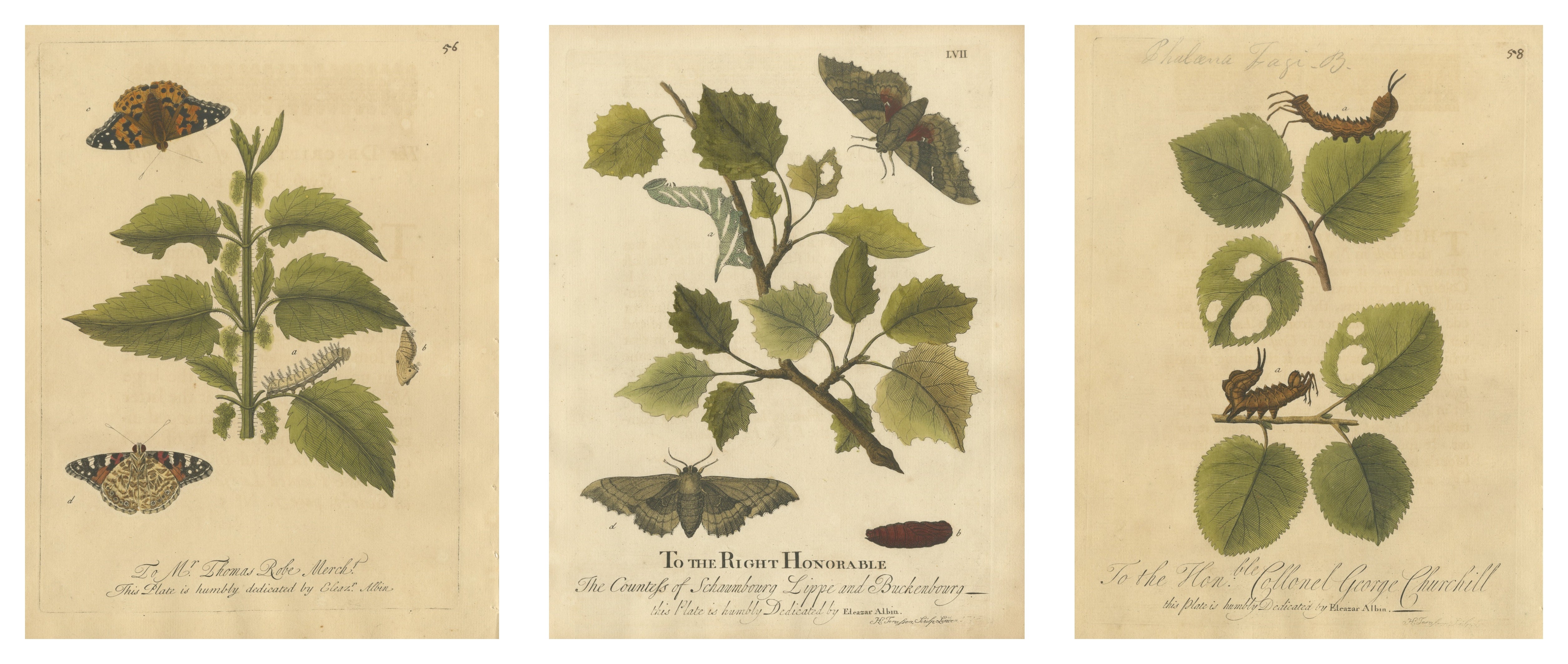
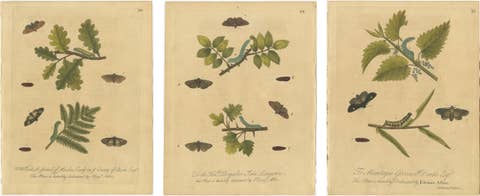
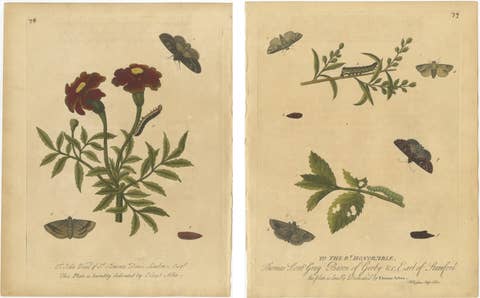
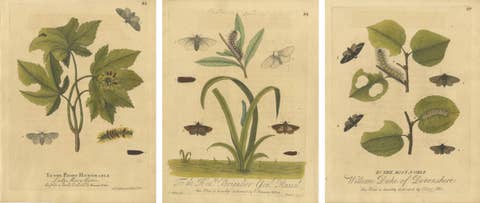
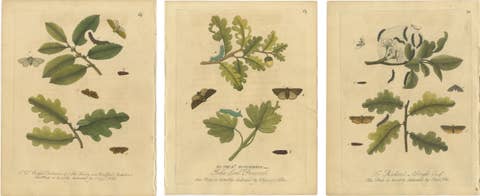
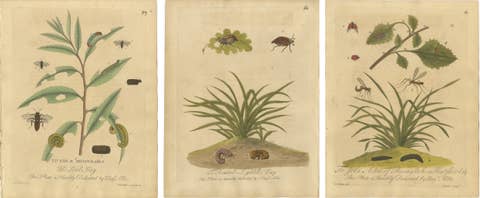
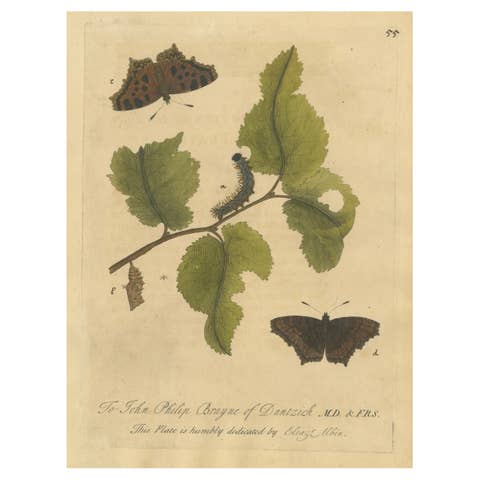
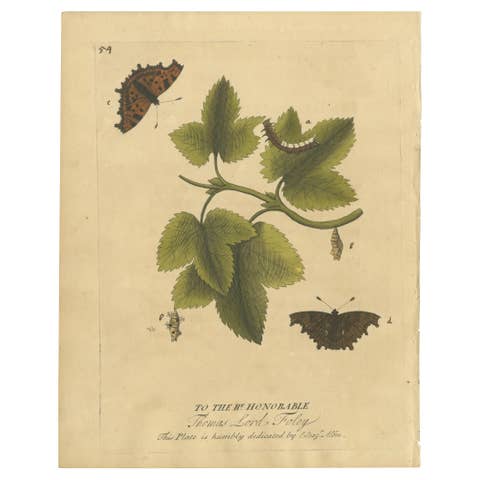
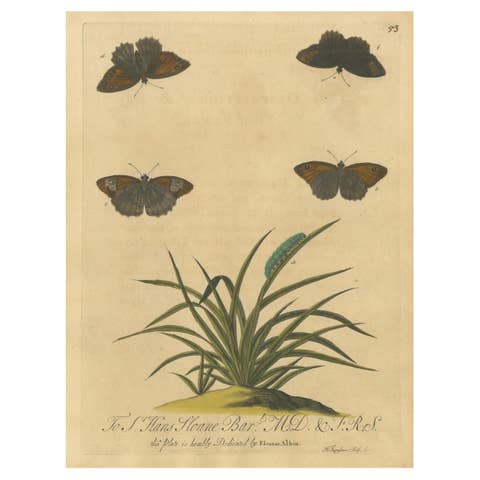
This elegant decorative set of three hand-colored engravings originates from the first edition of A Natural History of English Insects, published in London in 1720 by the pioneering naturalist and illustrator Eleazar Albin. Albin’s work is regarded as one of the earliest and most influential illustrated studies of British insects. His plates combine careful scientific observation with refined decorative composition, presenting insects together with their host plants and often illustrating several stages of their life cycles within a single image.
The present group of three plates beautifully demonstrates Albin’s method and artistic sensibility. Each composition places the insect within a botanical setting, creating natural balance and visual harmony that makes these prints particularly appealing for interior design. Their graceful arrangement of leaves, caterpillars, butterflies, and moths reflects the Enlightenment fascination with nature while also producing compositions that function beautifully as decorative artworks.
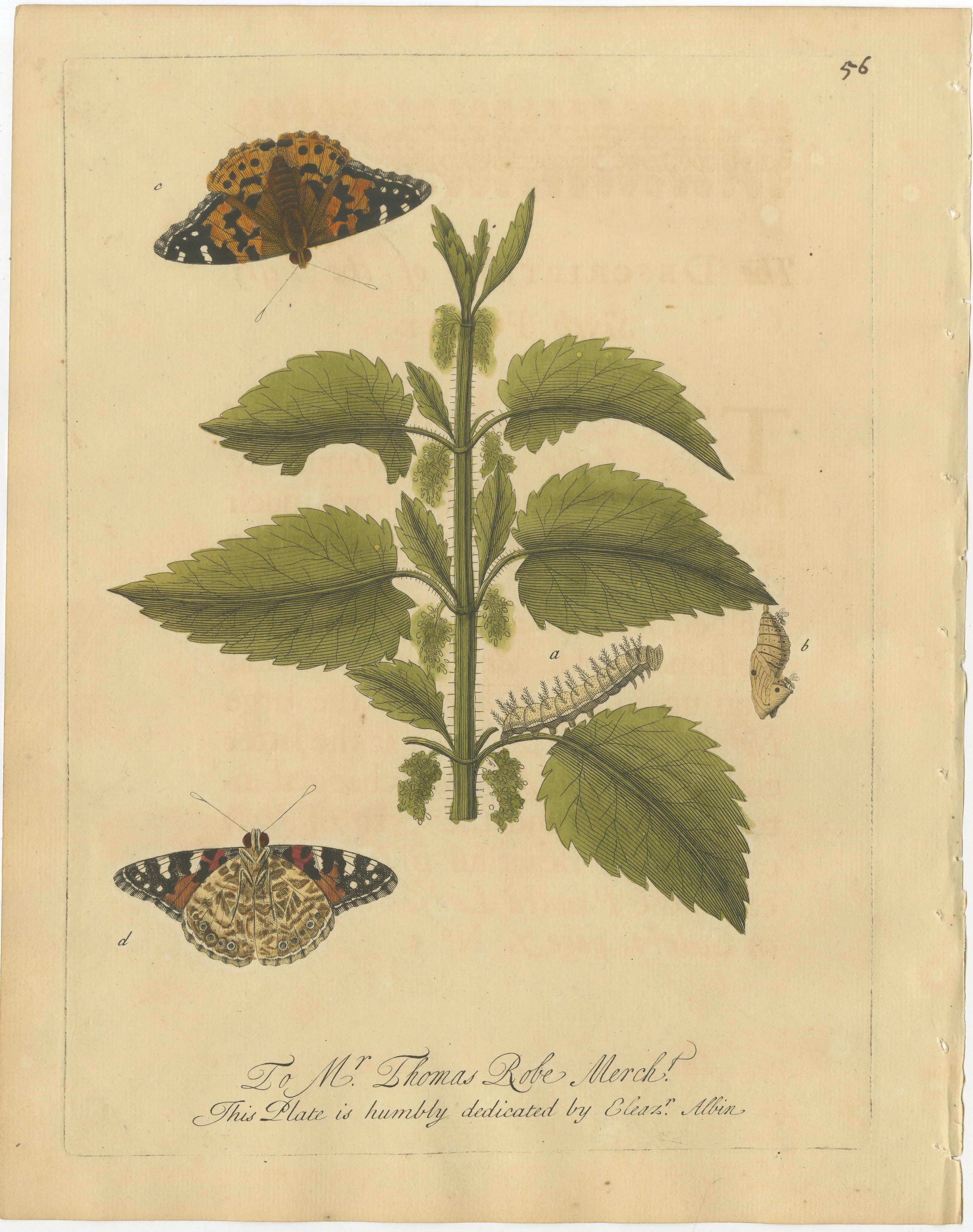
The first plate depicts the Small Tortoiseshell butterfly (Aglais urticae), shown both with wings open and in a resting position. The insect appears together with its larval stages feeding on the Stinging Nettle (Urtica dioica), the plant on which the caterpillars develop. Albin carefully rendered the distinctive serrated nettle leaves while also showing the caterpillar and chrysalis, illustrating the butterfly’s life cycle.
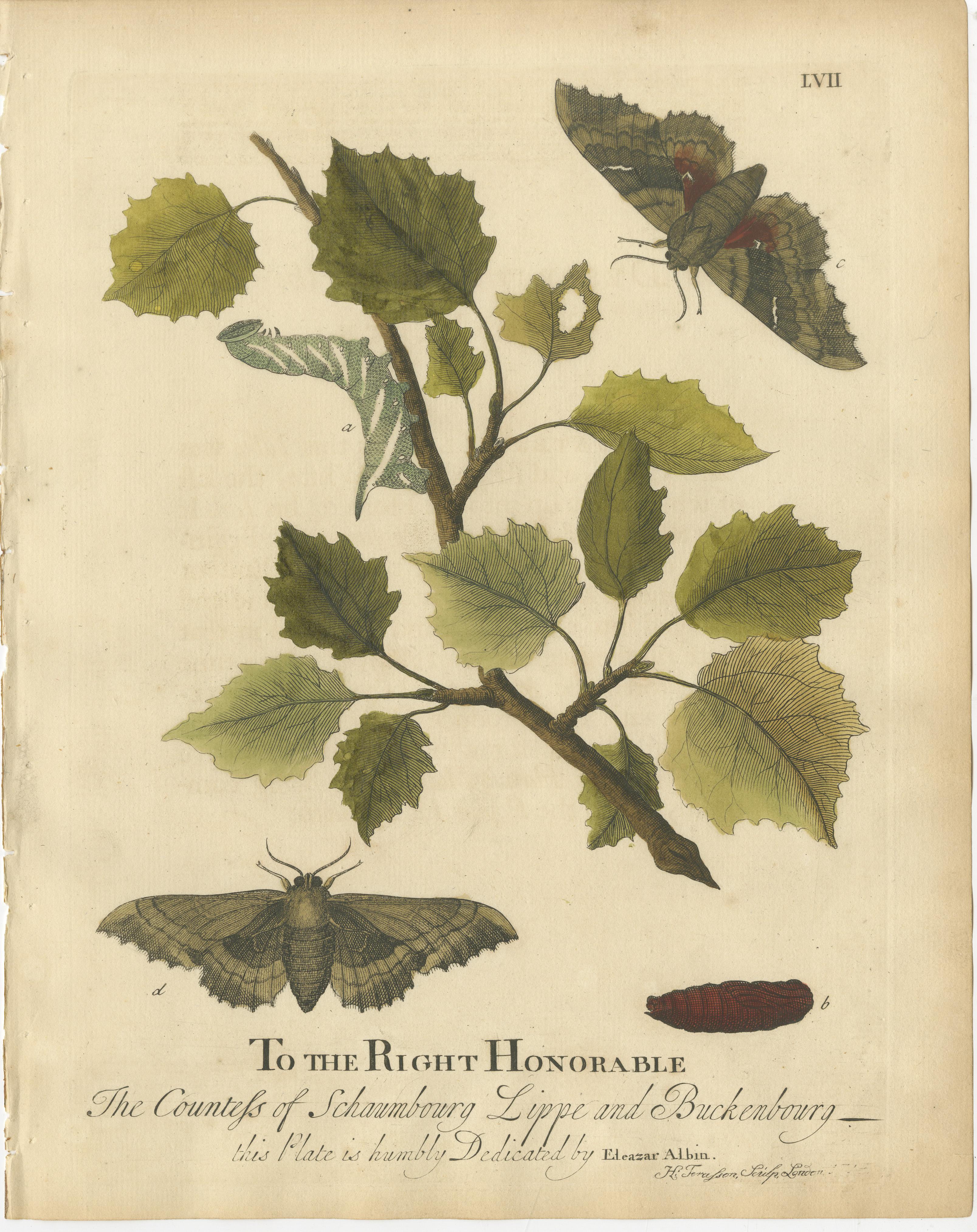
The second plate features the Poplar Hawk Moth (Laothoe populi), one of the most recognizable British moths. The moth appears in both flight and resting positions, accompanied by its caterpillar and chrysalis on a Poplar branch (Populus species). The broad leaves and branching structure provide a naturalistic and visually striking setting.
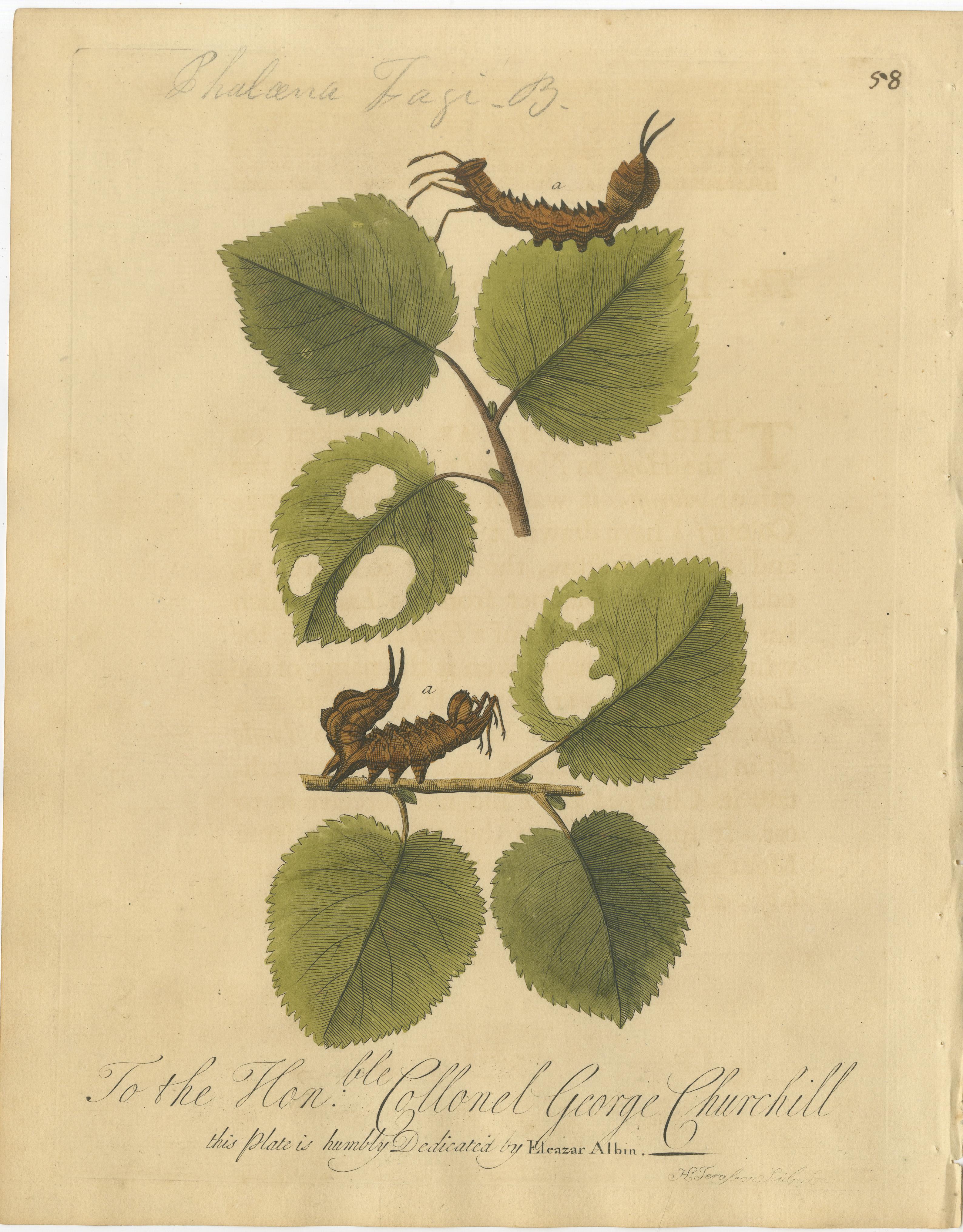
The third plate shows a moth caterpillar and chrysalis feeding on Elm leaves (Ulmus species). The composition highlights the feeding patterns on the leaves, emphasizing the natural relationship between insect and host plant.
At the lower margin of each sheet appears an engraved dedication, a distinctive feature of Albin’s publication reflecting the Enlightenment-era system of patronage that supported natural history publishing. The plates are dedicated to Thomas Robe, Merchant — a London merchant and patron of scientific and artistic publications; the Countess of Schaumburg-Lippe and Bückeburg — a member of the German princely house associated with aristocratic patronage of science and the arts; and Colonel George Churchill — a British army officer and Member of Parliament from the prominent Churchill family.
Printed in London in 1720, these engravings represent the first edition issue of one of the earliest illustrated surveys of British insect life. Albin’s work helped establish the visual language of entomological illustration and remains highly valued today both for its scientific importance and for its refined decorative quality. Sets such as this are particularly sought after by collectors and interior designers for their elegant balance of botanical and zoological subjects.
Condition report: Good condition for early 18th-century natural history engravings. Light age toning consistent with period paper. Minor edge wear and occasional faint marks. Strong plate impressions remain visible.
Framing tips: These prints display beautifully as a set of three. Dark walnut, black, or ebonized frames with generous ivory or warm cream matting emphasize the subtle hand coloring and complement the warm tone of the historic paper. Arranged horizontally or vertically, the set works particularly well in a study, library, hallway, or nature-themed interior.
Technique: Copper engraving with original hand coloring
Maker: Eleazar Albin, London, 1720