About this sheet
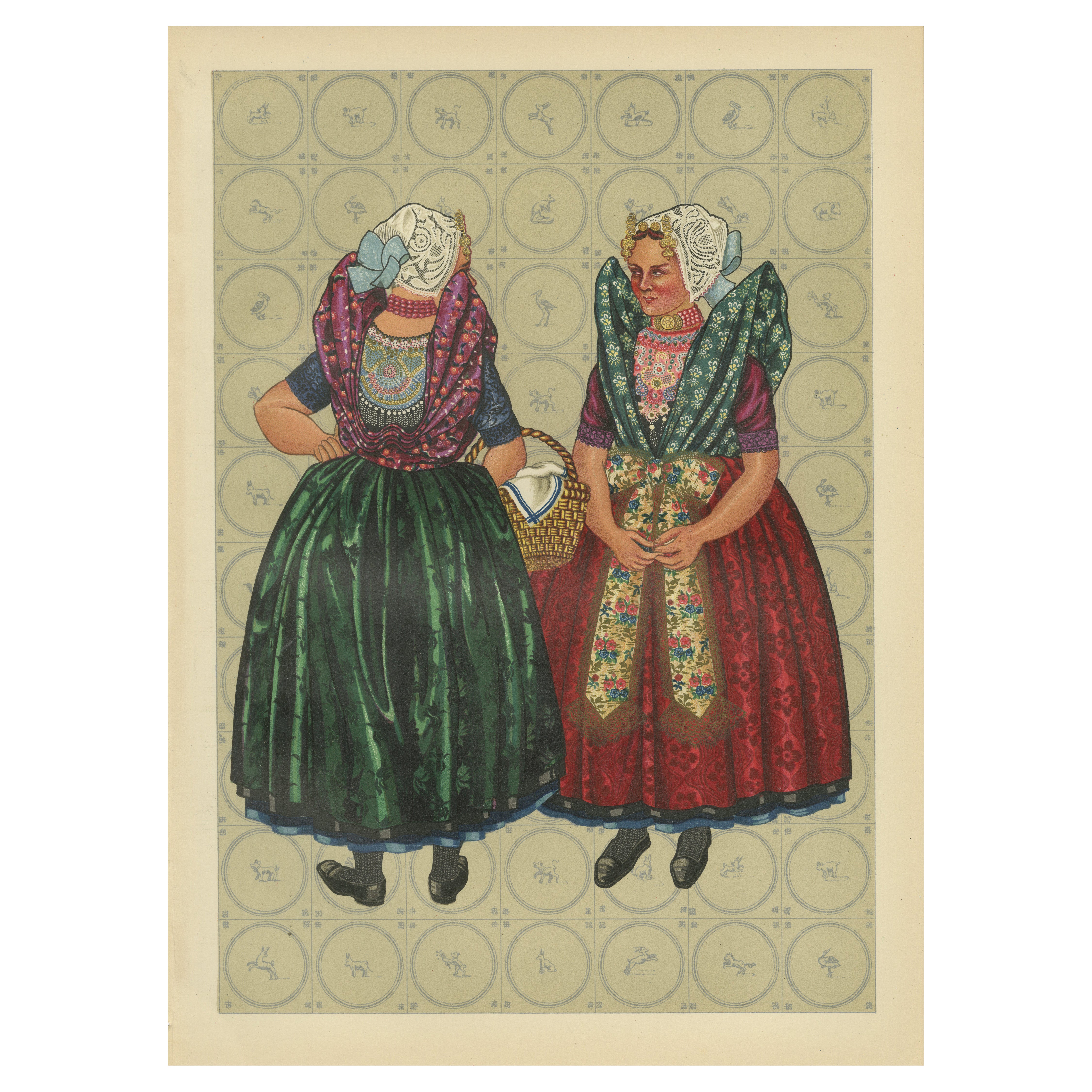
Plate XLVI – Zeewsch-Vlaanderen, or Zeeland-Flanders, to Axel, 1890
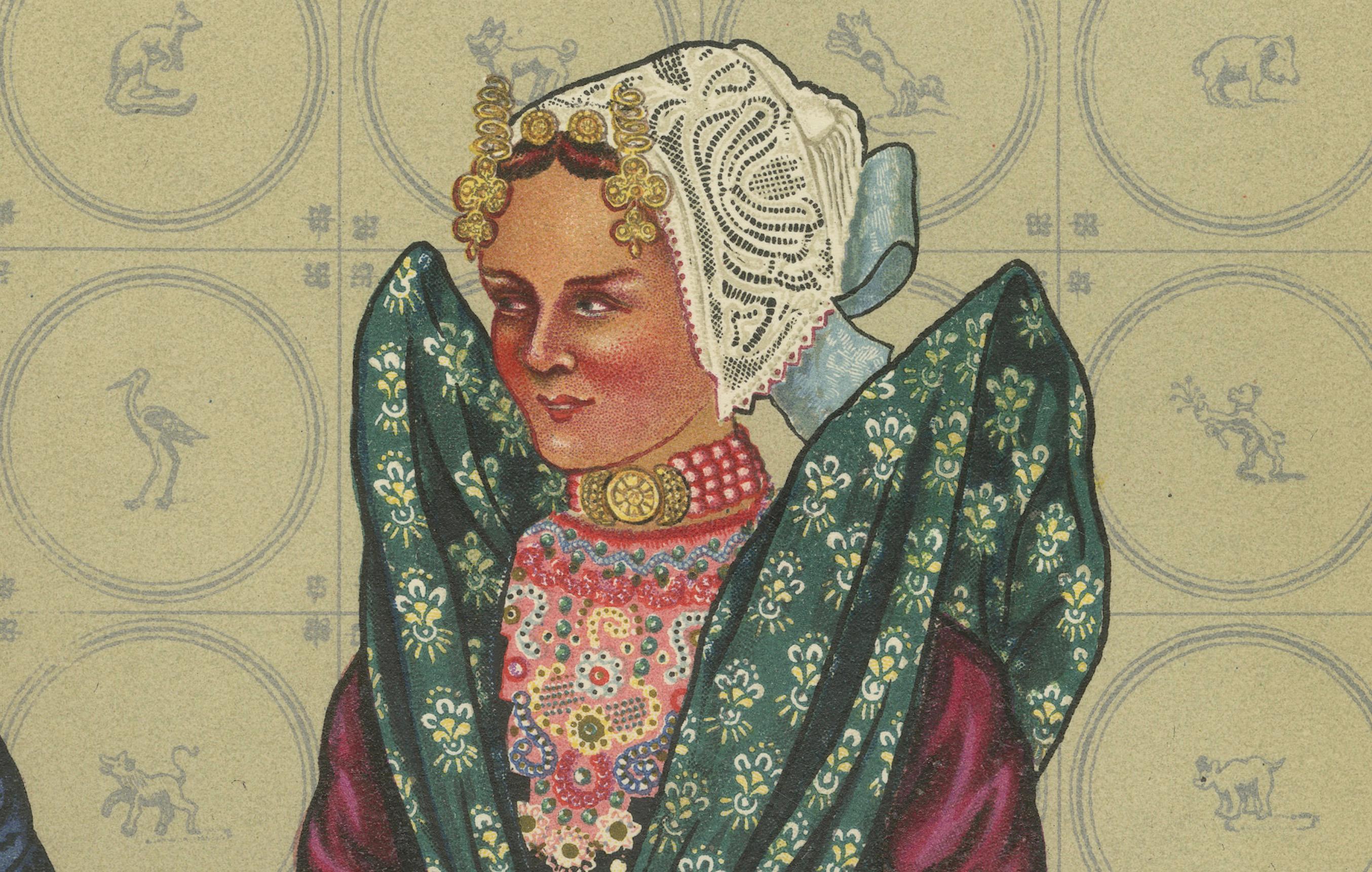
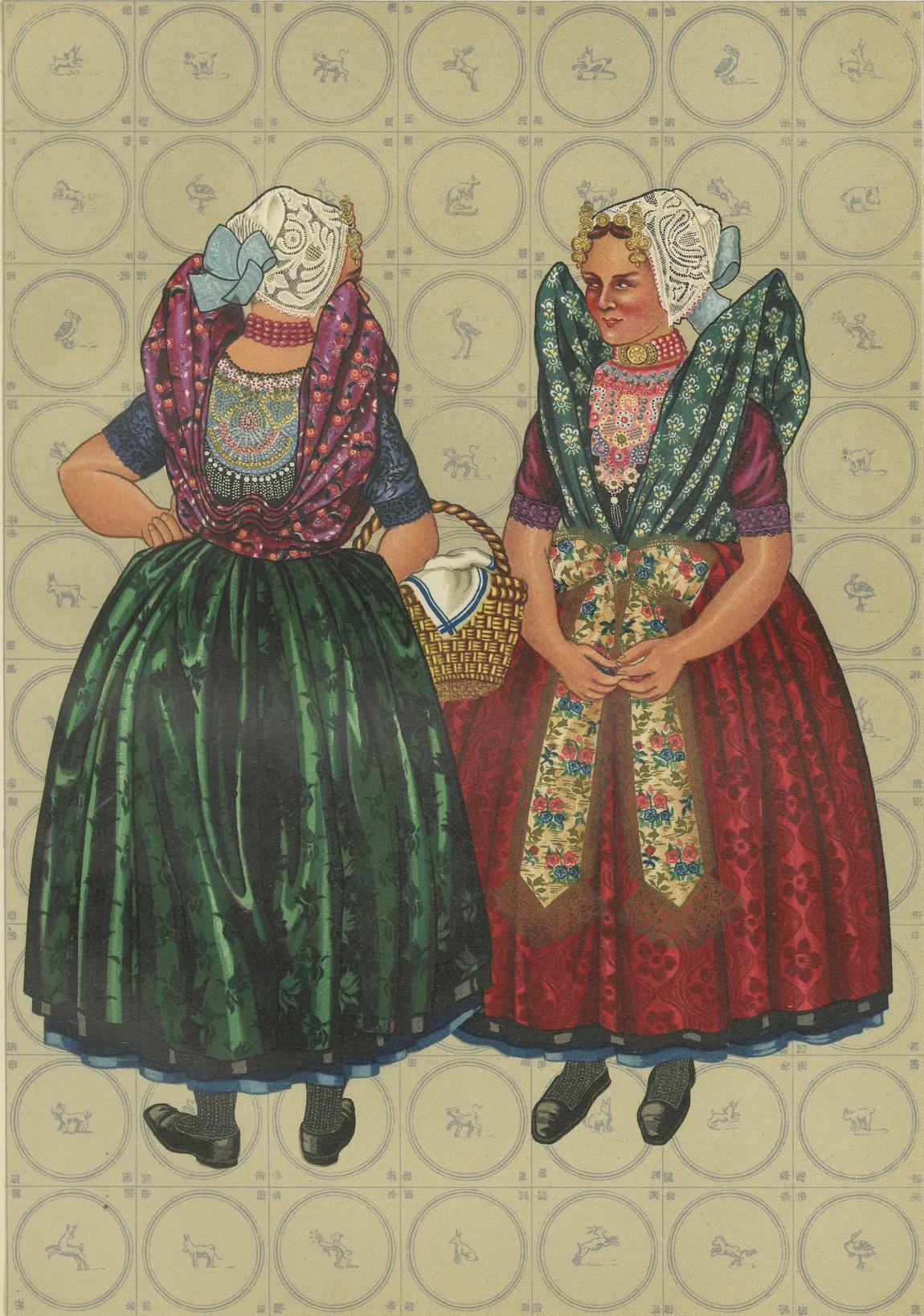
This striking costume from Axel, a town in Zeeland-Flanders near the Belgian frontier, represents one of the most vibrant and imaginative interpretations of traditional Dutch dress. Worn around 1890 and observed mostly in Protestant communities—despite its church-like symbolism—this ensemble dazzles with vivid colors, rich textures, and highly personal ornamentation. Particularly memorable are the wing-like extensions of the stiffened fichu or *doek*, which lend an almost angelic silhouette to the wearer and are a distinctive hallmark of this region’s ceremonial fashion.
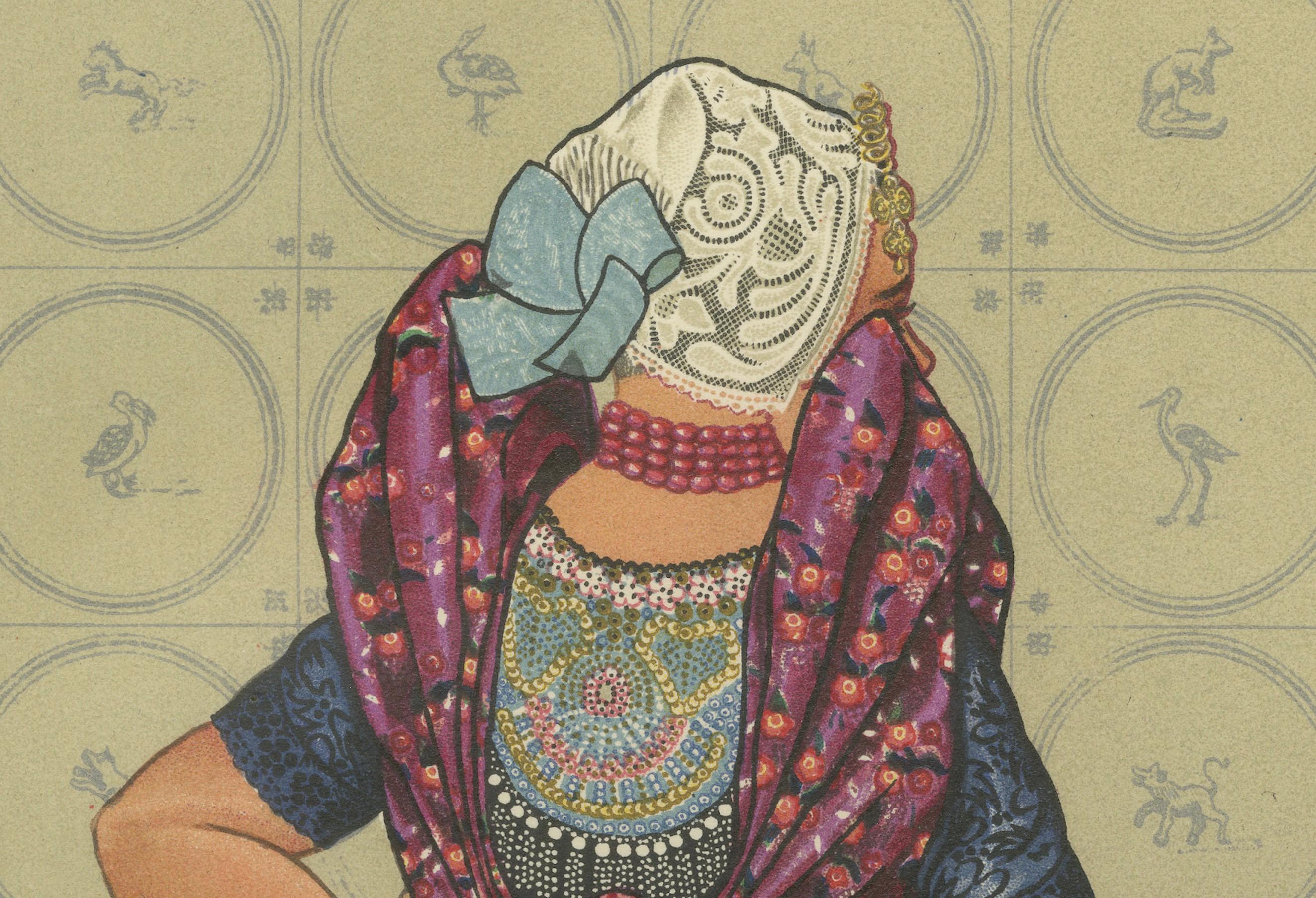
The headdress is simple yet elegant. The hair is parted in the center and drawn into two coiled loops, supporting a white cambric under-cap edged in narrow lace. Over this lies the *trek muts*, or “drawn-in cap,” with a pleated crown, and a bow of blue *broché* ribbon affixed at the back. The ensemble is anchored by a narrow silver *beugel* that ends in gold spirals, secured with two gold pins featuring ornamental tops, as clearly visible on the right-hand figure.
The bodice is cut very low and made of rich brocade or merino. The left-hand woman’s deep blue bodice is embroidered at the short sleeves, while the right-hand figure wears red merino trimmed with purple and black *galon*. The front panel, or *beuk*, is the most elaborately worked element—often handmade by the wearer—featuring beads, sequins, embroidery, and lace arranged with remarkable skill and aesthetic sense. These *beuks* were treasured and sometimes embroidered with initials to mark personal ownership.
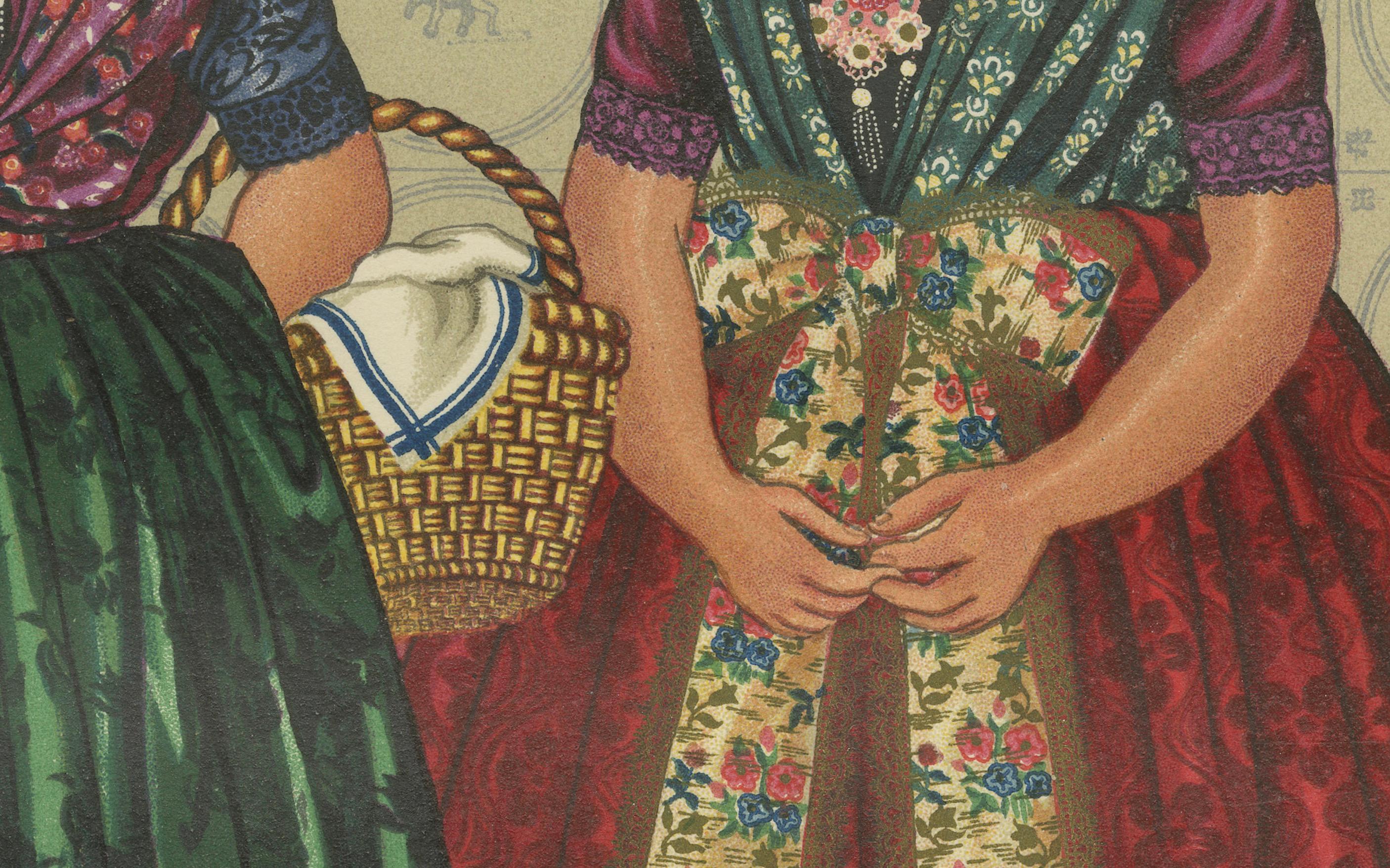
The fichu (*doek*) is unique in its structure: stiffened with canvas or paper, it extends above the shoulders like raised wings. Examples include purple satin decorated with bright floral designs or green satin with crystal fringe. Tied in front is a luxurious apron sash made of *moiré française* with fine gold lace edging and printed posies.
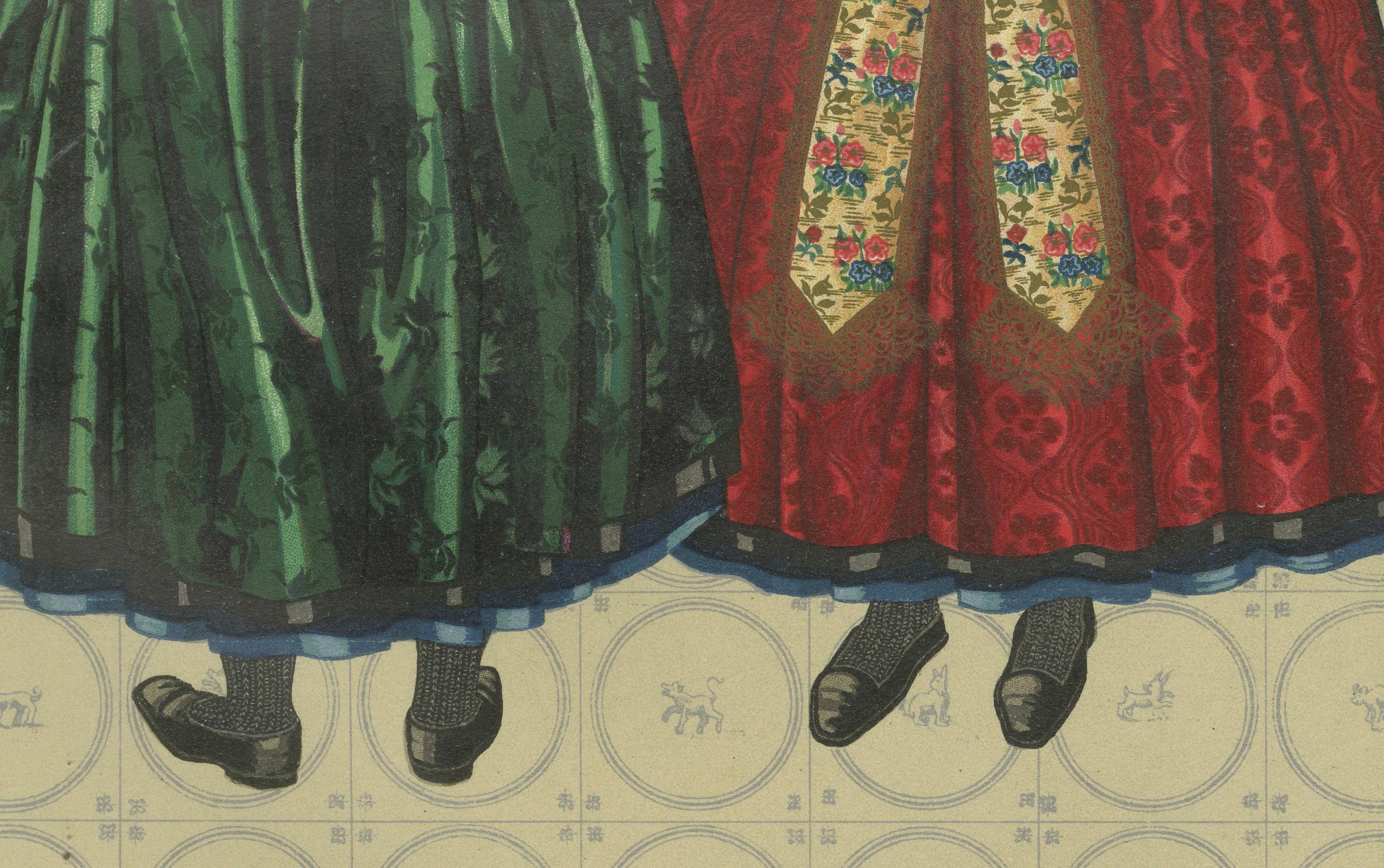
The skirts are constructed of multiple petticoats—often more than seven—with padded rolls worn around the hips to exaggerate volume. The upper skirt, typically of moirette, is worn over a voluminous underskirt in dark tones. Both figures wear black knitted stockings and sturdy leather shoes, adding practical weight to the otherwise ornate attire.
These richly detailed garments, crafted with care and expressive individuality, serve as a vivid testimony to the regional pride, artistic skill, and personal expression embedded in Zeeland-Flemish folk costume at the end of the 19th century.
Certainly! Here's a summarized version of the condition and framing tips in the same style as your earlier listings:
Condition:
Excellent original condition. Colors remain vivid with no fading, foxing, or staining. Paper is clean and margins are intact, with only minimal age-toning at the edges. No tears, creases, or damage—ideal for framing.
Framing Tips:
Best presented with a neutral acid-free mat and a dark wood or black frame to enhance the rich colors. UV-protective glass is recommended to preserve its vibrancy. A narrow gold inner mat or accent color can complement the costume’s detailing.