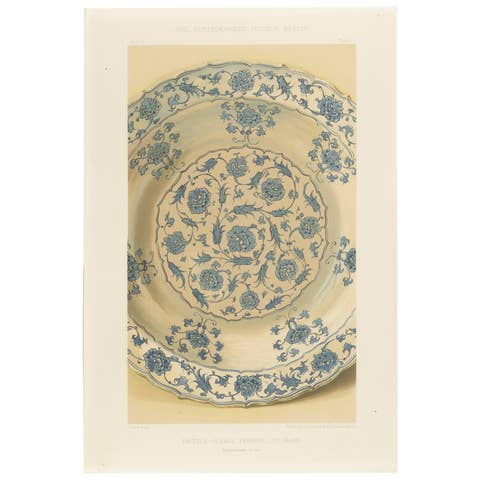
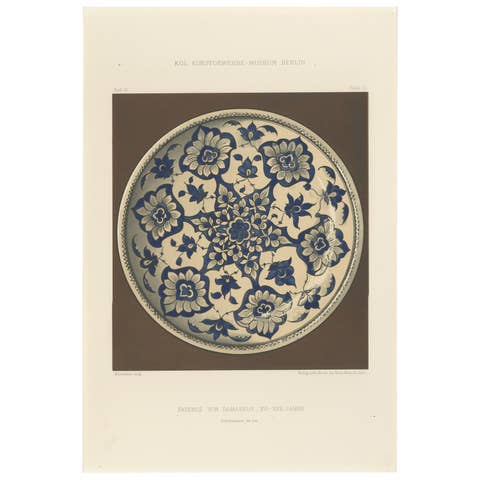
Damascus Faience Plate with Carnations and Tulips – Julius Lessing, Berlin 1890
€ 340
One of a kind: this is the sheet in the photographs. Ships from Langweer, the Netherlands.
Date
1890
Sheet size
49 × 33 cm (19.3 × 13.0 in)
Condition
Good
Reference
BG-14139-7
Condition
Excellent condition with crisp, vibrant coloration and wide margins. Minor edge toning and faint handling marks, consistent with age. Image area clean and fresh.
About this sheet
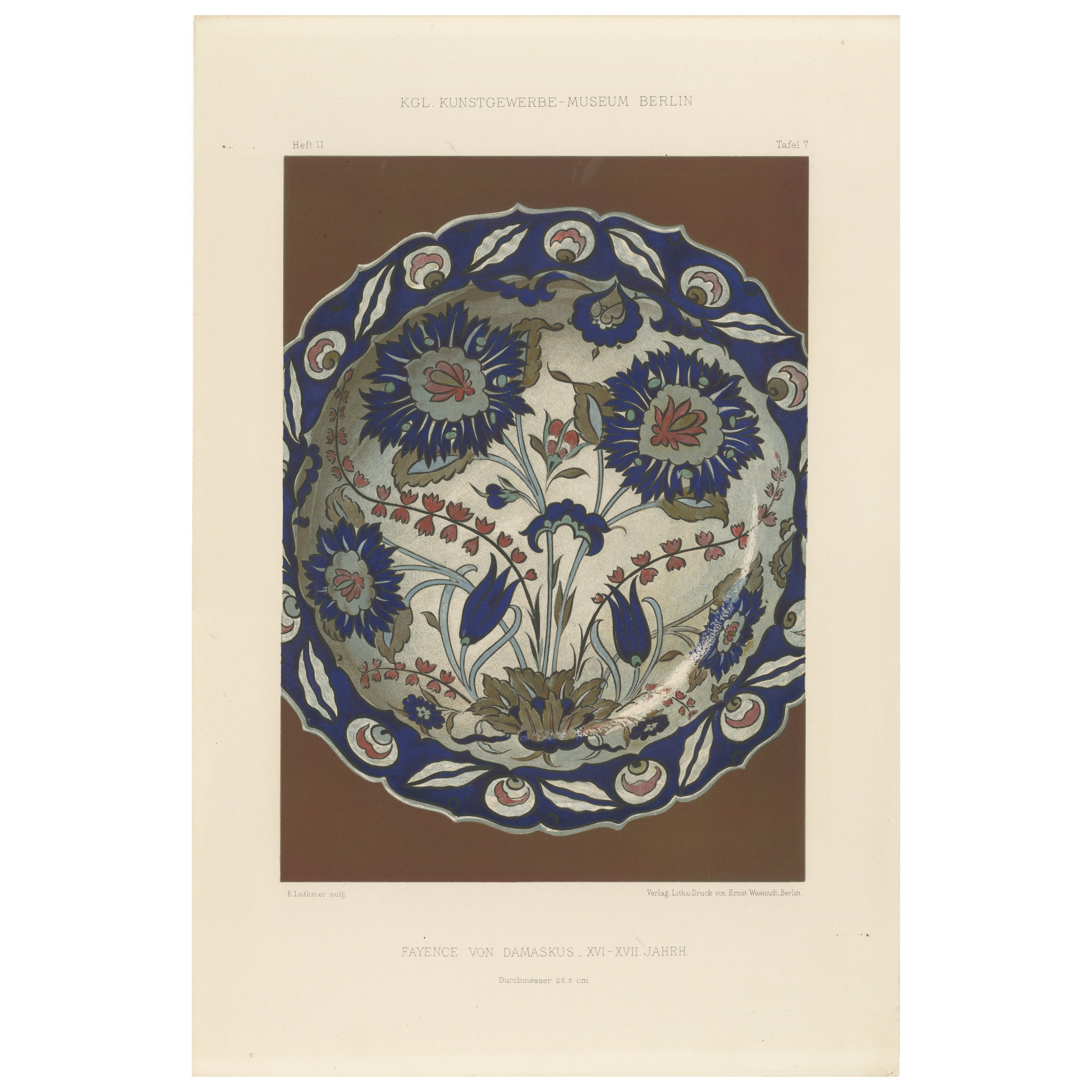
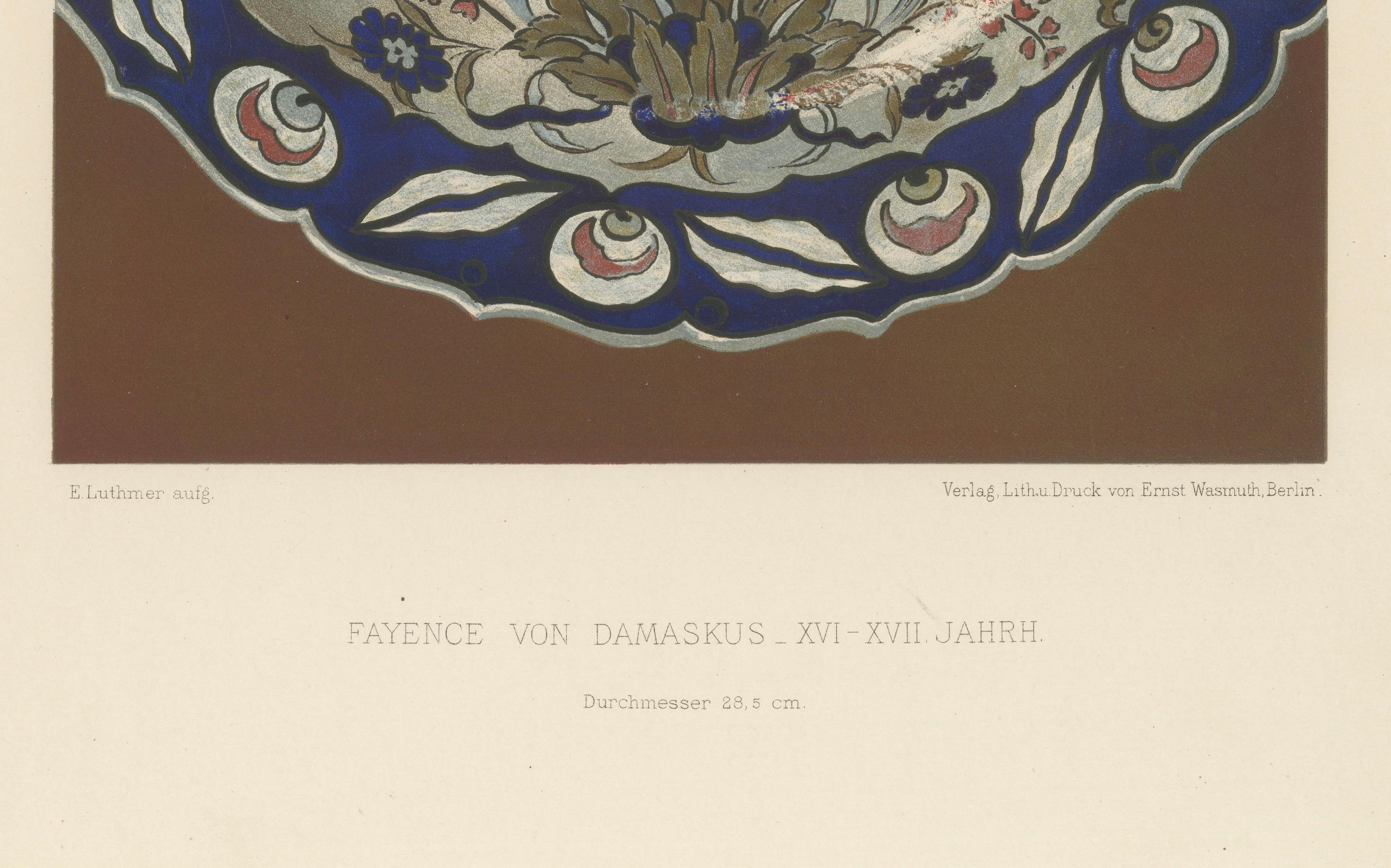
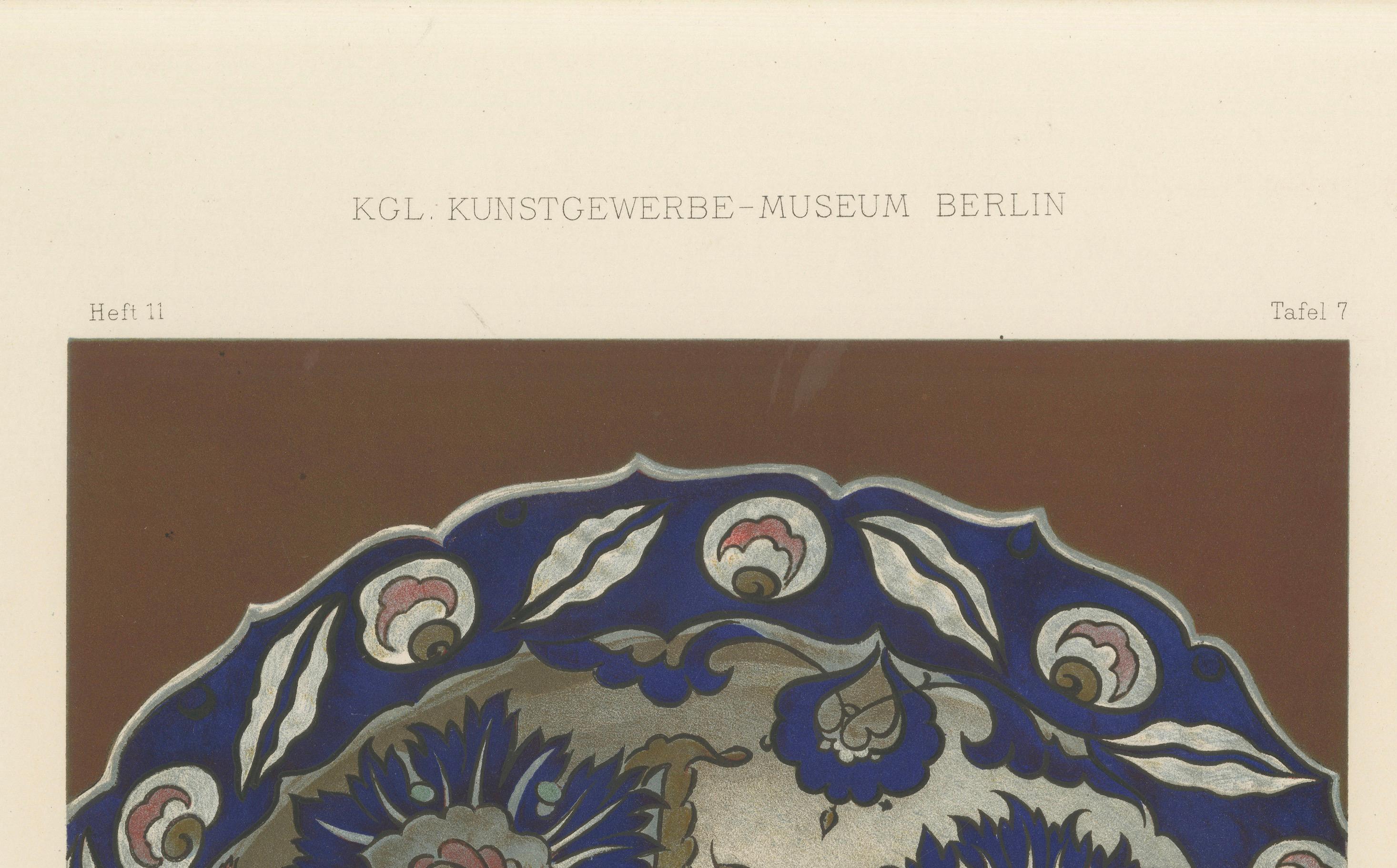
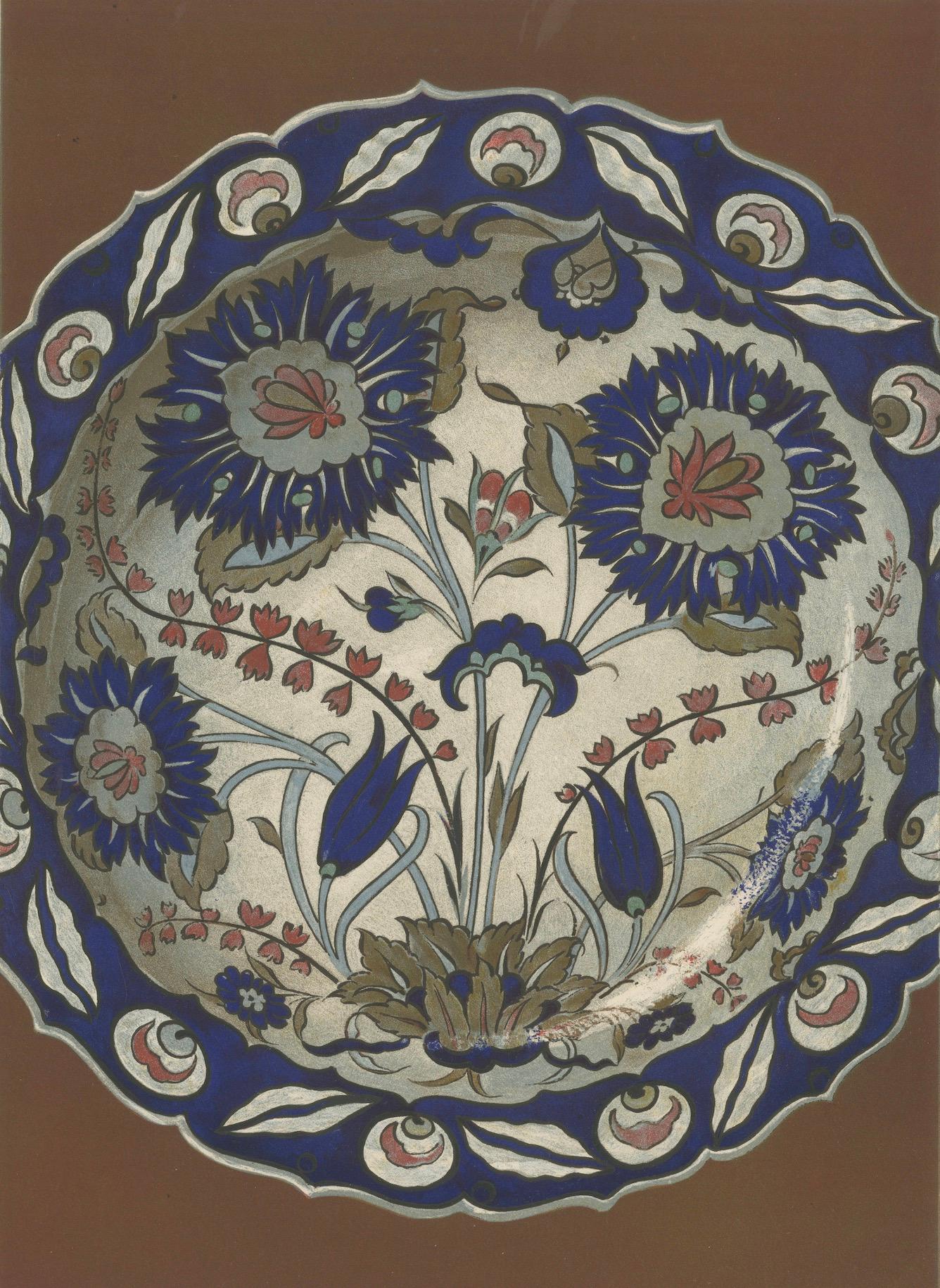
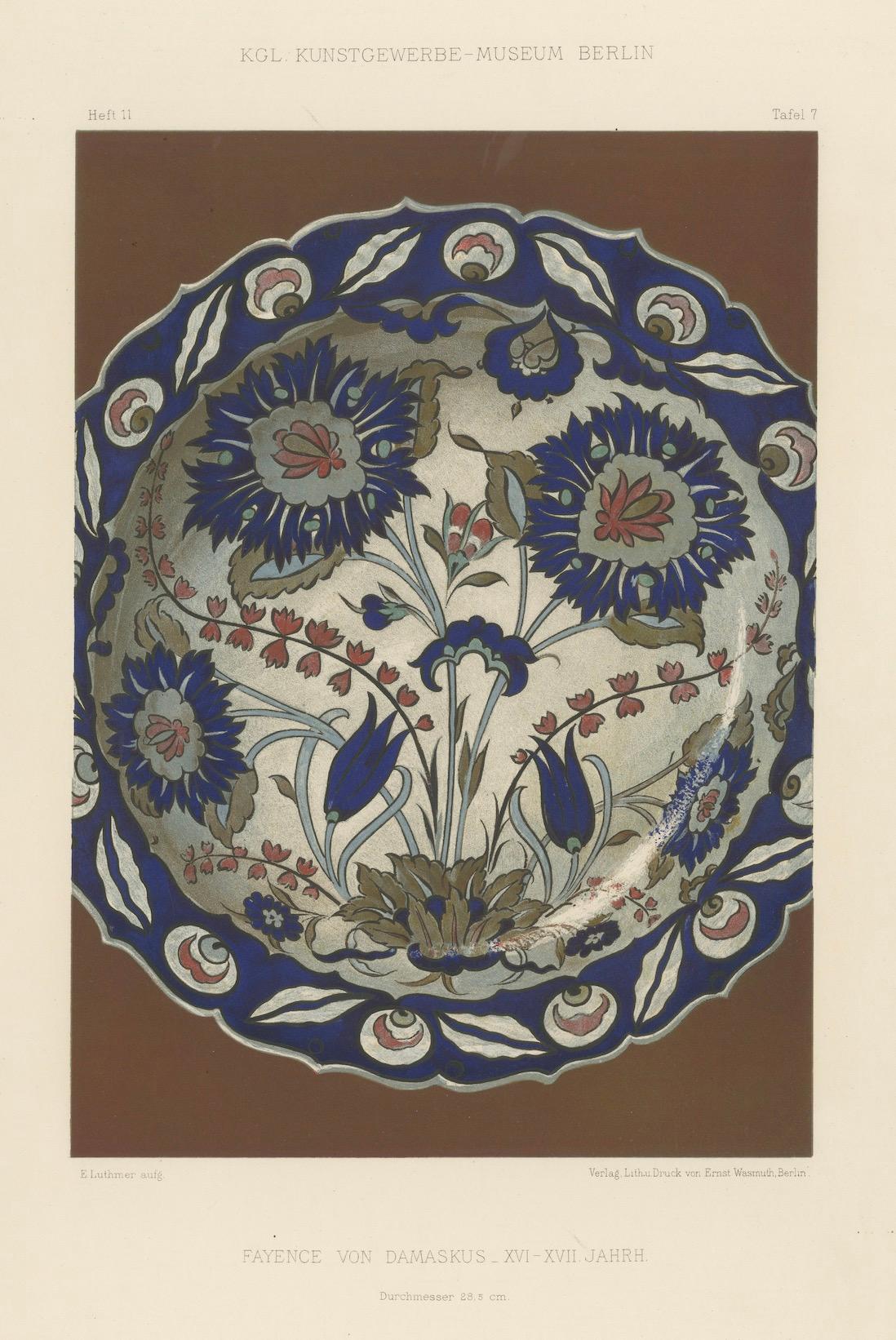
Damascus Faience Plate with Carnations and Tulips – Julius Lessing, Berlin 1890 A striking chromolithograph from Julius Lessing’s Persisch-Türkische Fayencen (Persian-Turkish Faience), published by Ernst Wasmuth, Berlin, in 1890 as part of Vorbilder-Hefte aus dem Königlichen Kunstgewerbe-Museum, Heft 11. This print (Tafel 7) reproduces a 16th–17th-century faience plate from Damascus, part of the Royal Museum of Decorative Arts in Berlin’s collection of Islamic ceramics.
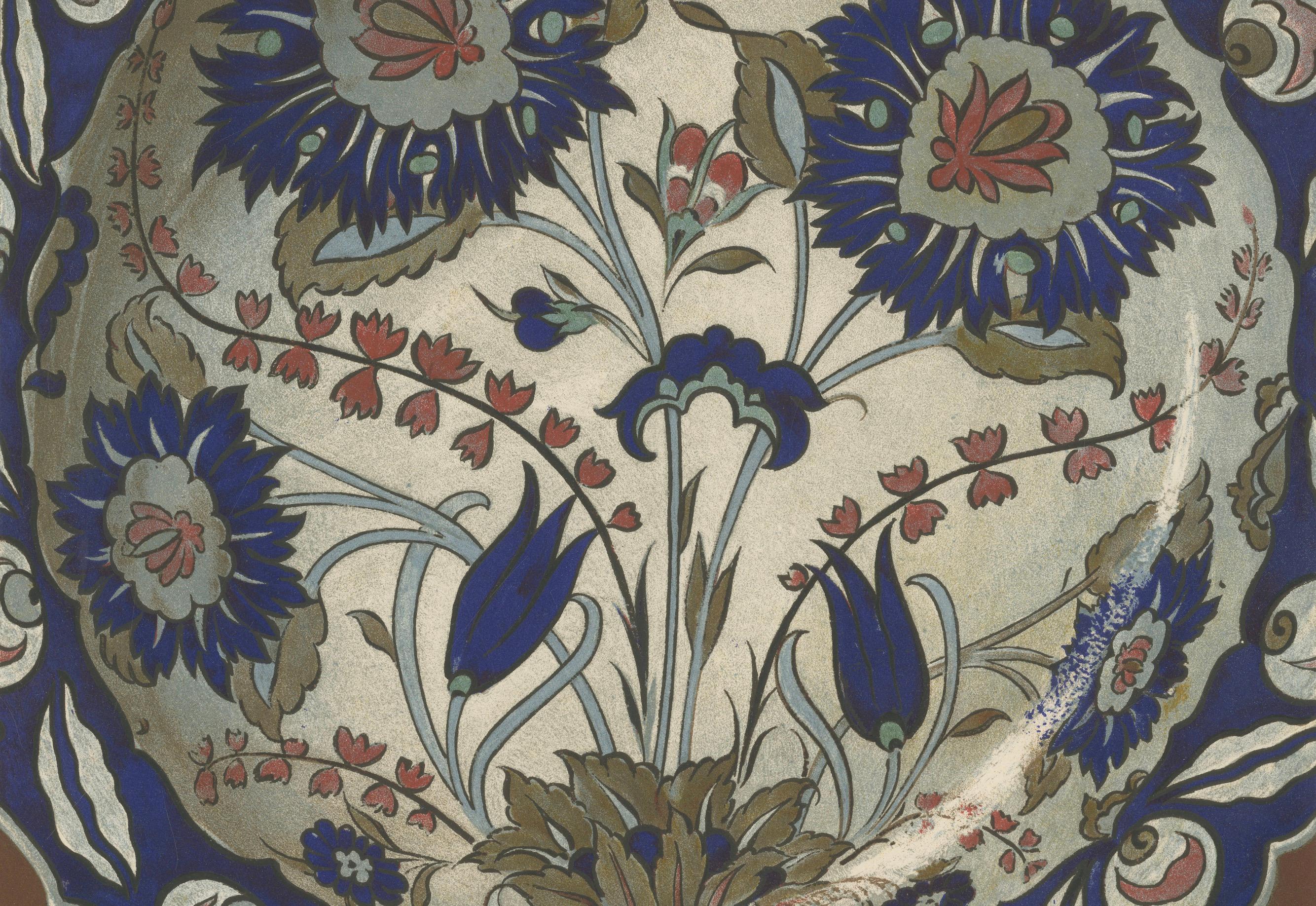
The plate displays a vivid arrangement of stylized carnations, tulips, and rosettes, characteristic of Syrian faience from the late Ottoman and Mamluk periods. The design radiates with a refined interplay of cobalt blue, turquoise, sage green, and soft red against a pale ground, enclosed within a scalloped rim of bold undulating leaves and blossoms. The naturalistic yet stylized floral composition embodies the transitional style of 16th-century Damascus pottery, blending Persian influence with local Levantine flair.
Unlike the pure white background of Iznik ware, Damascus faience often features a subtle grayish or silvery tone, enhancing the depth of the colors. The rhythmic floral pattern and balanced symmetry evoke a sense of harmony and divine geometry, reflecting Islamic art’s emphasis on beauty as a reflection of order in the universe.
Drawn by E. Luthmer and printed under the direction of Julius Lessing (1843–1908), this plate was part of the pioneering Vorbilder-Hefte series published to inspire European designers and craftsmen with the ornamental traditions of global art. Lessing’s dedication to the study of Islamic ceramics helped introduce Ottoman and Persian decorative art to Western design education and the emerging Art Nouveau movement.
Condition report: Excellent condition with crisp, vibrant coloration and wide margins. Minor edge toning and faint handling marks, consistent with age. Image area clean and fresh.
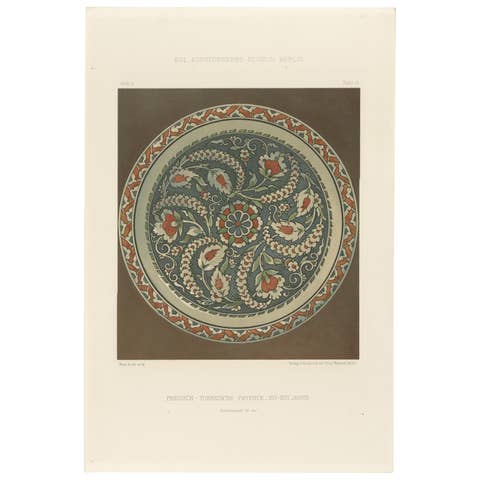
Framing tips: A dark brown or mahogany frame with a cream mat will enhance the rich cobalt and red hues of this composition. Ideal as a stand-alone display or in combination with other plates from Lessing’s *Persisch-Türkische Fayencen* series.
Technique: Chromolithograph Maker: Julius Lessing, Berlin, 1890