About this sheet
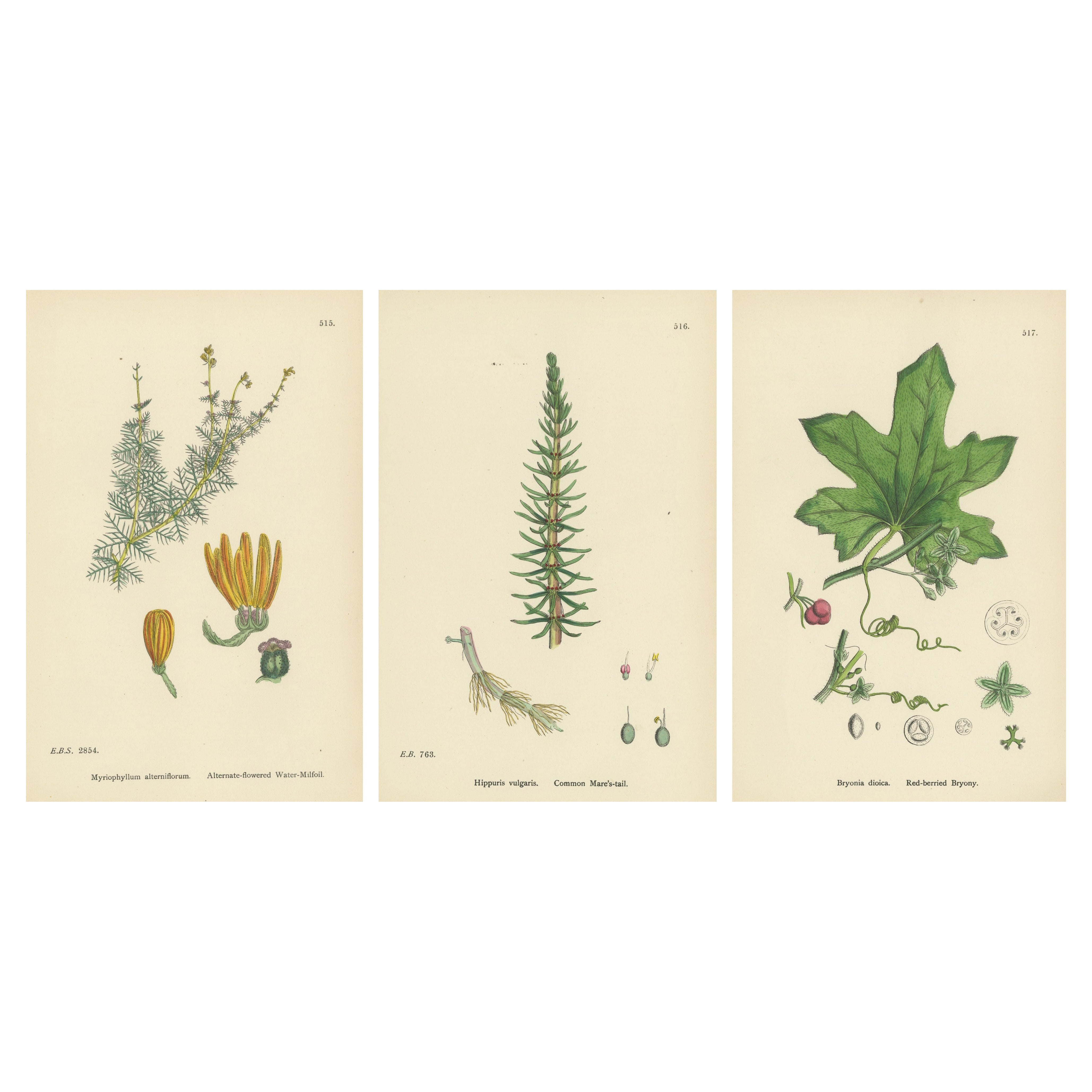
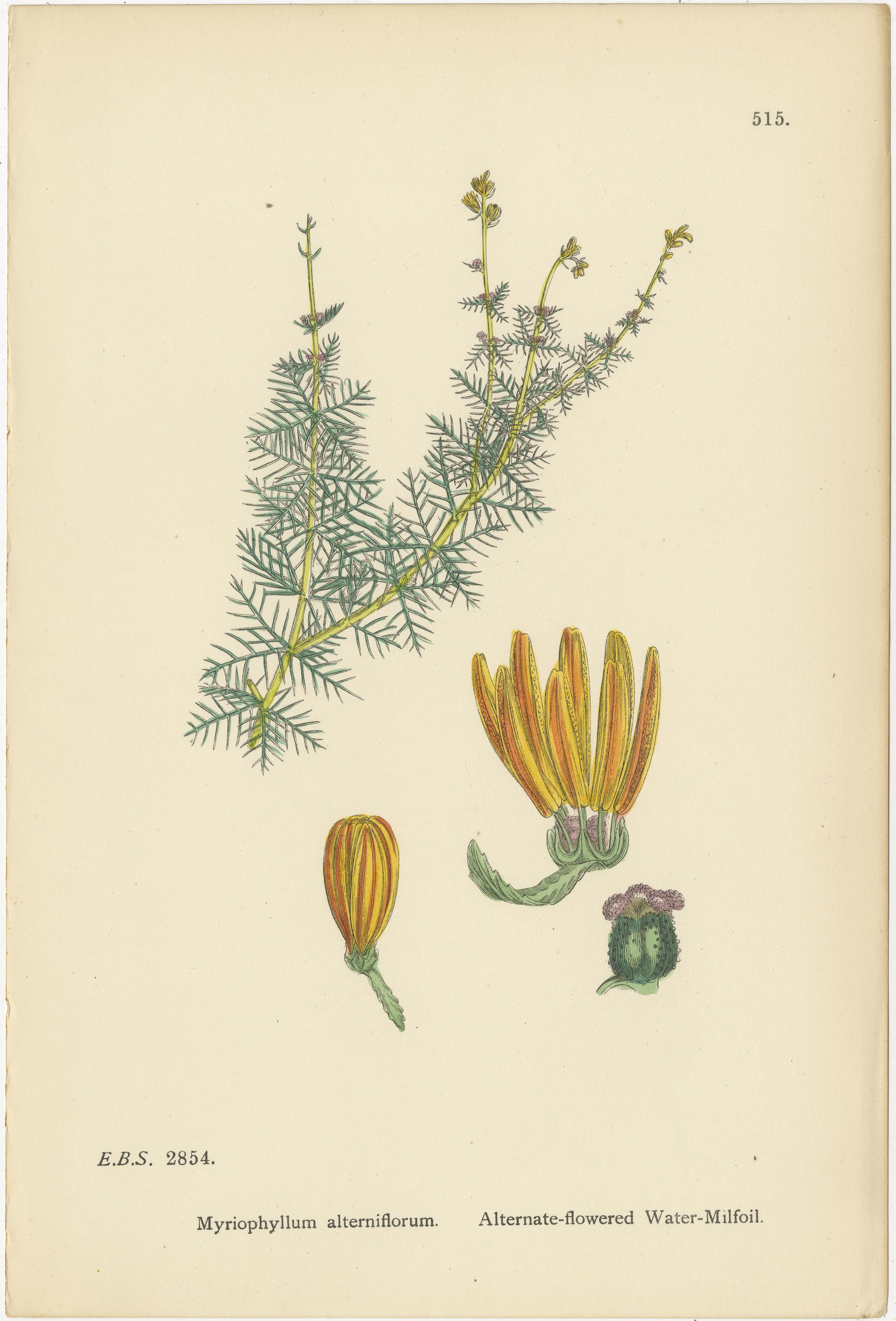
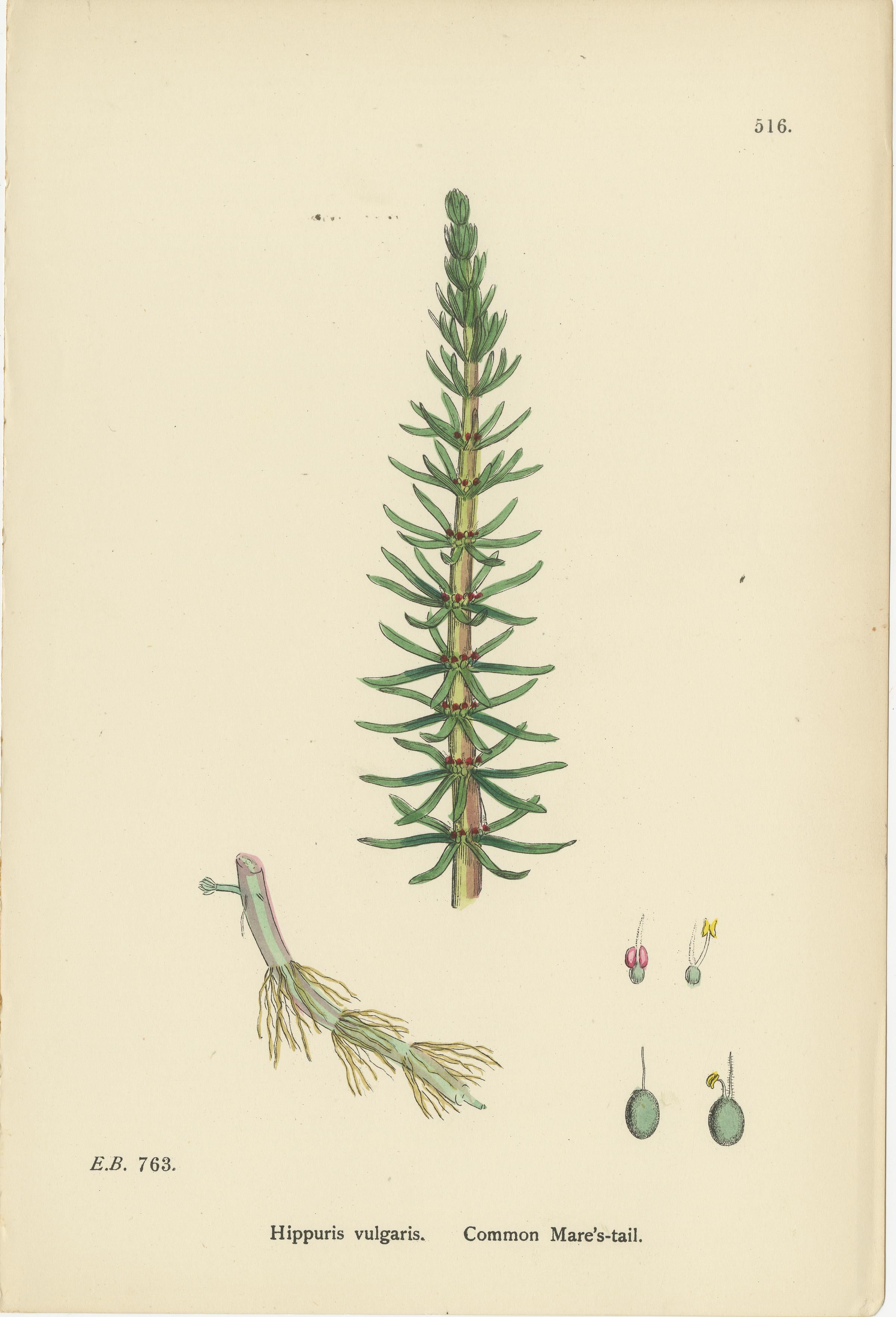
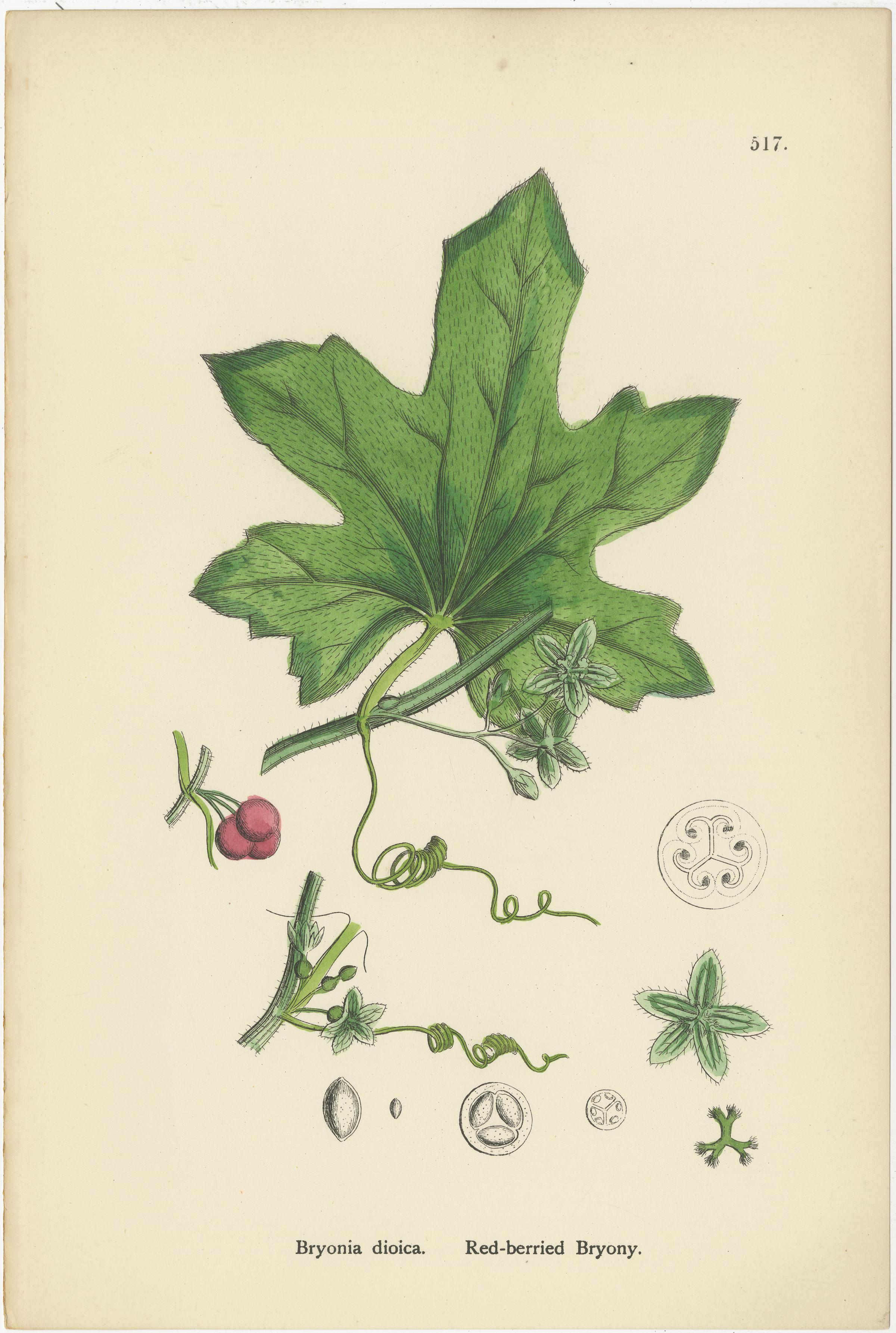
This elegant trio of hand-colored botanical engravings from 1902 presents a captivating study of British aquatic and climbing plants. The plates depict Myriophyllum alterniflorum (Alternate-flowered Water-Milfoil), Hippuris vulgaris (Common Mare’s-tail), and Bryonia dioica (Red-berried Bryony). Together they showcase contrasting plant forms — the delicate underwater grace of the milfoil, the architectural structure of the mare’s-tail, and the bold climbing tendrils of the bryony vine.
The first plate, Alternate-flowered Water-Milfoil, beautifully captures the intricate feathery foliage of this submerged aquatic species, with detailed floral dissections highlighting its alternate arrangement and golden stamens. The second, Common Mare’s-tail, depicts a slender, erect plant with whorled leaves arranged in precise geometric symmetry, a characteristic feature of lakes and slow-moving streams. The third plate, Red-berried Bryony, contrasts dramatically with its vigorous climbing habit, broad lobed leaves, curling tendrils, and bright red berries. The accompanying botanical details, including seeds and floral cross-sections, add depth to the composition and scientific value to the work.
Each engraving reflects the superb craftsmanship of the period — crisp line etching, carefully applied watercolor, and thoughtful composition. The balance between technical accuracy and artistic subtlety results in a harmonious depiction of the plants’ natural character. The warm cream paper enhances the freshness of the greens and reds, making the trio ideal for collectors or interior display.
Condition report: Excellent condition. Very light age toning and a few small specks consistent with age. Strong impressions with visible plate marks and wide margins intact.
Framing tips: These three prints make a striking coordinated display when framed together. The aquatic greens and earthy tones harmonize beautifully in natural oak, gilt, or dark green frames with ivory or pale sage mounts. Displayed horizontally, they create an elegant natural rhythm, suitable for a study, library, or botanical-themed interior.
Technique: Hand-colored engraving
Maker: British, published London, 1902